When someone searches for a 'Celtic good luck bird,' they're usually looking for one of three things: a specific bird species that carries lucky meaning in Celtic tradition, a Celtic-style decorative symbol featuring a bird, or a charm or talisman they've encountered and want to understand. The short answer is that there isn't one single official Celtic good luck bird, but there are several strong candidates rooted in genuine Irish, Welsh, and broader Celtic folk tradition, and the symbolism running through all of them is surprisingly consistent. Birds in Celtic culture carried omens, protected against harm, and guided the living between worlds. That's a richer foundation than a simple 'lucky charm' framing, and understanding it makes the symbol far more useful.
Celtic Good Luck Bird Meaning and How to Identify It

What the 'Celtic good luck bird' likely means
The phrase points to a genuine tradition, even if the exact referent depends on your context. In Celtic folk practice, birds were read as messengers and omens, not merely decorative animals. The practice of drawing meaning from birds' behavior, flight patterns, and calls has ancient roots, a practice known as ornithomancy that was documented across Celtic and pre-Celtic cultures. Within that framework, certain birds earned consistent associations with fortune, protection, and prophetic guidance.
If you've seen a piece of jewelry, artwork, or a tattoo described as a 'Celtic good luck bird,' it's most likely one of the following: a stylized bird rendered in Celtic knotwork (an artistic style, not a specific species), a wren motif drawing on deep Irish and Welsh folklore, a raven or crow referencing druidic omen traditions, or sometimes a goose, which carried land-blessing associations in Irish folk belief. The wren is probably the strongest historical claim to the title of Celtic good luck bird, given how explicitly its feathers were treated as protective amulets in documented Irish tradition.
Celtic symbolic themes behind birds and good fortune
Celtic symbolism doesn't divide 'luck' from 'protection' or 'guidance' the way modern greeting-card culture does. In Irish and Welsh tradition, a bird that brings good fortune is also warding off harm and pointing the way forward. These meanings stack rather than compete with each other.
The wren is the clearest example. The Wren Day tradition (celebrated on December 26 in Ireland) held that whoever captured a wren gained good luck for the coming year. JSTOR Daily discusses Wren and “wren folklore” in relation to St Stephen’s Day, showing how this tradition has been documented and photographed in modern times The Wren Day tradition (celebrated on December 26 in Ireland) held that whoever captured a wren gained good luck for the coming year.. More practically, the wren's feathers were kept as amulets to guard against supernatural harm and witchcraft, and sailors specifically sought them as protection against shipwreck. The wren also appears in older Gaelic texts as a bird of augury, linked to druidic prophecy in the Pseudo-Cormac Glossary. Old Irish and Welsh linguistic evidence both suggest the wren was regarded as a prophetic bird alongside the raven, meaning its 'luck' was specifically the luck of foreknowledge and divine favor, not random chance.
The raven and crow occupied a more ambivalent but equally powerful position. Druidic omen-taking explicitly named 'a crow' and 'a raven' as significant omen signs, and a bird on the wing was treated as a meaningful message in Celtic-influenced practice. Ravens weren't purely good luck in the way a four-leaf clover is; they were respected as serious messengers whose meaning depended on context. The magpie carried similarly conditional luck in Irish tradition: one magpie alone was read as bad and good luck simultaneously, while two brought joy, five signaled silver, and six meant gold. That layered, number-dependent system shows how Celtic bird luck was always interpretive, never automatic.
The goose adds another dimension. Irish folk belief held that if a flock of wild geese settled on someone's land, it brought good fortune for three years. That's a land-blessing framing, connecting birds to prosperity and abundance rather than personal protection or prophecy. A Celtic-style goose charm draws on this strand of meaning.
Running through all of these is a broader Celtic symbolic logic about birds as boundary-crossers: creatures that move between earth, sky, and (in some traditions) the otherworld. That movement made them natural carriers of messages, fortune, and protection across thresholds. Celtic knotwork art reinforces this with its emphasis on continuous, unbroken lines, a visual language of connection and flow that pairs naturally with birds in motion.
How to identify the exact symbol (artwork vs. specific bird species)
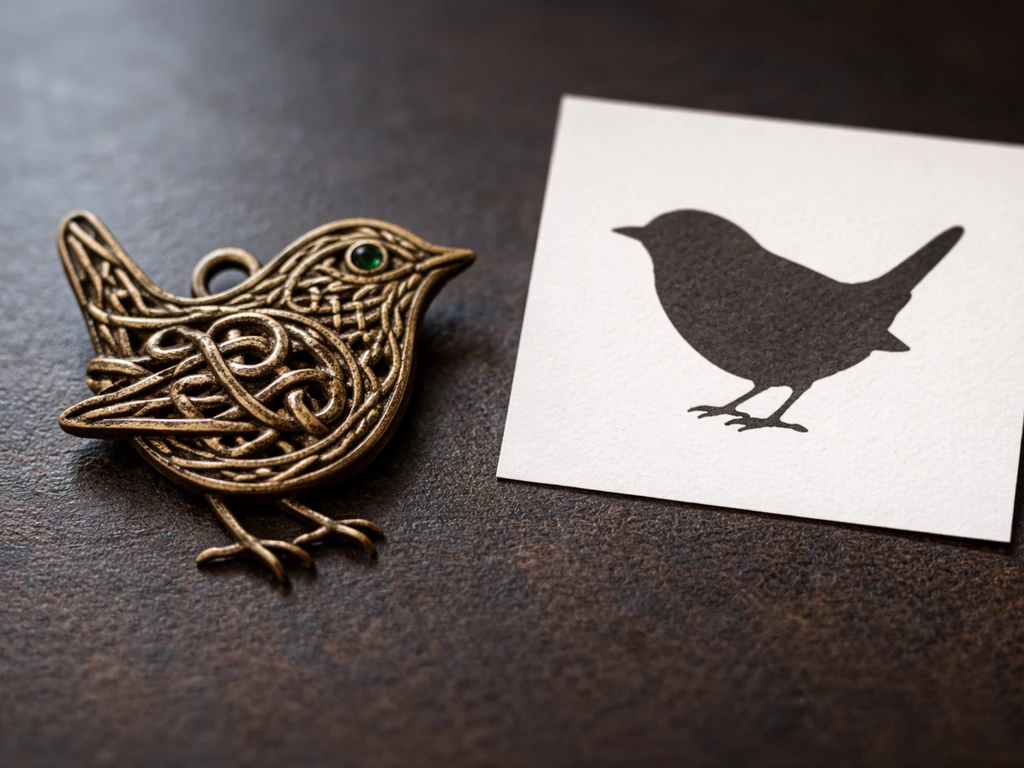
Whether you're looking at a piece of jewelry, a tattoo design, a decorative object, or a bird you've actually encountered, the identification process is slightly different. Here's how to approach each case.
If it's artwork, jewelry, or a decorative object
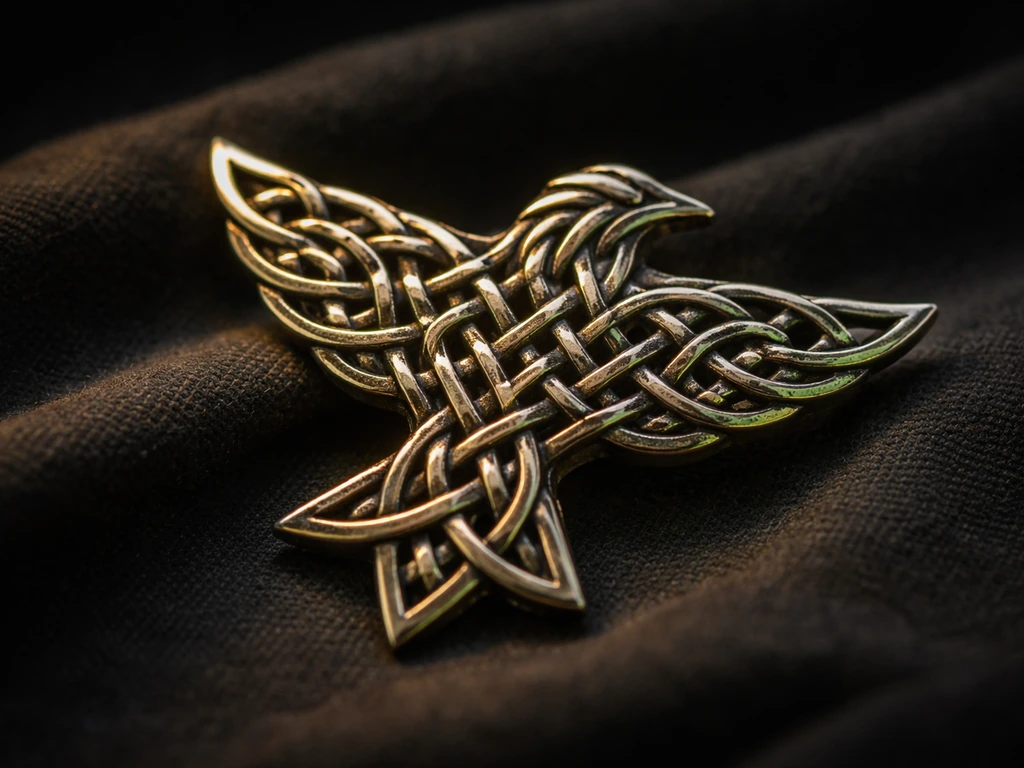
Look at the styling first. True Celtic knotwork uses interlaced lines with no beginning or end, often forming the body, wings, or tail of the bird. If the bird's feathers or outline weave into a continuous knot pattern, you're looking at a Celtic knotwork bird rather than a realistic depiction of a specific species. These stylized birds are more about the symbolic grammar of the knotwork than about identifying a wren versus a raven.
If the piece includes a shield motif (a circle divided into four quadrants with interlaced borders), the protection meaning is dominant; the Celtic Shield Knot was explicitly associated with strength and endurance in Celtic communities. If the bird is combined with a triquetra (the three-cornered Trinity Knot) or a spiral triskele, the meaning layers in triplication themes: mind, body, and spirit, or birth, death, and rebirth. Spiral motifs specifically signify growth, the sun's path, and life cycles in Celtic ornament tradition, so a bird with spiral feathers leans into themes of personal transformation and forward movement.
For a piece specifically labeled 'good luck,' check whether the bird is shown in flight or perched. If you want to know what it means when a bird is blowing a kiss toward you, look at the same Celtic sign-reading idea: context matters more than the label good luck. Flight tends to carry the omen/messenger reading (a bird on the wing was the classic omen posture in Celtic practice). A perched bird with prominent feathers leans more toward the protective amulet tradition, echoing the wren feather charms of Wren Day. Either way, if the seller or artist describes it as Celtic, the meaning is almost always drawn from the luck, protection, and guidance cluster.
If it's a real bird you've encountered
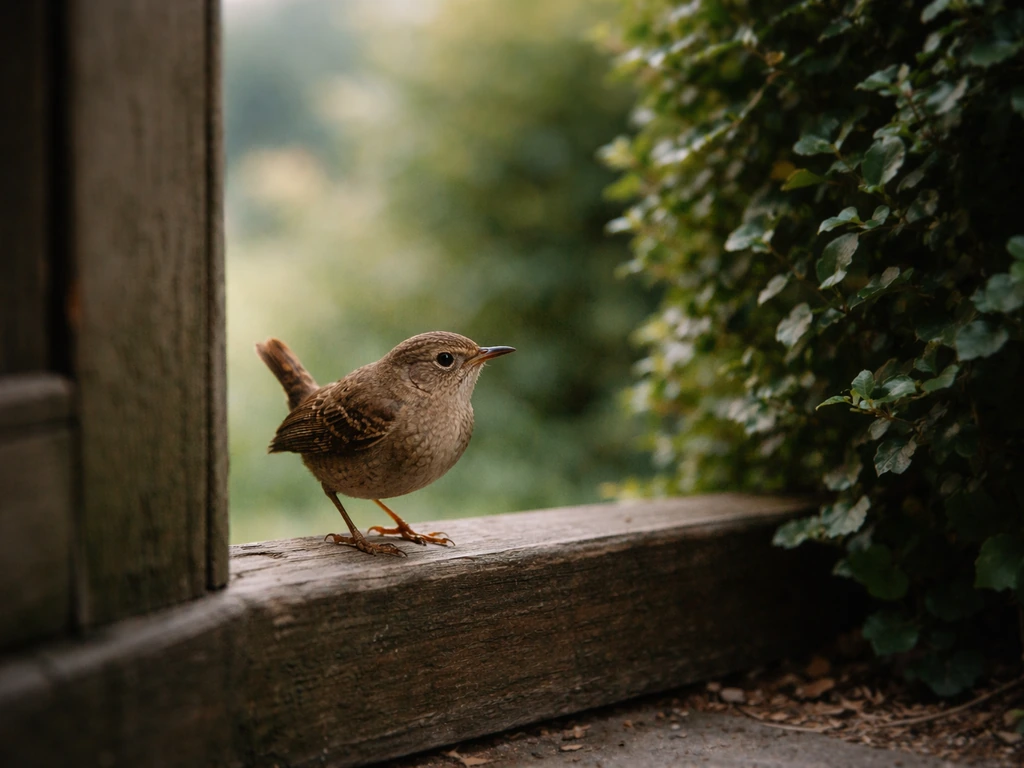
Identify the species first, then cross-reference with Celtic tradition. A wren sighting carries the strongest traditional Celtic luck association, particularly in Ireland and Wales. A raven or crow is an omen bird requiring context: what was it doing, how many were there, what direction was it flying? A magpie in an Irish context follows the traditional counting rhyme (one for sorrow, two for joy, and so on), and many Irish people still reflexively salute a lone magpie. Geese settling near your property or land have the folk-blessing association. A robin, while not the center of Celtic lore specifically, has a broad protective symbolism across British Isles tradition that often gets folded into Celtic-adjacent discussions.
Common interpretations: luck, protection, guidance, messages
| Bird | Primary Celtic association | Type of 'good luck' | Key tradition |
|---|---|---|---|
| Wren | Prophetic/druidic bird, augury | Protection from harm, good fortune for the year | Wren Day, feather amulets, Pseudo-Cormac Glossary |
| Raven / Crow | Omen messenger, druidic sign | Guidance, forewarning, fate navigation | Celtic omen-taking, Druid augury |
| Magpie | Conditional luck/fortune bird | Joy, silver, gold (number-dependent) | Irish folk counting rhymes, saluting tradition |
| Goose | Land blessing, abundance | Prosperity and fortune for land/household | Irish folk belief, wild geese settling |
| Stylized knotwork bird | Continuity, flow, otherworld connection | General luck, protection, transformation | Celtic knotwork art tradition |
Protection and luck are almost always intertwined in the Celtic bird tradition. The wren feather didn't just passively bring good fortune; it actively blocked bad fortune, specifically supernatural harm, witchcraft, and shipwreck. That's a more robust concept than passive luck: it's a bird-derived shield. The guidance meaning comes through most strongly with ravens and crows, where the omen tradition asks you to pay attention to what the bird is doing and treat it as meaningful communication rather than coincidence. Messages and omens overlap here: in Celtic omen-taking practice, a bird encounter wasn't random. It was something to read.
How to use the meaning in everyday life and intention-setting
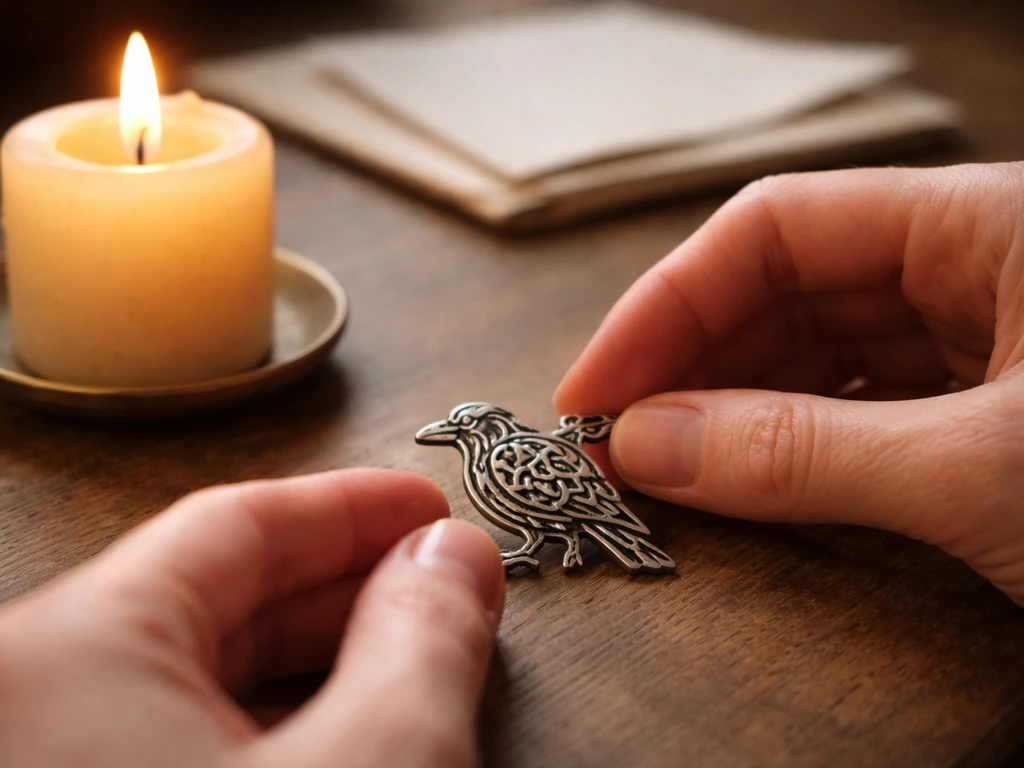
The most grounded way to work with Celtic bird symbolism isn't to wait passively for luck to arrive but to use the encounter or the object as a prompt for reflection and intention. Celtic bird symbolism has always been interpretive, meaning you're an active reader of the sign, not a passive recipient of predetermined fate.
If you own a Celtic bird charm or piece of jewelry, the tradition actually supports wearing it as a protective talisman, not just a decoration. The wren feather amulet precedent is clear: the object was carried specifically to guard against harm. Treat your piece with that intentionality. When you put it on, acknowledge what protection or good fortune you're inviting. That's not superstition as magical thinking; it's the symbolic framework working exactly as Celtic tradition intended, as a daily reminder of what you're orienting toward.
If you encounter a bird in the wild, the Celtic omen tradition invites you to pay attention to specifics: the species, the number, the direction of flight, and what you were thinking about when it appeared. You don't have to believe in literal augury for this to be useful. Treating a bird encounter as a prompt to pause and check in with yourself, with your current path or decision, mirrors exactly what ornithomancy was for in practice. It's a structured way to slow down and notice.
For intention-setting or meditation, the Celtic bird's core symbolic value is its boundary-crossing nature: the creature that moves freely between earth and sky, between the seen and unseen world. Working with that image during moments of transition, a new job, a relationship shift, a creative project, connects you to a genuinely ancient use of bird symbolism. You're not inventing a meaning; you're stepping into one with a very long history.
- Choose a bird species or knotwork style that resonates with the specific meaning you want: wren for protection, raven/crow for guidance and foreknowledge, goose for abundance, stylized knotwork bird for transformation.
- If using a charm or object, set a specific intention when you first acquire or wear it rather than leaving the meaning abstract.
- When you spot a relevant bird in daily life, pause and note the species, number, and what you were focused on. Treat it as an invitation to reflect, not a guaranteed sign.
- If using bird imagery in meditation, visualize the bird in flight across a threshold, a doorway, a shoreline, a forest edge, to engage the Celtic otherworld-crossing symbolism.
- Keep expectations grounded: Celtic bird symbolism is a lens and a framework, not a guarantee. The tradition itself was always interpretive, conditional on details, and required an active reader.
Related bird symbolism worth knowing
Celtic bird symbolism sits within a much broader tradition of birds as luck and omen carriers across cultures. The crane, for example, carries powerful good luck associations in East Asian tradition that parallel the Celtic wren's prophetic role, though through a completely different cultural path. The cardinal is probably the most recognized good luck bird in North American folk tradition, carrying meaning rooted more in Christian and folk symbolism than Celtic sources. If you're drawn to bird symbolism generally, it's worth knowing that the 'Celtic good luck bird' is one branch of a very old, very wide tradition of humans finding meaning in birds.
Within the Celtic world itself, the sibling topic of the 'Celtic thunderbird without wings' opens an interesting contrast: that symbol is more about power and elemental force than personal luck or protection. If you’re curious about a closely related bird symbol, see the meaning of Celtic thunder bird without wings meaning as a contrast to personal luck and protection. It shows that Celtic bird symbolism isn't monolithic. A bird in Celtic iconography can mean fortune, prophecy, protection, or raw elemental energy depending on how it's depicted and what tradition it's drawing from.
Feathers, flight, and nesting each carry their own symbolic weight that intersects with the lucky bird theme. Feathers are the most literal carry-over from the wren amulet tradition: the physical feather was the protective object, not just the idea of the bird. Flight is the omen posture in Celtic augury, the bird on the wing being the classic sign. Nesting, by contrast, tends to carry stability and home-blessing meanings across multiple traditions, a different register from the mobile, boundary-crossing bird of luck and prophecy.
Quick answers and common misunderstandings
The biggest misunderstanding is assuming there's one definitive Celtic good luck bird the way there's one official national bird for a country. If you're trying to match the idea of a bird on a Christmas tree good luck to Celtic symbolism, this article can help you compare that “good luck bird” framing to the species-specific meanings like wren, raven, crow, magpie, and goose. There isn't. The wren has the strongest documented claim based on actual folk practice (Wren Day, feather amulets, augury texts), but ravens, crows, magpies, and geese all carry well-attested Celtic lucky or omen meanings. If someone sells you a 'Celtic good luck bird' charm without specifying the species, they're drawing on the general tradition, which is legitimate, just not species-specific.
A second common confusion: Celtic knotwork birds are an artistic style, not a species identification. A bird rendered in interlaced knotwork is using the visual language of Celtic art to convey continuity, connection, and otherworldly flow. That's meaningful, but it's the knotwork grammar doing the heavy lifting, not a specific species' folk associations. Both things can be true at once: a knotwork wren would carry both the artistic symbolism and the species symbolism simultaneously.
Third: Celtic bird luck was never unconditional. The magpie counting tradition is the clearest proof of this. One magpie is ambiguous; two is joyful; the numbers matter. The wren feather protected specifically against shipwreck and witchcraft, not against all misfortune in all contexts. If you're using Celtic bird symbolism, lean into that specificity rather than flattening everything into generic 'good luck.' The tradition is richer and more useful when you engage with its actual texture.
- The wren is the most historically documented Celtic luck/protection bird, with its feathers used as amulets in Irish tradition.
- Ravens and crows are Celtic omen birds, primarily for guidance and forewarning rather than passive luck.
- Magpies carry conditional luck in Irish folk tradition: the number you see determines the meaning.
- Wild geese settling on land was a folk sign of prosperity for three years in Irish belief.
- Celtic knotwork bird designs are an artistic style carrying their own symbolism through the knotwork patterns, not just the bird species depicted.
- Celtic bird luck is always interpretive and context-dependent, not automatic or unconditional.
- Feathers from lucky birds (especially the wren) were historically carried as protective amulets, not just decorative items.
FAQ
How can I tell if a “Celtic good luck bird” charm is meant as knotwork art or a specific bird species?
Check whether the charm shows a specific knot layout rather than a realistic bird. If it is a continuous interlaced figure with no separate background, it is likely knotwork symbolism. If the item includes a clear shield, triquetra, or spiral, the design is steering the meaning toward protection, triplication themes, or growth cycles, even if the artist does not name a species.
If I see a bird in the wild, how do I apply Celtic “luck” meaning in a practical way without assuming it’s random?
Yes, but you need to treat it as “read the sign” guidance rather than a guaranteed outcome. In Celtic-flavored practice, the emphasis is on noticing details like what you were doing mentally, the bird’s direction of flight, and whether you saw one versus several, then using that as a prompt for a decision or reflection.
What should I do if the seller or artist doesn’t specify which bird species the “Celtic good luck bird” represents?
A lot of sellers use loose labels, so ask what species the design is referencing (wren, raven/crow, magpie, goose) and whether the bird is shown perched or in flight. If the piece is described only as “Celtic good luck bird” with no species, you can still use the general theme of messenger and protection, but the strongest species-specific claims (especially wren feather protection) are not locked in.
Are ravens and crows always “good luck,” or does Celtic meaning depend on context?
For raven and crow, context is the point, not the species alone. Note behaviors (calling, landing, circling), numbers, and flight direction, then interpret through the omen framework, where the message is conditional. If you want a more straightforward “warding” meaning, wren or shield-linked designs usually feel more aligned.
Can I treat Celtic bird luck as unconditional good fortune, the way many modern charms are marketed?
Not automatically. Celtic bird luck is often conditional, especially with magpie traditions where counting matters (for example, one versus two changes the tone). If you want to use the symbolism responsibly, avoid turning it into a universal “everything will be fine” promise.
Does the meaning change if my Celtic good luck bird charm includes a real feather versus a purely symbolic bird image?
If it is literally a feather, it should be treated as a carryover from the wren-amule t tradition (protection against supernatural harm). If it is a generic bird image made of metal or wood without feather details, the meaning tends to be more symbolic than protective in the “warding” sense.
What does perched versus flying mean for interpreting a Celtic good luck bird design?
Use the form cues: perched birds with prominent feathering lean toward protection-amulet vibes, while birds in flight lean toward messenger or omen posture. Also look for “boundary” visual language (knotwork flow, continuous lines), since it reinforces the idea of messages crossing thresholds.
How should I interpret a Celtic good luck bird when the artwork includes extra symbols like a shield, triquetra, or spirals?
Yes. If your piece combines the bird with a shield motif, prioritize endurance and protection. If it includes spirals, treat it as personal growth or life-cycle change. If it includes a triquetra, use triplication themes as the “lens,” mind, body, spirit, or birth, death, rebirth, rather than forcing one single lucky meaning.
How do I use a Celtic bird charm for intention-setting without making it vague or purely superstitious?
When you are grounding the symbolism, you can set a specific intention that matches the bird’s theme. For example, if you are using a protection-leaning design, define what harm you want to avoid and which boundary you are reinforcing. If it is guidance, define the decision you will revisit after the sign encounter, then follow through.
Is it okay to mix Celtic “good luck bird” meanings with other cultural bird luck beliefs I’ve heard about?
If you are comparing “Celtic good luck bird” ideas to other bird symbols, don’t assume meanings transfer across cultures unchanged. A bird can be lucky in one tradition and ominous or conditional in another, so treat Celtic bird symbolism as one specific interpretation system, not a global guarantee.
Cardinal Bird Good Luck: What Seeing a Cardinal Means
Learn what a red cardinal bird sighting means for good luck, how to interpret it, and simple spiritual steps to respond.