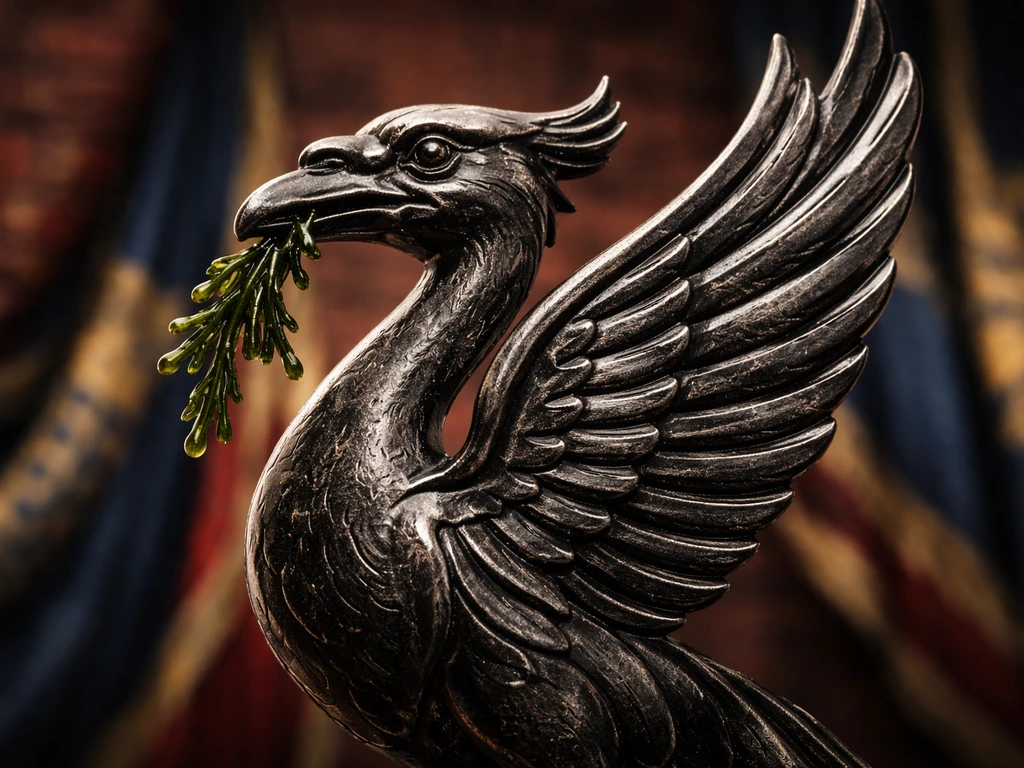
The liver bird became Liverpool's symbol because of a heraldic pun dating back to 1797, when the College of Arms officially granted the city its coat of arms. The bird depicted is technically a cormorant, holding a sprig of seaweed called 'laver' in its beak. That laver-in-beak detail is not decorative accident: it was a deliberate wordplay on 'Liver-pool,' encoding the city's name visually into its own emblem. The creature was never a real species called a 'liver bird.' It was a cormorant dressed up in heraldic language, and the nickname stuck so firmly that most people today have never heard of the laver connection at all.
Why Is the Liver Bird the Symbol of Liverpool

Eleanor Hartwell
4 May 2026
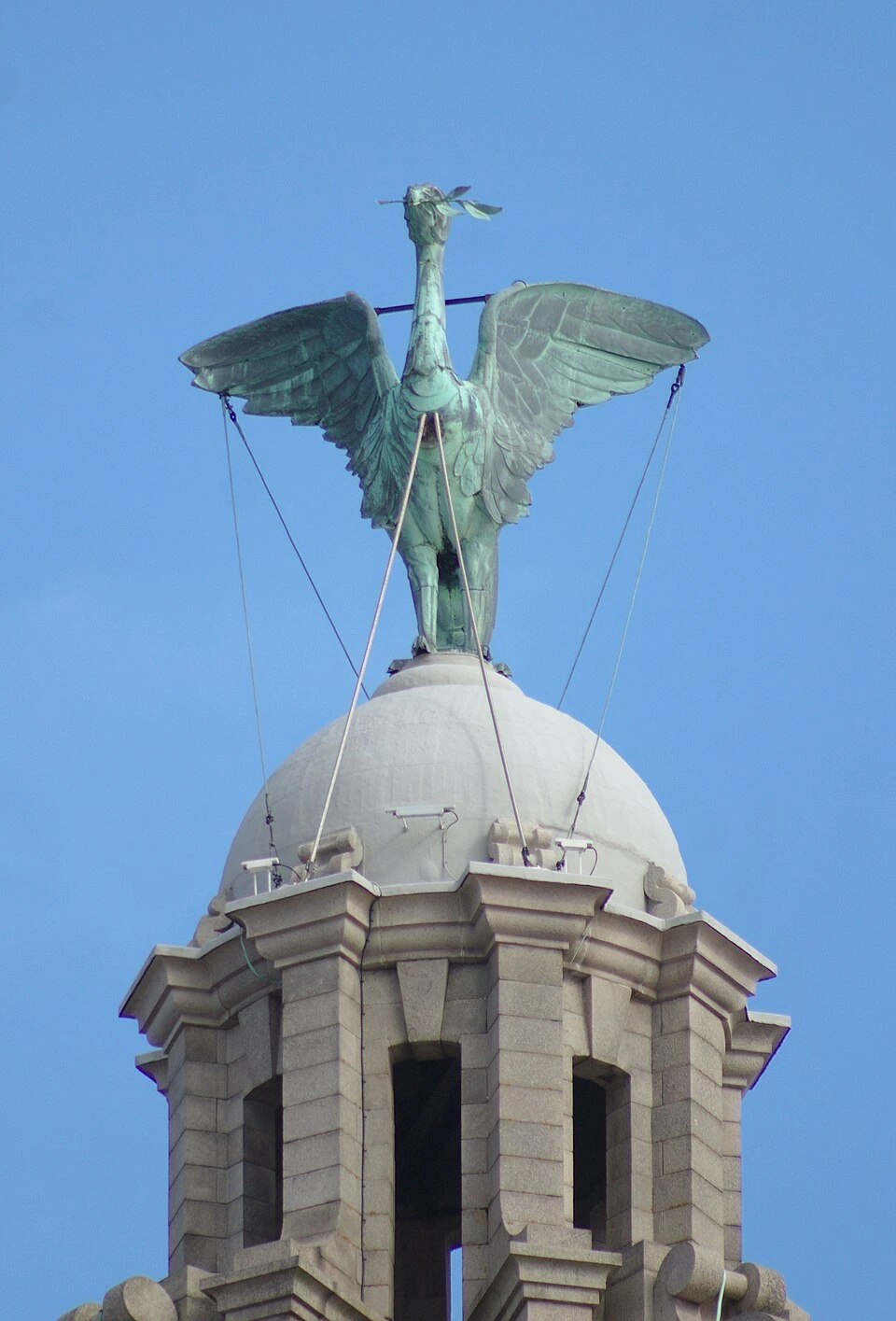
Origin of the Liverpool liver bird symbol

The official paper trail starts in August 1796, when Liverpool's Mayor Clayton Tarleton wrote to the College of Arms requesting formal civic arms for the city. The College responded with an official grant on 22 March 1797, with supporters added the following day. That 1797 blazon describes the central figure plainly: a cormorant, wings elevated, holding a branch of seaweed called laver in its beak. The same question often comes up about birds associated with spring, where people search for which bird is known as the herald of spring. Not a mythological creature, not a phoenix, not some unnamed waterbird from local legend. A cormorant, with seaweed.
But the visual pun had almost certainly been in informal local use well before 1797. Port cities develop their unofficial symbols through trade, ships, and habit long before any formal institution writes them down. Cormorants are authentic birds of the northwest English coastline, birds that Liverpool's merchant sailors and dockhands would have recognized immediately as part of the maritime environment. The city's connection to water, trade, and the sea made a seabird a natural candidate for civic identity even before the College of Arms made it official.
The naming logic is worth pausing on. 'Laver' is a real edible seaweed, used historically in Welsh and English coastal cooking, and it appears in the bird's beak specifically to create a visual echo of 'Liver-pool.' This kind of heraldic wordplay, called a 'canting arms' in heraldry, was completely standard practice in medieval and early modern European coats of arms. Families and cities routinely embedded the sounds of their own names into their crests through visual puns. Liverpool's is simply one of the most famous surviving examples.
Cultural and historical meanings of the liver bird
Once the 1797 grant locked in the cormorant-with-laver design, the symbol spread fast. A liver bird finial sat on top of St John's Market when it opened in 1822, and similar figures appeared across the city's architecture, ceramics, and official materials through the 19th century. The emblem moved from civic paperwork into the physical fabric of Liverpool itself, carved in stone, cast in iron, and painted onto public buildings.
Culturally, the liver bird absorbed meanings that go far beyond any single heraldic decision. In Liverpool's self-understanding, the bird came to represent the city's maritime identity, its defiance, its working-class pride, and its fierce local loyalty. In that way, the liver bird represents more than a heraldic pun, capturing Liverpool’s sense of self and heritage represent the city's maritime identity.
When Liverpool FC adopted a version of the liver bird for its crest, first appearing as a flag over Anfield in September 1892 shortly after the club's founding competitive match, the symbol took on a new emotional weight for millions of people worldwide. The football club's red liver bird and the city's civic liver bird are related but distinct: the LFC brand guidelines themselves distinguish between the club's crest and the broader civic emblem.
Across cultures, birds have carried meanings of protection, guidance, and connection between the earthly and the divine. The cormorant specifically has a complicated symbolic life in Western tradition: sometimes associated with gluttony (Milton used it as a disguise for Satan in Paradise Lost), but more broadly understood as a skilled, persistent hunter who dives deep and surfaces with what it needs. For a port city built on relentless commercial drive, that persistence reads as pride rather than criticism.
Religious and spiritual symbolism tied to birds and the 'liver' language
The liver bird exists at an interesting crossroads of spiritual symbolism. Birds in general across virtually every major tradition represent the soul, the spirit in motion, the link between the human world and something larger. Flight is the oldest metaphor for transcendence. Coastal and water birds specifically often carry associations with navigation, providence, and safe return: sailors read seabirds as omens of land, guidance, and survival. In that context, a cormorant holding sustenance in its beak becomes something genuinely resonant: a bird that provides, that knows its way, that carries nourishment back from the deep.
The 'liver' language in the symbol's name is worth examining spiritually as well as linguistically. In ancient traditions, the liver was the seat of the soul and the center of vitality, not the heart. Egyptian, Mesopotamian, and Greco-Roman augury all gave special weight to liver reading as a way of interpreting divine will. This is almost certainly not why Liverpool is called Liverpool: the name more likely derives from an Old English word for a muddy or thick pool.
But the layering of associations, liver as vital organ, laver as life-sustaining seaweed, bird as spiritual messenger, creates a symbol that feels richer than its bureaucratic origins might suggest. Some people also treat the phrase about the bird of Hermes as a playful mythic echo of spiritual identity, though it is not part of the symbol’s documented heraldic origin.
There is also the question of whether the liver bird is a phoenix, a comparison that comes up regularly. The official answer is no: the 1797 grant specifies a cormorant, not a mythological bird of fire. But in popular imagination, the liver bird has absorbed some phoenix-like meanings, particularly around Liverpool's resilience after industrial decline and the upheavals of the 20th century. The symbol of a city rising and persisting is hard to separate from rebirth imagery, even when the original creature is firmly identified as a seabird eating seaweed.
Common explanations, and which ones hold up
Several theories circulate about the liver bird's origin, and it is worth separating the credible from the colorful.
| Explanation | Credibility | Why |
|---|---|---|
| The bird holds 'laver' seaweed as a heraldic pun on 'Liverpool' | High: well-documented | Confirmed in the 1797 College of Arms blazon; standard heraldic canting arms practice |
| The cormorant was chosen because it was a real bird of the local coastline | High: plausible and consistent | Cormorants are genuine northwest England seabirds; fits maritime city identity |
| The 'liver' name comes from the organ, reflecting ancient vitality symbolism | Low: interesting but unsupported | Liverpool's etymology likely derives from Old English for a muddy pool, not the organ |
| The liver bird is a mythological creature unique to Liverpool | Low: romantic but inaccurate | The 1797 grant record explicitly names a cormorant; the 'uniqueness' is a later legend |
| The bird is a phoenix representing city rebirth | Low for official arms; partial for folk meaning | Not historically accurate, but phoenix associations have grown organically in popular culture |
The most credible explanation, by a significant margin, is the heraldic wordplay account. It is documented in primary sources, consistent with standard heraldic practice of the era, and supported by the specific detail in the blazon: laver in the beak, not any random branch. Everything else, the organ connection, the mythological creature story, the phoenix comparison, is either demonstrably later invention or genuine folk meaning that grew up around the symbol rather than explaining its origin.
How the liver bird is used today
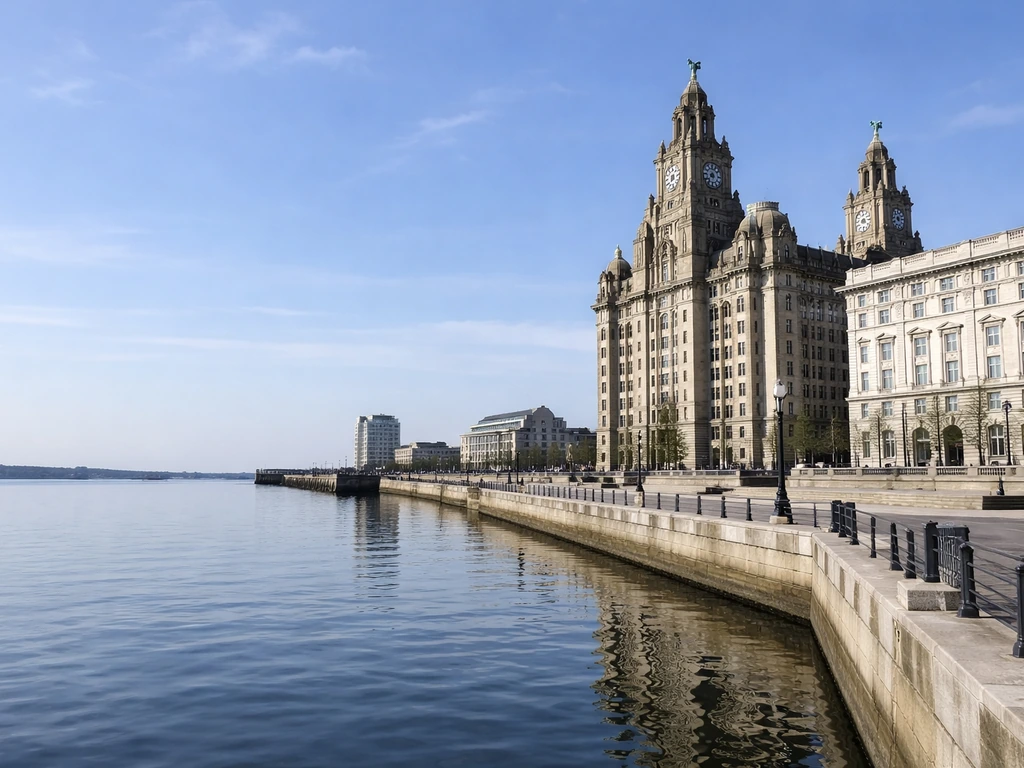
The most iconic modern appearance of the liver bird is on top of the Royal Liver Building, one of Liverpool's Three Graces along the Pier Head waterfront. Two copper liver birds sit on the building's clock towers, installed when the building opened in 1911. They are among the most photographed architectural features in northern England, and they are explicitly identified in the Oxford Learner's Dictionaries entry for 'liver bird' as the symbol of the city visible to anyone arriving by water.
Beyond the Royal Liver Building, the symbol appears across Liverpool's civic and commercial life. The Thomas family coat of arms also features its own distinctive bird, and its story can be traced through heraldic descriptions Thomas coat of arms. It features on the official coat of arms of Liverpool City Council, appearing as a cormorant with wings elevated holding the laver sprig, with the crest repeating the liver bird on a heraldic wreath.
Liverpool FC's branding uses a stylized liver bird across kits, merchandise, stadium signage, and digital assets, with formal brand guidelines distinguishing it from but connecting it to the civic original. The Liver Bird Trail organized by National Museums Liverpool guides visitors through historic examples of the symbol embedded in the city's streets, buildings, and museum collections, including the saved finial from St John's Market. The [Liver Bird Trail](https://images. liverpoolmuseums.
org. uk/2020-02/liver-bird-trail-2020. pdf) organized by National Museums Liverpool includes historical framing for the Liverpool Liver Bird symbol through its timeline and markers.
The liver bird also appears in cultural contexts that range from tattoos to pub signs to local art. It has become a shorthand for Scouse identity in the same way that specific birds serve as totems for communities worldwide: the symbol says 'this is where I am from and what I stand for' without needing any further explanation to those who recognize it.
In heraldry, the secretary bird coat of arms is also used to convey distinct qualities, so its meaning is worth comparing to the liver bird secretary bird coat of arms meaning. In Liverpool's civic identity, it's often described as the place where the noble bird stands proud, beyond a simple image on buildings.
For those interested in how birds function as symbols on civic coats of arms more broadly, the liver bird sits in a fascinating tradition alongside emblems like the secretary bird, which carries its own distinct symbolic weight in heraldic contexts.
How to interpret the liver bird symbol personally
If you encounter the liver bird and want to sit with what it means, the richest approach is to hold both its precise history and its accumulated emotional weight at the same time. The symbol started as a bureaucratic heraldic pun, and that is genuinely interesting: it was built to carry meaning from the moment of its creation, encoded into the design through the laver in the bird's beak. That intentionality matters. Someone in 1797 chose to make the city's identity legible in a visual language.
At the same time, the liver bird has been layered with centuries of meaning by the people who lived under it. The maritime associations, resilience, protection, homecoming, and pride are not invented: they reflect what coastal communities genuinely experience and project onto the birds that share their environment. A cormorant that dives deep and surfaces with something useful is a real behavior pattern that translates naturally into symbolic language about persistence and reward.
Here are a few reflection prompts worth sitting with when you encounter the symbol:
- What does it mean for a city to choose a seabird as its identity? What does the choice of a working, diving, coastal bird say about how Liverpool understood itself?
- The laver in the beak is a symbol of nourishment and provision. What are you carrying right now that sustains you or others?
- The bird appears on towers, high above the waterfront, watching over arrivals and departures. What in your own life stands watch over transitions and thresholds?
- The cormorant was given a new name, 'liver bird,' and took on a meaning larger than its species. Where in your life have you been given a name or role that shaped how others see you?
- Liverpool's symbol began as a wordplay and became a spiritual touchstone for millions. What symbols in your own tradition started as practical markers and became something more?
Symbolism works best when it is held lightly: as a lens rather than a fixed meaning. The liver bird does not mean one thing. If you’re wondering about “halcyon bird meaning,” the same idea of layered symbolism can help explain why different birds and names feel resonant in different cultures. It means a heraldic cormorant, and a city's maritime pride, and a football club's identity, and a folk creature that may or may not be a phoenix (it is not, officially, but the feeling of it can be). All of those layers are real. Letting them coexist is exactly how symbols do their work.
FAQ
Is the “liver bird” the same as a cormorant on every official Liverpool emblem?
Most official depictions aim to match the 1797 heraldic description (a cormorant with elevated wings holding laver). However, you may see stylistic variations in linework and color, especially between civic artwork, architectural finials, and later merchandise. The key check is the specific “seaweed in the beak” feature that signals laver, not just any seabird.
Why does the liver bird sometimes look different between Liverpool City Council and Liverpool FC?
They are related but not identical. The club uses a stylized crest designed for branding, so proportions, beak shape, and simplified shapes often change to read well at small sizes and on fabrics. Civic pieces usually keep closer to heraldic wording like “wings elevated” and the laver sprig detail.
Was the “laver” seaweed really important, or could it have been any branch?
It matters because the emblem’s wordplay depends on using laver specifically, not a generic plant. In heraldic canting, replacing that sprig with something else would break the visual pun that maps to “liver pool,” so the documented descriptions single out laver rather than leaving it open-ended.
If laver is the wordplay, does that mean Liverpool is named after the seaweed?
No, the symbol’s pun does not prove the city name comes from laver. The article’s discussion separates the heraldic mechanism (laver in the beak) from the likely origin of “Liverpool” itself, which is generally linked to an old English description of a muddy pool rather than the seaweed.
Are the “phoenix” and “Hermes bird” stories official explanations?
No, they are best treated as later layers of folk or interpretive meaning rather than documented origin. If you’re trying to answer the “why,” stick to the heraldic grant wording and its specific imagery, then treat phoenix-like or Hermes-like associations as how people later engaged with the symbol’s look and resonance.
Could someone confuse the liver bird with other Liverpool birds or crests from nearby families?
Yes, Liverpool has multiple heraldic birds in civic and private coats of arms, so context matters. If you’re looking at a sign or artwork, check whether it includes the distinctive laver sprig. Without that, it is often a different bird or a different emblem designed for a different family or purpose.
Why is it often shown on buildings near the waterfront, is that part of the original meaning?
The waterfront placement is consistent with the maritime identity that people attached to the bird over time, especially as the emblem became public-facing. While the origin story is heraldic wordplay, the repeated placement on port-facing landmarks helped reinforce practical meaning (trade, sea life, homecoming) through everyday visibility.
What’s the most reliable way to verify a claim about the liver bird’s origin?
Prioritize claims that connect to the formal heraldic grant imagery and the specific “laver in the beak” detail. Stories that rely only on broad organ symbolism, generic seabird behavior, or mythic comparisons are usually later interpretations. When in doubt, ask what the depiction in question would need to look like to support the pun.
Does the liver bird have to be a real-world species to still be meaningful?
No. Heraldry often describes creatures in practical visual terms while using them as a vehicle for wordplay and civic messaging. In this case, the “liver bird” is not a separate biological species, but the underlying bird type (a cormorant) is real, and that realism helps the symbol feel grounded.
If I want to explain the liver bird in one sentence to someone, what should I emphasize?
Emphasize the canting pun: the emblem uses a cormorant holding seaweed called laver to visually encode “Liver-pool,” then mention that the name stuck and later the symbol absorbed maritime pride and community identity. That combination answers both the origin and why it matters today.
Next Article
What Does the Liver Bird Represent and Its Meaning
Meaning of the Liver Bird: Liverpool pride, heritage, home, loyalty, and warding symbolism in art, tattoos, and everyday