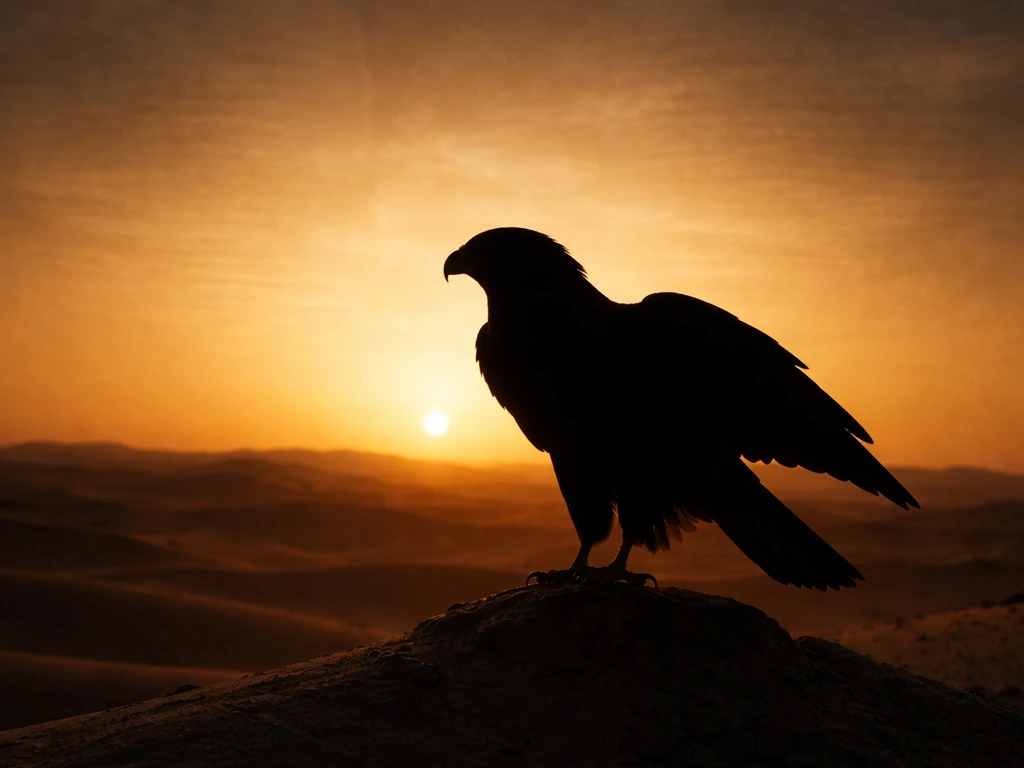
When someone says 'bird of Jove,' they almost always mean the eagle. Specifically, the golden eagle is the bird most tied to this phrase across classical literature, medieval bestiaries, and Shakespeare. 'Jove' is simply another name for Jupiter, the king of the Roman gods, and the eagle was his sacred bird. So 'bird of Jove' is essentially a poetic way of saying 'eagle', one that carries centuries of divine authority, sovereignty, and cosmic power behind it.
Bird of Jove Meaning: Origin, Symbolism, and What It Signals

Eleanor Hartwell
19 May 2026

What 'Jove' actually refers to and why it matters

Jove is the English form of the Latin stem 'Jov-' (from Iovis), the genitive form of Jupiter's name. In Roman religion, Jupiter was the king of all gods: lord of sky and thunder, protector of the Roman state, keeper of oaths, and the ultimate source of divine sanction. When Romans swore 'by Jove! Wikipedia traces the origin of the English exclamation “by Jove!” to Roman swearing by Jupiter to witness oaths, noting it as archaic but still used blank" rel="noopener noreferrer">'by Jove!. ' they were invoking him as a cosmic witness to their word. That exclamation survived into modern English as an archaic phrase, now fossilized and mostly theatrical, but it gives you a real window into how seriously Romans took the name.
Understanding that Jove equals Jupiter matters because it tells you exactly what symbolic weight the phrase 'bird of Jove' is carrying. You are not talking about a minor deity or a regional spirit. You are talking about the supreme authority figure in the Roman pantheon. Whatever bird was assigned to him inherited that prestige directly. The eagle, as his bird, was not just a symbol of strength in general, it was a symbol of divine kingship, cosmic order, and the will of heaven itself.
The eagle is the bird of Jove
Merriam-Webster defines 'bird of Jove' simply as 'eagle,' and traces it directly to Jove (Jupiter) as the ancient Roman divinity. Classical Latin poets called the eagle 'Jovis Ales,' meaning 'the bird of Jove,' and the Latin dictionary ties the word 'ales' (bird) to the aquila (eagle) in this same context. The constellation Aquila, the celestial eagle, was understood in Roman star lore as the eagle of Jove, the same creature given charge over the heavens just as Jupiter ruled them.
Shakespeare used the phrase directly. In Cymbeline, there is the line 'I saw Jove's bird, the Roman eagle, wing'd…', and across his works, the eagle is labeled 'Jove's bird,' 'the royal bird,' and 'the holy eagle.' Thomas Gray also references 'the eagle, the bird of Jove' in his own poetic tradition. These weren't just decorative flourishes. These writers were drawing on a well-established classical association that their educated audiences immediately recognized. The Dictionary of Literary Symbols (Cambridge) even gives 'bird of Jove' its own dedicated entry, confirming that the phrase functions as a recognized literary symbol.
The mythological glue between Jove and the eagle is especially vivid in the story of Ganymede. According to Greco-Roman myth, Jupiter sent his eagle to carry the beautiful youth Ganymede up to Olympus to serve as cupbearer to the gods. That act, a mortal being seized and lifted to the divine realm, became one of the defining images of the eagle as Jove's agent. The eagle does not just represent Jupiter's power; it enacts it.
What the bird of Jove symbolizes spiritually and mythologically
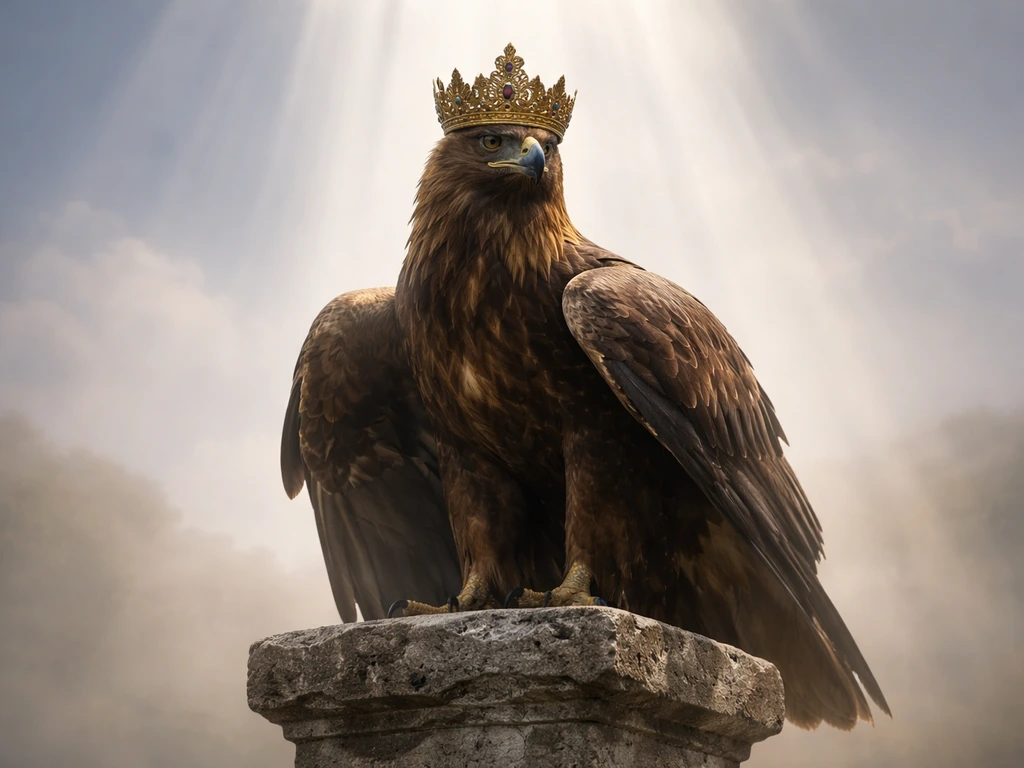
The eagle's symbolic meaning within the 'bird of Jove' tradition is layered but consistent at its core. It stands for divine authority, sovereign power, and the direct presence of the highest god. Medieval bestiaries carried the tradition forward, describing the eagle as 'the most noble bird, king of birds,' and framing it as a creature that could look directly into the sun, a metaphor for the soul's ability to endure divine radiance. One bestiary passage frames the eagle in exactly those terms: 'So the bird of Jove turns his new fledglings to the rising sun,' symbolizing both renewal and the divine test of worthiness.
Across traditions, encountering the eagle, or specifically the bird of Jove, has been read as a signal of divine favor or divine attention. Not necessarily comfort, but significance. Jupiter was a god of judgment and order as much as blessing. So seeing his bird could mean you are under divine protection, but it could equally mean that something is being weighed or decided in your life. The eagle brings a message of power and purpose, not simply reassurance.
It is worth noting the contrast with the bird of Juno, which is the peacock. Where Juno's bird is associated with watchfulness, pride, and the beauty of the divine feminine, the eagle of Jove is associated with action, authority, and the male principle of sky-sovereignty. Both carry serious mythological weight, but in very different registers. Knowing the distinction helps you interpret imagery accurately when you encounter it in art, poetry, or spiritual contexts.
| Attribute | Bird of Jove (Eagle) | Bird of Juno (Peacock) |
|---|---|---|
| Deity | Jupiter/Jove (king of gods) | Juno (queen of gods) |
| Core symbolism | Divine authority, sovereignty, sky-power | Watchfulness, beauty, divine pride |
| Mythological role | Jove's messenger and agent | Juno's sacred attendant |
| Spiritual tone | Judgment, favor, decisive action | Protection, observation, feminine power |
| Cultural reach | Roman, Greek, medieval, Renaissance | Roman, Greek, Hindu, Persian |
How 'bird of Jove' shows up in texts versus everyday symbolism
In literary and classical contexts, 'bird of Jove' is almost always a poetic epithet, a formal, elevated way of naming the eagle to invoke its divine associations. Shakespeare uses it to charge a scene with cosmic significance. Medieval writers use it to position the eagle above all other birds in a spiritual hierarchy. Classical star-namers use it to tie the constellation Aquila to Jupiter's dominion over the sky. In every case, the phrase is doing symbolic work that the plain word 'eagle' does not quite accomplish alone.
In modern everyday symbolism, most people who encounter the phrase are not reading Shakespeare or medieval bestiaries. They are searching for the spiritual meaning behind an eagle sighting, or they came across the phrase in a poem, a tattoo description, or a piece of art. In that context, 'bird of Jove' functions as a gateway into the full symbolic tradition of the eagle: power, vision, divine connection, and sovereignty. The phrase signals that you are not just dealing with a bird known for its size and hunting ability, you are dealing with the embodied symbol of the highest divine authority in Western classical mythology.
This is also different from the way eagles appear in other traditions. In biblical prophecy, the eagle is a symbol of swiftness, judgment, and divine rescue (as in Isaiah's 'mount up with wings as eagles'). In the Bible, the bird of prey imagery is often read as a sign of judgment and divine rescue In biblical prophecy. In Native American traditions, the eagle is a sacred messenger between humans and the Great Spirit. These are not the same as the bird of Jove, though they overlap in interesting ways. If you are reading a text that uses 'bird of Jove' specifically, you are in the Greco-Roman or Renaissance literary tradition. If you are interpreting an eagle sighting more broadly, you can draw from multiple traditions, and that wider frame is often more useful.
Interpreting a real-life encounter with the bird of Jove

If you see an eagle, whether soaring overhead, perched close to where you are, or appearing repeatedly in imagery, dreams, or media, the bird of Jove tradition offers a specific interpretive lens. The classical reading is that this is not a casual visit. The eagle in Jove's tradition is an agent of divine will. Its appearance is associated with moments of consequence: leadership decisions, turning points, situations requiring clear-eyed authority or judgment.
An eagle feather, in this tradition, carries the same weight as the bird itself. In that sense, a bird of the air shall carry the voice as an emblem of divine communication. Where other feather traditions (like Celtic or Native American ones) emphasize messages from ancestors or spirit guides, the Jove tradition specifically connects eagle feathers to sovereignty and divine sanction. Finding one at a meaningful moment has historically been read as a sign that you are being called to step into a position of responsibility or that a matter of real significance is being resolved around you.
Context matters enormously. The bird of Jove appearing during a period of personal struggle carries different weight than it does appearing on a day of victory or decision. In the Ganymede myth, the eagle's arrival was transformative and dramatic, a mortal was lifted to an entirely new plane of existence. That story suggests that when the bird of Jove shows up symbolically in your life, you might ask whether something in your circumstances is asking you to rise to a higher level, not just persist at the current one.
Practical next steps: journaling and reflection after a bird of Jove encounter
The most useful thing you can do after a meaningful eagle sighting or encounter with the bird of Jove in imagery is to sit with the context before reaching for an interpretation. What is happening in your life right now? What decision or challenge is closest to the surface? The bird of Jove tradition is specifically concerned with authority, divine favor, and sovereign action, so start there.
Write down the encounter in as much sensory detail as you can: where you were, what you were doing just before it happened, how the bird or image appeared, and what your immediate gut reaction was. That reaction matters. The eagle of Jove carries a certain unmistakable quality of 'something important is happening,' and honoring that instinct is step one.
Then work through the following reflection questions in your journal:
- Where in my life right now do I need to step into a position of greater authority or responsibility?
- Is there a decision I have been avoiding that actually requires decisive, sovereign action—my own, not someone else's?
- What would it mean for me to be 'lifted to a higher level' in this situation—what does that actually look like practically?
- Am I seeking divine favor or protection right now, and if so, what am I asking for exactly?
- What does 'clear-eyed vision' (one of the eagle's core qualities) require me to see honestly in my current circumstances?
- If this were a message from the highest authority I believe in—whatever that is for me—what would the message most likely be?
After journaling, you can deepen the reflection by exploring how the eagle appears in other traditions you feel drawn to. The bird of prey appears across biblical prophecy, and the question of who the bird of prey represents in scripture (as in Isaiah 46:11) is a rich parallel thread worth exploring if you are spiritually inclined in that direction. In that biblical usage, the "bird of prey" is commonly understood as a symbol tied to divine action in prophetic writing, often discussed in connection with passages like Isaiah 46:11 bird of prey appears across biblical prophecy. Mother Mary as a bird of prey is a spiritual symbol that some traditions and folk readings connect to protective power and watchful authority mother mary is a bird of prey. The eagle's role as a commanding, direction-setting figure in multiple traditions often reinforces whatever personal meaning you are already drawn toward.
Common mix-ups and alternate interpretations to watch for
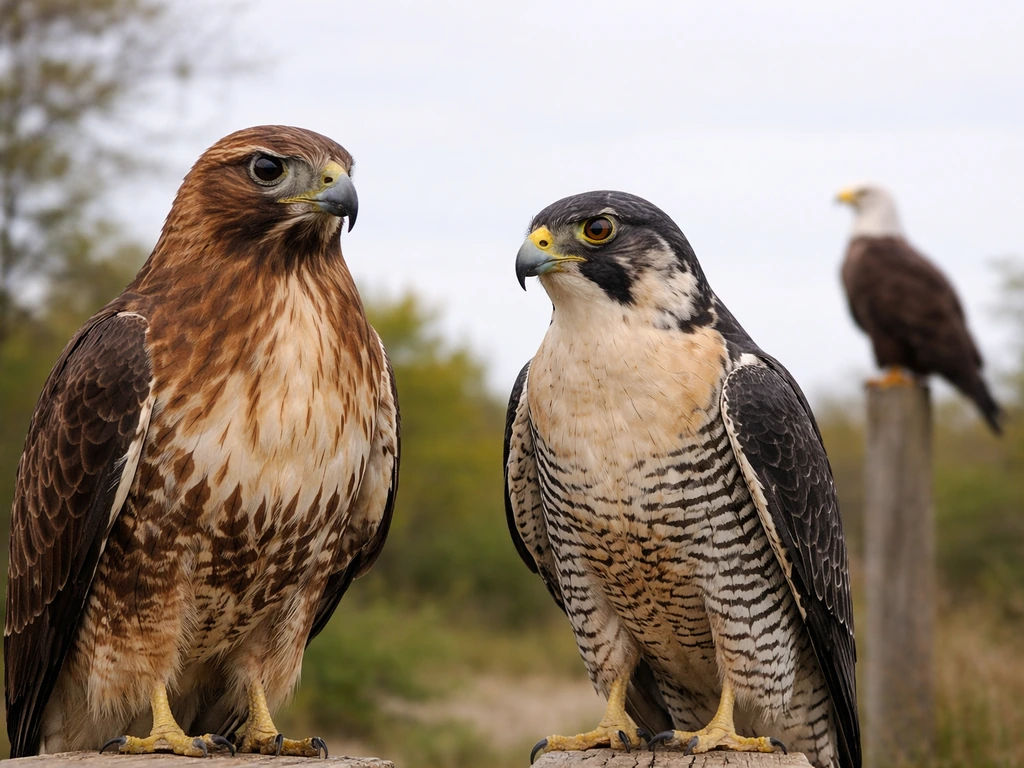
The most common mix-up is confusing 'bird of Jove' with 'bird of prey' as a general category. For a quick definition of the “bird of prey” phrase and how Jim Morrison connected it to his own meanings, see bird of prey jim morrison meaning. Bird of prey is a biological classification that includes eagles, hawks, falcons, owls, and vultures. 'Bird of Jove' is a specific mythological title for the eagle. If someone uses the phrase 'bird of Jove' in a spiritual or literary context, they mean an eagle, not just any predatory bird. Getting that wrong changes the entire symbolic reading.
A second mix-up involves which eagle is meant. The bird most consistently called 'bird of Jove' in classical and Renaissance sources is the golden eagle (Aquila chrysaetos), whose Latin genus name directly preserves the Jove connection. Bald eagles, though powerful symbols in American culture, are a separate tradition and do not carry the same classical Jove mythology. If you are working with the bird of Jove as a literary or historical symbol, you are in golden eagle territory.
A third area of confusion involves the Greek versus Roman tradition. In Greek mythology, the eagle was associated with Zeus, Jupiter's Greek counterpart. The Ganymede story, for instance, comes through both Greek and Roman versions. 'Bird of Jove' is specifically the Roman/Latin naming convention, but the underlying symbolism of eagle-as-king-of-gods is shared. If you encounter the phrase in a Greek context, it is effectively pointing to the same eagle with the same meanings, just under Zeus's name rather than Jove's.
Finally, be careful about assuming 'bird of Jove' always signals something purely positive. Jupiter was a god of judgment and cosmic order, not just blessing and favor. In many traditions, the idea that the weak should fear the strong bird captures the eagle symbolism of divine power and judgment. His eagle could appear as a herald of reckoning as easily as a herald of reward. Some encounters with bird-of-Jove imagery in older texts carry a warning tone: something powerful is paying attention. That is not necessarily bad, but it is not simply comfortable either. Treat it as a call to honesty and clarity rather than as automatic reassurance.
FAQ
Does “bird of Jove meaning” always refer to an eagle, or could it mean any bird of prey?
Usually, yes. In Greco-Roman literary usage, “bird of Jove” is an epithet for the eagle, most specifically the golden eagle, not just any hawk, falcon, or vulture. If a text says “bird of Jove” and then describes a different predator, treat that as either an error or a deliberate reinterpretation.
How can I tell if a “bird of Jove” reference is Roman (Jupiter) versus Greek (Zeus)?
Look for the author’s frame. If the surrounding material mentions Jupiter, Roman gods, classical learning, or Renaissance/Latin motifs, it is almost certainly the Roman “Jove” reference. If the text is explicitly Greek (Zeus language), the same eagle symbolism may show up, but the phrase “bird of Jove” specifically signals the Roman naming tradition.
If I see “bird of Jove” imagery, how do I know whether it should be a golden eagle versus a bald eagle?
In classic symbolism, the golden eagle is preferred for the “Jove” link. The bald eagle may appear in modern symbolism, but it is not part of the classical “Jove’s bird” association. If you are interpreting art or a tattoo, the species details (golden coloration, old-world imagery, Latin/Roman references) matter more than modern national symbolism.
Is “bird of Jove” symbolism always a positive sign, or can it be a warning?
It can mean “divine attention” rather than “divine comfort.” Because Jupiter also represents judgment and the enforcement of cosmic order, the eagle can function as a signal that an issue is being evaluated. A helpful practical check is to ask, “What decision or accountability moment is closest right now?” rather than “How do I feel reassured?”
What context clues should I use to interpret an eagle encounter tied to “bird of Jove”?
Don’t assume the meaning is fixed without context. The same symbol changes tone depending on timing (before a risk versus after a success), your emotional state, and how the eagle appears (directly nearby, repeated appearances, feathers, dreams, or a line in a poem). Context helps you distinguish “motivation and power” from “judgment and reckoning.”
How do I avoid confusing “bird of Jove” with “bird of prey” meanings?
A common mix-up is turning “bird of Jove” into the biological idea of “bird of prey.” If the source is spiritual, the safest move is to check whether it explicitly invokes Jupiter/Jove, Roman symbolism, or classic literature tropes. If it does not, the message may be using “bird of prey” more generally.
If I find an eagle feather, does it have the same “bird of Jove” meaning as seeing the eagle?
In the feather version of this tradition, the interpretation tends to focus on authority, commissioning, or being called to take responsibility, rather than ancestry messages (which show up more strongly in some other eagle/feather traditions). If you find a feather at a meaningful moment, pair it with the practical question, “What responsibility is asking for my clear-eyed leadership?”
When I see “bird of Jove” in a poem or play, is it literal, or just a poetic way of saying “eagle”?
The phrase can appear in poetry or speeches as elevated language, meaning “the eagle,” even when no literal Jupiter reference is present. If you are reading a line from a classic work, treat it as a symbolic cue the author expects educated readers to recognize, not as a claim of a personal prophecy.
What’s a quick way to interpret a “bird of Jove” moment without overreaching?
The most efficient journal approach is to separate “what happened” from “what I’m assuming it means.” Write down sensory details and your immediate reaction first, then test it against the “authority, sovereignty, judgment” lens. If your conclusion doesn’t connect to those themes, it may be borrowing a different tradition’s symbolism.
Next Article
Who Is the Bird of Prey in Isaiah 46:11? Meaning
Identifies the bird of prey in Isaiah 46:11 as a symbol for Babylon’s swift conquest, with context and meaning.