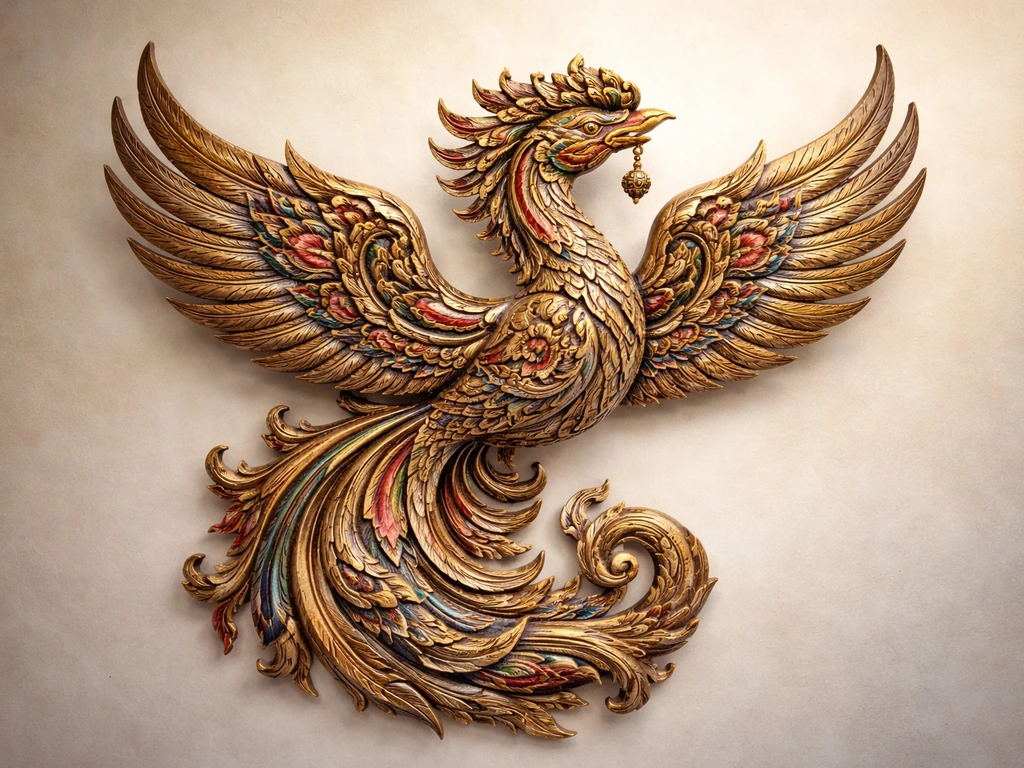
The legend you are thinking of is most likely about the phoenix, the dove, or the thunderbird, depending on what fragments you remember. A mythical bird is typically a legendary creature that appears in oral stories or religious art, rather than an animal documented in the natural world what is a mythical bird. The phoenix burns and rises from its own ashes, making it the most universally recognized bird legend across Egyptian, Greek, and Roman tradition.
There Is a Legend About a Bird: Find the Meaning and Symbolism

Eleanor Hartwell
28 May 2026

The dove carries the olive branch to Noah, or descends at the baptism of Jesus, making it the dominant bird legend in biblical contexts. The thunderbird commands storms across a wide range of Indigenous North American traditions. Those three cover the vast majority of what people are reaching for when they say 'there is a legend about a bird.
' If none of those feel right, this guide will help you narrow it down and, once you have the right one, tell you what it means.
How to pin down which bird legend you mean
Start with what you actually remember, even if it is only one detail. Bird legends tend to cluster around a handful of distinct plot points: fire and rebirth, water and peace, storms and power, messages carried between worlds, or a trickster figure causing chaos. If you can recall even one of those themes, you can usually identify the legend within a few possibilities.
Ask yourself these questions in order. What does the bird do? Does it burn, fly through a storm, carry a message, or signal something to a human? What culture or religion does the legend come from, even vaguely? Is the bird a specific species, like a raven or a dove, or is it a fantastical creature? And what was the emotional core of the story when you first heard it: hope, destruction, divine contact, or guidance?
| Key clue you remember | Most likely legend | Origin |
|---|---|---|
| Fire, burning, rising again | Phoenix | Egyptian / Greek / Roman |
| Flood, olive branch, peace | Noah's dove | Biblical (Hebrew/Christian) |
| Thunder, storms, enormous wingspan | Thunderbird | Indigenous North American |
| King, missing messenger bird, desert queen | Solomon's hoopoe (Hudhud) | Islamic / Quranic |
| False sun god, shining eyes, defeated by twins | Vucub-Caquix | Maya (Popol Vuh) |
| Colorful ornamental bird, Mindanao, decorative art | Sarimanok | Maranao (Philippines) |
| Scavenging after flood, contrast to gentle bird | Raven vs. dove | Biblical / Northern mythology |
If you heard the legend in a family story, a film, or a poem rather than a religious or academic source, it may be a blended retelling that borrows from several traditions at once. That is common. Record every detail you can, because even a half-remembered color or setting will help.
Common bird legend types by culture and religion
Bird legends fall into a few broad categories once you step back and look at them across traditions. Understanding the category helps you interpret the meaning even if you have not identified the exact legend yet.
Fire and rebirth legends
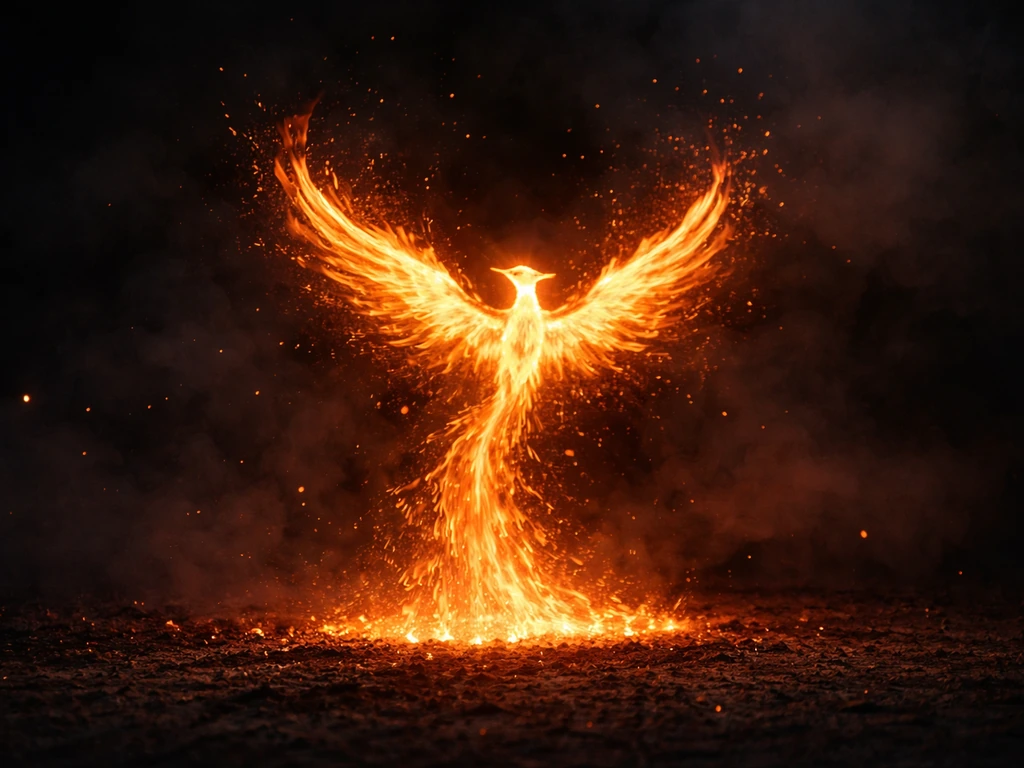
The phoenix is the flagship example. To find the best legendary bird for your needs, start by matching the story to the themes of fire and rebirth, water and peace, or storms and power. blank" rel="noopener noreferrer">In ancient Egyptian tradition it was associated with sun worship, and one widely told version has the dying bird fly to Heliopolis, immolate itself on an altar fire, and then rise again as a young phoenix from those same ashes.
The Greeks and Romans inherited and adapted the story. What makes the phoenix legend so persistent is that it compresses an entire theology into one image: death is not an ending, transformation requires destruction, and the self that rises is renewed rather than merely restored. If the legend you are thinking of involves any kind of burning and return, this is almost certainly your bird.
Biblical and Abrahamic bird legends
The biblical tradition contains at least three distinct bird legends worth separating. First, the dove in Noah's flood narrative, sent out to test whether dry land had appeared, returning with an olive branch, a moment that became one of the most widely recognized symbols of hope and peace in Western culture.
Second, the raven, also sent from the ark but functioning differently: it scavenged among the flood debris rather than returning with a clear sign, making it a morally ambiguous figure in Jewish and early Christian interpretation. Third, the dove at the baptism of Jesus, descending from the sky as a visible form of the Holy Spirit, a scene that established the dove as the primary artistic symbol of divine presence in Christian iconography.
The hoopoe (Hudhud in Arabic) belongs to a fourth, Islamic strand: in the Quran's Surah 27, Solomon notices the hoopoe is absent from his gathering of birds, and when it returns it brings intelligence from the kingdom of Sheba, acting as a royal messenger between Solomon and the Queen. That layered messenger role made the hoopoe a recurring symbol of spiritual guidance in Islamic and Sufi traditions.
Indigenous and storm legends
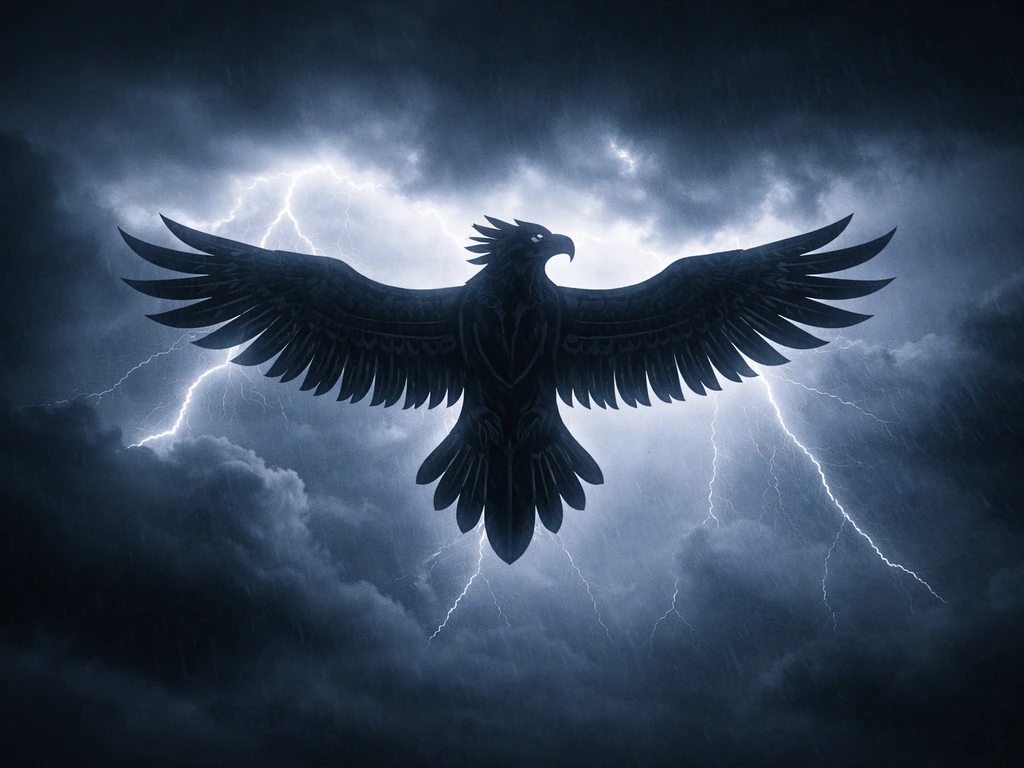
The thunderbird is a spirit figure in a wide range of Indigenous North American traditions. It is not a single myth with one fixed story but rather a recurring presence across many nations, consistently associated with storms, thunder, and enormous supernatural power. In most accounts it is a protector figure as much as a destructive one, a being whose wingbeats cause thunder and whose eyes flash lightning. The thunderbird is less about a single narrative event and more about an ongoing spiritual force embedded in the natural world.
Mesoamerican and Southeast Asian bird legends
The Maya Popol Vuh describes Vucub-Caquix, a bird demon who presents himself as a false sun god with shining eyes and teeth, only to be defeated by the Hero Twins. His story is about the dangers of arrogance and false claims to divine power. Further east, the Sarimanok is the legendary bird of the Maranao people of Mindanao in the Philippines, a figure so central to Maranao identity that it appears throughout the decorative art tradition known as okir.
The Sarimanok is visually elaborate and culturally foundational rather than anchored to a single dramatic narrative, which makes it quite different in character from the phoenix or the thunderbird. The UNESCO/ICHCAP PDF on [Traditional Craftsmanship Sarimanok](https://archive. unesco-ichcap. org/eng/ek/sub3/pdffile/domain5/102Sarimanok.
pdf) describes the sarimanok as embodying okir and as a central Maranao bird motif in craft tradition. Wikipedia describes the Sarimanok as a legendary bird of the Maranao people from Mindanao, where it is a significant cultural symbol used in Maranao art.
Match the bird species to its symbolic meanings

Once you know which legendary bird you are dealing with, you can cross-reference it with the symbolic weight carried by its species or archetype. Several birds appear in both everyday life and in legend, and the symbolic meaning tends to be consistent across both registers.
| Bird / Archetype | Core symbolic meaning | Legend connection |
|---|---|---|
| Phoenix | Rebirth, transformation, resilience | Egyptian sun worship, Greek and Roman antiquity |
| Dove | Peace, purity, divine presence, hope | Noah's flood, baptism of Jesus, Holy Spirit |
| Raven | Mystery, duality, intelligence, shadow side | Noah's ark, Northern mythology, trickster traditions |
| Hoopoe (Hudhud) | Messenger, wisdom, spiritual guidance | Quranic Solomon narrative |
| Thunderbird | Power, storm, protection, divine force | Indigenous North American traditions |
| Cardinal | Good luck, spiritual visitation, love | Widespread folk and spiritual tradition |
| Hummingbird | Joy, speed, renewal, endurance | Indigenous American and folk symbolism |
| Swallow | Return, seasonal cycles, loyalty, home | Mediterranean and global folklore |
| Blue jay | Truth, alertness, courage, voice | North American folk symbolism |
If the legend you are working with features a species that does not appear in the table above, focus on its behavior within the story rather than its species name. A bird that carries a message means one thing; a bird that burns means another; a bird that returns after an absence means something else entirely. The behavior is usually the symbol.
Universal bird symbols: feathers, flight, and nesting
Across cultures and across time, birds carry a cluster of symbolic meanings that are so consistent they can be treated as a baseline for interpreting any bird legend, even one you have not fully identified yet. Three elements show up most reliably: feathers, flight, and nesting.
Feathers are among the most widely documented symbols of spiritual contact. They appear as physical traces of a bird's presence, but in symbolic terms they represent breath, air, and the boundary between the material and the spiritual. Finding a feather in many traditions is understood as evidence that something from the spirit world has passed close by. In Egyptian religion, the feather of the goddess Ma'at was literally the measure against which a soul's worth was weighed.
Flight carries the symbolic logic of transcendence: moving between earth and sky, between the human and the divine. In augury, the ancient Roman and Greek practice of reading omens in bird behavior, the direction, height, and pattern of a bird's flight were all meaningful. Cross-cultural research in ethno-ornithology confirms that bird vocalizations and movements are widely used as sign channels across Indigenous and traditional societies. The bird in flight is consistently understood as a messenger moving between realms.
Nesting grounds the symbolic register in a different direction: toward home, return, continuity, and the protection of new life. Where flight is about transcendence, nesting is about roots. The swallow returning to build its nest each spring is a global folk symbol for loyalty and the reliable return of good things. A nest found unexpectedly is often read as a sign of stability or impending new beginnings.
Spiritual interpretation: what the legend could be saying
The most useful way to interpret a bird legend spiritually is to treat it as a narrative about a process you might be going through yourself. Legends survive because they map onto recurring human experiences. The phoenix does not just describe a mythological bird: it describes what it feels like to lose everything and rebuild. The dove returning to Noah does not just end a flood story: it describes the moment when chaos begins to resolve and hope becomes credible again. The thunderbird does not just make storms: it describes the experience of encountering a force so much larger than yourself that you either submit or are destroyed.
To interpret the legend you have in mind, identify its central turning point. What changes in the story? Something is destroyed and reborn (phoenix), something is lost and returns (dove, hoopoe), something overwhelming is encountered (thunderbird), or something false is defeated (Vucub-Caquix). That turning point is the spiritual instruction. It is telling you something about the nature of the cycle you are in or the encounter you are navigating.
It is worth being honest about the limits of this kind of interpretation. Legends accumulate layers, get retold across centuries, and travel between cultures. What the phoenix meant in Heliopolis is not identical to what it means in a modern spiritual practice. That does not make either interpretation wrong, but it does mean the legend is a lens rather than a fixed answer. Use it to focus your own thinking, not to extract a single predetermined message.
Applying it to real-life encounters and signs
The connection between bird legends and actual bird sightings is older than any of the specific stories covered here. Augury, the formal practice of reading bird behavior as divine communication, was a cornerstone of Roman religious life. The underlying logic, that birds move between earth and sky and therefore carry information from one realm to the other, is present in cultures from the Mediterranean to the Pacific Northwest to the Philippines.
If you are drawn to a bird legend and also experiencing real-life sightings of the relevant species, the practical approach is to treat both as part of the same inquiry rather than separating them into 'myth' and 'coincidence.' A cardinal appearing repeatedly at a window carries the same symbolic weight whether or not you know the legend behind it. But knowing the legend adds depth. It tells you what other people across time have understood that encounter to mean, and that accumulated meaning is worth taking seriously even if you do not treat it as literally predictive.
- Seeing a cardinal: widely understood as a sign of good luck, a visitation from someone you have lost, or spiritual encouragement during difficulty
- Seeing a dove unexpectedly: peace after conflict, resolution approaching, or divine acknowledgment of a situation
- Seeing a raven: pay attention to something you have been avoiding; the raven in legend is not evil but it is honest
- Seeing a hummingbird: joy is available even in hard circumstances; renewal is possible at speed
- Seeing a swallow return: something you thought was gone is coming back; a cycle is completing
- Seeing a blue jay: a call to speak up, to be alert, or to stop avoiding a truth
The key in all of these is paying attention to context. Where were you, what were you thinking about, and what did the encounter feel like? Cross-cultural research on birds as signs consistently finds that both behavior and vocalization matter: a bird that lands close and looks at you directly carries different weight than one glimpsed at a distance. Notice the details.
Practical verification steps and what to do next
If you are still not sure which legend you are thinking of, here is a concrete process for narrowing it down and building an interpretation you can actually use.
- Write down every detail you remember about the legend, including where you first heard it, what culture or religion it came from, what the bird looked like, and what happened in the story. Even a single remembered detail (fire, flood, crown of feathers, enormous size) usually points to one of a small number of candidates.
- Match your details to the culture first, then the species. If the legend came from an Islamic or Sufi context, start with the hoopoe. If it came from Indigenous North American traditions, start with the thunderbird. If it came from a Christian or Jewish context, start with the dove and the raven. If it is Egyptian, Greek, or Roman, start with the phoenix.
- Look for the legend's central action: what the bird does, not just what it is. That action is the symbolic core. A bird that burns and rises is about transformation. A bird that carries a message is about guidance. A bird that commands a storm is about power and protection.
- Cross-reference the species with its symbolic meanings using the table in this article, then read about the full legend rather than relying on a summary. The details in the original source, whether that is the Quran, the Popol Vuh, or Herodotus, will give you texture that summaries lose.
- Record any real-life bird encounters you have been having alongside your research. Note the species, the behavior, the location, and what you were thinking or feeling at the time. Over a week or two, patterns often become visible.
- Treat your interpretation as a working hypothesis rather than a fixed conclusion. The same legend genuinely does mean different things in different cultural frameworks, and your own relationship to the story is part of what gives it meaning. Return to it as you learn more.
If the legend you are researching turns out to be a specific cultural or regional bird figure (the Sarimanok, Vucub-Caquix, or another less widely known figure), dig into the source culture directly. These legends carry weight that general summaries cannot fully convey, and they reward the extra effort. The Maranao traditions around the Sarimanok, for instance, are inseparable from the visual art tradition of okir, which means the legend is literally encoded in decorative form across an entire material culture. That kind of depth changes what the legend means and how you use it. The more specific you get, the more useful the symbolism becomes.
FAQ
I only remember a vague detail (a color or a setting). How do I identify the right bird legend?
Start with the bird’s action, not its name. For example, “burns and returns” points strongly to the phoenix even if the exact Egyptian, Greek, or Roman phrasing is fuzzy. “Returns with something from the water” usually points to Noah’s dove or raven. If you only remember a color, treat it as secondary until you can match the turning point in the plot (destruction, return, divine message, or false power being defeated).
How can I tell whether the meaning I’m getting is about hope, guidance, or warning?
Compare the story’s emotional outcome to its turning point. Phoenix stories typically leave you with a transformation theme (loss, then renewal through destruction). Dove-type return stories tend to move toward resolution and restored trust after uncertainty. Thunderbird accounts more often frame the encounter as confrontation with a larger-than-you power, with either protection or overwhelm as the emotional endpoint.
What if my legend seems like it mixes parts from different cultures or religions?
Legends can be blended, but you can still build a clean interpretation by separating “elements” from “cultural package.” Keep the element that drives the plot (fire, water, storms, message, trickster/defeat). Then treat the culture-specific layer (Egyptian sun worship, biblical covenant imagery, Indigenous protector force) as context for tone, not as a required literal claim.
What should I do if none of the phoenix, dove, raven, hoopoe, thunderbird, or sarimanok seems to match?
Yes, sometimes the legend you mean is not a well-known “mainstream” one but a local or regional figure. In that case, your best next step is to search for variants of the distinctive feature you remember (a demon false-sun bird, a royal messenger hoopoe-like function, a culturally encoded bird in decorative art) rather than only searching the generic phrase “legend about a bird.”
How do I apply bird legend symbolism to real life without turning it into something predictive?
The article’s interpretive approach is most useful when you apply it to your current situation. Decide what kind of cycle you’re in (ending and rebuilding, waiting and return, confronting excess force, correcting a false claim). Then use the legend’s turning point as a prompt for one concrete action or decision you can take now, rather than trying to “prove” a single prediction.
If I’m also seeing birds in real life, how do I connect the sightings to symbolism responsibly?
If you get repeated sightings, focus on consistent, specific context: time of day, distance, behavior (landing near vs. glancing past), and whether the bird vocalizes. Many people interpret feathers and flight similarly to “message” logic, but you can avoid overreach by limiting meaning to themes like “attention,” “timing,” or “homecoming,” unless the legend you’re using already has a precise ritual or narrative function.
What does nesting symbolism typically mean, and how should I use it if I’m not sure what “home” refers to?
Treat nesting-related symbolism as a sign of stability and continuity, not a guarantee. A “nest found unexpectedly” often gets interpreted as new beginnings, but you can refine the reading by asking what “home” currently means for you (a job, a relationship, a community, or a mental routine) and then looking for one practical step that supports that stability.
When do the “feathers, flight, nesting” meanings conflict with the specific bird story?
Cross-cultural baseline meanings (feathers, flight, nesting) are helpful, but they do not override the legend’s specific turning point. If your legend centers on burning and return, emphasize transformation through destruction, even if the same bird is seen as a messenger in another tradition. In short, use the baseline for orientation, then let the plot drive the final interpretation.
What are common mistakes people make when interpreting a bird legend spiritually?
Watch out for two common mistakes: (1) assuming one universal “correct” meaning, and (2) ignoring the emotional core you felt when you first heard the story. Legends are lenses, so your emotional reaction is data. If your takeaway feels fear-driven, you may be reading a storm or false-power storyline. If it feels relieved, you may be reading a return and resolution storyline.
Next Article
What Is the Legendary Bird of the Maranao? Meaning
What is the legendary Maranao bird? Learn its identity, myths, symbolism, spiritual meaning, and how to interpret encoun