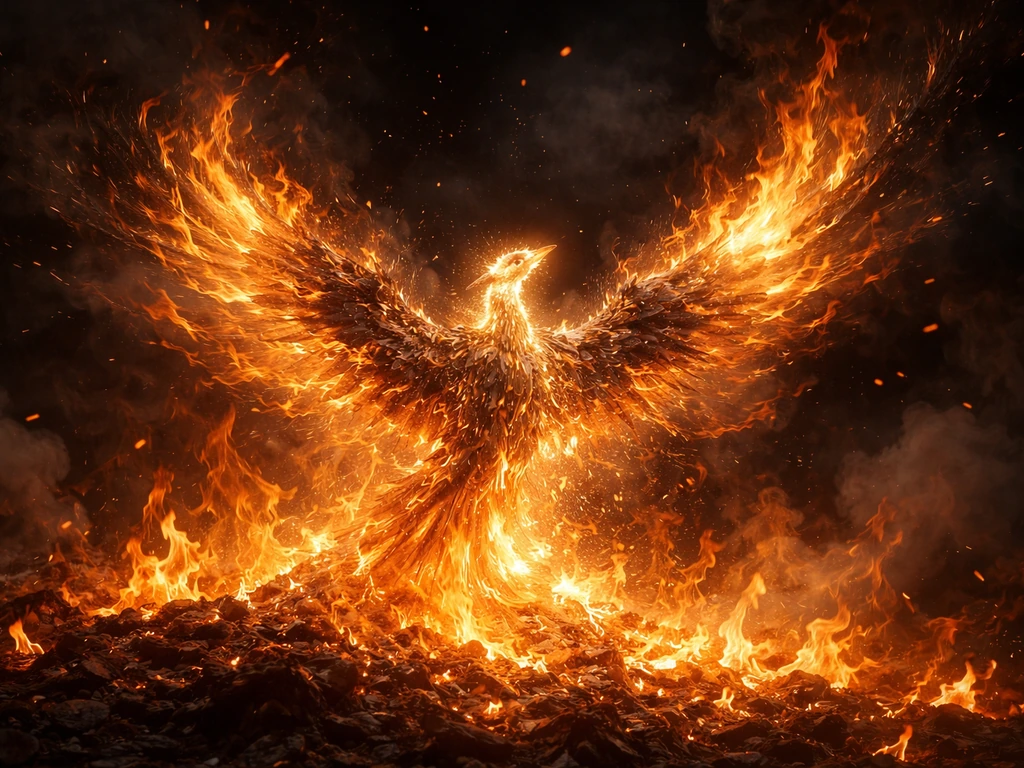
Place a phoenix image on the south or southeast wall of a living room, home office, or entryway, ideally depicting the bird rising upward in warm golds, reds, and oranges rather than crashing downward in darkness. That single choice captures most of what Vastu guidance on phoenix imagery is really asking you to do: pick a depiction that feels energizing and hopeful, put it somewhere active and visible, and let it function as a daily visual cue for resilience and renewal. The rest of this guide fills in the details so you can make that choice with real confidence.
Phoenix Bird Images Vastu Benefits: Placement Guide

Eleanor Hartwell
17 May 2026
The symbolism behind phoenix imagery
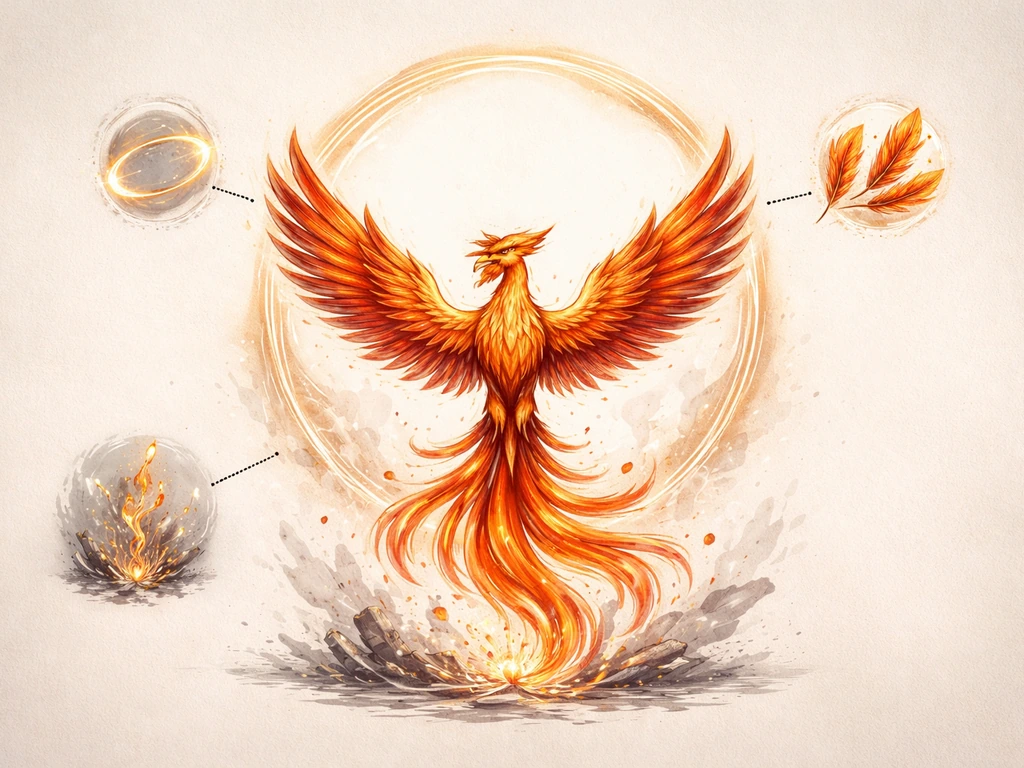
Before you hang anything on a wall, it helps to understand what you're actually looking at. The phoenix is one of the oldest and most cross-cultural symbols in human history. Ancient Egyptian tradition linked it to the bennu bird, a heron-like solar creature associated with the sun's daily death and rebirth. Greek and Roman writers including Herodotus and Tacitus documented the myth of a fabulous bird that lives for centuries, burns at the end of its life, and rises renewed from its own ashes. The Encyclopaedia Britannica frames the phoenix explicitly as a sun-associated creature whose core story is about dying and rising again.
Early Christian artists adopted the image almost immediately because it mapped so cleanly onto ideas of resurrection, regeneration, and eternal life. Scholars studying early Christian art note that phoenix imagery functioned as a symbol of resurrection, renewal, immortality, and eternal life, and that its style shifted over time even as the central theme remained mapped so cleanly onto ideas of resurrection. Scholars studying early Christian art note how phoenix imagery evolved in style across centuries while the central message stayed consistent: something ends, something new begins, and the continuity is unbroken. Contemporary writers on mythology and archetype frame the phoenix in psychological terms as a symbol of voluntary transformation and self-reliant renewal. That thread runs through every tradition that has used the image: fire is not destruction but release, and rising is the point.
This matters for artwork selection because the symbol only works if the image you choose actually communicates that upward momentum. A phoenix mid-flight, wings spread wide, feathers catching light, reads unmistakably as renewal. A phoenix depicted in shadow, talons down, surrounded by smoke and darkness reads as something else entirely, regardless of what the artist intended.
Reading different phoenix image styles
Phoenix artwork comes in broadly three visual styles, and each carries a different emotional register.
| Style | Visual Feel | Vastu Suitability | Best Used For |
|---|---|---|---|
| Realistic/naturalistic | Eagle or heron-like bird, muted tones, photographic | Moderate — calming but less energising | Bedrooms, meditation spaces |
| Fiery/elemental | Bird composed of or surrounded by flame, rich reds/oranges/golds | High — matches fire-element energy | Living rooms, offices, entryways |
| Mythical/ornate | Stylised, jewel-toned, decorative (Chinese fenghuang style) | High — vibrant but not aggressive | Living rooms, dining areas, study rooms |
The fiery and mythical styles are what most Vastu-oriented guidance has in mind when it recommends phoenix imagery. The Chinese fenghuang (often called the golden phoenix) is worth mentioning separately: it reads as harmonious and auspicious rather than combative, and its warm, jewel-like palette makes it one of the easiest phoenix styles to place without worrying about visual aggression. The golden phoenix is discussed more fully in relation to its specific cultural meanings, but for placement purposes, its gentle vibrancy makes it versatile.
What to avoid in any style: a phoenix depicted crashing or falling, a phoenix in predominantly grey, black, or cold-blue tones, and any composition where destruction is the visual center rather than the rise. The image should feel like a beginning, not an ending.
What Vastu says the phoenix is actually meant to support
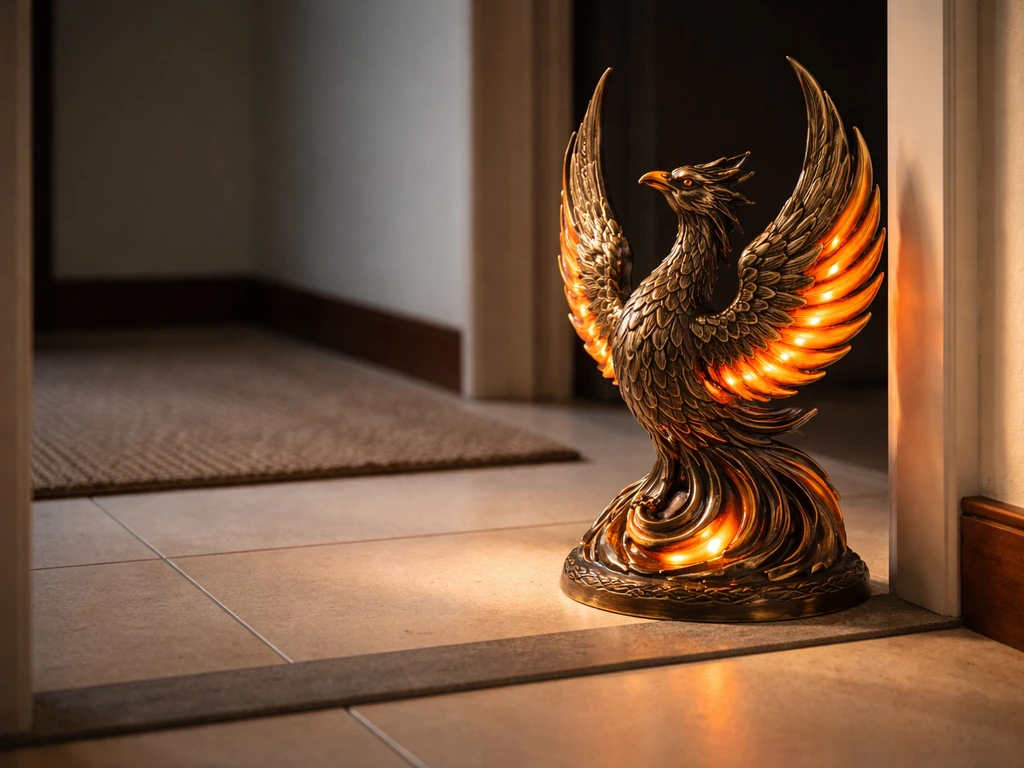
Vastu Shastra is a traditional Indian system of spatial design that organizes buildings and their contents around directional energy, elemental balance, and symbolic intention. Within that framework, the phoenix is treated as a fire-element symbol, and Vastu's fire element (Agni) is associated with energy, passion, confidence, and growth. The southeast corner of any building is specifically called the Agni Kona, the fire corner, governed by Agni Dev. This is the conceptual home of fire-element decor within Vastu thinking.
Vastu writers who recommend phoenix imagery typically list its intended benefits as: supporting recovery from setbacks, encouraging transformation and fresh starts, generating motivating energy in a space, and reinforcing protection and resilience. MagicBricks describes phoenix bird paintings as a dynamic Vastu symbol for fire energy, passion, rebirth, and overcoming problems. That is a fair summary of the claimed benefit set. It is worth saying plainly that these are symbolic and psychological benefits, not mechanical guarantees. The phoenix image functions as a visual anchor for the intentions you already carry, not as a talisman that operates independently of your own effort and mindset.
Where to place it: rooms, walls, and directions
The rooms that work best
Living rooms and home offices are the strongest choices. These are active, daytime spaces where an energising symbol has room to do its work as a motivational visual cue. Entryways are another good option because a phoenix positioned near the front door frames every entry and exit with its core message of renewal. Vastu guidance for drawing rooms generally recommends the north, east, or northwest zones of the home as favorable locations for the living room itself, so a phoenix displayed in a living room already positioned in one of those zones gets a double alignment.
Wall direction and orientation
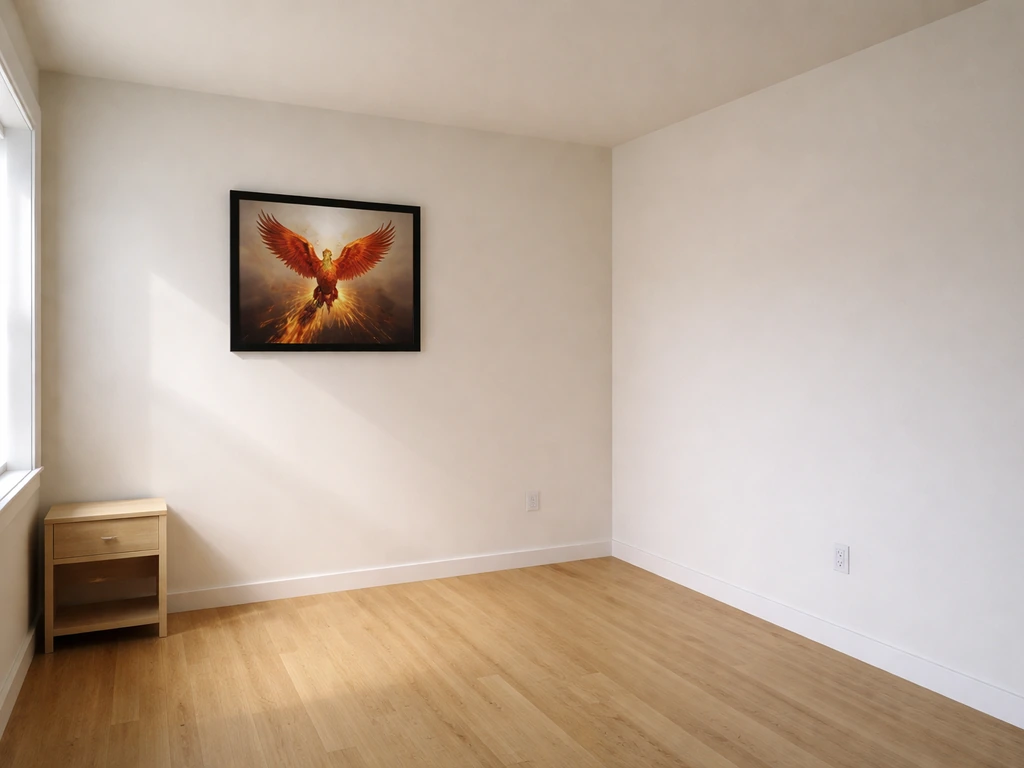
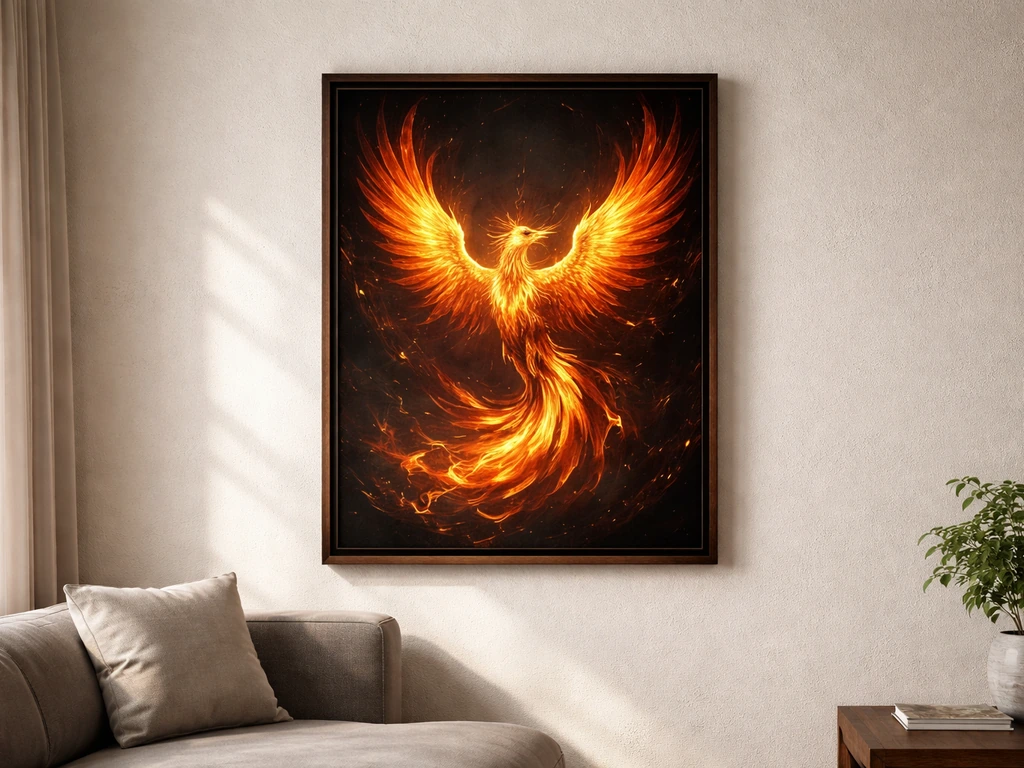
The south or southeast wall is the most commonly cited placement for fire-element art in Vastu. Since the phoenix is explicitly treated as a fire-element symbol, this is your primary target. East walls are also reasonable because east is associated with sunrise and new beginnings, and some Vastu architects specifically mention that east walls can carry sunrise or rising imagery. If your layout makes the south and southeast walls impractical, east is a defensible second option. The key orientation principle is that the phoenix itself should appear to be rising or facing upward and forward, not turning away from the room or descending.
Rooms to treat carefully
Bedrooms are where fire-element imagery needs the most restraint. Housing.com’s bedroom Vastu guidance similarly advises using restraint and avoiding disruptive or highly energising setups in sleeping spaces Bedrooms are where fire-element imagery needs the most restraint.. Vastu guidance consistently discourages disruptive, aggressive, or highly energising imagery in sleeping spaces because those rooms are meant for rest and restoration. A highly dramatic, flame-forward phoenix depiction in a bedroom can feel unsettling rather than comforting. If you want phoenix energy in a bedroom, choose a naturalistic or softly stylised version in gold and ivory rather than full flame. Avoid placing any phoenix image in a position where you'd face it directly while lying in bed. The northeast, associated with sacred and subtle energy in Vastu, should receive the softest, most harmonious versions of phoenix art rather than intensely fiery ones.
Choosing the right phoenix image
Color
Gold, warm orange, and deep red are the most Vastu-aligned colors for phoenix imagery because they correspond directly to fire-element energy. Terracotta tones work well too. Vastu color guidance across multiple sources consistently recommends warm tones for energising spaces while flagging cold or dark palettes as discordant in those same zones. Artfactory's Vastu painting guidance explicitly cautions against aggressive or chaotic colors in the northeast, which by extension suggests keeping phoenix palettes warm and luminous rather than harsh or murky. Avoid predominantly black, grey, or smoky imagery unless it is balanced by a very clear golden or amber presence in the rising bird itself.
Mood and composition
The composition should clearly communicate ascent. Wings spread and angled upward, a dynamic but not violent pose, and a background that suggests sky or light rather than darkness are all positive signals. Vastu painting guides from Naksham and GalleryToday both emphasize that artwork in a home should feel warm and energising but not aggressive. A phoenix that looks like it is attacking something, or whose flame fills the frame in a chaotic way, tips from energising into overwhelming. Think of the difference between a brushstroke that feels like sunrise and one that feels like wildfire.
Size
A traditional Vastu guideline from Vishwakarma Prakash (referenced in Naksham's painting guide) suggests that artwork on a wall should occupy no more than about one-third of that wall's total area. This is a genuinely useful rule of thumb. An oversized phoenix that dominates an entire wall can feel imposing rather than inspiring, which undercuts the intention. A piece that takes up roughly a third of the wall, hung at or slightly above eye level, tends to read as confidently present without being overwhelming.
Material and medium
Canvas paintings, framed prints, and wall murals all work. Metal art (brass or copper-toned) has a natural fire-element resonance and can be particularly striking for a phoenix. Avoid materials that read as dark or heavy, such as dark wood frames that absorb rather than reflect light, especially if the image itself is already warm-toned. The overall display should feel luminous. Good lighting aimed at the artwork, natural or artificial, does a lot of the practical work of making a phoenix image feel alive rather than flat.
Mistakes and misconceptions to avoid
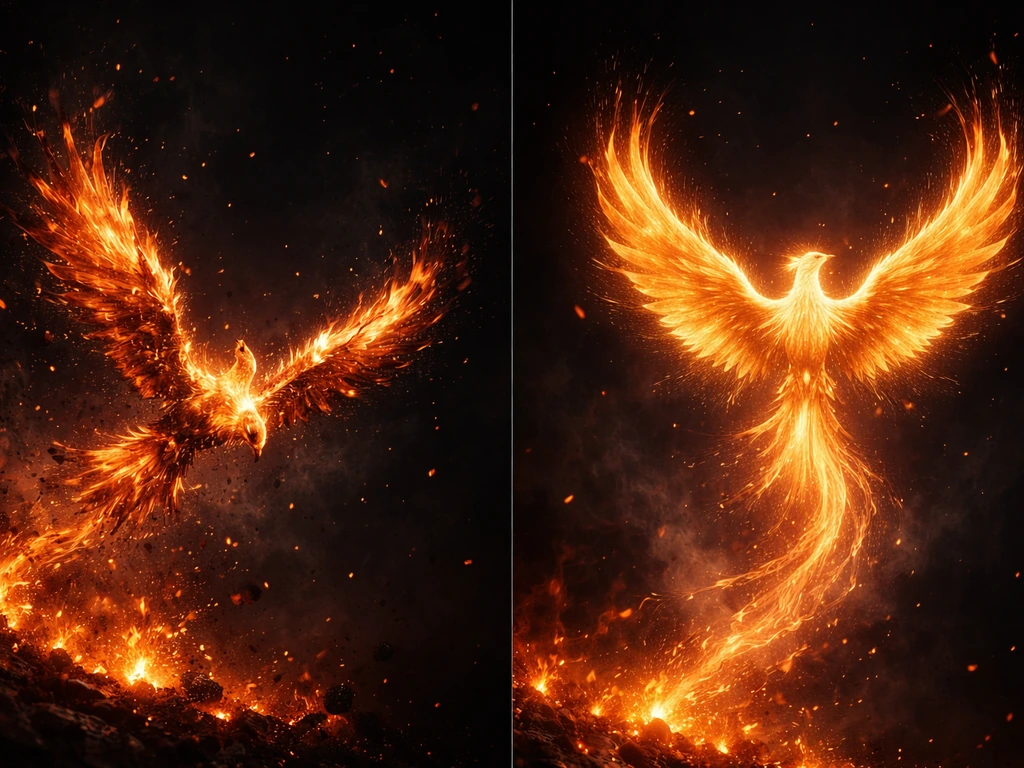
- Choosing a phoenix depicted in flames that looks more like destruction than rebirth: check that the bird itself is clearly the focal point and is rising, not falling.
- Placing a highly energising image in the northeast: Vastu treats this direction as sacred and subtle, so intense fire imagery here can feel jarring. Save your most dramatic phoenix for the south or southeast.
- Hanging it in the bedroom at eye level when lying down: even a gentle phoenix can disrupt sleep if it is directly in your sightline from bed.
- Treating the image as a guaranteed fix: the phoenix is a symbol, not a mechanism. It works by orienting your attention and intention, not by operating on the room while you ignore it.
- Ignoring scale: an image that fills an entire wall can feel aggressive rather than inspiring, which is the opposite of the intended effect.
- Displaying it in dim or poorly lit areas: Vastu guidance repeatedly emphasizes that spaces should not be dimly lit. A phoenix in a dark corner loses most of its symbolic energy.
- Picking dark or cold color palettes just because the artwork is 'phoenix themed': a phoenix depicted in grey and blue might be beautiful art but it doesn't carry the fire-element resonance that makes phoenix imagery useful in a Vastu context.
One broader misconception worth naming: some readers approach phoenix imagery as if its mere presence will generate good luck automatically, the way a superstition might work. If you are hoping for a phoenix bird for good luck outcome, use the symbol as an intentional reminder to keep moving through change, not as a guarantee that luck will arrive by itself. The phoenix symbol, across every tradition that has used it, describes a process that requires going through fire, not avoiding it. It is an image of active transformation, not passive protection. If you are drawn to phoenix imagery because you are navigating a genuinely difficult period of change, that is exactly the right reason to use it. But the image works best as a reflection of your own commitment to rising, not as a shortcut around the work.
A simple daily practice: intention and engagement
The most grounded way to use a phoenix image is to treat it as a daily visual anchor rather than background decor. When you first hang it, take a few minutes to sit or stand in front of it and articulate, either mentally or out loud, what transformation or renewal you are working toward. Be specific. 'I am rebuilding my career after a setback' is more useful than a vague sense of wanting things to improve. This initial intention-setting is what connects the symbol to your actual life rather than leaving it as generic wall art.
In daily use, a simple morning check-in works well. Spend thirty seconds looking at the image when you enter the room in the morning. Let it remind you of the specific intention you set. Some people light a candle nearby, which ties nicely into the fire-element symbolism and creates a sensory moment that helps the practice feel distinct from ordinary life. Vastu literature mentions fire-related practices like Agnihotra as a way of sincerely engaging with Agni energy rather than just decorating around it. You don't need to adopt a formal ritual, but some deliberate, repeated engagement is what keeps the image from becoming invisible.
Refresh the intention periodically. As circumstances change, the specific transformation you are working toward will change too. A phoenix image that you connected to job loss in one season might connect to a relationship or health challenge in another. The symbol is broad enough to carry all of it, but the practice stays alive only if you stay intentional about what you are asking it to reflect back to you.
Phoenix imagery sits within a larger symbolic tradition that is well worth exploring. Questions about whether the phoenix is a protective or ambiguous figure, what the golden phoenix specifically represents, and how phoenix symbolism connects to ideas about luck and overcoming adversity all have their own nuances worth understanding if this symbol resonates with you. The image on your wall is an entry point into a very old and very rich conversation about what it means to change, survive, and begin again.
FAQ
Can I use a phoenix image in a rental apartment where I cannot change wall locations?
Yes. Pick the best available wall within your constraints, prioritizing south or southeast for the strongest fire-element alignment, and then use lighting and scale to keep the image from feeling visually aggressive. If those walls are not possible, place it on an east wall, and keep the phoenix clearly oriented upward (avoid facing inward toward a wall or downward poses).
What if my phoenix artwork shows the bird rising but the background is still dark or smoky?
Keep the composition oriented around ascent, but dark backgrounds can reduce the “renewal” read. Choose pieces where warm light, gold or amber tones dominate the bird and wings, and where the surrounding haze is not the main visual focus. If the smoke is prominent, balance it with brighter warm lighting aimed at the artwork rather than relying on ambient room light.
Is it okay if the phoenix is not in classic fire colors, for example it is mostly red and black?
Vastu guidance generally favors warm, luminous colors for this fire-symbol use, so a predominantly black or cold palette is usually not ideal. A practical fix is selecting a piece where gold, orange, or terracotta still appears prominently on the bird’s body and highlights. If the palette is mostly dark, it can feel heavy, so limit use to spaces where you want more energy (not bedrooms) and ensure the lighting makes the warm tones visible.
Where exactly on the wall should I hang it, at eye level or higher?
Eye level or slightly above is usually most workable because it helps the symbol function as a daily visual anchor without feeling looming. Also follow the scale guideline from the article (around one-third of the wall area). If the piece is large, hang it a bit higher to reduce “dominance,” but do not place it so high that you cannot easily look at it during a morning check-in.
Can I place a phoenix image in a bedroom if I really want the symbolism there?
You can, but use restraint. Choose softer styling (gold, ivory, gentle stylization) instead of flame-forward, aggressive scenes. Avoid placing it where you will face it directly while lying in bed. Many people also prefer placing bedroom phoenix art in the northeast of the room with the most harmonious, least intense version rather than the most fiery one.
What should I do if my only suitable location is a hallway or bathroom?
Hallways can work because they are transitional spaces, but keep the phoenix depiction calm and upward. Bathrooms are trickier because of the strong water-related ambience and moisture, which can clash with a fire-element symbol. If you use it anyway, select a luminous, rising phoenix in warm golds and place it where it does not feel like it is “facing” dampness directly, and keep it well-lit and clean so it stays visually uplifting.
Should I frame the phoenix art in metal, wood, or something else?
Metal frames in brass or copper tones can enhance the warm, fire-like feel, especially if the artwork is already luminous. If you use wood, avoid very dark, heavy finishes that absorb light. Regardless of frame type, aim a light source toward the art so the highlights on the phoenix read clearly, not flat or dull.
Does size matter as much as placement?
Size matters, but placement matters first. A too-large phoenix can feel imposing even in a correct direction, so the “no more than about one-third of the wall area” rule is a useful safeguard. If the placement is less ideal (for example, not south or southeast), compensate slightly by choosing a moderate size and very clear upward composition so it stays inspiring rather than overwhelming.
How can I tell whether my phoenix image is “aggressive” versus “renewing” in practice?
Use a quick visual test from the room’s typical standing spot. If your first reaction is defensiveness (bird looks like it is attacking, flames fill the frame chaotically, or the pose feels downward), it is likely to read aggressive. If your eyes naturally follow upward wings and the bird’s body is lit warmly, it will usually feel like renewal. When in doubt, choose sunrise or sky-like backgrounds rather than destruction-centric imagery.
Is the phoenix meant to bring protection, or is it more about personal change?
In the Vastu-aligned way described in the article, the phoenix is more reliably a prompt for transformation and resilience than an independent protective “charm.” Treat it as a daily intention anchor. If you are expecting automatic results without personal action or reflection, the symbol may feel disappointing, even if it is placed correctly.
Can I combine a phoenix image with other fire symbols or energizing decor?
You can, but avoid visual clutter and competing focal points. If you add other energizing elements, ensure the phoenix remains the clear upward focal point (and keep fiery scenes away from sleeping spaces). If multiple items compete, the “daily cue” effect weakens, so consider one strong phoenix centerpiece rather than several similar-intensity pieces.
Next Article
Phoenix Bird Benefits: Rebirth, Renewal, and Inner Transformation
Discover phoenix bird benefits for emotional renewal, letting go, and inner transformation through fire, ashes, and rebi