
In the Bible, birds symbolize a range of spiritual realities: divine communication, God's provision, the Holy Spirit, sacrifice, and trust in God's care. They are not ornaments in the text. They show up at critical moments, carrying meaning that is rooted in the story around them rather than floating freely as universal omens. The short answer is that no single symbolic meaning covers all birds in Scripture.
What Does a Bird Symbolize in the Bible? Meanings

Eleanor Hartwell
18 Apr 2026
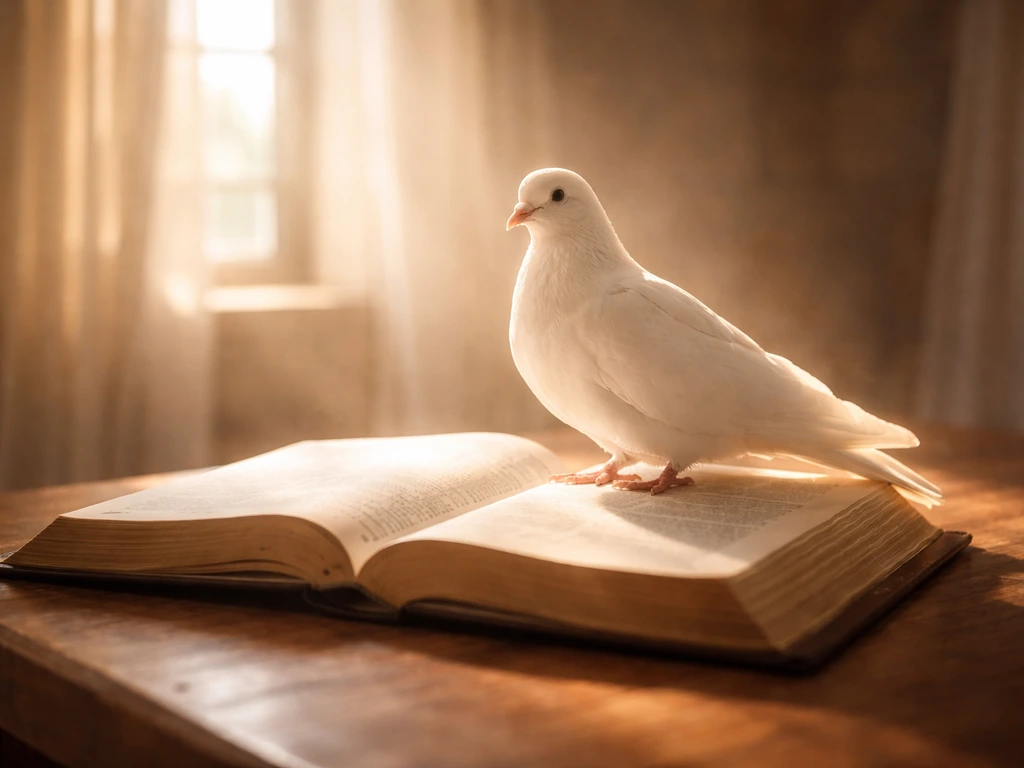
Context drives everything. A dove at Jesus' baptism points to the Spirit. Ravens feeding Elijah point to God's sovereign provision. A dove returning to Noah with an olive leaf signals the end of judgment and the start of renewal.
To understand what a bird symbolizes in the Bible, you have to read the passage, not just clock the species.
The big picture: what birds represent across Scripture
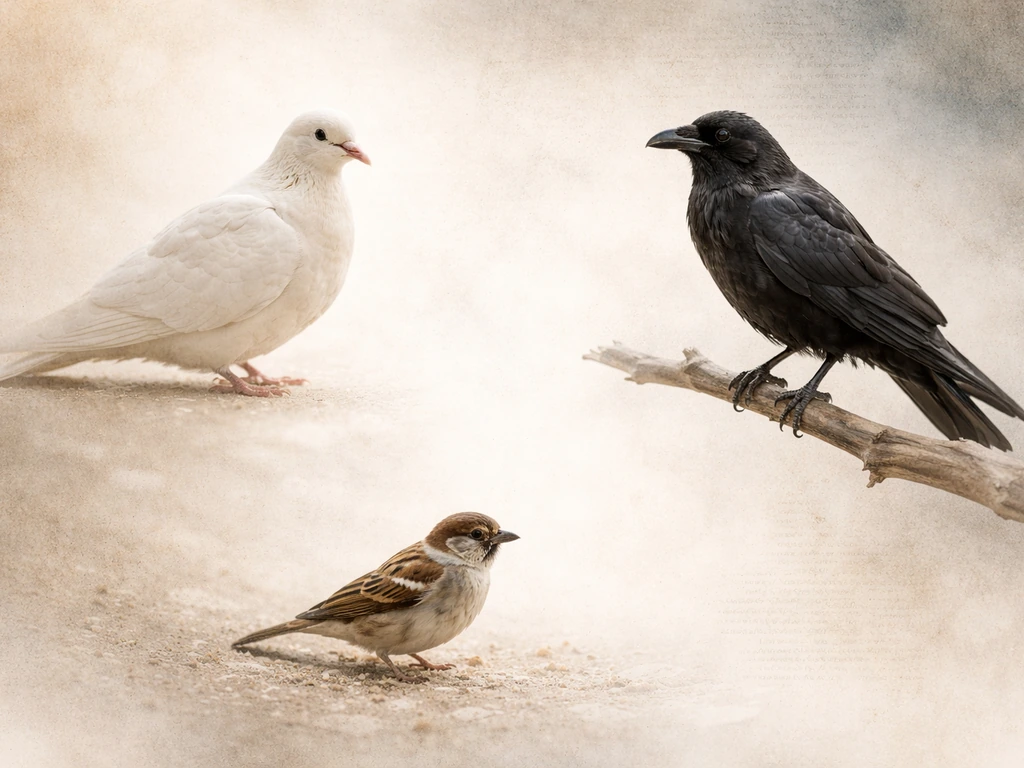
The Bible uses birds across many genres, from law to poetry to Gospel narrative, and the symbolic weight shifts depending on the context. Broadly speaking, birds in Scripture cluster around five major themes: divine communication and signs, provision and care, worship and atonement, the presence of the Spirit, and trust as a model of faith. These themes sometimes overlap, and they don't always land on the same species twice. Ravens, for instance, appear as both scavengers in Job and as miraculous providers in 1 Kings. That range is the point. Birds in the Bible are not locked into one symbolic lane.
Across cultures, birds have long carried associations with transcendence, flight, and the crossing of thresholds between the earthly and the spiritual. That wider symbolic background is worth knowing because it helps you understand why biblical writers reached for bird imagery when they wanted to talk about God's nearness, freedom from anxiety, or the movement of the Spirit. But the Bible never asks you to interpret a bird you see today as a direct divine message. What it does do is use birds to teach you something about God's character, and that teaching is meant to shape how you live.
Birds as messengers, signs, and spiritual communication
The clearest examples of birds functioning as signs or instruments of divine communication in Scripture are tied to specific narrative moments, not general rules. In Genesis 8, Noah sends out a raven first (verse 7), and it flies back and forth until the floodwaters dry up. He then sends a dove three times (verses 8 through 12). When the dove returns with an olive leaf on the second trip and doesn't return at all on the third, Noah reads that as a concrete signal that the land is becoming habitable again. The birds are functioning as messengers, yes, but only because God is using the natural order to communicate within a specific rescue story.
At Jesus' baptism, the Gospel writers describe the Spirit descending like a dove. Mark 1:10 says the Spirit came 'like a dove descending upon Him,' and Luke 3:22 specifies it appeared 'in bodily form like a dove.' This is one of the most significant bird moments in the entire New Testament, and it is explicitly tied to the inauguration of Jesus' identity and mission, not to a general principle about doves being signs of the Spirit whenever you see one. The dove here is carrying the weight of a unique, unrepeatable theological moment. Treating every dove you spot as the Spirit showing up would actually flatten what this passage is doing.
The dove and the raven: what these two birds actually point to

The dove and the raven are the two most symbolically developed birds in the Bible, and they make an interesting pair because they are nearly opposites in the way most cultures read them. In the Noah account, both serve God's purposes, but differently. The raven is sent first and does not return in a useful way. The dove is sent three times and ultimately confirms the arrival of new life. The olive leaf the dove carries back has become one of the most enduring symbols of peace and hope in Western culture, and it earns that weight from what the narrative is actually doing: marking the transition from judgment to restoration.
The raven carries its own distinct symbolism in Scripture, and it is largely positive, which surprises people. In 1 Kings 17:4–6, God tells Elijah to hide by the Kerith Ravine and explicitly says, 'I have directed the ravens to supply you with food there.
' The ravens bring Elijah bread and meat morning and evening. This is not incidental. Ravens were considered unclean animals under Mosaic Law, and yet God uses them as instruments of miraculous provision for his prophet. Job 38:41 and Psalm 147:9 both reference God providing for the raven's own needs, and Jesus builds on this in Luke 12:24 when he says, 'Consider the ravens: they neither sow nor reap, they have neither storehouse nor barn, and yet God feeds them.
How much more valuable are you than the birds! ' The raven has gone from scavenger to sermon illustration.
Doves and pigeons in worship and sacrifice
One of the most practical and often overlooked bird themes in Scripture is the role of doves and pigeons in the sacrificial system. Leviticus 1:14 specifies that burnt offerings from birds must be turtledoves or young pigeons. Leviticus 5:7 goes further, allowing those who cannot afford a lamb to bring two turtledoves or two young pigeons instead, one for a sin offering and one for a burnt offering. Leviticus 12:8 extends this same provision to purification rituals after childbirth. This was a genuine economic accommodation, making atonement accessible to the poor.
This is exactly what Mary and Joseph do at the Temple after Jesus' birth. Luke 2:24 records that they brought 'a pair of turtledoves or two young pigeons' as their offering, which tells you directly that they were not wealthy. The doves in this context are not primarily symbols of peace or the Spirit. They are the means by which an ordinary family participates in the covenant worship of Israel. That practical, legal dimension of bird symbolism is easy to miss if you only focus on the more dramatic dove imagery at Jesus' baptism, but it matters. It shows how birds are woven into the everyday religious life of the biblical world, not just its high theological moments.
What birds teach about God's care and provision

Some of the most emotionally resonant bird passages in the Bible are the ones Jesus uses to teach about anxiety and trust. In Matthew 6:26 he says, 'Look at the birds of the air: they neither sow nor reap nor gather into barns, and yet your heavenly Father feeds them. Are you not of more value than they?' Luke 12:22 through 31 extends this teaching and grounds it in a direct argument: if God feeds ravens, who lack storerooms and barns entirely, how much more does he care for you? The conclusion is not 'notice birds and feel peaceful.' The conclusion is 'seek his kingdom' rather than worry about provision.
The birds here are functioning as an argument from the lesser to the greater. God's attentiveness to creatures that cannot plan or store is the evidence for his attentiveness to people who can. This is a rhetorical move, not an invitation to treat every bird you see as a personal reassurance. The passage is teaching a posture of trust, grounded in God's character as revealed in how he runs creation. That is worth sitting with. The bird is not delivering a message to you; it is illustrating a truth about God.
How to read bird symbolism correctly in the Bible
The most common mistake people make when they look up bird symbolism in the Bible is lifting a bird out of its passage and attaching a fixed meaning to it that then gets applied to any encounter with that bird. The Bible does not work that way, and the passages themselves resist it. The dove at Jesus' baptism is not the same symbol as the dove in Leviticus 5:7. The raven in 1 Kings 17 is not the same symbol as the raven in Genesis 8. Context is not optional, it is the entire interpretive frame.
There are three useful questions to ask when you encounter a bird reference in Scripture or in reflection. First, is the bird functioning literally or figuratively? In Genesis 8, Noah's dove is a real bird doing a real thing. In Matthew 6, the birds of the air are illustrative, not the point. Second, what does the surrounding passage say about God's character or action? That is usually what the bird is illustrating. Third, does the broader biblical witness support the symbolic meaning you are drawing? A single passage rarely carries the full weight of a symbol by itself.
- Identify the genre: is this narrative history, poetry, law, or teaching? Genre shapes how literally or symbolically to read imagery.
- Read the surrounding context: what is the passage actually teaching about God, faith, or covenant? The bird typically serves that larger point.
- Check if the same bird appears elsewhere in Scripture and compare the contexts before drawing a unified symbol.
- Avoid importing modern 'omen' frameworks. The Bible does not present birds as general good or bad omens the way some folk traditions do.
- Distinguish between what the text claims and what you are inferring. If the passage doesn't say a dove means peace, be honest that you are reading backward from tradition.
It is also worth knowing what the Bible does not say. Scripture does not establish a system where particular bird species consistently signal particular messages to individual readers. The passages that use birds symbolically are doing theological work in their own narratives, not setting up a bird-watching guide to divine communication. If someone tells you that a specific bird appearing in your yard is a guaranteed biblical sign, that claim is going further than the Bible goes. That is also why claims about the biblical meaning of oriole bird are usually more about modern speculation than Scripture itself.
A quick reference: major birds and their biblical contexts
| Bird | Key Passages | Symbolic Function | What It Actually Points To |
|---|---|---|---|
| Dove | Gen 8:8–12; Matt 3:16; Luke 3:22; Lev 1:14; Luke 2:24 | Peace, restoration, the Holy Spirit, sacrificial access | End of judgment (Noah); Spirit's descent on Jesus; covenant worship for the poor |
| Raven | Gen 8:7; 1 Kings 17:4–6; Job 38:41; Luke 12:24 | Divine provision, God's sovereignty over creation | God uses unexpected instruments; God feeds even the 'unclean'; argument for trust |
| Turtledove / Pigeon | Lev 1:14; Lev 5:7; Lev 12:8; Luke 2:24 | Sacrifice, atonement, purification | Accessible worship for the poor; participation in covenant life |
| Birds of the air (general) | Matt 6:26; Luke 12:22–31 | Model of trust, God's providential care | Illustration of God's fatherly attention; argument against anxiety |
What to do when a bird shows up in your reading or reflection
If you are reading Scripture and a bird passage catches your attention, the most productive thing you can do is slow down and ask what theological truth the bird is being used to carry. Is it about God's provision? His Spirit? Covenant accessibility? Restoration after judgment? Once you identify what the passage is teaching through the bird, that is what you take with you into reflection or prayer. You are not meant to decode the bird; you are meant to receive what it illustrates about God.
If you have an encounter with a bird in everyday life and feel moved to draw meaning from it, the most grounded approach is to let it prompt reflection rather than claim revelation. Seeing a dove does not mean the Holy Spirit is literally present in the way Mark 1:10 describes.
But it can be a reasonable, non-superstitious prompt to return to the passages that use dove imagery and sit with what they say about peace, restoration, or the Spirit's work. This kind of approach can also help you interpret the bird in dream biblical meaning through Scripture rather than treating it like a guaranteed sign. The bird becomes a doorway into Scripture rather than a message that replaces it.
For people who use journaling in their spiritual practice, bird passages translate especially well into written reflection. Take the ravens passage in Luke 12:24 and write out what worries you are carrying that Jesus is directly addressing there. Use Noah's dove in Genesis 8 as a prompt to think about what 'after the flood' moments you have lived through and what new beginning might be emerging. These are not claims about what the bird means in a predictive or omen-like sense. They are honest invitations to let the biblical image do what it was designed to do: reorient your thinking toward God's character.
A few practical reflection prompts
- Read Matthew 6: 25–34 slowly and write down one specific anxiety the 'birds of the air' illustration speaks to in your current life.
- Look at the raven story in 1 Kings 17: 1–6 and note what the passage says about how God provides, not just what he provides. How does that shape your expectations?
- Read Genesis 8: 6–12 and reflect on what it means to wait for the signal that a difficult season is ending. What would your 'olive leaf' look like right now?
- If you are exploring bird symbolism more broadly, the biblical meaning of specific birds like hummingbirds or orioles carries its own distinct texture, shaped by how those birds appear in Scripture and tradition.
- If you have been thinking about birds in dreams, the biblical approach to dream interpretation follows similar rules: look at what the image is doing in context rather than assigning a fixed meaning to the species.
The Bible is not shy about using birds. From the earliest chapters of Genesis to the Gospels, birds show up at moments of transition, provision, worship, and revelation. The thread running through all of it is not a symbolic dictionary but a theology: God is attentive, sovereign, present, and generous. Birds, in their various roles across Scripture, are consistently used to make that case.
That is what you are really finding when you look up what a bird symbolizes in the Bible. If you are looking into the humming bird biblical meaning, use the same approach: let the passage and context shape the conclusion. Not a sign system, but a portrait of God.
If you want to know what a humming bird is a sign of, start by checking the context and asking what truth the passage is teaching rather than assuming a fixed omen.
FAQ
How can I tell whether a bird reference is meant literally or symbolically?
No. Scripture does not teach a one-to-one mapping between a species and a guaranteed message to you. A dove can point to the Spirit in one passage and to an offering for the poor in another, so your interpretation needs the specific book, verse, and purpose of the bird in that scene.
If I see a dove or a raven today, can I treat it as God “speaking” to me like in the Bible?
Look for whether the passage’s argument depends on the bird as an illustration. For example, Jesus’ teaching about anxiety uses “birds of the air” to make a logic point about God’s care, not to announce a special sign for the listener’s day.
What’s the most biblically grounded way to respond when a bird makes me feel spiritually moved?
A safer approach is to treat the sight as a prompt back to Scripture. Ask what theological truth the passage teaches (provision, Spirit, covenant access, restoration), then apply that to prayer or behavior, rather than expecting a predictive or personal message.
When I research bird symbolism, what steps keep me from pulling a bird out of context?
Start by identifying the bird’s role in the narrative flow: sent, received, sacrificed, or used as an illustration. Then check whether the surrounding text explicitly frames it as a sign, an offering requirement, or a teaching device. That prevents collapsing different categories into one meaning.
Why do the same kind of bird (like ravens or doves) seem to “mean different things” in different parts of the Bible?
Because birds in Scripture show up in multiple genres, their symbolism shifts. Don’t assume an image carries the same weight across law, poetry, and Gospel narrative. The best check is whether the passage is describing worship practice, a theological inauguration, or a rhetorical lesson.
How do I apply the bird passages about anxiety and provision without turning them into superstition?
Try a “lesser to greater” question when the passage sounds like teaching about worry or God’s care: what does God feed or notice that the listener might overlook? That helps you land on the intended posture (trust and seeking God) rather than looking for an emotional cue only.
What’s a common interpretive pitfall when people use cultural bird symbolism alongside Scripture?
If you use modern symbolism (for example, peace, bad luck, or prophecy) without testing it against the text, you’ll likely add ideas the passage never makes. Biblical birds function as part of God’s character being revealed, so validate your conclusion against the surrounding verses.
Are Noah’s dove and other “sign moments” proof that birds can predict events for modern believers?
No. Even strong biblical examples are not permission to claim a guarantee about future outcomes. The Noah dove functioned as a concrete marker in that story, and Jesus’ dove imagery at baptism was tied to identity and mission, not a reusable prediction method.
How should I interpret a bird in dreams biblically without overreaching?
If you’re trying to interpret a bird in a dream, use Scripture as the governing guide. Ask which biblical themes the dream imagery might be nudging you toward (trust, restoration, Spirit, worship access), then test your interpretation by whether it aligns with the broader biblical witness and produces faithful reflection rather than fear or certainty.