
When people say 'God sends a red bird,' they almost always mean that a cardinal or similar red bird appeared at a moment that felt too significant to be accidental: during grief, after a prayer, at a crossroads. The dominant spiritual interpretation in Christian and folk traditions is that the bird carries a message of comfort, hope, or divine attention. That reading is worth taking seriously, and it's also worth approaching with honesty about what birds actually do, what Scripture actually says, and how you can tell the difference between a meaningful moment and wishful pattern-matching.
When God Sends a Red Bird Meaning and How to Discern

Eleanor Hartwell
6 May 2026
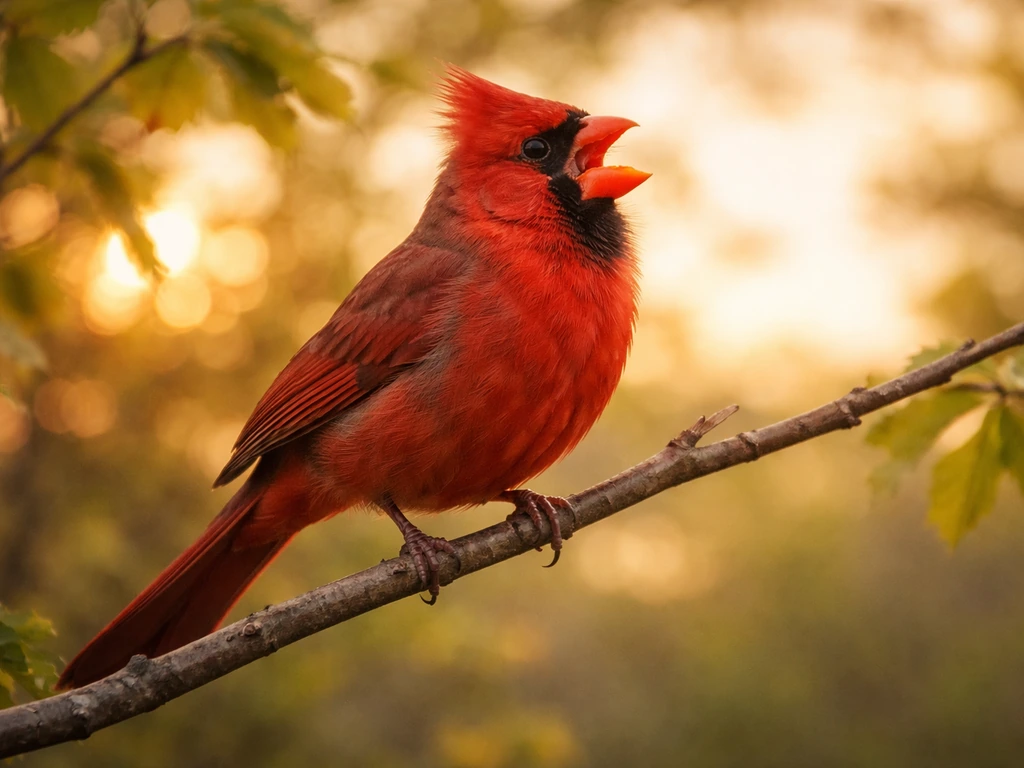
What 'God sends a red bird' usually means spiritually
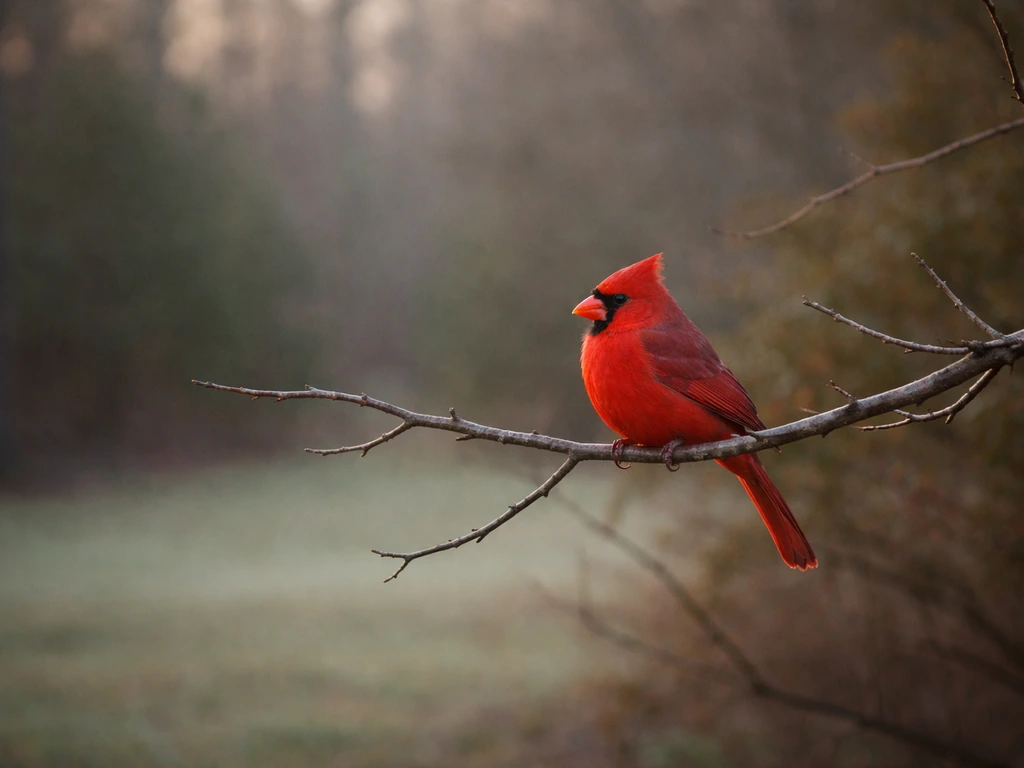
The phrase has deep roots in American Christian folk spirituality, particularly in the South and Midwest where the Northern Cardinal is common. At its heart, it expresses the belief that God communicates through the natural world: that a vivid red bird arriving in your yard during a hard season is not coincidence but care. The most common interpretations cluster around a handful of themes.
- Comfort during grief: the red bird is understood as a visit from or on behalf of a loved one who has passed, a sign that they are at peace and that God is near
- Hope in a difficult season: the brightness of the cardinal against winter or gray surroundings mirrors a promise that light and renewal are coming
- Encouragement or spiritual wake-up call: the bird appears as a reminder to pay attention, pray, or re-center after a period of distraction or doubt
- Confirmation of guidance: the timing of the sighting lines up with a decision, prayer, or question in a way that feels like a quiet 'yes' from God
- Remembrance of the sacred: the encounter pulls the viewer out of ordinary time and into a moment of reverence, whatever the specific message
None of these interpretations are invented from thin air. They reflect something very old: the human instinct to read God's presence into the visible world. Whether the message is about a specific red bird or what the whole category of unexpected bird encounters tends to communicate, the feeling underneath it is usually the same: 'I am not forgotten.'
Biblical and Christian symbolism: red birds vs. birds in general
Here is something important to be honest about: the Bible does not specifically name the cardinal or assign spiritual meaning to red birds as a category. What Scripture does do is use birds repeatedly and deliberately as teaching images for God's attentive care. If you want to ground your question in the text, you can also look up the first bird mentioned in the bible and use that as a baseline for how Scripture talks about birds. Micah 1:16 what bird is mentioned is another place you can verify the specific biblical wording before you assign meaning to a sighting. In Matthew 6:26, Jesus says, 'blank" rel="noopener noreferrer">Look at the birds of the air; they do not sow or reap or store away in barns, and yet your heavenly Father feeds them. In the wilderness, God’s provision for meat is closely tied to the quail narrative, a reminder that God can provide what people cannot reliably produce for themselves. Are you not much more valuable than they?' In Matthew 10:29-31, the point sharpens: 'Are not two sparrows sold for a penny? Yet not one of them will fall to the ground outside your Father's care. So don't be afraid.' The logic is consistent across the Gospels: God notices even the smallest, most overlooked birds, so you can trust that God notices you.
The color red carries its own weight in Scripture, where it appears in connection with blood, sacrifice, and redemption. Scholars note that the English word 'red' and related terms like scarlet and crimson appear dozens of times in the King James Version, almost always tied to themes of atonement and cleansing. So when a Christian sees a vivid red bird and feels a sense of spiritual significance, two streams of symbolism are quietly converging: the general biblical association of birds with divine care, and the color red's link to redemption and sacrifice. If you are wondering what is God’s favorite bird, the Bible does not give a single named answer, so it helps to look at the broader way Scripture describes God’s care for birds.
The connection between the cardinal and Christianity is also partly cultural. The Northern Cardinal takes its name from the Roman Catholic cardinals who wore scarlet cassocks and red hats, so the bird has been visually associated with the Church for centuries without any explicit scriptural basis. This matters because it means the symbolism is real but inherited, built from tradition and naming rather than a direct biblical command. The Catholic Encyclopedia notes that bird symbolism in Christian art and theology is often church tradition and interpretive history rather than universal Scripture rules. That does not make the symbolism meaningless, but it does mean it should be held thoughtfully.
Common reasons you might be seeing a red cardinal right now
Before interpreting what the bird means, it helps to understand why you might be seeing one at all. Northern Cardinals are year-round residents across much of the eastern and central United States. Northern Cardinals are year-round residents across much of the eastern and central United States, and Audubon's field guide provides regional context for their distribution. They have expanded their range significantly, partly because backyard feeders provide a reliable food source in winter months when natural food is scarce. If you have a feeder, a birdbath, or dense shrubs in your yard, cardinals will find you, and they will return regularly. That doesn't cancel the spiritual significance you feel, but it does give you grounding.
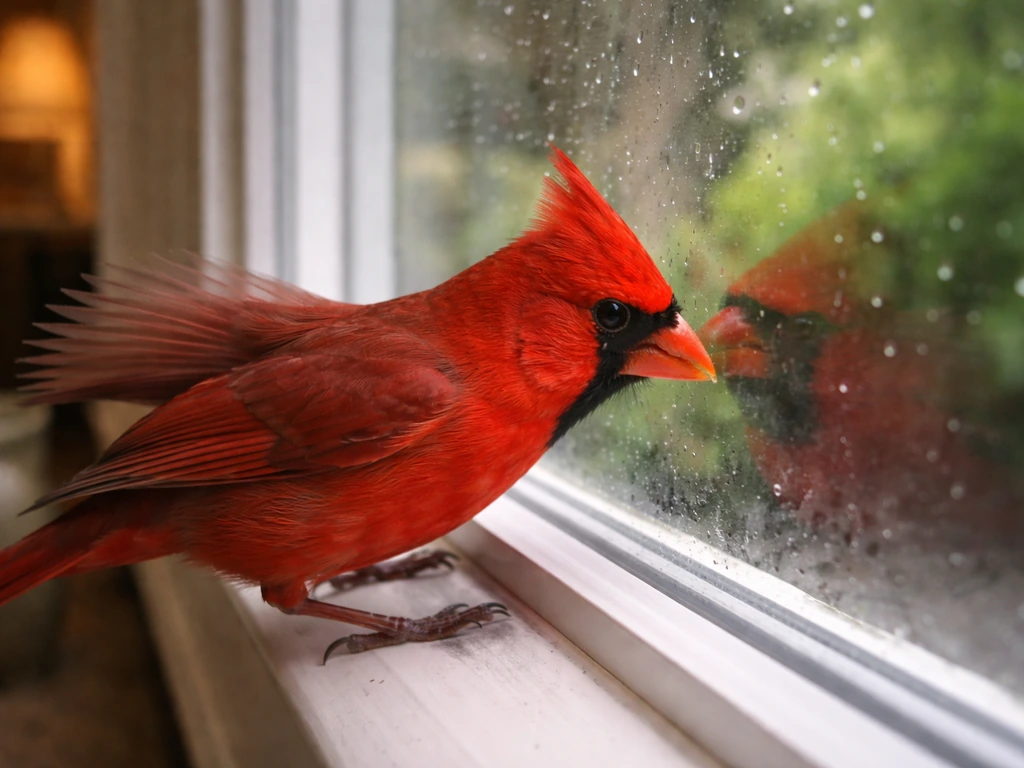
Cardinals are also notably territorial and will repeatedly strike windows because they see a reflection and interpret it as a rival. Research from Tufts Wildlife Clinic and the USGS confirms that birds mistake reflected trees and sky in glass for real habitat, which causes window collisions and repeated confrontations with their own image. A cardinal at your window every morning for a week may be fighting its reflection rather than delivering a message. Knowing this is not cynical; it just helps you ask better questions about what you're actually experiencing.
That said, people often notice cardinals more during emotionally significant seasons: after a loss, during illness, in the middle of a major decision. Grief and heightened attention go together. When you are raw and watchful, the world offers more to be read. The sighting may be objectively ordinary but personally extraordinary, and that combination is worth honoring, not dismissing.
How to interpret the message: context clues that actually matter
If a red bird encounter feels significant to you, the most responsible thing to do is read the whole scene, not just the bird. Context clues are your best discernment tool.
What the bird is doing
A cardinal singing from a branch during your morning prayer is a different experience from one that crashes into your window during a phone call. One invites stillness; the other startles. Pay attention to whether the encounter feels like an interruption, an accompaniment, or a quiet presence. Repeated visits over days or weeks carry more interpretive weight than a single pass. If a cardinal appears at the same spot, at roughly the same time, multiple days in a row, that pattern is worth noticing and, as noted above, also worth investigating practically before assigning full spiritual weight.
Where it appears

Location matters. A cardinal landing near a gravestone during a cemetery visit, appearing at the window of a hospital room, or showing up in your garden right after you finish praying carries different contextual weight than one visiting your feeder every afternoon. The more unusual or unexpected the location, the more it may feel like a departure from routine that deserves attention.
What is happening in your life
This is the question that shapes everything else. Spiritual encounters do not happen in a vacuum. If you are grieving, the comfort interpretation will feel most resonant. If you are at a crossroads, the guidance frame fits better. If you have been spiritually dry for months and the bird arrives during a moment of unexpected stillness, the wake-up reading makes sense. The encounter mirrors your interior life back to you. That is not a weakness in the interpretation; it is how meaningful symbols work.
What to do next: prayer, journaling, and discernment steps
If a red bird encounter has stayed with you, here is a practical sequence for working with it well, drawn from Christian discernment traditions rather than impulse.
- Pause and receive it: before analyzing, simply sit with the moment. Gratitude is a better first response than interpretation. Acknowledge that something felt meaningful without immediately deciding what it means.
- Journal the full scene: write down what you saw, where you were, what you were thinking or feeling immediately before the encounter, and what your first emotional response was. Specificity matters because patterns only become visible when details are recorded.
- Pray with the question open: bring it to God without a predetermined answer. Ignatian spirituality offers a practice called the Daily Examen, a structured prayerful review of where you noticed God moving through your day. This is far more useful than asking 'was this a sign?' and waiting for confirmation.
- Sit with 1 John 4: 1: the biblical instruction to 'test the spirits' is not meant to produce fear but to encourage honest reflection. Ask: what fruit does this interpretation produce in me? Does it lead toward peace, trust, and love, or toward anxiety, compulsion, and fear?
- Look for convergence over time: a single sighting is data. A pattern of encounters, all aligned with a consistent theme in your life and confirmed by prayer and community reflection, carries more interpretive weight. Give it days or weeks before landing on a conclusion.
- Share it with someone you trust: a pastor, spiritual director, or grounded friend can offer a perspective you cannot give yourself. Discernment in Christian tradition has almost always been a communal practice, not a solo one.
- Align the interpretation with your values and Scripture: whatever meaning you land on should be consistent with the character of God as revealed in Scripture, specifically the themes of care, freedom from fear, and love that Jesus ties directly to bird imagery in Matthew 6 and 10.
How other cultures read the red bird: useful comparisons
Christian folk spirituality is not the only tradition that assigns deep significance to red birds. The comparison is worth making, both because it shows how universal the instinct is and because it helps you notice what is distinctive about a Christian reading.
| Tradition | Red Bird Meaning | Key Difference from Christian Reading |
|---|---|---|
| Cherokee / Indigenous | The cardinal (redbird) is associated with the sun, protection, and good luck; a guardian presence | Protective and luck-based rather than primarily about divine communication or comfort from a personal God |
| General American Folk / Popular Culture | Seeing a cardinal means a deceased loved one is visiting or sending a message of reassurance | Emotionally similar to Christian comfort framing but often not rooted in theological discernment; more superstition than doctrine |
| Roman Catholic Visual Tradition | The cardinal's red color is linked visually to the Church's leadership, martyrdom, and readiness to shed blood for faith | Institutional and liturgical rather than personal encounter; red as dedication rather than message |
| General Omen / Luck Traditions | Red birds are broadly seen as good omens, signs of fortune, and renewal in many world cultures | Luck-based omens are passive and impersonal; Christian reading involves a relational God who communicates purposefully |
| Biblical Bird Symbolism (general) | Birds represent freedom, God's providence, and deliverance; the dove specifically represents peace and the Holy Spirit | No specific color-to-meaning rule; the emphasis is on God's care for living things rather than the bird as messenger |
What stands out when you lay these traditions side by side is that almost every culture puts positive weight on red bird encounters. The comfort and hope people feel when they see a cardinal is not irrational or uniquely Christian; it is deeply human. The Christian reading layers on top of that instinct a more specific claim: that the care signaled by the bird comes from a personal God who knows your name and counts the hairs on your head, as Jesus puts it in the same breath as his sparrow teaching.
It is also worth noting that other bird-related biblical questions, such as which bird God provided for the Israelites in the wilderness or what the great speckled bird in Ezekiel represents, show how varied and specific biblical bird imagery can be. Red birds don't appear in those narratives, which reinforces that the spiritual meaning of cardinal encounters is more cultural and traditional than strictly scriptural.
When to be careful: confirmation bias, fear, and spiritual safety
This is the section most articles on this topic skip, and that's a mistake. Assigning spiritual significance to natural events can be genuinely meaningful, and it can also become a trap. Knowing the difference is part of mature spiritual practice.
Confirmation bias is real and active in sign-reading
Humans are pattern-recognition machines. When you are looking for signs, you will find them. You will notice every cardinal and forget the thirty sparrows. Theologians and pastoral counselors have written specifically about this: the tendency to interpret events selectively to confirm what we already want to believe. The Gospel Coalition and various discernment writers explicitly name this as something believers need to resist. The test from Matthew 7 is helpful here: what kind of fruit does your interpretation produce? If it leads you toward generosity, peace, and openness, that's one thing. If it leads you toward obsession, fear, or compulsive sign-checking, that's a warning sign.
When the sign creates anxiety rather than peace
Some people encounter a bird, decide it is a warning, and spiral. Healthline research on magical thinking notes that people with anxiety already tend toward higher levels of it, and that looking for signs can sometimes function as an anxiety-management strategy that ends up feeding the very worry it is meant to soothe. If you find yourself ruminating, checking obsessively for more signs, or interpreting every cardinal as a threat or urgent message, that is a signal to step back. Rumination and worry are repetitive thought processes linked to anxiety and depression, and they do not improve with more sign-reading.
When to seek outside support

If your engagement with signs, including red bird encounters, is escalating anxiety rather than providing comfort, making it hard to function, or becoming a compulsive behavior, please talk to someone. A pastor or spiritual director is a good first stop. If the anxiety is persistent and intrusive, a therapist or counselor is appropriate and not in conflict with your faith. Cognitive behavioral therapy is a well-documented treatment for health anxiety and magical thinking that has become distressing. Seeking that help is not a failure of faith; it is wisdom.
A practical safety checklist
- The encounter produces peace, not escalating fear or compulsion
- You are interpreting the moment alongside Scripture and trusted people, not in isolation
- You can hold the meaning loosely: you find it meaningful without needing others to confirm or validate it obsessively
- The interpretation does not lead you to make major life decisions based solely on the sighting
- You are not spending significant daily energy looking for follow-up signs or becoming distressed when none appear
- If none of the above apply, talking to a pastor, spiritual director, or mental health professional is the right next step
Healthy spirituality makes room for wonder, including the wonder of a brilliant red bird landing nearby at exactly the right moment. It also makes room for honesty: about what birds do, about how our minds work, and about the difference between a moment that opens us to God and one that closes us into fear. In the Exodus story, God provided quail as food for the Israelites during their wilderness journey. The biblical instruction is consistent from Matthew 6 to 1 John 4: pay attention, test carefully, and let the fruit of the interpretation tell you whether it's leading toward life.
FAQ
If I see a red bird a lot, does that mean more spiritually, or could it just be my yard conditions?
Start by checking whether you are likely to see cardinals in your area and whether you have features that attract them (feeders, birdbath, dense shrubs). Then notice whether the encounter happened during something you were already doing spiritually (prayer, worship, grief work) versus when you were distracted. If the bird shows up only when you actively hunt for signs, the pattern may be your attention doing the interpreting rather than God directing the moment.
What if the red bird shows up every day for a week, is that a stronger sign?
Yes, repeated appearances can mean different things depending on context, but repetition alone is not proof of a specific message. Use a “discernment checklist” instead: Does the bird’s timing align with an honest moral or emotional need you are facing, and does your interpretation produce steadier peace over time? If it produces dread, compulsive checking, or constant second-guessing, treat it as a cue to pause and recalibrate.
How should I respond in the moment when I feel the encounter is a message?
Try a short, neutral practice: pause, thank God for any comfort you feel, then ask one clear question (“What do I need to trust God with right now?”). Afterward, do a concrete next step that matches the fruit you want (rest, confession, a difficult conversation, or seeking help). If you feel pushed toward action that increases love and responsibility, that’s usually healthier discernment than seeking new “evidence” each time.
Can a red bird encounter be used to predict outcomes or confirm a specific decision?
Be cautious about turning it into a prediction tool, for example, “If I see a cardinal, this decision is guaranteed right.” Scripture-based discernment usually moves you toward obedience, courage, or comfort, not certainty about specific outcomes you cannot verify. If the message you “receive” tells you to ignore facts, delay needed care, or stop making normal plans, it likely isn’t the kind of spiritual guidance you can safely build on.
Does it matter whether the red bird sings calmly versus hits a window or startles me?
Context and fruit matter. A bird that startles you, crashes into a window, or appears during a stressful interruption may still be spiritually meaningful, but the “tone” is likely different. Compare your body and emotions right after the encounter: does it lead you toward calming attention and wise choices, or toward panic and rumination? Use that response as part of your interpretation.
I deal with anxiety, how can I avoid spiraling when I interpret red bird sightings?
If you’re already anxious, grief-stricken, or prone to obsessive thoughts, you may be more vulnerable to reading danger into neutral events. A helpful safeguard is a time limit, like “I will interpret this for two minutes, then return to my normal responsibilities.” If you notice you are repeatedly checking windows, feeders, or calendars for signs, that’s a sign to slow down and seek support.
How do I tell the difference between mature discernment and spiritual control?
Yes. “Sign-checking” can become a form of control, where you feel you must keep receiving confirmation before acting. Ask whether you can obey God’s known guidance anyway (wisdom, honesty, seeking help) without needing the bird to validate it. When your peace depends on repeated signs, that is a red flag even if the sign is beautiful.
Should I treat my interpretation as certain, or more like a tentative prompt?
A good rule is to interpret the encounter as potentially meaningful, then ground yourself back in what is stable: prayer, Scripture, community counsel, and realistic planning. You can keep wonder without escalating certainty. If your interpretation keeps changing dramatically based on your mood, the message may reflect your inner state more than a reliable external guidance.
Next Articles

Micah 1:16 What Bird Is Mentioned? Hebrew Answer and Check
Find the bird in Micah 1:16, verify the Hebrew term, and compare translations for a confident answer.

What Is God’s Favorite Bird? Meaning, Scripture, and Symbols
No single favorite bird in Scripture. Explore dove, sparrow, raven, and symbolic meanings with careful next steps.

What Is the Great Speckled Bird in the Bible? Meaning
Is the Great Speckled Bird actually in the Bible? Find the real wording, context, and symbol meaning plus a verification