The limerick that begins 'A wonderful bird is the peacock' is real, but it exists in a murkier textual history than most people expect. If you searched for the full five-line version and kept hitting blanks or contradictory wording, that is not a failure of your research skills. The phrase turns up primarily as an educational prompt in English workbooks, where students are given the first line and asked to complete the poem themselves. That means the 'canonical' version most people are hunting for may not have a single authoritative source at all. Here is what we actually know, and how to use the peacock's rich symbolic meaning to work with whatever version you have found.
A Wonderful Bird Is the Peacock Limerick: Meaning

Eleanor Hartwell
5 May 2026
Finding the Exact Limerick Text (and Why It Is Harder Than You Think)
The first line 'A wonderful bird is the peacock' appears in multiple Indian school curriculum materials, including Kerala SCERT and PSCnet Standard 7 English resources, consistently formatted as a fill-in-the-blanks exercise. The lines after the first are intentionally left blank for learners to complete. That is a significant clue: it suggests the opening line has been adopted as a teaching prompt rather than preserved as a fixed, authored poem.
A complete five-line version does circulate online, most often on student answer platforms like Brainly. That version is almost certainly student-generated or crowd-sourced rather than drawn from a verified published source. No credible scholarly or archival reference has been found that attributes a full peacock limerick with this opening line to a named author, publication, or date.
To understand why this matters, it helps to know the closest parallel in limerick history. The most famous 'A wonderful bird is the _' limerick was written by American journalist Dixon Lanier Merritt in 1910 and blank" rel="noopener noreferrer">features the pelican, not the peacock. Merritt's pelican limerick is widely documented and credited. Wikimedia Commons hosts an audio recording titled "A Wondrous Bird is the Pelican" that notes the limerick is sometimes attributed to Dixon Lanier Merritt, reflecting common attribution practices for this "wonderful bird" tradition Wikimedia Commons file. The peacock version appears to be a later template borrowing the same opening structure, which is a common move in limerick writing. The form practically invites substitution.
How to Handle Variant Versions
If you have found two or three slightly different five-line versions and are trying to decide which one is 'correct,' here is my honest recommendation: choose the version whose rhyme scheme follows the AABBA pattern cleanly and whose comic or observational tone feels consistent throughout. A limerick's final line carries all its punch, so prioritize the version where that fifth line lands with clarity or wit. Because no single authoritative text exists, the version that sounds best and scans properly is functionally the right one for your purposes.
What the Peacock Actually Represents Across Spiritual Traditions
The peacock is one of the most symbolically dense birds in the world's traditions, carrying meanings that sometimes contradict each other across cultures, which makes it especially interesting to interpret.
| Tradition | Core Peacock Symbolism |
|---|---|
| Hinduism | Sacred to Saraswati (wisdom) and the mount of Kartikeya (war); feathers symbolize protection and the all-seeing divine eye |
| Christianity (early Church) | Immortality and resurrection; the peacock's flesh was believed incorruptible in medieval bestiaries |
| Ancient Greece and Rome | Associated with Hera/Juno; the 'eyes' on the tail feathers represent the hundred eyes of Argus, watchfulness, and divine surveillance |
| Buddhism | Compassion and the ability to transform poison into beauty; peacocks were said to eat venomous plants and thrive |
| Persian and Islamic art | Paradise, the garden of Eden, and royal dignity; peacock motifs appear extensively in Safavid and Mughal illuminated manuscripts |
| Chinese tradition | Dignity, beauty, and good luck; peacock feathers were historically awarded to officials of merit |
The thread running through almost all of these traditions is transformation. The peacock's tail, spread into its famous fan, is a display of something hidden suddenly made radiant and visible. That moment of revelation, the shift from folded to fully open, maps onto spiritual ideas about enlightenment, resurrection, and the unveiling of inner worth. When you encounter peacock imagery in art, on a card, or in a dream, that transformative arc is almost always what it is pointing toward.
The Complicated Question of Pride
Peacock symbolism is not uniformly positive. In Western secular culture and in some Christian moral traditions, the peacock became a figure for vanity and excessive pride, its beauty read as self-absorption. But in most Eastern traditions that same display is read as divine radiance rather than ego. This tension is worth sitting with: is the peacock showing off, or is it revealing something sacred? The answer probably depends on what you bring to the encounter.
How Peacock Symbolism Maps onto the Limerick's Tone
Limericks are a comic form. They almost always work by setting up an expectation and then undercutting it with a twist, usually one that involves something absurd or ironic about the subject. The peacock is a near-perfect limerick subject precisely because the bird itself contains an internal joke: it is extravagantly, almost ridiculously beautiful, and it knows it. The visual spectacle of a peacock fanning its tail in a parking lot or a suburban garden carries that same quality of incongruity that limericks depend on.
From a symbolism perspective, this is meaningful rather than merely funny. The limerick form, by treating the peacock with affectionate irreverence, actually touches on the same idea that Buddhist tradition encodes more seriously: the peacock transforms poison into beauty, the mundane into the magnificent. A limerick about the peacock is, in a small way, doing the same thing, taking a creature associated with divine radiance and placing it in a human, comic frame. That contrast is where the poem's energy lives.
This dynamic is different from the symbolism carried by birds of ill omen or the kind of solemn, reverent bird poetry you find in traditions like the albatross as a sacred wanderer. That contrast is related to how people read other birds as omens or sacred wanderers, such as the albatross bird of good omen. The contrast becomes clearer when you compare it with the darker, ominous undertone often associated with the bird of good omen and the old-world rime of The Ancient Mariner bird of good omen rime of the ancient mariner. In many contexts, the phrase "a bird of ill omen" is associated with meanings like bad luck, warning, or foreboding birds of ill omen. In contrast, a pious bird of good omen appears in some traditions as a sign of grace, reassurance, and spiritual uplift birds of ill omen. Limericks lighten the symbolic load on purpose, and that lightness can actually make the peacock's deeper meanings more accessible rather than less.
Using the Limerick in Gifts, Rituals, and Journaling Prompts
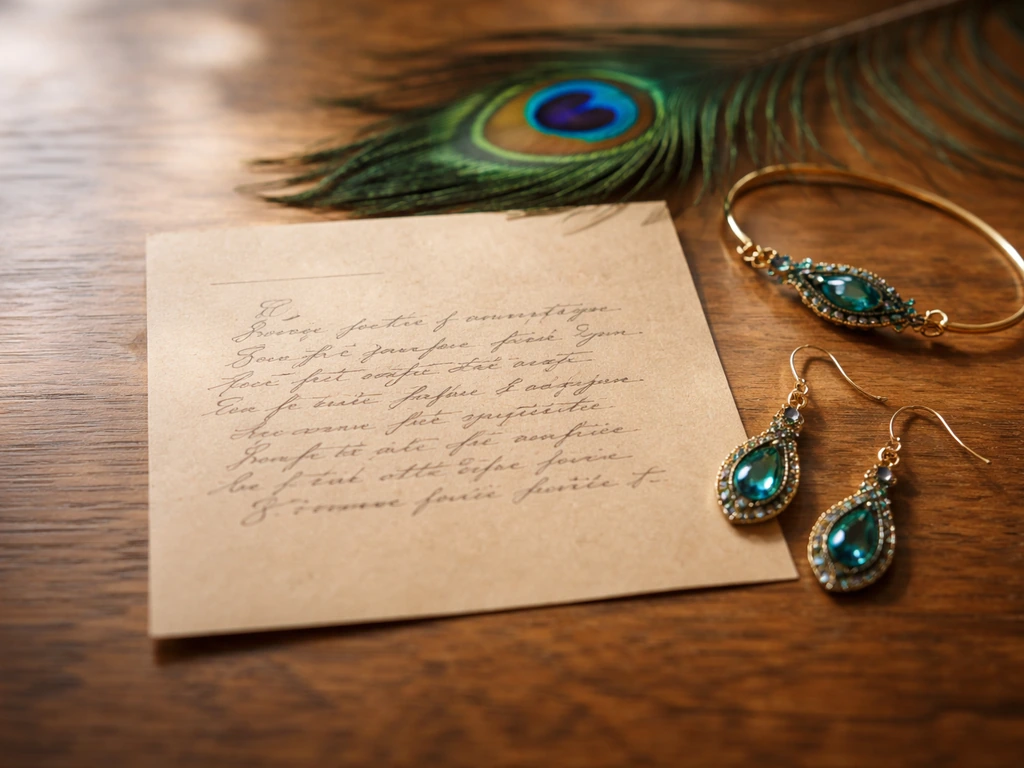
Once you have settled on a version of the poem, there are several genuinely useful ways to apply it that align with the peacock's symbolic weight. These are not arbitrary suggestions: each one connects the limerick's comic energy to a real layer of the bird's meaning.
As a Gift Inscription
The limerick works well as a note accompanying a gift of peacock-themed art, jewelry, or home decor. Because the poem is short and ends on a light note, it softens what might otherwise feel like an overly earnest symbolic statement. Writing it inside a card for someone who is stepping into a new role, a new phase of confidence, or a creative project makes the peacock's transformation symbolism land without feeling heavy-handed.
As a Journaling Prompt
- Write the first line of the limerick and then complete it yourself. The act of finishing the poem forces you to choose what you find most striking about the peacock, which is itself a reflection exercise.
- Use the poem's comic structure as a prompt: where in your own life are you hiding your 'tail feathers'? What would it look like to display them?
- Reflect on the tension between peacock-as-vanity and peacock-as-sacred-radiance. Which reading resonates for you today, and what does that say about how you are currently relating to visibility or recognition?
- If you encountered a peacock in real life, in a dream, or in a piece of art recently, write about what the limerick's tone (playful, affectionate, slightly absurd) adds to your interpretation of that encounter.
In Meditation or Ritual
Reading the limerick aloud at the opening of a creative ritual or celebration has a practical psychological function: it breaks the tension of taking a symbolic act too seriously. If you are doing a new-moon intention-setting practice, a birthday ritual, or a blessing for a creative project, reciting a limerick about the peacock can serve as a kind of tonal calibration, reminding you that joy and beauty do not require solemnity. The peacock, in Hindu tradition especially, is associated with celebration and rain, with the release that comes after a long wait. A limerick captures that release.
The Deeper Spiritual Angles: Feathers, Tails, and the Idea of 'Wonder'
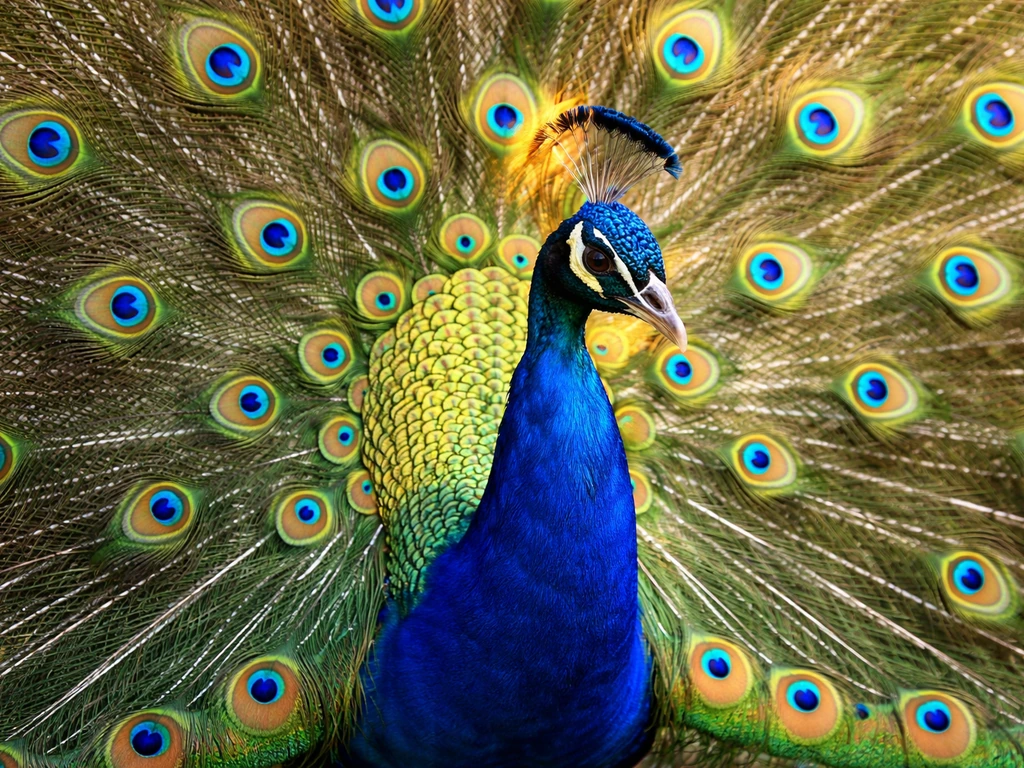
The word 'wonderful' in the limerick's first line is worth pausing on. It does not just mean impressive or attractive. It means wonder-inducing, something that provokes a response of awe. That is exactly what the peacock's tail does when it opens. The ocelli, the iridescent eye-spots on each feather, shift color as the light changes, moving from blue to green to gold. That optical phenomenon has no single fixed appearance; it depends entirely on your angle and the quality of the light. Spiritually, this has been read as a metaphor for truth that cannot be pinned to a single fixed view.
Peacock feathers as individual objects carry their own symbolic freight. In Hindu tradition a single peacock feather tucked into a doorway or altar space is a protective talisman. In early Christian iconography peacock feathers appear in illuminated manuscripts as symbols of the incorruptible and the eternal. Even in secular Western contexts, the feather's eye-like marking has made it a symbol of watchfulness and protection against the evil eye.
The tail display itself, the full fan raised and shimmering, is one of the most dramatic ritual behaviors in the bird world. It is a performance of self, an act of becoming visible that the bird undertakes with what looks, to human eyes, like total commitment. There is something genuinely moving about that. The limerick, by calling the peacock 'wonderful,' is acknowledging the same thing that centuries of religious art and mythology have encoded: this bird makes you stop, look, and feel something. That response is the beginning of symbolic interpretation.
If you are using this limerick within a broader exploration of bird symbolism, it sits in interesting company. You may also come across the pious bird of good omen vinyl as a modern pop-culture reference to that same peacock symbolism of blessing and radiance. Fleetwood Mac has a famous song titled “The Pious Bird of Good Omen,” which is often discussed alongside the idea of hope and transformation. Birds marked as omens, whether good or ill, tend to carry weight through their behavior and context: an albatross following a ship, a raven arriving at dusk. The peacock's symbolism works differently. It is not about arrival or departure or message-carrying. It is about display, about the moment of revelation itself. That makes it a uniquely self-contained symbol, and the limerick, brief and complete in its own five lines, is a surprisingly fitting container for it.
FAQ
How can I tell which peacock limerick version is the right one if there is no single authoritative text?
If you need the “most correct” peacock limerick for a class or publication, treat it like a template rather than a fixed literary artifact. Pick a five-line version that scans cleanly in AABBA and whose last line clearly completes the joke, then cite how you obtained it (for example, the workbook page or the platform where you found it). Because no single authoritative author is known, quoting without context can mislead.
What should I look for if two five-line peacock versions seem similar but one sounds wrong?
Most listings you find are missing either the punctuation pattern or one rhyme endpoint, which can make it “feel” wrong even when the lines are close. Check two things: the fifth line’s rhyme, and whether the internal turn happens in line four, not line two or three. If the punch lands early, the poem will sound flat even if the words are similar.
I found a fill-in-the-blanks version. Can I treat the student-completed lines as the original poem?
In fill-in-the-blanks workbook versions, the opening line is provided as the prompt, and the student completion is intentionally open-ended. If you are using a workbook-derived version, avoid presenting the missing lines as established canon. Instead, frame it as “a classroom prompt starting with” the first line, then include the specific completed text you are using.
Is it okay to edit the peacock limerick I found online, for example to make it rhyme better?
Yes, but do it carefully. If you share it publicly, keep the first line exactly as given, then label the rest as your adaptation and do not claim an origin that you cannot verify. A small change in the last two lines can break the AABBA rhyme, so confirm the rhyme and the final-line punch before posting.
How should I read the peacock limerick aloud so it lands as a joke, not just a description?
For reciting, the peacock limerick works best when the voice sets up “wonderful” as genuine awe, then shifts to the comic undercut on the final line. A practical approach is to read it twice, once very neutral and once with slightly exaggerated surprise on line one, then pause a beat before the fifth line.
Which peacock symbolism should I use, vanity or divine radiance, when explaining the limerick?
If you are interpreting the symbolism, be explicit about your frame. The peacock can read as vanity or as divine radiance depending on cultural context, so your explanation should state which lens you are using (for example, “transformative radiance” versus “excess pride”). In workshops or essays, that single decision prevents your interpretation from sounding contradictory.
Is the peacock limerick appropriate for all occasions, or are there situations where it clashes emotionally?
Choose the symbolic use-case based on tone. The limerick’s short, comic closure suits celebrations and creative transitions, while it can feel tonally mismatched for solemn memorial contexts. If you want it near grief, consider using it only as a brief “lightening” card note and pair it with a more direct condolence message.
When I use it in a creative or intention-setting ritual, should I recite it before or after stating my intention?
If you are using it in a ritual setting, set your intention after you recite it, not before. The fresh detail here is timing: recitation first “resets the mood,” then your intention becomes the next step, so the poem functions like a tonal calibration rather than just a statement of meaning.
Does the peacock limerick connect to the famous 1910 “wonderful bird” pelican limerick?
Watch out for confusing the peacock template with the earlier, better-documented Merritt limerick that uses the pelican. If you are teaching limerick history, explain that “a wonderful bird is the ___” is a common structural opening, and in this case the peacock variant is a later substitution. That distinction helps prevent accidental attribution errors.