
A bird of good omen is any bird whose appearance is traditionally understood as a sign of fortune, protection, divine favor, or coming joy. The phrase comes from folklore and literary tradition, and it can mean two different things depending on context: a broad category in symbolic thinking (birds in general as favorable messengers) or a specific species that a particular culture has designated as lucky or spiritually significant. When you look up the meaning, you are most likely trying to figure out which of those two things applies to the bird you just saw, and what to do with the message.
Bird of Good Omen Meaning: Symbolism, Specific Birds, and How to Interpret

Eleanor Hartwell
1 Jun 2026

What "bird of good omen" actually means
The word omen itself simply means a sign that something may happen. It is neutral by definition, omens can be good or bad, which is why folklore distinguishes so carefully between birds of good omen and birds of ill omen. When scholars catalog folk narratives, the "bird of good omen" appears as a recognized motif: a creature whose arrival, song, or behavior signals favorable change for the people who witness it. That categorization spans cultures from medieval European ballads to Indigenous North American oral tradition.
In literary use, the phrase gets attached to specific birds. Coleridge's "The Rime of the Ancient Mariner" calls the albatross "the pious bird of good omen", a creature that followed the ship and was understood by the crew as a token of their good fortune. That poem is one of the most famous English-language examples of a named bird carrying the full weight of the phrase, and it shows how "good omen bird" works in practice: a real species, a specific encounter, and a meaning the witnesses agree on together. One common online reading of Coleridge’s text treats the “pious bird of good omen” as the albatross, continuing to follow the ship and representing the crew’s good fortune blank" rel="noopener noreferrer">good omen bird carrying the full weight of the phrase. The moment the mariner kills the albatross, the omen is violated and disaster follows.
So when someone searches for "bird of good omen meaning" today, they are usually asking one of two things. Either they want the general symbolic framework (what makes a bird count as a good omen at all?) or they saw a specific bird and want to know whether it qualifies. Both questions are worth answering, because the framework shapes the interpretation.
Why birds carry so much symbolic weight in the first place
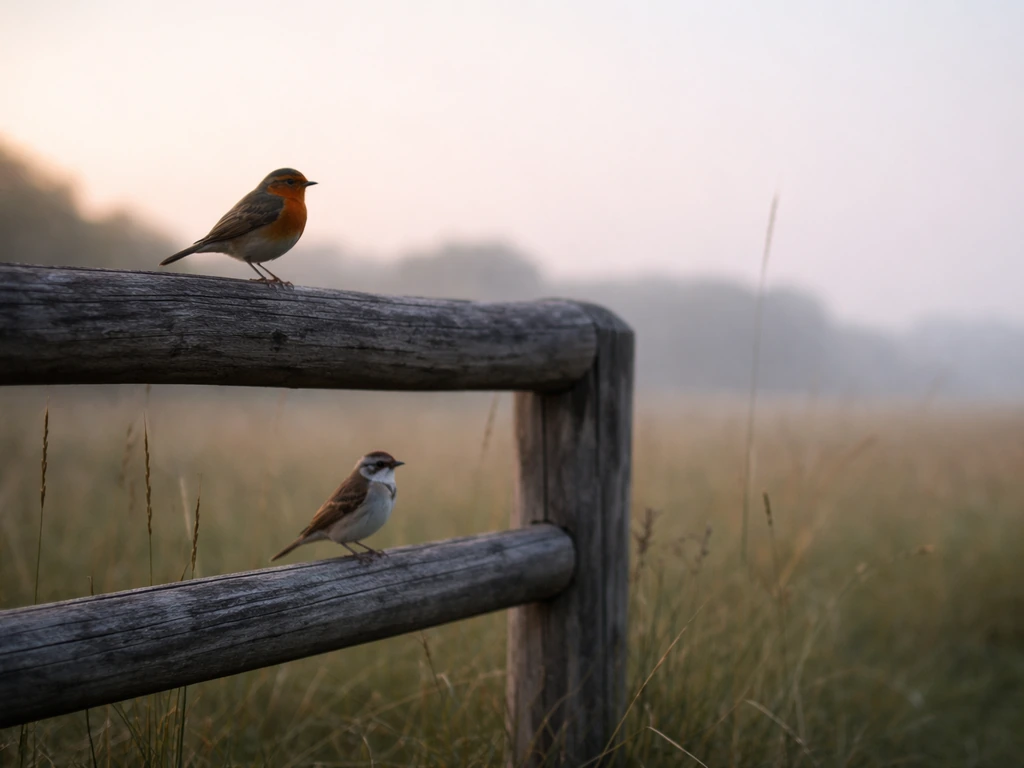
Before getting into specific species, it helps to understand why birds landed at the center of omen traditions across so many unconnected cultures. Four qualities come up repeatedly.
- Flight: Birds move between earth and sky, which virtually every spiritual tradition has understood as movement between the human and the divine. A bird arriving from above carries whatever the sky represents — heaven, the spirit world, higher knowledge.
- Messengers: In Egyptian, Greek, Norse, and Native American traditions alike, birds are vehicles for divine communication. They bring news that humans cannot access on their own.
- Nesting and return: Birds that migrate and return — swallows being the clearest example — symbolize cycles of renewal, the return of warmth and abundance, and promises kept.
- Feathers: A found feather is often interpreted as a residual sign even after the bird has gone, carrying the same symbolic meaning as the bird itself. Many people encounter feather symbolism as a softer, quieter version of the full bird omen.
These qualities are not arbitrary. They are drawn from actual bird behavior that human observers across millennia have noticed and attached meaning to. When a swallow returns in spring, it really does signal the end of winter. The symbolic layer is built on top of something observable, which is part of why these meanings have stayed so durable.
The birds most commonly called birds of good omen
Different cultures designate different species, but a handful of birds appear on favorable-omen lists across enough traditions that they deserve individual attention.
Cardinal
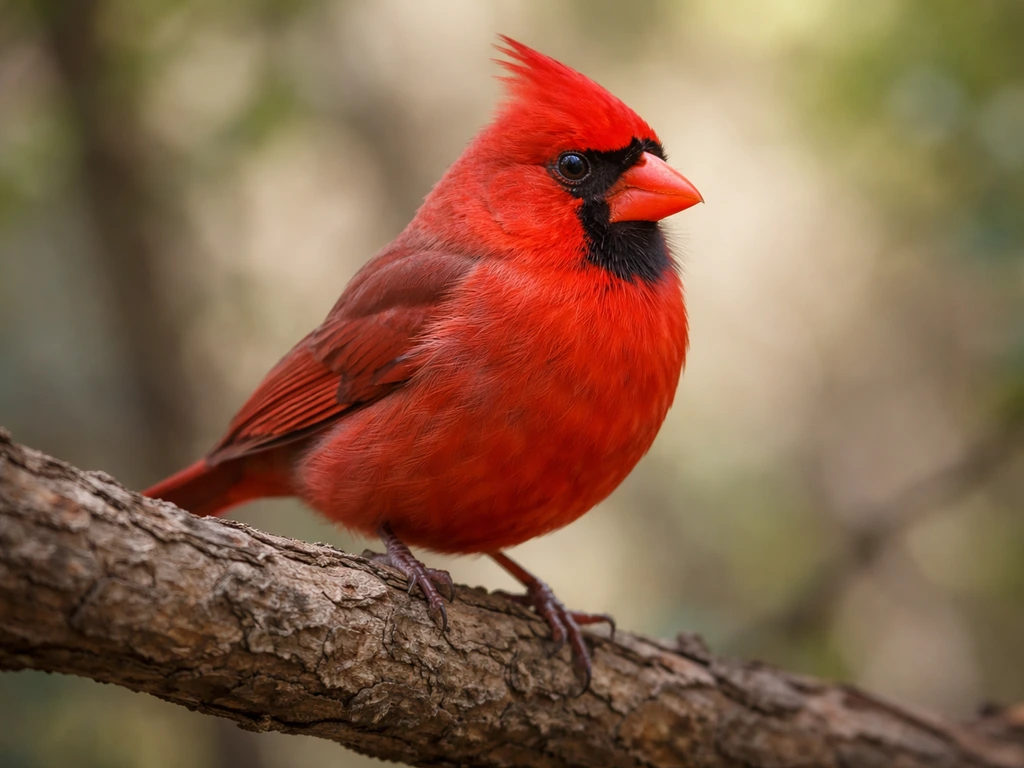
The cardinal is perhaps the most widely recognized good-omen bird in contemporary North American culture. Its vivid red color associates it with vitality, passion, and the life force itself. Many people interpret a cardinal sighting as a visit from a deceased loved one, making it a bird of comfort and spiritual reassurance rather than just luck. The cardinal is year-round, not migratory, which reinforces its meaning as a stable, reliable presence.
Swallow
Swallows have been good-omen birds in European, Asian, and Indigenous traditions for thousands of years. Their return from migration signals the arrival of spring and the end of hardship. Sailors historically tattooed swallows to ensure safe passage home. A swallow nesting on or near your house was considered so auspicious in many European traditions that it was bad luck to disturb the nest. The core meaning is always some version of safe return, joy coming back after absence, or a journey completed successfully.
Hummingbird
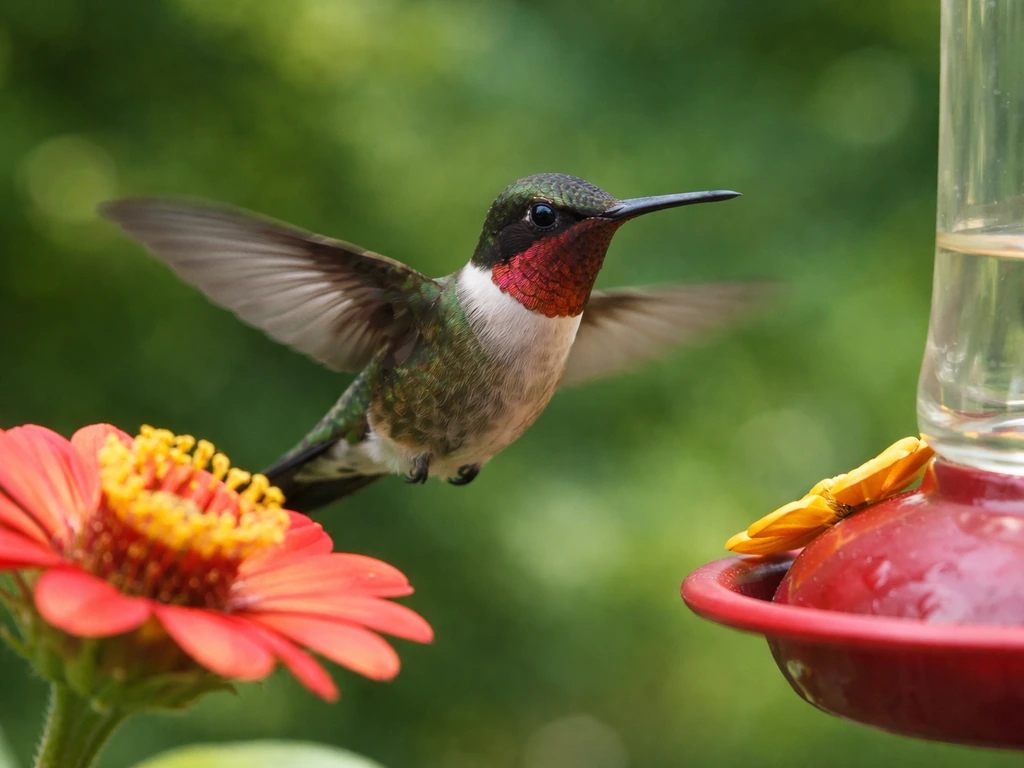
In many Indigenous American traditions, the hummingbird is a messenger of hope, renewal, and the sweetness available in life even during hardship. Its ability to hover, fly backward, and move with impossible speed makes it symbolically associated with agility, adaptability, and the ability to find joy in small things. Aztec warrior culture honored the hummingbird specifically, Huitzilopochtli, one of the principal Aztec deities, was associated with hummingbirds and solar energy.
Robin
In British and Irish tradition, the robin is one of the most protective and fortunate birds. Killing one was considered deeply unlucky. The robin's association with Christmas and winter renewal ties it to themes of light returning in darkness. It appears frequently in folklore as a bird that brings good news, signals a change of fortune, or indicates that a spirit is nearby and watching over someone.
Dove
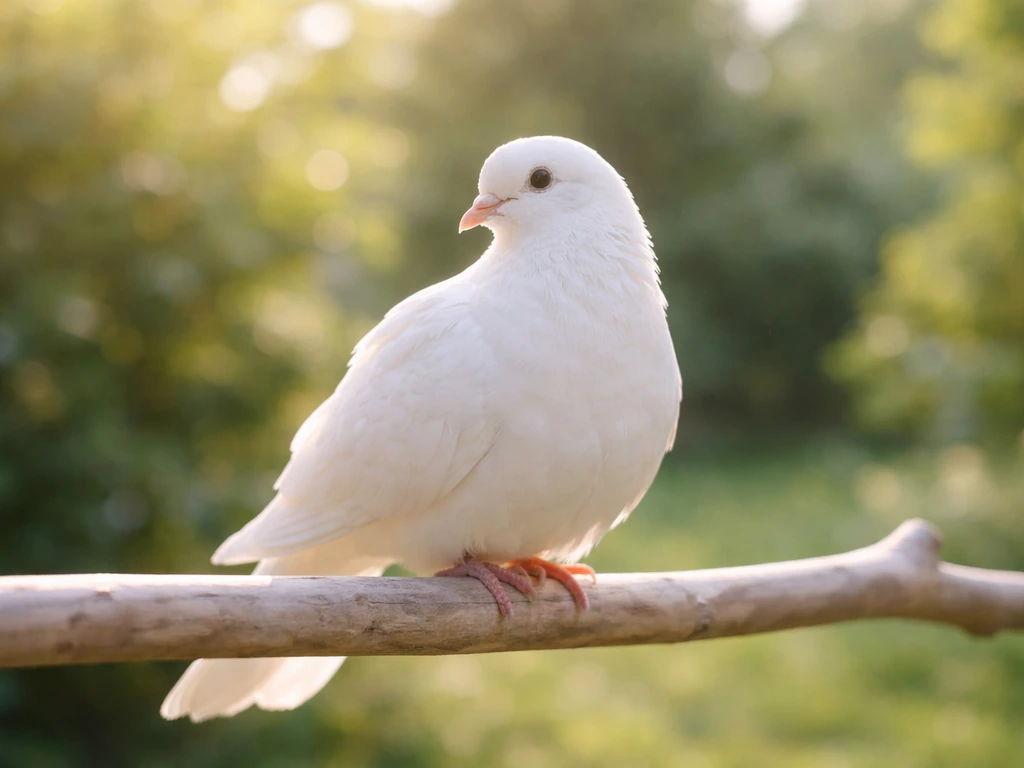
The dove is one of the oldest and most universal good-omen birds across cultures. Its white color and gentle manner associate it with peace, purity, and divine blessing. In biblical tradition, the dove carrying an olive branch to Noah is one of the foundational good-omen narratives in Western culture. In Hindu, Greek, and Roman traditions, the dove is sacred to deities associated with love and prosperity.
Stork
In European and Middle Eastern traditions, the stork is strongly associated with fertility, new beginnings, and domestic prosperity. A stork nesting on a rooftop was a sign of a blessed household. The modern popular image of storks delivering babies is a diluted version of this much older omen tradition.
Albatross
The albatross occupies a fascinating position: it is specifically named as a bird of good omen in Coleridge's poem, and in actual maritime tradition it was considered extremely lucky, believed to carry the souls of lost sailors. Its enormous wingspan and ability to glide effortlessly across vast distances made it a symbol of endurance and safe passage. What makes the albatross symbolism so rich is the literary context, its meaning as a good omen is most fully developed within the narrative of "The Rime of the Ancient Mariner," which is worth exploring on its own terms. In Coleridge’s "The Rime of the Ancient Mariner," the poem uses the expression "the pious bird of good omen" to refer to the albatross within the story its meaning as a good omen is most fully developed within the narrative of "The Rime of the Ancient Mariner".
How to read the encounter: timing, location, and behavior
Knowing that cardinals or swallows are generally good omens is the starting point, not the ending point. The specific quality of what a sighting means for you depends on three factors: when you saw it, where you saw it, and what the bird was doing.
| Factor | What to notice | What it may indicate |
|---|---|---|
| Timing | Time of day, life circumstances, a question you were holding | A bird appearing during a moment of grief may signal comfort; during a decision point, it may signal a clear path forward |
| Location | Near your home, at a workplace, during travel, at a significant site | Proximity to home suggests domestic or family meaning; travel encounters often relate to journeys, literal or metaphorical |
| Behavior | Song, flight direction, landing close, nesting activity, eye contact | A bird that sings loudly near you often signals communication or good news; one that lands unusually close suggests intimacy or direct personal message |
| Repetition | Single sighting vs. repeated encounters over days or weeks | A single sighting is a sign worth noting; repeated appearances with the same species are widely interpreted as a sustained message requiring attention |
Timing deserves special attention. A bird encounter during grief, illness, a major decision, or a period of waiting carries more interpretive weight than one during a routine moment. Omen traditions across cultures assume that the witness is in a state of receptivity, not that omens appear only to people in crisis, but that we are more attuned to meaning when something is at stake.
What different cultures and traditions say about good-omen birds
One of the most important things to understand about bird omens is that the same species can mean very different things in different traditions. There is no single universal taxonomy of lucky birds. What every tradition shares is the underlying logic: birds as messengers between worlds. But the specific assignments vary.
Biblical and Christian tradition
The dove is the central good-omen bird in biblical tradition, appearing at both the moment of Noah's salvation and at the baptism of Jesus, where it represents the Holy Spirit descending. Sparrows appear as symbols of God's attention to small, seemingly insignificant things, the argument being that if God cares for sparrows, divine care extends to humans as well. Eagles appear frequently as symbols of divine strength and renewal: "They shall mount up with wings as eagles" (Isaiah 40:31) is one of the most recognizable bird-as-blessing passages in the text.
Egyptian tradition
Ancient Egyptian culture elevated birds to divine status more explicitly than almost any other tradition. The ibis was sacred to Thoth, god of wisdom and writing, an ibis sighting was associated with knowledge and divine communication. The falcon was the form of Horus, the sky god and protector of pharaohs, making it a royal good-omen bird. The heron (specifically the Bennu bird) was associated with the sun, creation, and resurrection, making it perhaps Egypt's most profound good-omen creature. The Bennu is also considered an early model for the phoenix, that great symbol of rebirth.
Native American traditions
Indigenous North American traditions vary significantly by nation, so generalizations require care. That said, certain birds appear across many traditions as favorable signs. The eagle is widely regarded as the most sacred bird, a messenger to the Creator and a symbol of courage and spiritual vision. The hawk is often interpreted as a messenger urging the observer to pay attention. The hummingbird, as noted above, carries strong associations with joy and medicine in many southwestern and Central American nations. The wren, small and quick, is a bird of cleverness and good fortune in several traditions.
Celtic tradition
Celtic omen traditions are particularly rich with bird symbolism. The wren was paradoxically both hunted ritually and deeply revered, associated with the Druids as a bird of prophecy and wisdom. The robin was protective, as noted above. Swans were sacred in Irish and Welsh mythology, they were often divine beings in disguise, and harming one was considered catastrophic. The crane carried associations with longevity, patience, and secret knowledge, particularly in Irish tradition where it appears in the legends of the god Manannan mac Lir.
Aztec tradition
Aztec bird symbolism is deeply intertwined with cosmology and warrior culture. The eagle was the animal form of the sun and the symbol of the elite Eagle Warriors, an eagle sighting was a sign of solar power and divine favor for those undertaking difficult challenges. The quetzal bird, with its iridescent green plumage and long tail feathers, was sacred to Quetzalcoatl and associated with fertility, abundance, and the divine wind. Quetzal feathers were among the most prized materials in Mesoamerican culture, and the bird itself was a living good omen for renewal and divine blessing.
Journaling the encounter and translating it into action

Omen interpretation is most useful when it moves from general meaning to personal application. The best way to do that is to write it down immediately and then sit with three questions.
- What was I thinking or feeling when the bird appeared? Write the emotional and mental context before trying to interpret the bird itself. The encounter's meaning is shaped by what it interrupts or confirms.
- What is the bird's core symbolic quality, and how does that quality apply to my current situation? A swallow's core meaning is safe return and renewal. If you are waiting for news about a relationship or a project, apply that specific quality to that specific situation.
- What is one concrete action I can take that honors this message? Symbolism is most valuable when it moves you toward something. If a cardinal shows up and you interpret it as a message from a lost loved one, the action might be writing a letter to that person, revisiting something they valued, or simply allowing yourself to grieve more openly.
Keep a running journal of bird encounters over time. Patterns matter. If you see the same species three times in a week during a period of uncertainty, that repetition is data. What changes around those sightings? What resolves? Tracking encounters over months builds a personal symbolic vocabulary that is far richer than any generic meaning guide, because it is grounded in your actual lived experience.
Treating omens as guidance, not guarantees
The most honest thing to say about bird omens is that they are a tool for meaning-making, not a prediction engine. When the sailors in Coleridge's poem saw the albatross as a good omen, they were not receiving a guaranteed contract from fate, they were reading their situation through a framework that gave them hope and a sense of divine accompaniment. The omen helped them navigate. When that framework was violated, the story that followed was about the consequences of breaking trust with the natural and spiritual world, not about omens being literally predictive.
This is the responsible way to hold bird symbolism. A cardinal appearing after loss does not guarantee that everything will be fine. It offers a frame: you are not alone, something continues, there is care in the world around you. Whether you find that comforting or useful is personal. The omen does not make the decision for you, it hands you a lens, and you decide what to do with the view.
Cultures that have lived with bird symbolism longest, Egyptian priests, Celtic Druids, Indigenous medicine people, understood this distinction clearly. Omens required interpretation by someone with knowledge, context, and humility. They were starting points for reflection, not verdicts. Approaching good-omen birds with that same interpretive humility keeps the practice meaningful without sliding into magical thinking that could substitute for real decision-making.
The phrase "bird of good omen" carries centuries of that accumulated human wisdom about how to read the natural world for guidance. Whether you came to it through Coleridge's albatross, a cardinal at your window, or a swallow returning to the same nest outside your door, the underlying invitation is the same: pay attention, notice what the moment asks of you, and let the symbolic meaning deepen your engagement with your own life rather than bypass it.
FAQ
If I saw a bird that people call a “good omen,” does that always mean good luck will happen to me soon?
Not automatically. In most traditions, an omen is a meaning frame, it does not guarantee outcomes. Use it to check what you are currently facing, for example review whether you are taking a helpful next step (health, relationship, work) that matches the “message” you feel.
How can I tell whether I’m supposed to interpret a “general bird omen” or a specific species meaning?
Start with what you actually encountered. If you only remember “a bird” or generic symbols like flight or singing, interpret it broadly. If you can identify the species, pay attention to timing, location, and behavior of that species in your sighting, because those details usually determine which cultural assignment you should use.
What if I do not know the bird species, only the color or behavior (for example, white, red, hovering)?
You can still interpret it, just with a higher level of uncertainty. Focus on observable cues the article mentions, like color associations and behavior patterns (returning from migration, nesting near a home, hovering). Then treat the meaning as a prompt, not a firm verdict, until you can confirm the species.
Does the time of day or season change the meaning of a good-omen bird?
Yes. Many of the best-known meanings depend on seasonal timing, like swallows tied to spring return. A “good” species seen out of season may still be meaningful, but reinterpret it as about the specific situation you are in (waiting, change, recovery) rather than the usual calendar-based message.
What if I saw the bird at a stressful moment, but I still feel worse afterward?
That can happen because omens are meaning-making tools. The “good omen” frame may be inviting you to process grief, reduce pressure, or seek support, rather than promising immediate relief. Consider writing down what changed in your actions after the sighting (what you did differently), not only how you felt instantly.
Can the same species be a good omen in one tradition and a bad omen in another?
Yes. The article emphasizes there is no single universal taxonomy. If you are mixing cultural meanings, choose one framework that matches your own background, or blend cautiously by focusing on shared themes like care, protection, or guidance, and avoid treating conflicting meanings as a contradiction.
What does it mean if the bird landed on my property versus flew overhead?
A landing or nesting near a home is often read as a closer, more domestic sign (stability, protected household). Passing overhead is more like a message that you should pay attention to timing or direction, and it may require a quicker response rather than a long-term “settling” interpretation.
How should I interpret a good-omen bird if it behaved unusually (for example, dead, trapped, injured)?
Traditions usually treat normal behavior (song, return, nesting) as part of the symbolic logic. If the bird is injured or appears in distress, interpret the moment as a call to care and responsibility, for example contacting local wildlife services, rather than assuming it is a purely “luck” sign.
Is it a mistake to act on an omen instead of making a real-life decision?
Treat it as reflection support, not a substitute for action. The responsible approach described is to let the omen give you a lens, then decide based on practical steps, evidence, and your values, especially for major choices like health, money, or safety.
What if I keep seeing the same bird repeatedly, does that strengthen the meaning?
Repetition usually increases personal relevance. The article suggests journaling, because patterns help you build a grounded symbolic vocabulary. Note what is changing in your life during each occurrence, for example whether a decision is nearing, a relationship shifts, or uncertainty resolves.
How long should I “sit with” a bird omen before using it to guide decisions?
A good rule is immediate note-taking, then a brief reflection window. Record the sighting, your context, and the action it suggests. If you are still stuck after a reasonable period (for example a couple of weeks), revisit your notes and translate the omen into a concrete, testable next step.
What should I write in a bird omen journal entry to make the interpretation more accurate?
Include the date and time, species or best guess, exact location (window, rooftop, garden, road), behavior (song, nesting, hovering, flying direction), and what you were doing mentally at the moment (waiting, grieving, choosing). Those specifics reduce guesswork and help you compare later sightings.
Next Article
What Does an Albatross Bird Symbolize Spiritually and Culturally
Symbolism of albatrosses: spiritual meaning, freedom and wayfinding, endurance, omens, and sea spirit across cultures