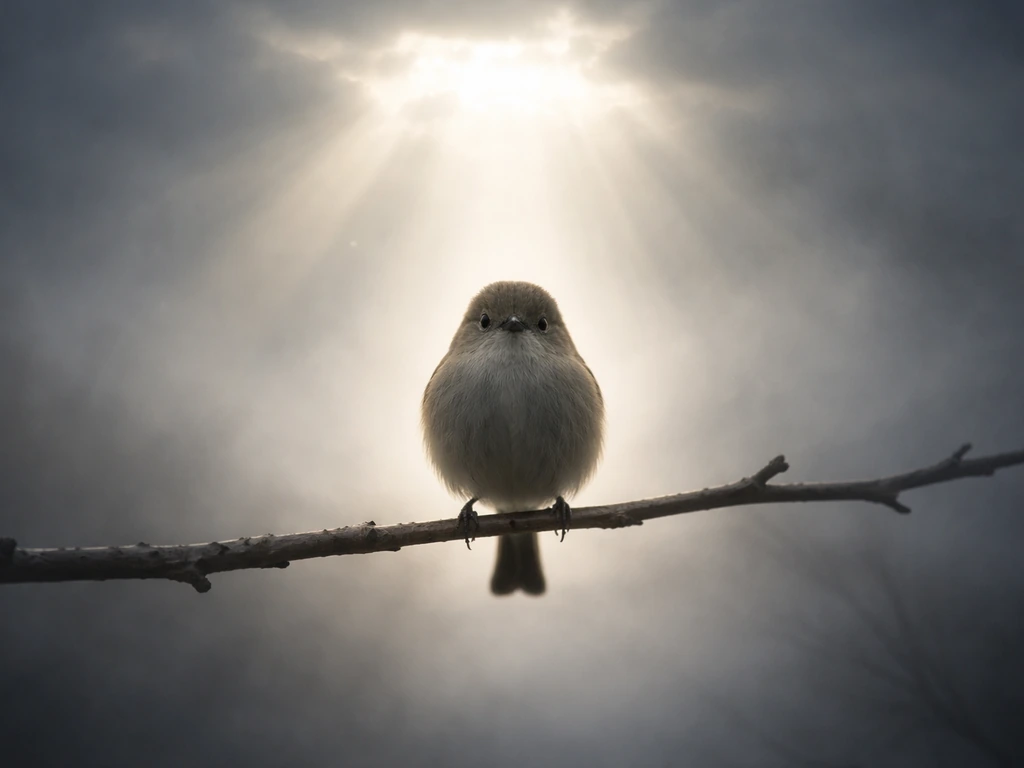
A "bird of good omen" is any bird species understood, within a specific cultural or personal context, to signal hope, protection, positive change, or divine favor. The phrase doesn't name a single species. It describes a role that dozens of birds have filled across human history, from the albatross in Coleridge's poetry to the cardinal in North American folk belief to the ibis in ancient Egypt. If you saw a bird today and felt something shift in you, the most honest starting point is this: the meaning lives in the intersection of the species, the tradition you carry, and the moment you were in when it appeared.
The Bird of Good Omen Meaning and How to Interpret It

Eleanor Hartwell
4 Jun 2026

What "the bird of good omen" actually means
The word "omen" entered English in the late 1500s, but the practice it describes is far older. In standard English usage, “omen” has an early recording period (first recorded in the late 1500s) and is commonly tied to the idea that interpretations depend on culture the early recording period (first recorded in the late 1500s). The English word "auspicious" comes directly from the Latin "auspicia," which referred to Roman divination by observing the flight of birds. An augur would watch which direction birds flew, how many appeared, what sounds they made, and interpret those signs for military or political decisions. That lineage is still embedded in the language we use every day. When someone says "an auspicious occasion," they are, etymologically, saying "the birds looked good."
So "bird of good omen" is essentially a category, not a species. It means a bird whose appearance, behavior, or association within a tradition is understood as a positive signal. The specific bird that earns that label changes depending on the culture, the historical moment, and even the personal history of the observer. This is why the phrase can feel simultaneously ancient and deeply personal.
One important clarification worth making early: if you arrived here after encountering the phrase in a literary context, particularly in Samuel Taylor Coleridge's "The Rime of the Ancient Mariner," the bird in question is the albatross. Coleridge’s The Rime of the Ancient Mariner includes the exact phrase “pious bird of good omen.” blank" rel="noopener noreferrer">Page. Coleridge describes it as "the pious bird of good omen," and the poem's entire moral weight rests on what happens when the mariner kills it. That specific literary usage is its own rich topic, as are the albatross's broader symbolic associations. But if you saw a bird in the wild today and felt drawn to find meaning in it, the poem is context, not a field guide. Keep reading.
Which bird did you actually see? Common good-omen species and how to identify them
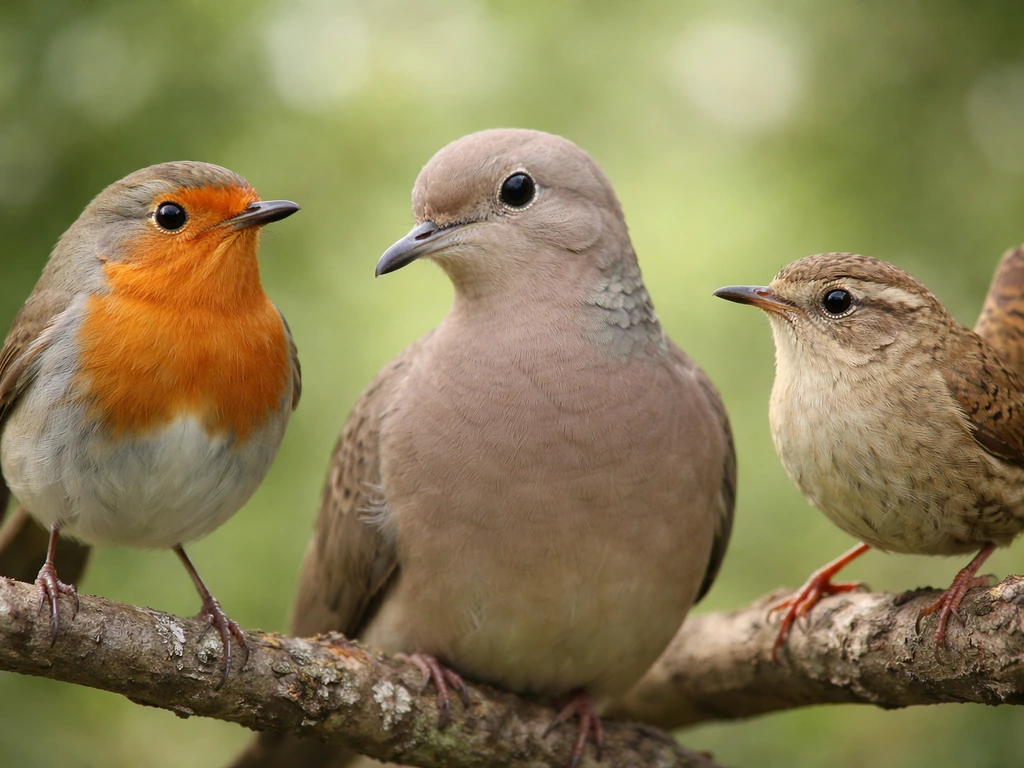
Identifying the species you saw is the most practical first step, because symbolic meaning has always been species-specific in serious traditions. A robin means something different than a hawk. A cardinal seen at a window carries different associations than a swallow returning to a barn eave. Here are the birds most commonly labeled as good-omen birds across Western, folk, and spiritual traditions, along with quick identification notes.
| Bird | Key Identifying Features | Common Good-Omen Association |
|---|---|---|
| Cardinal (Northern) | Brilliant red male; crest on head; conical orange bill; females are warm brown with red tinges | Visits from deceased loved ones; renewed hope; divine presence |
| Robin | Orange-red breast; dark gray-to-black back; yellow bill | Spring renewal; new beginnings; coming good fortune |
| Swallow | Forked tail; iridescent blue-black back; fast, swooping flight | Safe return; good luck for sailors; protection of home |
| Dove (Mourning or White) | Slender body; small head; soft cooing; muted gray-brown or white plumage | Peace, divine blessing, the Holy Spirit; love and faithfulness |
| Bluebird (Eastern) | Vivid blue upper body; rusty-orange breast in males; small and compact | Happiness, contentment, prosperity arriving |
| Hummingbird | Tiny; rapid wing beats; iridescent green; hovers near flowers | Joy, resilience, presence of spirit; good things coming quickly |
| Crane | Tall and long-legged; white or gray; long neck extended in flight | Longevity, fidelity, good fortune (especially in East Asian traditions) |
| Albatross | Enormous wingspan; white body with dark wing tips; seen at sea | Protection of sailors; safe passage; in Coleridge, the pious good-omen bird |
If you are unsure what species you saw, use a free identification app like Merlin Bird ID (from Cornell Lab of Ornithology) or simply describe it: size relative to a sparrow or crow, dominant colors, bill shape, and behavior. Getting the species right matters, because you don't want to apply cardinal symbolism to a house finch just because both have red on them.
How different cultures and traditions define good-omen birds
One of the most important things to understand about bird omens is that the same species can carry opposite meanings depending on the tradition. The raven is a trickster and a death omen in some Northern European contexts, but a creator figure and messenger of transformation in many Pacific Northwest Indigenous traditions. Context isn't just helpful, it's essential. Here's how some of the major traditions approach good-omen birds.
Biblical and Christian symbolism

In biblical tradition, the dove carries the most concentrated good-omen symbolism. Noah's dove returning with an olive branch signals the end of the flood and God's renewed covenant. In the New Testament, the Holy Spirit descends "like a dove" at Jesus's baptism. Eagles appear throughout scripture as symbols of divine strength and protection (Isaiah 40:31). Sparrows, though small and common, are explicitly noted by Jesus as being within God's care, making even their appearance a reminder of divine attentiveness.
Egyptian symbolism
Ancient Egypt treated bird symbolism with extraordinary precision. The ibis was sacred to Thoth, god of wisdom, writing, and the moon, making it an omen of knowledge and divine order. The falcon (particularly the peregrine) embodied Horus, god of kingship and sky, so a falcon sighting carried immense positive significance. The heron, known as the Bennu bird, was associated with the sun god Ra and with creation itself, making it one of the most auspicious birds in the entire tradition.
Native American traditions
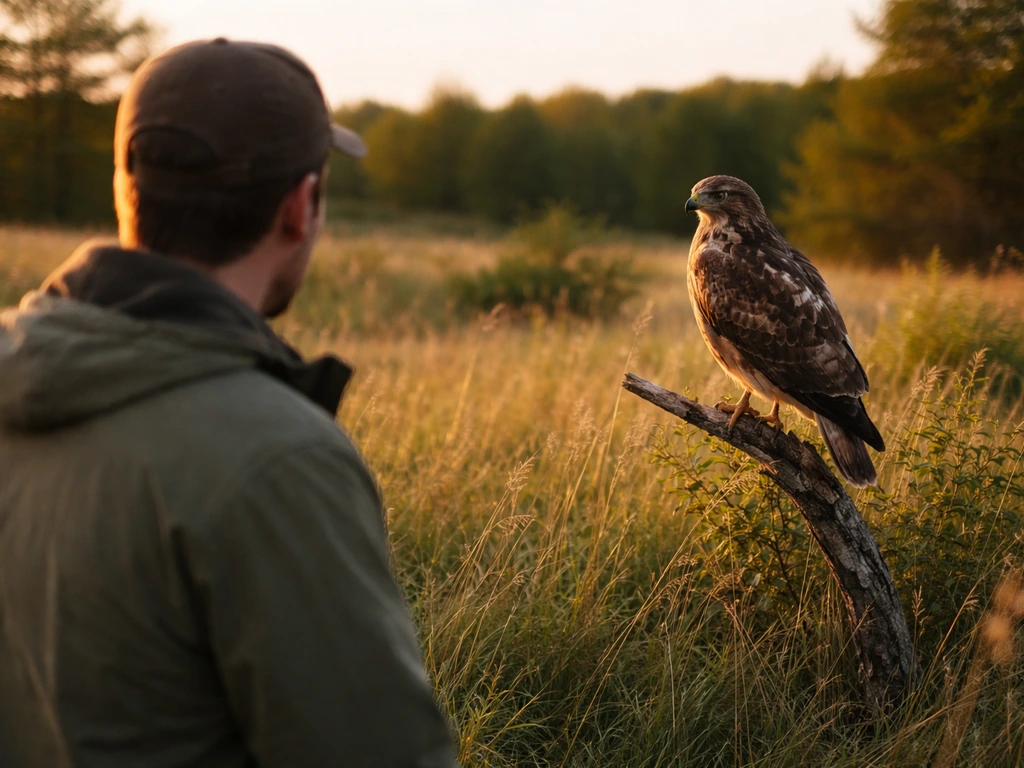
It's important to note that "Native American" encompasses hundreds of distinct nations, each with its own specific traditions. That said, certain birds appear across multiple traditions as positive messengers. The eagle is widely regarded as a sacred bird that carries prayers to the Creator. The hummingbird appears in several Southwestern and Central American traditions as a bringer of joy and love. Owls are complex: feared as death omens in some nations, revered as wisdom carriers in others. If you have a specific cultural heritage, going deeper into that particular tradition will give you far more accurate symbolic grounding than generalizations can.
Celtic traditions
Celtic bird lore is rich and often tied to the Otherworld. The wren, despite its small size, was considered the king of birds in Celtic myth. Robins were sometimes seen as protectors and carriers of the soul. Swallows and martins nesting on a home were considered deeply lucky, and it was considered very bad form to disturb them. The crane (or heron, often conflated in older texts) was associated with longevity, hidden knowledge, and the transition between worlds.
Aztec and Mesoamerican traditions
In Aztec cosmology, the hummingbird carried especially powerful positive symbolism. Huitzilopochtli, one of the most important Aztec deities, was associated with hummingbirds: fallen warriors were believed to return as hummingbirds. Seeing one was not a casual encounter but a potential visitation from the honored dead. The quetzal bird, with its brilliant green plumage, was so revered that its feathers were reserved for royalty and gods, making a sighting an omen of exceptional favor.
Roman augury (the origin of "auspicious")
The Roman augural tradition was highly formalized. Augurs observed birds within a templum, a defined section of sky, and interpreted the direction of flight, the species, and the number of birds. Eagles and vultures were especially significant. Birds flying from the left (to the augur's right, the east) were generally favorable. This isn't just historical trivia: it's the origin of the entire Western concept of an "omen," bird-based or otherwise.
What to notice during a sighting, and what to do with it
If you're standing in front of a bird right now, or replaying a recent encounter in your mind, there are specific things worth noting before you start interpreting. Paying attention to these details will anchor your reflection in something real rather than something projected.
- Species and coloring: Identify what you saw as specifically as possible. Color, size, bill shape, and behavior are the most useful clues.
- Direction of approach or flight: Many traditions, including Roman augury, assigned meaning to whether a bird arrived from the east or west, from above or below, or flew toward you versus away.
- Behavior: Was it singing? Silent? Landing close to you? Looking directly at you? Bringing something? Behavior often matters as much as species.
- Timing: Was this during a personally significant moment? A period of decision, grief, transition, or celebration? Context shapes meaning.
- Location: A bird at your front door, inside your home, at a grave, or during a walk in the woods all carry different resonances across traditions.
- Your emotional state at the moment of the sighting: Traditions that emphasize bird omens often treat your felt response as part of the message itself.
After you've noted these things, sit with what arose in you rather than immediately reaching for an interpretation. The felt sense of a sighting, before you name it, is often the most authentic data you have.
Feathers, flight, and other bird symbols that signal good omens

You don't have to see a whole bird to encounter a bird omen. Finding a feather, hearing a distinctive call, or watching a bird's flight pattern are all forms of encounter that have been interpreted symbolically across traditions. These partial or indirect encounters deserve their own framework.
Feathers are perhaps the most common indirect bird symbol. In many Native American traditions, feathers are treated as gifts from the bird world and carry the energy of the species they came from. An eagle feather carries the same sacredness as the eagle. White feathers appear across multiple traditions, including spiritualist and New Age contexts, as signs of angelic presence or messages from deceased loved ones. Finding a feather unexpectedly, especially in an unusual location, is widely interpreted as a positive sign.
Flight itself is a universal symbol of transcendence, freedom, and the movement between earthly and spiritual realms. Birds cross the threshold between earth and sky naturally, which is why so many traditions position them as messengers. When you watch a bird lift from the ground and disappear into the upper air, you're watching a symbol that has meant "connection to the divine" across cultures for thousands of years.
Nesting behavior carries its own set of positive associations. A bird choosing to nest near or on your property has been read as a good omen in Celtic, East Asian, and North American folk traditions alike, signifying that the space is safe and blessed. A returning bird, especially a swallow or martin coming back to the same nest year after year, amplifies that sense of continuity and protection.
Song matters too. A bird singing near your window at dawn, or calling out unexpectedly in the middle of the night, has been interpreted differently in different traditions, but melodic, clear song in daylight is broadly associated with positive energy. The wren's loud, complex song relative to its tiny body has made it a symbol of outsized power and luck across Celtic and English folk traditions.
Where people go wrong with bird omens (and how to stay grounded)
The most common mistake in reading bird omens is projection: deciding in advance what you want to hear and then finding a bird that confirms it. This is especially easy when you're going through something difficult and desperately want reassurance. The bird becomes a mirror for your wish rather than a genuine encounter.
A second common error is misattribution across traditions. If you're working from a Christian framework and interpret an owl as a divine messenger, you might be pulling from a tradition that treats owls very differently. Celtic and Aztec owl symbolism differs significantly from, say, the owl in Greek tradition (associated with Athena and wisdom) versus many North American Indigenous traditions where an owl call can signal death or transition. Knowing which tradition you're actually working from matters.
There's also the issue of confirmation bias in frequency. Once you decide cardinals are messages from a deceased grandmother, you may start noticing cardinals constantly, not because they're appearing more often, but because your attention has been selectively tuned. That's not entirely a bad thing, grief has its own logic, but it's worth being honest with yourself about it.
- Don't force a meaning if the sighting felt neutral. Not every bird is a message.
- Cross-reference the species with the tradition you actually hold, not a tradition you cherry-picked for a convenient interpretation.
- Distinguish between a personally meaningful encounter and a culturally documented omen. Both are valid, but they're not the same thing.
- Avoid turning every negative bird symbol into a positive one just because you want good news. A vulture circling is not a cardinal visiting.
- Let the experience breathe before you interpret. Time often clarifies whether the encounter was genuinely significant or just notable.
Making the meaning yours: reflection, timing, and journaling prompts
Across the traditions that take bird symbolism seriously, the observer is never passive. Roman augurs were trained specialists. Indigenous vision-seekers were in intentional states. Even in folk traditions, the person who receives the omen brings their own life circumstances to the reading. You are part of the interpretation, not just a bystander. Here's how to engage with that honestly.
Start by writing down the encounter while it's fresh. Include the date, the time of day, the weather, where you were, what you were thinking about just before the bird appeared, and your immediate emotional response. Don't edit toward meaning yet. Just record it like a field note.
Then sit with these questions, and write whatever comes up without filtering:
- What was I carrying emotionally just before this sighting? What question or concern was most alive in me?
- What did the bird's behavior remind me of, literally or metaphorically?
- If I assigned this bird a single word as a message, what would that word be, and why does that word land the way it does?
- Does this interpretation come from a tradition I actually belong to, or am I borrowing symbolism from somewhere else? Is that borrowing intentional and informed?
- What would it mean for my life right now if I took this as a positive sign? What would I do differently?
- A week from now, will this sighting still feel significant, or was it a passing moment? (Revisit this question in seven days.)
The last prompt matters more than it looks. Genuine symbolic encounters tend to stay with you. They accrue meaning over time rather than fading. If you find yourself returning to the memory of a bird sighting days or weeks later, that persistence is itself data worth working with.
Bird symbolism is one of the oldest lenses humans have used to make sense of their lives. Whether you're exploring the albatross's role in Coleridge, the dove in Christian scripture, or the hummingbird in Aztec cosmology, the underlying impulse is the same: we look to birds because they move between worlds we cannot access. They are in the air we breathe but beyond the ground we stand on. That position, literally and symbolically, is what makes them feel like messengers. The question worth asking is not just "what does this bird mean" but "what does it mean to me, right now, in this particular life." That's where the real interpretation begins.
FAQ
What if I saw a bird that is not one of the “common” good-omen species mentioned?
You can still work with the category idea from the article: focus on the specific species you identified, then check which traditions or local folk beliefs assign it a positive role. If you cannot connect it to any tradition, treat your felt shift and the concrete behaviors you observed (call, flight direction, nesting) as the primary data, and keep the interpretation narrower until you learn more.
How can I tell the difference between a meaningful omen and a coincidence?
Use the timeline test: if your interpretation is mainly driven by what you wanted to happen, it will fade when you stop looking for it. If the encounter keeps resurfacing on its own days later, and you can describe consistent details (species, time of day, behavior) without changing the story, that persistence is a stronger sign you are not only pattern-matching.
Does “good omen” always mean something joyful or lucky?
Not necessarily. Some traditions read “positive” as protective, transitional, or restorative, even if the omen arrives during grief or change. The better question to ask is what kind of help or direction the bird seems to signal in your life context, rather than assuming it must predict pleasant events.
What should I do if I am unsure whether the bird was a match for my identification?
Pause the symbolism and confirm the species first. If the bird is a look-alike (for example, small red-breasted birds), use multiple cues like bill shape and wing pattern, or recheck with an ID app after the fact. Avoid locking in an interpretation until you are confident, because the article notes symbolic meaning is often species-specific.
Can two different traditions both be “right” about the same bird omen?
Yes, in the sense that they can both be meaningful frameworks for you. But pick one as the active lens for the interpretation exercise, otherwise you may end up blending contradictory messages. A practical approach is to choose the tradition that matches your personal heritage or the one you were actively thinking about when the bird appeared.
What if my culture treats the bird as an omen, but my personal experience felt neutral or unsettling?
That does not automatically invalidate the symbolism. Record the encounter details anyway, then distinguish “felt sense” from “meaning claim.” You can treat the message as “attention” rather than “reassurance,” and explore what unsettled you as additional information about what area of life is calling for reflection.
Is it okay to interpret a bird omen for other people, like family members?
Be cautious. Symbolic readings are strongly shaped by the observer’s life context, which the article emphasizes. If you want to share, frame it as your impression and invite their perspective, instead of stating it as a direct prediction for them.
What if I find a feather or hear a call but never see the bird itself?
Use the indirect-encounter framework: track what you can verify (location, time, color or type of feather, the call you recognized). Without species certainty, treat the encounter as “directional” meaning (message, protection, awareness) rather than a precise species-linked claim.
Does the time of day or direction of flight change the meaning?
Often, yes. Birds’ calls at dawn versus nighttime, and flight patterns like crossing a window line or moving toward versus away from you, have been used as interpretive cues in many traditions. If you noted these details, let them guide you before you assign a broader “good omen” narrative.
How do I avoid turning grief into constant omen-seeking?
Set a check-in rule. For example, decide you will only record an omen when you have new observational detail, not just because you notice the same species again. Also consider writing whether you felt comfort, urgency, or bargaining in the moment, so you can separate longing for reassurance from the encounter itself.
Should I act on a bird omen, like making a major decision?
Treat it as a prompt for reflection, not a standalone decision tool. A practical method is to pair the omen with ordinary planning steps (pros and cons, timelines, professional advice). If the bird omen motivates an impulsive choice, slow down and reassess using concrete facts.
What if I get an omen repeatedly, for example the same species shows up every day?
First, check whether attention has changed. Confirmation bias is a common issue, so compare frequency before and after you started looking. If sightings truly increased, consider whether your environment is drawing the bird (food, shelter, nesting) and whether your interpretation should shift from “message” to “relationship with a real pattern in your life and surroundings.”
Next Article
Bird of Good Omen: Coleridge Meaning and Spiritual Sign
Meanings of a bird of good omen in Coleridge and global traditions plus spiritual steps for real bird encounters.