Yes, 'Mother Mary Is a Bird of Prey' is a real, verified song title and chorus lyric from Powerwolf, a German heavy metal band. It appears on their debut album 'Lupus Dei,' released April 5, 2007. The phrase in the chorus reads exactly: 'Mother Mary is a bird of prey.' That is the confirmed source. If you heard this line somewhere and wanted to know where it came from, now you know. If you want to understand what it actually means symbolically, that is where things get genuinely interesting.
Mother Mary Is a Bird of Prey Meaning and Symbolism

Eleanor Hartwell
22 May 2026
Is this a real lyric line, and how do you confirm the exact wording

The track title and chorus phrase both match exactly: 'Mother Mary Is a Bird of Prey. Powerwolf’s official site for the “Lupus Dei” album lists “Mother Mary Is a Bird of Prey” in the track listing “Lupus Dei” track listing.
' Multiple major platforms confirm the track exists under Powerwolf's discography. Apple Music lists it under 'Lupus Dei' with the April 2007 release date. Apple Music lists “Mother Mary Is a Bird of Prey” as a Powerwolf song from the album “Lupus Dei” (with the release date shown as April 5, 2007 on the page) [Apple Music lists it under 'Lupus Dei' with the April 2007 release date. ](https://music.
apple. com/us/song/272130264/mother-mary-is-a-bird-of-prey). Bandcamp carries the official track under Powerwolf's catalog. A fan wiki that documents Powerwolf lyrics reproduces the chorus refrain verbatim, repeated across the song's structure.
That said, lyric websites are not always reliable for exact spelling, punctuation, or phrasing. If you need the precise wording for a serious purpose (analysis, citation, academic work), the most trustworthy sources are the physical liner notes included with the album, or a licensed lyrics provider like Genius or AZLyrics that sources from official submissions. Streaming platforms like Apple Music or Spotify often display officially licensed lyrics when you play the track directly, and that is about as authoritative as it gets short of the booklet itself. Always cross-check at least two sources before treating any lyric as confirmed.
What 'Mother Mary' symbolizes spiritually
In Christian tradition, Mary is among the most layered and carefully constructed symbolic figures in any religion. She is simultaneously the Theotokos (God-bearer) in Eastern Orthodox Christianity, the Immaculate Mediatrix in Catholicism, and a model of humble surrender in Protestant readings. What runs through all of these is a cluster of consistent qualities: purity, intercession, protective love, and grief. The image of the Mater Dolorosa, Our Lady of Sorrows, shows Mary as a figure who absorbs suffering on behalf of others. She is not passive in this role. She is described in Catholic theology as a powerful intercessor, someone who acts on behalf of those who cannot act for themselves.
Outside strict Christian doctrine, Mary has accumulated enormous symbolic weight in folk religion, art, and popular culture. In many Latin American traditions, the Virgen de Guadalupe functions as a near-sovereign spiritual protector, a figure who shields communities. In Southern European folk Catholicism, Mary is sometimes understood as having absorbed older goddess energies from pre-Christian traditions. She is associated with the moon, the sea, and the earth. She is also, notably, a figure of transformation: the vessel through which the divine enters the human world. That combination of tenderness and transformative power is essential when you are trying to interpret her being called a bird of prey.
What 'bird of prey' symbolizes across traditions

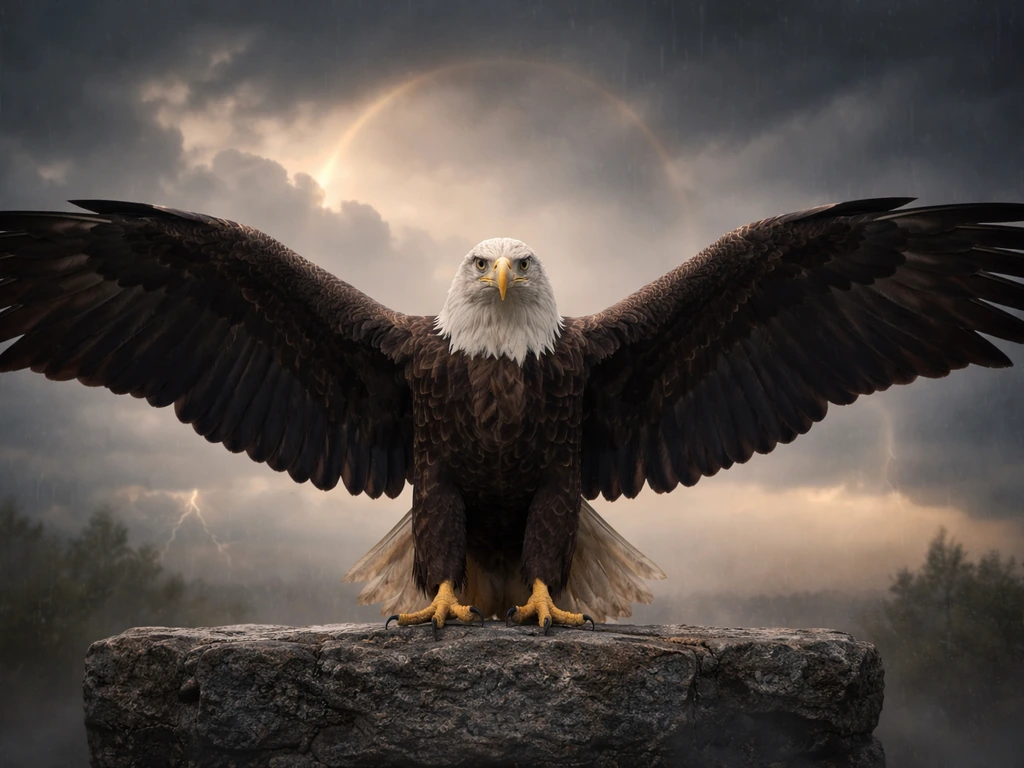
Birds of prey carry one of the most consistent symbolic profiles across world traditions. Whether you are reading the Hebrew Bible, Egyptian iconography, or Celtic mythology, raptors signal a concentrated set of meanings: divine authority, keen vision, swift judgment, and sovereign protection. They are creatures of threshold, operating between earth and sky, which places them symbolically between the human and the divine.
In the Hebrew Bible, the bird of prey appears in Isaiah 46:11, where God summons a 'bird of prey from the east' to execute divine purpose. That passage frames the raptor as an instrument of providence, not mere violence. The same principle runs through Egyptian tradition: the falcon-headed Horus is both warrior and protector, the eye that sees everything and the talon that acts with precision. In Roman iconography, the eagle (Jupiter's bird, also called the bird of Jove) represents sovereign power exercised from above. In some traditions, the phrase bird of Jove connects the eagle or falcon with Jupiter’s sovereign power, which helps explain why a bird of prey image can feel so authoritative.
In Native American traditions, eagles and hawks carry messages between worlds. In Celtic lore, the hawk is associated with memory, the long view, and clear-sighted truth. Across these traditions, the bird of prey is not simply a predator. It is a figure of purposeful force: something that strikes exactly when and where it must, guided by a vision that ordinary creatures cannot access. The imagery of weakness confronting the strength of such a creature appears across folklore as a recurring motif, underscoring the raptor's role as an enforcer of natural and divine order. In that spirit, the weak should fear the strong bird, because purposeful force can still function as protection rather than cruelty.
How the combined imagery works, and what the lyric is likely saying
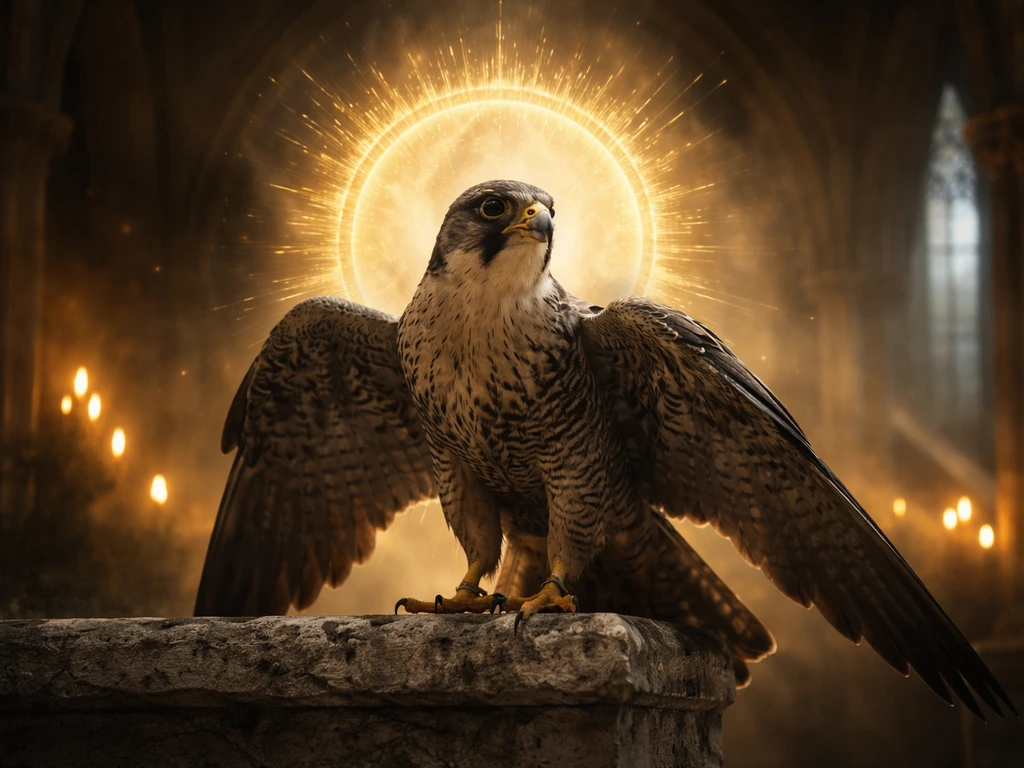
Powerwolf's aesthetic is built on what you might call sacred transgression: they layer Catholic imagery, Gothic horror, and heavy metal energy to produce something that feels blasphemous and reverent at the same time. 'Mother Mary Is a Bird of Prey' fits that pattern exactly. The lyric takes the most gentle and intercessory figure in Christian tradition and assigns her the attributes of the most powerful, sovereign predator in spiritual symbolism.
There are a few ways to read this combination, and they are not mutually exclusive. The first is a reclaiming of Mary's power. Traditional piety tends to emphasize her softness and sorrow. Calling her a bird of prey restores a kind of fierce agency, the idea that divine maternal love is not passive but strikes with precision when protection is needed. This reading resonates with the Mater Dolorosa tradition where Mary's grief is itself a form of spiritual force.
The second reading leans into the transgressive quality Powerwolf cultivates deliberately. By combining the sacred with the predatory, the lyric creates productive tension. It destabilizes the comfortable image of Mary and asks whether what we call holy is also, in some sense, dangerous. This is a genuine theological question with deep roots: the same God who offers mercy in the Psalms commands destruction elsewhere. Holiness in most traditions is not simply gentle. It is also consuming.
The third reading is more personal and less doctrinal. The bird of prey, particularly in its biblical framing (see the usage in Isaiah), represents a figure called to fulfill a specific purpose, moving swiftly and without hesitation. In the Bible, the phrase “bird of prey” is used in passages like Isaiah 46:11 to describe a raptor summoned for divine purpose.
In the Bible, the phrase “bird of prey” is used as a symbol of God’s calling and purposeful action, especially in passages like Isaiah bird of prey meaning bible. Mary, as intercessor and protector, can be understood through this lens as someone who swoops precisely when called upon. The lyric could be expressing awe at the combination: not a contradiction but a unity.
A practical reflection exercise to apply this to your own situation

If this lyric landed with you, that is worth paying attention to. Symbolism tends to surface when something in the imagery matches something you are already processing. Here is a simple exercise to help you figure out what it might mean for you specifically.
- Write down the two images separately: what does 'Mother Mary' mean to you personally? Not theologically, but emotionally. What feeling, memory, or association does she carry? Write three words.
- Now write three words for 'bird of prey.' Not dictionary definitions, but gut responses. What do you feel when you picture one?
- Look at your two sets of words side by side. What happens when those qualities exist in the same being? Is that comforting, unsettling, clarifying, or something else?
- Ask yourself: what is happening in your life right now that might need both of those things at once? Fierce protection and tender intercession? Precision and compassion?
- Sit with what comes up. You do not need to force a conclusion. Symbolic meaning usually arrives gradually, and the point is the reflection, not a neat answer.
This kind of exercise works whether you are religious or not. The symbols in this lyric are powerful because they are old, and old symbols carry psychological weight independent of belief. You are essentially asking yourself what that weight means in your current context.
Where to look next: verifying lyrics and going deeper on the symbolism
If you want to go further with the lyric itself, here is a practical checklist for today.
- Stream 'Lupus Dei' on Apple Music or Spotify and enable lyrics view while the track plays. That gives you the officially licensed text in real time.
- Check the Powerwolf fan wiki for a full lyric transcription, but cross-reference it against what you see on the licensed stream before trusting any individual line.
- If you have the physical album or a digital booklet download, the liner notes are the definitive source for every word and punctuation mark.
- For the symbolic side, look into the biblical treatment of the bird of prey, particularly Isaiah 46:11, which is one of the most direct scriptural uses of the raptor as a divine instrument. That passage adds real texture to how the image functions theologically.
- Compare the Marian symbolism in this lyric against how other traditions frame a protective divine feminine figure: Isis, Athena, Durga. The pattern of a fierce-and-tender female archetype appears across cultures, and seeing it in context makes the Powerwolf usage feel less shocking and more archetypal.
- If the band's other imagery interests you, 'Lupus Dei' (meaning 'Wolf of God') is itself deeply symbolic, blending lupine and Christian iconography throughout the album. Reading the whole record as a symbolic text, not just this one track, gives the lyric richer context.
The line 'blank" rel="noopener noreferrer">Mother Mary is a bird of prey' is doing a lot of work in a short space. In the broader biblical symbolism of that line, a bird of the air can carry a message on behalf of divine purpose. It compresses centuries of Marian theology and the long symbolic history of raptors in religious tradition into seven words.
Whether Powerwolf intended every layer or was primarily going for a striking image, the result holds up to serious symbolic reading. If you are trying to pin down what that bird of prey phrasing is meant to convey, you can also look up the “bird of prey Jim Morrison meaning” discussion for another perspective. Both the gentle intercessor and the sovereign predator are real, documented roles in the history of sacred imagery.
The lyric suggests they might be the same thing.
FAQ
How can I verify the exact lyric wording if different lyric sites show different punctuation?
It is the song title and a repeated chorus line on Powerwolf’s 2007 debut album Lupus Dei. If you are trying to confirm the exact capitalization and punctuation for quoting, use the album’s physical booklet or a licensed lyrics display on the track page rather than a search result screenshot, since many lyric reposts vary.
Is “Mother Mary is a bird of prey” meant literally or metaphorically?
For interpretation, the closest helpful approach is to treat it as metaphor, not as a literal claim about Mary. The “bird of prey” component draws from longstanding raptor symbolism (authority, precise action, protective force), while Mary’s side draws from intercession and protective love. Reading it as a compressed metaphor avoids forcing a doctrinal contradiction.
What’s the best framework to analyze the line without mixing symbolism and doctrine?
If you are doing a religious or academic discussion, you will get the most consistent results by separating two layers: Marian theology (intercession, grief, protection) and raptor symbolism (sovereign protection, swift judgment, divine purpose). Then decide which of Powerwolf’s three suggested angles (reclaiming fierce agency, transgressive tension, or purpose-driven calling) you find most persuasive for your context.
Does “bird of prey” in this lyric always imply violence?
A common mistake is assuming raptors automatically equal cruelty. In many of the traditions summarized in the article, the predator’s force is purposeful and protective, often described as striking exactly when needed. If your interpretation keeps defaulting to “violence only,” rebalance it with the protective and threshold meanings (earth and sky, human and divine).
What does the “sacred transgression” angle add to the meaning?
The “sacred transgression” reading matters most if you notice Powerwolf’s pattern of pairing Catholic iconography with aggressive imagery. Under that angle, the line is designed to unsettle the comfortable image of Mary as only gentle. Instead, it highlights agency, consuming holiness, and the idea that protection can look fierce.
I heard the line in a video, but I do not know the song. How can I identify it reliably?
If you heard the line but not the song, you can still validate the source by searching the track name plus “chorus” and then cross-checking whether the same phrase appears in the section labeled as the chorus on a licensed or official preview. Also, check the album tracklist for Lupus Dei, since the line is tied to that specific release and structure.
Can the lyric be meaningful if I am not Christian?
If you are not Christian, you can still interpret the symbolism effectively by using a “psychological and cultural metaphor” approach. Old religious symbols often carry emotional weight even without belief, so focus on what raptors represent to you (focus, authority, decisive protection) and what Mary represents (maternal care, intercession, sorrow turned to force).
What should I do if I need to cite the lyric accurately for a paper?
If your goal is quoting for an essay, avoid relying on multiple free lyric aggregators that may contain transcription errors. The article recommends cross-checking at least two sources, and the most authoritative options are the album liner notes or a licensed provider. If your quote is important, verify the line inside the song’s printed booklet or an officially licensed display.
How can I use the symbolism to reflect on my own situation?
A practical way to apply the personal reading is to connect “swoops precisely when called” with a real decision you are facing. Ask yourself, where in your life do you want targeted protection or clarity, and what “vision” you have been ignoring. Then compare whether you feel more comforted by the reclaiming-agency angle or by the transgressive-tension angle.
If I translate the line into plain language, what version stays closest to the symbolism?
Yes, but be specific about what you are translating. The article frames the phrase as a unified symbol where Mary’s intercession and the raptor’s purposeful force can function as the same “protective agency.” If you translate it into simple words, keep both halves: “a maternal intercessor who acts with precise authority when needed.”
Next Article
Bird of Jove Meaning: Origin, Symbolism, and What It Signals
Bird of Jove meaning explained, including Jupiter origin, the usual bird reference, and spiritual signs for interpretati