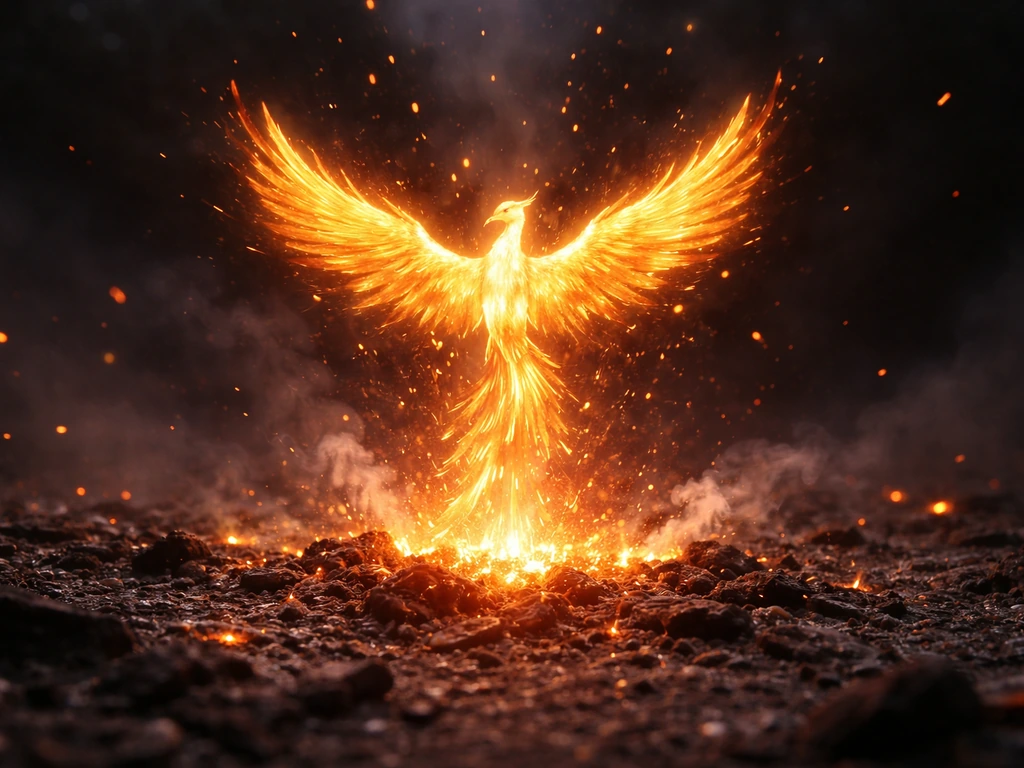
The mythical bird that is reborn from ashes is the phoenix. In nearly every tradition that carries this story, the phoenix lives for hundreds of years, builds a nest or funeral pyre, ignites itself (often through the heat of the sun and the fanning of its own wings), and then rises from those ashes completely renewed. That core image, death by fire followed by literal rebirth, is what separates the phoenix from every other powerful or sacred bird in world mythology.
Mythical Phoenix Reborn From Ashes: Meaning and Next Steps

Eleanor Hartwell
12 May 2026
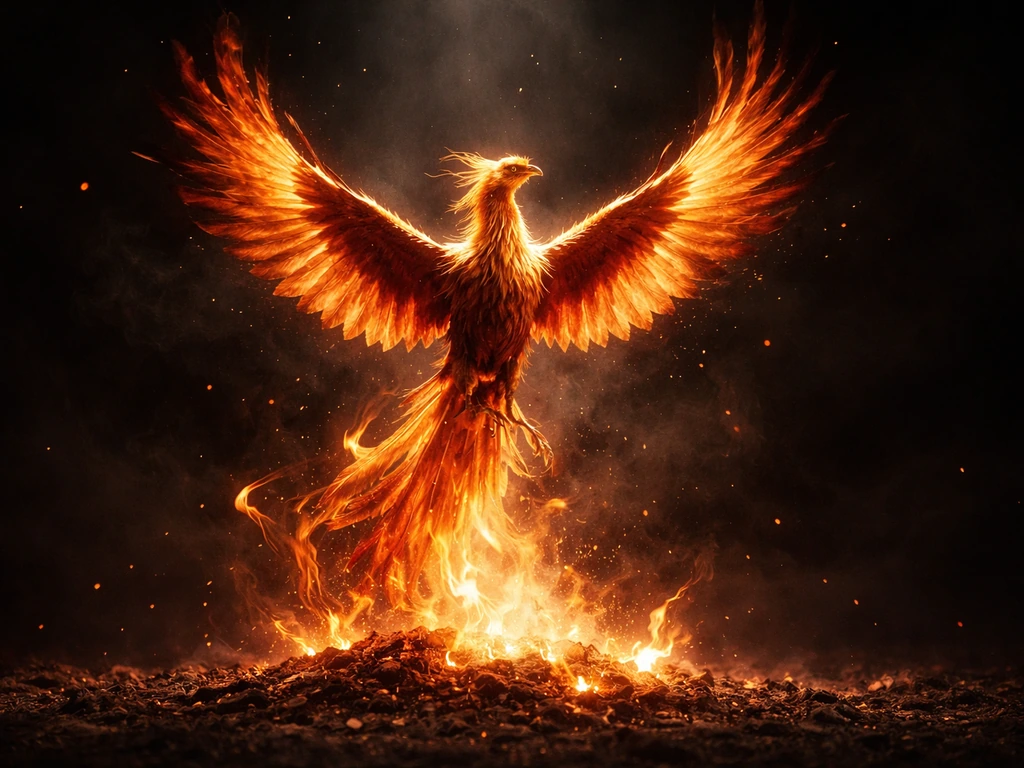
The Phoenix and What Rebirth from Ashes Actually Means
The phoenix is not just a pretty metaphor someone invented for a motivational poster. It has deep roots in ancient storytelling, and the details matter if you want to use its symbolism meaningfully. In the most common classical telling, the phoenix lives somewhere between 500 and 600 years, then burns itself on a funeral pyre. A new phoenix rises from the ashes with renewed youth and begins the entire cycle again. Some versions add a remarkable detail: the young phoenix embalms the ashes of its predecessor in an egg of myrrh and carries that egg to Heliopolis, depositing it on the altar of the sun god Re, where flames produce the next bird. The fire is not destruction. It is the mechanism of continuation.
That distinction is worth sitting with. The phoenix does not escape death. It walks directly into it. The burning is not a punishment or an accident but a deliberate act of transformation. That is precisely why phoenix symbolism resonates so powerfully for people going through grief, major life transitions, illness, or spiritual crisis. The myth does not promise you will avoid the fire. It promises something comes after.
Where This Myth Comes From: Origins Across Cultures
Egypt: The Bennu and Solar Renewal
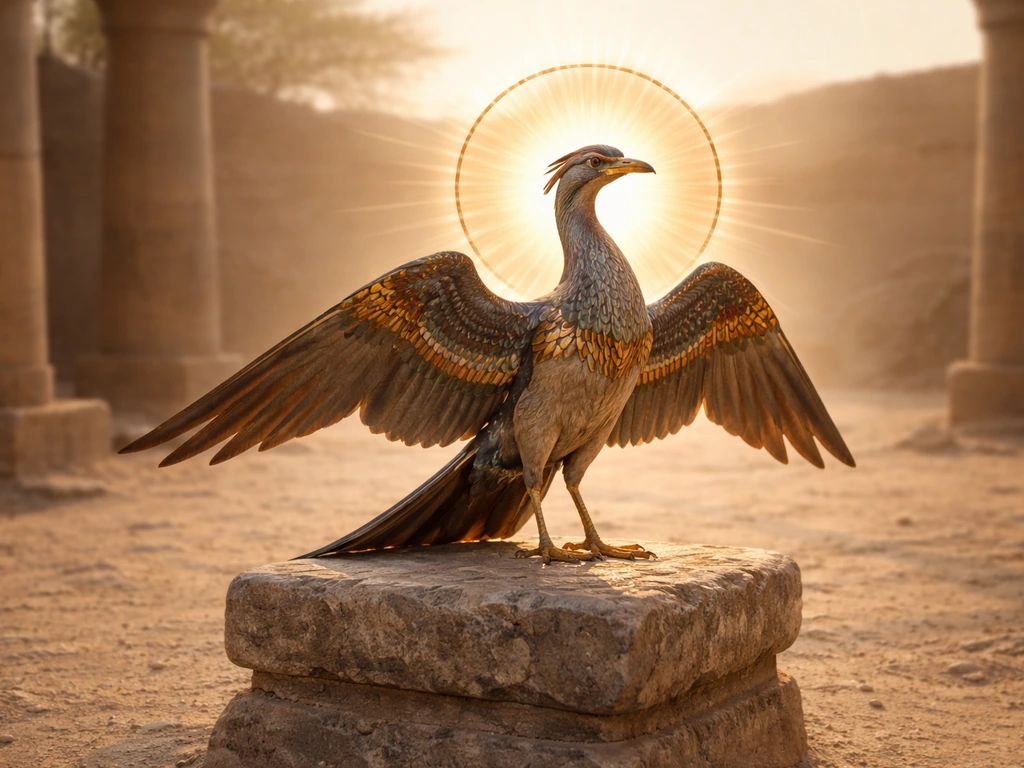
The closest Egyptian relative of the phoenix is the Bennu, a sacred bird connected to the sun god and to the concept of creation itself. The name Bennu is thought to derive from a verb meaning 'to rise in brilliance' or 'to shine,' which already tells you something about how the Egyptians framed it. The Bennu was associated with the benben stone, a primordial mound, and with cycles of time and regeneration. Scholars debate how directly the later Greek phoenix myth borrowed from the Bennu, since Egyptian sources do not describe the Bennu dying in flames the way later traditions describe the phoenix. But the solar connection, the periodic return, and the theme of time renewing itself all clearly feed into what became the phoenix story.
Greece and Rome: Herodotus, Tacitus, and the Altar of the Sun
Herodotus described the phoenix as a periodic Arabian bird that traveled to Egypt, which already frames it as a visitor from a distant, sacred place. Tacitus, writing in the Annals, added texture: in his version, when the phoenix's years are complete, it builds a nest in its birthland, loads itself with myrrh, bears its predecessor's body to the altar of the Sun, and leaves it to the flames. This version emphasizes the filial duty of the young bird, the sacred altar, and the fire as a ritual act rather than a spontaneous combustion. These Greek and Roman accounts gave the western world its most enduring version of the myth.
Jewish and Christian Traditions: A Symbol of Resurrection
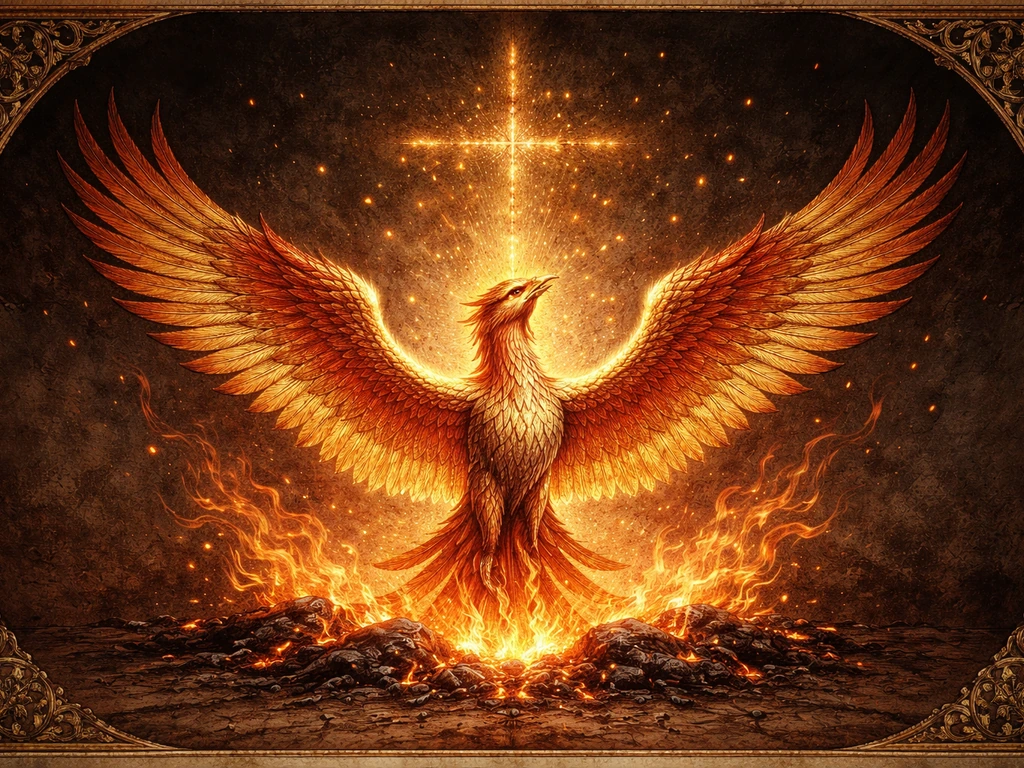
Early Jewish rabbis were familiar with Hellenistic phoenix myths and actively adapted them to their own theological frameworks. In Christian tradition, the Physiologus, an early bestiary with enormous influence on medieval symbolism, treated the phoenix's self-burning and rising from ashes as a direct typological figure for Christ's death and resurrection, with the bird rising on the third day. Clement of Rome, writing in the first century, used the phoenix explicitly as an emblem of resurrection, situating it in Eastern lands around Arabia. This Christian adoption explains why phoenix imagery shows up so persistently in medieval church art and illuminated manuscripts. The bird was not seen as a pagan curiosity but as a divinely-provided sign pointing toward the possibility of new life after death.
What Phoenix Symbolism Actually Represents in Spiritual Life
Across these traditions, a consistent core of meaning emerges. The phoenix represents the idea that transformation requires a genuine ending. Not a pause, not a setback, but a real death of something, whether that is an identity, a relationship, a chapter of your life, or a way of thinking about yourself. The ashes are not the final word. They are the raw material.
- Personal renewal after loss, illness, or major life change
- Spiritual awakening that comes specifically through difficulty rather than despite it
- Second chances and the legitimacy of starting over
- Resilience understood not as toughness but as the capacity to be remade
- The idea that endings carry seeds of the next beginning
One thing worth noting: phoenix symbolism is not an invitation to rush past grief or skip the hard emotional work. Using spiritual imagery to sidestep unresolved pain is a real pattern that therapists sometimes call spiritual bypassing. The phoenix myth does not teach that the fire is quick or painless. It teaches that the fire is necessary and that something real comes out the other side. If you are in a genuinely painful season, the phoenix is not telling you to feel better faster. It is telling you the burning means something.
Other Rebirth Birds People Confuse with the Phoenix
Because the question of which bird rises from the ashes comes up in many forms, including in puzzles and word games like CodyCross, it is worth being clear about what makes the phoenix distinct from other powerful birds in world mythology. For example, CodyCross often points people to the mythical bird that is reborn from ashes, which is the phoenix mythical bird that is reborn from ashes codycross. Because the phoenix is defined by burning and renewal, the question of which bird rises from the ashes usually points back to it.
| Bird | Tradition | Key Feature | Rebirth by Fire? |
|---|---|---|---|
| Phoenix | Greek, Roman, Egyptian (Bennu), Jewish, Christian | Self-immolation and rising from ashes after hundreds of years | Yes, this is the defining trait |
| Thunderbird | Various Native American traditions | Powerful spirit bird associated with storms and lightning | No, not a fire-rebirth or ash-rising myth |
| Simurgh | Persian mythology | Ancient, wise, enormous bird often linked to divine knowledge and healing | Not typically, the Simurgh is powerful but its myth does not center on burning and rising from ashes |
| Bennu | Ancient Egypt | Solar bird connected to creation and time cycles | Debated, the death-by-fire element is largely absent from Egyptian sources |
| Garuda | Hindu and Buddhist traditions | Divine eagle-like bird, vehicle of Vishnu | No, rebirth from ashes is not a feature of Garuda mythology |
The single clearest identifier of the phoenix across all its versions is the fire mechanism: the bird burns, and what rises is continuous with what burned. No other major mythological bird shares that specific combination of self-directed fire and ash-based regeneration. If you are looking at a rebirth or resurrection symbol in art, literature, or cultural reference, that burning-and-rising detail is your clearest confirmation you are looking at phoenix imagery.
Interpreting Phoenix Signs in Everyday Life
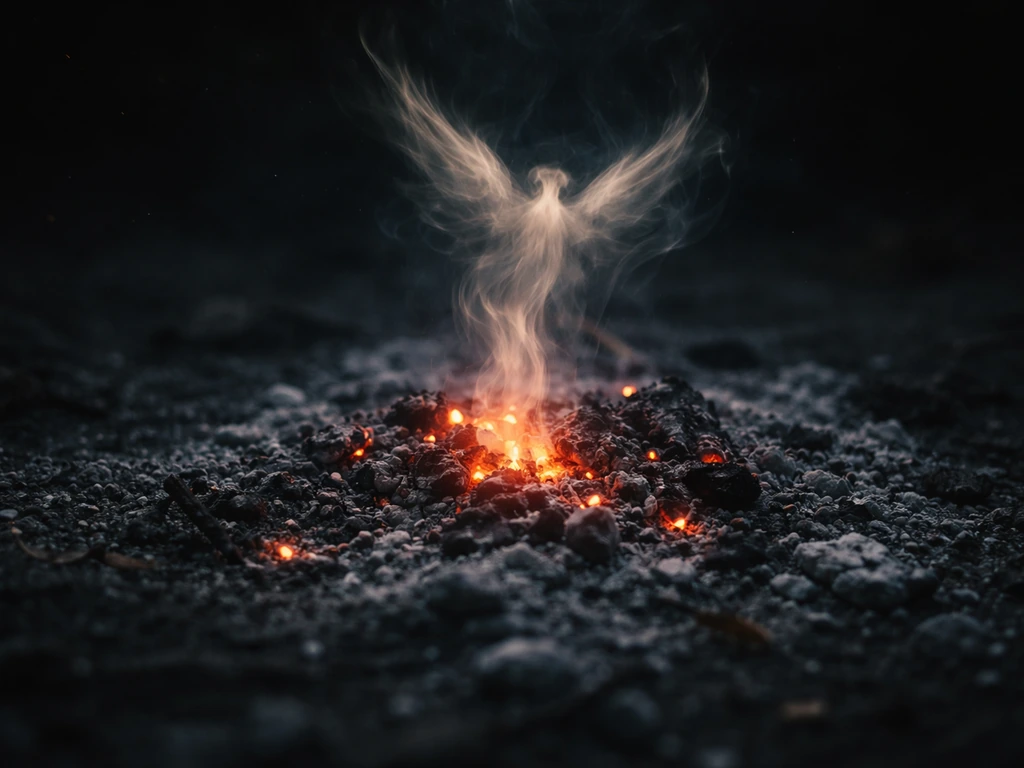
People encounter phoenix imagery in a lot of forms: a feather found unexpectedly, a bird seen in flight during a difficult moment, fire or ember imagery appearing repeatedly in art or dreams, or phoenix symbols appearing in jewelry, tattoos, or décor during a season of change. Here is how to interpret these encounters responsibly, meaning in a way that gives you genuine meaning without overclaiming.
Notice Before You Interpret
The first step is simply to observe without immediately assigning meaning. Psychologists note that confirmation bias, our tendency to favor information that fits what we already believe or feel, can shape what we 'notice' as significant. That does not mean symbolic encounters have no meaning. It means the most useful interpretation comes after you have actually sat with what you observed. What were you thinking about when the image appeared? What has been ending or burning in your life lately? The phoenix image becomes meaningful not because it is a literal omen but because it gives your mind a framework for processing something real.
What Different Encounters Might Prompt
- A red or gold feather found unexpectedly: a prompt to ask what you are in the middle of releasing or burning away
- A bird seen rising suddenly from low ground into the sky: a prompt to notice where in your life new movement is possible after a period of stillness
- Fire or ember imagery recurring in dreams: worth journaling about what the fire feels like, destructive or cleansing, and what it seems to be consuming
- Phoenix symbols appearing in art, clothes, or spaces during a hard season: an invitation to explore the rebirth narrative as a frame for your own situation, not a guarantee of easy resolution
Treat symbolic encounters as prompts for reflection rather than predictions about outcomes. The meaning-making process itself, taking the image seriously enough to ask what it mirrors in your own life, is where the real value lives.
Practical Next Steps: Renewal Practices You Can Do Today
Journaling Prompts Rooted in Phoenix Symbolism
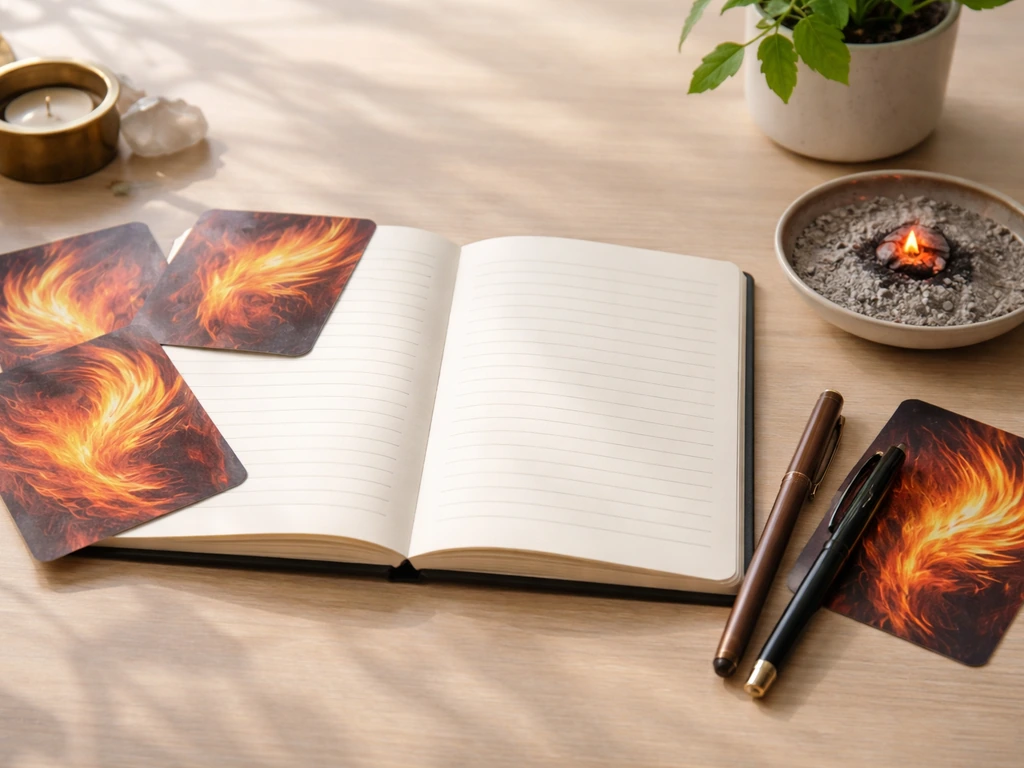
Journaling is one of the most concrete ways to work with phoenix symbolism. Writing down your thoughts soon after a symbolic encounter or a moment of emotional intensity helps you identify patterns and reframe what you are experiencing. Try writing in response to these prompts:
- What in my life right now is in the process of burning? What am I grieving, releasing, or being forced to let go of?
- If I imagine those ashes as raw material rather than just loss, what could they become?
- When have I risen from something difficult before? What did I carry forward from that experience, and what did I leave behind?
- What would it mean to treat this ending as a necessary part of the next beginning, rather than something that should not have happened?
- What identity, habit, or story about myself is ready to be released so something new can emerge?
A Simple Release Ritual (No Fire Required)
One of the most meaningful phoenix-aligned practices is a release ritual. You do not need actual fire for this to work symbolically. Write down what you are releasing: a fear, a pattern, a version of yourself that no longer fits, a grief you have been carrying. If it is safe and appropriate where you are, burning the paper in a fireproof container is one option. If not, burial under soil, releasing the paper into flowing water, or simply tearing it and disposing of it mindfully all carry the same core gesture: the deliberate, intentional release of something that has been held. The ritual works because you are participating in it consciously, not because of any mystical property of the paper.
A Meditation Practice for Transformation
Sit quietly for five to ten minutes and imagine yourself standing in front of a fire, not a threatening one but a warm, contained one. Notice what you are holding in your hands. What would you put into the fire if you could? What are you afraid to burn? What do you hope will rise? Link this idea of the phoenix is a legendary bird that rises to the part of you that wants renewal what do you hope will rise. You do not need to force answers. Simply notice what images, feelings, or words arrive. Afterward, write down anything that surfaced. This kind of visualization borrows directly from the phoenix narrative while keeping you grounded in your own emotional reality rather than floating into abstraction.
Working with Phoenix Imagery as a Symbol Object
If you are drawn to carrying or displaying phoenix imagery, whether a piece of jewelry, a print, a tattoo, or a small sculpture, use it as a deliberate anchor rather than a passive decoration. Each time you notice it, let it prompt a brief internal check-in: where am I in my own cycle right now? Am I in the burning phase, the ash phase, or the rising phase? That level of conscious engagement is what transforms a symbol from decoration into a genuine tool for meaning-making. You are not claiming the object has power. You are using it as a mirror.
The phoenix has endured across Egyptian, Greek, Roman, Jewish, and Christian traditions not because people were naive but because the image names something true about how transformation actually works. Things end. Sometimes dramatically. And what you become afterward is continuous with what you were, shaped by the fire, not erased by it. That is the myth's deepest gift, and it is just as available to you today as it was to anyone who first told this story thousands of years ago.
FAQ
How can I tell the phoenix from other “rebirth” birds in myths or symbolism?
The phoenix is defined by a specific transformation pattern: it dies by self-initiated fire, then rises from the resulting ashes as the same life renewing itself. If a bird story involves immortality, magical sleep, or being reborn without an ash and burning step, it is usually describing a different motif than the phoenix.
Does phoenix symbolism promise a fast “rebirth” after pain?
Not exactly. Many phoenix traditions frame the cycle as long and deliberate, so the fire phase is typically portrayed as real time for an ending, not an instant shift in feelings. If you are hoping for a quick emotional fix, the myth is more aligned with sustained transition than with immediate relief.
What is spiritual bypassing in a phoenix context, and how do I avoid it?
One common mistake is using the imagery to avoid grief, for example, telling yourself you should be “over it” because something new is coming. A phoenix-aligned approach keeps the ending honest, then asks what changes you can already feel after you have allowed the difficult part.
If I keep seeing phoenix imagery, should I take it as an omen?
The article treats symbolic encounters as prompts, not predictions. That means you can ask “What is this mirroring for me?” without treating the image as a guarantee about outcomes or timing. If you notice the same symbol repeatedly, it is usually safer to track your inner cycle than to assume external events are predetermined.
What if interpreting phoenix signs makes me more anxious?
Yes, especially if you notice stress, intrusive thoughts, or compulsive checking around signs. As a practical rule, if your interpretation increases anxiety or pushes you to ignore what you already know you need to face, pause the “meaning search” and return to concrete reflection (journal prompts, values, or support).
Are there safer alternatives to burning paper in a release ritual?
Rituals work best when they are framed as symbolic release, not as a way to make danger or consequences disappear. Using fireproof containers is optional, but safety matters, and you should avoid unsafe burning at home. Alternatives like tearing, burial, or disposing mindfully can still preserve the intentional release gesture.
Does “rebirth” mean I should fully erase my old self?
Many versions emphasize continuity, meaning what rises is shaped by what burned, not erased. So if you are using the symbol for personal change, focus on “what remains worth carrying” alongside “what must end,” rather than trying to become an entirely different person overnight.
Is it respectful to use phoenix symbolism if I am not from that religious tradition?
Because the myth appears across cultures, you can use it personally without borrowing sacred claims you cannot verify. A respectful approach is to treat it as a human storytelling pattern about transformation, then focus on your own meaning-making rather than declaring you have a definitive religious or historical authority.
How do I apply the phoenix cycle to a specific life transition right now?
For grief or illness seasons, the most useful “next step” is often to map where you are in the cycle: burning (what is ending), ashes (what feels numb, lost, or grounded), rising (what is rebuilding). This turns the symbol into a planning tool instead of a vague inspiration poster.
What should I do differently after noticing phoenix imagery in art or a dream?
If you encounter phoenix symbolism through art, jewelry, or dreams, avoid overclaiming and don’t assume literal meaning. The grounded method is to note what you felt and what was already changing, then choose one small action that supports your ending and rebuilding (a conversation, boundary, cleanup, or therapy appointment).
Next Article
Phoenix the Bird Reborn From Ashes: Meaning and Guide
Phoenix rebirth symbolism, mythic origins and meanings across traditions, with exercises to interpret imagery, dreams, a