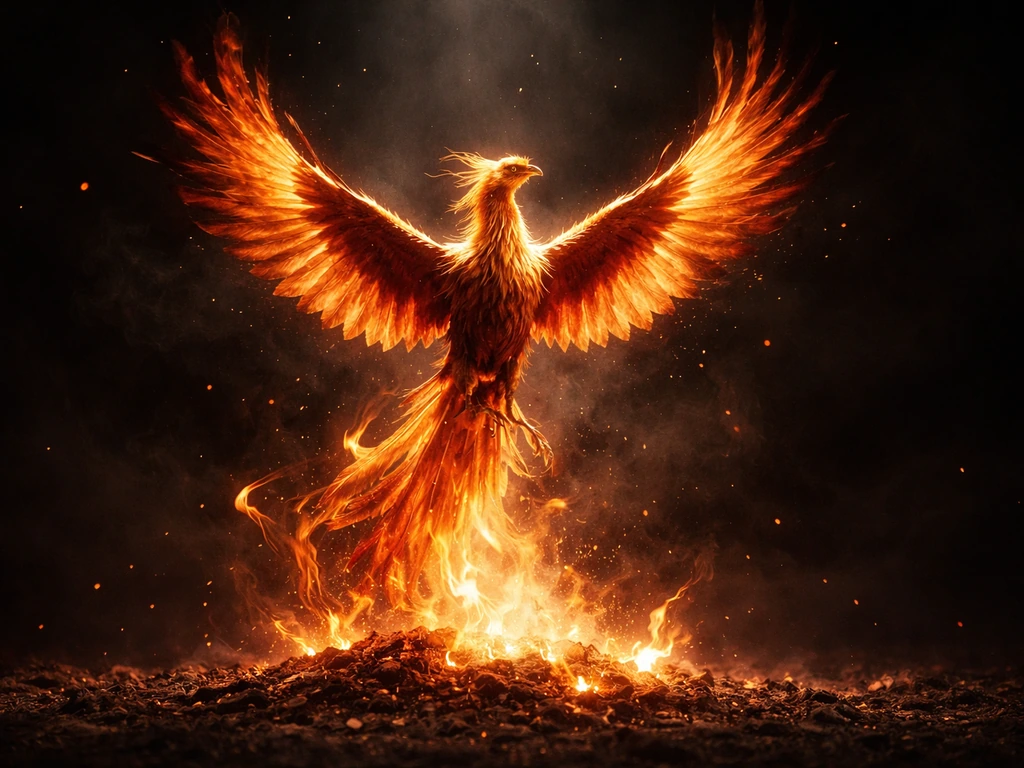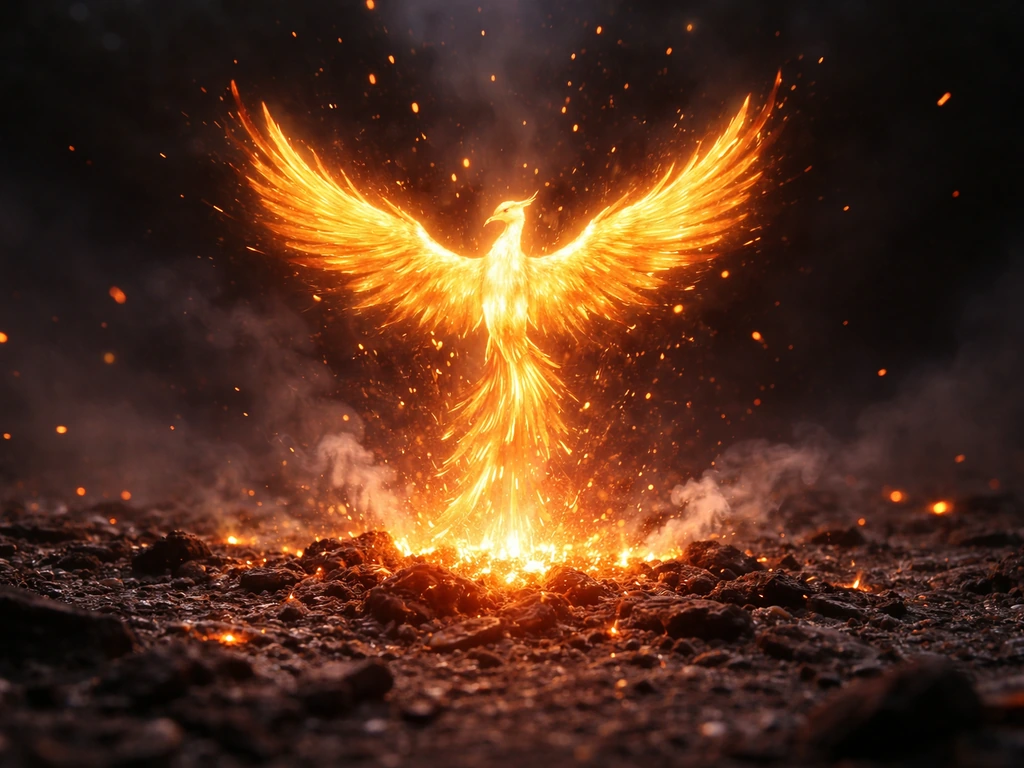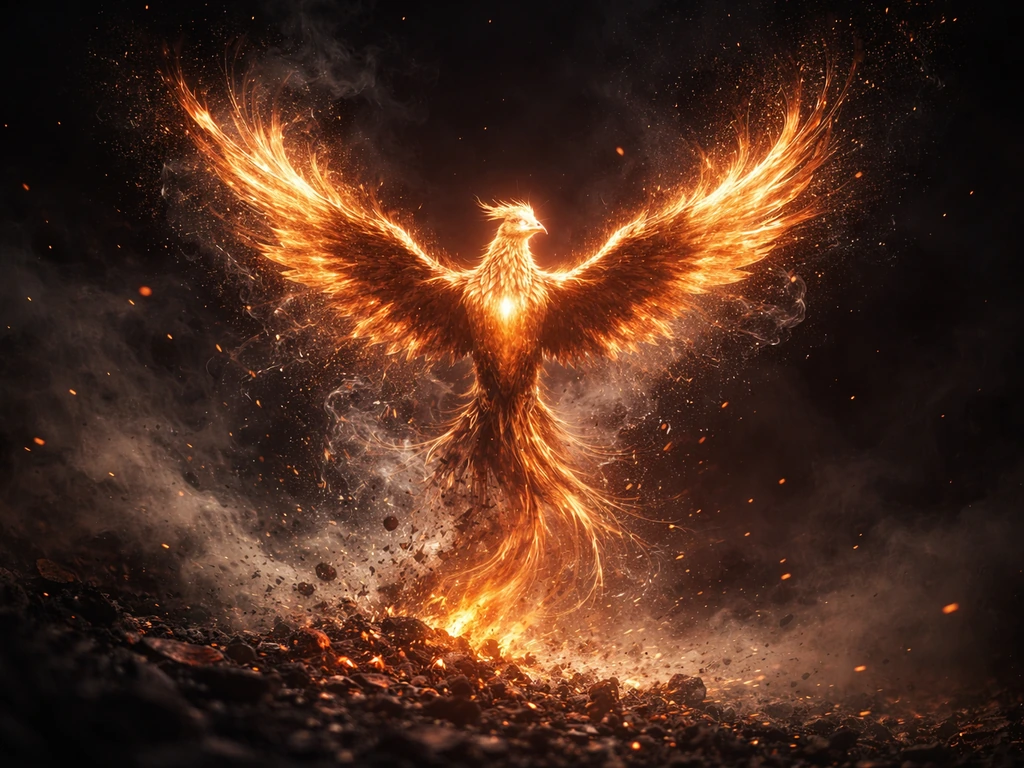
The bird reborn from ashes is the phoenix. In many tellings, the phoenix is a legendary bird that rises again from the ashes after burning to nothing. That's the answer you'll find across Greek, Roman, Egyptian, medieval Christian, and Persian traditions alike. The phoenix builds a pyre, burns itself to ash, and rises again, renewed. Every version of the story carries the same core image: fire, ash, and a bird that comes back. If you're looking for the mythological creature behind that image, the phoenix is it.
Which Bird Is Reborn From Ashes? Phoenix and Beyond

Eleanor Hartwell
12 May 2026
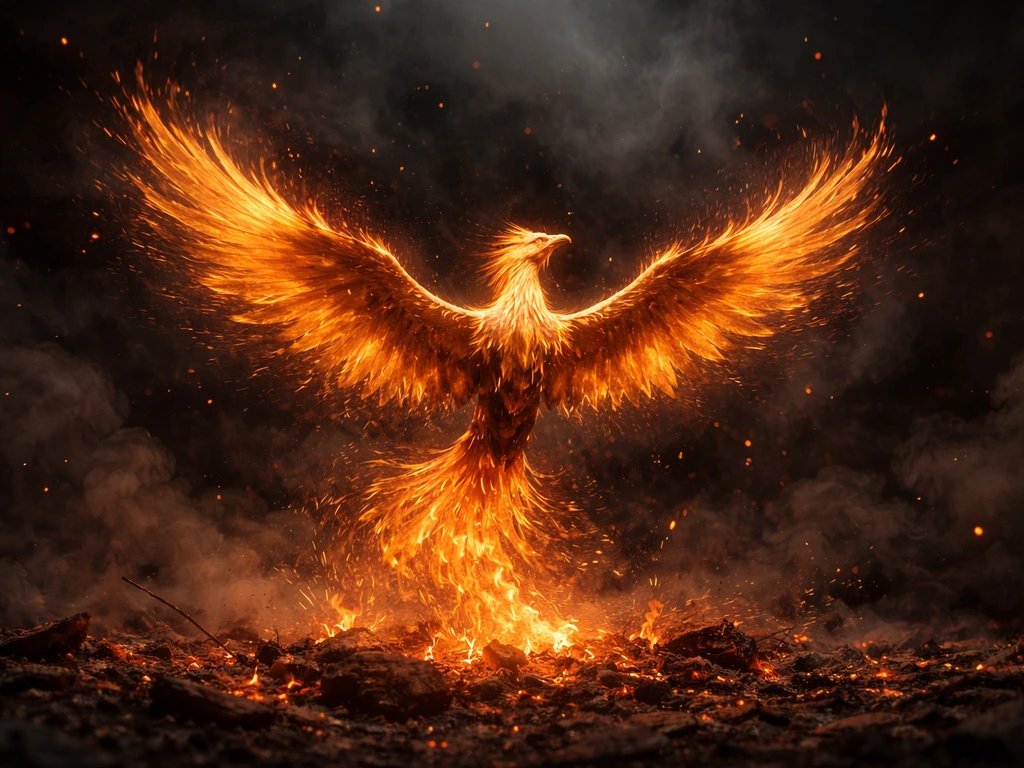
The bird most linked to rebirth from ashes
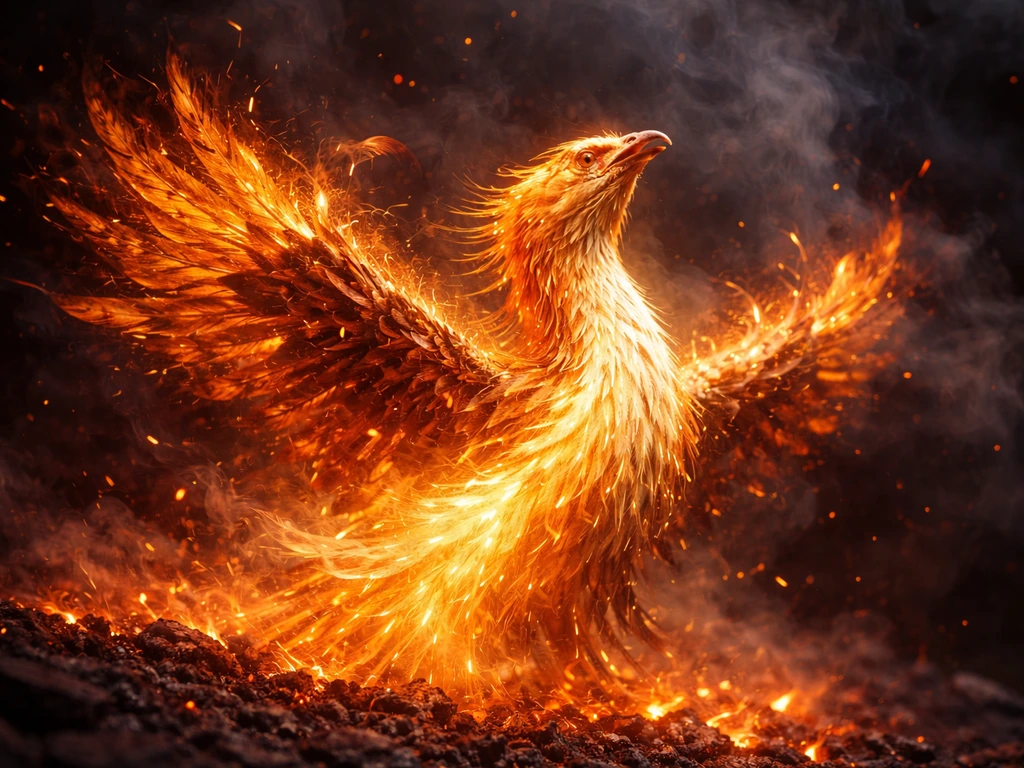
The phoenix is, without question, the bird most universally associated with the phrase 'reborn from ashes.' Encyclopaedias from Britannica to Cambridge to Collins all define it the same way: an immortal bird that sets itself on fire every 500 to 600 years and rises again from the ash. Cambridge's dictionary puts it plainly, glossing 'rising from its ashes' as rising from 'the powder left after its body has been burned.' There's no ambiguity in the tradition. Only one phoenix exists at a time. It dies. It burns. It returns.
That said, depending on which culture you're reading about or which dream, artwork, or puzzle clue sent you here, you might actually be thinking of a related but distinct bird: the Egyptian Bennu, the Persian Simurgh, the Slavic Firebird, or even the Chinese Fenghuang. All of them carry some thread of renewal or fiery transformation. But only the phoenix has the specific ashes cycle locked into its defining myth. The Collins English Dictionary synopsis says the mythical phoenix lives about 500, 600 years, burns itself on a funeral pyre, and rises from its ashes in renewed youth only the phoenix has the specific ashes cycle locked into its defining myth. If you're searching in the context of a crossword, mythology class, or spiritual symbol, the answer is phoenix. The rest of this article will help you understand what that really means, and when another 'rebirth bird' might actually be the better fit.
What 'reborn from ashes' actually means in bird symbolism
In bird symbolism broadly, flight already carries ideas of transcendence, the soul leaving the body, and freedom from earthly limits. The 'reborn from ashes' motif takes that one step further. It doesn't just say a bird escapes death. It says the bird passes through death completely, is reduced to nothing, and comes back more fully alive than before. That's a very different symbolic claim than simple longevity or escape.
The ashes matter. Ash in many traditions is what remains after total destruction, the irreducible core. In the Catholic tradition, ashes are also used as a Christian symbolic practice, especially connected to penance, which fits this idea of ashes as an irreducible core Ash in many traditions is what remains after total destruction, the irreducible core.. When a phoenix rises from ash rather than from sleep or injury, the myth insists that transformation isn't possible without complete loss first. You can't partially burn and expect renewal. The symbolism specifically honors the going-all-the-way-through. That's why phoenix imagery resonates so strongly with people navigating grief, endings, illness, or radical personal change. It's not optimistic in a shallow way. It looks directly at destruction and says: this is where the new thing starts.
Britannica notes the legend was 'widely interpreted as an allegory of resurrection and life after death,' and that this reading appealed strongly to early Christianity. But even outside religious contexts, the symbolic logic holds: cycles of destruction and return are woven into nature (seasons, fire ecology, cellular renewal), and the phoenix externalizes that pattern in one vivid, unforgettable image.
The phoenix across traditions: where the story comes from and what it carries
Egyptian roots: the Bennu and Heliopolis
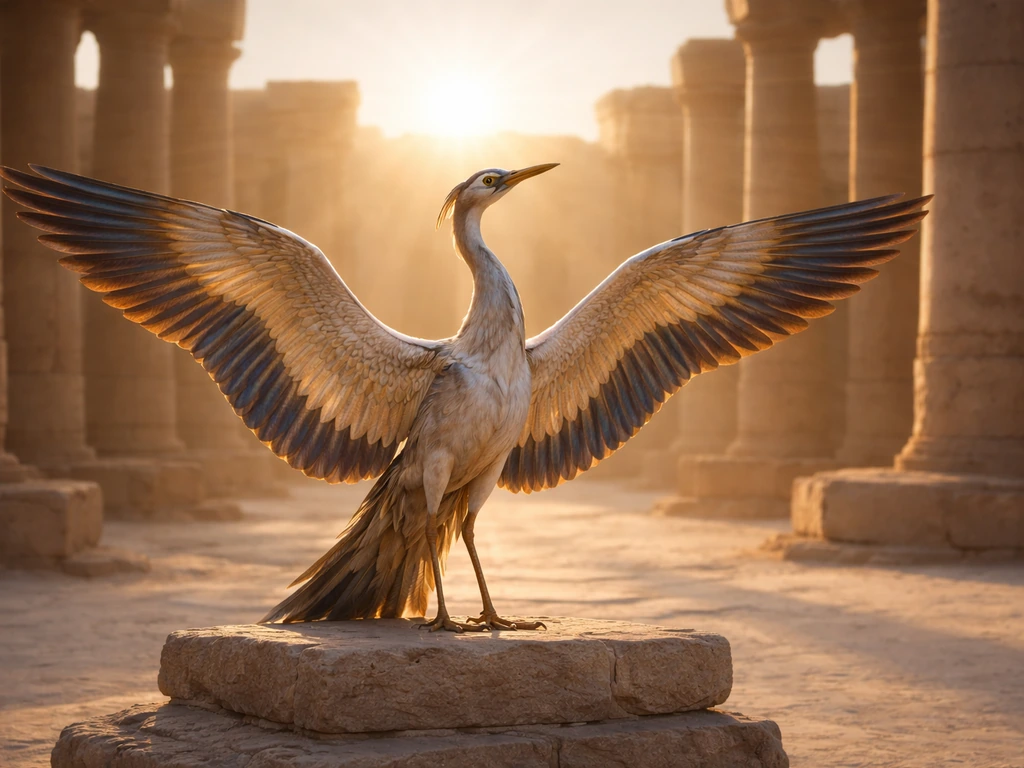
The oldest ancestor of the phoenix myth is the Egyptian Bennu bird, a heron-like solar deity associated with Ra and Osiris at Heliopolis. The name Bennu connects to the Egyptian verb 'wbn,' meaning 'to rise' or 'to rise in brilliance,' and the bird appeared on funerary scarab amulets as a symbol of rebirth. But here's an important distinction worth knowing: Egyptian sources don't actually describe the Bennu dying and rising from fire. That specific fire-and-ashes sequence developed later in Greek and Roman retellings. The Bennu's rebirth is solar, cyclical, and tied to the daily rising of the sun, not to a pyre. Think of it as the symbolic ancestor rather than the same story.
The Heliopolis connection does carry through, though. In one version of the phoenix myth documented by the ancient historian Herodotus and later elaborated by Tacitus, the phoenix embalms its father's ashes in an egg of myrrh and carries them to the altar of the sun god Re at Heliopolis. The geography is deliberately sacred. The bird returns its dead to the center of solar power and, from that act of devotion, renewal begins. The 1911 Encyclopaedia Britannica summarizes the 'most familiar form' of the classical myth as the phoenix burning itself on a nest or pyre, with 'the young phoenix spring[ing] from the ashes.'
Greek and Roman versions
By the time the phoenix appears in Greek and Roman sources, it's fully shaped as the bird that builds a funeral pile of spices and aromatic materials, self-immolates, and is reborn from what's left. Theoi's classical mythology database describes exactly this sequence, the fragrant pyre, the flames, the rebirth, and notes parallels appearing 'in many parts of the East,' including Persian and other traditions. The detail about spices and myrrh is significant symbolically: this isn't a destructive, random fire. It's a prepared, intentional, even sacred burning. The phoenix chooses it.
Medieval Christian symbolism
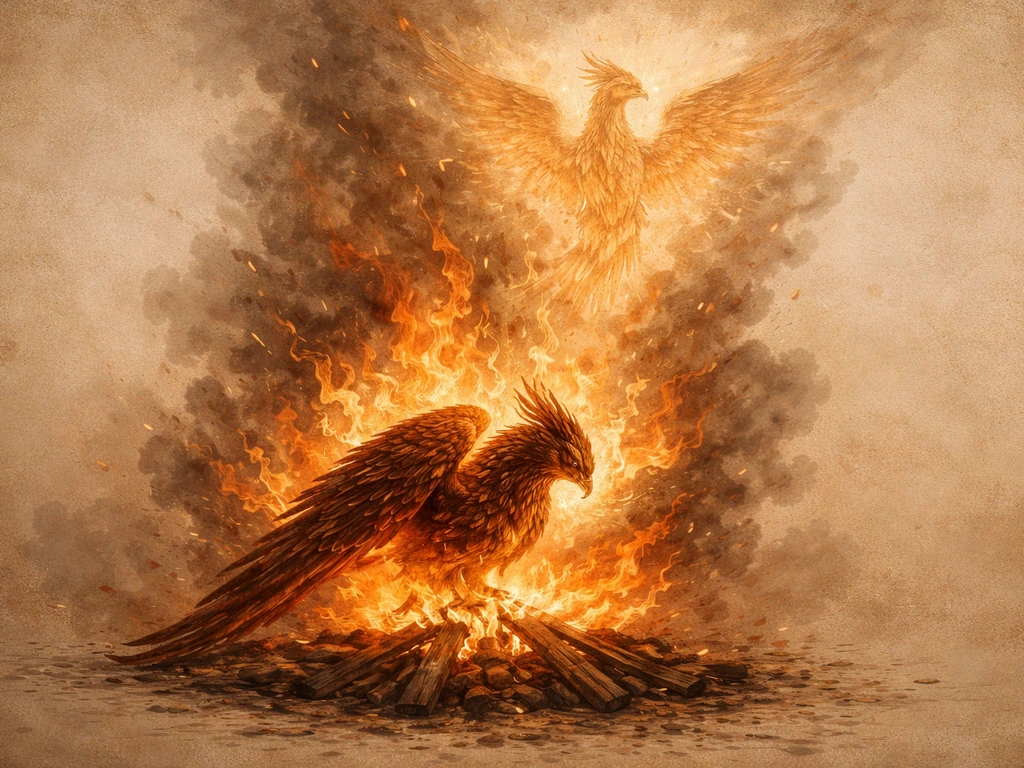
The Physiologus, an early Christian text that shaped medieval bestiaries, describes the phoenix burning itself to death and rising on the third day from the ashes, and explicitly frames this as a type of Christ: death, burial, and resurrection mirrored in a bird. The Morgan Library's Worksop Bestiary shows the phoenix gathering spices for its pyre and rising from the flames, captioned with the Christ allegory. This is one of the clearest examples in Western art history of a bird symbol being used to teach theological doctrine. The phoenix wasn't just decorative. It was a teaching image, a shorthand for resurrection that any illiterate medieval viewer could understand by looking at the picture.
Persian and Eastern traditions
In Persian tradition, the Simurgh is a vast, ancient bird associated with wisdom and renewal, sometimes described as old enough to have witnessed the destruction of the world multiple times. It's phoenix-adjacent in the sense of extreme longevity and transformation, but it doesn't typically die by fire and rise from ash the way the classical phoenix does. More directly parallel is the Persian Quqnus (Quqnūs), a bird described as building a pyre and burning itself, with its young emerging from the ashes, making it one of the closest structural parallels to the classical phoenix outside the Greek-Roman tradition.
Other 'rebirth' birds people might be thinking of (and how they differ)
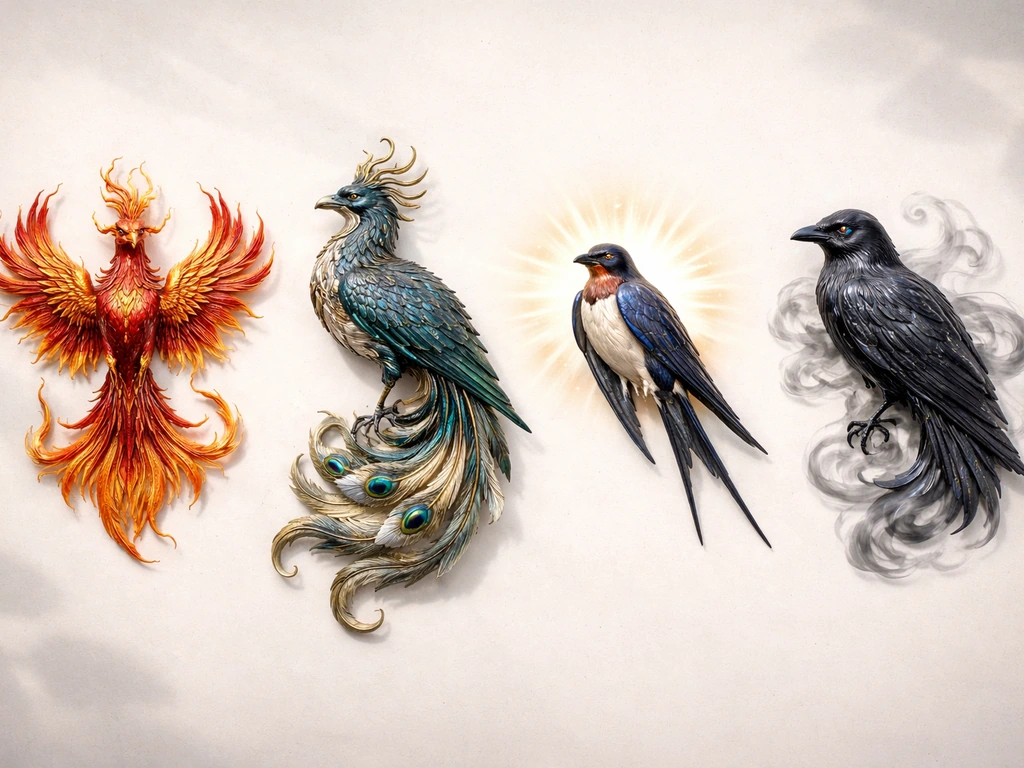
If you're researching bird symbolism and came across 'rebirth from ashes' in a context that doesn't quite match the classical phoenix, here are the most likely alternatives and how their meanings differ from the phoenix's specific fire-and-ash cycle.
| Bird | Origin | Core rebirth motif | Key difference from phoenix |
|---|---|---|---|
| Phoenix | Greek/Roman/Medieval | Burns to ash, rises renewed | The defining fire-and-ash cycle; only one exists at a time |
| Bennu | Egyptian | Solar renewal at dawn | No fire or death narrative; renewal is cyclic and solar, not pyre-based |
| Simurgh | Persian | Ancient wisdom, world-renewal | Longevity and wisdom focus; not a fire/ash death cycle |
| Quqnūs | Persian poetry | Burns itself, young rise from ashes | Structurally similar to phoenix but less widely known in Western tradition |
| Firebird (Zhar-Ptitsa) | Slavic/Russian | Magical fire, inspiration | Associated with beauty and wonder; ballet adaptations added phoenix-like rising |
| Fenghuang | Chinese | Harmony, virtue, imperial power | Symbol of balance and good fortune, not specifically death and rebirth from fire |
| Garuda | Hindu/Buddhist | Solar, divine power | Carries a solar/divine role; not associated with burning and renewal from ash |
The Slavic Firebird is worth a special note because modern media, especially Stravinsky's ballet, has layered phoenix-like imagery onto it. In the original Russian folktales, the Firebird is a luminous, magical creature pursued for its beauty and power, but its core meaning is about the extraordinary and the transformative in the sense of inspiration, not death and rebirth. When the ballet scenario has the Firebird 'rise from the ashes,' that's a modern grafting of phoenix logic onto Slavic material. If you encountered this bird in art, a tattoo, or a ballet program and assumed it meant 'reborn from ashes' the same way a phoenix does, it might carry that weight in that specific context, but it's not the original tradition.
How to interpret phoenix and rebirth bird imagery when you encounter it
In dreams
Dreaming of a phoenix or a bird rising from fire is consistently interpreted in symbolic frameworks as a signal of transformation or new beginnings. The more useful question to ask isn't 'what does this mean?' in a fixed way, but 'what's burning in my life right now, and what might be trying to come back?' If the phoenix in your dream burns but doesn't rise, some frameworks read that as fear of change rather than transformation itself. If it rises clearly, the symbol leans toward confidence about what's beginning. Context matters a great deal. A phoenix dream during a major loss carries different weight than the same image during a creative breakthrough.
In art, tattoos, and visual culture
Medieval bestiary paintings of the phoenix were theological teaching tools, and that interpretive tradition still echoes in contemporary phoenix art. When you see a phoenix tattoo or painting, look at what stage of the cycle is shown. A bird in flames reads differently from a bird mid-rise from ash, which reads differently again from a fully soaring bird with no fire in sight. The embers and ashes beneath are doing as much symbolic work as the bird itself. Fire alone suggests purification or destruction. Ashes suggest the aftermath and the raw material of renewal. The rising bird unites both: it says the destruction was real and the renewal is also real.
In everyday encounters and personal meaning
People often feel pulled toward phoenix imagery during transitions: job loss, divorce, recovery from illness, the aftermath of grief. The symbolism earns its resonance here because it doesn't skip the hard part. It doesn't promise everything will be fine. It says: go fully through the fire, and what's on the other side will be something genuinely new. If you're in a period that feels like burning, phoenix symbolism isn't telling you to be optimistic. It's telling you that the burning itself is part of the process, not a detour from it.
Practical next steps: how to actually use this symbolism
Bird and rebirth symbolism is most useful when it helps you reflect rather than when it gives you a simple answer. Here's how to work with it in a grounded, practical way.
- Identify which bird you're actually working with. Are you seeing a phoenix (fire, ash, singular cycle), a Bennu (solar, cyclic dawn), a Firebird (radiant beauty, pursuit of the extraordinary), or something else? The specific tradition matters because each carries a different emotional and spiritual emphasis.
- Notice the accompanying symbols. Fire alone points to purification or destruction. Ashes point to aftermath and grief. A rising bird points to emergence. Spices or fragrant materials (in classical phoenix imagery) suggest intentional, even sacred preparation. Which of these is present in the image or dream you're interpreting?
- Ask what's 'burning' in your own life. Phoenix symbolism earns its meaning through honest self-inventory. What has ended, or needs to end, for something new to be possible? The symbol works as a lens for this question, not as a prediction.
- Journal or write through the metaphor. Research in grief and meaning-making frameworks suggests that writing your 'event story,' the thing that burned, alongside a forward-looking narrative, helps reconstruct a coherent sense of self after loss. You don't need to use the word 'phoenix.' You just need to write both parts: what was destroyed, and what is beginning.
- Look at the cultural tradition most relevant to you. If Christian resurrection symbolism resonates, the medieval bestiary reading of the phoenix as a type of Christ may be the most meaningful angle. If Egyptian solar cycles speak to you, the Bennu's connection to daily renewal and funerary hope may be closer. If you're drawn to Persian poetry, the Quqnūs or Simurgh tradition offers its own texture. None of these is more 'correct' than the others.
- If you want to go deeper, compare the phoenix to related rebirth birds in nearby traditions. Understanding how the Bennu differs from the phoenix, or how the Firebird grafted phoenix meanings in modern interpretations, helps you use the symbolism more precisely and honestly, rather than treating all 'fire birds' as interchangeable.
The phoenix endures as a symbol because it doesn't offer false comfort. It makes a specific, demanding claim: that renewal is real, but it requires going all the way through the fire, not around it. Whether you encountered this image in a dream, a piece of art, a mythology puzzle, or a moment of personal crisis, that's the core idea it's asking you to sit with. Which bird is reborn from ashes? The phoenix. In CodyCross-style clues about a mythical bird reborn from ashes, that same figure is the phoenix mythical bird that is reborn from ashes codycross. And what it's asking of you is the harder question worth exploring.
FAQ
If a clue just says “bird reborn from ashes,” is the answer always phoenix?
In most puzzle and mythology contexts, yes. “Ashes” paired with “reborn” strongly points to the classical phoenix cycle (self-immolation, ash aftermath, then return). If the clue instead emphasizes “solar” or “rising” without fire, Bennu becomes more likely.
How can I tell when the article’s “phoenix” meaning is being used loosely in modern media?
Check whether the story includes both fire and the ash-to-birth sequence. Modern retellings sometimes reuse the word phoenix or “reborn from ashes” imagery for birds that are only transformative (like the Firebird) or only long-lived (like Fenghuang), without the defining ashes moment.
In Egyptian mythology, is the bird that rises from ashes also a perfect match to the phoenix?
Not exactly. The Egyptian Bennu is an important rebirth ancestor, but it is typically linked to solar rising rather than the specific Greek and Roman fire-and-ashes self-burning sequence. So if the question explicitly mentions “ashes,” “pyre,” or “self-immolates,” phoenix fits better.
Could this be a crossword answer that expects a specific spelling, like “Simurgh” or “Bennu” instead of phoenix?
It depends on what else is in the clue. If the clue’s wordplay or length matches Bennu or Simurgh and the definition hints at sun or cosmic renewal without burning, those names can fit. If the definition literally includes “ashes” or “rises from ash,” phoenix is usually the safer pick.
Does the phoenix always rise on the same schedule, like every 500 to 600 years?
Many retellings include a long interval, but not all versions emphasize the timing. If your clue is “immortal bird” without any time number, phoenix still works. If the clue includes an exact cycle length, you may need the specific variant that gives that timeframe.
In a dream, what if the bird burns but never clearly rises?
That often shifts the interpretation from “renewal is underway” to “change is being resisted or feared.” The key practical step is to identify the real-life situation that feels like it is “on fire” and ask what part you are skipping (the part that must be faced before any return).
What if the artwork shows a phoenix, but it’s more of a glowing bird than a burned one?
Then you might be looking at a phoenix-like symbol that is emphasizing transcendence, not the aftermath logic. In practical terms, focus on whether the image highlights embers and ash (after complete loss), or whether it just shows power and transformation without the “gone to ash” stage.
Is the phoenix symbolism about being “reborn” or about the process itself?
Both, but the distinction matters. The phoenix claim is that renewal is real and requires going all the way through the destructive stage. If you want to apply it well, treat it as guidance to complete the transition, not as a guarantee that the new outcome will arrive without cost.