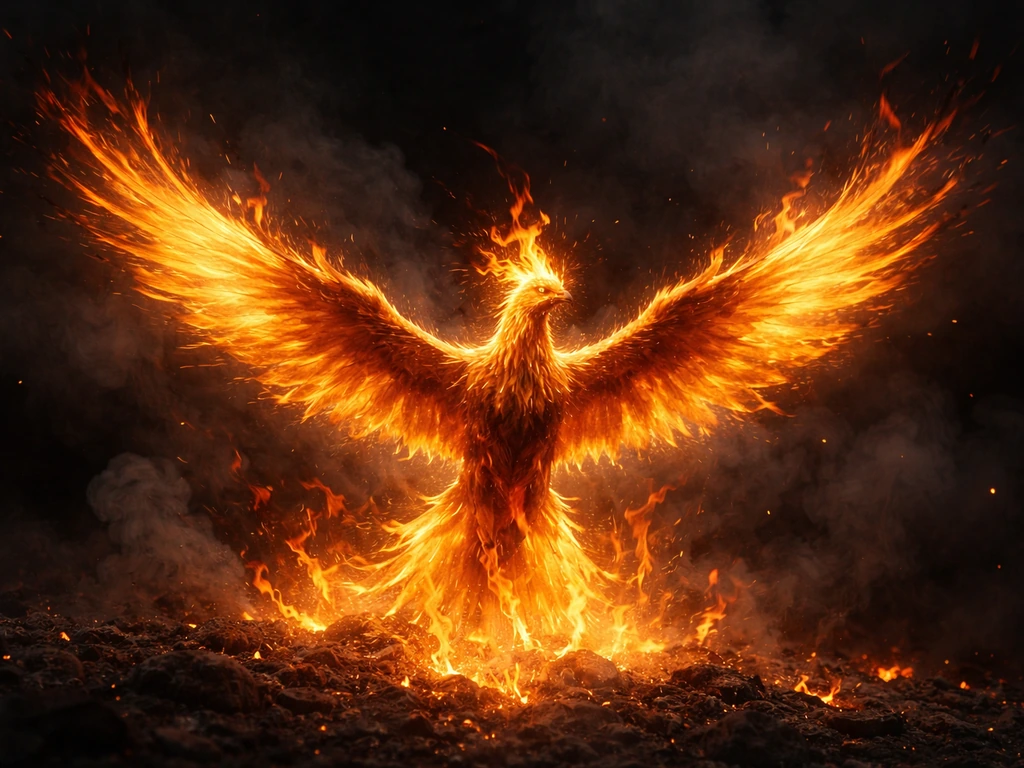
The phoenix is a legendary bird that rises from its own destruction, and what that means symbolically is this: no ending is truly final, and transformation often requires passing through fire first. It is one of the most enduring metaphors in human history precisely because it maps so cleanly onto real experience. Loss, collapse, grief, reinvention, survival. The phoenix doesn't avoid the flame. It walks into it.
The Phoenix Is a Legendary Bird That Rises: Meaning and Practice

Eleanor Hartwell
19 May 2026
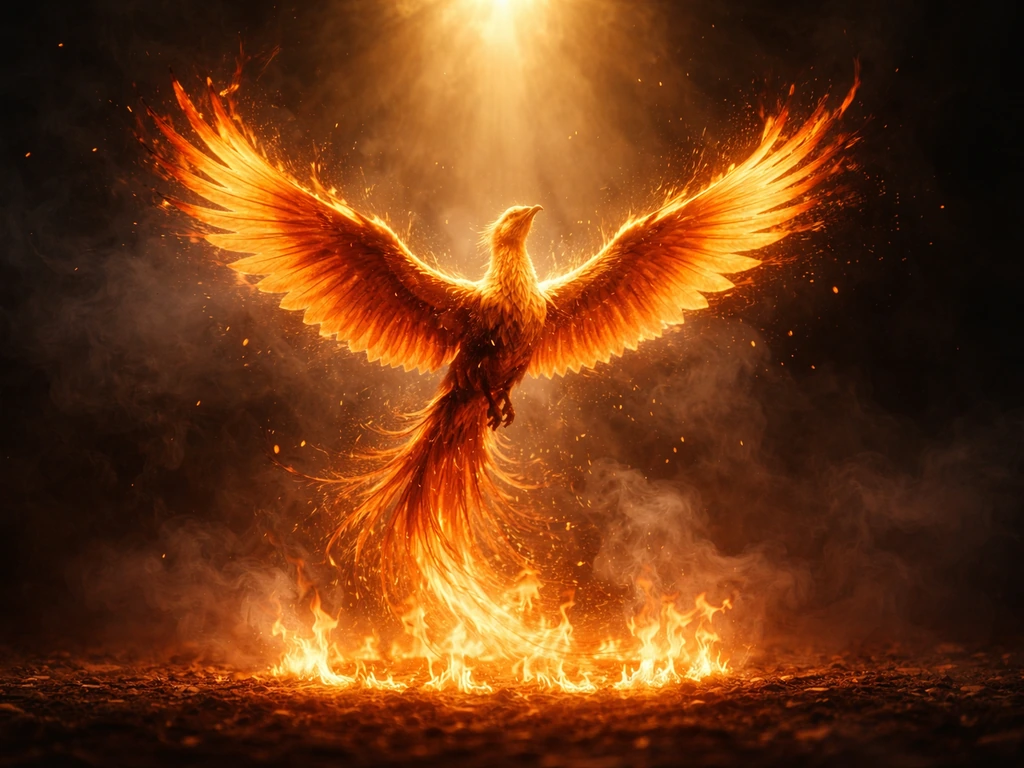
Where the phoenix idea comes from
The earliest written accounts we have place the phoenix in ancient Egypt and classical Greece. The Greek historian Herodotus, writing in the 5th century BCE, relays a story he heard from people in Heliopolis: a sacred bird arrives every five hundred years, transports the body of its parent to the Temple of the Sun, and buries it there. In his version, the young phoenix encases the parent in an egg of myrrh and carries it to Egypt.
Herodotus himself was honest about his skepticism, admitting he had never personally seen the bird and adding plainly, 'I cannot believe the story. ' That kind of candor from an ancient source is worth noting. Even at the very origin of the written record, the phoenix was understood more as a powerful image than a verifiable creature.
The Roman poet Ovid, writing in his Metamorphoses, gives the phoenix its most vivid literary form: the bird blank" rel="noopener noreferrer">assembles fragrant materials, cassia bark, nard, cinnamon, and myrrh, fashions a nest from them, dies among the perfumes, and from that death a young phoenix is reborn, 'destined to live the same number of years.' The sensory richness Ovid brings to the image, the spices, the scent, the self-constructed funeral pyre, became enormously influential. It's the version most people are drawing on when they talk about the phoenix rising from ashes, even if they've never read a word of Latin.
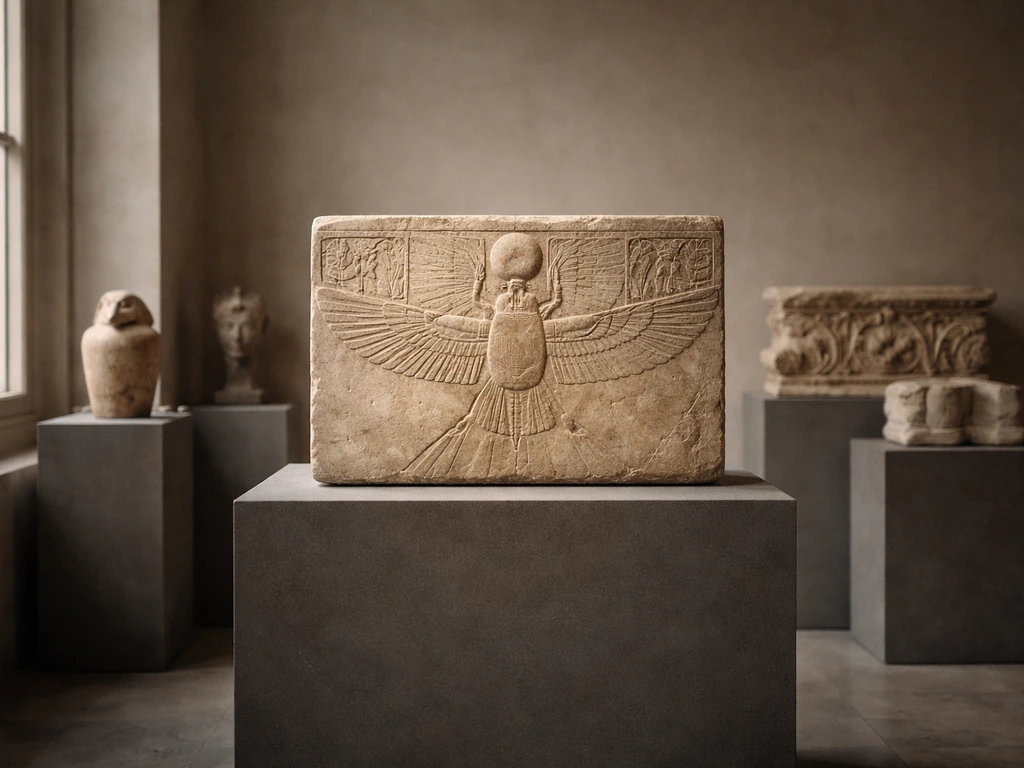
The Egyptian roots are worth understanding separately because they predate the Greek and Roman accounts. The Bennu bird, a solar deity associated with the sun god Ra and the creator god Atum, appears in Egyptian cosmology as a heron-like figure whose very name is linked to a verb meaning 'to rise in brilliance' or 'to shine.' The Pyramid Texts connect the Bennu to solar and ritual symbolism going back thousands of years. Most scholars believe the Greek phoenix tradition drew at least partly from this Egyptian imagery. The solar connection matters: 'rising' in this tradition isn't only about death and rebirth. It's about the daily renewal of the sun, the cosmic cycle that keeps everything alive.
What 'rises' actually means in phoenix symbolism
The word 'rises' does a lot of work in the phoenix story, and it's worth unpacking rather than treating as obvious. Britannica summarizes the phoenix as a sun-associated bird whose death-by-immolation is followed by a young phoenix rising again from the altar fire or ashes, and describes this as 'widely interpreted as an allegory of resurrection and life after death.' That's the core reading. But the symbolism of rising operates on several layers at once, and different traditions emphasize different ones.
- Rebirth: The phoenix doesn't just survive, it is renewed. It comes back younger, full of life, starting again. This is distinct from mere endurance.
- Resurrection: In Christian interpretive traditions especially, rising carries the theological weight of resurrection, specifically the idea of body and soul returning to life. The underlying Greek term 'anastasis' literally means 'rising or resurrection.'
- Renewal: The solar reading emphasizes cyclical renewal rather than a one-time event. Like the sun rising every day, the phoenix represents the regenerative rhythm of existence itself.
- Transformation: The fire doesn't just destroy the old phoenix and produce an identical copy. There's an implicit transformation in the process. What rises is the same and also changed.
- Overcoming: The very act of walking into the fire and emerging is a model for how to face catastrophe, not by avoiding it, but by moving through it with intention.
The fire itself is as important as the rising. In Ovid's account and in the later medieval bestiary tradition, the phoenix actively gathers the materials of its own funeral pyre. It isn't destroyed randomly or violently. It constructs its own ending, which is a meaningful distinction. This suggests that conscious engagement with loss or transition, rather than passive suffering, is part of what the phoenix represents.
The spiritual lessons people draw from the phoenix
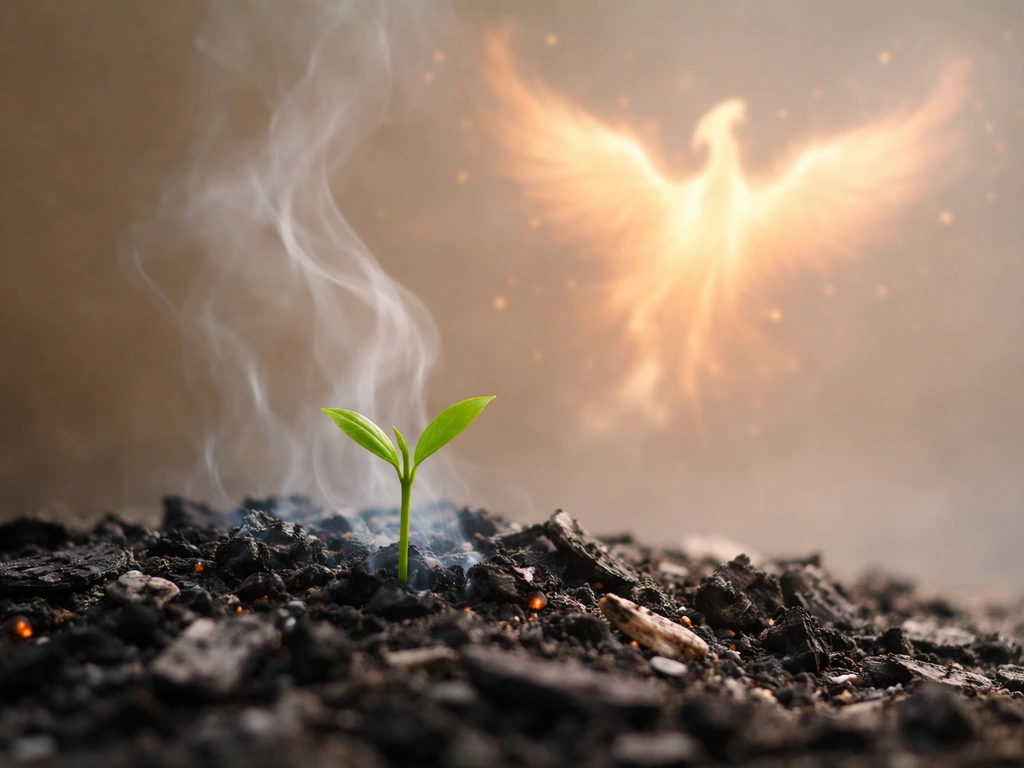
Across the traditions that have worked with phoenix imagery, a few consistent spiritual lessons emerge. They're worth stating plainly because people sometimes get lost in the mythology and miss the practical wisdom underneath it.
- Destruction is not the end of the story. The phoenix's death is the midpoint, not the conclusion. Whatever you are in the middle of, the symbol insists there is a next chapter.
- Cycles of loss are part of life, not aberrations. The phoenix doesn't rise once and live forever in that risen state. It completes a cycle and does it again. This frames recurring hardship as natural rather than punishing.
- Fragrant things, values, beauty, meaning, are worth gathering before the fire. Ovid's phoenix chooses aromatic spices. Symbolically, knowing what matters most to you before a difficult season helps you carry it through.
- Rising requires release. You can't hold onto the old form and rise at the same time. The ash is necessary.
- Self-renewal is possible at any age or stage. The phoenix that rises is described as young and vital. There's no upper limit on when a person can begin again.
The Christian allegorical reading adds another layer. Medieval scholars and artists latched onto the phoenix specifically because it offered a resonant image for resurrection doctrine. A 12th-century Latin bestiary depicts the phoenix dying in flames and then waiting to be reborn from the ashes, with the cycle read explicitly as a mirror of Christ's death and resurrection.
Over time, scholarship notes that the phoenix could symbolize broader concepts beyond rebirth alone, including later theological associations such as Christ and paradise, showing how interpreters expand what 'rising' can mean mirror of Christ's death and resurrection. Many versions of the phoenix myth describe it as a mythical bird that is reborn from ashes.
The Morgan Library's Worksop Bestiary shows the phoenix gathering sweet-smelling spices to line its funeral pyre and then rising from the flames. For readers outside Christian faith, this interpretive layer is still useful as cultural context: it shows how powerfully the rising motif speaks to the human need for hope after devastation.
How to actually use phoenix symbolism in daily life
This is where I think most guides on mythology fall short. They describe the symbol beautifully and then leave you with nothing actionable. The phoenix is a particularly practical symbol because it maps directly onto the psychology of grief, loss, and recovery. Research on meaning reconstruction after loss, notably Robert Neimeyer's framework, describes grief as the process of rebuilding one's sense of identity and worldview after something is taken away. That is the phoenix cycle in psychological language. What rises is not the same self that went into the fire, and that's okay.
Journaling with phoenix symbolism

Directed writing that focuses on meaning-making has been studied in bereavement research, and the evidence suggests that writing with specific prompts oriented toward sense-making and benefit-finding can support healing. One honest caution from that same research: this kind of reflective writing may not be appropriate during acute, intense grief. If you are in the very raw early stages of a major loss, give yourself time before attempting to extract meaning. Symbolism is a tool, not a timeline.
When you are ready, try these prompts. They are structured around the phoenix cycle deliberately.
- What has ended, or is ending, in my life right now? Name it plainly without softening it.
- What did I value most about what I am losing or have lost? (These are your spices, what you will carry through.)
- What would it look like to rise from this? Not to return to the before, but to be transformed by it?
- What is one small action I can take this week that moves toward the person I want to become after this fire?
- What is something I have already survived that once felt unsurvivable? (Evidence of previous risings.)
Mindfulness and the phoenix as a resilience practice
Loving-kindness meditation is a particularly well-matched practice for phoenix symbolism because it cultivates self-compassion during hard seasons, exactly the kind of internal warmth you need to survive a burning. A basic practice: sit quietly, close your eyes, and direct phrases of warmth toward yourself, something like 'May I have the strength to rise. May I be kind to myself in the fire. May I trust in the cycle.' Then extend those phrases outward to others you know who are in their own fires. This isn't magic. It's a deliberate cultivation of resilience through compassion, and it works alongside, not instead of, practical support.
Interpreting phoenix imagery when you encounter it
If you keep encountering phoenix imagery in art, tattoos, dreams, literature, or conversation, treat it as a prompt rather than an omen. Ask: what in my life is currently in a state of ending or transition? What am I being asked to release? This is not about predicting the future or reading supernatural signs. It is about using the symbol as a mirror for what you already sense is true. Dreams of fire or birds, in the framework of bird symbolism, often reflect internal states of transformation. The meaning is in the resonance, not in any literal external message.
The phoenix across traditions and related bird imagery
It is worth looking at how different cultural frameworks handle the phoenix, because they emphasize different aspects of rising, and understanding the range makes the symbol richer.
| Tradition | Associated Bird or Concept | What 'Rising' Means Here |
|---|---|---|
| Ancient Egyptian | Bennu bird (heron-like solar deity) | Solar renewal, daily rising of the sun, cosmic regeneration |
| Greco-Roman | Phoenix (classical mythology, Herodotus/Ovid) | Cyclical rebirth after death, immortality, time and empire |
| Medieval Christian | Phoenix as Christ-allegory (bestiaries) | Bodily and spiritual resurrection at the Last Judgment |
| Old English literary | Phoenix in the Old English poem derived from Lactantius | Journey from paradise, death, and Christian resurrection |
| Modern secular/metaphorical | Phoenix as cultural metaphor | Personal reinvention, recovery from collapse, resilience |
One thing that stands out when you trace this symbol across cultures is how consistent the core idea remains even as the theological framing shifts. Whether you are reading Egyptian cosmology, a Roman poem, a medieval bestiary, or a contemporary self-help metaphor, the phoenix says the same thing: something can be destroyed and still rise. That cross-cultural consistency is part of why the image remains so potent today.
It's also worth noting how the phoenix relates to other bird symbols in the broader tradition. The themes of flight, transcendence, and freedom that appear across bird symbolism generally, whether in the soaring of eagles or the migratory patterns of swallows, find their most concentrated expression in the phoenix.
Where most birds symbolize freedom or spiritual aspiration, the phoenix adds the specific dimension of earned flight: rising not from a starting point of ease, but from the lowest possible point, ash and ruin.
Related questions about which specific bird rises from the ashes, and whether the phoenix is best understood as the original archetype of that idea or as one expression of a broader mythic pattern, open out naturally into the wider world of legendary and fabled birds across cultures. One way people ask the question is which bird reborn from ashes, and the answer most often points back to the phoenix which specific bird rises from the ashes.
If you are thinking about the legendary, fabled bird rose from the ashes of its nest, that question is really another doorway into the symbol’s deeper themes what fabled bird rose from the ashes of its nest. That question highlights why the phoenix continues to be linked with the idea of which bird reborn from ashes across cultures.
Myths vs. literal belief, signs vs. omens, and how to stay grounded
The most common confusion people bring to phoenix symbolism is the question of whether any of this is literally true. The honest answer is: no, and that doesn't diminish the symbol at all. Herodotus himself, reporting the story over two thousand years ago, said he had never seen the bird and couldn't believe the account. The phoenix was always primarily a symbolic creature. Its power is not dependent on its literal existence. A symbol can be completely imaginary and completely true at the same time. The phoenix is true the way a metaphor is true: it accurately describes something real about human experience.
On the question of signs and omens: if you see phoenix imagery repeatedly, say in art, dreams, or even in conversation, the useful question is not 'Is the universe sending me a message?' but rather 'Why does this image resonate with me right now?' That framing keeps the practice psychologically grounded. You are doing the meaning-making, not receiving a decoded transmission. The symbol works as a lens, not a prophecy. This distinction matters because a prophetic frame can produce anxiety (am I about to lose something?) while a reflective frame produces insight (what is already shifting in me?).
One more thing worth saying plainly: the phoenix is a symbol of hope, but it's honest hope. It doesn't promise that the rising will be painless or quick. In every version of the story, there is a real fire and real ash. In CodyCross, the mythical bird that is reborn from ashes points straight back to the phoenix idea mythical bird that is reborn from ashes codycross. The beauty of the symbol is not that it bypasses hardship but that it places hardship inside a larger arc. If you are in a season that feels more like burning than rising, that is part of the cycle too. The phoenix doesn't skip the fire to get to the flight.
FAQ
Is the phoenix rising more about resurrection or personal growth?
Both readings are compatible. In the Christian tradition it is resurrection symbolism, while in the psychological practice it functions as meaning reconstruction and identity rebuilding. If you are working through grief, the personal-growth angle tends to translate more directly into daily coping, even if you appreciate the religious layer as cultural context.
What if I cannot write about meaning when I feel “stuck” in grief?
That is a sign to slow down, not that you are failing. In acute grief, meaning-focused writing may heighten distress. A gentler next step is to write only factual moments (what happened today, what I can manage today) or use self-compassion language rather than “benefit finding,” then revisit meaning-making later.
How do I tell the difference between a reflective “sign” and spiraling anxiety?
Use your body and behavior as the checklist. If the imagery leads to calmer insight and one practical action (reach out, rest, make a plan), it is acting like a lens. If it pushes you into rumination, fear, or compulsive searching for predictions, switch frames immediately to “what transition am I already sensing,” and limit exposure to triggering content.
Does the “earned flight” idea mean I caused my own suffering?
No. The phoenix imagery emphasizes rising from the lowest point, not that the person created the fire. In practice, focus on what you can influence now (supports, boundaries, next small step) rather than assigning blame to yourself or others.
Can I use phoenix symbolism for situations that are not death or grief?
Yes. The same cycle can map to endings like divorce, job loss, a move, or health changes. The “fire” becomes the transition itself, and “rising” becomes the next stable identity you build. Keep the prompt specific to your situation, for example, “what am I releasing from my old role?”
What should I do if phoenix imagery feels triggering rather than hopeful?
Treat it like a signal to adjust the practice, not to force positivity. Reduce intensity, shorten sessions, and consider swapping loving-kindness for grounding first (breath, body scan, sensory noticing). If the trigger brings panic or persistent worsening mood, it may be worth speaking with a mental health professional.
How long should I practice loving-kindness when using it with phoenix themes?
Start small. Five minutes is enough to test tolerance, then move to 10 to 15 minutes if it feels steady. If you notice emotional flooding, return to a shorter practice and focus on neutral kindness statements rather than strong “trust the cycle” language.
Are phoenix tattoos, dreams, or repeated sightings “messages” from outside me?
The practical approach is to treat them as internal prompts. Dreams of fire or birds can reflect transformation states, but the meaning is your interpretation of the resonance. If you feel compelled to “decode” them, pause and ask what current change, loss, or reinvention is most active in your life right now.
What is the safest way to use “benefit finding” without minimizing pain?
Make the relationship honest: you can acknowledge what hurt while also noticing a possible side-effect later. Try prompts like “What did I learn about what matters?” or “What support do I wish I had earlier?” Avoid forcing “good” outcomes during the early phase, because that can feel like invalidation.
Is it accurate to say the phoenix is a legendary bird that rises, literally?
In a literal sense, it is not treated as verifiable fact in the article tradition. Practically, the value comes from metaphorical truth, the way it describes real psychological processes like identity change after loss. If you enjoy the myths, you can hold the story as imaginative meaning without expecting it to be literal evidence.
Next Article
Mythical Bird Reborn From Ashes CodyCross Answer Phoenix
CodyCross answer for reborn from ashes mythical bird: Phoenix, rebirth symbolism and variations to fit letter count.