In symbolic and spiritual terms, the most compelling answer is this: divine authority and ultimate resurrection power are stronger than the phoenix. The phoenix is extraordinary, a bird that cycles endlessly through death and renewal, but it is still bound to a cycle. What sits above a cycle, symbolically speaking, is the force that set the cycle in motion or the being that can end death altogether rather than simply survive it. Depending on your tradition and why you are asking, that could mean Christ's resurrection power, Vishnu's immortality embodied in Garuda, or the cosmic ordering authority of the fenghuang. Each of these archetypes represents a different flavor of "stronger," and the right one depends on what you actually need from the symbol.
What Is Stronger Than a Phoenix Bird Meaning Explained

What the phoenix actually represents
Before you can meaningfully ask what surpasses the phoenix, it helps to be precise about what the phoenix actually is as a symbol. The phoenix is not simply a "cool fire bird." Across cultures and centuries, it has represented renewal, the sun and its daily cycle, the concept of metempsychosis (the soul passing through forms), consecration, life in paradise, and resurrection. In early Christian art and literature, the phoenix became one of the most potent emblems of Christ's resurrection and eternal life, appearing in catacomb paintings and in poems like De ave phoenice, where its fiery death and rebirth were read as a direct allegory for resurrection. The Old English poem The Phoenix draws on the same tradition, connecting the bird's journey from a paradisal homeland through death and back to life with Christian eschatology.
The Hebrew Bible also contributes to this web of meaning. In Job 29:18, some translations render the word as "phoenix" rather than "sand," giving the line the sense of "I will multiply my days as the phoenix." Jewish and early Christian commentators picked up on this and used it as a locus for discussions of immortality and long life. So the phoenix enters the symbolic field carrying a remarkably consistent core meaning across Egyptian, Greek, Roman, Jewish, and Christian contexts: it is the archetype of endurance through destruction, of renewal that refuses to accept permanent endings. That is powerful. But notice what it is not: it is not an archetype of original creation, absolute dominion, or the authority to judge or finalize. It endures and renews. Something else commands.
What "stronger than" even means in symbolic thinking
This is the part most articles skip, and it is actually the crux of the question. "Stronger" in a symbolic or spiritual framework does not work the way it does in a video game power ranking. Strength in symbolism is always relational and always depends on which dimension of power you are measuring. There are at least three distinct ways to read "stronger than a phoenix" and each one leads to a different answer.
- Strength as endurance or resilience: Which archetype survives the longest or is hardest to destroy? Here the phoenix is already near the top, and anything "stronger" would need to be genuinely indestructible rather than merely cyclically renewable.
- Strength as power and protection: Which archetype holds authority over other forces, offers the most potent protection, or governs the widest domain? Here the comparison shifts to figures like Garuda or the fenghuang, who wield divine authority rather than personal resilience.
- Strength as spiritual transformation: Which archetype represents the deepest change, not just survival but genuine transcendence? Here the comparison moves toward resurrection as a theological concept, where death is not survived but conquered from the outside by a higher power.
Knowing which of these you are asking about will sharpen your answer immediately. Someone going through grief or hardship might be asking about endurance. Someone seeking spiritual protection might be asking about authority. Someone in a moment of profound faith or existential reckoning might be asking about transformation that goes deeper than any cycle. None of these readings is wrong. They are just asking different questions under the same surface phrase.
Archetypes and figures that symbolically exceed the phoenix
Across world traditions, a handful of figures emerge as genuine symbolic comparables to the phoenix, and in specific ways each one can be read as "stronger" depending on which framework you are using. blank" rel="noopener noreferrer">World Tree traditions sometimes confer immortality via a fruit or nearby source of immortality, offering a non-phoenix model of cosmic permanence rather than renewal through repeated death and rebirth.
Garuda: the bird of immortality and divine authority
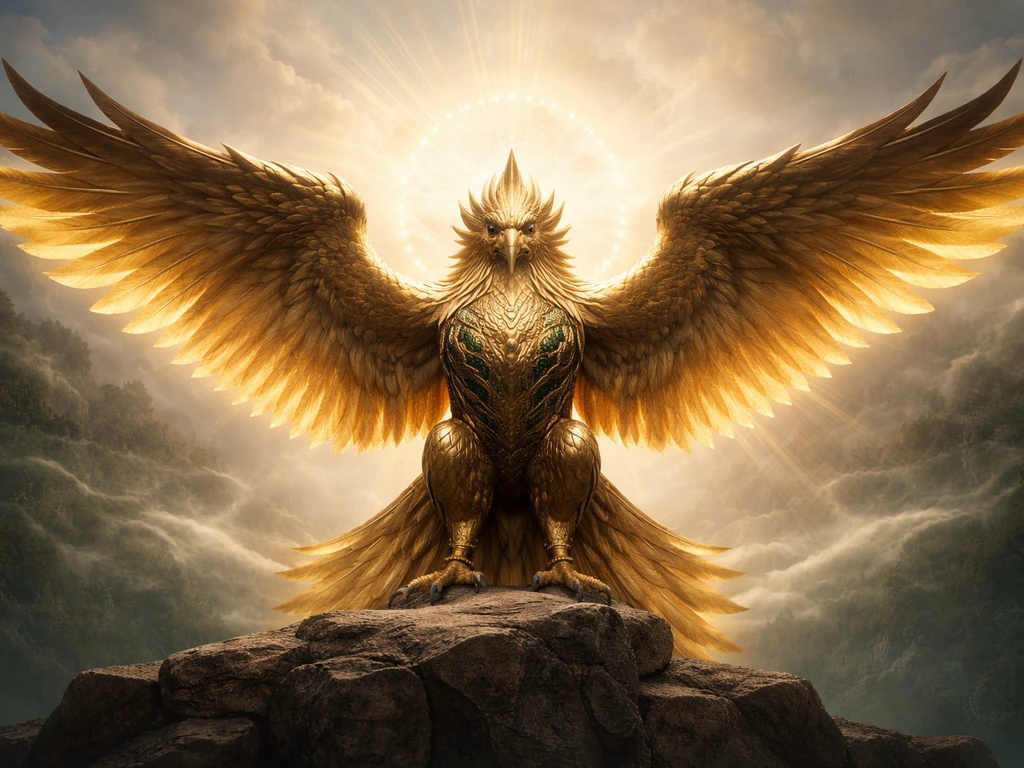
In Hindu mythology, Garuda is the great eagle-like bird who serves as the vahana (vehicle and emblem) of Vishnu, one of the supreme deities of the Hindu tradition. His most famous mythic act is obtaining the amrita, the nectar of immortality, from the gods. In symbolic terms, this is significant: the phoenix endures death by cycling through it, but Garuda is the one who carries and secures immortality itself. He does not renew from destruction; he operates at the level of the divine source. If you are measuring strength as power, protection, or proximity to ultimate divine authority, Garuda sits above the phoenix in the symbolic hierarchy. He is also a bird archetype, which makes the comparison especially direct.
Fenghuang: sovereign over all birds
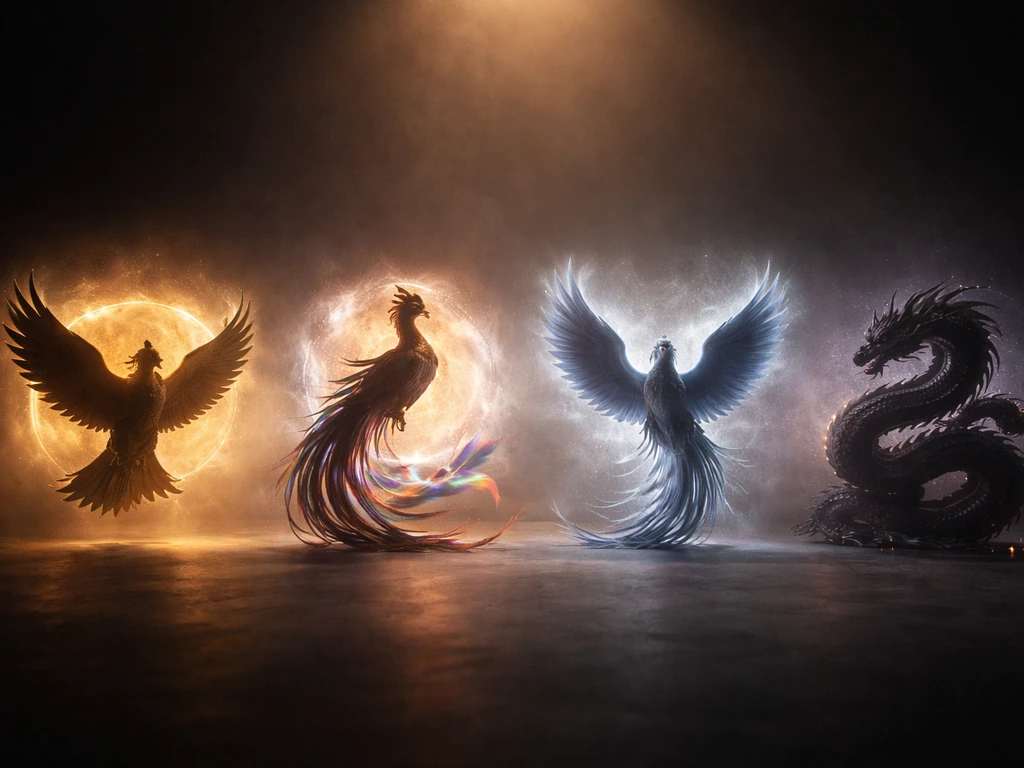
The Chinese fenghuang (often loosely called the Chinese phoenix, though it is a distinct creature with its own rich tradition) is described in Chinese cosmology as the regent over all birds and is traditionally paired with the dragon as a symbol of cosmic order. Where the Western phoenix represents personal or cyclical renewal, the fenghuang represents auspicious sovereign authority, the bird that other birds answer to. In terms of rank within the symbolic order of birds specifically, the fenghuang claims a higher position. If your question comes from a place of seeking order, authority, or cosmic alignment, the fenghuang is the more apt archetype.
The Bennu and the Simurgh: close cousins with different emphases
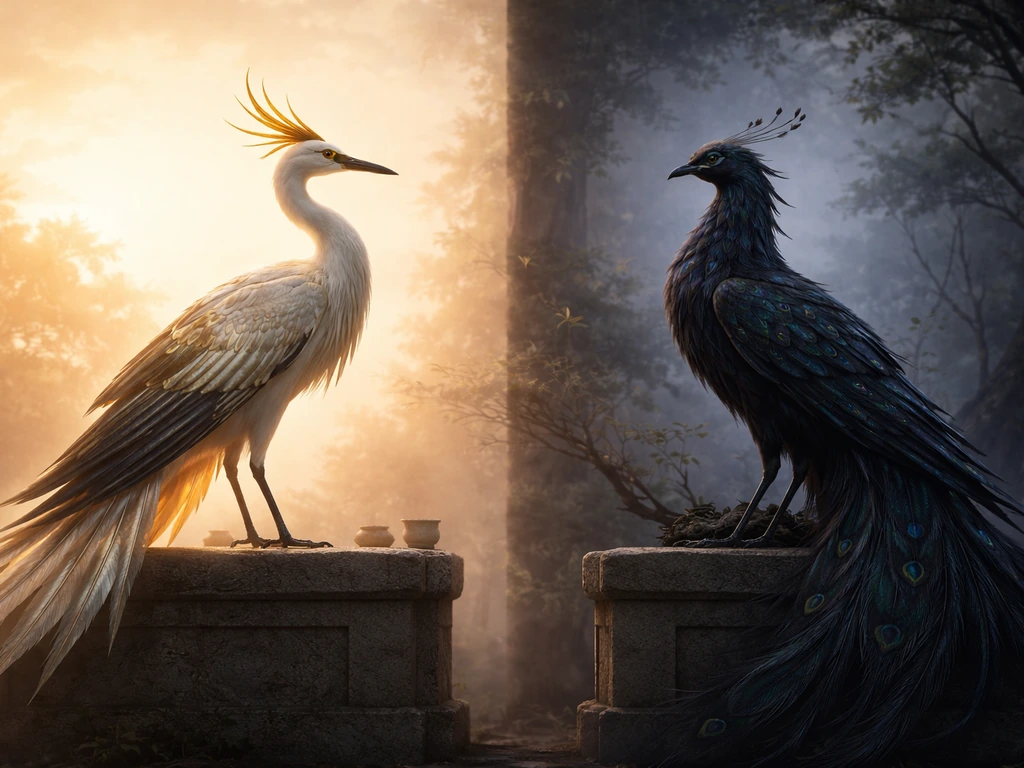
The Egyptian Bennu is often cited as an ancestor of the phoenix myth. Associated with Osiris and the sun, the Bennu carries themes of creation and primordial time that in some readings predate the phoenix's renewal cycle. The Persian Simurgh, meanwhile, is described as so ancient it has witnessed the world's destruction multiple times and is positioned as a cosmic mediator between earth and sky, a symbol of union and wisdom rather than pure renewal. Neither is straightforwardly "stronger" than the phoenix, but both gesture toward a different kind of power: primordial origin and cosmic mediation rather than cyclical endurance.
The dragon as counterpart
In East Asian traditions, the dragon is paired with the fenghuang as a complementary symbol of imperial and cosmic authority. Across many cultures, dragons represent divine order, forces of nature, and intermediary power between worlds. The dragon is not a bird archetype, but if you are asking what symbolic force governs the world in which the phoenix lives, the dragon (or the divine being the dragon serves) is often that answer. The phoenix endures within a cosmos; the dragon (and by extension the emperor, heaven, or the divine principle) orders the cosmos itself.
Comparing the main "stronger than phoenix" archetypes
| Archetype | Tradition | Type of Strength | Relationship to Phoenix |
|---|---|---|---|
| Garuda | Hindu | Divine authority, immortality, protection | Carries the nectar of immortality; serves the supreme deity; strength is relational to source, not cycle |
| Fenghuang | Chinese | Sovereign order, cosmic rank | Reigns over all birds; authority-based rather than endurance-based |
| Christ / Resurrection power | Christian | Ultimate conquest of death, not just survival | Phoenix used as emblem of Christ; the archetype is subordinate to the theological reality it symbolizes |
| Bennu | Egyptian | Primordial creation, solar origin | Precursor to phoenix myth; strength lies in originary rather than cyclical power |
| Simurgh | Persian | Cosmic mediation, ancient wisdom | Overlaps with phoenix in fire/longevity but emphasizes earth-sky union and accumulated wisdom |
If you want a single best answer: for most spiritual and symbolic purposes, the resurrection power represented by divine authority (whether you frame that as Christ, Vishnu through Garuda, or the cosmic ordering principle of heaven) is the most consistently "stronger" archetype across traditions. Tertullian’s De resurrectione carnis is one primary-text basis for this Christian way of framing resurrection as divine, authoritative power rather than mere cyclical renewal blank" rel="noopener noreferrer">resurrection power represented by divine authority. The golden phoenix bird meaning is often connected to renewal, but it can also point back to deeper resurrection themes resurrection power represented by divine authority. The phoenix is an emblem of renewal within a cycle; what is stronger is the power that transcends the cycle altogether.
The most likely reasons you are asking this, and what each answer means
Questions like this one rarely come from abstract curiosity alone. Here are the most common situations that prompt this search, and the symbolic reading that fits each one best.
- You are going through a period of loss or hardship and the phoenix feels like your symbol, but you are wondering whether there is something even more powerful to lean on. In this case, the answer is probably the resurrection archetype: not just endurance, but the promise that what was lost can be genuinely restored, not just replaced by a new version of yourself. This is the spiritual leap from phoenix-as-cycle to resurrection-as-transformation.
- You are researching symbolism for art, writing, or a tattoo and want to know whether there is a "stronger" creature or symbol in the same symbolic family. In this case, Garuda is your most visually and symbolically potent option within bird archetypes, and the fenghuang offers a sovereignty angle the Western phoenix does not carry.
- You are exploring vastu, feng shui, or protective symbolism and want to know what offers more powerful protection than a phoenix figure. Here the fenghuang (paired with the dragon) and Garuda both outrank the phoenix in terms of protective divine authority rather than personal renewal.
- You encountered the phoenix as a spiritual sign and are asking whether there is a "higher" message being communicated. In this case, the phoenix is pointing you toward the broader theme of renewal and resurrection, and the invitation is to ask what tradition or relationship gives that renewal its deepest meaning for you personally.
It is also worth noting that questions about the phoenix's goodness, its luck-bringing qualities, and its specific symbolic benefits in different contexts (like vastu) are genuinely separate from the question of strength. If you are looking at phoenix bird benefits in a practical, real-world sense, start by deciding which kind of “stronger than” you want: endurance, authority, or transformation. If you are drawn to it specifically for good luck, you can treat that as a separate intention from the symbol's deeper ideas about renewal and hierarchy phoenix's goodness, its luck-bringing qualities. Strength in symbolism is not the same as auspiciousness or moral alignment. The phoenix can be a deeply good and lucky symbol while still being symbolically subordinate to a higher-order archetype.
How to bring this into your actual life
Symbolic frameworks only mean something if you bring them into contact with your real experience. Here are a few concrete practices you can use today to work with whatever "stronger than a phoenix" means for you.
Start with a single reflective question
Before anything else, sit with this: when you ask what is stronger than a phoenix, what are you really asking? Are you looking for reassurance that something more powerful than your own resilience is on your side? Are you searching for an archetype that carries authority rather than just endurance? Or are you asking whether the story of renewal has a higher chapter, one that does not end in another cycle? Write your honest answer in a journal, even two or three sentences. This alone will point you toward the right symbolic territory.
Use imaginative or contemplative prayer with the symbol
One of the most practical methods for working with a powerful symbol comes from the Ignatian contemplative tradition. Rather than analyzing the symbol intellectually, you place yourself inside it imaginatively. Read or recall the story of the phoenix, then in meditation or prayer, ask: where am I in this story? Am I in the burning, the ash, or the rising? Then extend the image: what or who stands above the fire? What is the source of the renewal? This kind of imaginative engagement, used in structured prayer and reflection for centuries, is a genuine way to let a symbol speak rather than simply decoding it from the outside.
Choose a focal symbol and journal around it
If one of the archetypes in this article resonates (Garuda's protective authority, the fenghuang's sovereign order, or resurrection's promise of genuine restoration), spend a week using that image as a meditation anchor. Find or draw a simple image of it. Before journaling each day, spend two or three minutes looking at it and then write freely about what is cycling in your own life, what feels like ash, what is trying to rise, and what you need that is greater than your own endurance. The symbol is a lens, not a prescription. What you find through it is yours.
Bring the symbol into a ritual or intentional practice
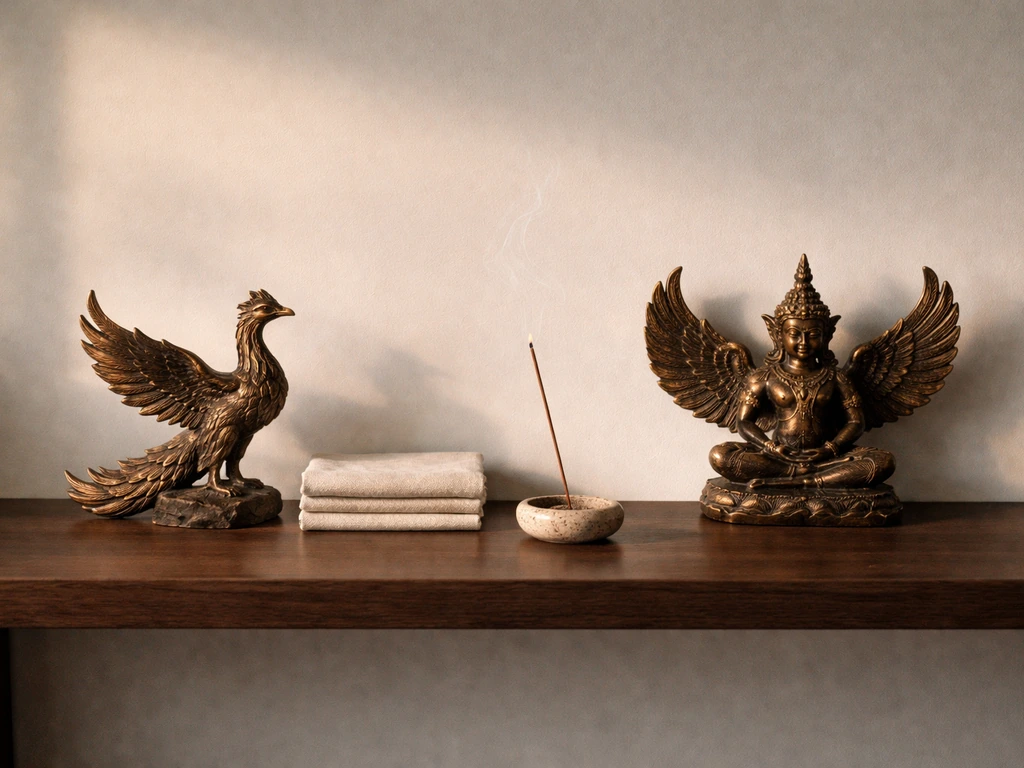
If you use symbolic objects in your home or practice, consider what the placement or pairing of symbols communicates. The phoenix placed alongside a Garuda image, a dragon figure, or a representation of divine light tells a different story than the phoenix alone. If you’re collecting or using phoenix bird images for vastu benefits, it can help to consider how that symbol fits into the room’s larger intention phoenix symbol. It situates the cycle of renewal within a larger order. In vastu or feng shui traditions, pairing the phoenix with its natural complement (the dragon in Chinese tradition) is already a recognized practice for invoking balanced cosmic energy rather than just renewal. The "stronger than" question, applied practically, might simply be an invitation to give your phoenix symbol a context, a larger story it belongs to.
The phoenix is one of the most enduring and resonant symbols humanity has produced. But enduring symbols rarely exist in isolation. Every tradition that embraced the phoenix also placed it within a larger cosmos, whether that was the Christological majesty of early Christian art, the divine authority of Vishnu's universe, or the sovereign order of Chinese cosmology. Asking what is stronger than a phoenix is really asking: what is the larger order that gives renewal its meaning? That is a worthy question, and following it honestly is usually where the real insight lives.
FAQ
What does “stronger than a phoenix” mean if I’m asking about moral authority or goodness, not just survival and renewal?
If you mean “stronger” in a moral sense, the best fit is not a bird that simply outlasts death, but an archetype tied to final restoration and judge-like authority. In Christian readings, that points to resurrection power, while in other traditions you would map the idea to the deity or cosmic principle that governs the end of death, not only the continuation of life through cycles.
I want the phoenix for good luck or protection, does that change which archetype is “stronger”?
People often conflate “stronger” with “more likely to bring good luck.” The article separates those ideas, so a practical check is to write down your intention first: endurance for resilience, authority for protection, or transformation beyond cycles. Then, only after that, decide whether the symbol’s “luck” associations matter to your goal.
How do I tell whether my question is about personal renewal (within the cycle) or about something that transcends the cycle?
Yes, the answer can shift if your question is about personal transformation versus cosmic hierarchy. If you are looking for a symbol that operates above the cycle itself, you are essentially asking for the principle that “sets the cycle in motion” or ends death. That tends to narrow the field toward divine authority rather than just renewal imagery.
What if I’m really asking about fate, identity, or what happens after death, not just renewal?
In many traditions, the phoenix is also linked to sun imagery and metempsychosis, so you may be indirectly asking about time and destiny, not only resurrection. If your “stronger than” question feels like it involves fate, identity, or what happens after death, include those meanings in your journaling, because the “stronger” archetype may be closer to cosmic order or mediation than to endurance alone.
Is there one definitive “stronger than” answer that applies everywhere, or is it framework-dependent?
A common mistake is treating the comparison as a single universal ranking across all cultures. A better approach is to choose the dimension you care about most, then pick the archetype that matches that dimension (endurance, authority, or transformation). The same symbol can be “stronger” in one sense and “subordinate” in another.
How should I use this in practice without accidentally mixing meanings (for example, mixing a phoenix with symbols that represent different goals)?
If you’re using the symbols in meditation or a home practice, avoid placing them randomly as if they are interchangeable. The article suggests context matters, so a useful decision aid is: pair the phoenix with the “above” archetype you are seeking (order, protection, or divine light) and keep the pairing consistent for a set period, like a week, to see what theme rises for you.
What if I resonate with the phoenix idea, but I do not want to align with a specific religion or deity?
If the phoenix resonates but you do not want a religious framework, you can still work with the same logic by treating “divine authority” as an abstract principle of ultimate restoration, rather than a specific deity. Your journal prompt can become “what power ends death for me symbolically,” even if you leave it undefined as to theology.
If I’m emotionally in the “ash” stage of my life, which “stronger than a phoenix” meaning tends to help most?
Yes, consider an “edge case” where the phoenix symbol is pointing to your current stage, not the final outcome. For example, if you are in “ash,” the stronger archetype might be the one tied to rescue or restoration rather than one tied to repeating cycles. That shift can help you choose the right meditation anchor for the season you are in.