If you searched 'a charm of what bird,' you are likely asking one of two things: either which bird species gives its name to the collective noun 'a charm' (that would be the goldfinch, and by extension finches and hummingbirds), or you want to know which bird is traditionally linked to a lucky, protective, or spiritual charm you have seen, been given, or encountered. Both are legitimate questions, and this guide covers both, with the emphasis squarely on bird symbolism: which birds are historically and culturally associated with luck, protection, love, healing, renewal, or guidance, and how to figure out which one applies to your specific situation.
A Charm of What Bird: Meanings and How to Identify Yours

Eleanor Hartwell
7 Jun 2026
What the phrase 'a charm of what bird' is really asking
In formal English, 'a charm of goldfinches' is the recognized collective noun, the same way you say 'a murder of crows' or 'a parliament of owls.' The word 'charm' here traces back to the Old French 'charme,' meaning a chanted verse or incantation, and it was attached to goldfinches because of the bright, musical energy of a flock in motion. So in the collective-noun sense, the answer is goldfinches, though the phrase is sometimes extended loosely to finches and hummingbirds in modern usage.
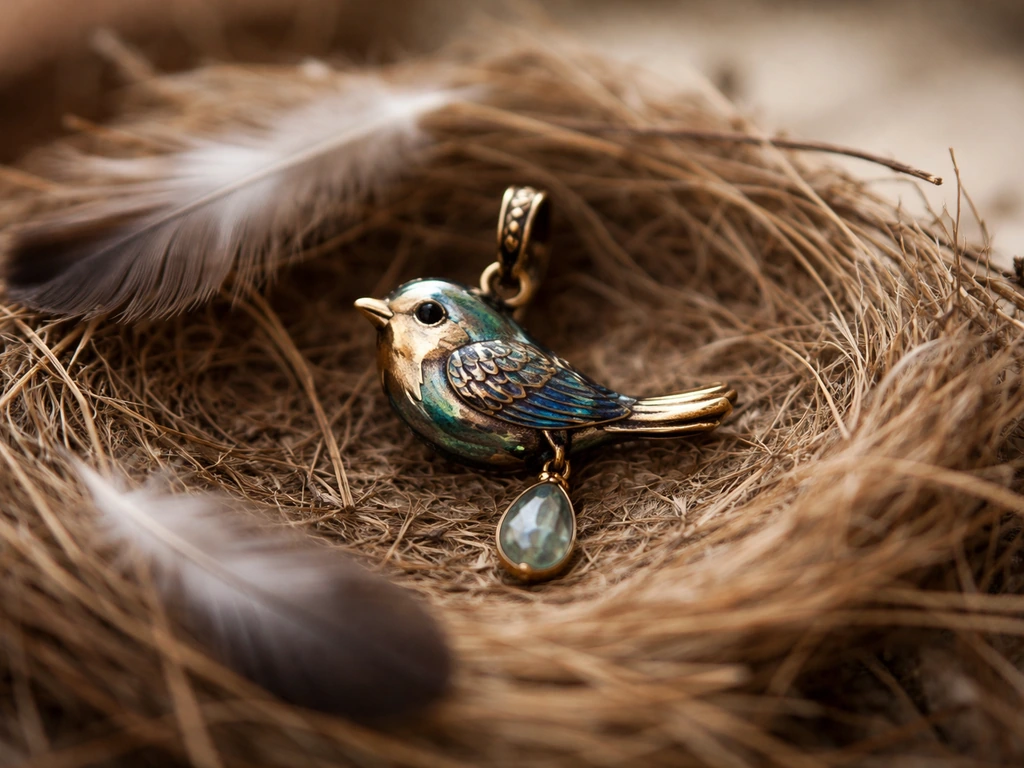
But many people searching this phrase are not doing a grammar exercise. They are holding a pendant, looking at a tattoo, trying to decode a dream, or unpacking a gift, and they want to know what bird is depicted and what symbolic meaning that carries. That is a symbol-hunting question, and it is the more layered of the two. The challenge is that bird imagery on charms, jewelry, and amulets is often ambiguous: one person sees an eagle, another sees a swallow, and the maker's intent may be lost entirely. The practical first step is always to identify the bird as specifically as possible before attaching meaning to it.
The most common bird charms and what they are believed to do
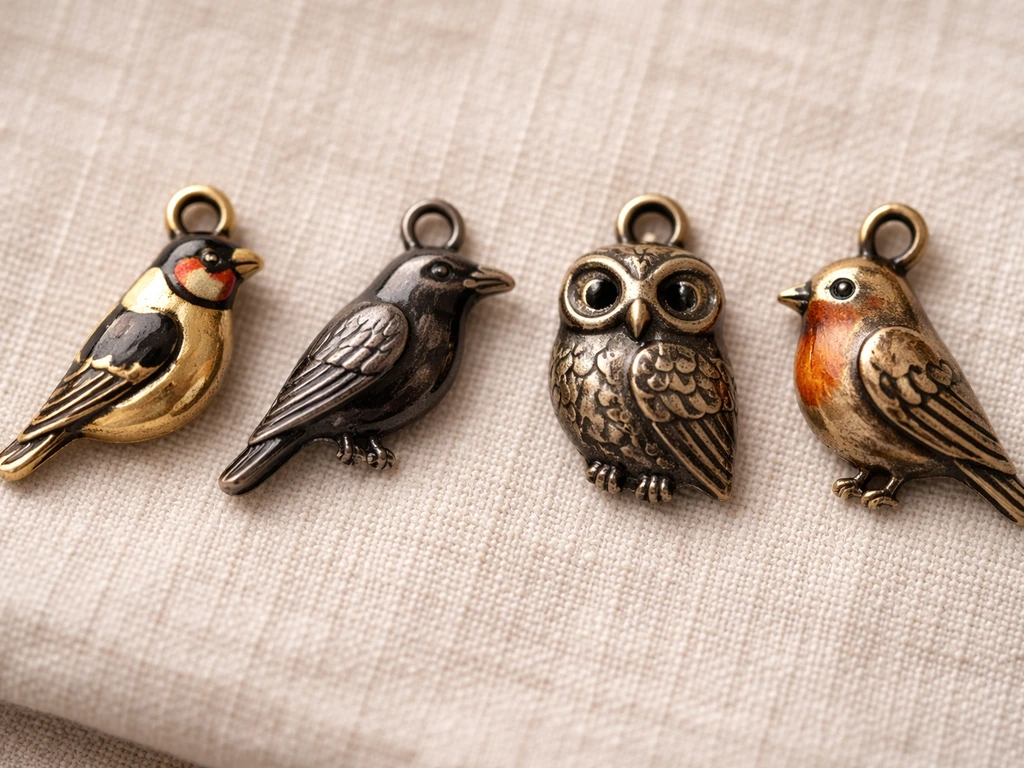
Across cultures, a handful of birds show up again and again as amulets, good-luck tokens, and protective symbols. Here are the ones you are most likely to encounter, along with what they conventionally represent:
| Bird | Primary Symbolic Association | Common Charm Use |
|---|---|---|
| Goldfinch | Luck, joy, musical vitality, the collective 'charm' | Good fortune tokens, festive gifts |
| Cardinal | Protection, good luck, love, strength | Amulets for safety and positive energy |
| Swallow | Safe return, hope, loyalty, resurrection | Sailor charms, love tokens, travel protection |
| Hummingbird | Love, joy, courage, resilience | Attraction charms, healing jewelry |
| Blue Jay | Protection, hope, truth, family | Protective amulets, communication aids |
| Phoenix | Rebirth, renewal, resurrection, solar energy | Transformation and renewal talismans |
| Eagle | Strength, divine connection, freedom | Sacred ceremonial objects, power amulets |
| Quetzal (feathered) | Fertility, divine authority, death and resurrection | Aztec ceremonial regalia, spiritual objects |
The cardinal deserves special mention here because it appears throughout this site's own framework. In Cherokee tradition, the redbird is linked to the sun and is a symbol of protection and good luck. In modern popular symbolism, it carries associations with love, strength, good fortune, and happiness. Because the bird is visually striking and deeply embedded in North American folk tradition, cardinal charms are among the most widely recognized luck symbols in contemporary use.
Swallow charms have a particularly rich material history. Sailors historically wore swallow tattoos and carried swallow tokens because swallows were believed to guide ships home safely, and because the bird's annual return to the same nesting site made it a living metaphor for loyalty and reunion. Medieval Christian interpreters also connected the swallow to hope and resurrection. If you have a small blue or gold bird charm and are unsure of the species, a swallow is one of the most likely candidates, especially on older European or nautical-style jewelry.
Hummingbird charms lean toward love and joy in most contemporary readings. Multiple symbolism traditions frame the hummingbird as a messenger of affection and an emblem of resilience, because the bird's ability to hover and navigate in all directions is read as a kind of spiritual agility. Some modern symbolism writeups explicitly claim hummingbirds symbolize love or romance while also emphasizing courage and determination, which can blend affection with resilience in charm readings Multiple symbolism traditions frame the hummingbird as a messenger of affection and an emblem of resilience. If a hummingbird ornament is what you are working with, curiosity, discovery, and emotional courage are the meanings most consistently attached to it.
How to identify the right bird charm for your situation
Start with the image itself. Look at the silhouette, the beak shape, any color details, and the posture of the bird. A long, forked tail points toward a swallow. A crest points toward a blue jay, cardinal, or cockatiel. A dramatically long tail feather or a serpentine body suggests phoenix or quetzal iconography. Round body with short wings and a needle-like beak is almost always a hummingbird. If the charm shows only a claw or a foot, that is a separate category of amulet with its own identification challenges, and the species behind it may genuinely be impossible to confirm without provenance.
Then match the bird to your goal. Think about what you are hoping the charm does for you. This is not a trivial question: the meaning you bring to a symbol actively shapes how useful it is as a personal or spiritual anchor.
- Protection and safety: cardinal, blue jay, eagle, hawk
- Love and attraction: hummingbird, swallow, cardinal, dove
- Renewal and transformation: phoenix, swallow, crane
- Good luck and fortune: goldfinch, cardinal, blue jay
- Guidance and spiritual clarity: eagle, owl, raven, heron
- Healing and resilience: hummingbird, crane, swan
Also consider the materials. A charm made of amber, for instance, has its own ancient symbolic weight across Baltic and Mediterranean traditions and may point toward solar or protective meaning independent of the bird depicted. Turquoise settings often signal a Southwestern or Native American cultural context. Gold and lapis lazuli together lean Egyptian. These material clues help narrow down not just the species but the cultural tradition the charm is drawing from, which matters enormously for interpretation.
Feathers, flight, and nesting: the universal language behind bird charms
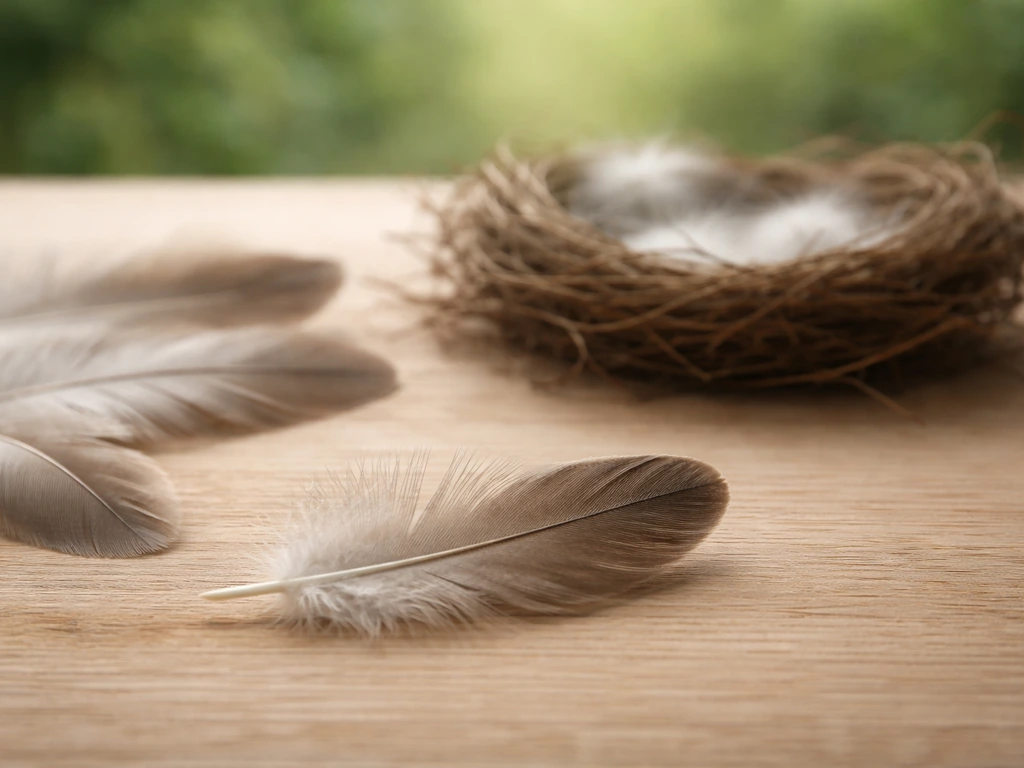
Before you get to the specific species, it helps to understand why birds carry symbolic weight at all. Birds occupy a unique position in nearly every human meaning-making system: they move between earth and sky, between the visible world and something beyond it. Ancient Egyptian cosmological texts literally describe birds as existing 'between heaven and earth,' and that liminal quality is what makes them natural carriers of spiritual messages across cultures.
Feathers in particular concentrate that symbolism into a single portable object. A feather is a piece of the bird's capacity for flight, which makes it a stand-in for aspiration, divine connection, and spiritual travel. But this is also where careful thinking is most important: feathers are not interchangeable. In many Native American traditions, eagle feathers are sacred objects tied to specific ceremonial roles, and their meaning is not transferable to a decorative use case. Wikipedia notes that bald eagles are sacred in some North American Indigenous cultures, and that their feathers are central to many religious and spiritual customs blank" rel="noopener noreferrer">eagle feathers are sacred objects tied to specific ceremonial roles. When feather imagery appears on a charm, the cultural source of that imagery should guide how you interpret it, not a generic 'feathers mean freedom' shorthand.
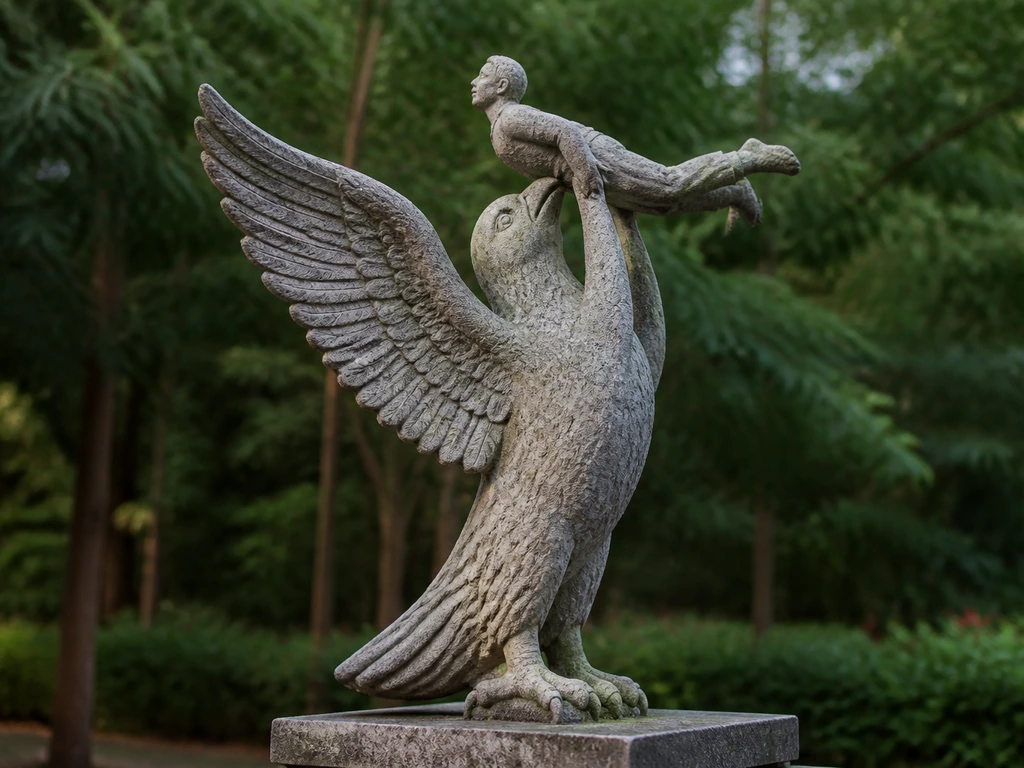
Nesting imagery on a charm typically carries connotations of home, maternal care, safety, and new beginnings. A bird depicted sitting on a nest or carrying a twig reads almost universally as a symbol of shelter, nurturing, and the hope of new life. If you are looking for what a bird carrying a man statue means, it is often tied to nest or shelter symbolism, plus the cultural context of the figure and the bird carrying a twig. If that imagery resonates with what you are seeking, it fits naturally into a range of traditions from Christian (the sheltering wings of God) to Celtic (birds as home-guardians) to general domestic folk practice.
What the same bird means in different traditions
One of the most important things to understand about bird charms is that the same species can carry very different meanings depending on the cultural frame. Here is how that plays out across the five traditions most relevant to this site's scope:
Biblical and Christian context

Biblical bird symbolism is consistently oriented around divine protection and provision. The recurring image of God sheltering humanity 'under wings' (appearing throughout Psalms and the Gospels) makes birds a direct metaphor for safety and care. The dove is the clearest example, representing the Holy Spirit and peace. The swallow appears in Psalm 84 as a symbol of belonging near the sacred. In medieval Christian interpretation, the phoenix was adopted as an allegory for Christ's resurrection. If a charm comes from a Christian or broadly Western devotional tradition, those are the symbolic layers most likely embedded in it.
Egyptian context
Ancient Egyptian bird symbolism is among the most systematically documented in any culture. The Bennu, a heron-like deity associated with the sun and creation, appeared on funerary scarab amulets as a specific symbol of rebirth. The ibis was the embodiment of Thoth, god of wisdom and writing. The falcon was Horus, divine kingship made manifest. If a charm has Egyptian-style iconography, the specific bird depicted is almost certainly intentional and carries a precise theological meaning rather than a general one.
Native American context
Native American bird symbolism varies significantly by nation and tribe, which means broad generalizations are risky. That said, some widely documented patterns include the bald eagle as a sacred bird whose feathers are central to religious and ceremonial life across many nations. The cardinal is associated with the sun and protection in Cherokee tradition. Birds in many Indigenous cosmologies function as spiritual messengers, with specific species serving as good or bad omens depending on behavior and context. Because the meanings are community-specific and often sacred, this is the tradition where it is most important not to assume that a generic symbolic reading applies.
Celtic context
Celtic traditions are rich with bird symbolism tied to prophecy, transformation, and the Otherworld. Ravens and crows appear as companions to war goddesses and as omens. Cranes were associated with longevity and the secrets of the divine. Swans were often seen as transformed humans or divine beings in disguise. Celtic bird charms, especially those carved in knotwork or stylized in bronze-age imagery, often point toward themes of threshold-crossing and supernatural communication rather than simple luck.
Aztec context
In Aztec cosmology, the quetzal bird is foundational. Its brilliant tail feathers were called 'quetzalli' and were deeply embedded in the iconography of Quetzalcoatl, the Feathered Serpent deity associated with creation, wind, knowledge, and cycles of death and resurrection. Quetzal feathers were used in ceremonial regalia of the highest status. The eagle also held a significant place as a solar symbol and the emblem of warrior culture. If a charm has Mesoamerican stylistic elements, the quetzal and the eagle are the two most likely bird references, and both carry cosmological weight that goes well beyond simple luck.
How to use a bird charm with intention and respect
Symbolic objects work best when you are clear about your own intention. Before you wear, display, or use a bird charm, it helps to articulate what you are inviting it to represent for you. That does not need to be a formal ritual. It can be as simple as holding the object and naming the quality you are connecting it to: protection, renewal, love, guidance. That act of naming anchors the symbol in your life in a way that passive ownership does not.
If the charm comes from a specific cultural tradition, especially a living one, learn enough about that tradition to use the symbol honestly. This matters most with Indigenous and sacred objects. Eagle feathers, for example, are protected under U.S. federal law (the Bald and Golden Eagle Protection Act) and are reserved for use by enrolled members of recognized Native American tribes for religious and ceremonial purposes. Wearing an eagle feather charm casually, without that context, is both legally and culturally fraught. A stylized eagle image on jewelry is different from an actual feather, but the principle of respect applies across the spectrum.
For charms that draw on ancient traditions like Egyptian or Aztec iconography, the ethical use is more about honesty than harm: wear or use the symbol with awareness of its origins, do not flatten a complex cosmological figure into a simple good-luck token, and stay open to the richer meaning behind it. The phoenix is not just 'renewal,' it is a centuries-old argument about time, mortality, and the nature of transformation. Holding that fuller context makes the charm more meaningful, not less.
When not to assume: how to verify what you actually have
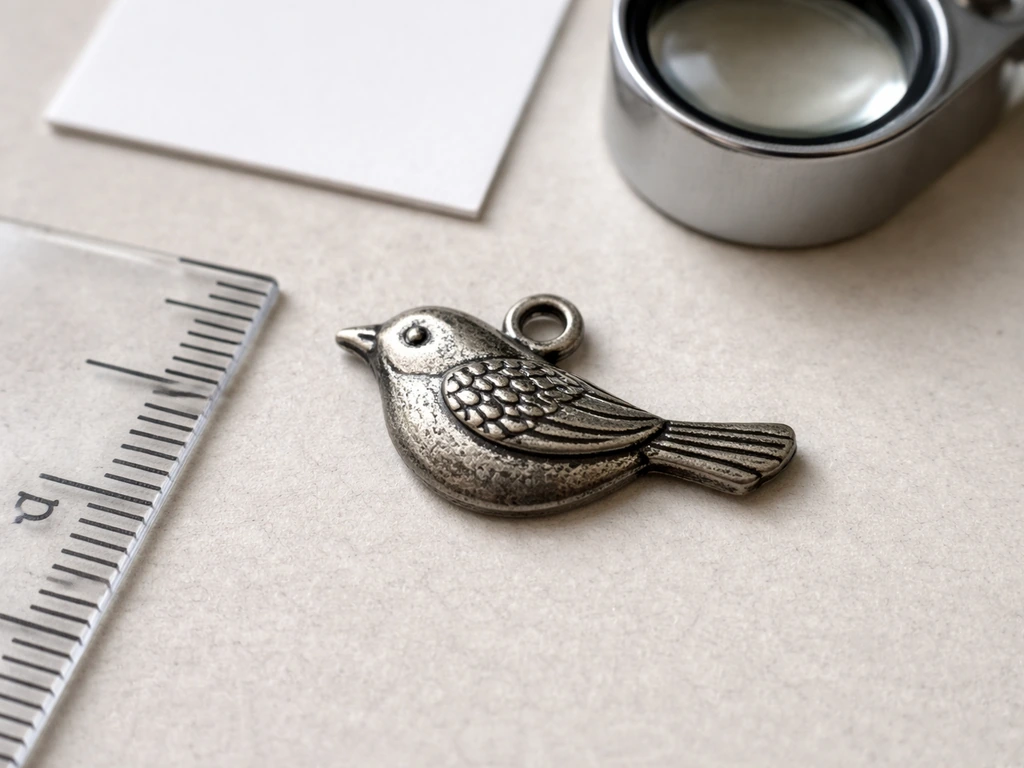
One of the most consistent themes in any honest discussion of bird charms is how often visual identification goes wrong. Online discussions regularly surface the same problem: someone posts a photo of a bird charm and half the commenters say eagle, half say swallow, and one person says it might be a phoenix. Without the maker's information, hallmarks, or cultural context, the identification can be genuinely uncertain. Museum conservators treat bird identification in ancient art as a specialist problem, not a casual one. That standard of care is worth bringing to personal charms too.
If you received the charm as a gift, ask the giver about its origin. If you bought it from an artisan, look up the maker's cultural background and stated influences. If it is antique, hallmarks, materials, and construction style can help date and locate it geographically. A charm described as 'tribal' or 'Native American-style' in a commercial setting may be a decorative interpretation rather than a traditional object, and that distinction changes how you should interpret and use it.
The same caution applies to bird encounters interpreted as signs. A cardinal appearing at your window carries genuine symbolic resonance in Cherokee and contemporary folk tradition, but whether it is a 'sign' for you specifically depends on your own framework for meaning-making, not on a universal rule. Symbolism is a lens, not a law. The most grounded approach is to note the encounter, explore what the bird represents in traditions relevant to your background, and hold the interpretation loosely rather than treating it as confirmed prophecy.
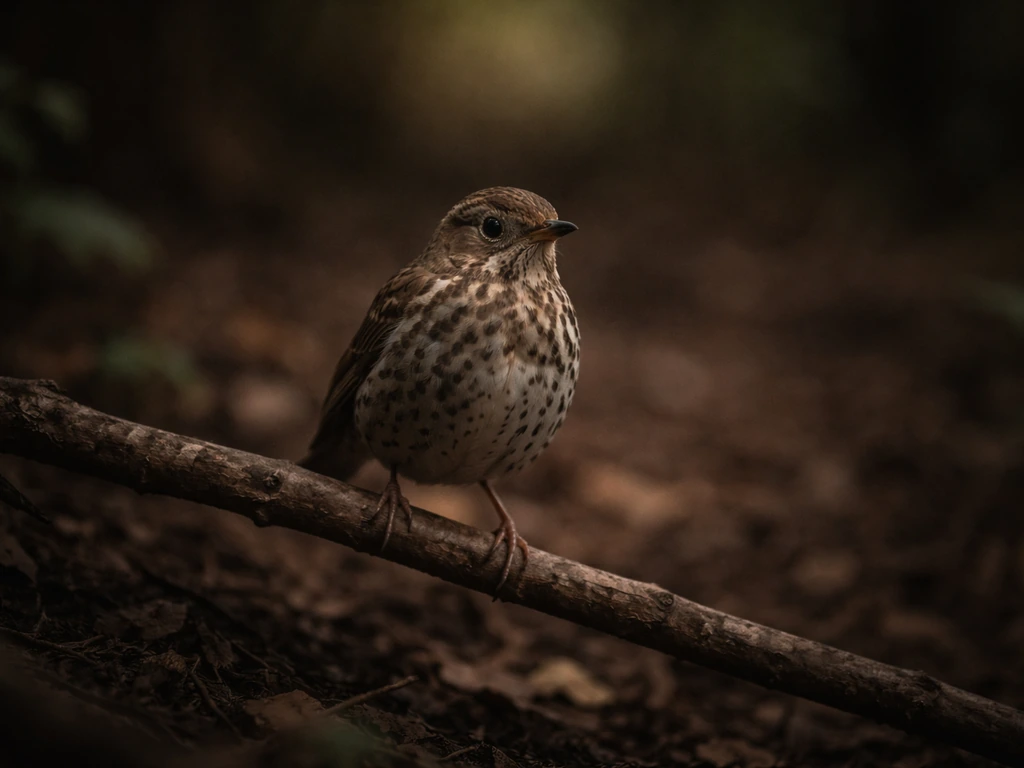
If you find yourself drawn to questions about what birds represent in broader contexts, like motherhood, healing, or spiritual protection, those threads run through many related areas of bird symbolism and are worth exploring on their own terms. If you are working with a broken bird to be healed ornament, it helps to connect its healing theme to the bird symbolism traditions most aligned with your situation. If you are specifically asking what bird represents motherhood, look for nesting and nurturing imagery, since that context is closely tied to maternal care. That line about identity and belonging also shows how bird imagery can reflect a deeply personal heritage my heritage is unto me as a speckled bird. The meaning behind a specific charm is almost always richer when you understand the full symbolic landscape the bird inhabits across cultures, rather than pulling a single definition out of context.
FAQ
If my charm does not clearly show the whole bird, how can I identify it?
Focus on the highest-contrast features that survive stylization, like tail shape (forked, fan, or long and serpentine), beak length and angle (needle-like suggests hummingbird), and presence or absence of a crest. If the charm only shows a claw or foot, species ID may be genuinely unknowable, so interpret it at the level of the symbol (amplification of power or “protection by the act,” not a specific bird species) and prioritize any maker notes or provenance.
What should I do if two different birds seem plausible from the design?
Treat it as a probability problem. Narrow by posture and silhouettes first, then by style cues that indicate cultural source (nautical, devotional, Egyptian scarab-like forms, Celtic knotwork). If uncertainty remains, use a “layered meaning” approach, assign meanings to the closest match (for example swallow-like tail points to guidance and homecoming), and keep the rest as optional until you get the maker or origin details.
How can I tell whether the “charm meaning” is likely specific tradition iconography or just generic luck?
Look for telltale context markers: Egyptian-style iconography often includes scarab-like motifs or specific regalia cues, Christian devotional pieces tend to use clear devotional symbolism (like doves or sheltering-wings themes), and Celtic work often shows knotwork or stylized “threshold” visual patterns. If the piece is generic and modern, the bird may be chosen for visual appeal rather than for a precise theological or cosmological reference.
Are bird charms ever misleading because the bird species is historically inaccurate to the maker’s culture?
Yes. Modern jewelry frequently mixes species or stylizes them so loosely that it can drift away from the original tradition. If the charm claims a specific tradition but the depicted bird does not match known iconography from that tradition, interpret with caution and prioritize the designer’s stated influences or the piece’s construction details over marketing labels.
Does the same bird always mean the same thing everywhere?
No. Even within one broad region, meanings shift by cultural frame. For example, a cardinal can be read through North American folk tradition and love-or-protection themes, while other traditions might emphasize different spiritual qualities or treat birds as messengers whose meaning depends on context. Use the charm’s visual source and your personal framework rather than assuming one universal definition.
What material clues should I trust most when decoding meaning?
Use materials as secondary evidence, not the only evidence. Amber, turquoise, gold, and lapis can point toward cultural contexts, but confirm with iconography first (bird posture, tail, crest, and any embedded motifs). If the material strongly suggests one tradition but the bird design suggests another, the safest interpretation is “hybrid” rather than insisting on a single origin.
How should I interpret a charm that shows nesting or a twig, but I am not sure which bird it is?
Nesting and twig-carrying imagery usually anchors the meaning more strongly than the exact species. You can reasonably read it as shelter, nurturing, home, or new beginnings, then let the bird identity refine it (for instance, swallow-like cues can intensify themes of homecoming and loyalty). If you cannot confirm the species, keep the “home and renewal” layer and avoid overcommitting to a single species-specific story.
Is it appropriate to wear bird-feather or eagle-feather style charms as casual fashion?
Be cautious. Actual feathers associated with specific Indigenous ceremonial roles can be legally restricted and culturally sensitive. For jewelry that uses stylized imagery rather than real feathers, the risk may be lower, but respect still matters. The safest approach is to verify what the item actually is (real feather versus imitation), where it was made, and whether the maker provides context for its inspiration.
If I bought the charm online and it is labeled “tribal” or “Native American-style,” how should I interpret that label?
Interpret it as a style description, not as evidence of authentic traditional meaning. The phrase often indicates decorative interpretation rather than a specific community’s sacred usage. When labels are vague, rely on concrete details you can observe (iconography, materials, construction) and treat the meaning as personal symbolism unless provenance or maker background confirms tradition-specific intent.
How do I connect a charm’s symbolism to my intention without turning it into a rigid “fate” promise?
Write down what you want to invite (protection, renewal, love, guidance) and then treat the charm as a focus tool, not a guarantee. Symbolism is a lens, so you can hold interpretations loosely: note the opportunity it encourages you to act on, rather than expecting a charm to produce outcomes automatically. This keeps the practice empowering and grounded.
What if I received the charm as a gift, but the giver cannot remember the origin or meaning?
Ask specific questions instead of general ones. For example, where was it bought, did they know the maker, were there any words said when it was given, and what moment or relationship it was meant to support. If the origin is unknown, date by materials and construction and use the bird’s visual traits plus broad tradition themes (like protection, peace, hope) as provisional readings until you can confirm details.