A bird carrying a man in statue form almost never means just one thing. The symbolism shifts dramatically depending on which bird is depicted, what the human figure is doing (being rescued, lifted toward the divine, set free, or transformed), and who made the statue and why. Before you can read the meaning, you need to identify the specific artwork. Once you know the bird species and the origin, the symbolism becomes much clearer and often surprisingly precise.
Bird Carrying Man Statue Meaning: Symbolism by Species

Eleanor Hartwell
6 Jun 2026
Start here: identify the exact statue first
The single most useful thing you can do right now is nail down the specific sculpture you're looking at. Many 'bird and man' statues get misread because people assume the pose is universal, but the same visual motif can mean freedom, divine punishment, soul ascent, or political allegory depending entirely on context. Two well-documented examples show just how much the details matter.
Alfred Tibor's bronze sculpture simply called 'Freedom,' dedicated on July 4, 1985, and installed in Battelle Memorial Park in Columbus, Ohio, shows a walking human figure with a bird raised in an uplifted hand. The plaque on the base removes all ambiguity: Tibor, a Holocaust survivor, wrote that he gives freedom as a gift to the city and that in the United States he became free to achieve his dreams. The bird is the symbol of that freedom. If you're looking at a statue of a person releasing or elevating a bird rather than being carried by one, this is likely your match.
A different configuration appears at Kennedy Space Center Visitor Complex in Brevard County, Florida, with 'The Eagle Has Landed,' which pairs human figures with an eagle in a commemorative rather than spiritual framing. Wikipedia describes the Kennedy Space Center Visitor Complex bronze artwork “The Eagle Has Landed,” pairing human figures with an eagle in a commemorative framing. Meanwhile, the Smithsonian catalogs sculptures like 'Man Fighting Eagle,' where a human grasps or struggles with a hovering bird, and the Cleveland Museum of Art documents a capital with a man and eagle paired with Latin inscriptions that are explicitly theological: the man represents Matthew, the eagle represents John. None of these are 'the bird carrying the man' in the literal sense. Knowing which sub-type you're looking at narrows the meaning considerably.
How to confirm what you're looking at
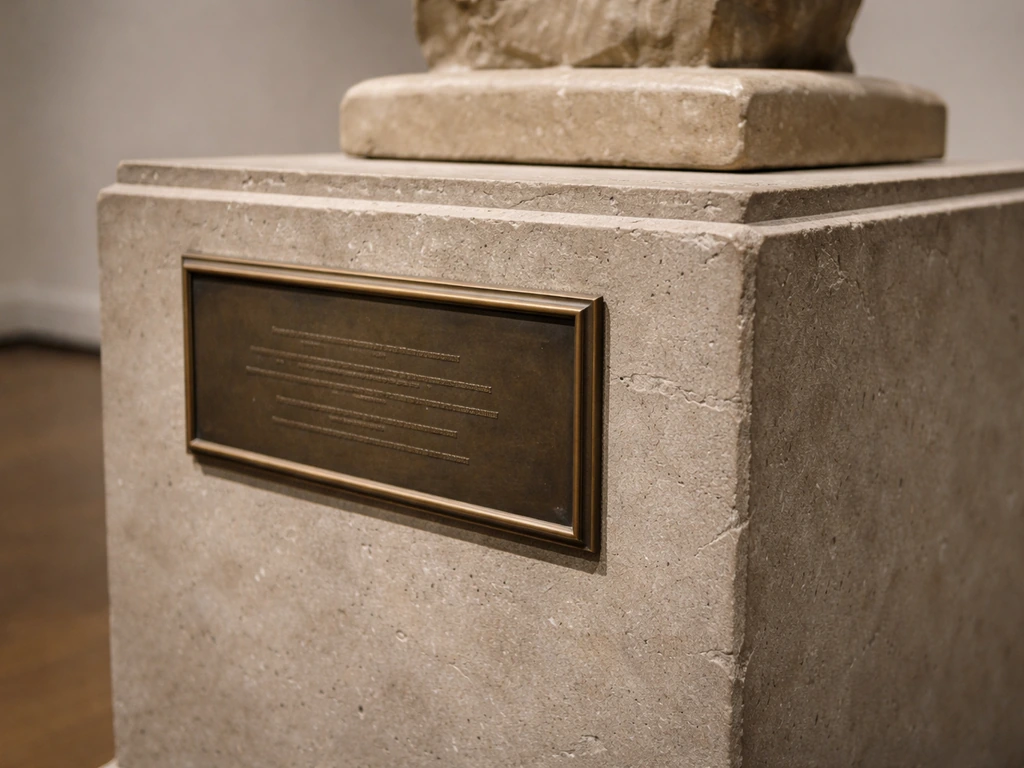
- Photograph the base and all four sides of the plinth. Plaques almost always name the artist, the title, and the year, and many include a dedication or short statement of intent.
- Note the bird species as specifically as you can: wingspan shape, beak curve, whether the bird is naturalistic or stylized.
- Record the location precisely (city, park, institution) and search that with the bird type and the word 'sculpture' or 'monument.'
- Search the Smithsonian American Art Museum's public inventory and the Public Art Archive, both of which catalog outdoor bronze works by location and artist.
- If the statue is indoors or in a museum, ask staff for the catalog number. Museum records almost always include iconographic notes.
What 'bird carrying man' imagery generally means
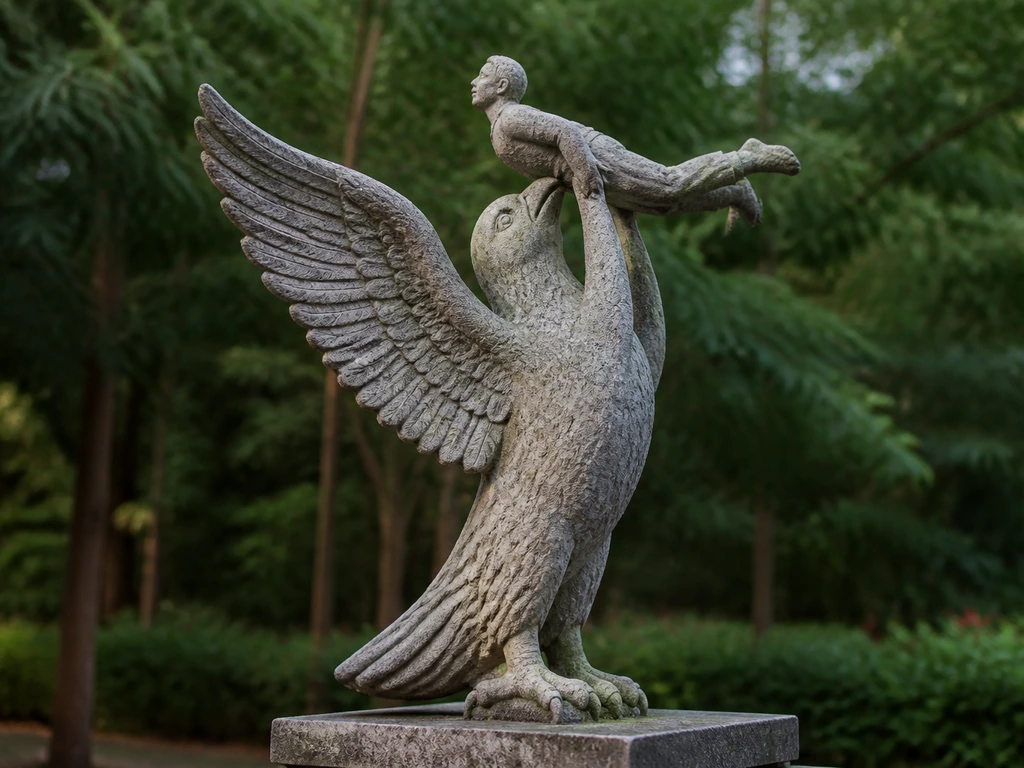
Once you strip away the specifics, the core visual of a bird lifting or carrying a human has a remarkably consistent symbolic spine across cultures: it represents transcendence. The bird moves between earth and sky, between the visible and invisible, between the living and the dead. A human figure being carried or elevated by a bird is almost universally read as a soul in transit, a person being rescued by a higher power, or an individual being granted access to a realm they could not reach alone. That's the broad symbolic grammar. The details are where it gets interesting.
What the man is doing matters enormously. The phrase “a charm of what bird” often points you to the specific bird species that determines the artwork’s symbolism man. Is he limp and passive, suggesting death or surrender? Is he reaching upward, suggesting aspiration or prayer? Is he being set free (as in Tibor's work) rather than carried? Is the bird's posture protective or threatening? A bird spreading wings over a human figure can mean shelter and guardianship, while a bird clutching a human from above evokes judgment or divine power. Artists working in the Western classical tradition often signaled these distinctions through posture, facial expression, and the specific bird chosen.
The bird species changes everything
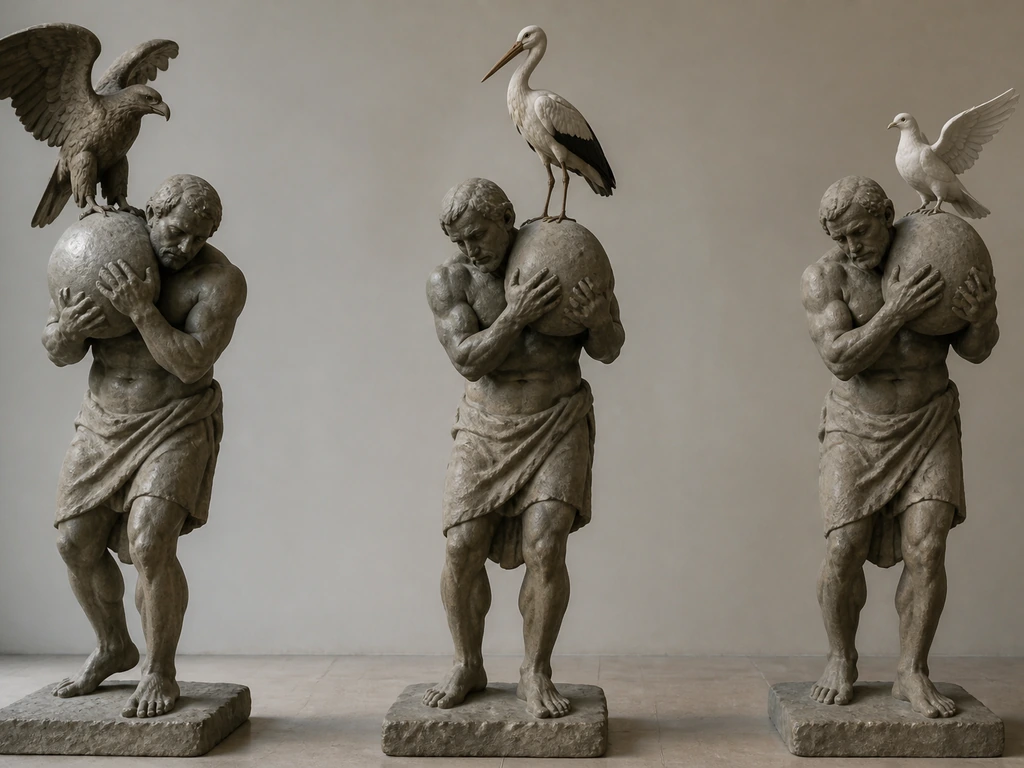
This is probably the most underappreciated factor when people try to decode bird-and-man statuary. The same human figure carried by an eagle reads completely differently than one carried by a stork, a phoenix, or a raven. Here is how the most common species shift the meaning:
| Bird Species | Primary Symbolic Register | Likely Statue Meaning |
|---|---|---|
| Eagle | Sovereignty, divine power, solar energy, national identity | Divine elevation, political allegory, connection to sky deities (Aztec Tonatiuh, biblical imagery, Native Thunderbird traditions) |
| Stork | Birth, soul delivery, family, transition between worlds | Carrying a soul to life or between realms; Slavic belief holds that storks bring unborn souls from Vyraj to Earth |
| Phoenix | Rebirth, renewal, resurrection | The human is being reborn or transformed; common in funerary and memorial contexts |
| Dove | Peace, the Holy Spirit, divine messenger | Spiritual protection, grace, the presence of God; strong in Christian iconographic tradition |
| Raven or Crow | Prophecy, death, the otherworld, trickster energy | Crossing a threshold, receiving a warning, or being guided through darkness |
| Heron or Ibis | Wisdom, the soul, Egyptian spiritual transit | The ba soul ascending; Egyptian funerary or esoteric symbolism |
| Generic large bird (abstracted) | Universal transcendence | Freedom, aspiration, or spiritual elevation without a specific cultural framework |
If the bird in your statue is an eagle specifically, pay attention to the broader cultural context of where the statue stands. The Aztec sun deity Tonatiuh was closely associated with the eagle and with the sky journey the sun makes each day, a journey explicitly tied in Aztec cosmology to sacrifice and renewal. Native American traditions across many tribes regard the eagle as the carrier of prayers to the Creator, and Thunderbirds as powerful spirit-beings who govern the upper realm. In European heraldic and Christian traditions, the eagle represents John the Evangelist, divine vision, and the soul's capacity to gaze directly at truth. The same bird, wildly different frames.
How different cultures read birds as spirit, guide, and carrier
The idea of a bird as a vehicle for the human soul is not a metaphor invented by any single tradition. It runs independently through Egyptian, Celtic, Slavic, Native American, and Aztec cosmologies, which is part of why a 'bird carrying man' image resonates so deeply even when viewers don't know its specific origin.
Egyptian: the ba bird and soul in flight
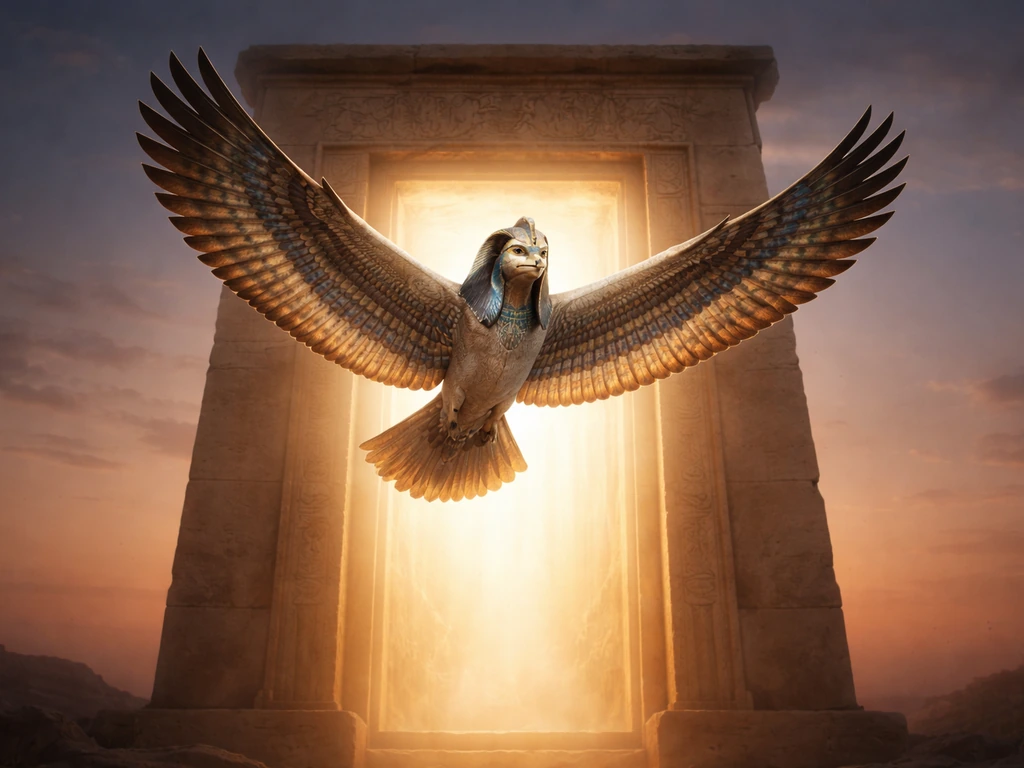
Ancient Egyptian funerary art developed one of the most literal visual expressions of this idea: the ba, depicted as a human-headed bird, represented the part of the soul that could leave the body after death and travel freely between the tomb and the living world. The ba was shown in flight, ascending toward the Field of Reeds (the Egyptian afterlife). The Bennu bird, a composite divine bird similar to the heron, was linked to the primordial moment of creation and the rising sun. In this tradition, a bird carrying a human-shaped form is not fantastical. It is a precise theological statement about the soul's capacity to transcend physical death.
Celtic: birds as threshold messengers
In Celtic traditions, the Otherworld was a parallel realm associated with deities, ancestors, and the dead, reachable through liminal spaces and often signaled by the presence of birds. Birds were understood as messengers who moved between the visible world and this hidden one, and a bird appearing at a significant moment (especially one that seems to interact with a human) was taken as a threshold signal. A statue in a Celtic or Celtic-revival context that shows a bird lifting or accompanying a human figure would likely be read as the soul being guided across that threshold, or a mortal receiving access to divine knowledge.
Native American: birds as intercessors and spirit-beings
Across many Native American traditions, birds are not simply symbolic animals but active spirit presences. The Thunderbird of the Pacific Northwest and Great Plains traditions governs the upper realm and can intervene in human affairs, bringing peace or destruction. Eagles carry prayers upward to the Creator. Particular birds are understood across different tribal traditions as helpers, messengers, or guides accompanying souls on their journey. A 'bird carrying man' image in this framework is most naturally read as divine intercession: a spirit-being lifting a human into a higher state of awareness or carrying them safely through a spiritual transition.
Slavic and European folk tradition: the stork and the soul
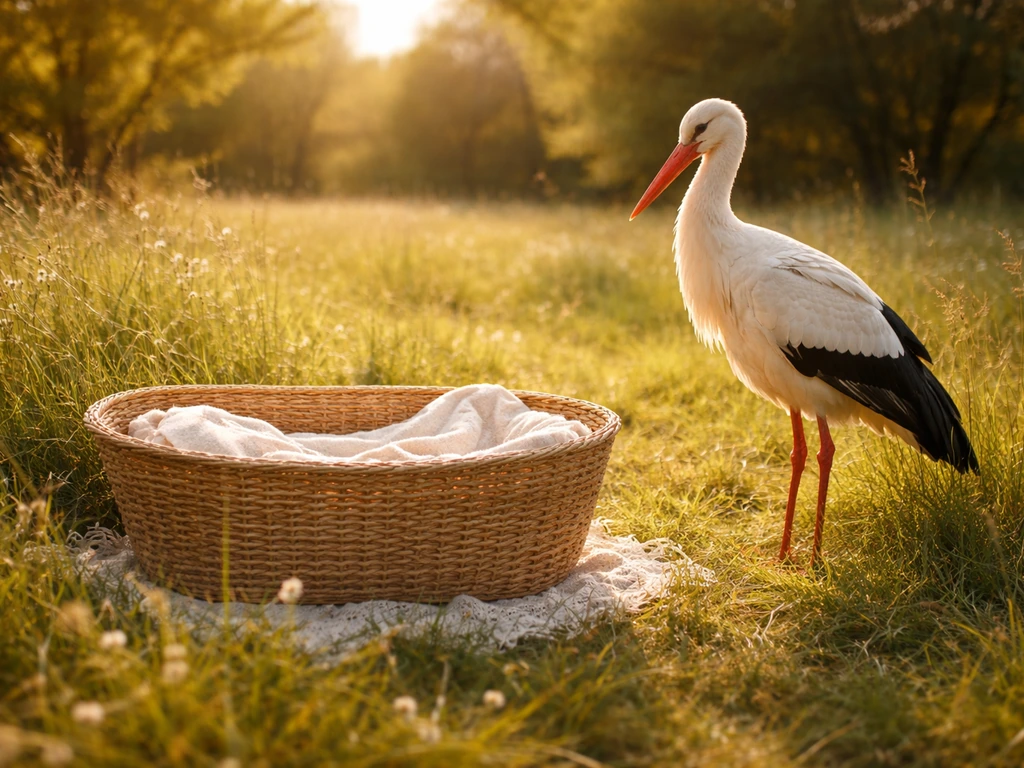
Slavic mythology held that storks carried unborn souls from Vyraj, a distant paradise, to Earth each spring and summer. This is the deep root of the European 'stork delivers babies' tradition, though the original meaning was more spiritually serious: the stork was a psychopomp of sorts, a carrier of souls between realms. German folk tradition added a darker layer, holding that a stork might drop or harm a child as a consequence of parental wrongdoing, making the bird not just a bringer of life but a moral arbiter. A statue of a stork with a human figure therefore sits at an intersection of birth, family, spiritual transit, and divine accountability. Astrology.com’s stork spiritual meaning discussion frames storks as totems linked to family, community, and tradition, which can support personal interpretations even though it is not scholarly birth, family, spiritual transit, and divine accountability.
Feathers, flight, and the act of carrying as spiritual symbols
Even if you can't identify the exact bird or the exact artist, the core symbolic elements of feathers, flight, and carrying each carry their own weight. Feathers across traditions represent divine touch, lightness, truth (the Egyptian weighing of the feather against the heart in the judgment of the dead), and the capacity to move between realms. A human figure that is covered with, wrapped in, or lifted by feathers is being marked as spiritually elevated or spiritually tested.
Flight itself is the universal symbol of freedom from limitation: physical, psychological, or spiritual. When a bird lifts a human, the symbolism is that the human alone cannot achieve this elevation. Something greater is required, a grace, a divine gift, a spiritual guide. The act of carrying specifically implies care and intention. It is not the same as a human hitching a ride. In most symbolic readings, the bird that carries a human does so purposefully, as a guide, protector, or emissary of a higher power.
This connects naturally to the symbolism of bird necklaces and ornaments in other contexts, where a bird held close to the body or fashioned into an object to be worn represents a carried blessing or an ongoing connection to the qualities the bird embodies. If you're trying to figure out what is the necklace that the bird has made of, look at the bird type and how it is shaped or held close to the body, since those details point to the blessing being symbolized bird necklaces and ornaments. The physical relationship between bird and human, whether in a statue, an ornament, or a live encounter, shapes the meaning. If you are dealing with a broken bird to be healed ornament, the repair story and the intent behind the piece can add another layer to what the symbol communicates.
How to apply this to your own situation
If you encountered this statue at a meaningful moment, or if it keeps drawing your attention, here is how to think about what it might be signaling in your own life. Start with the broadest honest reading: a bird lifting or carrying a human figure is almost always about being supported through a transition you cannot navigate alone. The question is what kind of transition.
- If you're in a period of loss or grief, the bird-as-carrier imagery maps most naturally to soul ascent, divine protection of someone who has died, and the idea that death is a transition rather than an ending. This is the Egyptian and Celtic reading, and it is one of the oldest frameworks humans have used to make grief bearable.
- If you're at a turning point (a career change, a move, a creative leap), the imagery of being lifted above ordinary limitation is a powerful mirror. The bird doesn't carry you away from your life. It carries you above it so you can see it more clearly.
- If the statue appeared in a context connected to freedom, democracy, or personal liberation, the Tibor 'Freedom' reading applies directly: the bird is not doing the carrying so much as being released, and the gesture of release is the meaning.
- If the statue has a stork with a human, and you're navigating questions of family, legacy, or the arrival or loss of a child, the Slavic and folk European traditions offer a framework that takes those experiences seriously as spiritual thresholds.
- If the bird is an eagle and the context has any connection to spiritual or religious practice, the Native American and Aztec traditions both frame the eagle as an intercessor, a being that moves between the human and the divine on your behalf.
None of this is prescription. Symbolism is a lens, not a verdict. What matters is which reading resonates with where you actually are. The same statue can mean different things to different people standing in front of it on the same day, and that's not a failure of the symbol. That's exactly how symbols are supposed to work. Questions about what birds represent in terms of motherhood, spiritual protection, or cultural heritage across traditions can deepen any of these readings significantly. If the bird in your statue feels more personal and ancestral than purely spiritual, related cultural heritage motifs like "my heritage is unto me as a speckled bird" can offer an adjacent lens. If you specifically want to know what bird represents motherhood, focus on traditions that link birds to birth, care, and protection, like the stork motif tied to unborn souls.
How to research and confirm the meaning
If you want a confident interpretation rather than a plausible one, you need to close the identification gap. Here is a practical process that works whether you're standing in front of the statue right now or working from a photograph.
- Photograph the plaque first. Most public sculptures have a base plaque with the title, artist name, date, and often a short explanatory text. Alfred Tibor's 'Freedom' in Columbus is a perfect example: the plaque text makes the symbolism explicit and removes the need for interpretation.
- Identify the bird species as specifically as possible. Look at the beak shape (hooked vs. straight), the body proportions, the wing span relative to the human figure, and any naturalistic details like feather texture or foot type. A curved predator beak points toward eagle or hawk symbolism; a long straight beak points toward heron, stork, or ibis traditions.
- Search the Smithsonian American Art Museum's public collections database and the Public Art Archive with the location and a description of the work. Both are free, searchable, and catalog thousands of outdoor and museum sculptures by artist, location, medium, and subject.
- If you're working from a photo without a known location, try a reverse image search. Google Lens and TinEye can often match public sculptures to news articles, museum records, or tourism pages that include the artist name.
- Once you have the artist name and title, look for any artist's statement, dedication speech, or catalog essay. These almost always contain the intended symbolic framework, and they're more reliable than inferring meaning from the pose alone.
- Cross-reference the bird species with the cultural tradition that matches the statue's origin. A European or American artist working in the 19th or early 20th century is most likely drawing on classical, Christian, or nationalistic symbolism. An artist with Indigenous heritage is more likely working within a specific tribal tradition. A contemporary artist may be drawing on multiple frameworks simultaneously and may have written about it.
The Antoine-Louis Barye example from the National Gallery of Art's collection is worth remembering as a caution: Barye's documented work includes 'Genet Carrying off a Bird,' which is a predator-animal carrying a bird, not a bird carrying a human. It's easy to misread a sculpture's subject relationship from a photo or a brief description. Always verify the directionality of the 'carrying' action before committing to an interpretation. Is the bird carrying the human, or is the human carrying the bird, or is one attacking the other? These are not the same image, and they do not mean the same thing.
Once you have the bird, the artist, and the context, the symbolism usually resolves itself quickly. The cross-cultural patterns described above: soul ascent in Egyptian tradition, threshold crossing in Celtic thought, divine intercession in Native American frameworks, freedom and liberation in modern public art, give you a reliable interpretive map. You're not guessing at that point. You're placing a specific image within a specific tradition, which is exactly how symbolic meaning is meant to be understood.
FAQ
How can I tell if the statue means rescue or danger?
Start by confirming whether the human is limp, supported, or actively reaching. Birds that cradle or lift typically read as guardianship or rescue, while birds positioned as attacking, clutching from above, or looming over a struggling person often shift the reading toward judgment, punishment, or danger. Direction and posture matter as much as the bird species.
What should I check first if there are no plaques or clear titles?
Look for labels on the base, nearby plaques, or catalog entries that mention the title and artist. If the piece lacks signage, compare distinctive details like the bird’s species (beak shape, head markings, wings spread), the human’s expression, and whether the human is ascending, being protected, or being released. Even small variations can turn “soul ascent” into “freedom” or “theological allegory.”
Can I rely on what I see in a single photo for the “bird carrying man” directionality?
Treat photographs as unreliable for “who is carrying whom.” Use a third viewpoint if possible, or check the installation angle, because statues are often designed so directionality is clearer from one side. If you cannot confirm, avoid making a confident claim until you verify whether the bird’s body is the supporter, the aggressor, or merely interacting with a human.
What if I don’t know the bird species or the artist, only that it looks like “bird carrying man”?
Yes, but the most useful approach is to prioritize the most specific identifier you have. If you know the bird species and the art context, that usually beats general cultural guesses. If you only know “bird plus human,” you can still read the broad grammar (transcendence and soul-in-transit), but you should phrase it as a range rather than a single definitive meaning.
Does the meaning change if the bird is just near the human versus actively carrying them?
In many traditional readings, feathers and flight imply transcendence, but “carrying” adds an intention component, meaning care or purposeful guidance. If the bird is just perched near the human or the human is holding the bird, the symbolism often shifts toward companionship, protection, or blessing carried by proximity rather than a transition being handled by a higher power.
How much does the location or purpose of the statue change the meaning?
Context can override the broad symbolism. For example, a public memorial title and an artist statement can anchor the bird as “freedom” or civic commemoration, while a religious or museum-theology framing can anchor the same motif as scriptural representation or divine judgment. Use the setting (memorial park, visitor complex, cathedral context, museum catalog) as a weighting factor.
What does it mean if the human appears to be releasing or elevating the bird instead of being carried by it?
If your statue is a “release” or “uplift” scene rather than a carried-body scene, the symbolism often emphasizes liberation, rescue, or ascent granted to the person. Watch for whether the human is being lifted by the bird’s grip or whether the human is opening posture, releasing, or stepping into the bird’s direction.
What’s the most common mistake people make when interpreting these statues?
Common mistake: assuming every eagle, stork, or raven image in this genre has one fixed interpretation. In practice, you should check the bird’s role (messenger, protector, judge, carrier of souls) and the human’s state (aspiring, surrendered, being freed, struggling). Species helps, but posture and narrative framing decide which tradition is most plausible.
How do I interpret it if the statue feels modern or memorial rather than ancient/traditional?
If the piece is from a modern public-art setting, it can blend spiritual language with civic themes, personal history, or national ideals. In those cases, the bird may symbolize a value (freedom, hope, renewal) that resembles older soul-transit ideas, but you should treat it as modern re-encoding rather than a direct borrowing from a single ancient tradition.