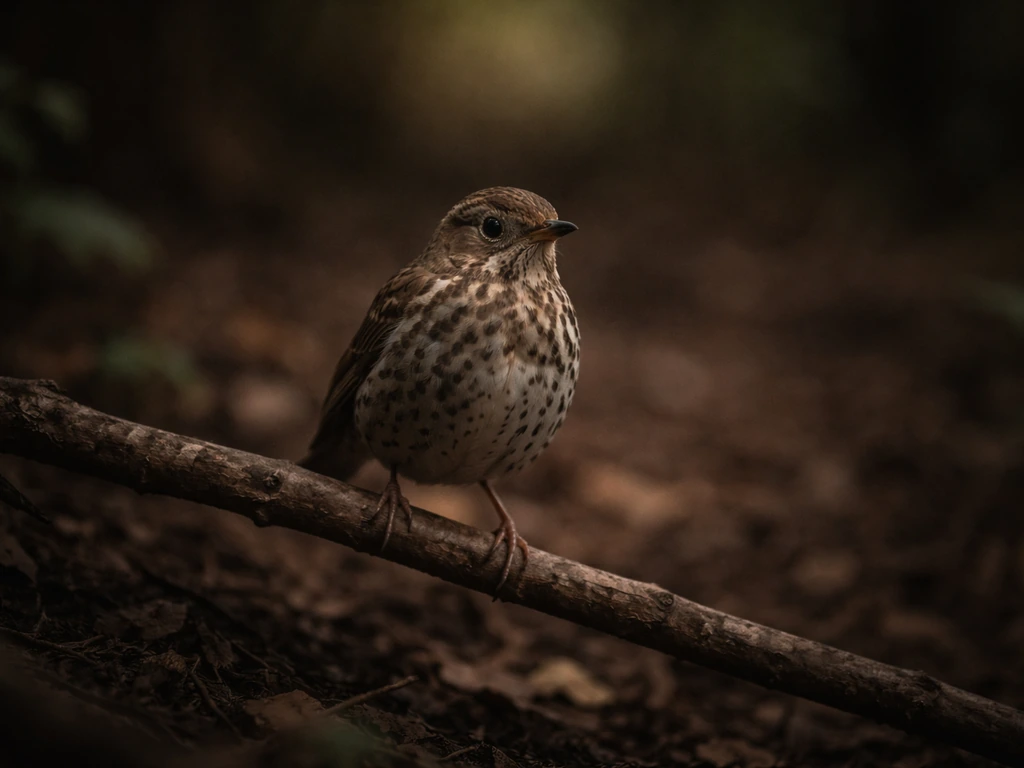
If you have a broken bird ornament tied to healing or rebirth, you can almost certainly fix it today with materials from a hardware or craft store, and the repair process itself can carry as much spiritual weight as the original piece. The right adhesive depends on what the ornament is made of: super glue (cyanoacrylate) for quick, clean resin or ceramic breaks; two-part epoxy for structural strength; wood glue for wooden pieces; UV resin for clear glass repairs. Once it's mended, how you finish, seal, and care for it determines whether it lasts another decade or cracks again next winter. And if you're drawn to this piece because it feels meaningful, there's a long, cross-cultural tradition of reading a broken and repaired bird as something more than damage: it's a symbol of transformation, healing, and the beauty inside brokenness.
Broken Bird to Be Healed Ornament: Fix It, Then Restore Meaning

What kind of ornament do you have?
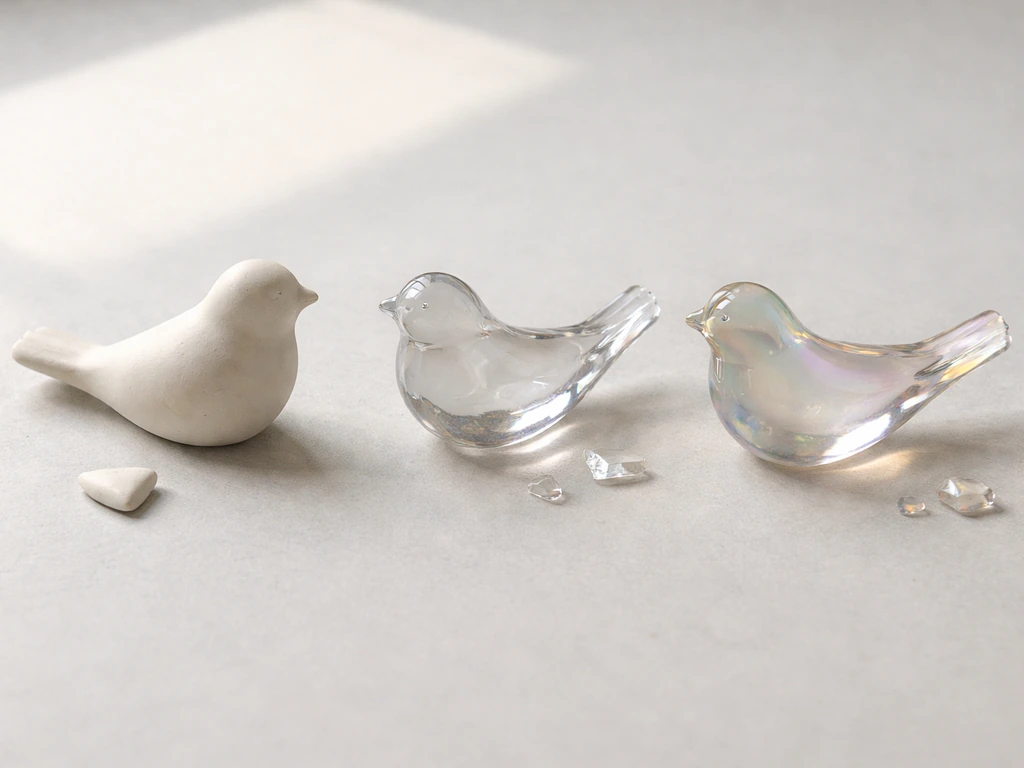
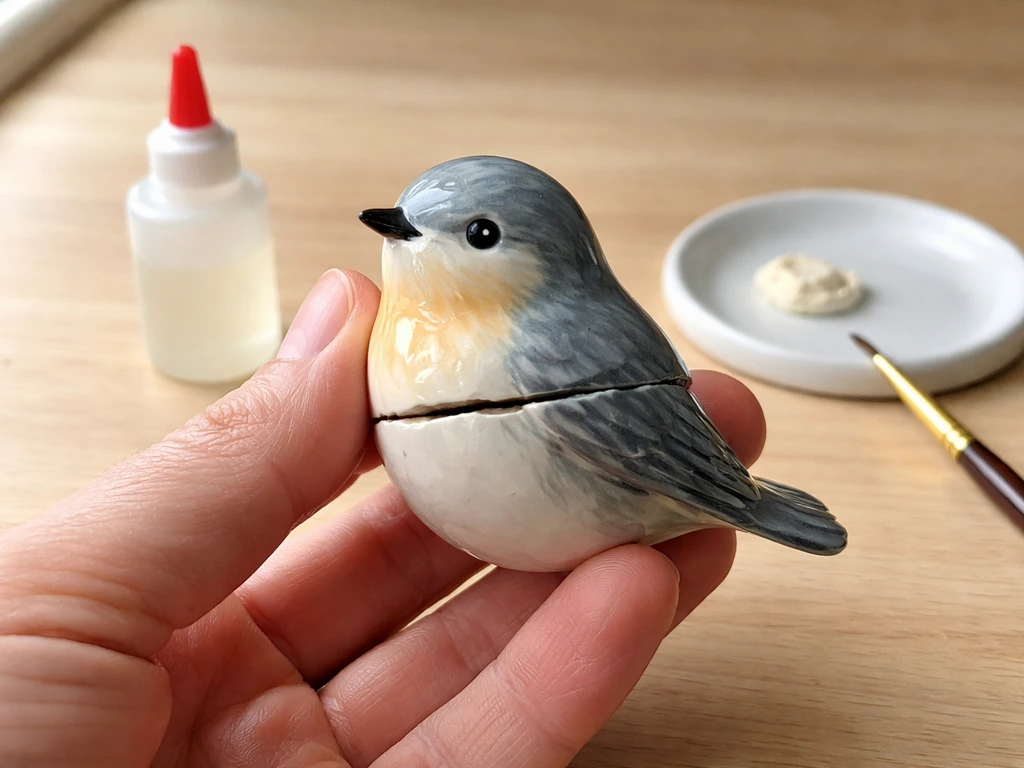
Before you reach for any adhesive, spend two minutes identifying exactly what you're working with. Bird ornaments made for healing or spiritual purposes come in a wide range of materials, and the material dictates everything that follows. Ceramic and porcelain pieces are the most common: they're heavy, smooth, often glazed, and they crack or chip with a clean, glassy edge. Resin ornaments are lighter, slightly flexible, and usually have a smoother uniform surface than ceramic. Wooden bird figures tend to have visible grain, feel warmer in your hand, and splinter rather than crack cleanly. Metal ornaments (cast zinc, pewter, copper) are denser and often have stamped or molded detail. Glass pieces are instantly recognizable by their transparency or brilliant glaze and will have razor-sharp fracture edges. Some ornaments also have applied fabric or real feather elements attached to wire frames or resin bodies, which require a completely different approach from the underlying structure.
Then identify the nature of the break itself. The most common break types are: a clean snap (two pieces that fit back together almost perfectly), a chip or loss (a small section is missing entirely), a crack that hasn't separated (the piece is still in one unit but fractured), a hinge or joint failure (a wing, beak, or tail that was separately attached has come loose), and paint or surface detail loss (flaking, scratched, or rubbed away finish). Many broken bird ornaments have more than one of these issues at once, so note all of them before you start.
Before you do anything: triage and safety
Ceramic, glass, and even resin breaks can leave edges sharp enough to cut. Handle the broken piece with care, especially if children or pets are nearby. Set all fragments on a stable, flat surface and check whether the main body of the ornament is still structurally sound: can it bear its own weight, or will it collapse if you glue one piece back and set it down? If the base or main body is fractured in multiple places, you may need to repair in stages, letting each join cure fully before moving on, rather than trying to assemble everything at once.
Also ask yourself honestly whether repair is the right call. If the piece has shattered into many small fragments with missing sections, or if it has personal or monetary value that warrants professional conservation, a specialist restorer is worth considering. For sentimental pieces you're repairing at home, the key ethical principle used in museum conservation applies: choose an adhesive that is reversible where possible, meaning it can be dissolved and redone if the repair fails rather than causing additional damage.
| Material | Break Type | Best Adhesive Option | Notes |
|---|---|---|---|
| Ceramic / Porcelain | Clean snap or chip | Cyanoacrylate (super glue) or Paraloid B-72 | Paraloid B-72 is conservation-grade, reversible in acetone, and non-yellowing; preferred for valued pieces |
| Ceramic / Porcelain | Large gap or missing section | Two-part epoxy putty or calcium-sulphate filler | Sandable when cured; prime before repainting |
| Resin | Clean snap | Cyanoacrylate (super glue) | Fast; best for small, tight-fitting breaks |
| Resin | Structural or larger break | Two-part epoxy | Stronger bond; allow full cure time per manufacturer |
| Wood | Clean snap or joint failure | PVA / wood glue | Clamp during dry time; full cure ~24 hours |
| Wood | Missing section | Two-part epoxy putty (e.g., SculpWood) | Moldable before curing; sandable and paintable after |
| Glass | Clean crack or break | UV-cure resin adhesive | Creates nearly invisible bond; standard super glue or epoxy often fails on glass |
| Metal | Joint failure or snap | Two-part epoxy (metal-rated) | Check manufacturer's compatibility for specific metals |
| Fabric / Feather elements | Detached from frame | Low-temp hot glue or fabric adhesive | Avoid solvent-based glues that may dissolve fabric or stain feathers |
Repair methods, step by step
Safety first, every time
Whatever adhesive you choose, protect yourself. Super glue bonds skin instantly and can cause eye and skin irritation: wear nitrile gloves and safety glasses, and work in a well-ventilated space. Two-part epoxies also require gloves and ventilation; consult the product's safety data sheet before you begin. This isn't over-caution: it's just basic handling for any adhesive repair.
Reattaching a clean break
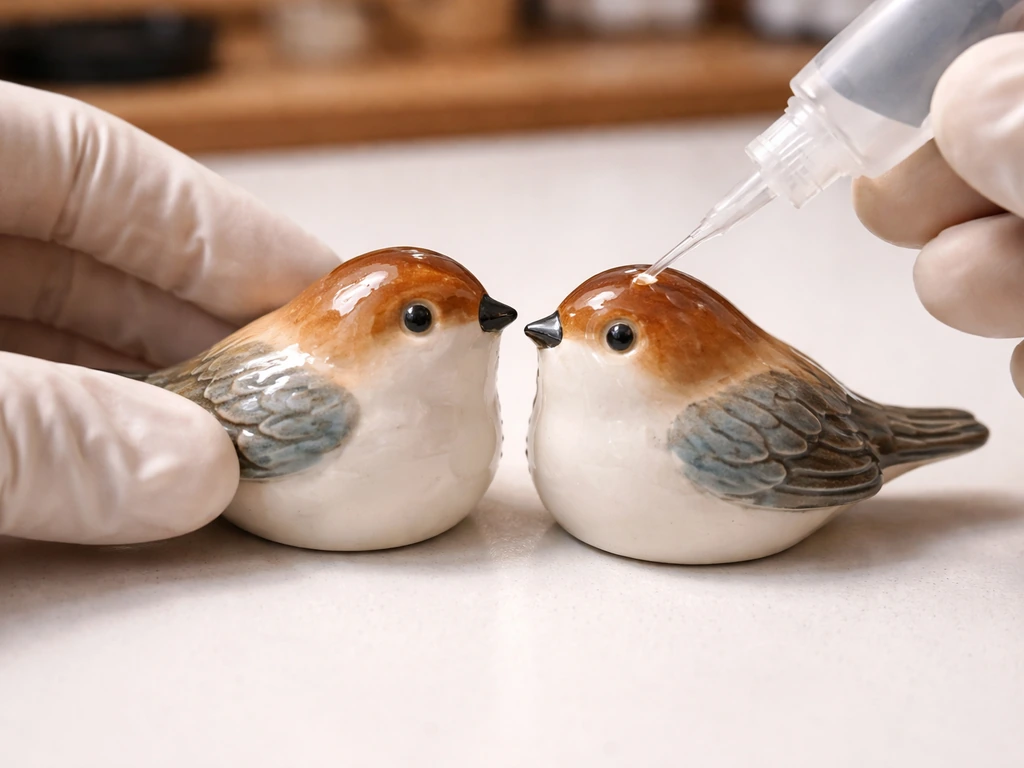
Clean breaks, where the two pieces fit back together with little or no gap, are the easiest to fix. Dry-fit the pieces first: hold them together without adhesive to confirm they align properly. For ceramic or resin, apply a thin, even layer of cyanoacrylate to one surface, press the pieces together firmly for the contact time specified on the bottle (usually 30 to 60 seconds), and then leave it undisturbed for at least an hour before handling. For wood, apply PVA wood glue, clamp during the clamp time the manufacturer specifies, and leave the joint to cure for a full 24 hours before stressing it. For glass, UV resin adhesive applied to the joint and then cured under a UV lamp gives the closest to an invisible result.
Filling gaps and missing sections
When a chip or fragment is missing, you need to build the material back up before you can paint or finish. For ceramic losses, a calcium-sulphate-based filler or an epoxy putty can be pressed into the gap, shaped to approximate the original form, and sanded smooth once cured. For wood, a two-part epoxy wood putty (such as a SculpWood-type product) is moldable before it cures, non-shrinking, and can be carved or sanded to shape afterward. These putties accept acrylic or enamel paint well once fully cured and lightly sanded.
Reinforcing weak points and joints
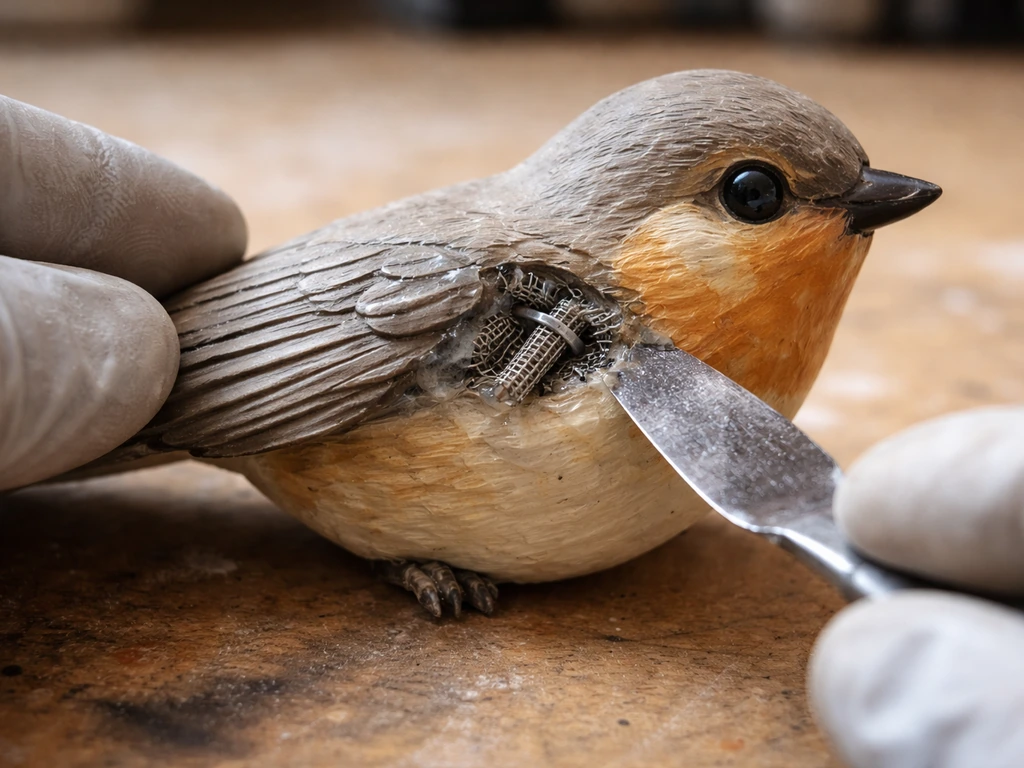
Wings, beaks, and tails on bird ornaments are almost always the weakest structural point because they project outward and bear leverage when the piece is moved or dropped. After reattaching a wing or similar projecting element, consider reinforcing the joint from behind with a small bead of two-part epoxy on the hidden side of the join, once the primary adhesive has cured. This is especially valuable for resin and ceramic pieces where the projection is thin and the join surface area is small.
Finishing: getting the look right again
A repaired join that's visible as a gray crack or a pale filled patch can undermine the spiritual presence of a piece. The standard finishing workflow is: fill and sand (if needed), repaint for visual continuity, then seal and protect. For repainting, acrylic paints work on almost every substrate after repair and are available in any craft store. Match the base color first, then layer any detail work on top once the base is dry. If the ornament has a specific sheen (gloss, satin, or matte), apply a matching clear coat last to unify the look across the repaired and original areas. A useful painting principle: work with a gloss isolation layer first if you're doing detailed overpaints, then adjust the final sheen at the very end with a topcoat.
For ornaments with applied feather or painted feather details, use a fine brush and reference any undamaged areas of the piece as your color guide. If real feather elements have detached, reattach them with a fabric or low-temperature adhesive rather than a solvent-based glue, which can dissolve the feather's structure or leave a stain.
One strong note on conservation and valued pieces: for any ornament you consider artistically or spiritually significant, Paraloid B-72 dissolved in acetone is worth knowing about. It's a conservation-grade acrylic resin used in museums as both an adhesive and a consolidant for ceramics and glass. It doesn't yellow over time (unlike many epoxies, which can yellow significantly during aging), and it remains reversible because it re-dissolves in acetone. It's not always the fastest option, but for a piece you want to last and whose repair you might want to redo cleanly in the future, it's the conservation professional's first choice.
The spiritual meaning of a broken bird ornament
Here's where this guide diverges from a standard repair manual. If you searched for a 'broken bird to be healed ornament,' you're probably not just looking for glue recommendations. There's something about this piece that feels like it matters, like the break itself is trying to say something. If you feel that kind of ancestry present in your bird, you can treat its mending as part of your own heritage, as expressed in the words “my heritage is unto me as a speckled bird.”. That instinct has deep cultural roots.
In Japanese tradition, kintsugi is the art of repairing broken pottery with gold, silver, or platinum lacquer, making the repair itself visible and beautiful. The philosophy treats breakage as part of the object's history, not something to hide. A mended bird ornament, approached with this sensibility, isn't diminished by its repair: it carries the story of its breaking and its healing visibly in its body. That's a powerful lens for any object tied to healing energy.
The 'healing' framing matters, too, because birds across traditions are understood as threshold creatures: they move between earth and sky, between the seen and the unseen. A bird that has been broken and restored sits at a particular kind of symbolic intersection. It has passed through damage and been brought back. If you're drawn to this piece, the act of repairing it can itself be understood as a healing ritual, not just a craft project.
Bird healing and rebirth symbolism across traditions
Egyptian: the Bennu and the phoenix
The Egyptian Bennu bird, often linked to the solar deity Ra and later to Osiris, is one of the oldest recorded symbols of cyclical renewal. From the Bennu tradition came the broader phoenix mythology: a bird that burns and rises from its own ashes. The phoenix as described by Greek and Roman writers was understood by the Egyptians as a creature of immortality, tied to solar worship and the cycling of time. Later Christian writers borrowed this image as an allegory of resurrection. A bird ornament that has been broken and repaired carries an unmistakable resonance with this ancient image: something destroyed, something restored. bird carrying man statue meaning.
Biblical: the dove and divine presence
In biblical tradition, the dove is the preeminent bird of healing and spirit. By the time of Jesus' baptism in the Gospel narratives, the dove descending as the Holy Spirit was drawing on a symbol already rich with meaning: peace after the flood, the presence of God, and spiritual renewal. A broken dove or bird ornament with a spiritual context might reasonably be interpreted through this lens as a call toward spiritual renewal or restored peace, the same imagery that has anchored the symbol for millennia.
Native American traditions: birds as messengers
Across many Native American nations (and these traditions vary significantly, so no single framing applies universally), birds are honored as messengers between the human world and the spirit world. The bald eagle, for instance, holds ceremonial reverence in many communities, its feathers used in ceremonies precisely because of the spiritual connection they carry. The broader interpretive theme across many of these traditions is that birds mediate between realms. A broken bird that is healed might be read, with care and humility, as a symbol of restored communication between the earthly and the sacred. The necklace-and-feather imagery that appears in bird ornament traditions also connects to how bird identity is carried in material form, something worth reflecting on as you restore your piece.
Celtic: transformation and the threshold
Celtic traditions are rich in bird imagery, particularly around transformation and the crossing of thresholds. In some traditions, people also look to specific birds to represent motherhood, using that symbolism to guide the feeling of care and protection they want to honor. The swan, in Celtic tales, often represents love, the soul's journey, and the ability to move between worlds. Celtic shapeshifting stories frequently involve human souls taking bird form, suggesting that the bird body is itself a symbol of transformation in progress. A cracked and mended bird figure fits naturally into this framework: it has undergone change, and it carries that change in its form.
Mesoamerican: feathers, sky, and duality
In Aztec and broader Mesoamerican traditions, the feathered serpent Quetzalcoatl (and the Mayan Kukulkán) embodies a profound duality: the quetzal bird represents the sky, flight, and divine aspiration; the serpent represents the earthly realm. Wikipedia’s explanation of Quetzalcoatl ties the “feathered” aspect to the quetzal’s sky and flight symbolism, while the serpent component points to the earthly realm blank" rel="noopener noreferrer">the feathered serpent Quetzalcoatl (and the Mayan Kukulkán) embodies a profound duality. The quetzal's iridescent feathers were literally treated as sacred objects. This is a tradition in which the bird and its feathers don't just symbolize the divine: they are understood to carry it. An ornament with feather detailing that has broken and been restored could be seen through this lens as a symbol of reconciled duality, of sky and earth brought back into wholeness.
After the repair: care, prevention, and restore vs replace
Display and handling
Once your ornament is repaired and sealed, where and how you display it matters for its longevity. Ceramics and glass are vulnerable to rapid changes in temperature and humidity: sudden shifts can cause existing hairline cracks to widen, or introduce new ones. Keep the piece away from heating vents, air conditioning drafts, and windowsills with direct sun exposure. When you pick it up, support the base from underneath with one hand and stabilize the sides with the other: never lift a repaired piece by a projecting element like a wing or tail. Relative humidity and atmospheric moisture are key long-term factors for ceramic and porous ornaments, and a stable indoor environment is significantly better than a garage or basement with fluctuating conditions.
Storage
If you need to store the piece, wrap it in acid-free tissue or bubble wrap and place it in a firm-sided box with cushioning so it can't rock or shift. Include a silica gel packet to control moisture buildup inside the box. Avoid stacking anything on top of a delicate bird ornament, and store it somewhere with stable, moderate temperatures.
When to restore vs replace
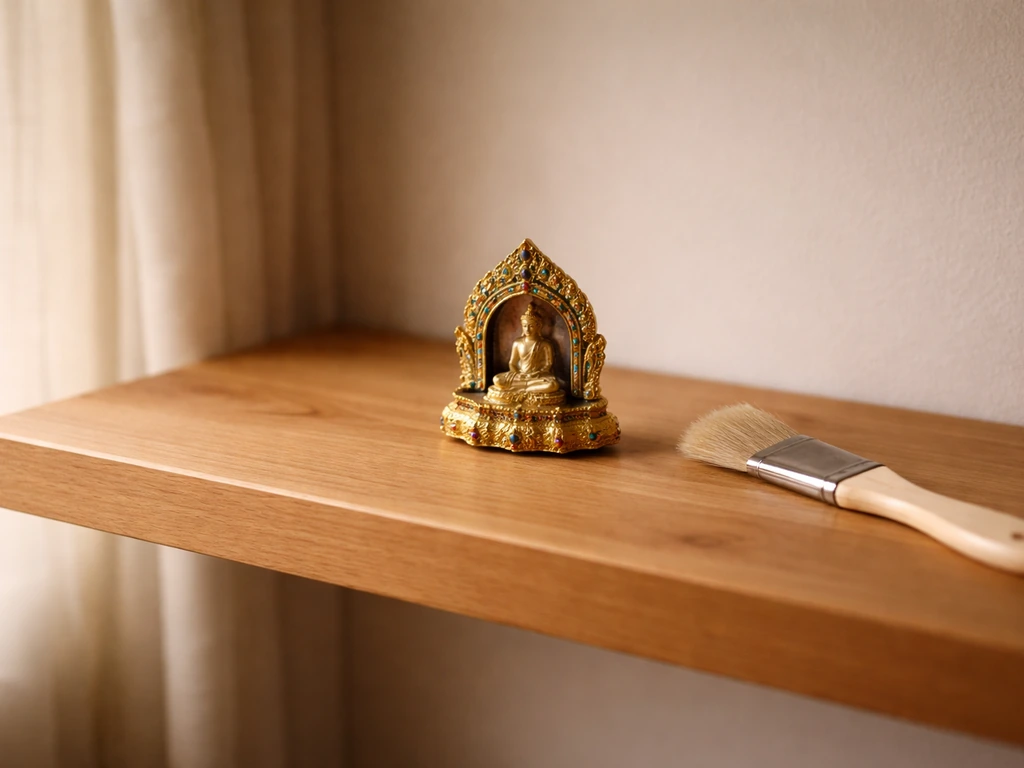
Restoration is usually the right call when the piece has sentimental or spiritual significance that a new object simply can't replicate. If this ornament was a gift, an heirloom, or a piece you've held through a specific period of life, the repair is part of its story now, and that has real value. Replace rather than repair if: the ornament has shattered beyond recognizable form and would require more reconstruction than restoration; the material cost and labor of a professional repair exceeds the replacement cost and you don't have a strong attachment; or the break has left structural weaknesses that make the piece genuinely unsafe to handle or display (particularly with sharp glass fragments). If you're unsure and the piece matters to you, a brief consultation with a ceramic conservator is often inexpensive and will give you a clear-eyed assessment.
Re-dedicating and cleansing the ornament
For a piece that carries healing or spiritual intention, the repair itself can be treated as a ritual threshold: the ornament was broken, and now it is whole again. Many people working within spiritual traditions mark this kind of restoration with a simple cleansing, passing the repaired piece through incense smoke, placing it in moonlight for a night, or simply holding it quietly and setting an intention for what the piece is meant to hold going forward. None of these practices require a specific tradition: they're about re-establishing your relationship with the object after its disruption. The bird, across almost every culture that has ever observed one, is a symbol of the soul in motion. Restoring it, materially and spiritually, is an act that rhymes with every healing narrative humans have ever told about themselves.
FAQ
How can I tell whether my broken bird ornament should be repaired at home or professionally restored?
Use a simple threshold test, if it is shattered into many tiny fragments with missing areas, or if any sharp ceramic or glass pieces would cut skin even after repair, consider a conservator. Also, if the ornament is an heirloom with monetary or artistic value, a professional can preserve original glaze or paint layers and document the repair.
What should I do if the break has gaps and the pieces do not meet cleanly when dry-fit?
If there is a persistent gap, do not force an adhesive bond anyway. Instead, plan for gap-filling with an appropriate filler (epoxy putty for ceramic or wood, or UV resin for glass-type joins), then sand and repaint. A forced thin glue line often fails and shows later as a widening crack.
Can I use the same glue on every material type if I am not sure what my ornament is made of?
Avoid one-size-fits-all glue. Super glue can work for quick resin or ceramic joins, but it can create brittle seams on some plastics and can fog certain translucent materials. If you are unsure, identify the material first, then test an adhesive on a hidden edge because compatibility affects both strength and appearance.
My ornament has a chipped paint layer, how do I decide whether to repaint or just seal?
If the color is missing or flaking down to bare material, repainting is usually needed for continuity, sealing alone will only lock in the damage. If only a surface scratch exists and the underlying color is intact, a clear topcoat can sometimes unify sheen without rebuilding pigment.
What is the safest way to reinforce a loose wing or tail without making it look bulky?
Reinforce from the hidden side after the main join has cured, use a small bead amount and keep it thin so it does not interfere with silhouette. For very thin projections, use the reinforcement as a bridge rather than a pad, then check alignment before the adhesive fully sets.
How do I prevent adhesives from staining or leaving a gray or yellow tint on my repaired ornament?
Choose materials based on longevity goals. Some epoxies yellow noticeably over time, and cyanoacrylate can leave a white haze in gaps. For a conservation-minded repair, consider a reversible, low-yellowing acrylic consolidant, and always protect the visible area by only applying adhesive to the join surfaces.
What should I do if the ornament has real feather elements, and a feather detached during handling?
Reattach feather components with a low-temperature or fabric-safe adhesive designed not to dissolve fibers. Do not use harsh solvents or strong general-purpose glues, they can permanently alter texture and leave a stain that becomes obvious under light.
How can I reduce the chance that my repaired ceramic or glass ornament will crack again in the future?
Control environmental stress, keep it away from heat vents, cold drafts, and direct sun through windows. After repair, avoid moving the piece for the full cure window, then store and display where temperature and humidity change slowly to reduce expansion-driven stress.
Is it okay to use UV resin on non-glass ornaments, and how do I avoid under-curing?
UV resin is best when you can ensure light reaches the join evenly, it may not cure fully inside thick or opaque areas. If the join is in a deep cavity, consider a different adhesive strategy or confirm cure by checking the surface and the underside after curing, then add a second cure pass if needed.
How long should I wait before displaying or handling a newly repaired ornament?
For quick cyanoacrylate contact, the join may feel set within minutes, but wait at least an hour before handling and avoid heavy stress longer. For wood glued with PVA, cure fully for about 24 hours before stressing. For epoxies and putties, follow the manufacturer cure time, and do not assume “set” means “fully strong.”
What is the best way to store a repaired bird ornament to avoid moisture damage and new stress cracks?
Use a firm-sided box with cushioning so it cannot rock, wrap it to prevent rubbing, and include a moisture controller like silica gel. Avoid stacking, and keep it in a stable indoor area rather than a basement or garage where humidity swings can widen existing hairline cracks.
If my ornament is spiritually meaningful, should I use reversible adhesives even if it takes longer?
Often yes. Reversibility matters because future repairs might be needed, and some adhesives are difficult or impossible to remove without damaging original surfaces. A reversible approach is especially helpful when you want the option to redo the repair while keeping the object’s history intact.
My Heritage Is As a Speckled Bird: Meaning and Symbolism
Meaning of my heritage is as a speckled bird: context, symbolism of marked birds, and practical identity reflection