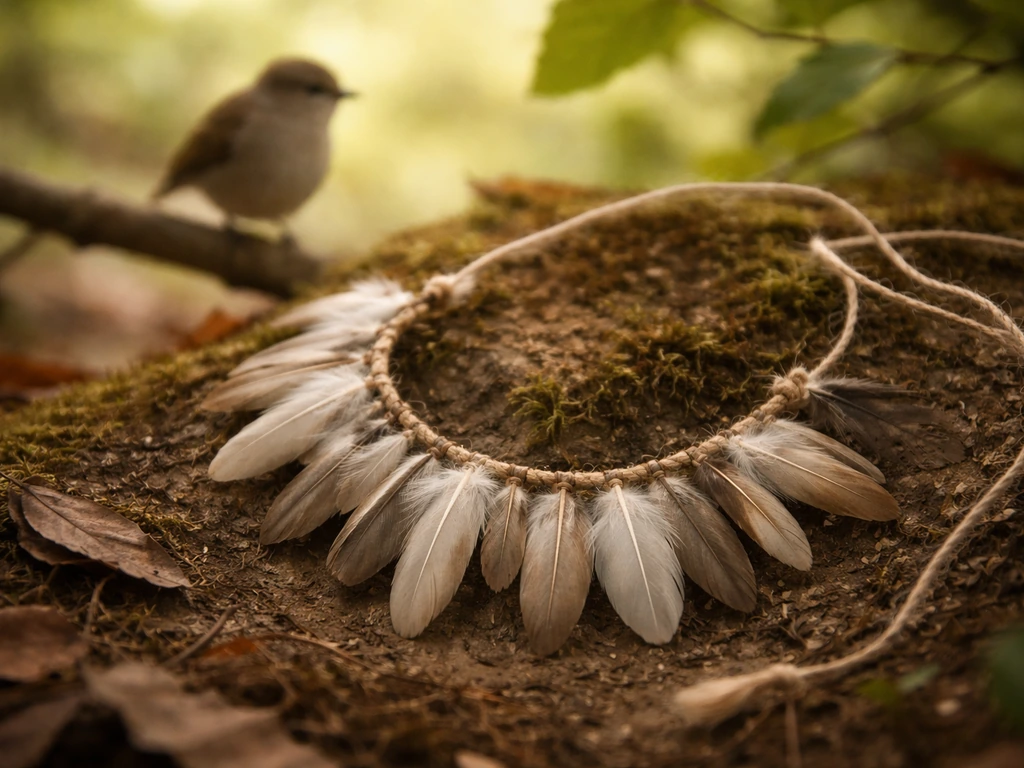
The necklace that the bird has made of is a feather-necklace. That answer comes straight from a poem called "The Bird," where the speaker describes a circular feather-necklace so precious they "wouldn't sell [it] for a thousand pound." If you landed here because a school worksheet, quiz, or textbook asked you this exact question, feather-necklace is the answer your teacher is looking for.
What Is the Necklace the Bird Has Made Of?

Eleanor Hartwell
29 May 2026
What the phrase actually refers to
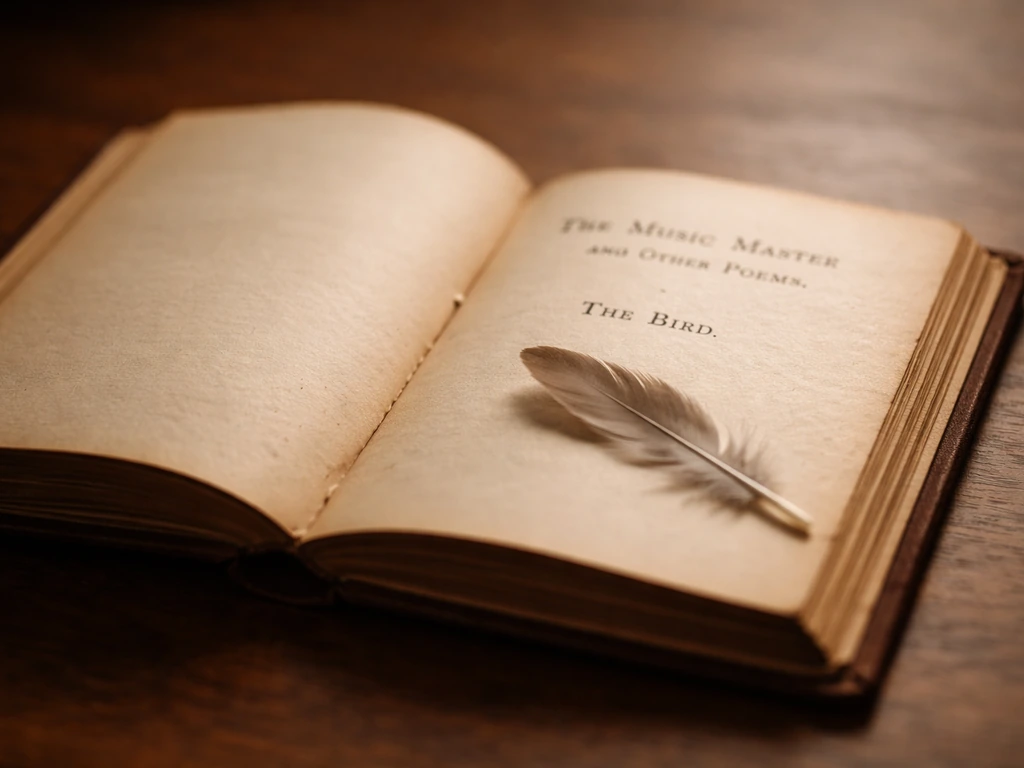
The question "What is the necklace that the bird has made of?" is almost always a comprehension question drawn from the poem "The Bird," published in "The Music Master and Other Poems." The relevant stanza describes the bird wearing or fashioning "A feather-necklace round and round" and valuing it beyond any price. The question is a grammar-style comprehension prompt, and it has one clean answer: the necklace is made of feathers. It is not a riddle about real-world jewelry construction, and it is not asking about a mythological object.
That said, there is genuine depth beneath the surface of that image. Feathers are one of the oldest and most cross-cultural symbols in human spiritual life, and a necklace made of them carries layered meaning that goes well beyond a school quiz. If you are here for the symbolism rather than the homework answer, keep reading.
Identifying the bird and what "made of" really means
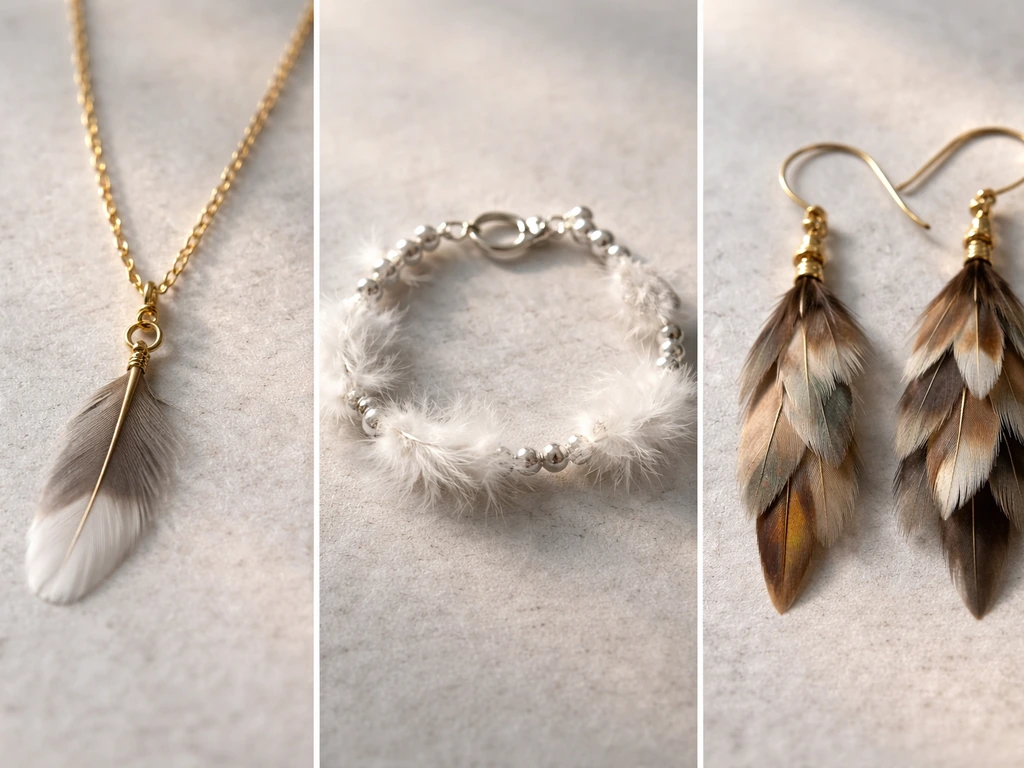
In the poem, the bird is the speaker and creator of its own adornment. The "made of" construction points to feathers specifically, which matters because the material is not incidental. A feather-necklace is not a necklace with a feather charm; it is a necklace composed entirely of feathers, which places it in a very specific symbolic register. In real-world jewelry traditions, this same concept shows up in several forms: Zuni fetish necklaces sometimes include bird figures carved from shell, turquoise, jade, or marble, with each material carrying its own spiritual weight. Modern bird-pendant necklaces are frequently cast in sterling silver or bronze. But in the poem's context, the material is feathers, full stop. For a real-world example of this “feather pendant” imagery turning into a product description, Yumrey’s FEATHER necklace is described as “a delicate necklace with a pendant in the shape of a feather.”.
If you are trying to identify a bird species connected to this motif, the poem does not specify one. However, if your question comes from a broader spiritual encounter (a necklace you received, a dream, or an image from a cultural tradition), the species matters enormously because it shifts the meaning. A dove-feather necklace carries completely different symbolism than a raven-feather or eagle-feather piece. Note the color, size, markings, and context of the bird you associate with the image, and use those details to narrow the species before you chase the symbolism.
What a bird-made necklace represents symbolically
Three core motifs come up again and again when birds and necklaces intersect in symbolic traditions: feathers, flight, and nesting. Each one carries a distinct spiritual register.
Feathers: truth, lightness, and passage
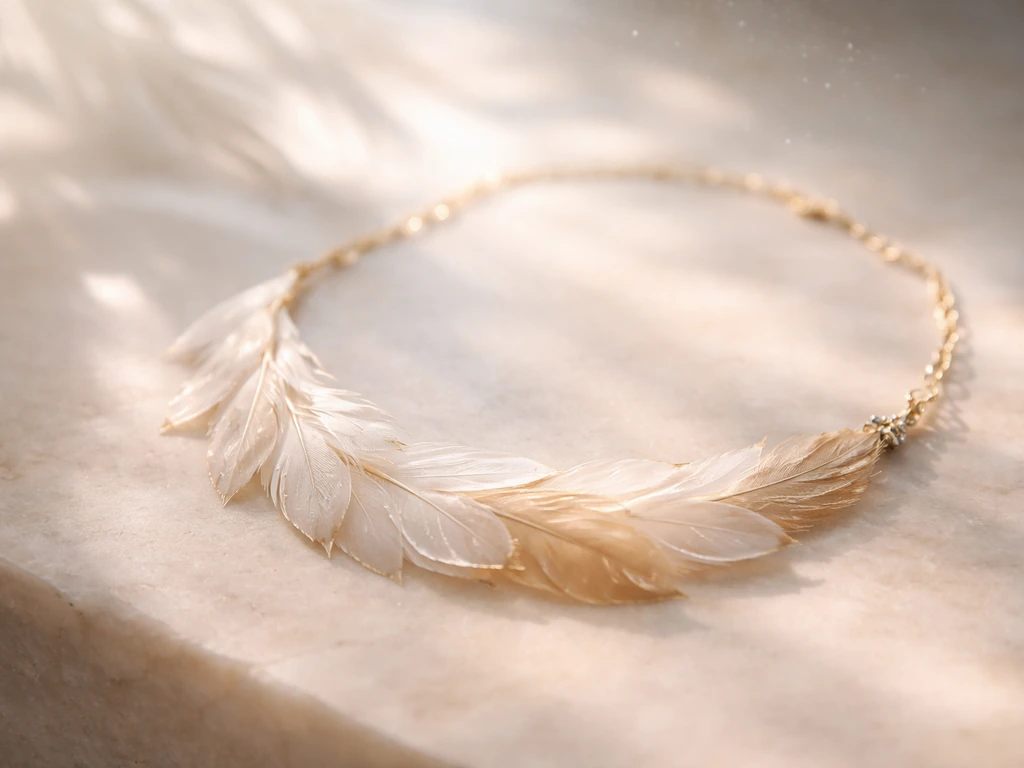
In ancient Egyptian tradition, the feather of Maat was the standard against which the heart of the deceased was weighed. Maat herself represents truth, balance, justice, and cosmic order, and her symbol is a single feather worn as a headdress. A necklace made of feathers, then, can be read as wearable truth: something you carry close to the body as a reminder of your alignment with what is real and just. That is a long way from a school quiz answer, but it shows how deeply the image runs.
Flight: freedom, ascent, and spiritual reach
Birds in nearly every tradition represent the soul's ability to move between worlds. Wearing something a bird has made, or that is made from a bird's own material, is a way of carrying that capacity for movement and elevation. The act of the bird creating the necklace in the poem suggests agency: this is not a passive symbol but an active one, something fashioned with intention.
Nesting: protection, devotion, and care
Birds are also powerful symbols of nesting and motherhood. Swallows return to the same nest year after year, making them emblems of devotion and homecoming. The dove is consistently tied to the divine feminine, caregiving, and the mother goddess across Near Eastern, Christian, and Jewish traditions. A bird constructing something with its own materials and then wearing it as adornment echoes the nesting impulse: building a protective, beautiful thing from what you already carry.
How different cultures and traditions read this kind of imagery
| Tradition | Bird/Feather Symbol | What It Means on the Body |
|---|---|---|
| Ancient Egyptian | Feather of Maat | Truth, justice, the soul's weight and worth |
| Native American (Zuni) | Bird fetishes in shell, turquoise, stone | Protection, spirit guides, connection to the natural world |
| Christian / Biblical | Dove (Holy Spirit) | Peace, divine presence, purity; the Spirit descending at baptism |
| Celtic | Raven, wren, swan feathers | Otherworldly passage, prophecy, shape-shifting |
| Aztec | Quetzal feathers as royal adornment | Divine authority, the feathered serpent Quetzalcoatl, rebirth |
| General cross-cultural | Eagle feathers | Strength, vision, connection to the sky deity |
In the Biblical and Near Eastern world, the dove became one of the most persistent spiritual symbols, associated with the mother goddess in ancient Mesopotamia before its adoption into Christian iconography as the Holy Spirit. A necklace carrying dove imagery (or dove feathers) straddles both traditions. In Aztec culture, the quetzal bird's iridescent green feathers were so sacred that killing one was punishable by death; wearing those feathers was an act of alignment with divine power. Each tradition changes what it means to wear a bird's making.
Connecting the meaning to your own situation
If this phrase came to you through a dream, a piece of jewelry you received, or a repeated encounter with a particular bird, there are a few things worth paying attention to. If the line about your heritage speaks to you, treat it as an invitation to honor what makes you distinct and to carry that meaning forward my heritage is unto me as a speckled bird. First, notice the emotional register of the encounter. Was the bird creating something, offering something, or wearing something? Creation suggests you are being called to build or express something. Offering points toward a gift or transition. Adornment suggests identity and self-expression.
Second, consider what the necklace was made of in your image or encounter, not just what the bird was. Feathers point toward truth and lightness. If you imagined the necklace as being made of shells, that language belongs to water, emotion, and cycles. If the material felt precious or metallic, the symbol may be speaking to lasting value or transformation, much the way the poem's speaker insists the feather-necklace is worth more than a thousand pounds.
Third, think about the bird species if you can identify it. A broken or injured bird carries a different message than a bird in full flight. The themes of healing and renewal that appear in bird symbolism generally suggest that even a wounded creature (and a wounded person) contains the possibility of restoration. A broken bird to be healed ornament is a powerful way of framing that restoration theme in tangible, wearable form.
How to get the exact answer you need right now
If you are working through a school question, the answer is simply feather-necklace or feathers. If your worksheet asks it in a different wording, look for a charm of a specific bird and its feathers in the same poem-based answer pattern a charm of what bird. Write that and you are done. If you are trying to go deeper, here is a quick framework for getting the right meaning fast.
- Identify where you first encountered the phrase. Was it a poem, a worksheet, a jewelry listing, a dream, or a cultural tradition? The source completely changes the answer.
- Note the bird species if one was specified or implied. Search "[species] feather symbolism" alongside your cultural background for the most accurate meaning.
- Note the material. If the necklace is described as made of feathers, shells, stone, or metal, search those materials alongside "bird necklace symbolism" to layer the meanings.
- Identify the cultural or religious context if you can. Searching "dove necklace Christian meaning" returns very different results than "eagle feather necklace Native American meaning."
- If the phrase came from a poem or literary text, search the exact line in quotation marks: "feather-necklace round and round" will pull up the source poem immediately.
- If the phrase came from a spiritual encounter or artwork, look at related motifs: feathers, flight, nesting, and motherhood are the symbolic clusters most likely to hold your answer.
One practical note: bird symbolism is one of those areas where the same image genuinely means different things in different traditions. A necklace of feathers in an Egyptian context speaks to truth and the afterlife. A related ancient Egyptian example is the Shuti hieroglyph, which uses feather motifs as formal iconographic adornment blank" rel="noopener noreferrer">Egyptian context. The same image in a Native American context speaks to spirit guides and protection. Neither answer is wrong, but the right one for you depends on the tradition your encounter is drawing from. When in doubt, go broad first (search the bird species and the word "symbolism") and then narrow by cultural context once you have a feel for the range of meanings.
FAQ
What if my worksheet asks “what is it made of” instead of “what is the necklace”?
If the worksheet asks for the material, the expected answer is feathers, or feather-necklace. If it asks what the bird made, you can answer “a feather-necklace” even if the wording says “that the bird has made of,” because the poem frames the construction as entirely feather-based.
Is this a riddle about how jewelry is constructed, or just a comprehension question?
The poem uses “made of” as a comprehension cue, not as an instruction for how to build jewelry. So you should not look for a realistic craft explanation like stringing, knotting, or adhesives, the point is that the necklace is composed of feathers and treated as extremely valuable.
Should I answer “feather-necklace” or “feathers,” and will both be graded as correct?
If a quiz expects a single noun, use “feather-necklace.” If it expects the core material, use “feathers.” When you can choose both, “a feather-necklace made of feathers” covers every common marking scheme.
How do I avoid mixing up a feather charm with a necklace made of feathers?
Some students miss the distinction between a necklace with a feather charm and a necklace made of feathers. In this poem, the phrasing points to a necklace whose substance is feathers, so avoid answers like “a necklace with a bird charm” unless the question explicitly says “charm.”
Does the poem mention which bird it is, and can I guess the species?
The poem never identifies the bird species, so species-specific answers (dove, eagle, raven, etc.) are usually a grading risk for school questions. For symbolism discussion, you can mention species as a “depends on what you associate” factor, but do not treat it as the poem’s stated content.
If this line shows up in a dream, what details should I focus on to interpret it?
For dream or personal-image interpretations, pay attention to the bird’s role in the scene, the necklace’s appearance (color, size, condition), and the emotion it evokes. A bird creating and wearing it often reads as identity and self-expression, while an offered necklace can read as transition or help.
What if the necklace in my encounter seems to be made of something else besides feathers?
If your image shows a different material (shells, metal, beads), treat that as a separate symbol thread. The article’s framework suggests matching the meaning to the material’s associations, so you can still use bird symbolism, but swap the “truth and lightness” layer that feathers carry for the layer that fits the material you actually saw.
How does symbolism change if the feather-necklace looks broken, old, or missing pieces?
If the necklace is described as broken or damaged, the symbolism often shifts from “valuing and wearing” to “repair and restoration.” For school answers, still stick to feathers, but for personal meaning, the condition of the necklace becomes a major clue.
What should I do if the prompt format is “a charm of what bird”?
If your question uses a pattern like “a charm of what bird,” the expected move is to fill in the bird word plus keep the phrase structure. In general, when the prompt includes “charm,” the answer should name the bird, because “made of” prompts material while “charm of” prompts a subject.
Next Article
What Bird Represents Motherhood? Meanings and Matches
Find the best bird symbol for motherhood with cross-cultural meanings, what each means, and how to apply it today.