
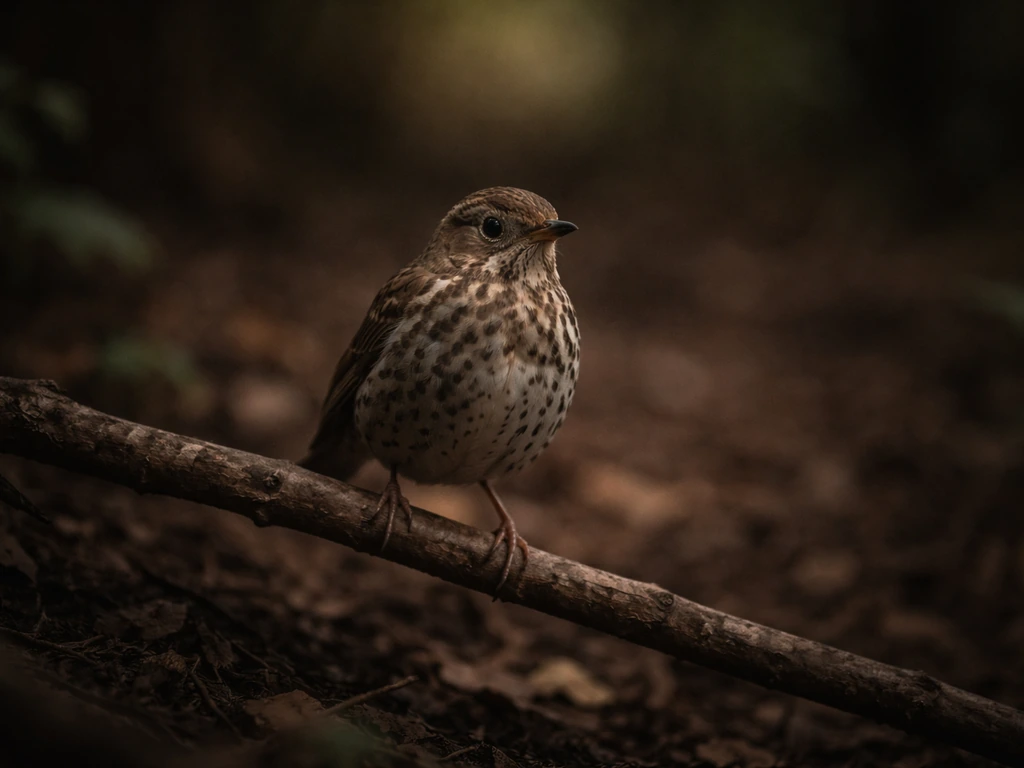
Jeremiah 12:9 is God speaking about Israel, comparing the nation to a speckled bird that has become strange and unwelcome among the other birds around it. In the King James Version it reads: "blank" rel="noopener noreferrer">Mine heritage is unto me as a speckled bird, the birds round about are against her; come ye, assemble all the beasts of the field, come to devour." The image is stark: a bird marked differently than the flock, surrounded by hostility, and vulnerable to being picked apart. If you searched this phrase because something about it resonated personally, that instinct is worth following. This verse is carrying a lot of weight about identity, belonging, and what it feels like to be set apart in a way that draws attack rather than celebration.
My Heritage Is As a Speckled Bird: Meaning and Symbolism

Where the phrase actually appears in Scripture
The phrase comes from Jeremiah 12, a chapter where the prophet himself is in anguish and wrestling with why the wicked prosper while Israel suffers. Verse 9 is generally understood as God's lament over the nation, framing Israel ("my heritage" or "my inheritance") as this oddly marked bird that the surrounding nations now circle and attack. It sits inside a larger passage (verses 9 through 13) that describes desolation, abandoned land, and a people who have become a spectacle and a target.
Translation differences matter here and can genuinely change how you read the verse. The KJV uses "speckled bird" and frames the comparison as a simile: the heritage is like a speckled bird. The NIV and NKJV tighten the image by specifying "speckled bird of prey," which shifts the bird from a passive victim to something simultaneously predatory and persecuted. Bible comparison sources for Jeremiah 12:9, such as YouVersion, reflect this "speckled bird of prey" language in the NKJV reading blank" rel="noopener noreferrer">The NIV and NKJV tighten the image by specifying "speckled bird of prey". Some translations also render it closer to "hyena's lair" or "bird of prey" depending on how the Hebrew is handled. The Hebrew word used (tsavua or related forms) can mean spotted, variegated, or streaked, and some scholars debate whether the creature described is even a bird of the ordinary kind or something closer to a vulture circling prey. The phrase you quoted about a bird making a necklace also appears as a vivid image of something precious being shaped from a difficult situation necklace that the bird has made of. So if you've seen the verse quoted slightly differently in different Bibles, that's not an error. It's a genuinely contested text, and the speckled bird image is the thread that runs through all major English translations.
What "heritage" and "speckled bird" actually mean in plain English
"Heritage" or "inheritance" in this context is not about a family estate. In the Hebrew tradition, the heritage referred to Israel as God's covenantal possession, the people and land given and claimed. So when God says "my heritage is unto me as a speckled bird," the meaning is closer to: the thing I cherish most has become strange, marked out, and under siege. It's a grief statement dressed in bird imagery.
The speckled bird image adds a specific kind of pain to that grief. A speckled bird is one that does not look like the others. In nature, a bird that looks different from the rest of its flock is often rejected or attacked by its own kind, not just by outside predators. Ornithologists have documented this in species where unusual plumage or color patterns trigger aggression from flock mates. The verse pulls on that instinct. The heritage has become something visibly different, and that difference has made it a target. Even when you feel like a broken bird to be healed ornament, this kind of imagery reminds you that your difference can still be held with purpose speckled bird. It's not just isolated. It's actively surrounded.
Why marked and spotted birds carry spiritual weight

Across cultures and spiritual traditions, birds that look different from the norm carry symbolic significance precisely because they stand out. In many Indigenous and folk traditions, an unusual bird, one with unexpected coloring, patterns, or markings, is treated as a messenger or an omen. The distinctiveness itself is the signal. A speckled bird is not invisible. It cannot hide. That visibility is both a vulnerability and, depending on the framework you bring to it, a kind of mark of distinction.
In biblical symbolism broadly, birds often serve as vehicles for divine communication and judgment. Ravens, doves, eagles, and sparrows each carry layered meaning depending on context. The specific use of a marked bird in Jeremiah 12:9 draws on something most readers would have recognized intuitively: a bird that sticks out among its own kind will be attacked. The imagery doesn't require an ornithology lesson. It lands immediately because it mirrors a human experience everyone understands. Being visibly different within a community you belong to is one of the most isolating feelings there is.
Spotted and patterned animals carry similar weight in other traditions. In many African and Mesoamerican symbolic systems, variegated or multicolored creatures sit at boundaries between worlds, neither fully one thing nor another. That liminality is where spiritual significance tends to cluster. The speckled bird in Jeremiah is functioning in a similar space: it is neither fully safe nor fully lost, neither fully belonging nor fully cast out. It is suspended in a tense in-between.
Historical context and how interpreters have read this verse
Jeremiah was writing during one of the most turbulent periods in Israel's history, with the Babylonian threat on the horizon and the covenant between God and Israel under severe strain. Chapter 12 is part of what scholars call the "confessions of Jeremiah," sections where the prophet voices raw grief and confusion rather than confident proclamation. The speckled bird verse appears in that context of lament and impending destruction, not triumph.
Three main interpretive angles have developed around this verse over centuries of commentary:
- Set apart by God: Israel was meant to be distinct among nations, and that distinctiveness has now become a liability. Being chosen and being targeted can be two sides of the same coin.
- Scattered and exposed: The speckled bird cannot hide. The imagery points toward the coming exile and dispersion of the people, visible and vulnerable in the midst of their enemies.
- Identity under siege: The heritage that should be a source of strength and continuity has become something strange even to itself. This reading focuses on internal fracture as much as external threat.
Some later Christian interpretive traditions applied the verse to the Church as the new covenant community, understood as set apart and often persecuted for its distinctiveness. Jewish commentators have long read it as a lamentation specifically about the conditions that led to and followed the Babylonian exile. Both readings are legitimate and neither one cancels the other. The verse is capacious enough to hold both.
Bringing this verse into your own life today

If this verse found you, it probably found you because something in the speckled bird image clicked. Maybe you are carrying a heritage, a family background, a faith tradition, a cultural identity, that makes you stand out in ways that attract friction rather than belonging. Maybe you feel like the bird described: marked, surrounded, and uncertain whether your distinctiveness is something to protect or shed. Here is what I'd offer as a framework for sitting with this verse personally.
Questions worth asking yourself
- What is my heritage in the deepest sense? Not just family or ethnicity, but the spiritual and cultural inheritance I carry.
- In what ways does that heritage make me visibly different from the people around me?
- Is the hostility I feel from others about my distinctiveness, or is some of it actually internalized, something I'm doing to myself?
- Does feeling like the speckled bird come from being set apart in a meaningful way, or from being genuinely scattered and disoriented?
Prayer lines and meditation anchors

If you pray, you can use the verse's own language as a starting point. Something like: "Lord, my heritage feels like a speckled bird today. I am marked in ways I did not choose and I am surrounded by pressure I don't always understand. Help me see what you see in this distinctiveness." That kind of prayer does not pretend the discomfort away. It names the bird, names the surrounding hostility, and holds it all in the presence of the one who named the heritage as his own in the first place.
Journaling prompts
- Write about a time when your heritage (spiritual, cultural, or familial) made you feel like the odd bird in the flock. What happened, and what did you do with it?
- Describe your "speckled" qualities: the things about you that are different, marked, or unusual. Try to write without judgment first, then come back and read it through the lens of being set apart rather than excluded.
- What would it mean to stop trying to smooth out your markings and instead let them be visible? What feels risky about that? What might feel freeing?
- Where do you most want to belong right now, and what would belonging actually cost you in terms of your distinctiveness?
How this verse connects to broader bird symbolism
The speckled bird of Jeremiah 12:9 fits naturally into a much wider symbolic framework around birds and what they represent spiritually. The speckled bird of Jeremiah 12:9 fits naturally into a much wider symbolic framework around birds and what they represent spiritually, including bird carrying man statue meaning as a related way to read standout bird imagery bird symbolism. The verse captures several themes that show up repeatedly in bird symbolism across traditions: flight as longing or displacement, feathers as marks of identity and distinction, and nesting as the tension between belonging and being driven out. A bird that cannot nest safely among its own kind is a bird in perpetual flight, which maps directly onto the exile imagery of the surrounding verses in Jeremiah 12.
Feathers, in many spiritual traditions, are signs of individuality and spiritual marking. Each feather carries a pattern unique to the bird it comes from, and a speckled bird's feathers would be among the most distinctive. Nesting imagery is equally relevant here: the surrounded and threatened bird of verse 9 is one that has no safe place to land. That theme of the bird unable to find rest or belonging threads through many cultural and religious bird symbols, from the dove seeking dry land after the flood to the sparrow finding a nest even at the altar (Psalm 84:3).
If you are exploring bird symbolism more broadly, the speckled bird of Jeremiah is a powerful entry point into the category of marked or liminal birds: creatures whose distinctiveness signals something beyond the ordinary. That liminality is where much of bird symbolism does its deepest work, whether you're looking at the symbolic meaning of specific species, the role of birds in different cultural traditions, or the personal significance of a bird encounter in your own life.
A short summary you can take with you
| Element | What it means in context | Personal application |
|---|---|---|
| Heritage / inheritance | Israel as God's covenanted possession, now under siege | Your deepest sense of who you come from and what you carry |
| Speckled bird | A bird marked differently, rejected and attacked by its own flock | Feeling visibly different in ways that attract pressure or exclusion |
| Birds round about are against her | Surrounding nations as threat; hostility from outside and within | The external or internal voices that challenge your distinctiveness |
| Come to devour | Impending destruction and exile; vulnerability made total | The fear that being marked means being consumed or lost |
Jeremiah 12:9 is not a comfortable verse, and it's not meant to be. In bird symbolism, some people also connect the question of what bird represents motherhood with themes of nurturing, protection, and self-sacrifice. It's a lament, not a promise. But laments are honest, and there is something useful in a verse that names the experience of being marked, surrounded, and uncertain without immediately resolving it. If you find yourself sitting with this phrase, let it be what it is: an ancient voice saying that the experience of carrying something precious that makes you strange in the world is not new, not unnoticed, and not without meaning.
FAQ
How can I apply “my heritage is unto me as a speckled bird” without turning it into self-pity?
If you feel the verse is about you, try identifying which part hurts most, “marked out” (identity difference), “surrounded” (conflict or social pressure), or “under siege” (real risk). Your emphasis can help you choose whether to frame the meaning as grief, endurance, or a call to prayer, rather than forcing one interpretation.
What’s the difference between lamenting like Jeremiah and using the verse to justify staying stuck?
A simple check is whether your reading produces growth or withdrawal. The verse is lament language, so it can include sadness, but it does not mean you must conclude that your distinctiveness is worthless. If the conclusion you’re reaching makes you isolate or abandon hope, shift toward lament plus responsibility (seeking support, staying truthful, making wise choices in community).
Does the verse point to personal feelings, or is it mainly about a nation under threat?
When you read “speckled bird” alongside the wider context (desolation, abandonment, and the people becoming a target), it helps to avoid making the metaphor only about personal awkwardness. The surrounding themes point to communal pressure and hostility, not just individual social differences. So look for whether your situation includes a “community-level” dynamic, not only one-off misunderstandings.
How should I think about versions that describe the speckled bird as predatory or different from a normal bird?
If your translation says “speckled bird of prey” or mentions a creature that sounds predatory, consider that the point may still be vulnerability. Predation language can highlight how others view you when they feel threatened, meaning your experience can be both “being attacked” and “appearing dangerous.” That tension is part of why the image lands so sharply.
Should I interpret the verse as applying to Israel, the Church, or me personally?
Don’t rush to decide “this is definitely about the Church” or “this is definitely about Israel.” The article’s point that both readings can coexist is a helpful guardrail: you can hold a dual lens by asking, “What does this say about God’s people generally,” rather than turning one framework into an either/or identity label.
What does “heritage” mean here if it’s not mainly about family background?
One common mistake is to treat “heritage” as only genealogy. In the covenantal sense, it includes belonging to God and the responsibility that comes with that belonging. If you only focus on family ancestry, you may miss the deeper theme of identity shaped by covenant and purpose.
How do I read the verse responsibly if the Hebrew and animal identification are debated?
If you know the verse is contested (bird type, Hebrew nuance), build your practice around the parts that stay stable across readings: marked distinctiveness, surrounding hostility, and grief under pressure. Let the details vary in your head, but keep the emotional and ethical core consistent so uncertainty doesn’t derail meaning.
If this verse feels true because I’m being attacked, what practical steps should I take alongside prayer?
Yes, especially if your situation includes real consequences, not only feelings. Use the verse as a framework, then also take practical steps like talking with trusted people, setting boundaries, documenting incidents if needed, and seeking wise counsel. Spiritual interpretation is most healing when it connects to safety and wise action.
Does “the bird can’t hide” mean I should be openly different all the time?
Look for the “visibility” element. The verse implies you cannot fully hide your differences, and trying to erase everything about yourself can intensify hostility. A more balanced approach is to decide what to keep visible (your values, faith practice, integrity) and what to share selectively (details you share until trust exists).
Can you suggest a brief prayer for using this verse when I feel marked and surrounded?
If you want a specific short prayer, keep it in lament mode and ask for guidance rather than immediate outcomes. For example, “God, my heritage feels exposed. Give me wisdom to discern what to endure, what to change, and where to find safe community.” This preserves honesty while directing you toward discernment.

Interpret what a bird-made necklace symbolizes, how materials and bird species change meanings, and how to find the exac

Find the best bird symbol for motherhood with cross-cultural meanings, what each means, and how to apply it today.

Which bird is often seen as a sign from heaven, plus a step-by-step way to interpret your specific encounter.