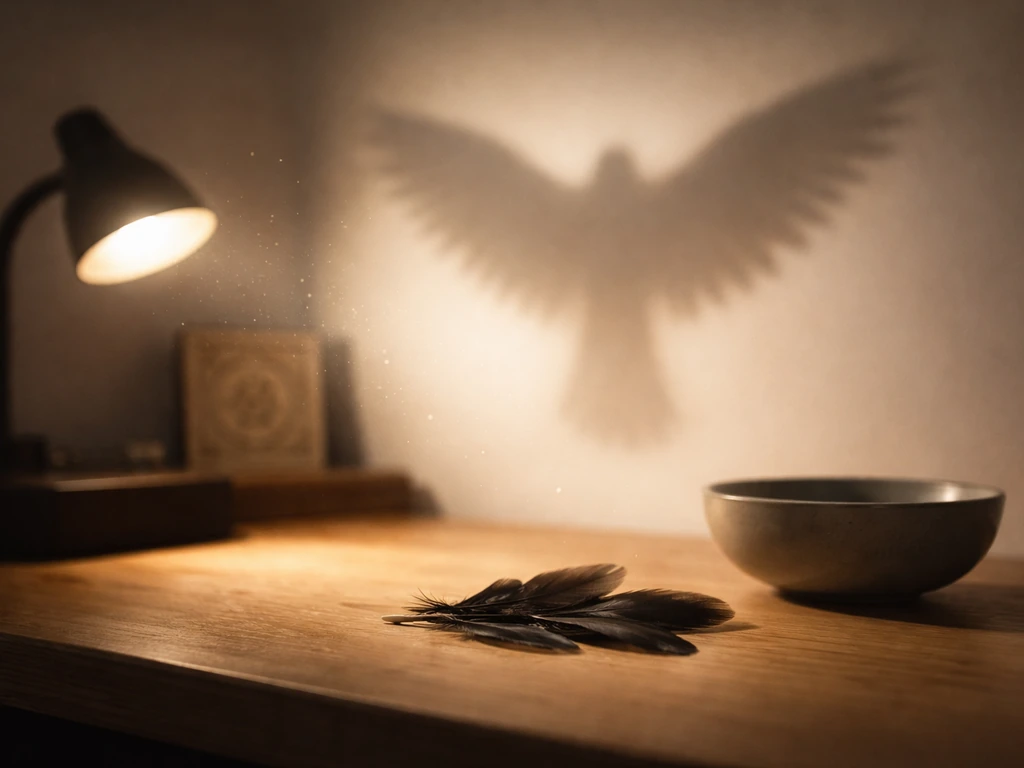
If you are searching 'discover the colossal bird shrine where rock encases,' the phrase most likely points to a specific in-game riddle location in Sea of Thieves, not a real-world monument or purely mythic concept. Community guides and official forum threads identify a 'Colossal Bird Temple encased in stone' as a concrete clue tied to Plunder Valley, where players find a large bird skull or bird-themed shrine imagery inside caves.
Colossal Bird Shrine Where Rock Encases: What It Refers To

Eleanor Hartwell
27 May 2026
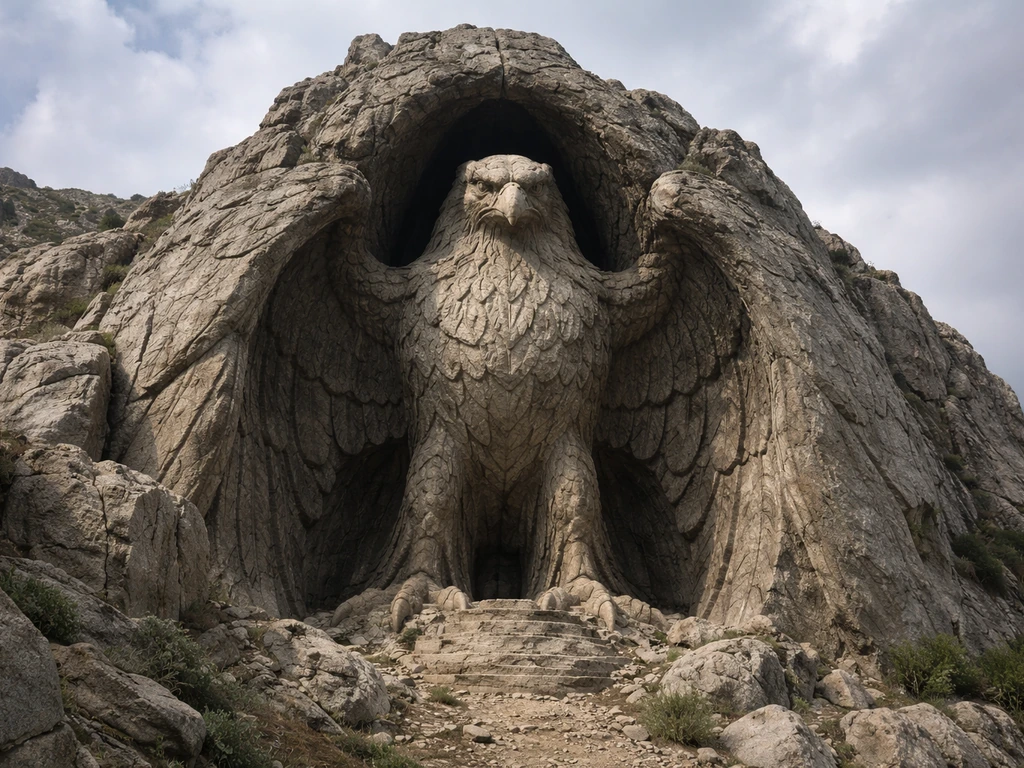
That said, unpacking why this imagery works, what 'colossal bird' and 'rock encases' mean symbolically, and how to verify whether you have the right thing regardless of context, is genuinely useful. In Helheim, the giant bird is often discussed as part of the game lore and symbolism tied to stone-encased shrine imagery giant bird in Helheim. So here is both the practical answer and the deeper layer.
If you are specifically looking for the bird associated with Helheim, it helps to know which in-game riddle location your clue is pointing to what is the bird in helheim. If you meant the novel by James McBride, The Good Lord Bird, the bird symbolism shifts toward a different kind of historical story bird shrine.
What 'Colossal Bird Shrine' Could Actually Mean
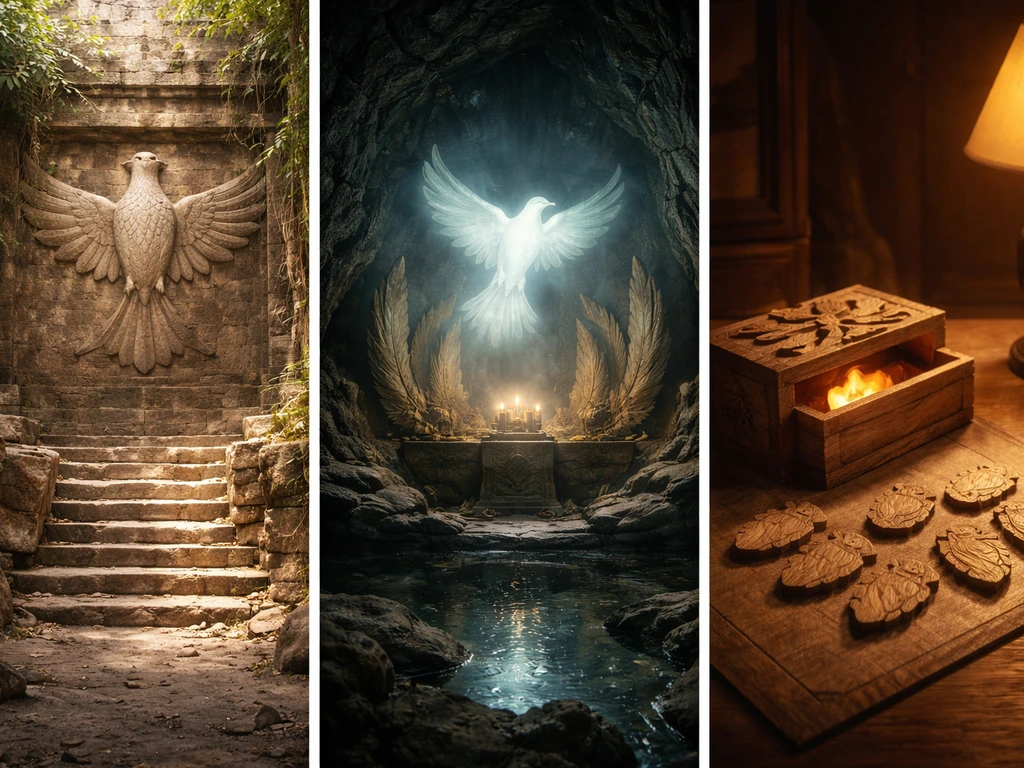
The phrase sits at a crossroads of three very different possibilities, and knowing which one applies saves you a lot of wasted searching.
- A real-world archaeological or sacred site: Think of Aztec eagle warrior temples in Tenochtitlan, or Egyptian falcon sanctuaries like the Edfu Temple dedicated to Horus. These are massive, stone-built, and genuinely fit the 'colossal bird shrine' description culturally. But none of them is specifically described as 'encased in rock' as a discovery clue.
- A mythic or symbolic concept: Across traditions, the idea of a sacred bird dwelling within a mountain or cave exists in Celtic lore, Norse myth (the eagle perched at the crown of Yggdrasil), and Mesoamerican cosmology. The 'rock encases' framing could be a poetic description of that hidden, protected sacred space.
- A game or media riddle clue: This is the most probable match for the exact phrasing. Sea of Thieves riddle guides list 'Colossal bird shrine' and 'Colossal stone bird up high' as named in-game location markers on Plunder Valley, with forum posts describing a large bird skull mounted on a cave wall with drawings beside it.
The specificity of the phrasing, particularly the combination of 'colossal,' 'shrine,' and 'where rock encases' as a riddle-style clue, is the tell. Real sacred bird sites are described in scholarly or travel language. Mythic bird shrines are described in narrative or poetic language. Riddle clues are described in exactly this compressed, directional way. Context is everything, and the evidence strongly points to the game riddle interpretation for this particular phrase.
What 'Rock Encases' Is Telling You
Whether you are reading this as a game clue or a symbolic one, 'rock encases' carries weight across cultures and traditions. Rock as enclosure around something sacred is one of the oldest preservation metaphors humans have. The Rock of Calvary at the Church of the Holy Sepulchre in Jerusalem is literally encased, protected behind glass at the Altar of the Crucifixion, because the physical containment signals that the sacred thing inside is permanent and protected. The rock does not trap the holy object. It witnesses it. That distinction matters.
In Jewish and Christian scripture, the 'Rock of salvation' language runs parallel to protective shelter imagery. Psalm 91:4, which describes finding refuge under divine wings, sits in the same conceptual frame as rock-as-refuge. The bird and the rock are two ways of saying the same thing: something powerful is holding you safe, and neither wing nor stone will yield. When you see 'rock encases' alongside a bird shrine, you are reading enclosure as protection, not imprisonment. The shrine is not hidden because it is secret. It is hidden because it is sacred.
This maps onto game-world design logic too. Caves, enclosed canyon spaces, and rock-walled chambers are where riddle designers place shrines precisely because the architecture echoes the symbolism. The bird shrine inside the cave is permanently sheltered, just as a sacred falcon statue placed in a stone temple niche conveys that the divine power inside is stable and guarded.
Why Bird Shrines Are Always Large-Scale
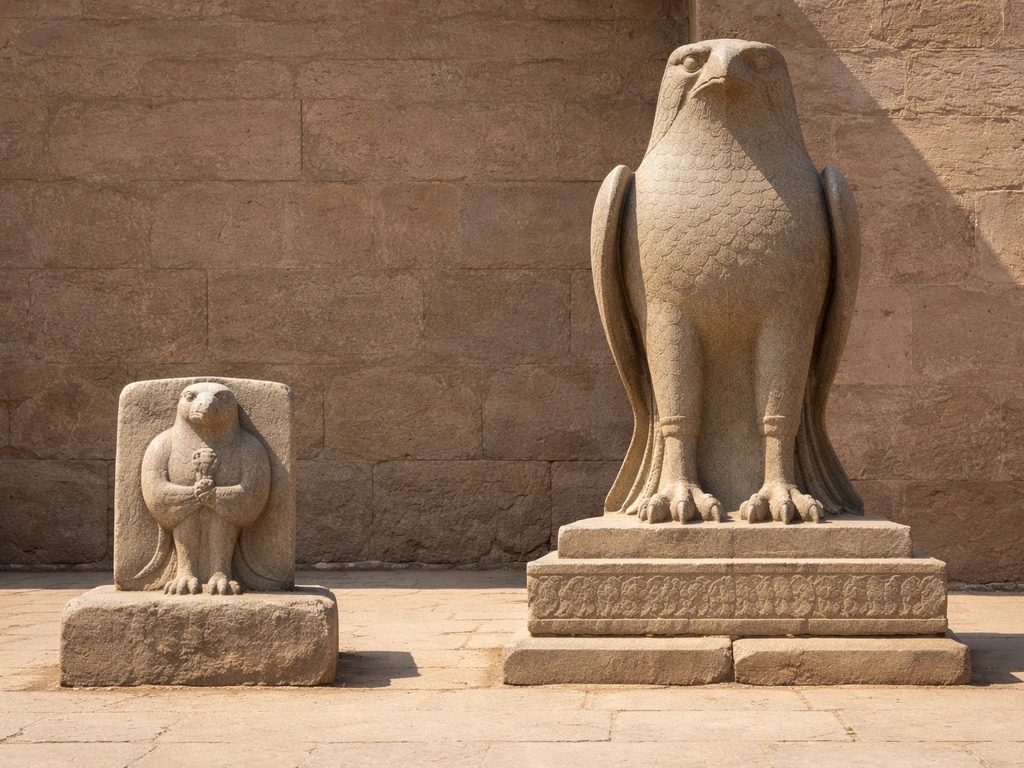
Across traditions, bird deities and sacred birds are almost never depicted small. Scale is part of the meaning. The Egyptian falcon god Horus, whose imagery at the Met shows a falcon sheltering King Nectanebo II beneath its breast, is depicted with the king literally under the bird's wings. The protective implication requires size: a colossal bird can actually shelter you. A small one cannot. This is why bird shrines across Egyptian, Aztec, and Celtic traditions tend toward the monumental.
The California condor, which Zion National Park describes as a 'cliff-loving giant,' is a real-world example of how 'colossal bird' functions in modern language without mythic inflation. Zion National Park describes the California condor as a "cliff-loving giant," supporting the point that "colossal bird" can reflect real-world language and scale without mythic exaggeration Zion National Park describes as a 'cliff-loving giant'. The condor's wingspan reaches nearly ten feet. It nests in cliff faces and caves. Indigenous traditions of the American Southwest treat it as a sacred messenger. The condor literally occupies cliff rock, nesting inside the encasing stone, which is as close as the natural world gets to embodying this symbolic phrase without any metaphor at all.
So when you encounter a 'colossal bird shrine,' the scale is a theological statement. It says: this bird's power is large enough to encompass, to protect, to oversee. The shrine is built to match. Whether that shrine is Aztec, Egyptian, Celtic, or rendered in the pixel-work of a game map, the iconographic logic is the same.
How to Actually Find It Today
If you landed on this phrase through a Sea of Thieves riddle, here is your fastest path forward. If your goal is specifically the Good Lord Bird OTT India, you can cross-check where it is available by consulting the latest streaming listings for India.
- Search specifically for 'Sea of Thieves Plunder Valley riddle guide colossal bird shrine' rather than the raw phrase. Sites like Rare Thief's riddle guides list exact in-game clue locations with screenshots.
- Look for cave entrances on Plunder Valley's map. Forum accounts describe the shrine as a large bird skull fixed to a cave wall, with drawings nearby. The 'rock encases' clue points you inside, not to an open hilltop.
- Cross-check by confirming the visual: a bird skull or bird-shaped stone feature on a wall, cave context, and accompanying markings. If all three are present, you have the right location.
- If you are not playing a game and instead found this phrase in an article, exhibit description, or artwork label, search the exact quoted phrase in quotation marks alongside the cultural tradition it appears in (e.g., 'colossal bird shrine rock encases' Aztec, or Egyptian, or Celtic). The specificity of the phrasing should surface the correct source quickly.
- For real-world sacred bird sites, use Google Arts and Culture or museum database searches with terms like 'falcon shrine stone enclosure,' 'eagle temple carved rock,' or 'bird deity stone sanctuary' alongside the culture name.
Verification steps that save time
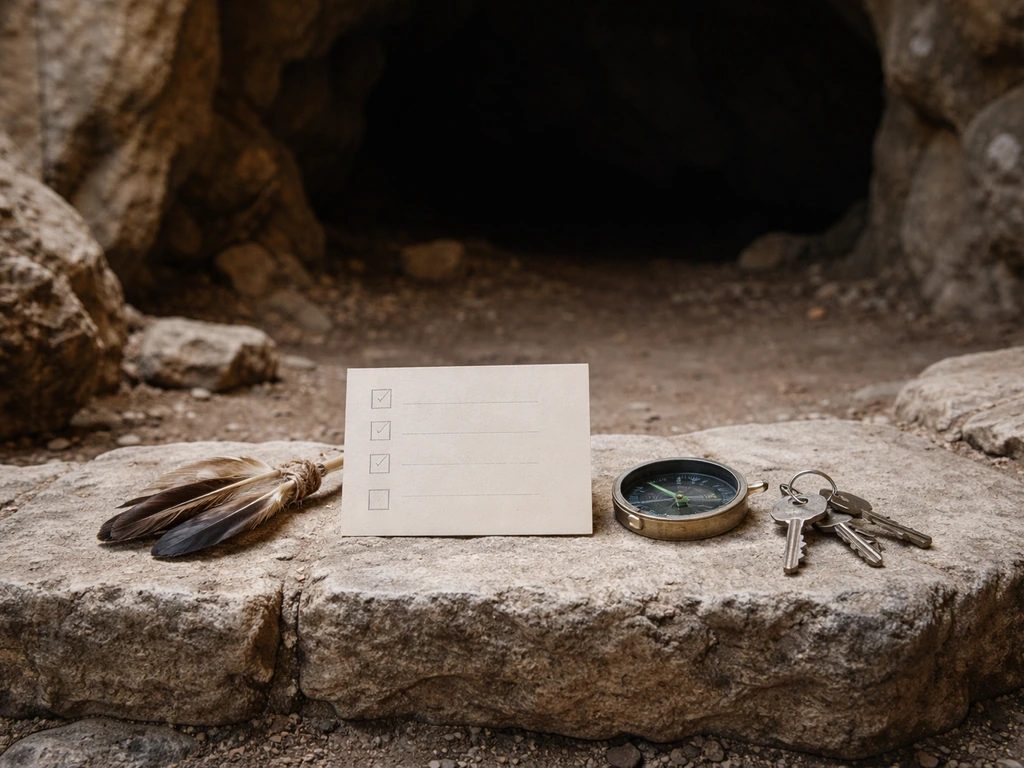
- Does the location match? For the game: Plunder Valley caves. For real sites: Egypt (Edfu/Horus), Mexico (Aztec eagle warrior shrines), or Celtic hill sanctuaries.
- Is there a bird figure or skull physically present, not just mentioned? The shrine should have a visible bird-form element.
- Is the enclosure made of rock, not wood or fabric? 'Rock encases' is specific. A tent shrine or wooden totem does not qualify.
- Are there accompanying markings, drawings, or inscriptions? Both real sacred sites and game riddle shrines consistently include secondary symbols alongside the main bird figure.
Interpreting What You Find Through a Bird-Symbolism Lens
Once you have located the colossal bird shrine, the symbolism it carries depends on which tradition the imagery draws from. If you are also wondering who the bird god is in this kind of imagery, the answer depends on the specific tradition the shrine is drawing from colossal bird shrine. Here is a quick frame for the most common cultural contexts.
| Tradition | Bird at Shrine | Rock/Enclosure Meaning | Core Symbolic Reading |
|---|---|---|---|
| Egyptian | Falcon (Horus) | Stone temple niche protects divine power | Kingship, sky dominion, protection of the living |
| Biblical/Hebrew | Wings as shelter (Psalm 91) | Rock as salvation refuge | Divine protection, permanent covenant, refuge from danger |
| Aztec | Eagle (warrior/sun bird) | Temple stone encases sacrificial sacred space | Solar power, warrior spirit, transition between worlds |
| Celtic | Raven or eagle on high ground | Hill/cliff rock as threshold between worlds | Prophecy, omen-reading, guardian of sacred boundaries |
| Native American (Southwest) | Condor or thunderbird in cliff rock | Cave as womb, rock as ancestor body | Rebirth, ancestral connection, messenger to spirit world |
| Game/Riddle (Sea of Thieves) | Bird skull shrine in cave | Cave rock encases hidden treasure marker | Discovery, hidden knowledge, threshold to reward |
The through-line across all of these is that a bird enclosed in rock is a symbol of something powerful that does not need to fly free to be alive. The encasement does not diminish the bird's meaning. It concentrates it. Just as a seed holds its energy inside a hard shell, the shrine inside the rock holds its sacred charge precisely because it is contained.
If you find a colossal bird figure inside a stone enclosure and you are trying to interpret it, ask: what is this bird protecting, and what is the rock protecting it from? If you are trying to connect this symbolism to a specific character, you may also be looking for which divine beast is the bird.
Related to this theme, the colossal bird shrine where there is little light carries a distinct shade of meaning. Darkness inside stone amplifies the sense of hidden sacred energy, which is worth considering if your search leads you to a dimly lit cave or enclosed sanctuary rather than an open monument.
Avoid These Common Mismatches
The biggest misidentification risk is confusing scale for type. A 'colossal bird' in one tradition is a mythic giant like the Thunderbird or the Norse Hraesvelgr, an eagle that causes wind by beating its wings. In another, it is a condor described as colossal because of its actual wingspan. In a game, it is a large bird skull rendered in pixel art. These are all 'colossal birds,' but they belong to completely different interpretive categories.
- Do not assume a 'colossal bird shrine' must be ancient or mythic. The phrase can describe a very contemporary game element or a modern cultural installation.
- Do not conflate the bird-in-rock with the bird-on-rock. Many sacred sites feature a bird perched on a stone (like the Horus falcon seated on a plinth). 'Rock encases' specifically implies the bird or shrine is inside or surrounded by rock, not just near it.
- Do not skip the confirmation step of checking for secondary markings. A rock formation that vaguely resembles a bird is not a bird shrine. A bird skull, carved bird figure, or intentional bird-form with surrounding symbols is.
- Do not mix up Norse and Celtic bird symbolism when both seem to fit. Norse eagle mythology tends toward cosmic scale (Yggdrasil's crown eagle) while Celtic bird omens are more localized and prophetic. The context of your shrine, its geography and iconography, will tell you which tradition is speaking.
- Do not rule out the game interpretation too quickly just because you are on a symbolism-focused site. Many people discover bird symbolism through game design that borrows directly from real traditions, and understanding the cultural source makes the game experience richer.
If you are still uncertain after running your searches, zoom out and ask what kind of source the phrase came from. A community forum post points to a game. A museum catalog entry points to a real artifact. A poem or novel points to a literary symbol. The phrase 'colossal bird shrine where rock encases' is doing different work in each of those contexts, but in every case, the bird inside the stone is asking you to look closer, not fly past.
FAQ
How can I confirm I found the correct “colossal bird shrine” clue in Sea of Thieves without relying on guesswork?
Use location checks, not just the visual. In Plunder Valley style riddle routes, confirm you are at the same cave or enclosed chamber the clue text points to, then look for the bird skull or bird-themed shrine asset in that exact rock-walled space. If you can’t reproduce the same find after revisiting the chamber, you are likely at a different clue location, even if the scenery looks similar.
What does “rock encases” usually imply in riddles, does it mean the shrine is trapped or simply sheltered?
In riddle-style phrasing like this, “encases” generally signals shelter or protection, not imprisonment. The practical check is whether the shrine is placed inside a cave niche, stone arch, or covered chamber where the environment appears intentionally protective. If the object is out in open air, the wording is probably not matching.
Does “colossal bird” always mean a mythic giant bird, or can it be a real animal with big scale?
It can be either, depending on the source. If the phrase appears in modern descriptive language, “colossal” may describe real wingspan and cliff or cave nesting behavior. If it appears in a riddle or mythic catalog, “colossal” often means a mythic-scale guardian. A quick test is whether the context supports physical measurement (real bird) or supernatural lore (mythic bird).
In Sea of Thieves, what’s the most common mistake that makes players think they found the shrine when they did not?
Confusing a bird-adjacent landmark with the exact shrine clue asset. Many caves have bird skulls, statues, or decorative art, but the riddle expects the specific bird shrine imagery tied to the clue. If your find does not align with the riddle’s described space (encased rock chamber versus open valley) you may be collecting the wrong item.
If I’m interpreting it symbolically, what should I pay attention to first, the bird, the rock, or the light level?
Start with what the rock is doing for the bird. If the bird is enclosed, protected, or set within a stone niche, the theme is usually safety and permanence. Then use details like lighting to refine the tone, dimness inside stone often suggests hidden sacred energy or guarded power, while brighter visibility suggests a shrine meant to be witnessed.
How do I avoid mixing up different traditions (or game lore) when the phrase is the same but the meaning changes?
Anchor your interpretation to the originating source you used to find the phrase. If the trail began with a Sea of Thieves riddle guide, treat the “bird shrine” as game iconography first. If it began with literature or a historical work, switch to symbolic reading. When in doubt, list the concrete elements you observed (cave, skull, stone niche) and map them to one context only.
What if my search results mention multiple related “bird shrine” phrases, how do I know which one matches “where rock encases”?
Prioritize the phrasing that matches containment. “Where rock encases” should correspond to a stone-walled or stone-covered environment, such as a cave interior, enclosed canyon, or a shrine positioned behind or within rock. If the phrase you see describes a shrine that is merely “near” or “around” a bird without enclosure details, it is likely a different clue.
If I’m trying to connect the bird to a specific divine beast, what practical detail can I use?
Identify the bird type shown (falcon, eagle-like, condor-like) and any consistent artistic markers (wings shielding a figure, cliff-cave nesting cues, or specific icon layouts). Those cues help differentiate traditions. Without the specific bird species or symbol set, “which divine beast” remains ambiguous, so match imagery before naming.
Next Article
Who Is the Bird God? Meaning, Traditions, and Key Candidates
Find likely meanings of who is the bird god, with key bird-deity candidates, symbols, and steps to identify your traditi