God provided quail for the Israelites in the wilderness. The Bible names the bird twice, once in Exodus 16 and again in Numbers 11, and both times it is quail that arrives in enormous flocks to feed the hungry camp. This was not a quiet, trickle-of-food miracle. In Numbers, the wind blew birds in from the sea until they covered the ground three feet deep for miles in every direction, and the people spent two full days and a night gathering them.
What Bird Did God Provide for the Israelites? Quail and Manna

Eleanor Hartwell
7 May 2026
The Direct Biblical Answer

The bird God provided was quail. Both major wilderness-provision accounts in the Hebrew scriptures use the same Hebrew word, 'selav' (sometimes transliterated as 'shlav'), which translators across virtually every major English version render as 'quail.' The KJV, NIV, ESV, CSB, and NET all agree on this. There is no serious dispute about the identification at the translation level, though there are interesting historical questions about the exact species, which we will get to below.
Where to Find It in Scripture
The first account is in Exodus 16:11-14. God tells Moses he will give the Israelites meat 'at twilight' and bread in the morning. God provided quail for meat in the wilderness, with the promise coming first at twilight and the result arriving that evening meat 'at twilight'. The Hebrew phrase for twilight is 'bein ha'arbayim,' literally 'between the two evenings,' which refers to the transition period just before dark. Then verse 13 delivers on the promise: 'In the evening quail came up and covered the camp, and in the morning there was a layer of dew around the camp.' The dew cleared, and underneath it was the manna. So the pattern was quail at dusk, manna at dawn.
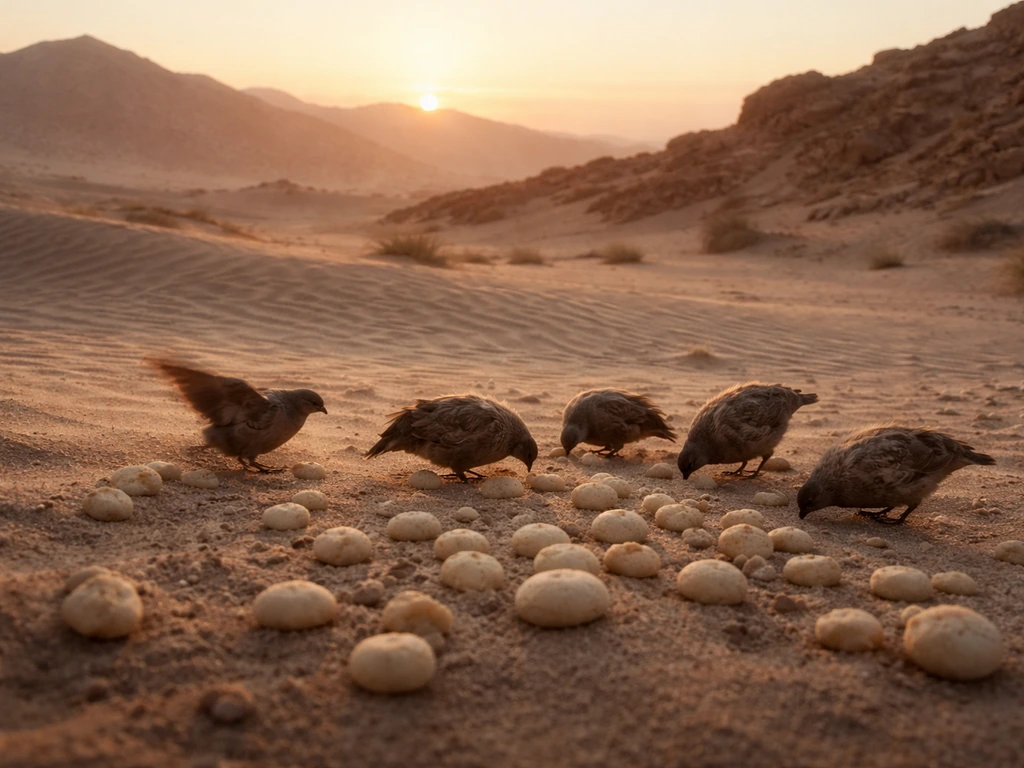
The second account, in Numbers 11:31-32, describes a much larger event. By this point in the Exodus narrative, the Israelites were complaining bitterly about having no meat, and God's response was dramatic. A wind blew in quail from the sea and dropped them all around the camp, about three feet off the ground, for a day's walk in every direction. Numbers 11:32 adds a remarkable detail: the person who gathered the least still collected ten homers of quail.
A discussion thread in r/BibleVerseCommentary also highlights the “ten homers” figure in its Numbers and Exodus quail commentary-style reasoning ten homers of quail. A homer is roughly 220 liters, so the minimum haul was something close to 2,200 liters of bird.
The people gathered all day, all night, and all the following day, then spread the quail out around camp, apparently to dry or cure the meat.
Clarifying the Confusion: 'Bird Provided' vs. 'Bird as Food'
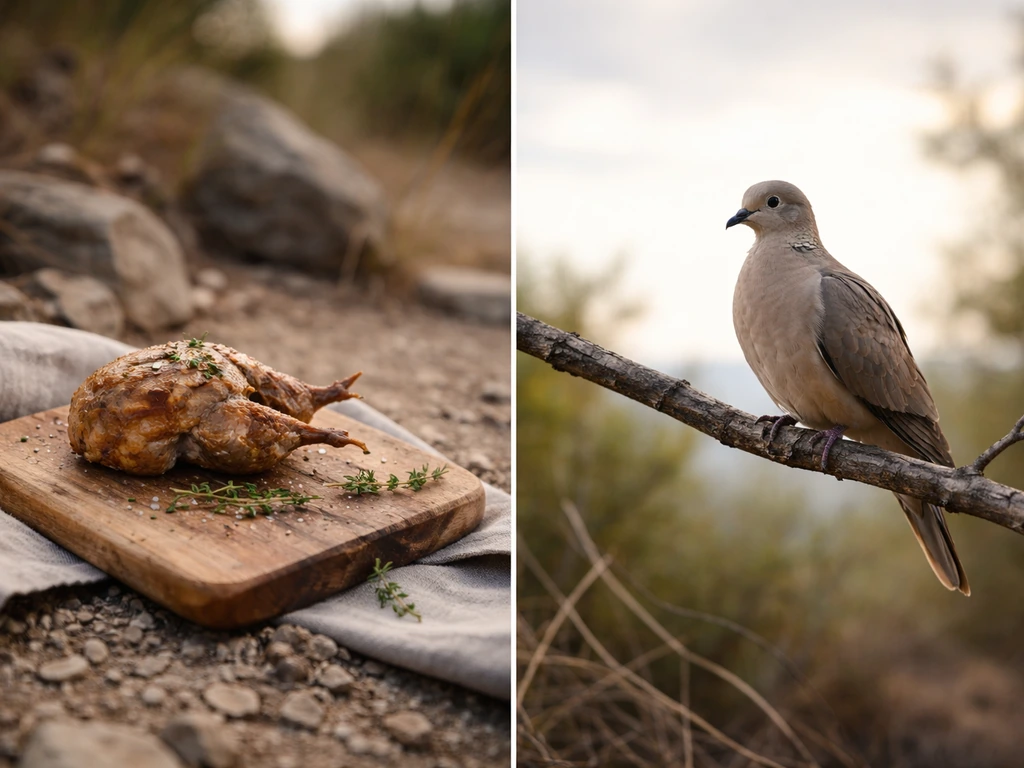
A lot of people search this question expecting a single symbolic bird, the way Noah's dove is a symbol or the eagle is used as a divine image throughout Psalms and Isaiah. The quail story is different. These birds are not acting as messengers or omens. They are food. God is responding to hunger, not sending a sign. So if you are coming to this passage looking for the kind of rich individual-bird symbolism you find in, say, the great speckled bird of Jeremiah 12 or the imagery in Micah 1:16, the quail passage will feel different. The symbolic weight here is in the provision event itself, not in the bird species.
There is also a translation layer worth knowing about. Some older or more literal translations use the word 'flesh' rather than naming the bird, because the Hebrew in certain verses refers to meat generically before specifying quail. If you are reading a translation that says 'I will give you flesh to eat' without immediately naming quail, look one or two verses forward. The bird is named quickly in both passages.
What Bird Was It Really? Quail Identification and Historical Notes
The species most consistently proposed is the common quail (Coturnix coturnix), a small migratory bird that still crosses the Sinai Peninsula and the eastern Mediterranean in enormous numbers during seasonal migrations. These are not birds that nest in one place. They travel in dense flocks, often flying at night or low to the ground, and they are known to land exhausted after long sea crossings, which makes them extremely easy to catch. Ancient Egyptians were catching migratory quail in nets along the Nile Delta for centuries, so there is solid historical evidence that massive quail migrations were a known phenomenon in exactly the geographic region where the Exodus narrative is set.
The Numbers account, with its description of birds blown in from the sea and settling low to the ground, fits the known behavior of exhausted migrating quail almost perfectly. Whether you read the story as miraculous, natural, or both, the bird identification is consistent and plausible. Some scholars have also suggested the 'ten homers' figure is hyperbolic, meant to convey overwhelming abundance rather than a literal measurement, but even a fraction of that amount per person would represent a staggering quantity of birds.
The Spiritual Symbolism of the Provided Bird
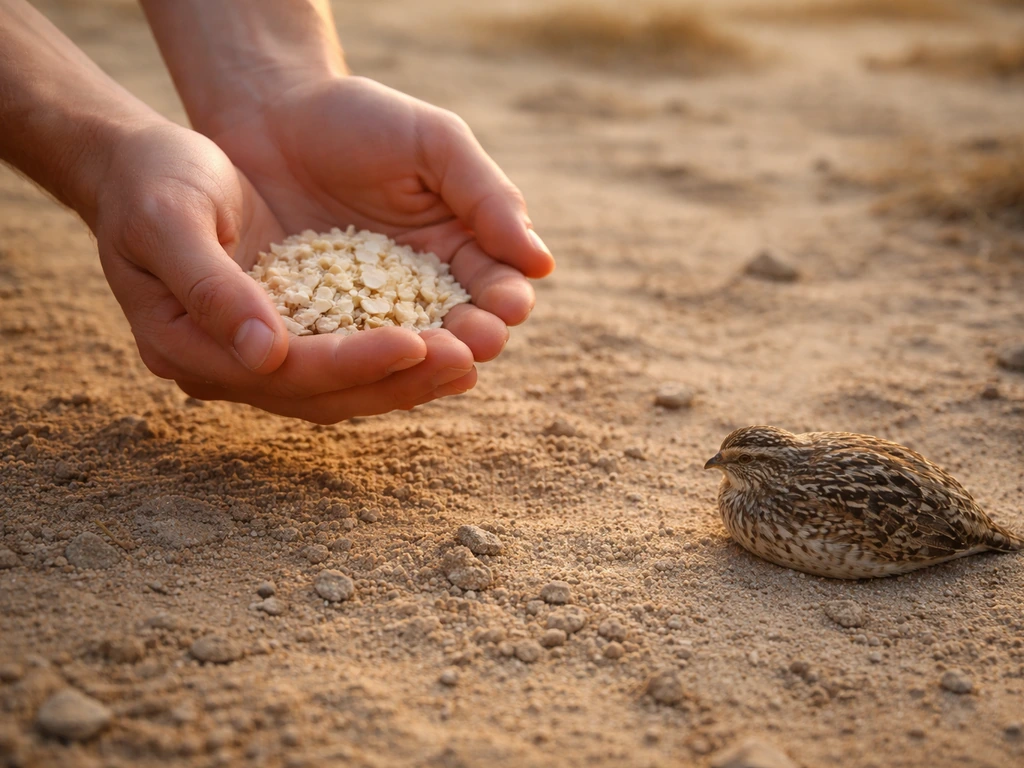
Even though the quail in these passages functions primarily as food rather than as a symbolic bird the way a dove or raven might, the event itself carries enormous symbolic weight within the larger biblical framework of divine provision. The Exodus wilderness period is the foundational story of God sustaining a people who had nothing, in a place that could not sustain them on its own. Manna and quail together form a paired image: bread from heaven and meat from the wind. Both arrive as gifts, neither is earned, and both disappear or spoil when hoarded beyond what is needed.
Within that framework, the quail represents several things that resonate well beyond the historical story. First, there is provision in scarcity: the birds arrive in a desert, the least hospitable environment imaginable, precisely when human resources have run out. Second, there is the theme of deliverance continuing past the moment of rescue. The Israelites were freed from Egypt, but freedom in the wilderness still required sustenance.
The quail shows that the same care that broke the chains also feeds the freed. Third, and perhaps most movingly, there is the image of abundance that comes on the wind, unannounced, uncalculated, far beyond what anyone could have organized. That quality of arriving abundance, of more than enough dropping from the sky, runs through a great deal of biblical and cross-cultural bird symbolism.
How Bird Imagery Connects: Flight, Arrival, Abundance, and Feasting
The quail passage taps into something deep about how birds function as spiritual images across many traditions. Birds arrive from somewhere unseen. They come on the wind. They cannot be controlled or scheduled. In the biblical imagination especially, that quality of sudden, wind-borne arrival makes birds natural vehicles for divine action. Think of the way the Spirit descends like a dove at Jesus's baptism, or how God describes sheltering Israel under wings throughout the Psalms. The idea of aerial arrival, of something good coming from above without human planning, is central to how Scripture uses bird imagery.
The quail story adds the element of abundance. This is not one bird arriving as a messenger, as with Noah's dove or Elijah's raven. This is a living cloud of birds, covering the ground for miles, more than any one person or family could process. That scale shifts the symbolism from personal sign to communal feast, which is a different but equally important register in biblical meaning-making. It connects to the Psalms and Prophets' recurring vision of restored abundance: the tables set in the wilderness, the rivers in the desert, the land flowing with milk and honey. The quail are a physical rehearsal of that eschatological feast.
It is also worth noting that birds in flight have long symbolized freedom, which adds a resonant layer to this particular story. These are free creatures, wild migrants, arriving and departing on their own terms. That a people newly freed from slavery would be fed by the freest of creatures, by animals that cross seas and deserts at will, is a pairing that rewards reflection even if the text does not make it explicit.
How to Use This Knowledge Today
Quick Verse Check
If you want to read the passages yourself, go to Exodus 16:11-14 for the first quail account and Numbers 11:31-32 for the second, larger event. The ESV and NIV are both readable and use the word 'quail' explicitly. If you prefer a literal translation, the NASB or CSB will give you the same word with slightly more formal phrasing. For the Hebrew 'selav,' any interlinear Bible or concordance will confirm the quail identification directly.
Applying the Meaning
The most direct spiritual takeaway from the quail passages is not about birds themselves but about the pattern of provision they represent. The story consistently runs: human need, human inability to meet that need, and then something arriving from outside human control that meets it completely. If you are drawn to this passage because you are sitting in a personal wilderness moment, that pattern is worth sitting with. The provision came at twilight in Exodus, right at the edge of dark. Timing matters in these stories.
If your interest is more in the symbolic and cross-cultural dimension of bird imagery, the quail story is a good anchor for thinking about how arrival-from-the-sky imagery works across traditions. The same theme of birds as carriers of divine abundance shows up in very different cultural contexts, and comparing how it functions in the Exodus narrative versus, say, the way birds are read as omens or messengers elsewhere can open up genuinely interesting lines of reflection. The quail does not need to be spiritualized beyond what the text says to be meaningful. Sometimes a bird that feeds a million hungry people in a desert is already doing all the symbolic work that needs doing.
| Passage | Bird Named | Key Detail | Symbolic Register |
|---|---|---|---|
| Exodus 16:13 | Quail | Covered the camp at evening; manna followed at dawn | Daily provision, rhythm of care |
| Numbers 11:31-32 | Quail | Wind-blown from the sea; ground covered for miles; minimum 10 homers gathered per person | Overwhelming abundance, communal feast |
| Psalm 105:40 | Quail (referenced) | God brought quail to satisfy the people | Retrospective praise, faithfulness in the past |
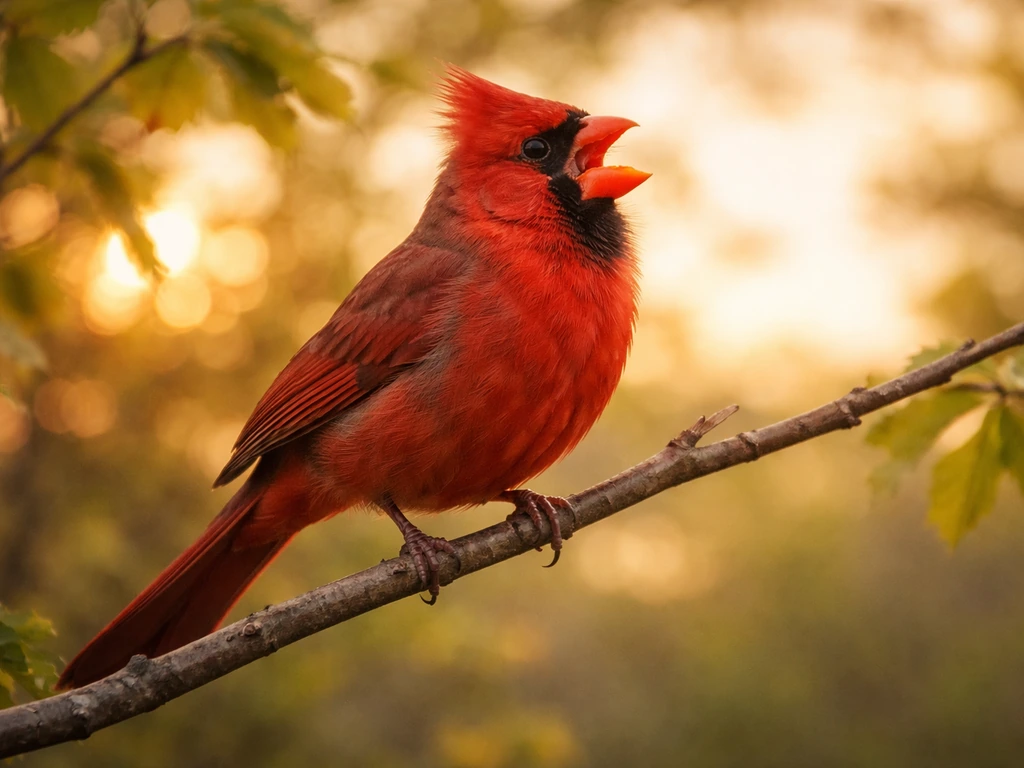
Whether you came to this question from a place of biblical study, spiritual searching, or simple curiosity about bird symbolism in scripture, the answer lands in the same place: quail, arriving on the wind, covering the ground, feeding a people who had nothing. When God sends a red bird, it is worth remembering how the Bible describes unexpected provision arriving from outside human control. This can be surprising because the common Thanksgiving association is with turkey, not quail.
That is the bird God provided for the Israelites, and it remains one of the most vivid images of unexpected abundance in the entire biblical tradition. Psalm 105:40 also describes God bringing quail and satisfying the people with the “bread of heaven.
”.
FAQ
Is the bird God provided the same in both Exodus 16 and Numbers 11?
Yes. In both accounts the provision is described with the same Hebrew term (often transliterated selav or shlav), and the text presents the birds as meat arriving for the camp, first at evening in Exodus and in a much larger wind-driven deposit in Numbers.
Why do some translations mention “flesh” instead of naming the bird right away?
Some versions render a meat-related Hebrew phrase before the specific bird term appears, so they may read like “flesh” at first glance. If you check the verses immediately after, the text shifts to the named bird quickly, so the identification still lands on quail.
What does “around the camp” mean in Numbers 11, did the birds land at ground level?
The description emphasizes that the birds were dropped low, about three feet off the ground, spread for a day’s walk in every direction. That low settling is part of why they are portrayed as easy to collect in large quantities.
Do the stories say they could keep the quail safely, or did it spoil like manna?
The passage about spoilage behavior is tightly associated with manna, not quail. For quail, the text highlights gathering and spreading the birds out, which implies managing the quantity (for drying or curing) rather than repeating the same spoilage rule the manna story uses.
Could the “ten homers” detail in Numbers 11 be exaggerated, or is it meant literally?
Some scholars read the “ten homers” figure as hyperbolic, intended to communicate overwhelming abundance. Even a smaller literal amount per person would still be staggering, so the point of the detail remains the scale of the provision.
Are quail the most plausible species, or do other birds fit the description better?
The common quail is the most consistently proposed because its migration patterns fit the region and its behavior matches exhausted landings after sea crossings. The article notes there are historical questions about exact species, but the text-level identification and the ecological fit both point strongly to migratory quail.
If quail can fly at night, does that help explain “wind” and “twilight” timing in the accounts?
Yes, migratory quail are known to travel at night or low to the ground. That supports how the story can describe a wind and then an arrival at the edge of nightfall, without requiring the birds to be scheduled like domestic animals.
Is the quail passage mainly symbolic, or is it presented as straightforward food provision?
In the narrative, the birds are not treated primarily as signs or messengers. The text frames them as direct response to hunger, so the main focus is provision, with symbolism emerging from the nature and scale of the event rather than from treating the bird as a standalone spiritual emblem.
Why do people sometimes connect this to Thanksgiving, and is turkey the “right” answer?
People often assume turkey because of modern cultural associations, but the biblical accounts are explicit that the wilderness meat involved quail. Thanksgiving “turkey” is a cultural later tradition, not the bird described in Exodus 16 and Numbers 11.
Next Article
When God Sends a Red Bird Meaning and How to Discern
Interpret what a red bird may mean as a spiritual sign, with practical discernment, context clues, and safety tips.