A 'bird of ill omen' is a bird whose appearance, behavior, or proximity is traditionally read as a warning sign, a signal to pay attention, not as a guarantee that something terrible is about to happen. The phrase has roots in ancient augury, literary tradition, and cross-cultural folklore, and it shows up everywhere from Homer to Shakespeare to your grandmother's superstitions. At its core, 'ill' here means unlucky or unfavorable, not doomed. The bird isn't causing the bad thing; it's being read as a messenger pointing toward caution, transition, or a need for inner reflection.
A Bird of Ill Omen Meaning: Signs, Traditions, and Next Steps

Eleanor Hartwell
6 May 2026
What 'Bird of Ill Omen' Actually Means (Symbol, Not Fate)
The phrase itself is an English idiom with genuine literary weight. Dictionary.com lists 'bird of ill omen' as a standalone headword and notes it has been frequently used in English literature as a label for ominous birds, which tells you something important: this isn't a single creature. It's a category, a role that different birds can occupy depending on cultural context, time, and circumstance. blank" rel="noopener noreferrer">Wiktionary even treats it as a count noun with a plural ('birds of ill omen'), reinforcing that it's a framework for reading symbolic bird encounters rather than one fixed legend.
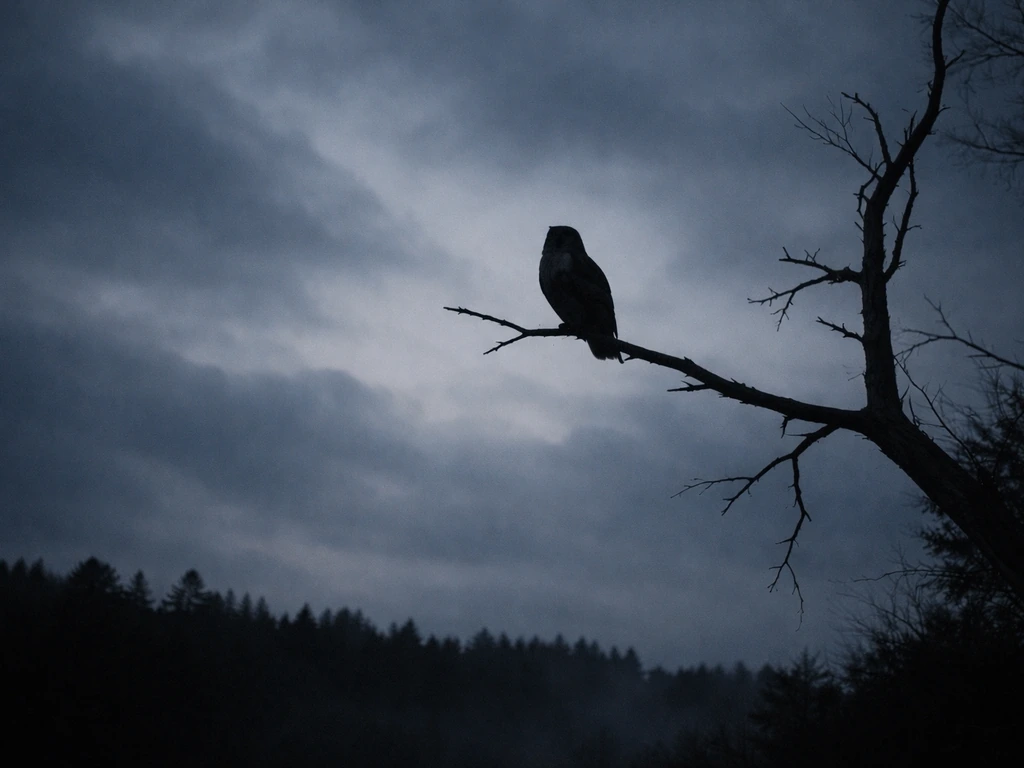
Symbolically, ill-omen birds function as messengers from the threshold between the ordinary world and something beyond it. They show up in liminal spaces, at dusk or dawn, near illness or significant life changes, and their appearance prompts the question: what needs your attention right now? That's very different from fatalism. Think of it less like a curse and more like a weather forecast that says there's a storm approaching, and you should decide whether to take an umbrella.
It's also worth noting that 'ill omen' and 'good omen' exist on the same continuum of bird symbolism. Some people also connect this meaning to Fleetwood Mac’s song titled “The Pious Bird of Good Omen.” Fleetwood Mac’s “The Pious Bird of Good Omen”. The albatross, for example, is famous as a bird of good omen at sea, and its killing in 'The Rime of the Ancient Mariner' becomes one of literature's most enduring ill-omen stories. The same bird can carry both energies depending on how humans relate to it, which is exactly the kind of nuance this framework rewards when you slow down and look carefully at what you actually witnessed.
The Birds Most Often Linked to Ill Omens
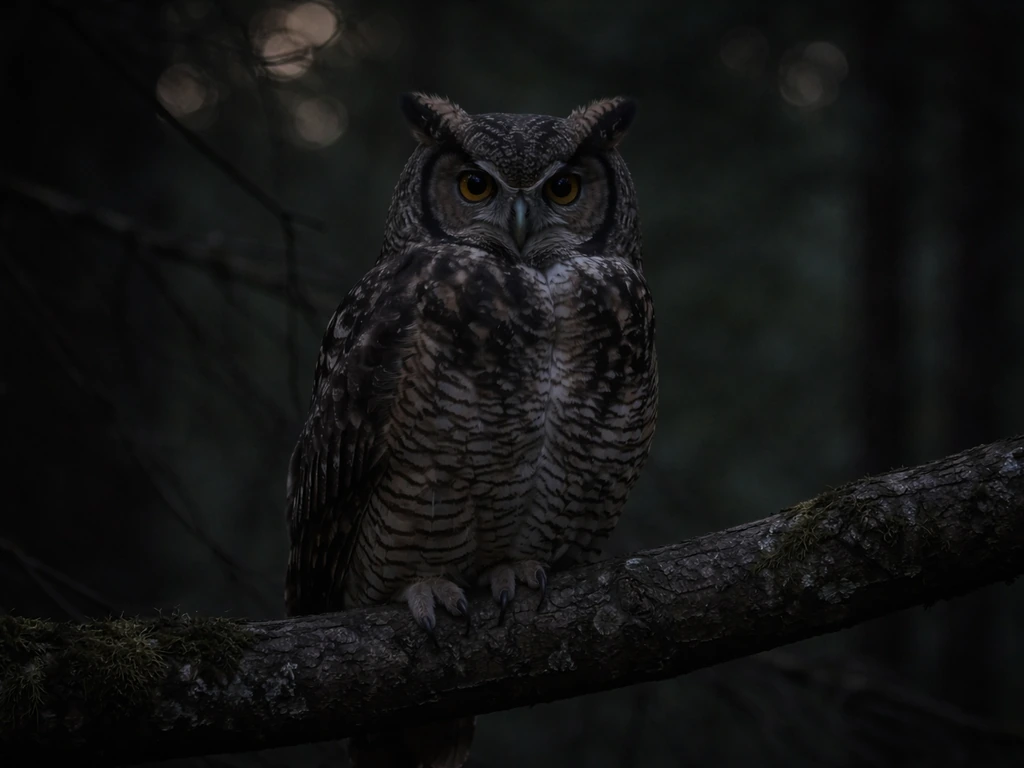
Certain species carry this reputation across multiple cultures, and it's usually tied to their real-world behaviors: nocturnal habits, association with death and decay, dark coloring, or eerie vocalizations. Here's a practical look at the most commonly cited birds and what specifically about them drives the omen reading.
Owls
The owl is probably the most universally recognized bird of ill omen. In ancient Rome, the hoot of an owl before a military campaign was considered a death warning, and the deaths of Julius Caesar and Augustus were both said to have been foretold by owls. In many Native American traditions, particularly among some Plains and Southeastern tribes, owls are messengers from the spirit world, sometimes associated with the recently deceased. The behavior that drives this: owls are silent, nocturnal, and appear without warning near human dwellings. When one perches on your roof and calls repeatedly at night, it's hard not to feel a shift in the atmosphere.
Ravens and Crows
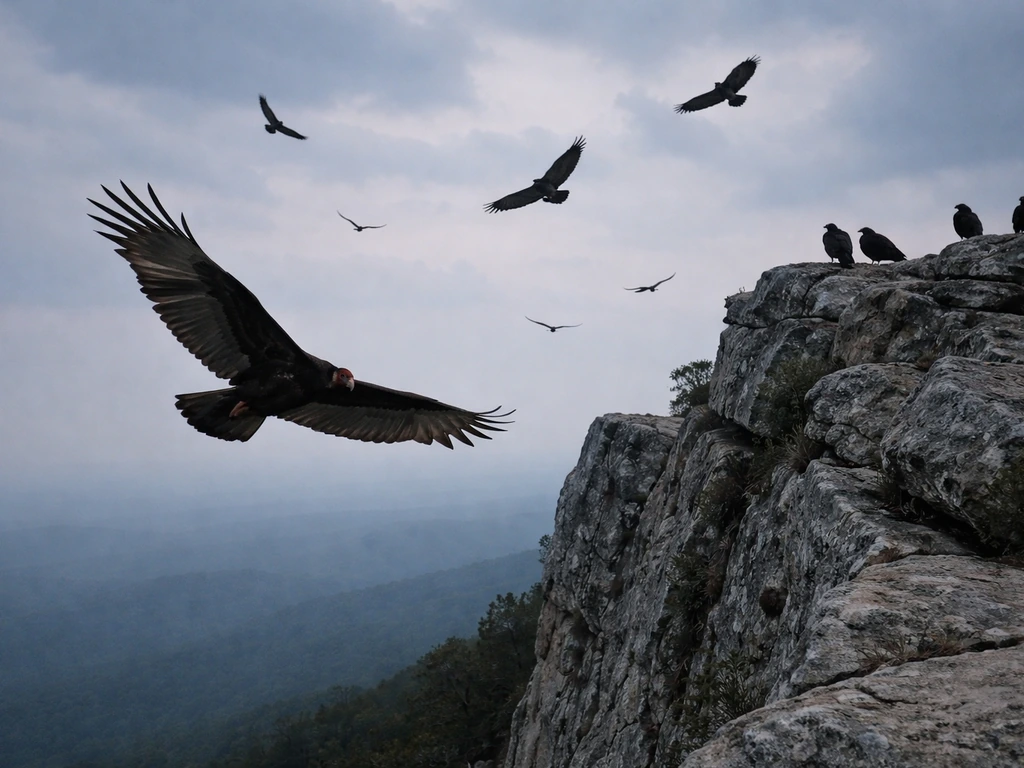
Ravens and crows occupy complex symbolic territory. In Norse mythology, Odin's two ravens Huginn and Muninn were messengers, not omens of doom but active agents of wisdom and intelligence. In Celtic tradition, the goddess Morrigan took the form of a crow on the battlefield, presiding over death and fate. In many Indigenous traditions across North America, Raven is a trickster and transformer, not necessarily malevolent. The ill-omen reading often comes from a crow or raven behaving unusually: landing very close to a person, following someone repeatedly, cawing at a window persistently. A crow circling overhead once is different from a crow tapping on your window for three days.
Vultures
Vultures circle and wait. That behavior alone makes them deeply unsettling as omens, and most traditions read them as symbols of death, endings, or the presence of something already dying nearby. In ancient Egypt, however, the vulture goddess Nekhbet was a protector of pharaohs and mothers, which illustrates how quickly ill-omen status can flip depending on the tradition. Still, in everyday modern encounters, a vulture perched near a sick person's home or circling a specific location is widely read as a warning signal.
Black Birds in General
Not every dark bird is an ill omen, but black plumage does consistently trigger omen-reading across cultures. Blackbirds, jackdaws, and magpies all carry regional reputations. In British folklore, a single magpie is bad luck ('one for sorrow' from the famous counting rhyme), while two bring joy. The number and behavior matter as much as the species.
How to Actually Interpret the Omen You Witnessed

The most useful thing you can do after an encounter that felt significant is slow down and run through a few practical variables. The meaning shifts considerably based on what you observed, not just which bird showed up.
| Variable | What to Notice | Why It Matters Symbolically |
|---|---|---|
| Species | Owl, crow, raven, vulture, or another species entirely? | Some birds carry near-universal omen meanings; others are tradition-specific |
| Behavior | Was it acting unusually? Approaching you, tapping windows, circling, sitting still? | Unusual behavior is the real signal; a crow simply flying by is not an omen |
| Location | Near your home, near a sick person, at a boundary (doorway, window, road)? | Liminal spaces amplify omen readings across cultures |
| Time of day | Dusk, dawn, or deep night vs. midday? | Nocturnal birds seen at night are expected; a nocturnal bird at noon is genuinely unusual |
| Number | One, two, or a flock? | Counting rhymes and folklore often assign specific meanings to counts (one magpie vs. two, etc.) |
| Your emotional reaction | Did you feel fear, peace, sadness, or recognition? | Your gut response is data; strong intuitive reactions are part of the symbolic reading |
Put it together like this: an owl hooting outside your bedroom window at 2 a.m. while you're caring for a sick family member is a genuinely significant confluence of variables. A crow landing near you while you eat lunch in a park is not. The omen framework was never meant to apply to every bird encounter; it's for the moments that feel like they crossed a threshold, where the bird's presence and behavior together create that sense of charged communication.
What Different Traditions Say About Ill-Omen Birds
One of the most striking things about bird omens is how widespread and structurally similar they are across completely unconnected cultures, which suggests they tap into something genuinely deep in how humans process uncertainty and change.
Biblical and Abrahamic Traditions
In the Hebrew Bible, several birds appear in contexts of desolation and divine warning. Isaiah describes owls, ravens, and vultures inhabiting ruined cities as signs of God's judgment. The raven sent out from Noah's ark doesn't return, a detail interpreted in Jewish and Christian commentary as a sign of its association with the morally uncertain space between worlds. In Islamic tradition, the hoopoe (hudhud) functions as a divine messenger in the Quran, which shows that Islamic bird symbolism tends toward the messenger/guidance model rather than pure ill-omen territory, but the broader Abrahamic world does contain specific birds whose presence signals divine attention to human affairs.
Ancient Roman and Greek Traditions
The Romans had an entire professional class of augurs whose job was reading birds as divine messages. Augury is divination by observation of natural phenomena, particularly including observation of birds and their behavior augurs whose job was reading birds as divine messages. Left-side birds were generally considered ill omens (sinister literally means 'on the left side' in Latin), and certain species were almost always read as warnings: the owl, the woodpecker in some contexts, and birds that appeared at the wrong time of day. The Greek tradition was similar, with birds appearing as omens in the Iliad and the Odyssey, usually spotted by seers interpreting battlefield conditions. This is where the literary phrase 'bird of ill omen' gets a significant amount of its cultural weight.
Celtic and Norse Perspectives
Celtic tradition gives us the Morrigan as a shapeshifting crow goddess, presiding over fate and battle. Crows and ravens in Celtic contexts aren't purely malevolent; they're associated with prophecy, transformation, and the otherworld. In Norse mythology, ravens sit at Odin's shoulders as extensions of his wisdom, making them powerful symbols but not simply ominous ones. The ill-omen quality in both traditions activates most strongly when the bird behaves in a way that disrupts the ordinary, appearing at thresholds, making unusual sounds, or arriving in unusual numbers.
Native American and Indigenous Traditions
It's important not to flatten the enormous diversity here, but some broad patterns do appear. Owls in particular carry death-messenger associations in numerous Indigenous traditions across North America, though the meaning varies: some traditions see an owl's presence as a direct message from an ancestor, others as a warning to prepare for change. Raven is a trickster and creator figure in Pacific Northwest traditions, complex and powerful but not a straightforward ill omen. The consistent thread is that birds are active spiritual agents, not neutral creatures, and their behavior near humans is always potentially meaningful.
Egyptian and Aztec Contexts
Ancient Egyptian culture linked specific birds to specific deities: the ibis to Thoth (wisdom), the vulture to Nekhbet (protection), the falcon to Horus (divine kingship). An ill-omen reading in this context would have depended heavily on which sacred bird appeared in the wrong context or behaved strangely near a sacred site. Aztec tradition includes the owl (tecolotl) as a powerful death symbol, associated with Mictlantecuhtli, the god of death. An owl's call at night in Aztec belief could signal that death was nearby.
How to Respond in a Grounded, Spiritual Way
If you've had an encounter that genuinely felt significant, the traditional response across most cultures isn't panic; it's attention. The bird is pointing somewhere. Your job is to figure out where.
- Pause and acknowledge the encounter. Whether you see this as spiritual or psychological, taking a moment to recognize that something caught your attention is the first step. Don't rush past it.
- Identify what area of your life feels uncertain or pressured right now. Ill omens almost always resonate with something already present in your situation, a decision you've been avoiding, a relationship that needs attention, a health concern, a significant change on the horizon.
- Use reflection rather than fear. Ask yourself: if this were a message, what would it be asking me to look at? Journal it, talk it through with someone you trust, or sit with it in prayer or meditation depending on your tradition.
- Consider protective practices if they align with your beliefs. Many traditions include protective responses to ill omens: prayers, burning herbs like sage or rosemary, placing protective symbols at entry points to your home, or simply asking for guidance and clarity in whatever spiritual framework you use.
- Check your decisions. Ill omens in most traditions function specifically as warnings about actions being planned or currently underway. If you're about to make a major decision, this is a good moment to revisit it with fresh eyes.
- Give it time. Many omen encounters resolve into clarity within days. You may encounter the thing the bird was pointing toward without any drama, or you may find in retrospect that the encounter helped you notice something you'd been avoiding.
Is It a Real Message or Just a Bird?
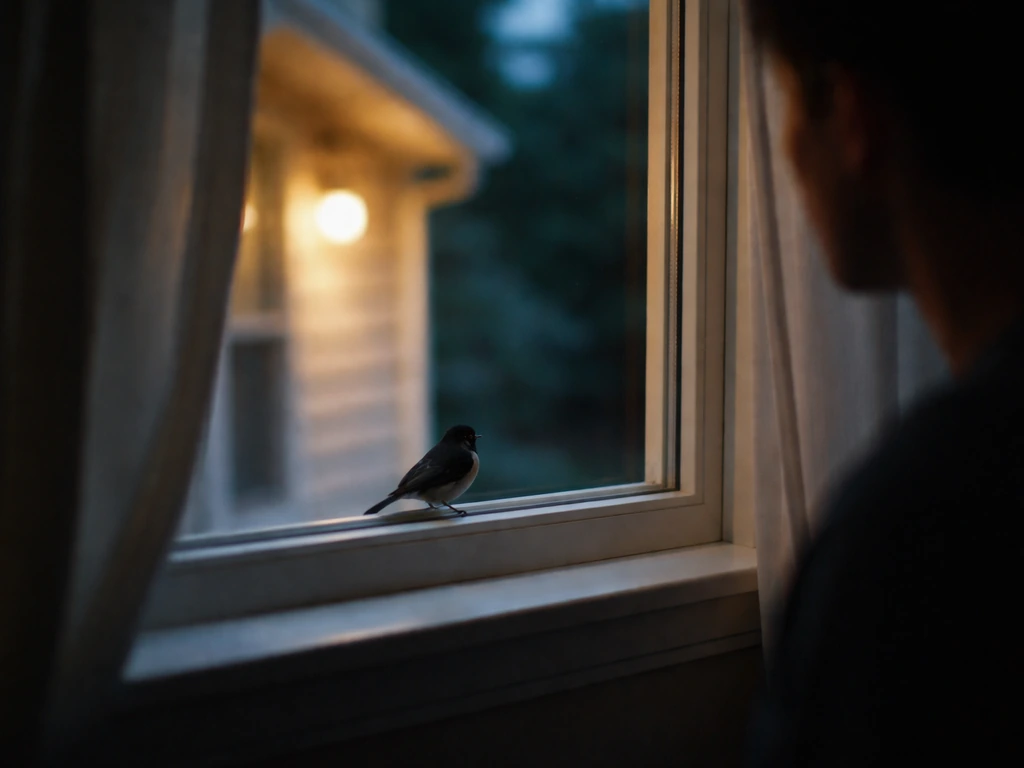
This is the honest question, and it deserves a direct answer. Symbolism works as a lens, not a mechanism. A crow tapping on your window doesn't cause a bad outcome; it may simply be a curious bird attracted to its own reflection, which is very common crow behavior. The omen tradition doesn't require the bird to be supernaturally aware of your situation. What it asks is that you use the encounter as a prompt to pay attention to your own life with more care.
The experiences most people describe as genuinely significant share a few qualities: the bird's behavior was objectively unusual, the timing felt connected to something already happening in their life, and the emotional response was strong and immediate rather than manufactured. If all three are present, the encounter is worth sitting with seriously. If only one is present (the bird was common, the behavior was ordinary, you're just anxious right now), the more honest reading is probably that you're in a heightened emotional state and projecting meaning outward, which is also useful self-information, just not the same as a direct omen.
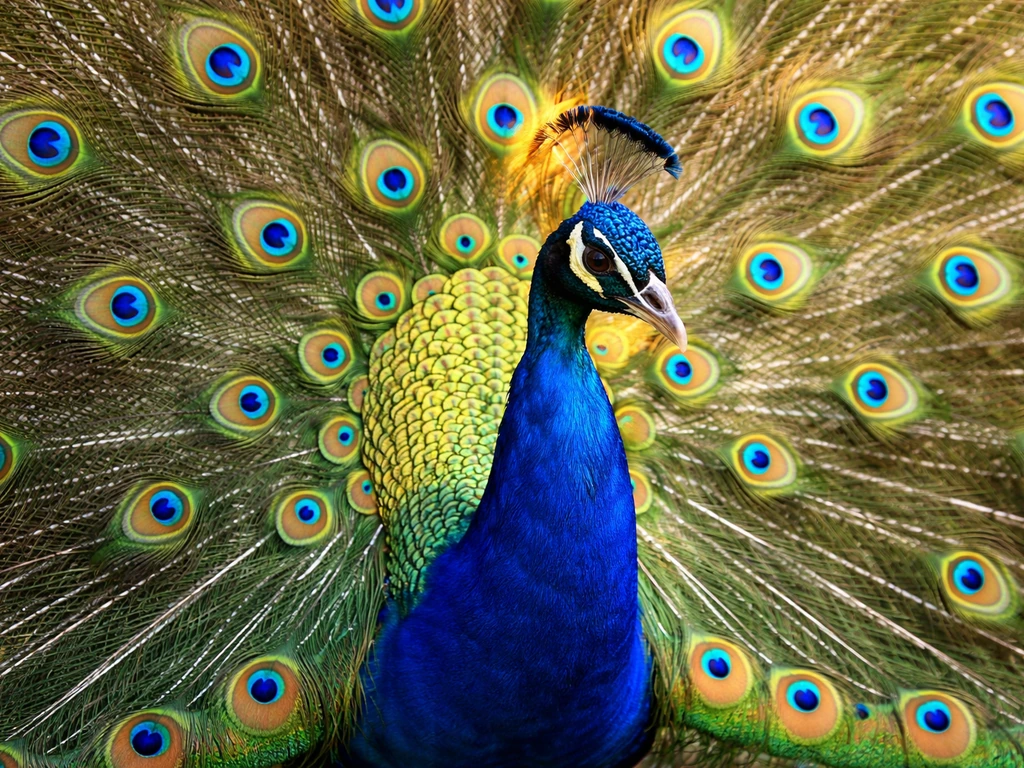
It also helps to remember that bird symbolism isn't only dark. If you enjoy the lighter side of bird folklore, you might also like how a peacock can turn into a playful limerick peacock limerick. The same traditions that give us birds of ill omen also give us birds of extraordinary grace: the albatross as a symbol of good fortune at sea, the peacock as a symbol of divine vision and immortality, and the cardinal as a sign of connection to a loved one who has passed. If you're drawn to bird symbolism, you're working with a system that holds both light and shadow, and an ill omen encounter is only one part of a much larger and mostly hopeful map.
The practical bottom line: take unusual bird encounters seriously enough to reflect on them, but not so seriously that you let fear drive your decisions. The point of an omen in almost every tradition is to sharpen your awareness, not to paralyze you. If a bird of ill omen is delivering a message, the message is almost always some version of 'pay closer attention to what's already in front of you,' and that's advice worth taking regardless of whether the messenger has feathers.
FAQ
Does “a bird of ill omen meaning” imply that something bad is definitely going to happen?
No. The phrase is traditionally read as a caution signal, “something needs your attention,” not a guaranteed prediction. Many traditions treat it like heightened awareness, similar to how you might check on a practical concern when something feels “off.”
How can I tell the difference between a real omen-style encounter and a normal bird event?
A useful decision check is whether the bird’s behavior is objectively atypical for its context (for example, repeatedly calling at close range at night) and whether the timing connects to an existing concern in your life (illness, a major decision, a threshold moment). If the event is ordinary or you feel only vague anxiety, it is more likely a heightened-emotion interpretation than an omen reading.
What should I do in the moment if a bird appears ominous or follows me?
Pause and note specifics rather than jumping to conclusions: species or general type, where it was (window, roof, path), how long it stayed, and what it was doing (circling, landing near, persistent vocalizing). Then use that information to pick one constructive action, like double-checking a plan, contacting a concerned person, or taking extra safety measures relevant to your situation.
Does it matter whether the bird is on my left or right side?
In some classical augury traditions, lateral placement mattered, with left-side birds treated as ill-omen signals. That said, modern symbolism is inconsistent across cultures, so the more reliable factor is still the specific behavior and context you actually experienced.
If I see a bird of ill omen in the daytime, is it less meaningful?
Often, the “threshold” feel is stronger at dusk or night in many folklore patterns, but daytime encounters can still be symbolically significant when the behavior is unusually persistent or disruptive (for instance, repeated landing near you or blocking a path). Timing changes the flavor of the interpretation, not the need for attention.
Can the same species mean something different depending on the culture?
Yes. The article’s core idea is that these are roles in interpretation, not a single fixed story attached to one animal. For example, one tradition might frame a crow as a transformer or messenger while another emphasizes death-related symbolism, so you can’t assume one universal meaning.
What if I’m superstitious but also want to stay grounded, what’s a balanced approach?
Use a “two-track” method: track the symbolism as reflection, not as a directive. Choose one practical step that improves your real-life situation, and avoid life-altering decisions based solely on the encounter. If fear rises, switch from interpretation to action planning.
Is there a difference between being “warned” and being “cursed” in bird symbolism?
In most omen frameworks, the emphasis is on warning or guidance toward better attention, not punishment. A curse implies harm caused by the messenger, while an omen implies the messenger is drawing your focus to what is already happening or about to become relevant.
What are common mistakes people make when interpreting bird omens?
Common errors include relying only on black plumage or species reputation while ignoring behavior and timing, treating one ordinary encounter as confirmation of a worst-case outcome, and confusing correlation with causation (the bird does not “cause” events). A better approach is to require unusual behavior plus meaningful context.
If a bird keeps coming back, does that strengthen the meaning?
Usually, yes, because repeated behavior is exactly what many traditions interpret as “unusual arrival” rather than random chance. Still, use it to guide attention to a continuing issue in your life, not to conclude a predetermined disaster.
How long should I reflect on an omen before moving on?
A practical approach is to set a short reflection window, like one to three days, and focus on one or two specific adjustments (check safety plans, follow up with someone, slow down on a decision). If the encounter fades, treat that as a sign the reflection task is complete rather than a sign the fear should continue.
Next Article
A Wonderful Bird Is the Peacock Limerick: Meaning
Find the exact peacock limerick text, handle variants, and use peacock symbolism for journaling and reflection.