
"Bird god" doesn't point to one single deity or doctrine. It's a phrase that shows up across mythology, religion, modern spirituality, and even fiction, referring to different sacred bird figures depending on the tradition you're looking at. In some contexts it names a specific divine being, like Zu (also called Imdugud), the ancient Mesopotamian bird god described in Encyclopaedia Britannica as a storm deity depicted with wings and a lion's head. In others it's used loosely to mean a bird that carries divine energy, acts as a messenger from the gods, or represents sacred spiritual power. If you've landed on this question, the most useful first step is figuring out which of those uses applies to your situation.
What Does Bird God Mean? Symbols, Myths, and Spiritual Messages

Eleanor Hartwell
8 Jun 2026

What "bird god" actually means

At its most literal, a "bird god" is a deity whose form, attributes, or sacred identity are inseparable from a bird. This can mean a god who takes the shape of a bird, a god whose symbol or companion is a specific bird, or a bird that is itself worshipped as divine. Across ancient cultures, the line between those three was often deliberately blurry. Gods weren't always cleanly separate from their animal symbols.
In academic and religious contexts, "bird god" usually refers to a named figure in a specific mythology, like Horus in Egypt, Garuda in Hinduism, Itzamna or Quetzalcoatl in Mesoamerican traditions, or the aforementioned Zu in Mesopotamia. In modern spiritual conversations, especially online, "bird god" gets used more loosely to describe bird symbolism treated as spiritually potent, something close to a guiding force or divine signal. Both uses are real. They just require different reference points to interpret.
How to tell which meaning you're dealing with
The phrase "bird god" can land in your reading, your research, or your life in a few different ways. Here's a practical way to sort it out.
You've encountered it in a religious or mythological text
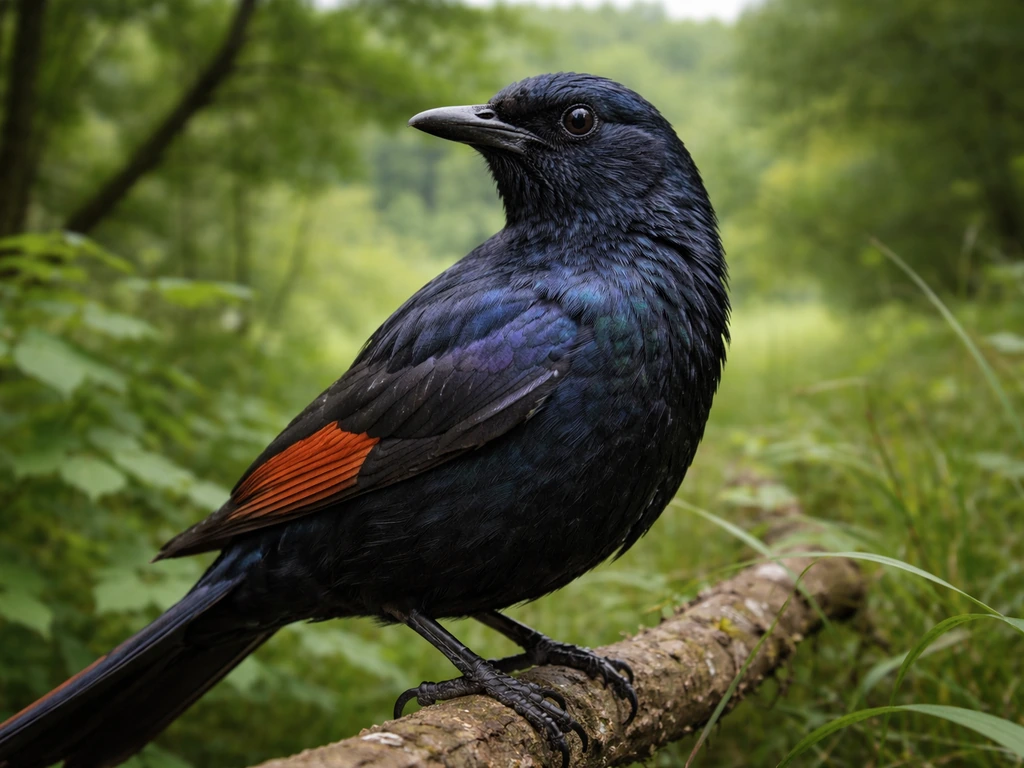
If you're reading about a specific culture's mythology, "bird god" almost certainly refers to a named deity or divine figure from that tradition. The context will usually tell you which one. Look for the name, the culture, and the bird species involved. Egyptian texts pointing to a falcon reference Horus or Ra. Mesopotamian references to a thunderstorm bird connect to Zu. Hindu mentions of a great eagle point to Garuda. The species and function of the bird within the story are your clearest clues.
You encountered a bird in real life and felt something significant
This is where people drift toward the phrase "bird god" in a more experiential, spiritual sense. If you've seen a particular bird repeatedly, or had an unusually close or striking encounter, the question becomes less about mythology and more about personal symbolism. In that case, the tradition you feel most connected to, whether that's Christianity, Indigenous spirituality, Celtic lore, or something more eclectic, shapes how you interpret what the bird might be communicating. The bird itself isn't a god, but in many traditions it acts as a divine intermediary or messenger.
You saw it in fiction, a book title, or casual usage
"Bird god" also functions as a non-technical label in fiction and popular writing, as a quick shorthand for any powerful or mysterious bird figure in a story. Evadeen Brickwood’s The Secret of the Bird God similarly reflects how “bird god” appears as a non-technical phrase in popular trade contexts like fiction blank" rel="noopener noreferrer">fiction and popular writing. The phrase “who said a bird in the hand” is often used as a reminder to value what you already have powerful or mysterious bird figure. In these cases there's no specific religious tradition to decode. The phrase is doing atmospheric or narrative work, evoking the sacred power birds carry symbolically without committing to one specific myth system.
What birds universally represent

Before getting into specific traditions, it helps to understand why birds attracted divine status in the first place. Across cultures and centuries, birds carry a core set of symbolic meanings that make them natural vessels for sacred significance.
- Flight and transcendence: Birds move between earth and sky, which made them natural symbols of the soul's ability to rise above material existence. The sky itself was divine in most ancient cosmologies.
- Messages and mediation: Because birds move between realms, they became understood as messengers between the human world and the divine. An unusual bird appearance often meant something was being communicated.
- Freedom and transformation: A bird in flight represents freedom from constraints. Many bird-related deities govern transformation, change of state, or the movement between life and death.
- Guidance and protection: Birds were read as omens, scouts, and guides across cultures. Their direction of flight, species, and behavior all carried meaning for observers who knew the system.
- Rebirth: Many birds, especially those associated with fire (like the phoenix) or the sun, became symbols of death and regeneration, the cycle of endings and beginnings.
These core meanings are what allow the same basic creature to show up as a divine figure in traditions separated by thousands of miles and years. The specifics shift significantly depending on culture, but the underlying logic is consistent.
Birds and the divine in the Bible
The biblical tradition doesn't name a "bird god" as such. Birds in the Hebrew Bible and the New Testament function differently: they appear as symbols, metaphors, and messengers rather than as gods in their own right. This matters because it makes biblical bird symbolism more about what birds represent than what they are.
The dove is the most prominent sacred bird in Christian symbolism. At the baptism of Jesus, the Holy Spirit descends in the form of a dove, directly linking the bird to divine presence and spiritual anointing. The dove also appears in Genesis as the sign that the flood has ended, carrying an olive branch as God's message of peace and covenant. The eagle appears throughout both testaments as a symbol of divine power, protection, and renewal, most famously in Isaiah 40:31, where those who wait on God "shall mount up with wings as eagles." Ravens appear as providers of miraculous sustenance when God sends them to feed the prophet Elijah in the wilderness.
In the biblical framework, birds carry divine communication and symbolize divine attributes, but they aren't worshipped as gods. The distinction is significant: if you're reading about bird symbolism in a biblical or Christian spiritual context and you encounter the phrase "bird god," it's almost certainly borrowed from outside that tradition.
Egyptian and ancient world bird deities
Ancient Egypt is probably the richest source of literal bird deities, figures that were either fully divine beings in bird form or gods depicted with bird heads on human bodies.
| Deity | Bird Form | Domain |
|---|---|---|
| Horus | Falcon (or falcon-headed man) | Sky, kingship, protection, divine order |
| Thoth | Ibis (or ibis-headed man) | Wisdom, writing, the moon, judgment of the dead |
| Ra | Falcon with solar disk | The sun, creation, time, divine power |
| Nekhbet | Vulture | Protection of the pharaoh, Upper Egypt, motherhood |
| Bennu | Heron | Rebirth, the sun, creation, the soul's renewal |
What makes Egyptian bird gods particularly striking is that the animal and the divine weren't treated as separate. Horus wasn't just symbolized by a falcon. The falcon was Horus made visible. Living falcons were kept in temples and treated as divine incarnations. When a sacred ibis was found dead, it could receive burial rites appropriate for Thoth himself. The animal was a window into the divine, not just a metaphor for it.
Outside Egypt, Mesopotamia gives us Zu (Imdugud), a bird deity associated with storms, chaos, and tremendous divine power. Encyclopaedia Britannica describes Zu (also called Imdugud) as a bird god in Mesopotamian religion Zu (Imdugud).
Zu is depicted as a lion-headed eagle and appears in Akkadian myths as a being capable of stealing the Tablet of Destinies, the artifact that held cosmic order. This positions Zu not as a benevolent messenger but as a formidable divine force in his own right. In Hinduism, Garuda is a vast eagle-being who serves as the vehicle of Vishnu, combining bird imagery with divine servitude and immense power.
Garuda appears across South and Southeast Asian traditions as a symbol of solar power, speed, and the destruction of evil.
Native American, Celtic, and Aztec sacred bird traditions

These three traditions handle bird sacredness in distinct ways, but all treat specific birds as spiritually significant beyond ordinary nature.
Native American traditions
It's important to note upfront that "Native American" encompasses hundreds of distinct nations and traditions, each with their own bird teachings. That said, some broadly shared patterns exist. The eagle holds sacred status across many nations as a symbol of connection to the Creator, spiritual clarity, and the carrying of prayers to the divine. Eagle feathers are treated as spiritually potent objects in many traditions, used in ceremony and given as honors.
The Thunderbird appears in the cosmologies of many nations as a supernatural bird-being that controls storms, thunder, and rain, functioning closer to a divine force than a simple symbol. Ravens appear in Pacific Northwest traditions, particularly in Haida and Tlingit stories, as trickster figures who shaped the world through cleverness. These birds aren't worshipped exactly as gods in the Western sense, but they carry sacred authority that makes them genuinely comparable to divine figures.
Celtic traditions
Celtic bird symbolism is dense with ravens, cranes, and swans. Ravens were deeply associated with the Morrigan, the Irish goddess of war, fate, and sovereignty, who could take raven form and was seen on battlefields as an omen of death or transformation. Cranes appear in Celtic mythology as otherworldly birds, sometimes as transformed humans or divine messengers, and were considered so sacred that in some traditions killing one was a serious taboo. Swans frequently represent the soul, transformation, and the boundary between worlds, appearing in stories like "The Children of Lir" where humans are transformed into swans by enchantment. Celtic bird meanings tend to orbit themes of prophecy, fate, and the liminal spaces between ordinary life and the otherworld.
Aztec traditions
The Aztec tradition offers some of the most explicit bird-deity fusions. Quetzalcoatl, one of the most important deities in the Mesoamerican pantheon, is literally named after the quetzal bird. His name translates roughly as "feathered serpent," and he governs wind, wisdom, the morning star, and priestly knowledge. The quetzal's brilliant green plumage was among the most sacred materials in Aztec culture.
Huitzilopochtli, the god of the sun and war, is associated with the hummingbird and was understood as a divine warrior. The eagle held significant military and religious symbolism, with eagle warriors being an elite class and the eagle representing the sun's power. In the Aztec creation story, the founding of Tenochtitlan was marked by the omen of an eagle perched on a cactus, a scene depicted on Mexico's national flag to this day.
How to work with this meaning in your own life
If you're here because of a real encounter or a spiritual question rather than academic curiosity, here's how to move from the general to the specific in a way that's both grounded and personally meaningful.
- Identify the bird species. This is always the first step. A falcon encounter carries different weight than a crow, a dove, or a hummingbird. If you didn't catch a clear look, note size, color, behavior, and habitat and work from there.
- Note the context of the encounter. When did it happen? What were you thinking about or going through? Where exactly were you, and what did the bird do? A bird flying directly toward you and a bird heard but not seen carry different symbolic textures.
- Choose the tradition that resonates or applies. If you have a personal spiritual framework, start there. If you're exploring, consider which cultural tradition has historical context for your geography or ancestry. Don't force an Egyptian meaning onto a bird sighting if you're working through a Celtic or Christian spiritual lens.
- Cross-reference the specific bird within that tradition. A raven means something different in Celtic lore than in Pacific Northwest Indigenous teachings, and both differ from how a raven appears in the Hebrew Bible. Get specific.
- Journal what you're carrying. Bird symbolism works best as a reflective tool. Write down what's alive for you right now, what questions, decisions, or emotions are present. Then hold the bird's symbolic meaning alongside that. What shifts? What becomes clearer?
- Sit with it rather than forcing a conclusion. The most useful thing bird symbolism can do is open a question, not close one. Treat the encounter as an invitation to look more closely at something, not a cosmic answer.
One more thing worth naming: "bird god" as a phrase can carry genuine spiritual weight or function as a casual pop-culture reference depending entirely on who's using it and why. You don't need to treat every mention as a profound encounter, and you don't need to dismiss it as nothing. Just get specific about which bird, which tradition, and which question you're actually sitting with. That specificity is where the real meaning lives.
If you're curious how bird symbolism extends into other areas, the question of which birds are associated with specific deities (like Lakshmi in Hindu tradition) or how birds appear in sacred poetry and texts is worth exploring as part of the same broader inquiry. In Hindu tradition, the goddess Lakshmi is commonly associated with the owl which birds are associated with specific deities (like Lakshmi in Hindu tradition).
You might also be interested in which bird inspired the design of the Lok Sabha. If you’re wondering where the idea of “bird god” comes from, tracing it through specific cultures and sacred texts is usually the fastest way to get clarity where did giving the bird come from.
FAQ
How can I tell if “bird god” refers to a specific deity or just bird symbolism?
“Bird god” can be either a specific named deity from a particular tradition or a general label for powerful bird symbolism. The quickest way to tell is to check whether the text names a culture and a specific bird (for example, a particular eagle, falcon, raven, or ibis), or whether it speaks in general, personal-spiritual terms about a bird “carrying” messages without naming a pantheon.
Does the phrase “bird god” mean something specific in the Bible or Christianity?
In biblical and Christian contexts, birds are generally not worshipped as gods. If you see “bird god” used while discussing the Bible, it is usually an outside phrase people borrow to describe sacred bird roles (like messengers or symbols) rather than a term that the text itself applies to worship.
What if someone tells me “bird god” means a message, but they never say which bird?
The meaning can shift depending on which bird you are actually looking at. For instance, in Christian symbolism a dove is especially tied to the Holy Spirit, while an eagle is more strongly associated with divine power and renewal. So if someone claims “bird god” based on a bird they repeatedly see, confirm which species it is before trying to match it to any spiritual interpretation.
I saw a bird repeatedly and started wondering if it means something. How should I interpret that responsibly?
If your encounter was with a native species you see often, it is more likely personal symbolism than evidence of a specific deity. A practical approach is to write down (1) the bird species, (2) where and when you encountered it, and (3) what you were thinking or asking about at that time. Then compare your notes to the tradition you feel drawn to, rather than forcing it into the most dramatic myth you can find.
Are “bird gods” always worshipped, or can birds be sacred without being gods?
Several cultures treat birds as channels of divine power, but the “bird as god” idea is not universal. In some settings the sacred status is linked to a divine being taking a bird form, while in others the bird is a sign or intermediary without being the divine itself. If you are trying to match a myth, look for language about embodiment (the bird is the god) versus agency (the bird delivers messages or carries prayers).
Why doesn’t “bird god” translate cleanly to one meaning worldwide?
Treat it like a translation problem, not a universal category. “Bird god” is an English, broad label, so there is rarely a one-to-one match across cultures. Identify the culture first, then map to the specific figure (for example, an eagle-being tied to Vishnu in Hindu traditions, or a named storm figure in Mesopotamian myths) instead of assuming the English phrase is the original concept.
How do I evaluate online or pop-spiritual claims about “bird god” messages?
If the claim includes a lot of vagueness like “this bird is a sign from the universe,” it may be modern spiritual framing rather than a trackable deity from a named mythology. For clarity, ask what tradition the person is drawing from and whether they can name the bird and figure they mean, or point to a specific narrative role in a story.
What is a common mistake when people connect “bird god” meanings to their own life?
A common mistake is swapping symbolism across traditions. For example, treating an eagle meaning from one tradition as identical to an eagle’s role in another can lead to confident but inaccurate interpretations. When you feel drawn to a meaning, verify whether that meaning is actually supported by the tradition you are using, or whether it is a personal association you are projecting.
What if I’m reading a novel or watching a show that uses “bird god” as a term?
Yes. If you are reading fiction or mythology summaries, “bird god” might be used as atmospheric shorthand for any powerful bird figure without committing to exact theology. In those cases, the best next step is to identify the character name and backstory, then track whether it resembles a known historical deity or is purely invented symbolism.
What practical steps should I take if I want to research the correct “bird god” for my situation?
If you want to go deeper, focus on the bird species and its role, not only the label. Then search within that tradition for the linked figure, such as the storm-associated bird deity in Mesopotamia, the eagle-being vehicle role in Hindu traditions, or the specific sacred bird associations in Christian symbolism. Species plus role is usually more reliable than the phrase “bird god” alone.