
No single person coined the phrase 'a bird in the hand is worth two in the bush.' It is a proverb with roots stretching back at least to 15th-century England, and the idea itself is even older, appearing in Latin, Arabic, and ancient Greek traditions long before it settled into the English form most people recognize today. The safest and most honest answer is: it belongs to folk wisdom, not to any one speaker.
Who Said A Bird in the Hand? Provenance and Meaning

Eleanor Hartwell
31 May 2026
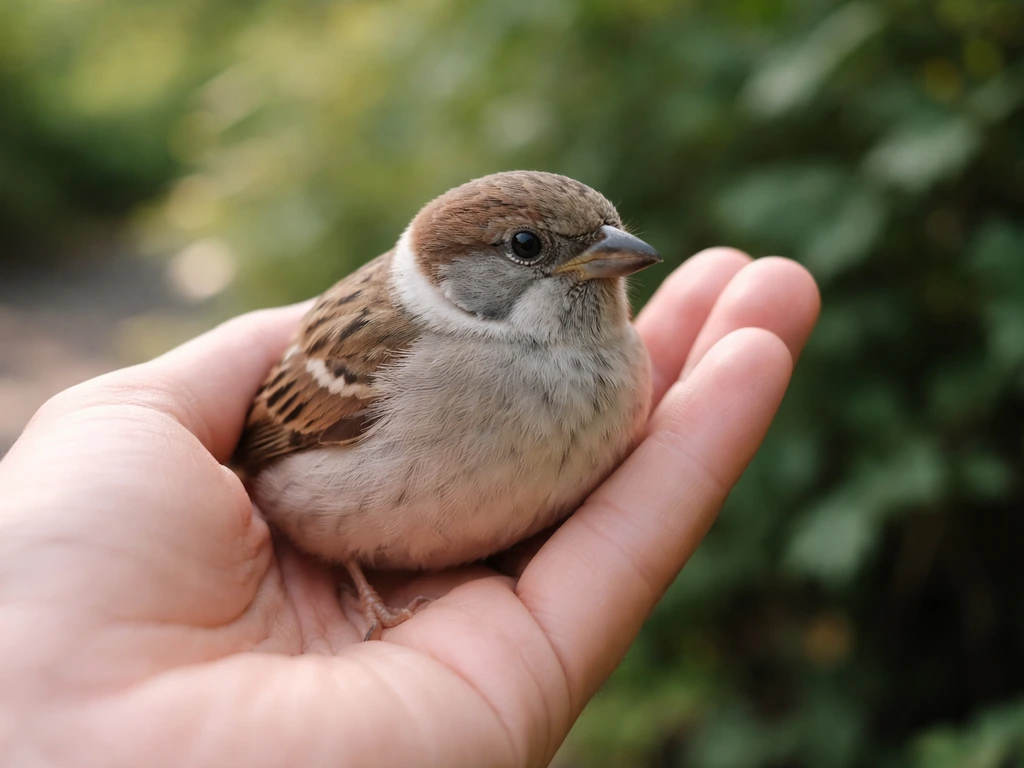
What the proverb means and when people use it

The proverb means that what you already have, however modest, is more valuable than something larger you might gain by risking what you hold. The 'bird in the hand' is the certain thing: the job offer on the table, the relationship you have, the small but guaranteed return. The 'two in the bush' are the uncertain things: the bigger opportunity that might not materialize, the gamble that could leave you with nothing. People reach for this phrase in conversations about career decisions, financial choices, relationships, and any moment where the temptation to chase more collides with the wisdom of appreciating what is already secured.
It is used both as a caution and as permission: permission to be satisfied with what you have, and caution against letting ambition push you into needless risk. In spiritual conversations, it also surfaces as a reminder about gratitude and presence, the idea that clinging too hard to what might be causes you to lose sight of what already is.
Who actually gets credited, and who gets wrongly blamed
The names that come up most often when people search for an attribution are Shakespeare, Benjamin Franklin, and occasionally Cervantes. None of them originated it. Shakespeare used bird imagery constantly and drew on folk proverbs throughout his plays, which is probably why his name gets attached to so many sayings he merely echoed. Franklin was a brilliant compiler of pithy wisdom in Poor Richard's Almanack, and because he popularized many proverbs in the American colonies, his name tends to stick to any quote that sounds wise and old. Neither man can claim this one.
The earliest named English-language appearance that researchers point to is found in John Capgrave's 'Life of St. Wiktionary records the proverb variant “15th c. , John Capgrave, Life of St Katherine” (Bodleian MS Rawlinson poet. 38) as an early English-language appearance [15th-century John Capgrave appearance](https://en.
wiktionary. org/wiki/birdinthehandisworthtwointhe_bush). Katherine,' a 15th-century manuscript held in the Bodleian Library (MS Rawlinson poet. 38).
Capgrave was a theologian and chronicler, not a poet of pithy sayings, and his version was closer to a passing reference than a polished maxim. A more recognizable form, '[Better one byrde in hand than ten in the woods](https://www. phrases. org.
uk/meanings/a-bird-in-the-hand. html),' appears in John Heywood's 1546 collection 'A Dialogue Conteinyng the nomber in effect of all the Prouerbes in the Englishe tongue. ' Heywood is the safest person to cite if you need a named English source, but even he was collecting existing folk speech, not inventing it.
The proverb was well established in American English by the early 18th century. A Pennsylvania community was named Bird-in-Hand by around 1734, a detail that tells you the phrase was already so familiar it could serve as a place name without any explanation needed.
Where this idea comes from across cultures
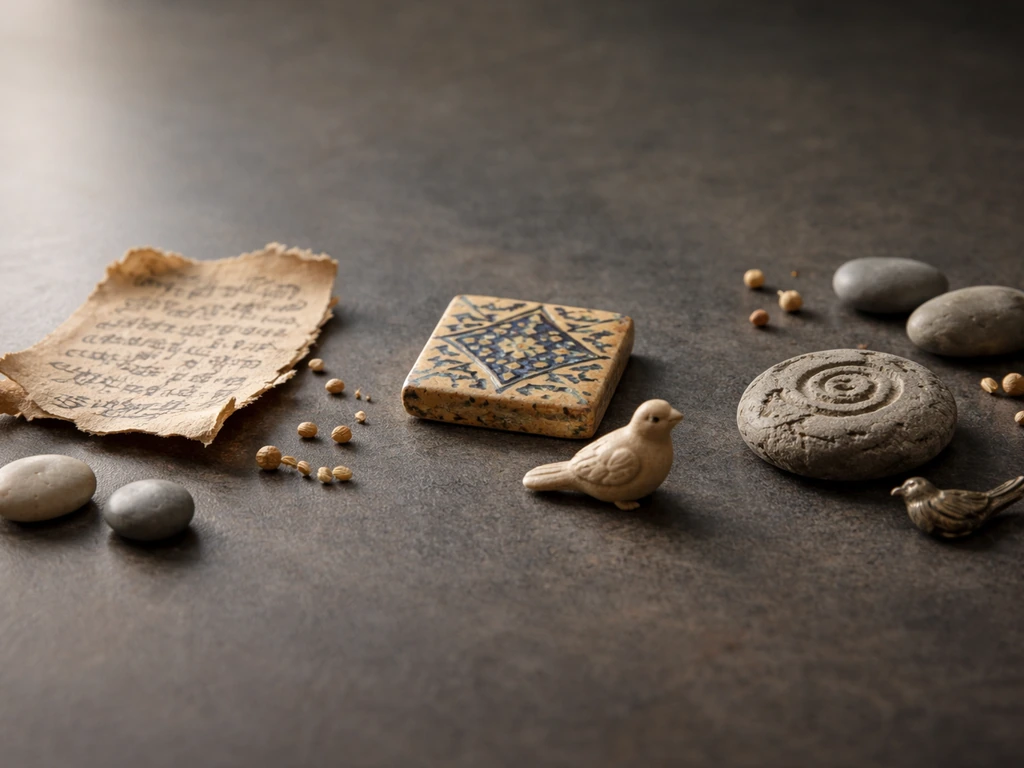
The concept behind this proverb is genuinely ancient and cross-cultural, which is part of why pinning it to a single source is impossible. The Roman author Pliny the Elder used similar logic in his writings. Medieval Latin had the phrase 'plus valet in manibus avis unica quam dupla silva,' meaning roughly 'a single bird in the hands is worth more than a double forest.' Versions appear in ancient Greek texts and in Arabic wisdom literature. The same underlying idea surfaces in the Hebrew tradition, in the Talmud, and in various Asian philosophical traditions where clinging to the present moment is framed as wisdom rather than timidity.
What this spread tells you is that human beings across wildly different cultures and centuries have looked at birds, considered what it means to hold one versus chase one, and arrived at the same conclusion. That kind of convergence is worth pausing on, especially on a site dedicated to the symbolic weight that birds have carried for so long. The bird was not chosen arbitrarily. It was chosen because birds represent fleeting opportunity, freedom, and the unpredictable movement of spirit or fortune.
Why the bird symbolism at the heart of this proverb matters
Birds have always symbolized things that are hard to hold: the soul, divine messages, transformation, and the passage between worlds. Kabir Das also speaks to this kind of spiritual truth, where the focus is on what is already given rather than chasing what is uncertain. In Celtic traditions, birds were messengers between the living and the dead. In Egyptian belief, the ba, one of the soul's components, was depicted as a bird with a human head. In Native American traditions, specific birds carry specific teachings, but across nearly all of them, birds in flight represent freedom and the untethered spirit. The phoenix, perhaps the most loaded bird symbol in world mythology, embodies transformation through total loss and rebirth.
When the proverb reaches for a bird to make its point, it is drawing on all of that accumulated symbolic weight, whether consciously or not. A bird is the perfect vehicle for the proverb's tension because birds are, by their nature, things that can fly away. To hold one is to temporarily contain something essentially free. The proverb is asking: do you know what you have when you have it?
This is not just a financial question. It is a spiritual one. In many traditions, a bird that lands near you, that comes unusually close, is considered a message or a visitation. The proverb, read through that lens, becomes an instruction: pay attention to what has come to you.
Do not be so focused on the sky that you let go of the living thing already in your hands.
This connects naturally to interpretations of everyday bird encounters, the kind of moment where a bird lands on your windowsill or follows you on a walk. Rather than immediately wondering what larger sign might be out there, the proverb's wisdom suggests sitting with the encounter itself, appreciating the specific message of the specific bird that actually arrived. Bird symbolism in art and mythology often wrestles with exactly this duality: flight as aspiration and as restlessness, as divine movement and as escape from what is present.
Using the proverb in real decisions and spiritual reflection

If you are using this proverb in a practical decision, the framework it offers is simple: name the bird in your hand clearly before you look at the bush. What do you actually have right now? If you are also wondering what “bird god” means, it refers to the idea of a sacred bird connected to divine power in certain belief traditions what does bird god mean. What would you have to release or risk to pursue the alternative? The proverb does not say never take risks. It says know the value of what you are holding before you open your hand.
For spiritual reflection, the proverb pairs well with gratitude practices. If you work with bird symbolism as a meaning-making framework, you might ask yourself: what has already arrived in my life that I am treating like a sparrow when it might be something rarer? In traditions where birds carry messages from the divine or from ancestors, the 'bird in the hand' can be understood as the grace or guidance that has already been given. The proverb then becomes a spiritual caution against spiritual restlessness: always seeking the next sign, the louder message, while ignoring the one that already landed.
Themes of nesting and rootedness, which appear throughout bird symbolism in many traditions, connect here too. Nesting birds represent stability, commitment, and the wisdom of building something durable rather than always being in flight. The proverb, at its heart, is about that same wisdom.
What to do if you heard a different attribution
If someone told you this was a Shakespeare quote, a Franklin quote, or attributed it to any single modern figure, the most useful thing you can do is treat that attribution with skepticism and trace it back. Misattributed quotes spread faster than accurate ones because a famous name makes a saying feel more authoritative. Here is a practical checklist for verifying any proverb attribution you encounter:
- Search a reputable phrase or etymology database such as Phrases.org.uk or the Oxford Dictionary of Proverbs before repeating any attribution.
- If a name comes up, look for the specific text where that person supposedly used it. Quotes from Shakespeare should have an act, scene, and play. Quotes from Franklin should appear in a specific edition of Poor Richard's Almanack.
- If no specific source text is provided, treat the attribution as folklore rather than fact.
- For ancient or medieval proverbs, expect that the actual origin is either anonymous or predates the named person by centuries.
- When in doubt, attribute honestly: 'an old English proverb, documented as early as the 15th century' is accurate. 'As Shakespeare said' is not.
For this specific proverb, the most defensible thing you can say is that it is a traditional English proverb with roots in medieval Latin and earlier traditions, appearing in written English at least as far back as John Capgrave in the 1400s and recorded in recognizable form by John Heywood in 1546. If you want a named source, Heywood is your best option. If you want to honor the full history of the idea, acknowledge that it belongs to human folk wisdom broadly, not to any one mind.
A quick attribution reference
| Commonly cited source | Accurate? | What they actually did |
|---|---|---|
| Shakespeare | No | Used bird imagery and proverbs but not the originator of this one |
| Benjamin Franklin | No | Popularized proverbs in colonial America but this predates him by centuries |
| John Heywood (1546) | Closest named English source | Recorded a recognizable variant in his proverb collection |
| John Capgrave (15th century) | Earliest named English appearance | Used a variant form in a manuscript life of a saint |
| Ancient folk/Latin tradition | Yes | The underlying idea circulated in Latin, Greek, and Arabic long before English |
Bird symbolism runs through so much of human expression, from the specific sacred roles of birds in goddess traditions and world mythologies to the way a single bird sighting can feel loaded with meaning on the right day. In Hindu traditions, Lakshmi is also associated with the owl, which symbolizes wisdom and auspicious guidance goddess traditions.
This proverb sits inside that long tradition, using the bird not just as a figure of speech but as a genuinely resonant symbol for something precious, temporary, and alive. The lesson it carries, whether you approach it as practical wisdom or as spiritual reflection, is the same: recognize what has come to you, and hold it with intention before you look to the sky for something more.
That same bird symbolism also echoes in the design question about which bird inspired the Lok Sabha emblem which bird inspired the design of the lok sabha.
FAQ
Does “bird in the hand” mean I should always choose the smaller option?
The safest reading is that “in your hand” means the opportunity is already real and accessible (you can act on it now), not just something you hope will happen later. If the “bigger prize” is uncertain, the proverb argues for choosing the reliable option first, or at least setting a clear plan so the risky choice does not cost you the certain one immediately.
If I want something better, how does the proverb guide risk-taking?
Yes, but with an important nuance. The proverb warns against throwing away a certain gain to pursue a speculative one. It does not forbid pursuing better opportunities; it encourages risk management, for example, apply for the new job while keeping your current one, or save the decision until you can quantify what “two in the bush” would actually require.
What if the “bird I’m holding” feels small or boring, am I being overly cautious?
If the “bird” you have is genuinely replaceable or trivial, the proverb can be misapplied. A quick check is to ask, “Would I still value this if no one called it a ‘bird’?” and “What tangible benefit am I protecting (income, stability, relationship trust, health)?” This prevents treating comfort or habit as “precious” just because it is familiar.
Why do I see different versions, like “ten in the woods” instead of “two in the bush”?
In many places the wording appears in variants, like “better one bird in hand than ten in the woods.” The core meaning stays the same, so focus on the certainty versus uncertainty contrast rather than the exact numbers or wording. The article’s named sources (Heywood, Capgrave) support that the phrase evolved through retellings, so small differences are normal.
How should I use this proverb in dating or marriage decisions?
Use it carefully in relationships. Chasing “two in the bush” can mean rationalizing leaving a stable partner without due diligence. The helpful approach is to evaluate what is currently working, name the specific reason you want change, and then decide based on evidence, boundaries, and timing rather than on a vague promise of better chemistry elsewhere.
Can this proverb be used to justify staying in a bad situation?
It can be, and that is the main failure mode. Many people stop at “be grateful” and ignore whether the current situation is harmful or actively deteriorating. A balanced application is to separate gratitude for what you have from denial about what you need, for example, keep what you have, but make an improvement plan with measurable steps and timelines.
What should I do before giving up a secure job, opportunity, or asset?
Not automatically. The article frames the proverb as “know the value before you open your hand,” so if you are considering releasing something secure, you should do a pre-mortem: list the downside if the gamble fails, and identify fallback options (savings, alternative offers, a defined “go/no-go” date). That turns proverb wisdom into practical decision structure.
Does the proverb mean I should stop trying to improve my current situation?
A common misunderstanding is reading it as “never negotiate” or “never ask for more.” In practice, you can often improve your “bird” through negotiation while still collecting new information about the “bush,” such as asking for a raise or role change and simultaneously interviewing discreetly.
How should I handle it if someone insists Shakespeare or Franklin said this exact line?
Yes, people often try to find a single famous author to make the saying more legitimate. The better approach is attribution hygiene: treat famous names as convenient associations unless a credible historical record ties them to that exact wording. If you need to quote it, you can say it is a traditional proverb rather than citing a person.
If I treat bird encounters as spiritual messages, does this proverb mean I should ignore the “next sign”?
In spiritual or symbolic interpretation, avoid taking it as “ignore messages.” Instead, the invitation is to hold the meaning you are receiving now with attention, while still being open to guidance later. For example, if a bird sighting feels like a “sign,” treat it as information to reflect on, not as an instruction to rush decisions without grounded discernment.
What does “certain thing” mean in real life, practically?
It helps to define what counts as “certain.” For some choices, certainty is legal or financial (signed contract, guaranteed income), for others it is relational (trust, mutual commitment), and for others it is behavioral (your proven ability to do the work). The more clearly you can define the “hand,” the easier it is to apply the proverb without exaggeration.
Next Article
On this Tree Is a Bird Kabir Das Explanation and Meaning
Kabir Das meaning: tree as inner world, bird as soul or divine freedom, with reflection tips and summary.