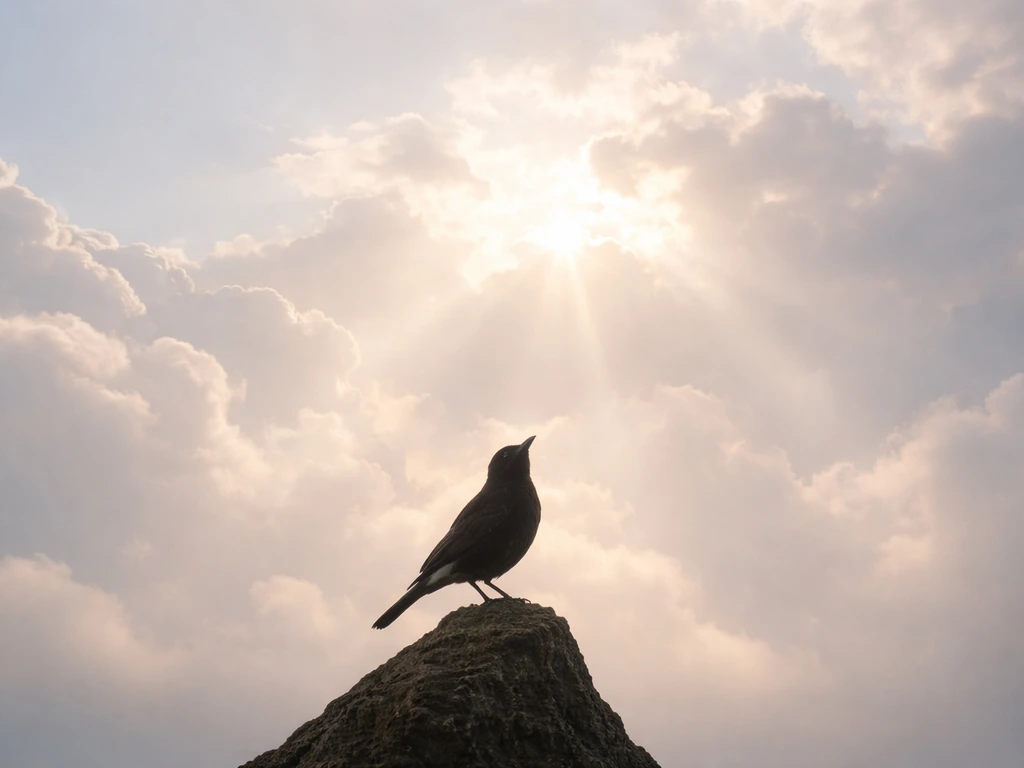
When Kabir Das writes about a bird sitting in a tree, he is not describing a scene from nature. He is describing you. The bird is the soul, the tree is the body or the entire field of human existence, and the poem is a quiet alarm asking why the soul stays so close to the Divine yet remains spiritually asleep. That is the core of the line, and everything else is unpacking what that means for how you actually live.
On this Tree Is a Bird Kabir Das Explanation and Meaning

Eleanor Hartwell
27 May 2026
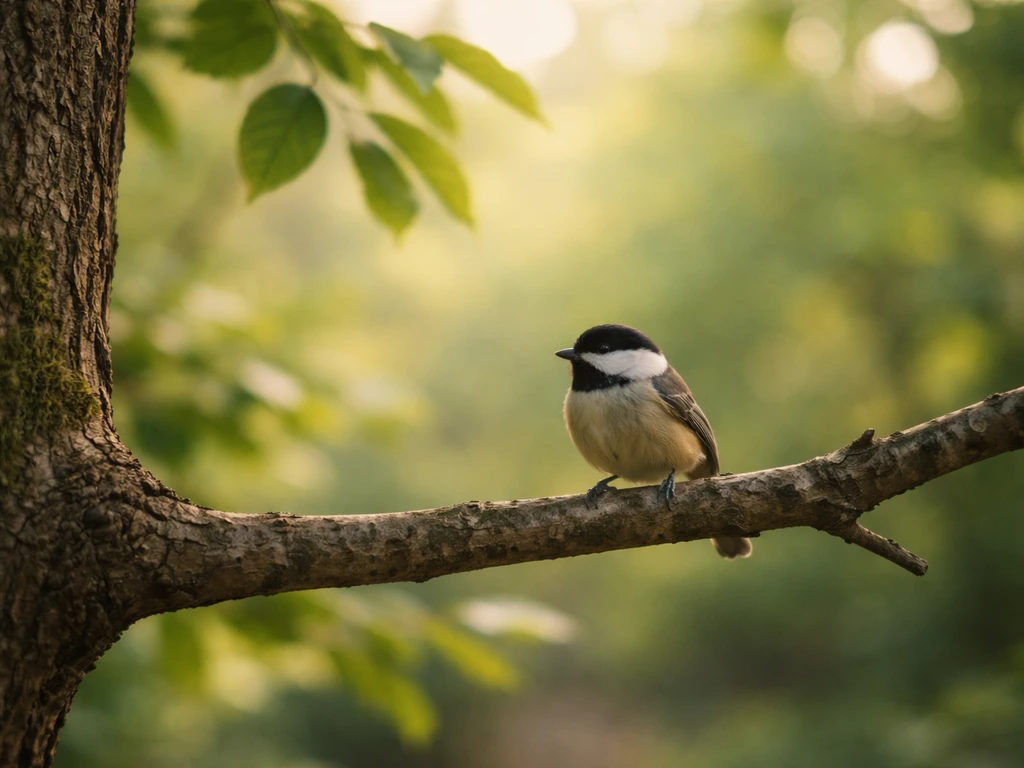
What the line 'On this tree is a bird' actually means in Kabir's hands
The exact wording shifts depending on which translation you are reading. Rabindranath Tagore's 1915 rendering from 'One Hundred Poems of Kabir' uses the phrase 'There is a bird in the tree.' Robert Bly's translations emphasize the interior, mystical register. Arvind Krishna Mehrotra's more recent English versions bring a sharper vernacular edge. All of them are working from Kabir's original Hindi and Braj Bhasha, so it is worth knowing upfront that a single definitive line does not exist in English. What does exist, consistently across traditions, is the image and what it points toward.
In the Guru Granth Sahib, Bhagat Kabir uses the 'tar-var' (tree) image to describe a soul that is physically proximate to the Divine but spiritually distant, almost willfully blind to what is right there. In Sikh24.com’s Gurbani Word of the Day discussion of tar-var, this “bird on a tree” idea is explained as Kabir’s portrayal of being physically near the Divine but spiritually far away the 'tar-var' (tree) image to describe a soul that is physically proximate to the Divine but spiritually distant. The bird sits in the tree. The tree is vast. And still the bird does not see. That tension, nearness without recognition, is the emotional and spiritual center of the line. It is a gentle rebuke, not a condemnation.
One of the clearest interpretive maps comes from devotional commentaries on Kabir that explain the 'vast tree' as the domain of creation itself, the whole field of birth, life, and repeated death that humans cycle through. The bird lives inside that vast tree, moving from branch to branch (one lifetime to another), but never quite landing on the realization that it was always free. The tree is also sometimes rendered more intimately as 'this body tree,' meaning the human organism itself, which one Unitarian commentary on Kabir explicitly names that way. One Unitarian interpretation of the poem reads the “tree” as “this body,” mapping bird to an inner, mystical reality rather than a natural scene this body tree. Both readings work together: the tree is the body, and the body exists within the larger tree of cosmic existence.
Who Kabir Das was and why he taught in metaphors

Kabir lived from roughly the early 15th century into the early 16th century, spending most of his life in Varanasi (then called Banaras). He worked as a weaver, a julaha, and his social position outside the Brahmin hierarchy shaped everything about how he communicated. He could not speak in the language of Sanskrit scholarship and expect to reach ordinary people, so he did not. His dohas (couplets) and padas (songs) used the vocabulary of the street, the loom, the river, and the forest. Birds, trees, fish, water, and thread appear constantly in his poetry because these were the textures of life his listeners already understood.
Kabir came to his spiritual formation through a convergence of two traditions. He was born into a Muslim weaver family but was deeply influenced by the Hindu devotional teacher Ramananda, who belonged to the Vaishnavite Bhakti movement. This dual inheritance meant Kabir was skeptical of ritual in both traditions and insistent that direct inner experience of the Divine was the only thing that actually mattered. His poetry was not commentary on scripture. It was a report from his own inner life, framed in images any farmer or craftsperson could picture. That is why bird imagery shows up so naturally in his teaching. Birds already carried enormous symbolic weight across Indian spiritual tradition, and Kabir used that weight without being bound by any single tradition's interpretation.
It is also worth knowing that Kabir's 'bird' is not purely decorative. Robert Bly, who worked on Kabir translations extensively, observed that Kabir's poetry connects thinking, feeling, intuition, and sensation in a single image. The bird on the tree is not just a metaphor for the soul in an abstract sense. It is designed to make you feel, in your chest, what it is like to be both free and stuck at the same time.
The symbolic meaning of the bird and the tree
The Vedantic tradition offers the clearest structural mapping of this image, and it runs parallel to Kabir's usage even though Kabir himself transcended formal Vedantic categories. In that framework, the tree is the body-mind complex, the dwelling place of experience. Two birds sit in the tree: one eats the fruit (acts, suffers, enjoys, gets caught in the cycle) and the other watches without eating, representing pure awareness or the Divine witness. Kabir collapses this into a single bird whose situation is the tension itself: it is capable of flight, capable of pure awareness, but it keeps eating the fruit anyway.
The 'tree of Naam' reading is another layer found in commentaries on Kabir's hymns. Here, the tree is not just the body but the living presence of the Divine Name, and the bird perching in it is the soul that has found, or is close to finding, its true home. This flips the tone from lament to invitation. The bird is not lost. It is already in the right tree. The work is recognizing that.
Kabir also uses 'bird imagery as spiritual pathway,' not just symbolic decoration. Some of his shabdas (sacred songs) describe the 'path of the bird' as distinct from all other paths, a route that leaves no tracks, cannot be taught by formula, and requires a particular kind of inner alertness. This connects to his broader suspicion of ritual and institutional religion. The bird's path is the path of direct experience.
| Symbol | Surface meaning | Kabir's spiritual meaning |
|---|---|---|
| The tree | A plant, a forest, a body | The body, the field of creation, the domain of repeated birth and death |
| The bird | A living creature in nature | The soul (atman/ruh), the inner self capable of liberation |
| Sitting in the tree | Resting, nesting, belonging | The soul dwelling in embodied existence, near the Divine but not yet awake to it |
| The bird not flying | Natural stillness | Spiritual inertia, the soul choosing familiar comfort over freedom |
| The vast tree | A large old tree | The entire cosmos as the arena of transmigration and experience |
| The tree of Naam | A named or sacred tree | The living presence of the Divine Name as the soul's true dwelling |
How to apply this to what you're actually experiencing
If you came to this line because you read it in a poem or saw it quoted somewhere, the most useful thing is to sit with the tension Kabir is pointing at: you are already in the right place (the tree, the body, this life), and the freedom you are looking for is not somewhere else. That is both reassuring and uncomfortable, which is exactly what good spiritual poetry is supposed to do.
If you encountered a bird in a tree in daily life and felt something pull you toward this image, that is worth paying attention to, not because birds are literal omens, but because Kabir's whole tradition insists that the outer world mirrors inner states. Seeing a bird perched and still might prompt you to ask where you are sitting still in your own life, whether from genuine contentment or from a reluctance to fly. This is a similar kind of practical reminder to the proverb who said a bird in the hand, where what is already here matters more than what you imagine elsewhere. If you are wondering where this “bird on a tree” idea leads, it can also help to ask where giving the bird came from in the first place where did giving the bird come from.
Here are the reflection questions Kabir's image actually calls you toward:
- Where in your life do you feel close to something meaningful but not quite in it? That gap is what Kabir is naming.
- What is your equivalent of 'eating the fruit of the tree'? What keeps you absorbed in experience rather than aware of the awareness itself?
- If the bird in this image is you, what would it mean to fly? Not escape, but genuine freedom of perception.
- Are you treating the tree (your body, your circumstances, your relationships) as a prison or as the exact place where awakening happens?
- What would it feel like to recognize, just once today, that you are already in the right tree?
These are not questions to answer quickly. Kabir wrote in couplets precisely because short, sharp images lodge in the mind and keep working. You can return to the bird-on-a-tree image the way you might return to a koan: not to solve it but to let it dissolve something.
If you are using this for study or teaching
Kabir's bird imagery shows up across several of his most well-known poems and shabdas, and translators render it differently. If you are reading it for an academic or devotional study context, compare at least two translations. Tagore's 1915 version (with Kshiti Mohan Sen) tends toward the devotional and lyrical. Mehrotra's NYRB translation is more grounded and direct. Bly's version emphasizes the psychological and interior. None of them is wrong. They each catch a different facet of what Kabir was doing. The image of the bird on or in the tree is consistent across all of them; the emotional coloring shifts.
The short version and the deeper takeaway
Here is the summary: when Kabir Das says 'on this tree is a bird,' the tree is the body and the wider field of human existence, the bird is the soul, and the poem's point is that the soul is already where it needs to be but has not woken up to that fact. It is a call to inner attention, not a description of nature. The bird could fly free at any moment. The question is why it does not.
The deeper takeaway is that Kabir is not pessimistic about this. He is not saying the bird is trapped. He is saying the bird is sitting in a magnificent tree, close to everything that matters, and it just needs to look. That is the whole spiritual program compressed into one image: not a journey to somewhere else, but a recognition of what is already present. That is why this line keeps circulating across centuries and translations. It describes a situation most people recognize from the inside.
This kind of bird symbolism, where the bird stands for the soul's relationship to freedom and the Divine, runs through traditions well beyond Kabir. Questions about which birds are associated with specific deities, how bird imagery functions in devotional contexts, or what it means when a god takes the form of a bird all connect to the same broad symbolic territory Kabir is drawing from. In devotional Hindu contexts, people often ask which bird is associated with the goddess Lakshmi and her iconography which bird is associated with goddess Lakshmi. People often wonder what it means when bird imagery is tied to a specific “bird god,” and that curiosity fits into the same symbolic territory this passage draws from. Some traditions also connect bird imagery to political symbolism, so you may be wondering which bird inspired the design of the Lok Sabha which birds are associated with specific deities. His genius was in making it feel personal and immediate rather than theological and distant.
FAQ
If translations differ, how can I know I’m understanding the line correctly?
Use the image’s consistent “function,” not the exact wording. In most versions, the tree represents the place you already are (body and life), and the bird represents what’s already present but not fully realized (soul or inner awareness). If a translation makes the bird seem like a literal animal with a plot, it is usually moving away from Kabir’s point.
Is Kabir saying the soul is trapped in the body, or that it can simply wake up anytime?
Kabir’s framing is closer to awakening than captivity. The line’s tension depends on the bird’s capacity for flight or clear seeing, even while it remains “eating” or distracted. So the usual takeaway is not despair, it is recognition, then a shift in attention.
What are the “two birds” idea and how does it fit with the “one bird” line?
Some commentaries use a two-bird framework (one active, one witness) to explain how people can act in the world while also having awareness. Kabir condenses this into a single image, where the tension is that awareness exists, yet action and desire keep pulling the person back into the fruit-eating mode.
How should I relate this to my daily life if my problem is anxiety or distraction, not spirituality?
Treat the “tree” as your current mind and circumstances, not some future destination. When you notice restlessness, ask what part of you is already “in the right place” (your breath, attention, present moment), but still refuses to land there. The practice is to return attention, not to add another belief.
Does the “tree of Naam” mean I should focus only on chanting the Divine Name?
Not necessarily, but Naam becomes a useful lens. If a commentary frames the tree as the living presence of the Name, your practice can be interior, such as silently tracking the Divine as you act, rather than requiring constant audible chanting. The key is aligning attention with the Name, not just producing sound.
What mistake do people commonly make when interpreting this line?
They turn it into a simple moral story like “you are bad because you don’t see.” Kabir’s rebuke is quieter and more diagnostic. The emphasis is nearness without recognition, so the correction is awareness, not self-hatred.
How should I practice with the image without overthinking it?
Return to it like a koan by doing a short cycle: sit, picture the bird and the vast tree, then ask, “Where am I already close to what I seek, yet I keep looking away?” Repeat for a few minutes, then stop. The goal is to let the tension dissolve, not to solve an argument.
If I’m reading for study, which translations should I compare and what should I look for?
Compare at least two translations that emphasize different layers. Look for whether they make the tone more devotional, more psychological, or more vernacular. Then verify whether their meaning still supports the same structure: bird equals soul or awareness, tree equals your current field of life, and the central theme is nearness without recognition.
Is this image connected to other bird symbols in Indian traditions, like birds tied to deities?
Yes in the sense that bird imagery often carries spiritual associations across traditions, but you should not force a one-to-one identification. In this particular Kabir line, the bird’s role is primarily to represent the soul’s relationship to freedom and the Divine, regardless of which bird a later tradition might link to a specific deity.
Next Article
What Bird Is a Sign From Heaven? Meaning and How to Interpret
Which bird is often seen as a sign from heaven, plus a step-by-step way to interpret your specific encounter.