The phrase 'giving the bird' traces back to 19th-century theatrical slang, not to any spiritual or symbolic bird tradition. When a performer bombed on stage, audiences would blank" rel="noopener noreferrer">hiss at them like geese, and that hissing became known as 'the big bird.' By the 1860s, 'give the big bird' meant to boo and hiss someone out of the room. That theatrical insult gradually compressed into 'give the bird,' and then, sometime in the 1960s, it latched onto the raised middle finger, the gesture we now call 'flipping the bird.' So the word 'bird' in this expression is not about feathers, flight, or symbolism. It is about the sound a goose makes when it is angry.
Where Did Giving the Bird Come From Origins and Meaning

Eleanor Hartwell
5 Jun 2026

Where the phrase actually started

The documented trail starts with theatrical culture in 19th-century Britain and America. Audiences at vaudeville and music hall performances had a vivid way of expressing disapproval: sustained hissing, very much like an agitated goose. The slang term for that collective rejection was 'the big bird,' because the goose was the quintessential hissing animal. William Ernest Henley's Slang and Its Analogues (1890s) records 'Big Bird' as specifically the goose in performer contexts, and the 1889 Dictionary of Slang, Jargon and Cant spells it out plainly: 'The bird is supposed to be, and is very often, a goose.' To give someone the big bird was to hiss them off the stage, to signal total contempt for their performance.
By 1922, vaudeville references document the pattern as a standard form of crowd heckling. The phrase shortened over time: 'the big bird' became 'the bird,' and 'give the big bird' became 'give the bird.' In UK English this sense is actually preserved to this day. Wiktionary records a specifically British meaning of 'give the bird' that still refers to booing and jeering at a performer, entirely separate from the middle-finger gesture. That is not a coincidence. It is the original meaning surviving in one dialect while the American usage went a different direction.
How the meaning jumped to the middle finger
The transfer from verbal heckling to the one-finger salute happened around the 1960s in American usage. Etymology sources are consistent on this point: the 'up yours' hand gesture (middle finger extended upward, others folded down) absorbed the existing slang label 'the bird,' becoming 'flipping the bird' or 'giving the bird.' Merriam-Webster defines 'flip someone the bird' today as specifically making an offensive gesture by pointing the middle finger upward. Collins English Dictionary labels the phrase as American and Australian informal, meaning the obscene gesture performed as a sign of contempt or anger. The hand gesture itself is much older than the slang term for it, with the middle finger's use as an obscene insult documented in multiple cultures across centuries. What happened in the 1960s was not the invention of the gesture but the borrowing of theatrical bird-slang to rename it.
So the modern phrase is a two-part evolution: 1860s theatrical hissing slang + 1960s transfer to an existing obscene hand gesture. The word 'bird' connected the two not because of any deep symbolic meaning, but because the slang was already in circulation as a general-purpose contempt expression.
What bird symbolism actually says (and what it does not say about this phrase)
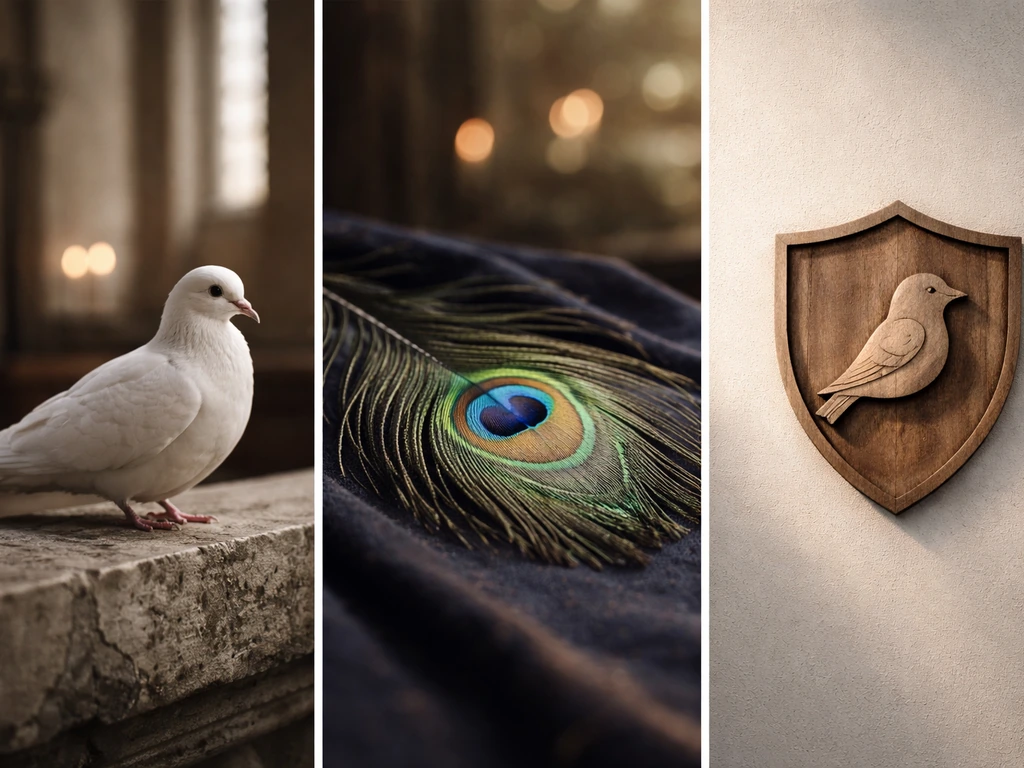
Here is where readers sometimes get tangled. People searching for 'where did giving the bird come from' sometimes expect a mythological answer, and it is worth addressing that honestly. The cultural symbolism of birds is rich and genuinely meaningful across traditions. In biblical contexts, birds like the dove carry divine peace and the Spirit's presence. In ancient Egyptian belief, the ibis represented Thoth, wisdom, and divine record-keeping. Native American traditions treat certain birds as direct messengers between the human and spirit worlds. Celtic lore associates ravens and wrens with transformation and the otherworld. Aztec cosmology famously links the hummingbird to Huitzilopochtli, the god of sun and war.
None of these traditions inform 'giving the bird' as a phrase. The etymology is rooted in goose behavior, specifically the hissing sound of an irritated goose, not in feathered messengers or sacred flight. That said, there is a fascinating indirect connection worth noting: the goose itself does carry symbolic weight in some traditions, representing vigilance, community loyalty, and even divine guardianship in Celtic and Greco-Roman settings. The Romans kept sacred geese at the Temple of Juno, and in Celtic folklore the goose was considered a threshold bird, a creature that moved between worlds. None of this fed into the slang. But if you are interested in why the goose was the instinctive cultural shorthand for contempt-by-hissing, the bird's behavioral reputation as territorial and aggressive around humans gives the theatrical slang a grounded, practical logic.
For readers drawn to this site's broader interest in bird symbolism, the more resonant question might be what birds represent as symbols of attitude, pride, or defiance across cultures. If you are looking for a Kabir Das take on this idea, see the explanation tied to on this tree is a bird and how it is commonly interpreted on this tree is a bird kabir das explanation. The peacock signals arrogance in some traditions; the crow signals cunning and irreverence. These are the symbolic parallels worth exploring if you are looking for meaning rather than etymology. The phrase 'giving the bird,' however, sits firmly in the category of historical slang, not spiritual symbol. Some readers also ask which bird is associated with goddess Lakshmi, but that kind of symbolism is separate from the slang meaning of “giving the bird.”. If you are wondering which bird inspired the phrase, the answer is not a mythological messenger but a hissing goose used in theatrical slang. As with discussions of which bird inspired a national emblem or what a bird god means across traditions, the most useful approach is to keep history and symbolism in their own lanes while letting both speak clearly. It is also why you will see people ask what a bird god means in the first place, but that symbolism does not explain the phrase.
How the meaning shifts depending on where you are
Regional variation matters here more than people realize. The phrase does not mean the same thing everywhere, and the gesture does not carry identical weight across cultures.
| Region / Language Context | What 'the bird' or the middle finger means | Notes |
|---|---|---|
| United States | Middle finger raised = 'flipping the bird'; standard insult of contempt or anger | Most widely recognized in popular culture; labeled American informal by Collins |
| Australia | Same as US usage; 'flip the bird' recognized as the middle-finger gesture | Collins marks it as American and Australian informal |
| United Kingdom | 'Give the bird' can still mean booing and jeering at someone, especially a performer | Original theatrical meaning survives; two-finger V-sign (back of hand) is more common obscene gesture |
| France | Middle finger understood as offensive, but 'bras d'honneur' (arm gesture) is the more culturally specific contempt signal | Different gestural vocabulary; the phrase itself does not translate directly |
| General cross-cultural | Middle finger gesture is widely understood as offensive in many cultures, but the slang 'bird' label is specifically English | The gesture predates the English slang by centuries; name does not travel with it |
The practical upshot: if you hear someone in the UK say an audience 'gave the band the bird,' they may mean the crowd booed, not that anyone raised a finger. And if you use the middle finger in a non-English-speaking country, the offense registers, but the 'bird' framing is lost in translation.
Reading the gesture in the moment

Context determines almost everything when interpreting whether 'giving the bird' is genuine hostility, dark humor, or something in between. Here are the scenarios where it tends to show up and what they usually signal.
- Road rage or traffic disputes: the most common contemporary context in North America and Australia; communicates frustration and contempt, rarely escalates beyond the gesture itself
- Sports and competitive contexts: directed at opponents, referees, or rival fans; often performative and crowd-driven rather than deeply personal
- Among close friends or in comedy: can function as a joke or affectionate ribbing depending on relationship and tone; context and facial expression matter enormously
- Directed at a public figure or camera: increasingly appears in protest or political commentary, sometimes deliberately provocative and sometimes ironic
- In workplace or formal settings: almost always read as genuinely hostile and professionally damaging; the theatrical origin does not soften the modern impact
- In media and advertising: sometimes used with euphemistic framing (a campaign famously urged people to 'give cancer the bird') to redirect the gesture's aggression toward something socially sanctioned
The reliable interpretive rule: the more public and less personal the setting, the more the gesture lands as a broad signal of contempt. The more intimate the context, the more room there is for irony or affection. When in doubt about how something was meant, the setting and the relationship are better guides than the gesture itself.
Origin myths worth setting aside
Several popular stories circulate about the origins of 'giving the bird' or the middle finger more broadly. Some people also ask who said a bird in the hand, as if it were connected to the same phrase. Most of them are entertaining but not supported by the historical record.
- The Battle of Agincourt myth: One of the most widely repeated claims holds that English archers at Agincourt (1415) raised their middle fingers to taunt the French, who had threatened to cut off their bow fingers. There is no contemporary documentation supporting this story. It appears to be a modern folk etymology, not a medieval historical record. Historians of the period have not found the claim in primary sources.
- Roman ancient-origin claims tied to bird symbolism: Some sources suggest the gesture originated with Roman bird augury or sacred bird practices. This conflates two completely separate things: Roman augury (the reading of bird flight for divine messages, which is well-documented) and an obscene gesture. The middle finger was used as an insult in ancient Rome, but there is no documented link between that usage and bird symbolism or augury practices.
- The phrase comes from Native American or Celtic spiritual traditions: Given this site's focus on bird symbolism across traditions, it is worth being direct: there is no credible source linking 'giving the bird' as a phrase or gesture to Native American, Celtic, Egyptian, or other spiritual bird traditions. The phrase is English theatrical slang with a goose at its center, and the goose connection is behavioral (hissing), not symbolic.
- The word 'bird' in the phrase refers to a specific sacred or mythological bird: It does not. Etymonline's account is explicit that the bird in question is the goose, and the connection is the goose's hiss. The symbolic richness of birds in spiritual traditions (phoenix as rebirth, dove as peace, raven as messenger) is real and documented, but it is entirely separate from this etymology.
- The modern gesture and the phrase always went together: They did not. The middle finger as an insult gesture and the slang term 'the bird' developed separately and merged only around the 1960s in American usage. Assuming they share a single unbroken origin leads to false attribution.
Getting comfortable with the actual documented chain (goose hissing in 1860s theatrical slang, vaudeville heckling by 1922, transfer to the raised-finger gesture in the 1960s) is more satisfying than the myths, because it shows how living language actually evolves: through performance culture, crowd behavior, and the slow drift of slang across decades. That is a genuinely interesting story even without any ancient drama attached to it.
FAQ
Does “give the bird” always mean the obscene middle-finger gesture?
No. In some UK usage, “give the bird” can still refer to booing and jeering at a performer, without any raised-finger component. If you are trying to interpret it, treat the local dialect and the situation (theater vs. street) as more important than the exact wording.
How can I tell from context whether “giving the bird” is literal heckling or a gesture?
Look for the setting and audience cues. Theater or live performance contexts tend to point to heckling, while confrontations, direct insults, or quick visual signaling tend to point to the middle-finger gesture. The more public and less personal the moment, the more likely it is contempt in the broad, performative sense.
Did the phrase “give the bird” originate in the same place as the middle finger insult?
Not exactly. The “bird” slang is linked to 19th-century theatrical heckling in Britain and America, and the “bird” label later got attached to the older middle-finger insult around the 1960s in American usage. So the words and the gesture evolved on slightly different timelines before merging.
Is there any connection between “bird in the hand” and “giving the bird”?
Usually no. “Bird in the hand” is a separate idiom about preferring what you already have, and it does not have a documented origin tied to the theatrical “big bird” heckling or the obscene gesture. It is a common confusion because both include the word “bird,” but they are different expressions.
If someone says it on social media, is it safe to assume it means the middle finger?
Not always. Online, people can use “giving the bird” as shorthand for general contempt or heckling, or as euphemism to avoid showing the gesture. Check surrounding details like references to a show, “booing,” or explicit mentions of the finger, and do not assume the meaning purely from the phrase.
What does “flip someone the bird” mean, and is it the same as “give the bird”?
“Flip someone the bird” generally means making the middle-finger gesture as an insult. “Give the bird” may be broader or dialect-specific, with some meanings still tied to booing. In most American contexts, though, they converge on the gesture meaning.
Does the goose element matter, or is it just a story that sounds plausible?
The “goose” detail is important for understanding why “bird” shows up at all. The earlier slang “big bird” is documented as a goose in performer heckling contexts, specifically because of goose-like hissing. That ties the term to behavior and sound, not to birds as symbolic messengers.
How should I respond if I hear “gave the band the bird” in the UK?
It most likely means the crowd booed or hissed the performers, not that anyone used a raised-finger gesture. A safe response is to ask for clarification in conversation if you need it, but your first read should be “booing,” because that is the preserved sense in that dialect.
Could translation change what people think “giving the bird” means?
Yes. In non-English-speaking settings, the “bird” framing often does not carry over, while the gesture does. If someone uses the phrase without making the gesture, listeners may miss the intended meaning entirely. If you are interpreting it in a different language environment, rely on visible action and situation rather than wording alone.
Are there myths about the phrase that are worth knowing, even if they are not supported?
Yes, but they are mostly folk explanations that circulate because the gesture and the word “bird” both look mysterious at a distance. The documented chain is theatrical goose-hissing slang first, then a later attachment to the middle finger in the 1960s. If you want the most reliable meaning, prioritize that historical progression over repeating origin legends.
Next Articles

Which Bird Is Associated with Goddess Lakshmi? Meaning
Lakshmi’s most cited bird is the owl, symbolizing auspicious wisdom, prosperity, and divine grace in Hindu tradition.
Who Said A Bird in the Hand? Provenance and Meaning
Find who said a bird in the hand, why no single source is sure, plus spiritual bird symbolism for daily guidance.

On this Tree Is a Bird Kabir Das Explanation and Meaning
Kabir Das meaning: tree as inner world, bird as soul or divine freedom, with reflection tips and summary.