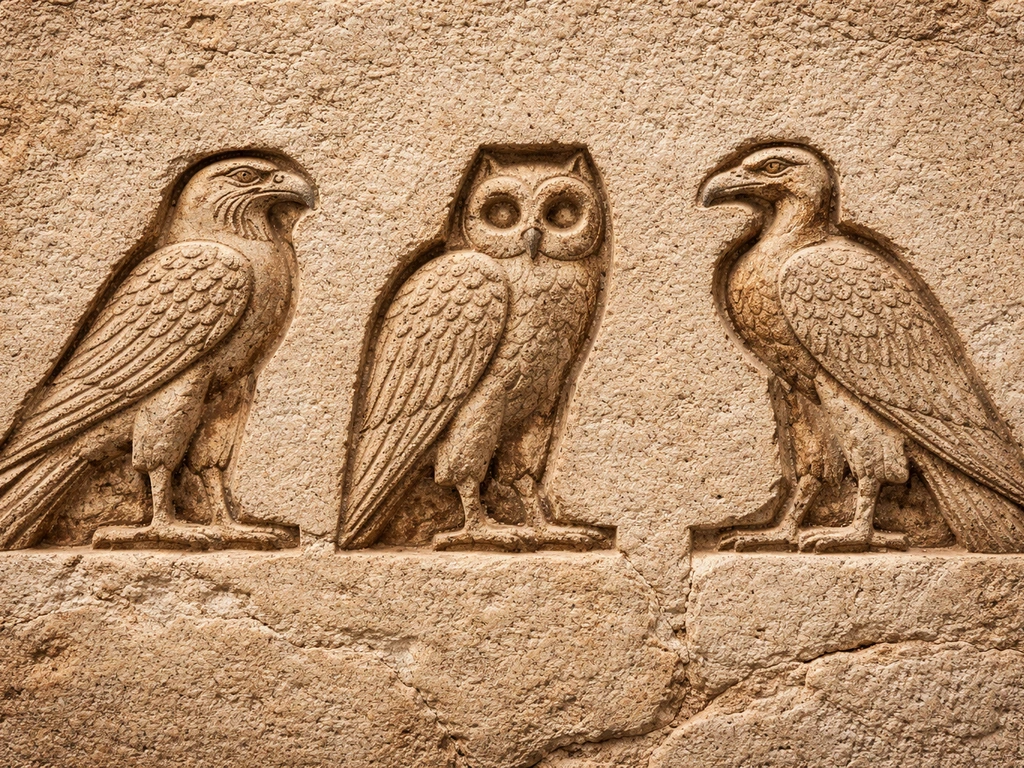
When you search 'sphinx bird meaning,' you're most likely looking at one of three things: a winged sphinx motif (a mythic hybrid that already incorporates bird wings as part of its design), a piece of jewelry or art labeled 'sphinx bird' as a combined decorative name, or a real bird encounter that felt sphinx-like in its stillness and mystery. None of those are the same thing, and the interpretation shifts depending on which one you're actually dealing with. The good news is that once you identify your context, the symbolism is actually very coherent and practical to apply.
Sphinx Bird Meaning: Symbolism, Spiritual Messages, and Clues

Eleanor Hartwell
23 May 2026
What 'Sphinx Bird' Actually Refers To
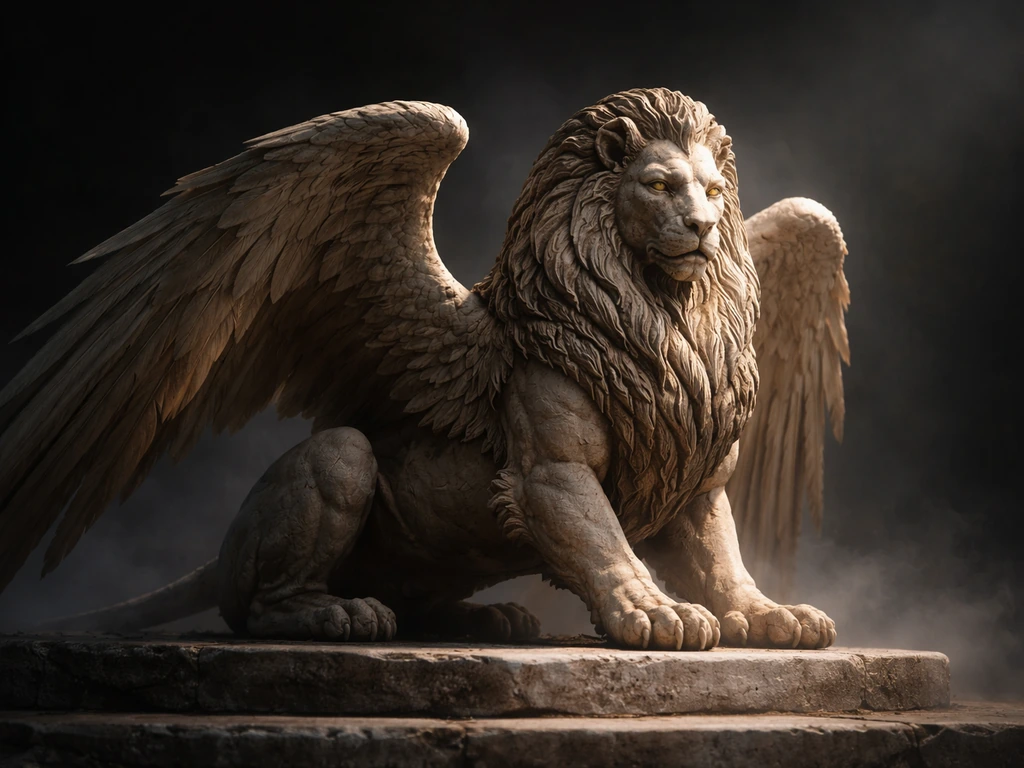
The phrase 'sphinx bird' doesn't correspond to a single ancient creature with a fixed definition. blank" rel="noopener noreferrer">In mythology, the sphinx is typically described as having a lion's body and a human head. The Greek version, most famously the Sphinx of Naxos, adds bird wings to that formula, giving you a woman's face, a lion's body, and feathered wings. blank" rel="noopener noreferrer">Egyptian sphinxes, by contrast, are usually not winged at all. So 'sphinx + bird' as a combined image is specifically a Greek and Near Eastern inheritance, not a universal ancient motif.
In modern usage, 'sphinx bird' shows up most often as a descriptive label in decorative arts and jewelry, where a brooch or pin features a sphinx-like figure with prominent bird elements, or where a brand name like SPHINX appears on a vintage bird-shaped brooch. A tattoo community article also uses the phrase to describe a creative hybrid design. So if you found this phrase on an antique or piece of jewelry, it's likely a mid-20th-century commercial label rather than a reference to any single ancient creature. That context matters enormously for interpretation.
There's also a biological confusion worth flagging early: sphinx moths (also called hawk moths) are sometimes described as bird-like because of their hovering flight pattern, and they're commonly mistaken for hummingbirds or small birds. If you had a sighting that prompted this search, it's worth confirming whether you actually saw a bird or a sphinx moth. That distinction changes everything about how to read the omen.
The Core of Sphinx Symbolism
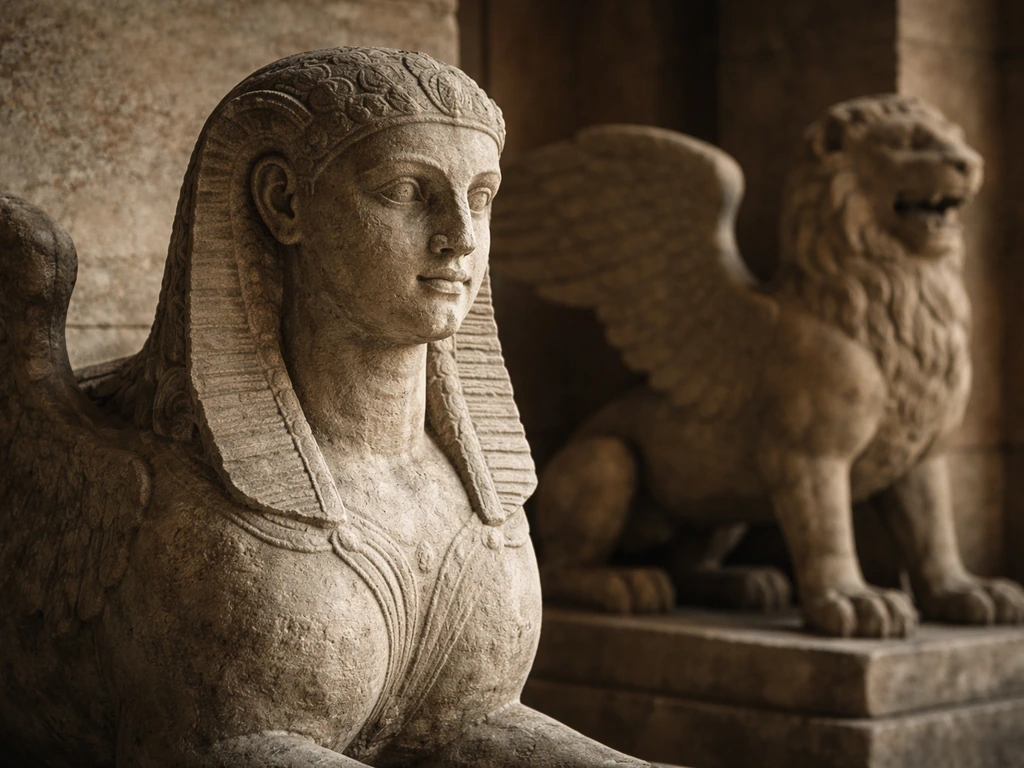
Before layering in bird symbolism, it helps to understand what sphinx imagery communicates on its own. Across Egyptian, Greek, and Near Eastern traditions, the sphinx functions as a guardian of thresholds. It sits at the boundary between the known and unknown, the human and divine, the living and the dead. The Dream Stele of Thutmose IV, erected between the front paws of the Great Sphinx at Giza around 1401 BCE, is a direct historical record of the sphinx as a site of divine communication and royal destiny.
The Greek sphinx adds the element of the riddle, specifically a challenge you must answer correctly to pass through. Modern dream dictionaries pick up on this accurately: dreaming of a sphinx is almost universally interpreted as a signal that mystery and hidden knowledge are at play, and that some obstacle or question must be worked through before you can move forward. That's not a casual symbol. It's a serious invitation to stop, think, and examine what you don't yet understand about your situation.
Mesopotamian guardian hybrids like the lamassu, which combines a human head with a lion or bull body and bird wings, share the same basic symbolic DNA. These figures flanked the entrances to throne rooms, standing guard against chaos. Some scholarly sources explicitly note that 'lion-bodied protective deities are also called sphinxes,' which means when you encounter a winged guardian hybrid in art or jewelry, the protective/threshold reading is well-supported regardless of whether the label says sphinx, lamassu, or something else entirely.
- Mystery and hidden knowledge that resists easy answers
- Guardianship of a threshold, boundary, or transition point
- A challenge or test you must face before moving forward
- Divine communication or a message embedded in a significant moment
- Protection of something sacred or important
What Bird Symbolism Brings to the Reading
Bird symbolism operates on a different register than sphinx symbolism, and when the two combine, the result is layered rather than contradictory. Birds across nearly every tradition represent the movement between worlds: earth and sky, body and spirit, the visible and invisible. Their flight is the central metaphor, embodying transition, ascent, freedom, and the soul in motion. Their voice carries messages, warnings, comfort, or revelation. Their nesting behavior signals cycles of beginning, protection of what's growing, and the deliberate creation of a safe container for something new.
Feathers specifically carry their own weight in this reading. A feather found in an unusual place, or noticed on a bird that appears unexpectedly still, is often treated as a direct message or confirmation from a spiritual source. Flight patterns matter too: a bird circling suggests vigilance or something returning to your attention, while a bird sitting perfectly still in plain view often reads as a deliberate pause, an invitation to stop and pay attention.
When you fuse sphinx symbolism with bird symbolism, you get something like: a guardian who can also fly, a threshold-keeper who carries messages, a mystery that is also on the move. That combination suggests a moment of spiritual transition that is simultaneously protected and active. You're not just being asked a riddle. You're being invited to take flight through the answer.
How to Read a Real-Life Encounter

If your sphinx bird meaning search came from an actual sighting, the most important thing you can do right now is record what you remember before the details fade. In Egyptian contexts, understanding the egyptian bird hieroglyph meaning can add a more specific layer to how you interpret the symbol sphinx bird meaning.
If you are trying to pin down the hamsa bird meaning, you can use the same approach by clarifying what kind of symbol you are actually dealing with sphinx bird meaning. Dream research consistently shows that memory of symbolic encounters dissolves within five to ten minutes, and the same is true for the emotional texture of unexpected sightings. Grab a notebook or your phone and capture the specifics while they're fresh.
- What time of day was it, and where exactly were you?
- What species of bird did you see, or what did it look like physically?
- What was the bird doing: sitting, flying, calling, looking directly at you?
- What were you thinking or feeling in the moments just before the encounter?
- Did anything unusual happen immediately before or after?
- What was your gut emotional response: awe, calm, unease, recognition?
Those details are your interpretive raw material. The bird's behavior in particular tells you a great deal. A perfectly still bird that holds your gaze and doesn't flee leans into the sphinx archetype: it's the guardian at the threshold, presenting a question. A bird that suddenly takes flight just as you approach suggests transition and movement are imminent in your life. A bird that calls repeatedly without showing itself maps onto hidden messages and inner communication, the voice speaking from somewhere you can't fully see yet.
Meaning by Context: Art, Dreams, and Sightings
| Context | What 'Sphinx Bird' Most Likely Means | Practical Interpretation |
|---|---|---|
| Jewelry or decorative art | A hybrid motif combining guardian/protective energy with bird symbolism | The object likely carries protective intent; wearing or displaying it can be read as invoking guardianship and transition |
| Tattoo or body art | A deliberate personal symbol of mystery, transformation, and spiritual power | Consider which sphinx qualities (challenge, threshold, wisdom) you're anchoring in your own body as a permanent reminder |
| Dream encounter | Mystery and hidden knowledge requiring your active engagement; a test or threshold you must cross | Record the emotional tone immediately; a sphinx that speaks in a dream is especially significant, pointing to an answer you already carry |
| Outdoor bird sighting | A moment of transition, spiritual message, or invitation to pause and reflect | Note behavior and species; stillness amplifies the sphinx-guardian reading, flight amplifies the transition/messenger reading |
| Indoor encounter (feather, image appearing) | A directed spiritual prompt or confirmation | Treat it as a reply to something you've been contemplating; ask what question has been sitting unanswered in your life |
Spiritual Guidance You Can Apply Right Now
The most honest thing you can say about sphinx bird symbolism is that it almost always shows up at a threshold. Something in your life is changing, or needs to change, and the image is functioning as a marker for that moment. The sphinx layer says: there's a mystery here that demands your attention and intelligence. The bird layer says: you have the capacity to move through it, to take flight, to carry the message forward. Together, they're not asking you to be afraid of what you don't know. They're asking you to engage with it directly.
Here are reflection prompts you can use in a journal today, regardless of whether your encounter was a dream, a sighting, or a piece of art that caught your attention in an unexpected way:
- What question in my life currently feels unanswerable or too complex to face?
- What threshold am I standing at right now, and what's on the other side if I cross it?
- What is trying to communicate with me that I haven't fully listened to yet?
- Where in my life do I need to act as a guardian, protecting something that matters?
- What would it look like to take flight through this uncertainty rather than wait for it to resolve itself?
As a practical action step: if the encounter was a dream, keep a dedicated notebook by your bed for the next two weeks and write down whatever you remember each morning before checking your phone. If it was a sighting, revisit the location at the same time of day for the next few days and see whether the encounter repeats or transforms. Repetition in symbolism is always significant. If it was an object like jewelry or art, sit with it deliberately rather than just displaying it passively, and ask what it's marking in your current life.
Don't Confuse These Things
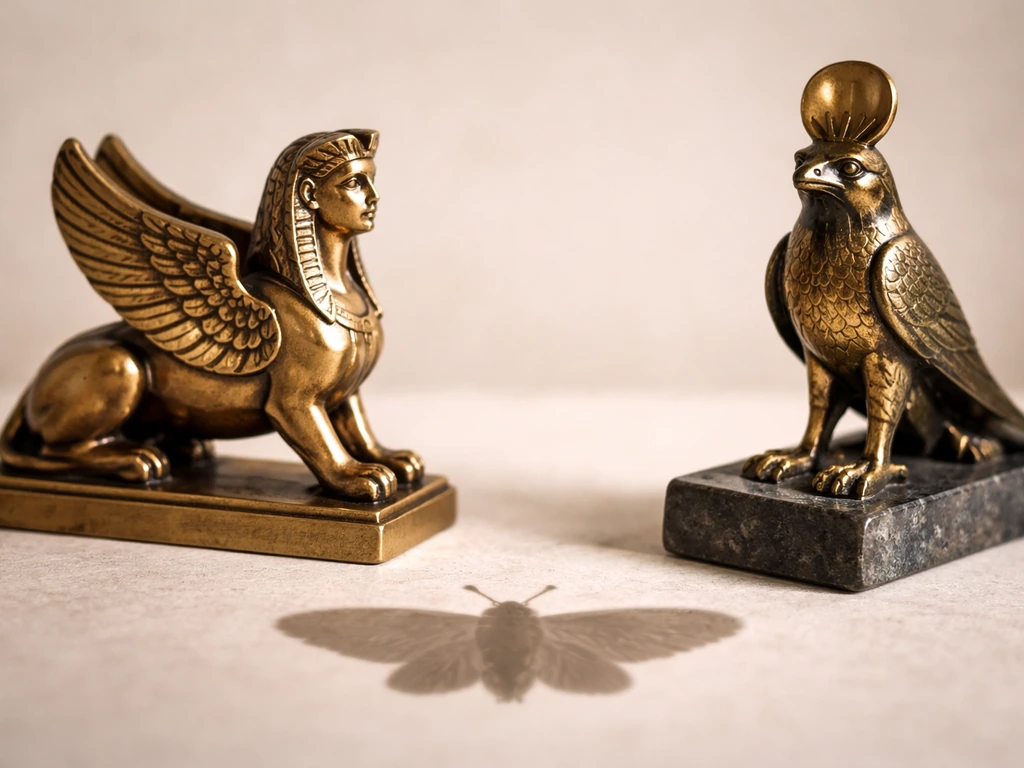
The most common misread in this space is conflating sphinx bird symbolism with Egyptian sacred bird symbolism, which is a genuinely different tradition. In ancient Egypt, one of the best-known sacred birds associated with divine authority was the ibis, often linked to Thoth Egyptian sacred bird symbolism. Horus, the falcon-headed god, represents kingship, protection, and divine power through a specific bird form, not a lion-bodied hybrid.
The Eye of Horus carries healing and protection meaning tied to that falcon iconography. If what you're looking at features a falcon head or the distinctive Eye of Horus symbol, you're in Horus territory, not sphinx territory, and the reading shifts accordingly. If the bird you mean is tied to Horus, the horus bird meaning will point you toward protection, healing, and divine sight rather than sphinx themes Horus territory. Sacred wading birds like the ibis, associated with Thoth, add yet another layer of distinctly Egyptian bird symbolism that is separate from sphinx imagery.
These are worth knowing as distinct topics because they're genuinely different symbolic systems that happen to share a geographical origin.
Also watch for the sphinx moth confusion mentioned earlier. If your sighting was of something hovering like a hummingbird but you couldn't quite place it, especially in late afternoon in a garden setting, there's a real chance it was a hawk moth. That doesn't make the encounter meaningless, but it changes what you're interpreting: moth symbolism (particularly around transformation and the relationship between light and shadow) rather than bird symbolism. The visual similarity is striking enough that naturalist sources regularly note people mistake these moths for small birds.
Finally, don't flatten the sphinx into a generic 'mystery symbol' and stop there. The sphinx specifically guards a threshold and poses a challenge. That's more actionable than vague mystery. If you find yourself repeatedly drawn to sphinx imagery, the spiritual invitation is less 'sit with the unknown' and more 'answer the question you've been avoiding.' That's the riddle at the heart of this symbol, and it's worth taking seriously.
FAQ
How can I tell whether I’m looking at a real “sphinx bird” design or a different hybrid like a lamassu?
Check the face and body details. A sphinx motif is often lion-bodied with a human or woman’s face, and in the Greek variant it has bird wings. A lamassu is typically shown with a human head plus a bull or lion body, and wings that are usually integrated in a more clearly protective, entrance-guardian way. If the wings or head type look like a Mesopotamian entrance guardian rather than a Greek-style feminine hybrid, the threshold meaning still applies, but the style cues help you pick the right flavor of symbolism.
If I found the phrase “sphinx bird” on jewelry, is it usually tied to ancient symbolism?
Most of the time, it is not. In many listings and vintage pieces, “sphinx bird” functions as a descriptive sales label for a mixed-genre ornament (sphinx-like figure plus bird wings) rather than an academically defined ancient creature. A quick tell is whether the item looks mid-20th-century in construction and branding, or whether it’s tied to a known mythological name, like “Sphinx of Naxos” or “lamassu.”
What if I’m not sure whether my sighting was a bird or a sphinx moth (hawk moth)?
Use conditions. Sphinx moths (hawk moths) often hover near flowers, can look “bird-like” in silhouette, and are more likely around dawn, dusk, and gardens. Birds usually land, hop, or show more distinct beak/foot detail, even when they pause. If you have any video or even a mental snapshot, compare the hovering position and distance to flowers versus open air to decide which symbolic track to take.
Do I have to interpret “sphinx bird meaning” as a spiritual omen, or could it be psychological?
You can treat it as both. The symbol’s power increases when it lands during a threshold moment (decision, transition, withheld information). If the encounter repeatedly draws your attention to a single unresolved topic, that pattern can be meaningfully psychological (your mind organizing around a theme) without making it “random.”
How should I interpret it if a bird kept circling but never landed?
A circling pattern usually reads as ongoing vigilance or a loop of attention, something you are not yet “inside” enough to resolve. Pair that with the sphinx layer: it suggests you have the answer available, but you are still avoiding the exact question. As a practical step, write the question you keep dodging and see whether it matches what you were emotionally focused on right before the circling began.
What if the bird appeared perfectly still and I felt afraid or tense?
Fear can still be part of the threshold message. Instead of treating fear as “bad omen,” treat it as information about what boundary you’re crossing. Ask what in your life currently feels exposed, like a question awaiting an honest response. If the stillness was coupled with clear contact (long eye contact or obvious attention), lean toward “answer the question,” but move gently rather than forcing a conclusion.
Can feathers carry a different message depending on where and how I found them?
Yes. A feather found in a highly noticeable, unusual location (near your door, on your bed, or in a workspace) often reads as “targeted confirmation.” A feather found after long wandering or cleaning may read as a sign to slow down and notice what you’re overlooking. Also note whether it was one intact feather or scattered fragments, one tends toward a specific message, fragments toward “multiple pieces” of an answer.
Does “sphinx bird meaning” change in dreams versus real-life sightings?
The core idea stays threshold and riddle, but the mechanism differs. In dreams, your mind condenses the riddle, so the most useful cue is what you felt you needed to do to “pass” (solve, speak, answer, surrender, escape). In waking sightings, the clue is behavior, stillness, flight, and whether the encounter repeats at the same time of day.
What’s the best way to journal my encounter without turning it into vague mysticism?
Translate it into a single decision statement. Write: “The sphinx part is asking me to ____,” then fill the blank with a concrete action (clarify, confront, research, forgive, choose). Then add: “The bird part suggests ____,” with a concrete outcome (movement, communication, release, transition). This prevents the symbol from staying abstract and keeps it tied to the “riddle you can answer.”
How do I avoid mixing up sphinx symbolism with Egyptian sacred bird symbolism or Horus imagery?
Look for the bird identity cues. If the image is clearly falcon-headed, Eye of Horus style, or explicitly tied to Horus, the reading shifts from sphinx threshold to kingship, protection, healing, and divine power. If it’s an ibis-like bird associated with Thoth, you’re in a different sacred-bird system. When the “sphinx” lion-human hybrid is present, keep sphinx threshold as the foundation, then add bird flight as the layered messenger.
What if the symbol shows up repeatedly across different formats (dream, jewelry, and a real bird)?
Repetition is a strong amplifier, but it can mean either one theme with different “channels,” or three separate lessons. To tell which, compare the emotion and the question. If you keep circling the same unresolved topic across formats, treat them as the same riddle. If the feelings and questions change completely, treat each appearance as its own threshold moment.
Next Article
Egyptian Bird Hieroglyph Meaning: Guide to Determinatives
Learn Egyptian bird determinatives: identify bird glyphs, phonetic vs semantic roles, and confirm meanings from text con