
The Bible never uses the phrase 'bird of paradise' in any verse. If you're wondering about the phrase itself, note that it does not appear in the Bible, even though many Christians connect it to themes like glory and paradise bird of paradise. But that doesn't mean the question is a dead end. What people are really asking when they search for the biblical meaning of bird of paradise is: what does this vivid, almost otherworldly creature represent through a Christian or scriptural lens? The bird of paradise flower meaning in this context is tied to the same themes people look for when they ask about its biblical significance biblical themes. And that question has a genuinely rich answer, built from the Bible's extensive imagery around birds, wings, glory, beauty, and God's provision. You just have to approach it honestly, without pretending a verse says something it doesn't.
Biblical Meaning of Bird of Paradise: Scriptural Themes

What we mean by 'bird of paradise' (it's two things)
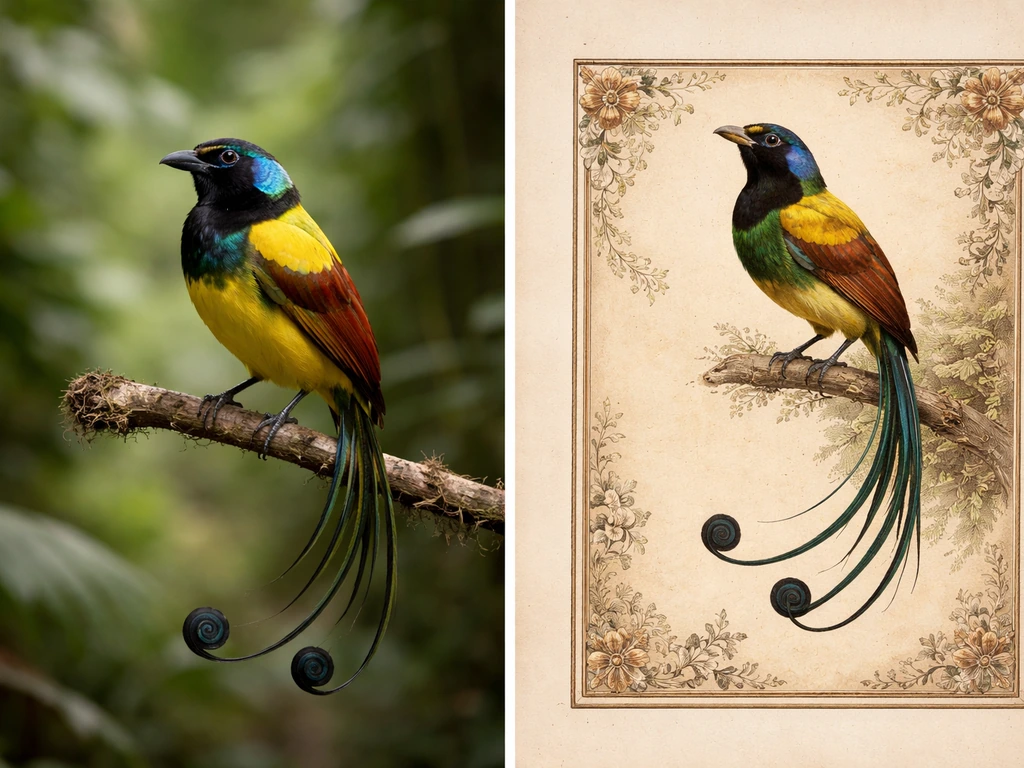
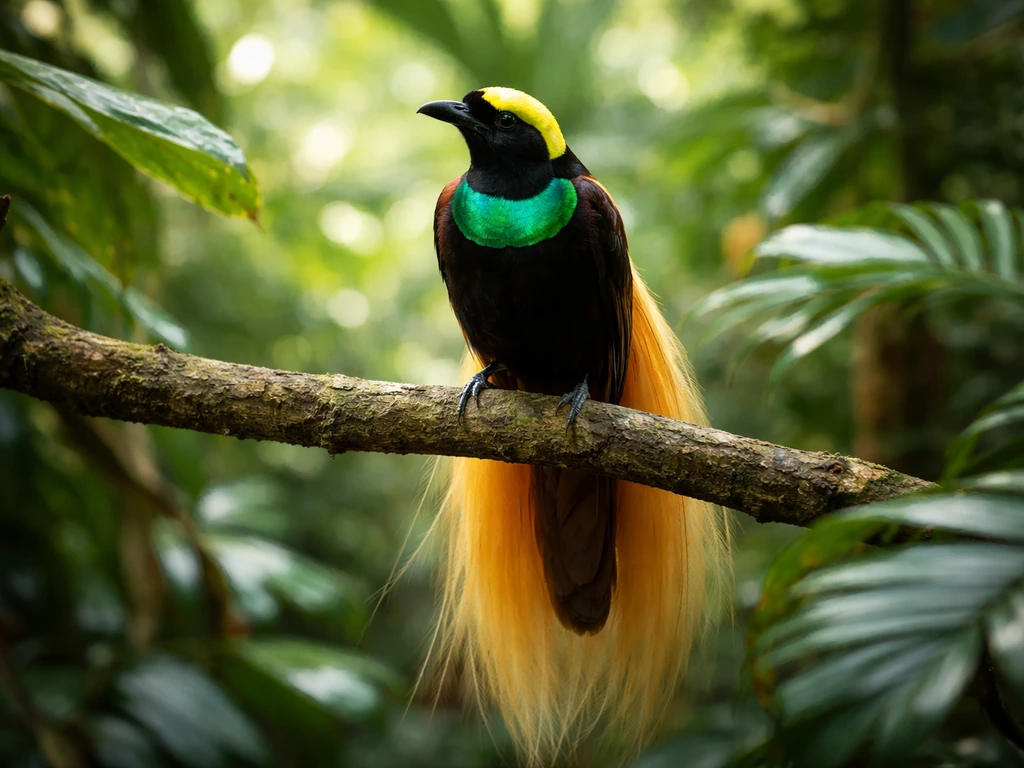
Before diving into biblical themes, it helps to clarify what 'bird of paradise' actually refers to, because the phrase is doing double duty. On one hand, there's a real animal: the birds-of-paradise are a family of tropical birds (Paradisaeidae) with more than 40 recognized species, native primarily to New Guinea and northeastern Australia. The males are famous for their extraordinarily colorful plumage and elaborate courtship displays, while females are comparatively plain. Encyclopaedia Britannica describes them as icons of the natural world precisely because of that spectacular male ornamentation. On the other hand, there's the bird-of-paradise flower (Strelitzia reginae), named for its resemblance to those showy birds. When people search for the 'biblical meaning of bird of paradise,' they're rarely asking about botany. They want to know what the bird itself, or the broader idea the name conjures, means in a faith context. If you are wondering, “may the bird of paradise meaning” is best understood through both the bird and the idea of paradise in Scripture-informed symbolism.
There's also a layer of cultural usage worth knowing. Older English commentators did use the phrase 'bird of paradise' as an exotic literary reference. John Trapp, a 17th-century Bible commentator, used the phrase 'Avis Paradisi, bird of paradise' in his remarks on Proverbs, deploying it as an evocative image rather than citing any Scripture that names the bird directly. This matters because it shows the phrase has floated around Christian writing for centuries as a kind of spiritual shorthand, even though it never made it into the biblical text itself. The related topic of what the bird of paradise symbolizes more broadly (outside the Bible) is worth exploring on its own, but here we're focused specifically on the scriptural angle.
Where 'bird of paradise' shows up in the Bible (and where it doesn't)
Let's be direct: a search of BibleHub for the exact phrase 'bird of paradise' returns no matches. It is not a biblical translation term. Websites that list verses 'about birds of paradise' are actually pulling general 'birds of the air' passages, not anything specific to this species or name. OpenBible.info, for example, surfaces familiar verses like Matthew 6:26 under the 'Birds of Paradise' topic, but those verses are about birds generically. That's not a flaw in the question; it's just how folk interpretation works, and it's worth understanding so you can engage with the symbolism carefully rather than building on a verse that doesn't exist.
What the Bible does contain is dense, recurring bird imagery: sparrows watched over by God (Matthew 10:29-31), eagles whose wings carry believers (Isaiah 40:31), doves as symbols of the Holy Spirit (Matthew 3:16), ravens fed by divine provision (Luke 12:24), and the general principle of Matthew 6:26 that God cares even for 'the birds of the air.' Job 39 gives a sweeping, almost poetic catalog of wild creatures, including birds, as evidence of God's creative sovereignty. The bird of paradise, understood as a creature of extraordinary beauty and exotic origin, fits conceptually into this world of divinely created splendor, even if it isn't named. If you are also looking for a more practical horticultural angle, bird of paradise when does it bloom is the common follow-up many readers want to answer next.
Biblical-adjacent meanings: what Christians associate with this bird
Even without a direct scriptural mention, there are several well-established biblical themes that map naturally and responsibly onto the bird of paradise. Here's where the symbolism holds up under honest scrutiny.
Glory and divine splendor
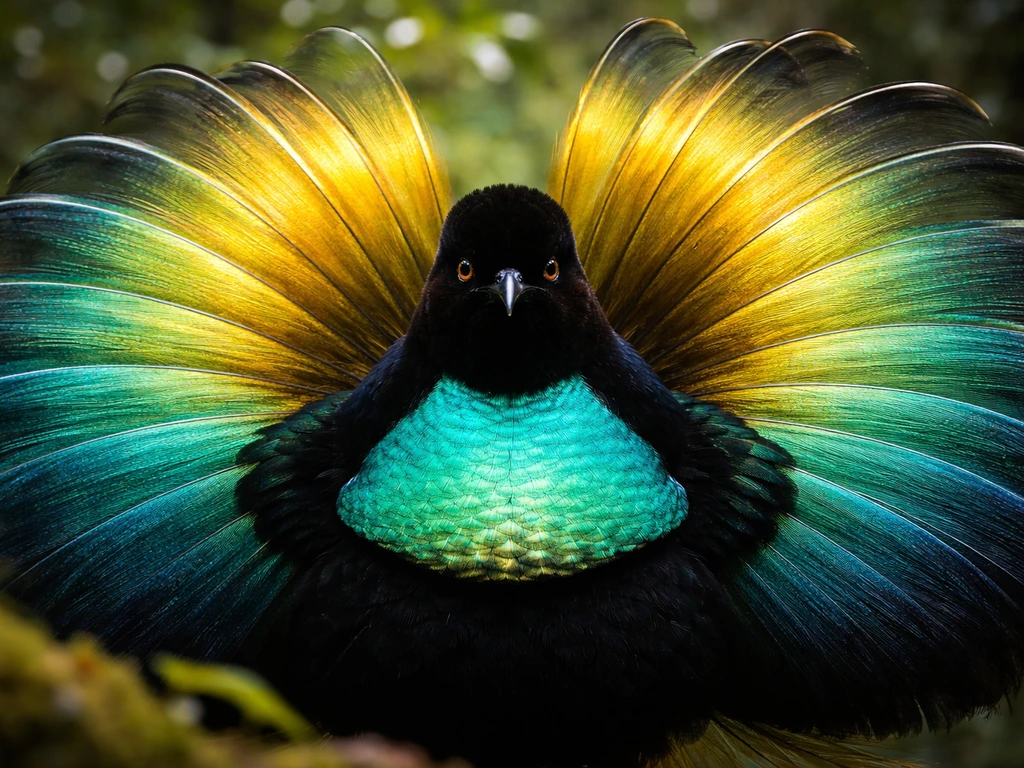
The male bird of paradise is arguably the most visually extravagant creature on earth. Its plumage and display seem almost gratuitously beautiful, which is theologically interesting. Matthew 6:29 has Jesus telling his listeners that 'Solomon in all his glory was not arrayed like one of these,' pointing to a lily, but the principle extends across created beauty: natural splendor is itself a kind of testimony to the Creator. In that sense, the bird of paradise can function as a symbol of God's glory made visible in creation, a living doxology.
Heaven and paradise
The word 'paradise' in the bird's name does have direct biblical currency. The Greek word 'paradeisos' appears three times in the New Testament: in Luke 23:43, where Jesus tells the thief on the cross 'today you will be with me in paradise'; in 2 Corinthians 12:4, where Paul describes being caught up into paradise; and in Revelation 2:7, where the overcomer is promised fruit from 'the tree of life, which is in the paradise of God.' So while the bird itself isn't in the Bible, its name carries a word that is deeply scriptural. A bird named 'of paradise' naturally becomes, in Christian interpretation, a symbol of heavenly beauty and the promise of the restored garden.
Witness and testimony
Birds in Scripture frequently function as witnesses or messengers. The dove at Jesus's baptism (Matthew 3:16) was a visible sign of the Spirit's presence. The raven and dove sent by Noah (Genesis 8) reported back on the state of the world. In Psalm 19, creation itself 'declares the glory of God,' with no speech or words, but a message that goes out to all the earth. A bird of impossible beauty, arriving in your awareness, fits within this tradition of creation bearing witness to something beyond itself.
Beauty as devotion
The Song of Solomon is the Bible's most concentrated meditation on beauty as spiritual metaphor. Beloved imagery there includes birds: 'The voice of the turtledove is heard in our land' (Song of Solomon 2:12). Beauty, in the Hebrew imagination, wasn't separate from holiness. The same Hebrew word 'tiferet' is used for both beauty and glory. The bird of paradise, as a symbol of beauty taken to its extreme, can serve as an image of devoted love and the longing the soul has for God.
How to read bird imagery in the Bible well
Reading the Bible with a symbol like 'bird of paradise' in mind requires a little interpretive discipline. The goal is resonance, not proof-texting. Here's how to do it without overclaiming.
- Start with what the Bible actually says about birds in general: God's provision (Matthew 6:26), eagles and renewal (Isaiah 40:31), the Holy Spirit as a dove (Matthew 3:16), and God's attention to even sparrows (Matthew 10:29-31). These are your grounded foundations.
- Ask what qualities of the bird of paradise resonate with a biblical theme. Its extraordinary beauty points to divine glory. Its name includes 'paradise,' a word with direct scriptural meaning. Its elaborate display can suggest devotion and the fullness of created life.
- Hold the interpretation loosely. Biblical bird symbolism was written with birds the ancient Near Eastern audience knew: eagles, doves, sparrows, ravens, and ostriches. Reading the bird of paradise into Scripture is interpretive extension, not exegesis, and it's more honest to say so.
- Cross-check against the broader passage. If you're meditating on Matthew 6: 26, the point of the verse is God's care and human trust, not the specific species of bird. Let the bird of paradise image serve that theme, rather than replacing it.
- Avoid certainty that the Bible assigns this bird a specific meaning. The symbolism is yours to explore as a devotional lens, not a doctrinal claim.
What feathers, flight, and nesting mean in biblical terms
Even if you want to go deeper than just 'the bird of paradise is beautiful and paradise is in the Bible,' there's a whole layer of universal bird symbolism that translates clearly into scriptural themes. The bird of paradise shares these with other birds, and the Bible addresses each of them directly.
| Bird Element | What It Represents in Bird Symbolism | Biblical Parallel |
|---|---|---|
| Feathers | Protection, covering, divine shelter | Psalm 91:4 — 'He will cover you with his feathers, and under his wings you will find refuge' |
| Flight / Wings | Transcendence, ascension, spiritual freedom | Isaiah 40:31 — 'They will soar on wings like eagles'; Psalm 55:6 — 'Oh, that I had wings of a dove' |
| Nesting | Safety, home, God's provision for even the smallest creatures | Psalm 84:3 — 'Even the sparrow has found a home... near your altar' |
| Song / Calling | Praise, witness, joy returning after sorrow | Song of Solomon 2:12 — 'The time of singing birds has come'; Job 38:7 — 'the morning stars sang together' |
| Plumage / Beauty | Divine glory visible in creation, sacred beauty | Matthew 6:29 — 'Solomon in all his glory was not dressed like one of these' |
The bird of paradise is, in a sense, the apex expression of the 'plumage and beauty' row in that table. If any creature could be said to manifest divine splendor in feathers, it's this one. And the Bible is clear that created beauty is meant to point upward, not stop at itself. That's the thread worth pulling.
A simple spiritual practice: journaling and prayer with this symbolism

Once you've done the interpretive work, the question becomes what to do with it. Here's a straightforward practice for using the bird of paradise as a devotional symbol responsibly, whether you encountered the image in a dream, in nature, or simply feel drawn to it.
Journaling prompts
- What quality of the bird of paradise feels most alive to me right now: its beauty, its name (paradise), or its freedom in flight? What might that quality be pointing to in my life or faith?
- Read Psalm 91: 1-4 slowly. Where in my life do I need to experience the 'shelter of wings'? What would it feel like to rest there?
- Reflect on the word 'paradise' as Jesus used it in Luke 23: 43. What does the promise of paradise mean to me today, not as a future destination but as a present hope?
- Think about a time when created beauty, something in nature, stopped you in your tracks. What did it make you feel toward God? Write that down without editing it.
- The bird of paradise male displays his full glory with no apology. Where in your own spiritual life are you holding back your full devotion or expression? What would it look like to offer that freely?
A short reflective prayer
You don't need an elaborate ritual for this. Try sitting quietly with the image of the bird of paradise in your mind, and then pray something simple: 'God, you made beauty as a language. Let me read it. Let the glimpse of paradise in your creation deepen my hunger for the real thing. May the blue bird of happiness remind you that joy is a gift you can receive with gratitude. Cover me with your wings, lift me toward you, and let my life be a display of devotion the way you designed all beautiful things to be.' Then sit in silence for a few minutes before journaling whatever surfaces.
Using the symbolism responsibly going forward
The bird of paradise doesn't need to become a doctrine to be spiritually useful. Think of it as a lens: when the image appears to you (in art, in a dream, in this article), let it prompt a question rather than assert an answer. It can remind you of divine glory visible in creation, of the paradise promised to those who persevere (Revelation 2:7), and of the ancient truth that God's attention reaches even the most spectacular and hidden birds of the world. That's a lot of spiritual freight for a creature the Bible never names, but the Bible's imagery is wide enough to hold it honestly.
If you want to keep going with bird symbolism in adjacent directions, the phrase 'may the bird of paradise fly up your nose' has its own fascinating cultural history, and the bird of paradise flower carries its own layer of meaning worth exploring separately. But for a scriptural foundation, what's here gives you solid ground to stand on without having to invent a verse.
FAQ
Is there any verse in the Bible that specifically mentions the bird of paradise?
Because the Bible does not name the bird itself, the safest devotional move is to use it as an image that points you toward themes the Bible does cover (God’s care for birds, created beauty, paradise language), without claiming a specific verse is “about” the bird of paradise.
How can I tell whether a website is using “bird of paradise” correctly when it shows Bible verses?
If you see “bird of paradise” on a verse list, it’s usually a category label for “birds of the air” (generic birds), not a match for the specific species or phrase. A quick check is to verify the exact wording in the passage in multiple translations.
Does the fact that the bird’s name includes “paradise” mean the bird is biblical?
The word “paradise” in Scripture (from Greek paradeisos) is important because it carries a biblical concept, but the connection only supports broad symbolism. It does not automatically mean the bird is a prophetically “authorized” symbol.
What is a good way to connect the bird of paradise to Scripture without overreaching?
The Bible’s bird imagery is not limited to one meaning, so you can ask a focused question each time you encounter the image. For example, “Is God’s glory in creation what I’m being invited to notice?” or “Am I being nudged to trust God’s provision?”
What’s the most common mistake people make when interpreting bird of paradise symbolism biblically?
Avoid “proof-texting,” where you try to force a passage to fit the bird’s traits (like color, courtship, or origin). Instead, map only the overlap themes your reading of the passage already supports, such as beauty as worship (glory), God’s attention, or the hope of paradise.
What if the symbolism feels too spiritual or unclear for my faith practice?
If you find the symbolism unhelpful or too mystical, it’s okay to simplify. You can treat it like a visual reminder of Matthew 6 themes (God’s care) and pause to thank God rather than assigning a “hidden message” to the bird itself.
How do I choose which biblical theme (glory, paradise, provision, Holy Spirit imagery) the symbol should point me to?
Different bird species and even “bird of paradise” in art can pull you in different directions (joy, longing, beauty, provision). To stay grounded, choose one Scripture theme you are already tracking in your reading, then let the image reinforce that theme only.
Is it appropriate to use the bird of paradise in prayer or journaling?
Yes, but keep it consistent with the article’s “resonance, not proof” approach. If you use it in a prayer, connect it to God’s character (Creator, provider, giver of hope) rather than treating the image as a source of new doctrine.