
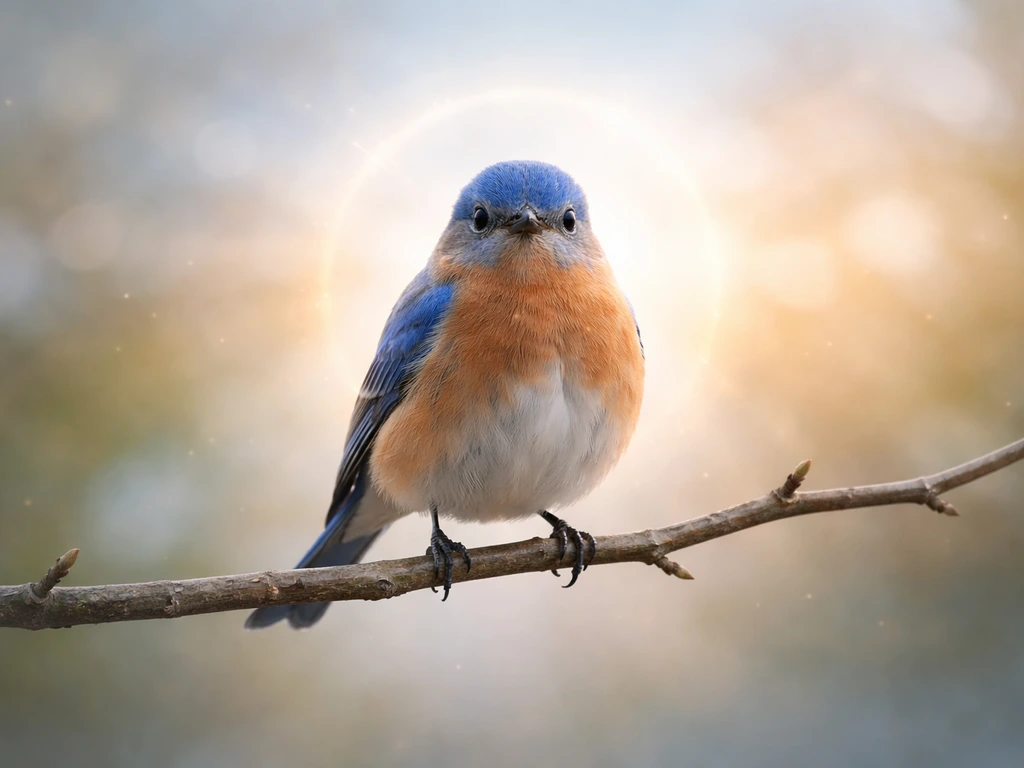
When someone says "may the bluebird of happiness find you," they are wishing you joy, good fortune, and the arrival of good news. The phrase draws on a rich symbolic tradition rooted in Maurice Maeterlinck's 1908 play "The Blue Bird," where two children search the world for a magical blue bird that represents happiness itself. That image took hold in popular culture, was reinforced by the blank" rel="noopener noreferrer">1934 song "Bluebird of Happiness" by Sandor Harmati and Edward Heyman, and eventually became a kind of shorthand blessing. Today, people use it to invoke the idea that happiness is something that can arrive unexpectedly, like a bright bird landing at your window.
May the Blue Bird of Happiness Meaning and How to Use It

Eleanor Hartwell
3 May 2026
The Meaning Behind "May the Bluebird of Happiness"

The phrase traces a clear line back to Maeterlinck's play, originally titled "L'Oiseau bleu." In it, siblings Tyltyl and Mytyl travel through dream-like worlds searching for the Blue Bird of Happiness, only to discover it was with them all along. That narrative structure, happiness sought abroad but found close to home, gave the bluebird its enduring symbolic weight. When the 1934 song popularized the image further, it moved from Belgian symbolist theater into American living rooms, cementing "bluebird of happiness" as a warm, optimistic phrase most people encounter as a blessing or toast rather than a literary reference.
Spiritually, the phrase carries an invitation rather than a guarantee. Saying "may the bluebird of happiness" find you is expressing a hope that joy will come to someone, not a promise that it will. That distinction matters when you start working with the symbolism personally. It frames the bluebird as a messenger of possibility, something that arrives when conditions are right, not something you can command. That is actually a healthy way to approach any bird symbolism: as a lens for reflection, not a vending machine for outcomes.
What Bluebirds Symbolize Across Traditions
Across a wide range of cultures, blue birds carry associations with joy, good news, and spiritual messages. In Chinese mythology, the Qingniao, literally a blue-green bird, was regarded as the messenger or servant of Xi Wangmu, the Queen Mother of the West, one of the most powerful figures in the Chinese pantheon. That bird delivered tidings between the divine realm and the human world. The parallel with the bluebird-as-messenger idea is striking, even though the traditions developed independently. Both treat the blue bird as something that crosses between worlds, carrying news.
In contemporary spiritual interpretation, the bluebird is most consistently framed as a herald of positive resolution. Seeing one, particularly at an unexpected moment, is often read as a sign that good news is coming, that a difficult period is lifting, or that joy is available right now if you are open to it. None of these readings are canonical doctrine, but they reflect a genuine, cross-cultural pattern: blue birds signal that something hopeful is on its way.
Why the Color Blue Matters Here
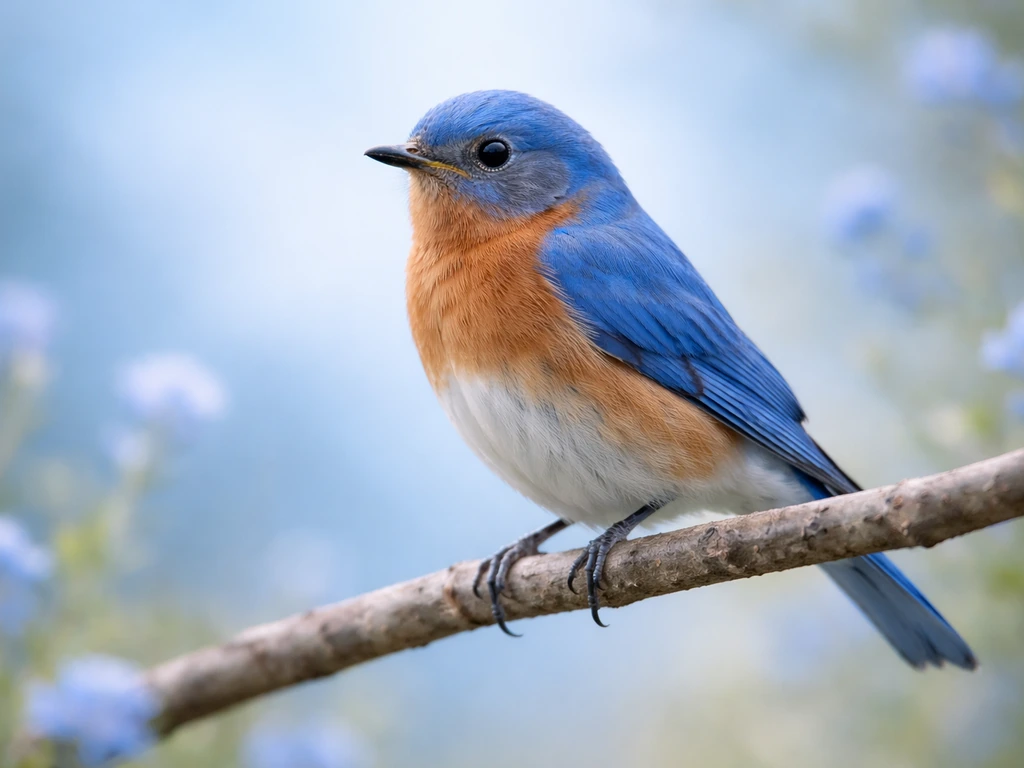
The blue in "bluebird" is not incidental. Blue is widely associated with calmness, trust, communication, and harmony in both Western color psychology and broader cultural frameworks. Those associations map directly onto what the bluebird symbolizes: not ecstatic, noisy happiness, but the quieter, more stable kind: serenity, hope, and the sense that things are going to be okay. When you see a brilliantly blue Eastern Bluebird or a flash of blue from an indigo bunting, the color itself does some of the symbolic work. It evokes tranquility at the same moment it draws your eye.
Flight, Feathers, and Nests: Broader Bird Symbolism That Feeds the Bluebird Tradition
The bluebird does not carry its symbolic meaning in isolation. It inherits a much older framework in which birds, as a category, represent something between the earthly and the divine. Flight has been associated across traditions with ascension, revelation, and the movement of the soul toward higher understanding. In Islamic spiritual writing, bird imagery regularly evokes the soul's relationship to divine truth. In folk religion worldwide, flight engages themes of freedom, transcendence, and receiving wisdom from above. The bluebird, then, benefits from this inherited resonance: it is not just a pretty songbird but a flying creature, something that crosses the boundary between the ground and the sky.
Feathers carry related symbolism: protection, peace, and spiritual guidance. Many people who work with bird symbolism treat finding a blue feather as an extension of the bluebird's message, a portable piece of the same energy. And bird nests add yet another layer. In symbolic interpretation, nests represent home, family, and the creation of new beginnings. If you encounter a bluebird nesting near your space, that layered reading, messenger plus new beginning plus home, becomes particularly rich.
How Different Traditions Interpret the Bluebird
| Tradition / Context | How Blue Birds Are Interpreted | Core Theme |
|---|---|---|
| Chinese mythology (Qingniao) | Messenger of the Queen Mother of the West; carrier of divine tidings | Divine communication |
| Western literary tradition (Maeterlinck) | The Blue Bird of Happiness as the object of a spiritual quest | Happiness as inner discovery |
| American popular culture (1934 song) | Symbol of hope, optimism, and joy accessible to everyday people | Hope and resilience |
| Contemporary spiritual interpretation | Herald of good news, positive resolution, and incoming joy | Synchronicity and signs |
| Islamic bird symbolism (broader) | Birds as creatures linked to ascension, revelation, and the soul's journey | Spiritual ascent |
| Christianity-adjacent (birds as messengers) | Birds as potential carriers of divine or angelic meaning; peace and uplift | Divine presence |
What is notable across these frameworks is that they overlap more than they diverge. Whether you are reading from a Chinese mythological angle, a literary-symbolic one, or a contemporary spiritual one, the blue bird consistently carries positive, messenger-like energy. That convergence is part of why the phrase "may the bluebird of happiness" resonates so widely. It is tapping into something genuinely multi-cultural, even if most people using it today are thinking of the song or the play rather than the Qingniao.
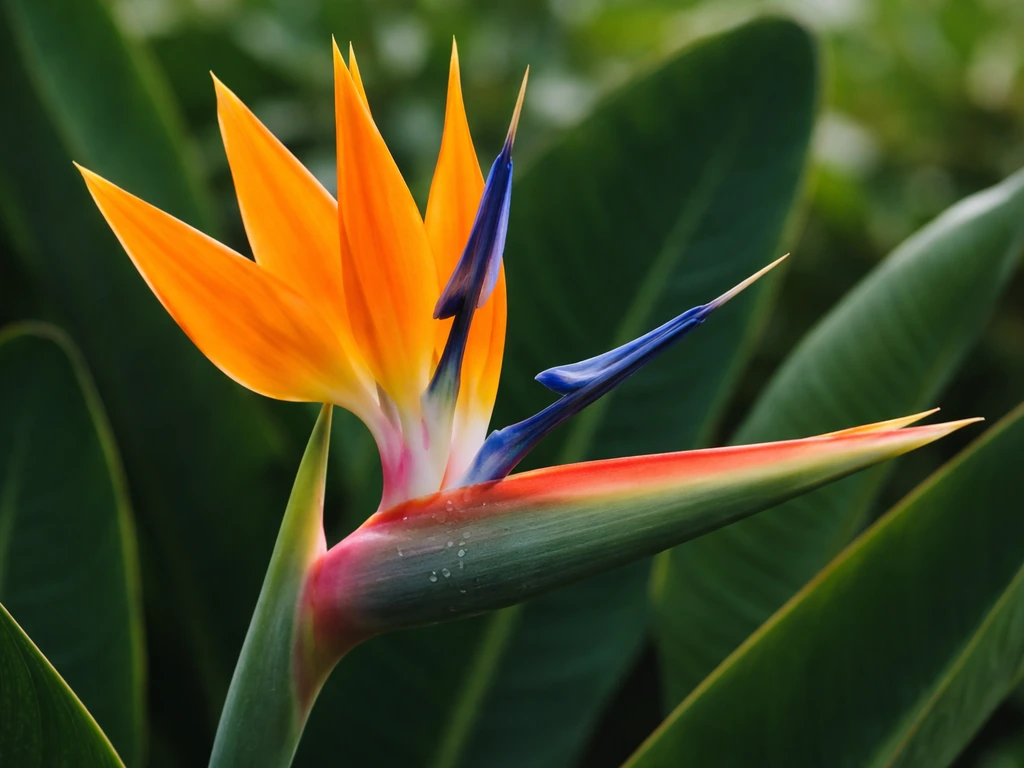
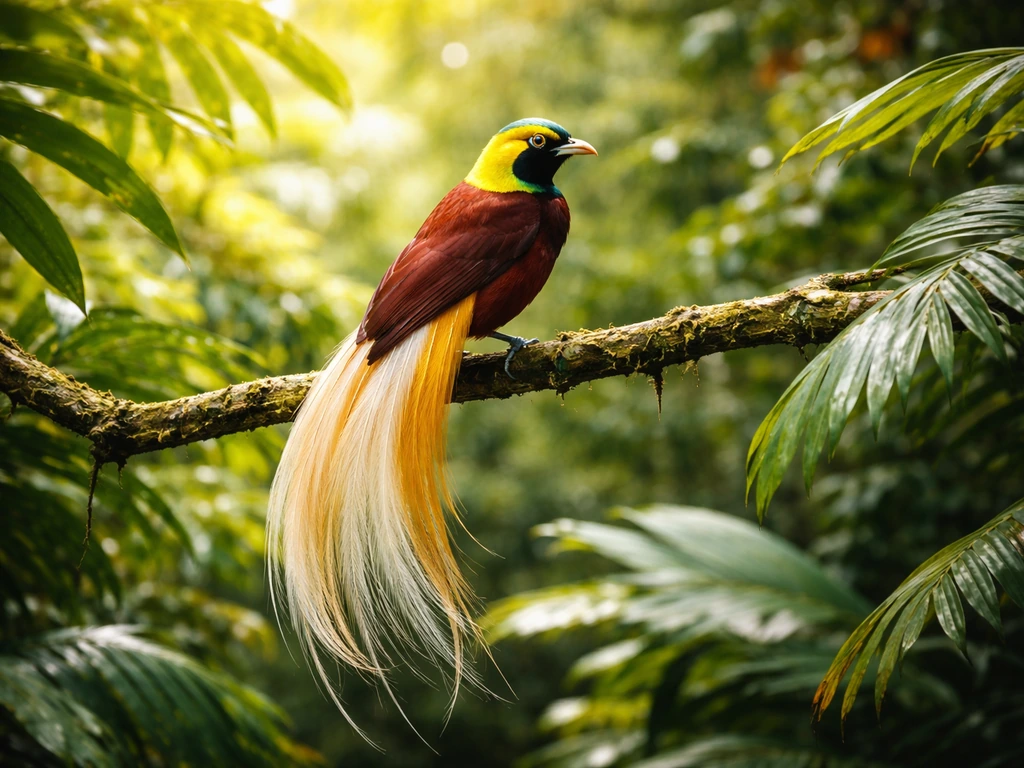
It is also worth noting that in related traditions, the bird of paradise carries its own distinct set of symbolic meanings, often centered on freedom, paradise, and divine beauty. While the bluebird and the bird of paradise are separate symbolic creatures with different cultural origins, both sit within the broader tradition of using birds as vessels for aspirational, spiritual meaning.
Johnny Carson’s “May the Bird of Paradise” line is a fun reminder that bird-themed blessings can show up in classic entertainment too. If you are also curious about the bird of paradise plant, its bloom time depends on the species and growing conditions. If you are also curious about bird of paradise meaning, it adds another layer to how different birds can symbolize aspiration, beauty, and uplift.
In some religious and spiritual traditions, the bird of paradise is associated with awe, beauty, and divine favor, so people sometimes connect it to uplifting, grace-filled meaning. If you are wondering what the bird of paradise symbolizes, it is another example of how certain birds become symbols of beauty, transformation, and aspiration across cultures. The bird of paradise flower meaning is often tied to themes of confidence, beauty, and attraction. They complement rather than duplicate each other.
How to Interpret a Bluebird Encounter Today
If you have just seen a bluebird, or found bluebird imagery that seems to keep showing up, the most useful starting point is to treat it as what psychologist Carl Jung called a synchronicity: a meaningful coincidence that invites reflection rather than a guaranteed message from the cosmos. The encounter is real; what you make of it is your interpretive work. That is not a diminishment. It is actually what makes symbolic encounters useful.
The context of the sighting matters. A bluebird perching quietly near you during a period of anxiety might read differently than one that crosses your path right before good news arrives. Pay attention to what was on your mind when you saw it, what you were hoping for, and what emotions the sighting stirred. The symbolism becomes most meaningful when it connects to something you are already processing.
One honest caution: confirmation bias is real. Once you decide bluebirds mean something good is coming, you will notice bluebirds more often and remember the times the good news followed while forgetting the times it did not. Treat the encounter as an invitation to open up to joy, not as a guarantee that a specific outcome is assured. That framing is both more honest and, practically, more useful.
A Simple Bluebird Intention and Reflection Practice

If you want to actively work with the "may the bluebird of happiness" blessing, here is a grounded, practical way to do it. This is not a ritual that requires special materials or beliefs. It is a structured reflection practice anyone can use.
- Center first. Before you begin interpreting or setting intentions, take two or three minutes to breathe slowly and let your thoughts settle. This is not ceremonial theater; it genuinely helps you move from reactive thinking to reflective thinking, and that makes the practice more useful.
- Name what you are hoping for. The bluebird of happiness is about joy and good news arriving. Ask yourself: in what area of my life am I most needing that right now? Naming it gives the symbolism somewhere specific to land.
- Set your intention aloud or in writing. Something as simple as "I am open to joy arriving in unexpected ways" or "I welcome good news" works fine. The phrasing matters less than the clarity of what you are actually opening yourself to.
- Notice encounters without forcing them. Over the next few days, pay gentle attention to bluebird imagery, blue birds in nature, or anything that evokes the feeling of the bluebird blessing. Do not hunt for signs; just stay receptive.
- Record what you notice. Keep a brief journal entry when something feels significant. Write down the encounter, your emotional state at the time, and any circumstances in your life that feel relevant. This gives you something to reflect on rather than just a feeling that fades.
- Reflect on the theme, not the prediction. After a week, look back at your notes. The question is not "did good news arrive?" but rather "did I move closer to being open to joy?" That is the actual work the bluebird symbol is inviting you to do.
You can also use the phrase itself as a kind of mantra or blessing. Saying "may the bluebird of happiness find me" in the morning is a way of orienting your attention toward openness and optimism, which research on mindset consistently shows has practical effects on how you perceive and respond to your day. The symbolism is a vehicle; the real mechanism is the shift in attention.
Clearing Up the Confusion Around the Phrase
The phrase "may the bluebird of happiness" can point in several directions depending on where you encountered it, and it is worth knowing what is what before you go deeper.
- Maeterlinck's 1908 play "The Blue Bird": This is the original literary source. The Blue Bird of Happiness is a specific character/object in a symbolic quest story. If you are reading about the play, you are in literary-symbolic territory, not personal spirituality practice.
- The 1934 song "Bluebird of Happiness": This is where the phrase entered mainstream American culture as a sentiment of hope and resilience. Hearing the song or quoting it is a pop-cultural reference first, a spiritual one second.
- Contemporary spiritual bluebird symbolism: Pages and books that interpret bluebird sightings as spiritual signs are working in the interpretive tradition, not making claims grounded in religious doctrine. This is the personal-meaning-making space, and it is legitimate as long as you hold it lightly.
- Actual bluebirds (the birds): Eastern Bluebirds, Western Bluebirds, and Mountain Bluebirds are real North American species. Their natural beauty and vivid blue coloring make them genuinely striking encounters in nature, separate from any symbolism you layer onto them.
- Other "blue bird" references in media: The phrase appears in video game contexts (like the "Season of the Blue Bird" update in Sky: Children of the Light, which was based on Maeterlinck's play), in jewelry and art, and in casual speech. Most of these trace back to the same literary origin but carry no specific spiritual instruction.
The safest disambiguation: if you are here for spiritual meaning and personal guidance, you are working with the interpretive tradition, which is real and valuable but distinct from formal religious teaching or literal ornithology. Keep that clarity and you will get more out of the practice.
FAQ
How should I respond when someone says “may the bluebird of happiness find you” to me?
A simple, warm reply works best, for example “Thank you, I really needed that,” or “I hope it does.” If you want to keep the meaning grounded, you can also add a practical intention, like “I’m open to good news and taking the next step.”
Is “may the bluebird of happiness” a guarantee that good news is coming soon?
No, it functions as a hope or invitation, not a promise. Treat it as a cue to notice opportunities and take helpful action, rather than waiting passively for a specific event to occur.
What if I keep seeing bluebird imagery but nothing “good” happens?
That can be a sign to reframe. Instead of expecting a particular outcome, look for smaller shifts you can influence now, such as repairing a relationship, sending an overdue message, or choosing rest. The symbolism may be pointing to openness and adjustment, not timing.
Does the meaning change if I saw a bluebird during a stressful moment?
Yes, context matters. In your article’s framework, a calm, quiet perch during anxiety often reads as reassurance that you are safe enough to steady yourself, while a brief crossing at a decisive moment can highlight a decision point you are already facing.
Can I use the phrase in a mantra or journal prompt, and what should I write?
Yes. Try a two-part prompt: first, “What emotion was I carrying when I encountered this blessing?” then “What would ‘happiness finding me’ look like in one concrete action today?” Keep it measurable, like making a call or setting a boundary.
Is it okay to interpret bluebird symbolism spiritually if I’m not religious?
Generally, yes. You can treat it as reflective meaning (a mindset cue) rather than doctrine. The key is to keep it distinct from literal claims, so it remains supportive and not demanding.
How do I avoid confirmation bias when interpreting bluebird signs?
Keep a brief log with two columns: “what I noticed” and “what action I took.” Also include counterexamples (times you saw bluebird imagery without an outcome) and ask whether the encounter still improved your choices or attention.
Is there a difference between the phrase and actually seeing a bluebird in the wild?
They can inform each other, but they are not the same. The phrase is social and intentional language (a blessing or toast), while a real sighting adds environmental context (time, mood, location). Use the sighting to reflect on your current situation, not to override your judgment.
What if I see other birds with similar symbolism, like “bird of paradise”?
That’s usually an opportunity to compare themes rather than merge them. The bluebird pattern is often about joy, calm, and hopeful news, while other bird symbols frequently emphasize freedom, awe, or transformation. Let each image keep its own “message” to avoid overgeneralizing.
Next Articles

Biblical Meaning of Bird of Paradise: Scriptural Themes
Explore the biblical meaning of bird of paradise using bird themes like God’s care, holiness, and devotion, with clear l
Bird of Paradise: When Does It Bloom and How to Get Flowers
Bird of paradise bloom timing, how often it flowers, and step-by-step fixes to trigger blooms and troubleshoot no-flower
May the Bird of Paradise Meaning: Symbolism and Blessings
Meaning of may the bird of paradise: a blessing for joy, good fortune, love, freedom, and authentic living, with example