If you searched for 'Celtic Thunder bird without wings meaning,' you're almost certainly looking for the song 'A Bird Without Wings' from Celtic Thunder's album Act Two, and its opening lyric: 'Like a bird without wings / That longs to be flying.' The symbolism is about longing, limitation, and the ache of being grounded when your spirit wants to soar. That's the core of it. But the phrase carries a lot more weight when you layer in what Celtic tradition actually says about birds and what 'thunder' as a cultural concept adds to the picture, so let's unpack all of it.
Celtic Thunder Bird Without Wings Meaning and Symbolism

Eleanor Hartwell
13 May 2026
Where the Phrase Comes From

Celtic Thunder is an Irish performance group whose shows lean heavily into visual drama: ancient stone pathway stage sets, theatrical lighting, and a choir aesthetic that evokes both bardic tradition and modern vocal performance. The phrase 'bird without wings' is not a Celtic proverb or ancient folk saying. It comes directly from their Act Two album, where 'A Bird Without Wings' is a featured track. The song opens with the image of a bird that longs to fly but cannot, which immediately frames the whole piece as a meditation on desire blocked by circumstance.
That said, even if the phrase originated in a contemporary performance context, it draws on symbolism that is genuinely ancient. Celtic Thunder didn't invent the bird-without-wings image from nothing. The group's whole artistic identity is built on channeling cultural and emotional archetypes that resonate across generations. So when people search for the 'meaning,' they're often doing two things at once: trying to understand a lyric, and also feeling the pull of an image that means something personal to them. Both questions deserve a real answer.
If you want to confirm the exact lyric source, the song is listed on Shazam under Celtic Thunder and has been arranged for Scandinavian choral ensembles, which tells you how far it has traveled. The opening line pattern 'Like a bird without wings / That longs to be flying' is what you're looking for in any lyric archive or streaming platform.
Thunder and Birds: The Voice That Shakes the Sky
In Celtic mythology, thunder was never just weather. It was the voice of the divine, specifically associated with Taranis, the thunder god whose name literally translates to 'thunderer.' Taranis was depicted carrying a wheel, symbolizing fate and the turning of cosmic cycles. Thunder in Celtic belief was a communication, something the gods sent when they wanted to be heard. It was loud, impossible to ignore, and it arrived without warning. Shazam — “A Bird Without Wings” song details notes that shazam lists “A Bird Without Wings” as released as part of the album “Act Two,” and reproduces the lyrics beginning with “Like a bird without wings / That longs to be flying …”.
Birds were seen as the creatures most capable of carrying that kind of message. They lived between the earth and the sky, between the human world and the otherworld. In Celtic culture, birds were essentially divine couriers, and their calls were sometimes treated with the same interpretive seriousness as thunder itself. So the pairing of 'Celtic Thunder' with bird imagery is not accidental or merely decorative. It echoes a tradition in which voice, sound, and flight are all part of the same spiritual grammar.
Thunder as a symbol in Celtic contexts also carries urgency. When you hear thunder, you pay attention. The 'thunder' in Celtic Thunder's name signals exactly that kind of emotional force: the group's music is meant to strike you, to announce something. A bird paired with that thunder becomes something more than a pretty image. It becomes a declaration, or in the case of a bird without wings, a lament.
What 'Bird' Means in Celtic and Cross-Cultural Symbolism
Across virtually every culture that has a relationship with birds, the bird is a soul symbol. In Celtic tradition, birds moved freely between the world of the living and the realm of the dead. The crane, for instance, was associated with wisdom, patience, and otherworldly knowledge. The wren was tied to both mischief and prophecy. The raven was a shapeshifter, a trickster, and a messenger depending on which part of the Celtic world you were in. What all of these birds share is the capacity for flight, which stands for freedom, spiritual movement, and the soul's ability to transcend ordinary life.
In Christian and biblical symbolism, birds represent the Holy Spirit (the dove), resurrection (the phoenix in early Christian allegory), and divine care (the sparrow). In Native American traditions, specific birds carry specific medicine, but the overarching principle is that birds are intermediaries between humans and the sacred. In Egyptian mythology, the Ba, one of the soul's aspects, was depicted as a human-headed bird. The pattern is nearly universal: birds are what the spirit looks like when it's free.
That's exactly why the image of a bird without wings lands so hard emotionally. You take the symbol of freedom and remove the very thing that makes freedom possible. What you're left with is a spirit that still wants to fly, that still has the instinct and the longing, but cannot act on it.
What a Bird Without Wings Actually Symbolizes
A bird without wings is one of the most potent images in symbolic language because it holds two truths in tension simultaneously. The bird still exists. It is still a bird, still carries the essence and identity of a creature meant to fly. But it is grounded, unable to access what it most essentially is. That tension is the symbol's entire power.
In practical symbolic terms, a bird without wings tends to represent one or more of the following experiences, and you'll likely feel which one fits your situation immediately when you read them.
- Blocked calling or purpose: You know what you're meant to do or be, but circumstances (fear, finances, relationships, health, timing) are preventing you from acting on it.
- Resilience without external conditions: The bird is still a bird even without wings. Your identity and worth don't depend on what you can currently achieve or access.
- Longing as a spiritual signal: The ache of wanting to fly is itself meaningful. In Celtic belief, longing (a concept closely related to the Welsh 'hiraeth') is not just pain but a kind of homing signal pointing toward what matters most.
- A season of waiting: Not all birds in mythology fly immediately. Some are in a period of transformation, like a chrysalis stage, grounded not because they are broken but because the time hasn't come.
- Protection through limitation: In some interpretive frameworks, being kept earthbound is a form of divine protection, holding you in place until the right path opens.
- Inner freedom despite outer constraint: The deepest reading is that the bird's nature cannot be removed by removing its wings. The spirit of flight, the longing, the identity, all of that remains.
The Celtic Thunder lyric leans into the longing interpretation. 'That longs to be flying' is the key phrase. The bird knows what it is. It hasn't forgotten. The longing itself is evidence of identity. If you didn't know what you were made for, you wouldn't feel the absence of it so acutely.
How to Interpret This in Your Own Life Right Now
Symbolic interpretation only becomes useful when it meets something real. Here's how to take the bird-without-wings image and apply it to whatever brought you to this search today. Celtic Thunder “About” page (official site) notes that celtic Thunder’s official site describes their concept as assembling a group to perform songs reflecting a shared Celtic heritage, and notes concerts use lighting effects, choreography, and stage sets resembling “an ancient stone pathway.”.
- Name the wings that feel missing. What specific thing feels blocked or inaccessible right now? A relationship, a career move, a creative project, a sense of belonging, a spiritual practice? Get concrete. The symbol only works when it has something specific to reflect.
- Ask whether the grounding is external or internal. Are you being held back by something outside yourself (a situation, another person, a lack of resources), or is the limitation coming from fear, self-doubt, or old conditioning? The answer changes what comes next.
- Notice if the longing is pointing somewhere. In Celtic symbolism, longing is directional. It's not just pain for pain's sake. If you feel a strong pull toward something and keep getting stopped, that pull is information. Where is it pointing?
- Check the timing. Celtic tradition has a strong relationship with seasons and cycles. Sometimes being a bird without wings is a winter state, not a permanent condition. Ask yourself: is this a permanent wall, or is this a season of preparation?
- Look for repeated bird encounters. If you've been noticing birds, feathers, or bird imagery before landing on this phrase, that pattern of repeated signs is worth paying attention to. Celtic belief held that the world communicates through repetition. One bird sighting is a moment. Three or four is a conversation.
The emotional register of the Celtic Thunder song is grief mixed with hope. That combination is important to honor. You don't have to rush to the 'hope' part. Sitting with the grief of knowing what you want and not having access to it yet is itself a meaningful act in Celtic spiritual frameworks, where lamentation was considered sacred, not something to skip past.
Grounding Rituals and Affirmations to Work With This Symbol

If this image is resonating with where you are right now, here are a few practical things you can do to work with it intentionally rather than just feeling it passively.
A Simple Ritual for the Grounded Bird
Find a feather, or a drawn image of a bird, and place it somewhere visible: your desk, your window, your altar if you have one. A feather is particularly useful here because it is the part of the bird most associated with flight, and it has separated from the bird without destroying either. The feather still carries the memory of flight. Let it remind you that your nature doesn't disappear just because your wings feel clipped right now. In Celtic folk practice, feathers were sometimes kept as protective objects, believed to carry the spirit of the bird they came from.
Affirmations That Actually Fit This Symbol
Affirmations work best when they match the emotional truth of where you are, not where you wish you were. For the bird-without-wings phase, these are more honest and therefore more effective than forced positivity.
- I am still the bird, even when the wings are missing.
- My longing is not weakness. It is a map showing me where I belong.
- Being grounded right now does not mean being groundless.
- The season will turn. I am not stuck. I am gathering.
- My spirit knows how to fly. I trust it to find the right moment.
Journaling Prompt for Right Now
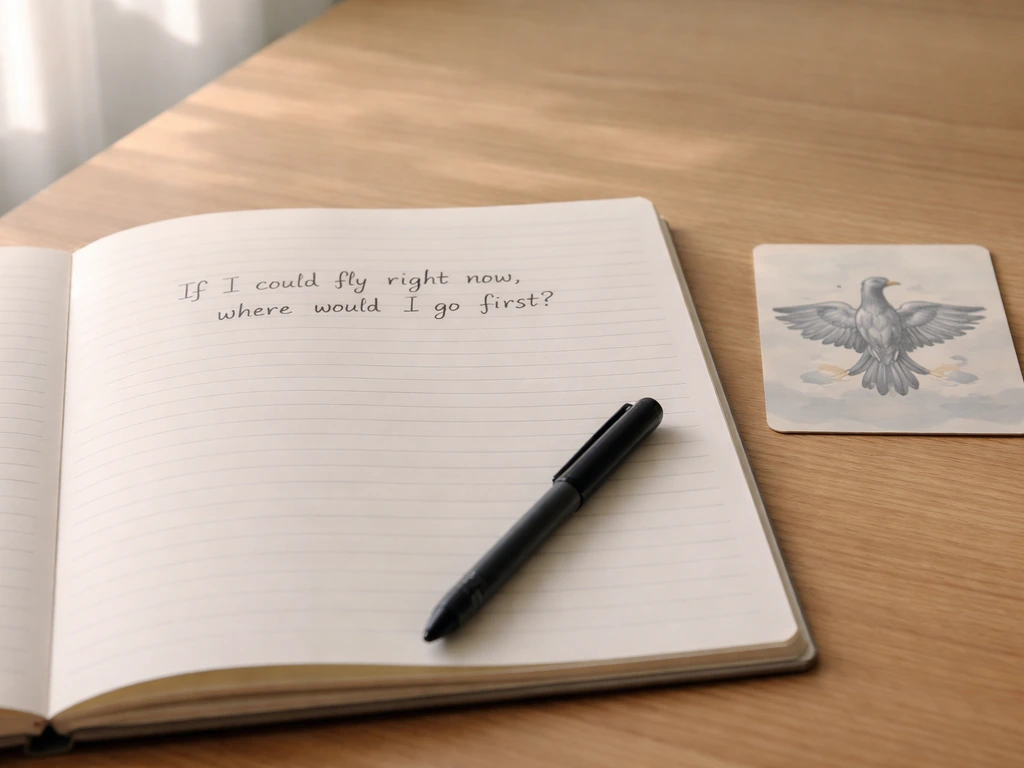
Write this question at the top of a page: 'If I could fly right now, where would I go first?' Don't censor or analyze. Just write. What comes out is the direction your longing is actually pointing, which is usually the most important piece of information you need.
Related Bird Symbols Worth Comparing
The bird-without-wings image doesn't exist in isolation. Here's how it sits alongside other bird symbols that often come up in the same conversations.
| Symbol | Core Meaning | How It Relates to Bird Without Wings |
|---|---|---|
| Feather (found or given) | Connection to the spiritual realm, lightness, a message carried from beyond | The feather is what remains of flight. It's a reminder that the capacity for transcendence is still present, even when full flight isn't possible. |
| Nesting bird | Home, preparation, safety during a vulnerable phase, impending new life | The nesting bird is grounded by choice for a season. It echoes the 'waiting for the right time' interpretation of the wingless bird. |
| Bird in flight (open sky) | Freedom, liberation, soul in motion, calling fully expressed | The direct opposite of the wingless bird, and the goal the wingless bird is longing toward. Seeing this symbol in your life may signal the waiting is ending. |
| Crane (Celtic tradition) | Patience, long vision, crossing between worlds, wisdom earned slowly | The crane waits and watches. It moves only when the moment is right. A useful companion symbol when you're in a season of being grounded. |
| Wren (Celtic good luck bird) | Luck, sacred duty, boldness despite small stature, prophecy | The wren is tiny but considered the king of birds in Celtic lore. Size and apparent limitation don't determine what a creature is capable of. |
| Cardinal (good luck) | Hope, presence of a loved one passed, encouragement at a crossroads | Often experienced as a sign arriving at exactly the right moment, the cardinal is a winged omen of reassurance that fits naturally alongside the bird-without-wings longing. |
The Celtic good luck bird tradition, and birds as omens of fortune more broadly, shares the same foundation as the wingless bird symbol: birds are seen as messengers that cross between worlds and carry meaning with them. Whether a bird brings good luck by arriving or carries meaning by being absent of its wings, the interpretive logic is the same. In many traditions, a bird on a Christmas tree is tied to the idea of good luck and welcome signs during the season bird on Christmas tree good luck. If you're interested in how crane birds are linked with good luck, it's helpful to compare how Celtic and cross-cultural traditions treat birds as omens crane bird good luck. In some traditions people also interpret specific red bird gestures, like blowing a kiss, as a good luck sign, but it helps to pair that belief with your personal context. In Celtic folklore and modern lucky-bird traditions, a good luck bird is often treated as a sign to pay attention to timing and opportunity. The bird is always pointing at something beyond itself.
One more thing worth noting: in Celtic tradition, the most powerful bird encounters were often the unexpected ones, the bird that appeared at a threshold moment, at a crossroads, or just before a significant decision. If the image of a bird without wings arrived for you at a moment like that, it's worth treating the timing as part of the message, not coincidence. The longing it names is probably already yours. The symbol just gave it language.
FAQ
Is the “celtic thunder bird without wings” phrase an old Celtic saying?
No. The “bird without wings” image discussed in this topic is presented as coming from Celtic Thunder’s song “A Bird Without Wings,” and the “longing to be flying” line is the key lyric cue. If you find the phrase attributed to a Celtic proverb online, treat it as likely modern retelling rather than an older primary source.
What does “thunder” add to the meaning beyond the bird image?
“Celtic Thunder” functions as a pairing of two symbolic forces in the article’s framing, where “thunder” signals voice, urgency, and a divine announcement (and not just weather). In that interpretation, a wingless bird becomes the emotional message that the sound brings into awareness, grief alongside hope.
Does a bird without wings always mean longing, or can it mean something else?
A wingless bird can be read in different emotional directions depending on your lived context. If the feeling is mostly yearning, the symbol will land as identity and calling. If it’s mostly stuckness, it may reflect limitations, lack of resources, or a “not yet” season. The most useful check is whether the bird represents something you want to access, or something you already have but feel unable to use.
If the meaning feels different to me than it does to others, is that normal?
In the article’s approach, the symbol works well with “seasonal” timing, not just a fixed interpretation. For example, the same image can mean different things during a decision moment versus during recovery. Treat the moment you encountered the image as part of the message (threshold, crossroads, or after a loss), then let the interpretation shift with that context.
What’s a common mistake people make when interpreting this symbol?
A common mistake is to force the symbol into a single “positive” lesson too quickly. The article emphasizes honoring grief as part of the message, so if your body feels tight, flat, or numb, it usually means you need steadier acknowledgement rather than immediate action steps or affirmations that do not match your emotional truth.
How can I translate the symbolism into something actionable without overthinking?
If you want a practical reality test, use the exercise implied by the article: ask where you would go first if you could fly right now, then treat the first honest answer as information, not a promise. If the answer is unrealistic, it can still point to the real need underneath (freedom, creativity, safety, belonging).
How is “bird without wings” different from general bird symbolism?
For a lot of people, this symbol can be confused with generic “bird soul” themes, but the wingless detail changes the emotional emphasis. Birds often represent freedom, while “without wings” specifically highlights the barrier that blocks freedom. That specificity matters for interpretation.
How do I verify I’m reading the right lyric version or source?
If you are checking accuracy, focus on the exact lyric phrasing (“Like a bird without wings” and “That longs to be flying”) and the specific song title, “A Bird Without Wings,” rather than the broader theme. If a source mixes multiple Celtic Thunder songs or different versions of lyrics, it can distort the meaning you are trying to look up.
Next Articles
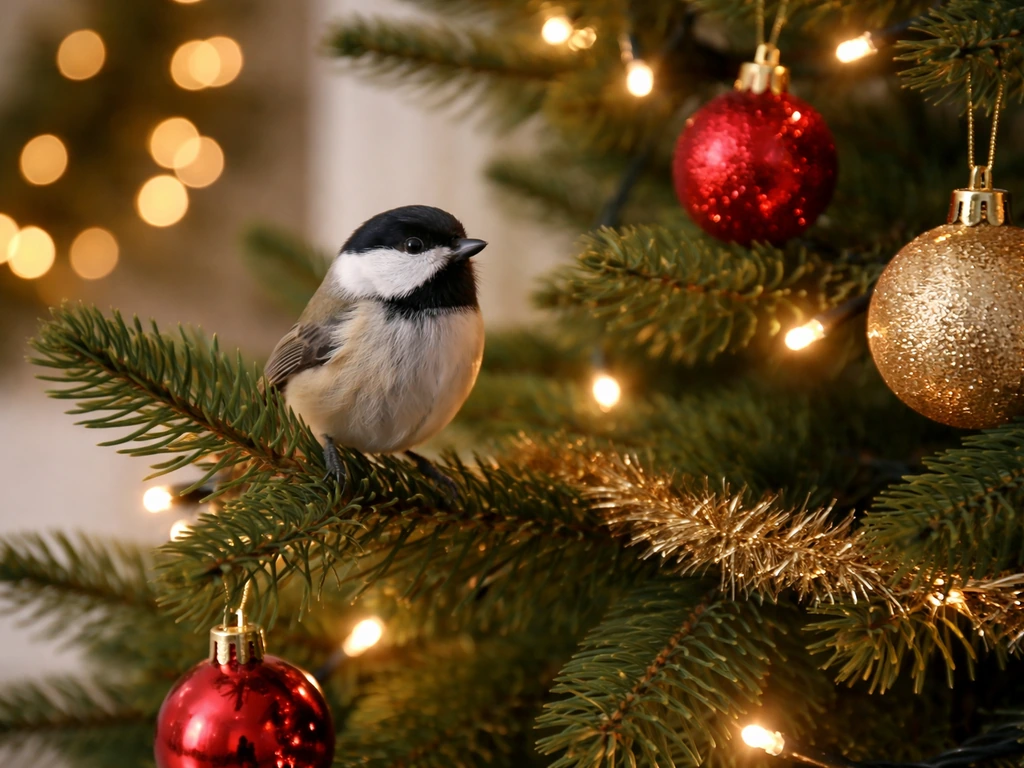
Bird on Christmas Tree Good Luck: Meaning and What to Do
Understand bird on Christmas tree good luck symbolism, context clues, and what to do safely when you spot it.
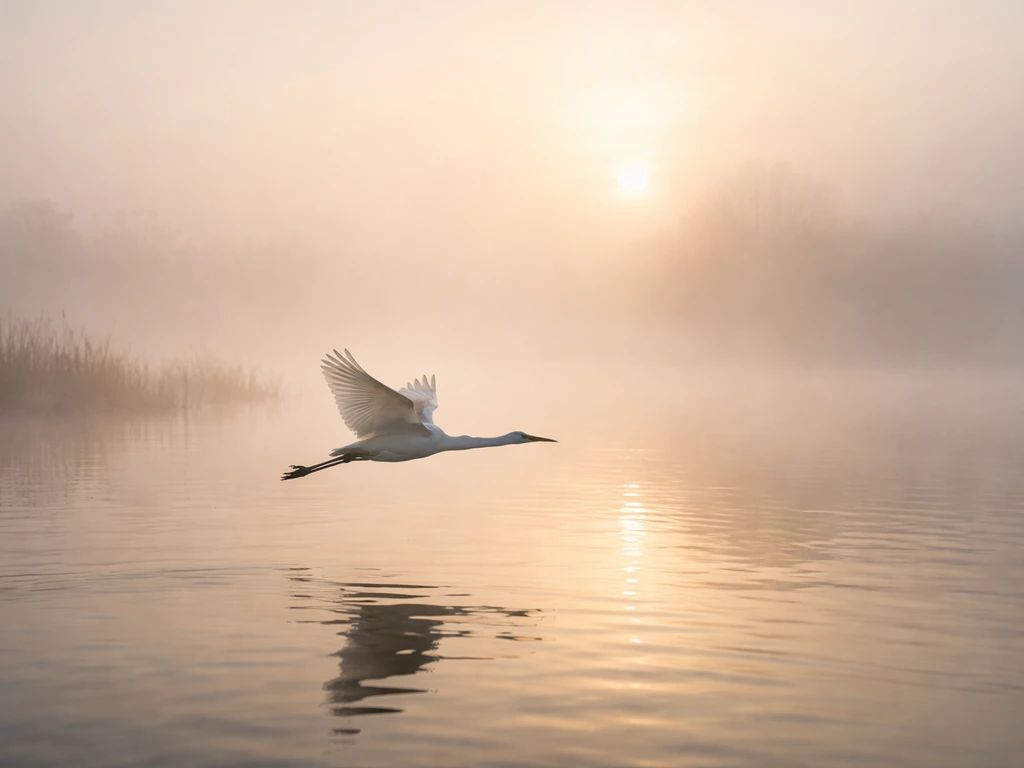
Crane Bird Good Luck Meaning and How to Apply It Today
Interpret crane bird good luck by context and behavior, then apply with simple intention, gratitude, and mindful steps.
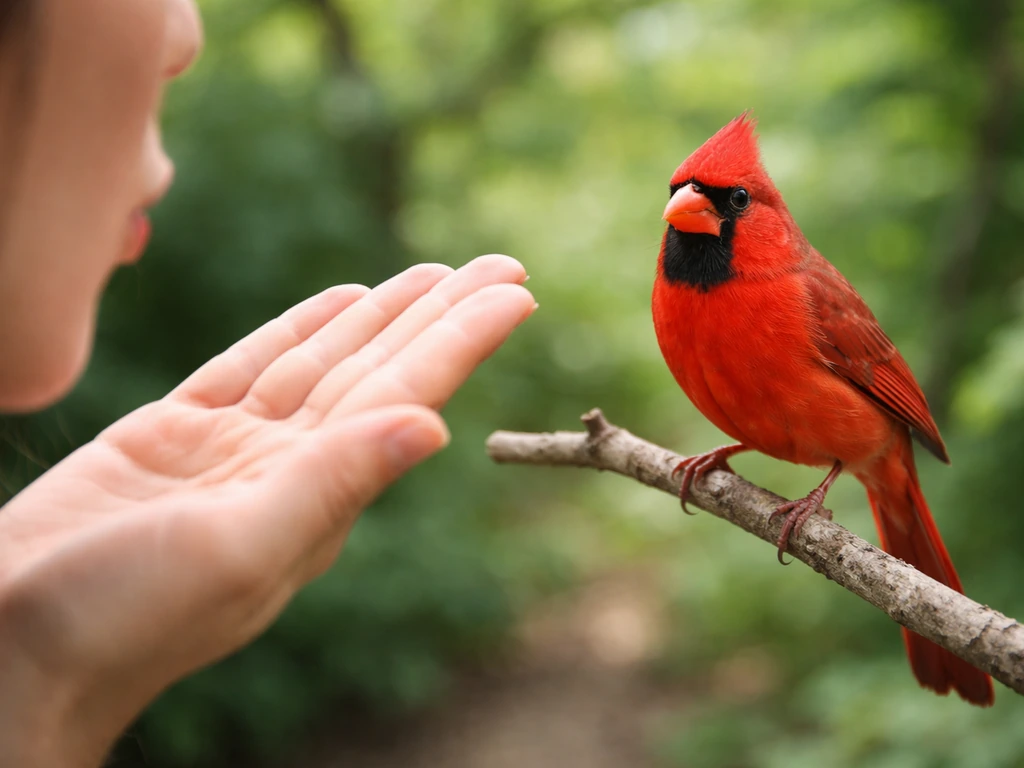
Is Blowing a Kiss at a Red Bird Good Luck? Meaning and What To Do
Meaning of blowing a kiss at a red bird as good luck, symbolic interpretation, what to watch for, and respectful steps.