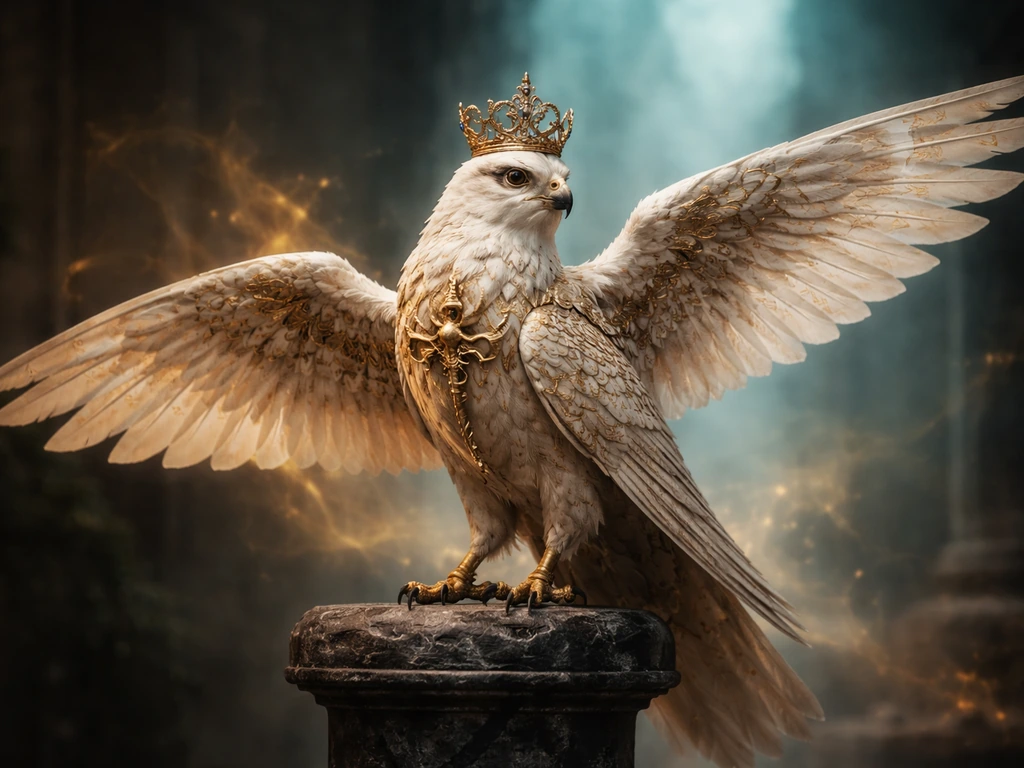
The phrase 'bird of Hermes' is a symbol rooted in classical mythology and medieval alchemy. At its core, it refers to a bird-like emblem associated with Hermes (or his Roman counterpart Mercury), representing communication, transformation, and the movement between worlds. Most famously, it appears in the Ripley Scroll, a 15th-century English alchemical manuscript, where the 'Bird of Hermes' is depicted as a crowned, human-headed winged figure and is widely understood to represent Philosophical Mercury, the principle of transformation at the heart of alchemical work. If you've come across the phrase 'I am the bird of Hermes' or simply 'the bird of Hermes meaning,' that's exactly the tradition you're tapping into.
Bird of Hermes Meaning: Symbolism, Messages, and How to Apply

Eleanor Hartwell
20 Apr 2026
What the bird of Hermes actually means
Hermes is one of the most layered figures in the entire Greek pantheon. He is the divine messenger, the guide of souls to the underworld (psychopomp), the patron of travelers, boundaries, commerce, eloquence, and trickery. Crucially, he is a liminal deity: a figure who exists at thresholds and crosses between worlds that others cannot traverse. That liminality is the key to understanding why a bird becomes his symbol. Birds occupy the same kind of in-between space, moving between earth and sky, between the visible and the invisible.
In alchemical tradition, the Bird of Hermes collapses all of that into a single image. The Ripley Scroll shows it standing on an orb of blue sea beneath a blazing sun, wings outstretched, with verses beneath that include the well-known line: 'The Bird of Hermes is my name, eating my wings to make me tame.' That image of a bird consuming its own wings is an allegory for self-restraint, inner transformation, and the disciplined refinement of volatile energy, what alchemists called 'fixing the Mercury.' In modern spiritual reading, the phrase is often used as a metaphor for taming wild potential and channeling it into purposeful work.
Hermes as symbol: messages, communication, and guidance

To really understand the Bird of Hermes, you need a feel for Hermes himself. In classical Greek and Roman tradition, his domains covered communication, languages, divination, financial gain, luck, travel, and the escorting of souls. The Romans called him Mercury, and his attributes were consistent across both cultures: the caduceus (a winged herald's wand), winged sandals (talaria), and a brimmed or winged hat (petasos). These aren't just decorative details. Each attribute signals speed, movement, and the ability to pass through barriers that bind others.
Hermes is also described as the inventor of language and, in some Roman literary traditions, the patron of lyric poetry, a kind of divine craftsman of meaning itself. Horace addressed odes to Mercury, framing him as an inventor of the lyre and a protector figure. That literary role matters here: the Bird of Hermes isn't just a messenger carrying a note from A to B. It's a symbol of meaning-making, of the capacity to translate experience into understanding. When you encounter the phrase, it often signals a moment of communication, a threshold crossing, or a call to pay attention to what's being transmitted.
How birds work as symbols: the bigger framework
Across virtually every symbolic tradition, birds carry three core associations: flight as spiritual ascent or freedom, the messenger role as a carrier of meaning between worlds, and transformation as creatures that move effortlessly between states (land, air, water in some species). These aren't arbitrary cultural projections. They're rooted in what birds actually do. A bird in flight is genuinely operating in a dimension unavailable to most creatures. That observable reality became the foundation for centuries of symbolic meaning.
Feathers, nesting, and specific bird behaviors all layer on top of that foundation in different traditions. In the case of the Bird of Hermes specifically, the alchemical dictionary tradition describes it as representing the 'ascension of mercurial vapors,' which is another way of saying volatile energy rising upward and seeking transformation. So when you read 'bird' in a Hermes context, think: messenger energy in motion, something volatile seeking to be refined, and a connector between different levels of reality.
The Egyptian connection: Thoth, the ibis, and Hermes Trismegistus
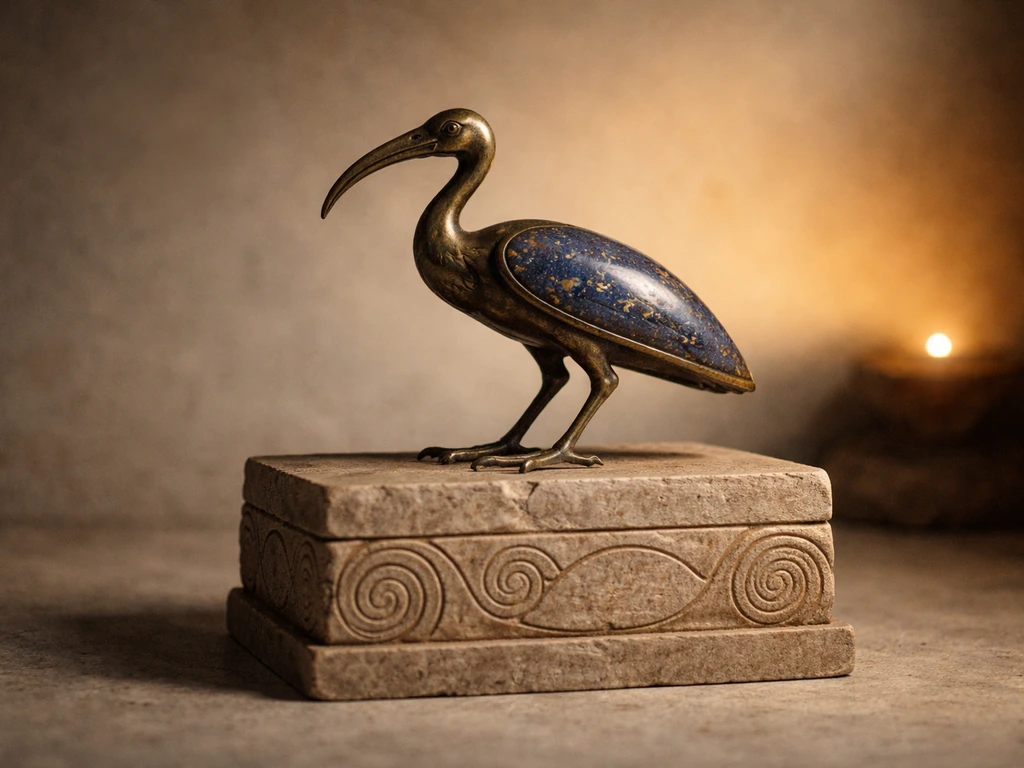
If you're researching the Bird of Hermes in any depth, you'll quickly run into the Egyptian god Thoth, and for good reason. The Greeks explicitly identified Thoth with Hermes, at least as early as Herodotus and officially formalized by around the 3rd century BCE. The merged figure, called Hermes Trismegistus, became the founding name of Hermetic philosophy and much of Western alchemy. Thoth was typically represented with the head of the African sacred ibis (Threskiornis aethiopicus), a bird that was reasonably common along the Nile in ancient Egypt.
So when you're looking at the Bird of Hermes, the ibis is genuinely in the background. Thoth was one of Egypt's oldest gods, patron of writing, wisdom, and divine record-keeping, functions that map neatly onto Hermes' domains of communication, languages, and divine messages. The ibis connection was noted explicitly in classical scholarship and appears in at least one reading of Horace's Odes 2.20, where allusiveness to Thoth's bird surfaces in a Mercury context. The Bird of Hermes, then, draws on both Greek and Egyptian traditions simultaneously, which is part of why the symbol is so rich and why it became central to alchemical and Hermetic writing.
How to interpret it when you encounter the phrase
Context matters enormously here. The phrase 'bird of Hermes' can show up in a few very different situations, and what it means for you depends on where you found it.
In a text, artwork, or manuscript
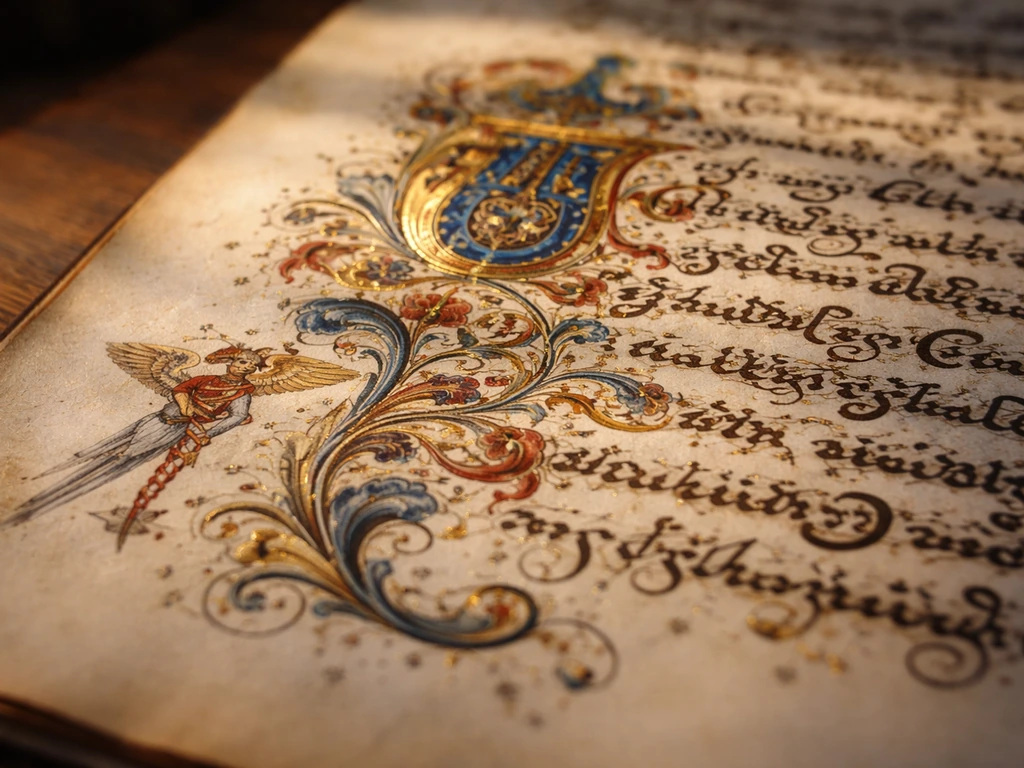
If you've seen it in alchemical or Hermetic writing, you're dealing with a technical symbol: Philosophical Mercury, the principle of volatility and transformation in the Great Work. The Ripley Scroll is the most iconic visual reference, showing a crowned winged figure with the specific image of self-consumption ('eating my wings'). In that context, the Bird of Hermes is about disciplined inner transformation, the refinement of raw energy into something purposeful. A Royal College of Physicians of Edinburgh heritage blog also interprets the Ripley Scroll’s “Bird of Hermes” eating its wing as a stabilising act in relation to mercury.
As a phrase or affirmation ('I am the bird of Hermes')
Modern practitioners and writers have repurposed the phrase as a kind of personal affirmation, leaning into the transformation and messenger themes. If you've encountered it as a statement someone applies to themselves, it typically signals an identification with Hermes energy: adaptability, communication, the ability to move between worlds or states of being, and the conscious taming of one's own volatile potential. It's a powerful phrase precisely because it contains both the wild (an uncontrolled bird in flight) and the disciplined (wings being consumed to create groundedness).
When an actual bird appears and feels significant

If you're reading this because a bird encounter felt meaningful and you found the phrase through searching, the interpretive framework is the same: look for what the bird's behavior was signaling. Was it at a threshold, a doorway, a boundary? Was it acting as if carrying something toward you or away? The Hermes framework invites you to read bird encounters as potential messages, invitations to notice what's crossing your threshold right now, what communication is waiting to be received, or what transition you're currently navigating.
Specific species or symbolic archetype? How to tell the difference
This is one of the most common points of confusion when people search for the Bird of Hermes. Some readers want a specific bird species. Others are looking for the broader symbolic concept. Here's how to orient yourself.
| Question | Specific Species Answer | Symbolic Archetype Answer |
|---|---|---|
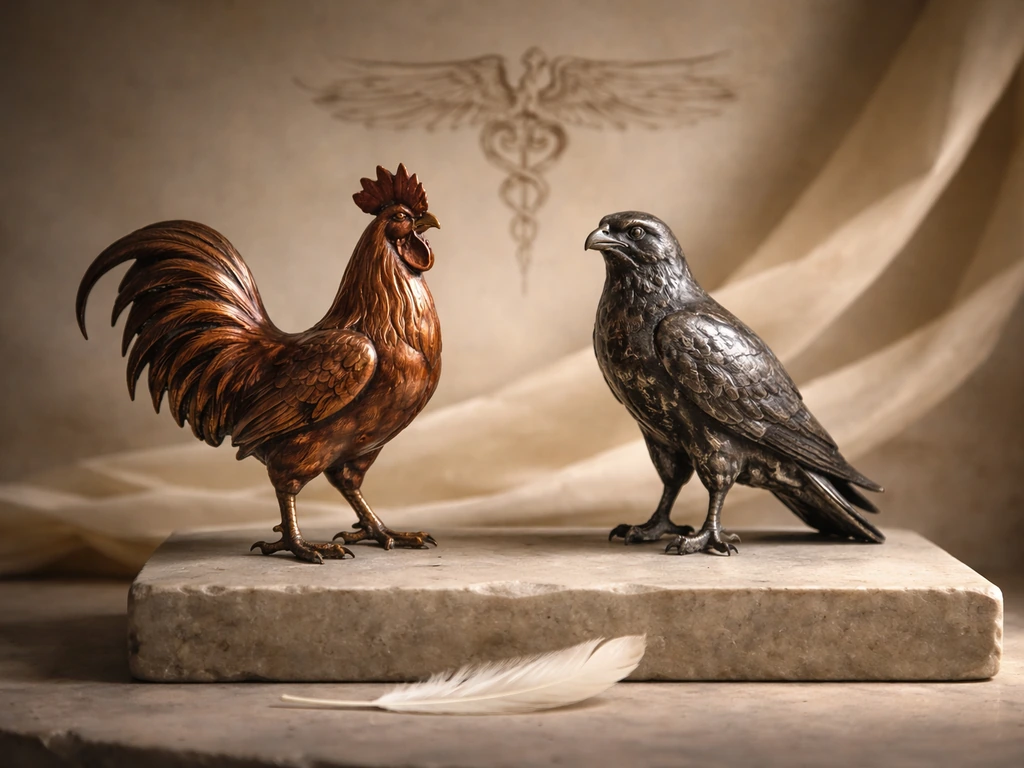
| What bird is literally associated with Hermes/Mercury? | Rooster (most commonly cited with Mercury), hawk (listed in some sources), ibis (via Thoth syncretism) | The Bird of Hermes is not one species; it's a composite alchemical emblem |
| What does the Ripley Scroll show? | A crowned, human-headed winged figure, not a naturalistic bird | Represents Philosophical Mercury, the transformative principle |
| Is there a real bird behavior to look for? | Roosters, hawks, and ibises all have documented symbolic roles across traditions | Any bird at a threshold or boundary can carry Hermes symbolism |
| What if I just want the 'Hermes bird' for practical symbolic work? | Focus on rooster (dawn, communication), hawk (speed, vision), or ibis (wisdom, Thoth) | Use the Bird of Hermes as an archetype: messenger energy, transformation, liminality |
The short recommendation: if you're working within classical Greek mythology, the rooster and the hawk are your most grounded species associations for Hermes/Mercury. If you're working with Hermetic or alchemical tradition, the Bird of Hermes is a symbolic archetype, not a single species. And if you're exploring the Egyptian dimension, the ibis is your bird, linked through Thoth. None of these are wrong. They're drawing from different parts of the same layered tradition. Related questions about what is Hermes' sacred bird, or what specific bird the goddess Hera honored, pull on adjacent mythological threads worth exploring separately. In the myths, Hera places the giant Argus eyes on a bird, reinforcing the theme of vigilant seeing and watchfulness goddess Hera honored.
Using the bird of Hermes for personal spiritual work
The most practical thing you can do with this symbol is use it as a reflective lens. The Bird of Hermes is fundamentally about what messages are moving through your life and what you're doing with volatile, transformative energy. These prompts are designed to help you work with that.
Journaling prompts
- What threshold am I currently standing at? What am I being asked to cross?
- What communication, message, or idea has appeared recently that I haven't fully received yet?
- Where in my life is there energy that feels volatile or untamed, and what would it look like to 'eat my wings' and begin disciplining it?
- What part of my own nature am I being asked to translate into something purposeful?
- If I identified with the Bird of Hermes today, what would that mean about the role I'm playing in my relationships, work, or inner life?
Meditation practice
Sit with the image from the Ripley Scroll: a crowned, winged figure standing on a sphere, wings outstretched beneath the sun, with the sea beneath. Let yourself inhabit both the wildness of the outstretched wings and the act of turning inward to consume them. The tension between those two states is the symbol's core teaching. You might visualize crossing a threshold, a doorway, a bridge, or a boundary, and notice what you're carrying across it. Hermes energy in meditation often feels like quickening or clarity, a sudden sense that something has been transmitted or received.
Practical next steps
- Note when you first encountered the phrase and what was happening in your life at that time. Hermes symbolism often surfaces at moments of transition or when an important communication is pending.
- Identify which layer of the tradition feels most alive for you: classical mythology (Hermes as messenger), alchemy (Philosophical Mercury and transformation), or Egyptian syncretism (Thoth, wisdom, the ibis). That will shape how you work with the symbol.
- If a specific bird encounter triggered your search, describe its behavior in writing. Was it at a border, a window, a doorway? Was it arriving or departing? Let the physical details guide the interpretation.
- Sit with the Ripley Scroll verse ('eating my wings to make me tame') as a mantra or contemplative text. What aspect of yourself is currently too volatile, and what would taming it free you to do?
- Consider whether the symbol is calling you to send or receive a message, to cross a threshold you've been avoiding, or to enter a transitional period with more conscious awareness.
Misconceptions worth clearing up
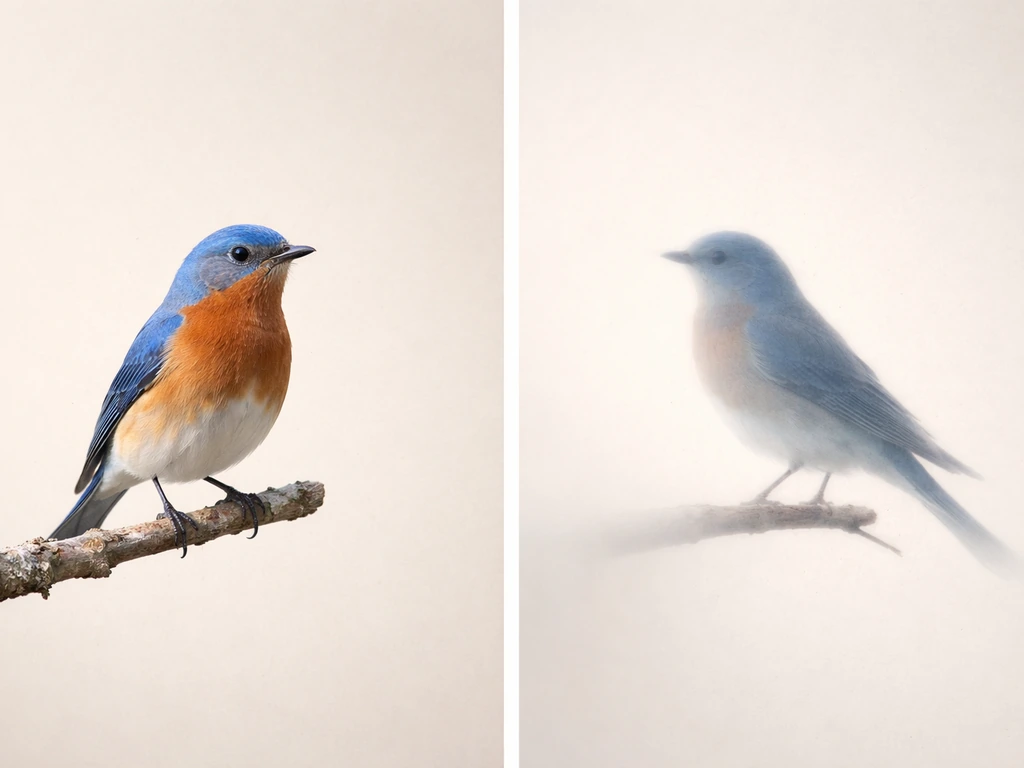
The biggest misconception is that 'bird of Hermes' refers to one specific, identifiable bird species the way 'cardinal' or 'blue jay' does. It doesn't. It's an alchemical and mythological archetype, a symbolic figure assembled from multiple traditions. Anyone telling you definitively that the Bird of Hermes is specifically a raven, or specifically an eagle, without acknowledging the Ripley Scroll source and alchemical context, is collapsing a layered tradition into something too simple.
Another common confusion is treating 'bird of Hermes' as interchangeable with 'Hermes' sacred bird' as a classical mythology question. If you're wondering what Hermes' sacred bird is in classical terms, this article also outlines the common species associations and the evidence behind them. Those are related but distinct questions. In case you are specifically chasing the symbol's symbolism from a different angle, see also the related guide on heraldic bird meaning. The classical mythology question points toward species with documented iconographic links to Hermes and Mercury, such as the rooster or hawk. The 'bird of Hermes' phrase, when used as a specific term, almost always points to the Ripley Scroll tradition and its alchemical meaning. Keeping those two frames separate will save you a lot of interpretive confusion.
Finally, some readers encounter the phrase through modern creative or pop-culture contexts, where it's been detached from its alchemical roots and used as a general metaphor for freedom or uncaging the self. That's a legitimate creative use, but it's worth knowing that the original symbol is actually about the opposite impulse: the disciplined containment of volatile energy, not its release. The bird consumes its wings to become tame. If you're drawn to the phrase, knowing that tension between freedom and discipline is at its heart gives you a much richer foundation to work from.
To verify any interpretation you're working with, trace it back to one of three sources: classical texts and iconography (for Hermes/Mercury as a mythological figure), the Ripley Scroll and alchemical dictionary tradition (for the phrase as a technical symbol), or Hermetic writing in the Thoth/Hermes Trismegistus lineage (for the Egyptian-Greek syncretism layer). If an interpretation can't be grounded in at least one of those, treat it as personal creative meaning-making, which is valid, but it's worth knowing the difference.
FAQ
When someone says “bird of Hermes meaning,” do they usually mean an actual bird or an alchemical symbol?
In the technical, alchemical sense, it most commonly points to Philosophical Mercury, the transformative principle described through the Ripley Scroll imagery. In that framework, the “bird” is not a literal species, it is a vehicle for describing volatility that must be disciplined and fixed through inner work.
What should I do if I encounter the phrase as a personal affirmation rather than a historical symbol?
If your meaning comes from a personal quote like “I am the bird of Hermes,” you can treat it as an identity statement for Hermes-style capacities (communication, threshold-crossing, translation), but still keep the alchemical caveat in mind. The symbol’s core tension is taming through inward discipline, not simply chasing freedom.
How can I apply “bird of Hermes” meaning to a real-life bird encounter in a structured way?
A practical approach is to note what was happening around the moment you noticed the phrase or the bird encounter. Hermes symbolism tends to activate when you are at a boundary, negotiating, learning a new “language” (literal or emotional), or receiving an unexpected message. Then map the bird behavior to the situation (arriving, hovering, circling, crossing a doorway, returning).
Does “eating my wings” imply something harmful, or is there a more constructive interpretation?
The “eating my wings” motif is often misread as self-harm or negativity. In alchemical symbolism it points to disciplined containment, where what is volatile and impulsive is consumed, refined, and made workable. If your first reaction is distressing, consider instead a meaning like self-regulation, focus, and turning raw energy into intention.
How do I avoid mixing up “Hermes sacred bird” species with the “bird of Hermes” Ripley Scroll meaning?
If you are trying to identify the bird species, the best decision aid is context. For classical Hermes/Mercury associations, writers often discuss specific candidate birds used in iconography (like rooster or hawk). For the exact term “bird of Hermes” as a phrase, most readers are actually referring to the Ripley Scroll archetype, not a single species.
If the symbol is about messages, how do I tell whether I am supposed to send, receive, or interpret?
Hermes imagery is also strongly about messages and interpretation, so avoid one-note conclusions. Ask what kind of communication is involved (spoken info, intuitive insight, synchronicities, or a boundary-crossing opportunity). Then check whether you are being called to send something, receive something, or translate something you already have.
What if I do not feel “transformed” right away after working with the bird of Hermes symbolism?
A common mistake is taking the symbol to mean immediate transformation with no required practice. In the alchemical reading, transformation is the result of a process, the disciplined “fixing” of volatile energy. If you do not see an external change, that can still be progress happening internally through clearer choices and steadier habits.
How should I handle modern interpretations that emphasize freedom without mentioning discipline?
Don’t treat modern uses as automatically wrong, but treat them as separate layers. When pop culture frames it as pure liberation, you may miss the original corrective point, discipline. A balanced application is to ask what freedom you want, then choose one concrete restraint or skill that makes that freedom sustainable.
How can I fact-check an interpretation I find online or in a reading?
If an interpretation claims the bird is a specific animal with certainty, ask what tradition it comes from. The layered model is: mythic iconography for Hermes/Mercury, the Ripley Scroll and alchemical dictionary tradition for the named archetype, and Hermetic writing for the Thoth/Hermes syncretism layer. If a claim can’t be tied to one of these, treat it as personal creativity rather than “the” meaning.
Next Article
What Is the Bird of Hermes? Name and Symbolic Meaning
Identify the Hermes bird and its name, plus symbolism for messages, travel, guidance, and how to apply it.