
The bird is the peacock. When Hera's giant watchman Argus Panoptes was slain by Hermes, Hera gathered his hundred eyes and blank" rel="noopener noreferrer">spread them across the tail feathers of her sacred bird, turning each feather tip into the shimmering, eye-like spot we still see today. Ovid put it plainly in the Metamorphoses: "Saturn's daughter spread their glister on the feathers of her bird, emblazoning its tail with starry gems." That is the complete answer, but the myth behind it is richer than the one-liner suggests, and the peacock's symbolic meaning that flows from this story is genuinely useful if you are trying to interpret an encounter or recurring eye-themed symbol in your own life.
The Bird With Hera’s Giant Argus Eyes Explained

Eleanor Hartwell
15 May 2026
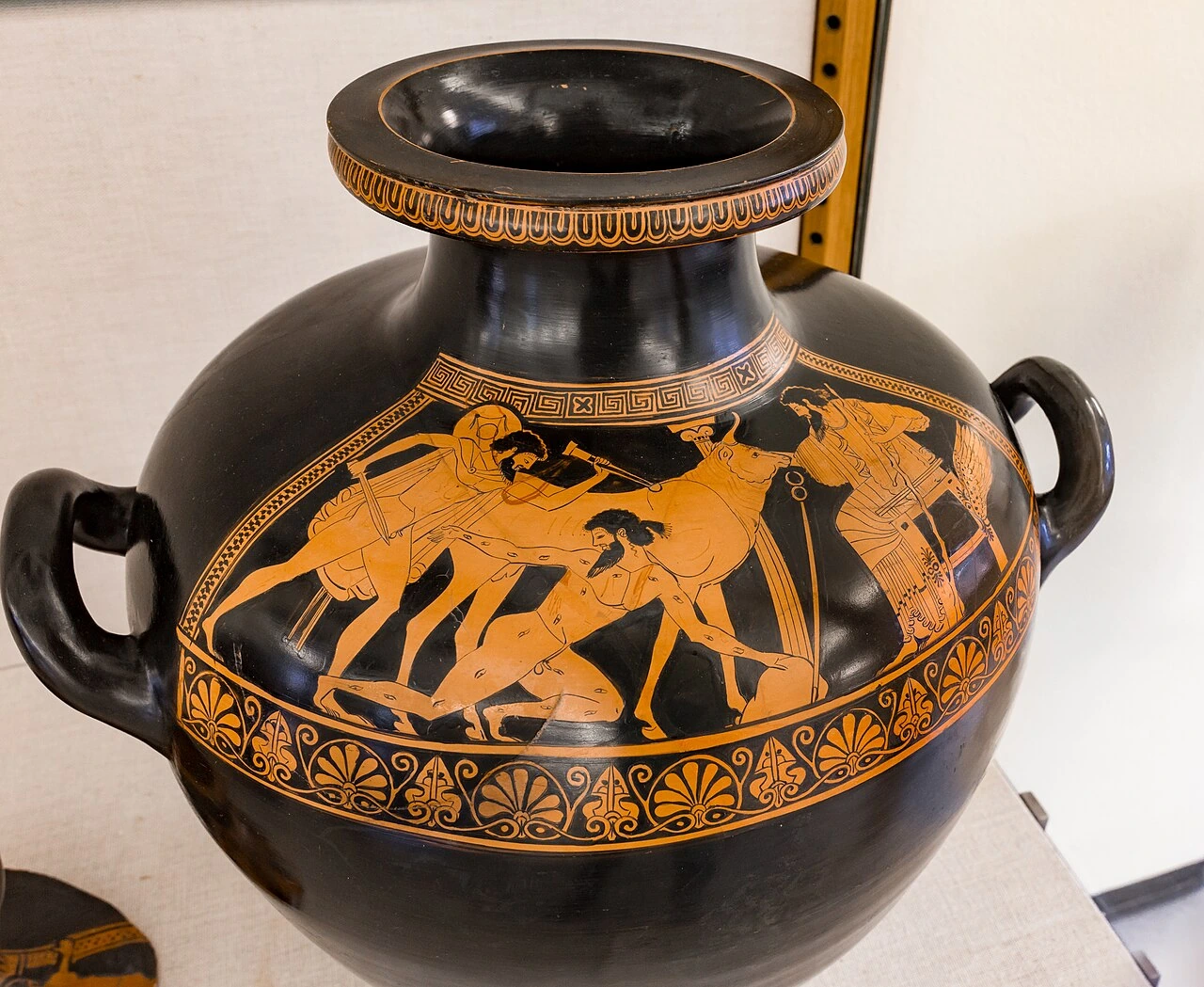
The myth of Hera and Argus Panoptes

Argus Panoptes, whose name translates roughly to "All-Seeing," was a giant whose body was covered with a hundred eyes. In the myth sequence best known from Ovid and catalogued on Theoi's classical texts library, Hera assigned Argus to guard Io, a mortal woman Zeus had transformed into a white heifer to conceal his affair. Argus was the perfect guard: because his eyes slept in shifts, he was never fully unconscious. Some eyes always stayed open, watching.
Zeus, wanting to free Io, sent Hermes disguised as a shepherd. Hermes used music and storytelling to lull each of Argus's hundred eyes to sleep one by one, then killed him. The epithet Zeus gave to Hermes after this act, Argeiphontes ("Argus-slayer"), appears in Homeric texts and is one of the clearest ancient anchors for this myth. In this story, Hermes is also the god whose sacred bird answer is tied to Hera's peacock and the Argus eyes Argeiphontes.
When Hera discovered Argus dead, she was grieved. The goddess did not let his vigilance go unrecognized. [She collected his eyes and placed them in the tail of her sacred bird, the peacock](https://en. wikipedia.
org/wiki/Peafowl), memorializing his watchfulness in a form that would endure.
How the eyes became the peacock's tail: the story mapped step by step
- Hera appoints Argus Panoptes, the hundred-eyed giant, to guard Io after Zeus transforms Io into a heifer.
- Argus keeps constant watch because his eyes sleep in rotation, never all at once.
- Zeus sends Hermes to neutralize Argus. Hermes plays music on his pipes, tells long drowsy stories, and systematically puts every eye to sleep.
- Once all hundred eyes are closed, Hermes kills Argus.
- Hera, honoring her faithful servant, takes the hundred glowing eyes and places them on the tail feathers of her sacred bird, the peacock.
- The eyes become the ocelli, the iridescent eyespots visible on every peacock tail feather to this day. Ovid describes them as 'starry gems,' and behavioral ecologists today call the same spots 'ocelli' from the Latin for 'little eyes.'
The ocelli on peacock tail feathers are not just decorative. Research in behavioral ecology confirms that the eyespots function as visual signals, and the great argus pheasant (a relative, discussed more below) has ocelli that create a convincing three-dimensional illusion when viewed closely. The mythological story and the biological reality point in the same direction: these are eyes, and they are meant to be seen.
What the peacock means as Hera's bird: symbolism rooted in the myth
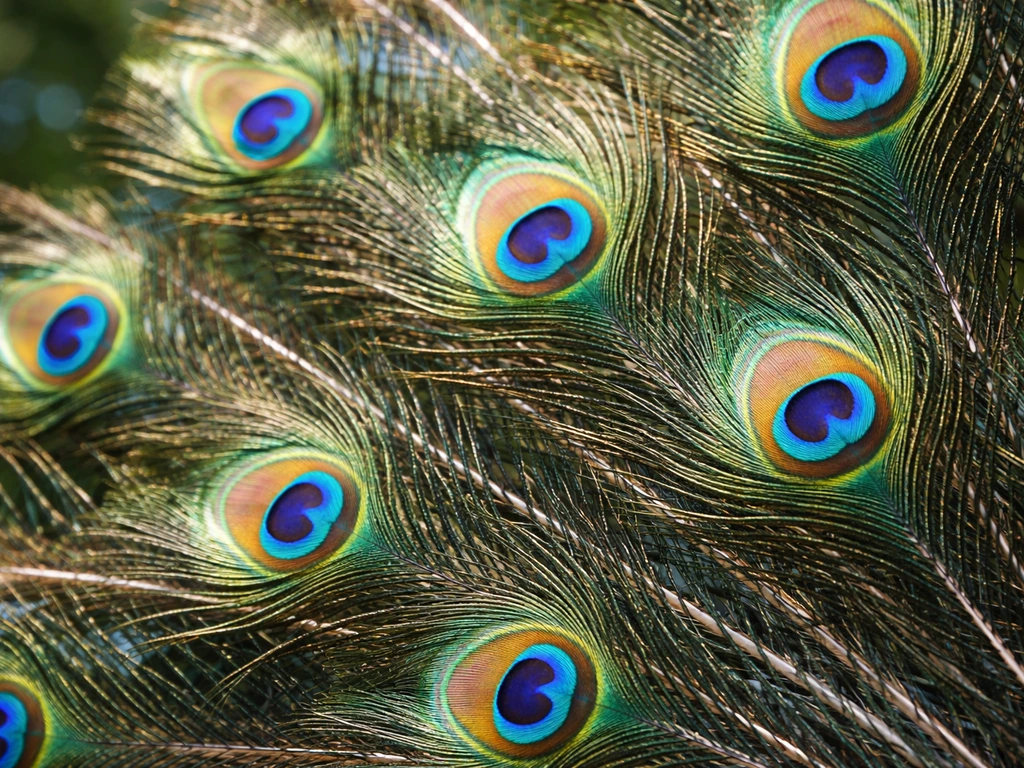
Because the peacock carries Argus's eyes, it inherits his primary attribute: watchfulness. In Greek tradition, Hera's peacock became a symbol of divine surveillance, the idea that nothing escapes the goddess's notice. If you are asking specifically for the heraldic bird meaning, the same eye-linked symbolism of vigilant presence carries over to how peacocks are used in coats of arms symbol of divine surveillance. The hundred eyes on the tail became a visual shorthand for omniscience, or at least for vigilance that cannot be fully evaded. Hera herself was associated with queenship, marriage, and the enforcement of divine order, and the peacock's eyed tail reinforced that her authority was always watching.
Beyond the Greek frame, the peacock's symbolic vocabulary expanded considerably as the bird moved through cultures. In early Christian iconography, the peacock became a symbol of immortality, partly because of a folk belief that peacock flesh did not decay, and partly because the eyes on its tail were read as the all-seeing eyes of God or the Church. In Hindu tradition, the peacock is the mount of the god Kartikeya and is associated with grace, protection, and the destruction of harmful forces. The peacock is also the national bird of India, where it carries strong associations with rain, renewal, and divine beauty.
What remains consistent across these traditions is the eye motif. Whether the context is Greek myth, Christian theology, or South Asian cosmology, the peacock's tail is read as a field of watching eyes, a symbol that presence is being observed, recognized, or protected. That thread runs directly back to Argus and the myth Hera set in motion.
The 'watching eyes' motif across other traditions
The idea that eyes confer power, protection, or surveillance is not unique to Greek mythology. Across cultures and time periods, eye symbols carry similar weight, which makes the peacock's ocelli feel mythologically resonant well outside Greece.
- Evil eye traditions: Britannica and Encyclopedia.com both document the 'evil eye' belief as appearing in ancient Greek and Roman literature and persisting through Jewish, Christian, Buddhist, Islamic, and Hindu traditions. The underlying premise is the same as the Argus myth: eyes hold power, and being watched by the right eyes can protect you while being watched by the wrong ones can harm you.
- Egyptian iconography: The Eye of Horus and the Eye of Ra are ancient protective symbols where a divine eye stands for both surveillance and defense. Amulets shaped like eyes were worn to deflect harm, functioning similarly to how Hera's peacock tail was understood as a field of watching, protective presences.
- Buddhist art: The 'eyes of the Buddha' painted on stupas across Nepal and Southeast Asia represent omniscient awareness, the idea that wisdom sees in all directions. The visual grammar is remarkably close to the peacock's all-directional eyespots.
- Native American traditions: Several traditions use feathers with eye-like markings as ceremonial objects associated with vision, spiritual insight, and the ability to see beyond the ordinary. The feather as a symbol of elevated perception connects to the peacock's eye-feather even across cultural distance.
- Hamsa and Nazar symbols: The hand with an eye at its center (Hamsa) and the blue glass Nazar amulet, used across the Middle East, North Africa, and Mediterranean cultures, are direct protective-eye symbols. A 2015 comparative study in the Journal of Contemporary Ethnography confirmed that these eye-based beliefs persist through active cultural transmission, not just as historical artifacts.
None of these traditions borrowed directly from the Argus myth, but they all independently arrived at the same conclusion: eyes embedded in protective objects or sacred animals create a field of watchful awareness. The peacock's ocelli sit at the intersection of all of these streams.
What it might mean if the peacock keeps showing up for you
If you are reading this because you had an encounter with a peacock, saw peacock imagery repeatedly, or kept encountering eye-themed symbols, the mythological frame gives you something practical to work with. The peacock is not a bird of vague general positivity. Its symbolism is specific: it points toward being seen, toward watchfulness, toward the question of what you are paying attention to and what is paying attention to you.
In a spiritual interpretation, a peacock encounter often invites you to examine visibility. Are you hiding something that deserves to be seen? Are you being observed in a way that feels protective or invasive? The Argus myth adds a layer: his eyes were placed there as an act of honoring service. If the peacock is showing up for you, it may be pointing toward recognition, either something in your life that deserves acknowledgment, or a situation where you need to pay closer attention yourself.
A simple journaling practice for a peacock encounter
- Write down the encounter in plain terms: where you saw the peacock or the eye symbol, what time of day it was, and what you were thinking about just before you noticed it.
- Ask yourself: what in my life right now feels unseen or unacknowledged? Write without editing for five minutes.
- Ask the opposite: what am I not paying attention to that deserves my full watchfulness? Note the first honest answer.
- Sit with the image of Argus's eyes, a hundred points of unwavering attention preserved and honored. What would it mean for your current situation to receive that kind of persistent, caring attention?
- Close with an intention statement. It does not have to be formal. Something like 'I am paying attention to ' or 'I am willing to be seen in ' is enough.
- Revisit the entry in three to seven days and notice whether circumstances shifted or whether new clarity arrived.
This kind of reflective practice treats the bird as a prompt rather than a verdict. The peacock does not tell you what to do. It points toward a question worth sitting with, which is exactly what good symbolism does.
Common confusion: which bird, and which Argus?
There are a few sources of genuine confusion around this topic, and it is worth clearing them up directly so you can feel confident in the answer.
The Argus pheasant confusion
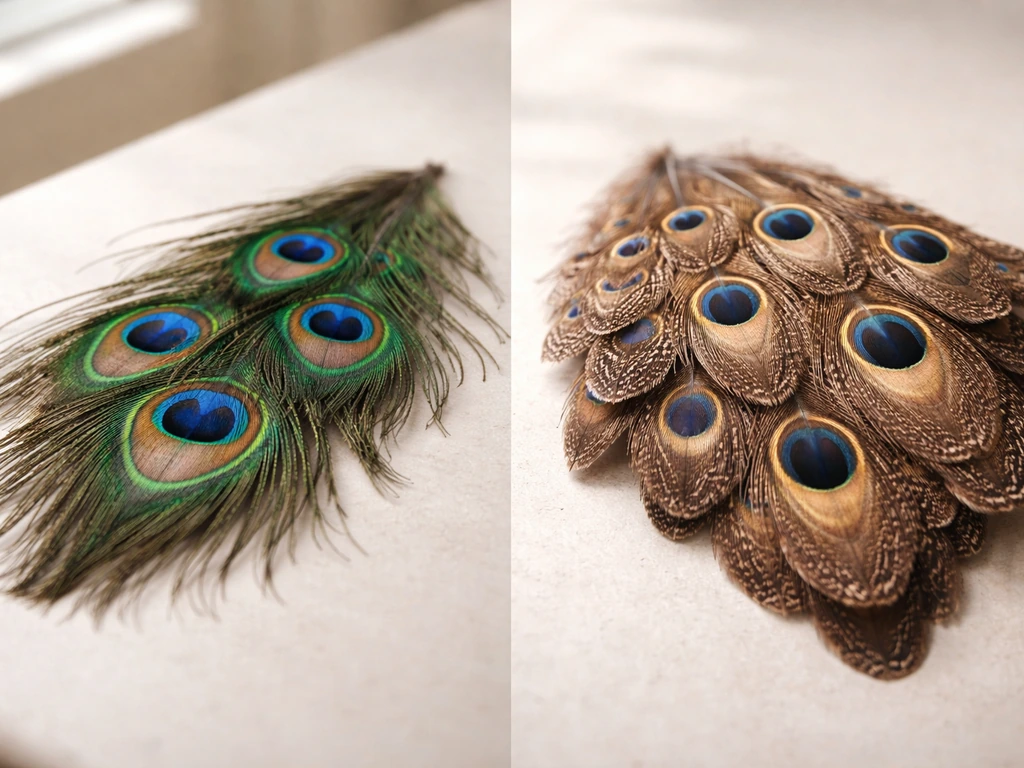
The great argus pheasant (Argusianus argus) is a real Southeast Asian bird named after Argus Panoptes because its wing feathers are covered in elaborate, three-dimensional-looking ocelli that strongly resemble eyes. Reddit threads and casual mythology discussions sometimes suggest this pheasant is the 'true' bird of the myth, or imply the myth applies to both birds equally. It does not. The canonical myth sources, including Ovid's Metamorphoses, Theoi's classical texts, Britannica, and Encyclopedia.com, all specify the peacock (Pavo cristatus) as the bird Hera honored. The argus pheasant is named for the visual resemblance to the myth's eyespot theme, but it is not the bird in the myth itself. The distinction matters if you are citing the myth accurately.
Which Argus are we talking about?
Greek mythology has more than one character named Argus. Argus Panoptes, the hundred-eyed giant, is the one connected to Hera and the peacock. There is also Argus, the faithful dog of Odysseus in the Odyssey, who dies after finally seeing his master return. And Argus is sometimes named as the shipbuilder who constructed the Argo for Jason and the Argonauts. None of those other figures are connected to the peacock or to Hera's memorialization story. When the question is 'the bird where Hera placed the giant Argus eyes,' the Argus in question is always Argus Panoptes specifically.
Is this connected to the bird of Hermes?
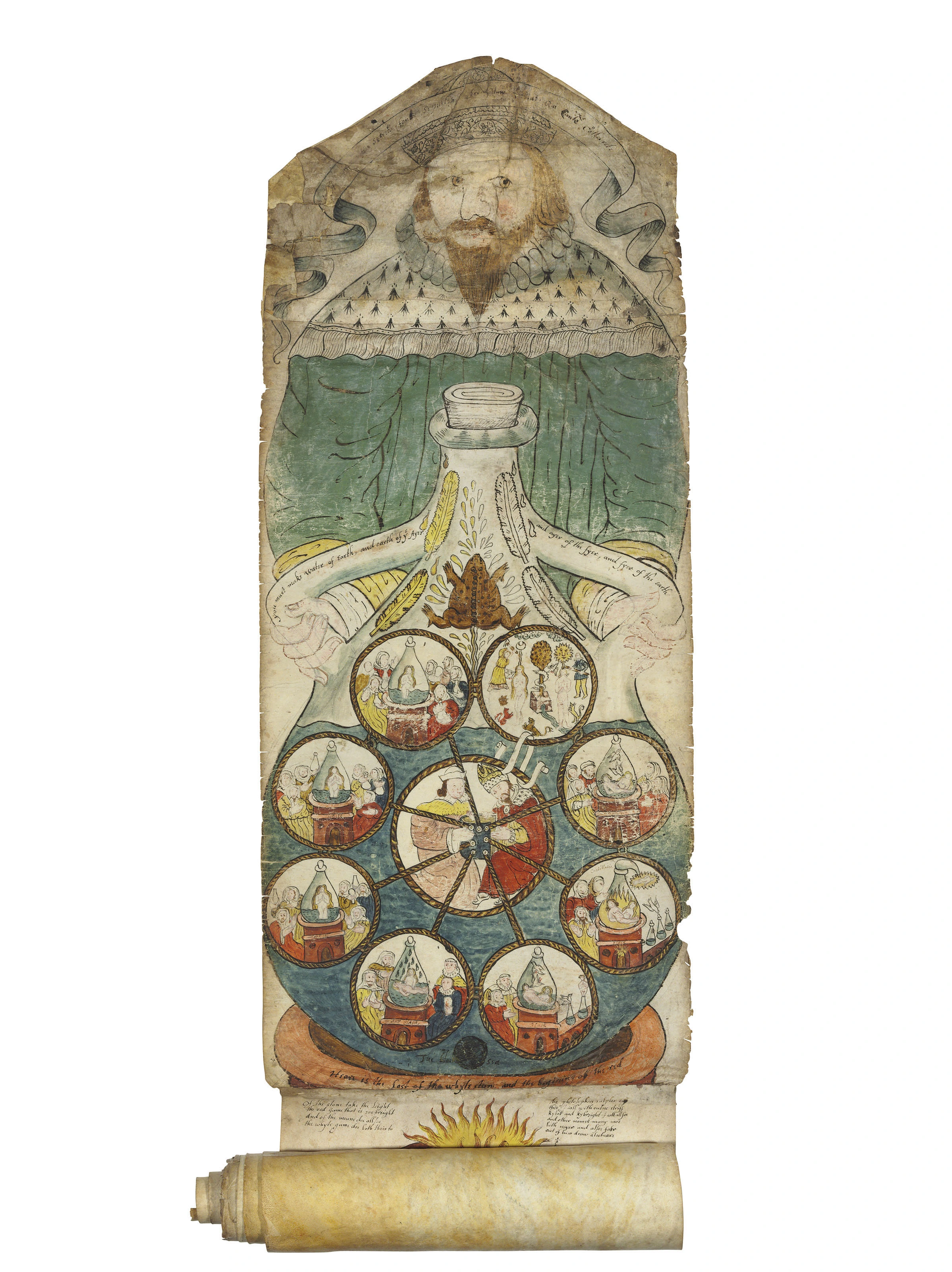
Hermes plays a pivotal role in this myth as the god who kills Argus, which is how he earns the epithet Argeiphontes. In the same myth-halo of Hermes symbolism, you might also see the phrase the bird of Hermes is my name ripley scroll used to connect Hermes with eye-like vigilance.
If you are wondering about the “bird of Hermes” meaning, it is typically another name or interpretation connected to Hermes’ symbolism rather than the peacock Hera memorialized bird of hermes meaning. But Hermes has his own sacred bird (most often identified as the ibis or sometimes the rooster, depending on the tradition), and that is a separate symbolic lineage. The peacock belongs to Hera. Hermes is a figure in the Argus story, not the owner of the peacock's symbolism.
The two divine bird associations are worth keeping distinct.
Quick reference: the core myth details at a glance
| Element | Detail |
|---|---|
| The bird | Peacock (Pavo cristatus) |
| Whose sacred bird | Hera (Roman name: Juno) |
| Who was Argus | Argus Panoptes, a hundred-eyed giant |
| What Argus did | Watched over Io (a mortal woman turned heifer by Zeus) |
| Who killed Argus | Hermes (Roman name: Mercury), sent by Zeus |
| How Hermes killed Argus | Put all hundred eyes to sleep with music and stories, then slew him |
| What Hera did with the eyes | Placed them on the tail feathers of her peacock |
| What the eyes look like | Ocelli: iridescent eyespots on each tail feather |
| Primary text source | Ovid, Metamorphoses, Book 1 |
| Common confusion | Argus pheasant (named after the myth but not the bird in it) |
The peacock's tail is one of the most visually striking things in the natural world, and it turns out the mythology behind it is equally striking. A grieving goddess, a loyal giant, a divine act of preservation: the eyes on those feathers carry a story that has been recognized across cultures for over two thousand years. Whether you are here to solve a crossword clue, confirm a mythology detail, or make sense of a repeated encounter with peacock imagery, the answer and the meaning point in the same direction.
FAQ
If I see a peacock with “eye” spots, does the myth mean I’m being watched by Hera specifically?
Not necessarily. The Argus story explains why the peacock’s eyes are linked to vigilance, but in most practical readings it functions as a general prompt about awareness and accountability, not a direct claim of Hera’s personal involvement.
What’s the simplest way to describe the story correctly if I’m writing it down or answering a trivia question?
Name the peacock, connect it to Argus Panoptes as Hera’s hundred-eyed guardian, then note that Hermes kills Argus and Hera places the eyes on the peacock’s tail as a memorial.
Is the “eyes” idea about the entire tail, or only the individual feather tips?
It’s the ocelli, the eye-like markings at the ends of tail feathers, that carry the “Argus eyes” symbolism. The bird’s overall display draws attention to them, but the iconic feature is the spots on the feather tips.
I found references claiming the Argus pheasant is the real myth bird, is that accurate?
No. The canonical myth identifies the peacock (Pavo cristatus) as the bird Hera honors. The great argus pheasant is named because its wing feathers resemble eye-like ocelli, but it is not the bird placed with Argus’s eyes in the core story.
Are there other myths where Hera or a goddess spreads eyes onto an animal for a similar reason?
Some traditions use eye motifs to represent protection, recognition, or surveillance, but the specific memorial act in this question is tied to Argus Panoptes and the peacock. Treat other “eyes-on-objects” stories as parallel symbolism unless the text explicitly links them to Hera and Argus’s eyes.
How do I interpret a “peacock encounter” if the symbolism feels threatening or intrusive?
Use the myth’s key nuance, watchfulness as both protection and recognition. Ask whether your situation involves boundaries being ignored, or whether you need to acknowledge something you have been avoiding, then choose an action that increases clarity or control rather than fear.
Does the peacock symbolize only vigilance, or are there other meanings I should know about?
In Greek context the dominant thread is divine surveillance or being seen. Outside that frame, peacocks also take on immortality, grace, protection, and renewal meanings, so the “right” takeaway depends on the cultural or personal context of the imagery you are encountering.
If I want to connect the symbol to Hermes too, is that appropriate?
Only carefully. Hermes is essential to the Argus event because he kills Argus and triggers Hera’s memorial gesture. But Hera is the one who owns the peacock’s symbolism, so peacock “eyes” are typically read as Hera’s memorial vigilance, not Hermes’s separate sacred-bird lineage.
How can I tell the difference between Argus Panoptes and other “Argus” figures when I’m researching?
Check whether the source says hundred-eyed or the guardian of Io in connection with Hera and Zeus. Argus Panoptes is the one paired with the peacock-eye memorial; other Arguses, like the dog in the Odyssey, are unrelated to the peacock story.
What’s a good self-check question to use when eye-themed symbols keep showing up?
Try this: “What in my life is asking to be seen or assessed, and what boundary am I currently ignoring or avoiding?” The Argus myth frames the eyes as a call to attention, not a verdict about your worth.
Next Articles
Heraldic Bird Meaning: Symbols, Types, and Tinctures
Interpret heraldic bird meaning in coats of arms: bird types, tinctures, posture, and how to read the symbolism.
What Is Hermes Sacred Bird? Meaning, Myths, and Symbols
Identify Hermes sacred bird(s), why they symbolize messages and travel, plus practical meanings for sightings, dreams, a
The Bird of Hermes Is My Name Ripley Scroll Explained
Decode bird of Hermes and Ripley scroll link: meaning, origin, likely bird imagery, and a clear journaling verification