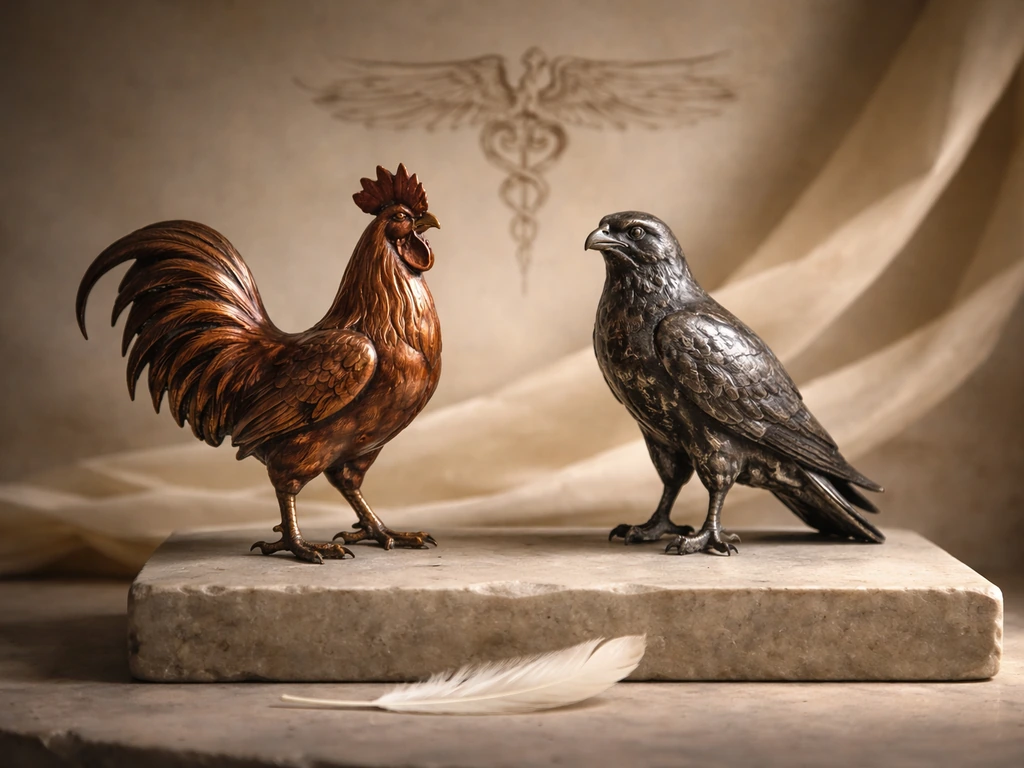
The bird most directly associated with Hermes in ancient Greek sources is the rooster (cock), with the hawk also named as sacred to him. Both appear in classical texts and artwork, but if you have been searching for a single answer, the rooster is the bird you will find depicted beside Hermes in iconographic records and referenced in ancient literature. The hawk gets cited by Pausanias (via Theoi's Hermes attributes page) as a sacred bird of Hermes, while the rooster shows up in sculpted depictions and in Lucian's dialogue 'The Cock' (Gallus), which frames its entire narrative around Hermes-given instruction. Neither association is a modern invention, both have traceable ancient roots.
What Is the Bird of Hermes? Name and Symbolic Meaning

Eleanor Hartwell
19 Apr 2026
Which bird is the bird of Hermes
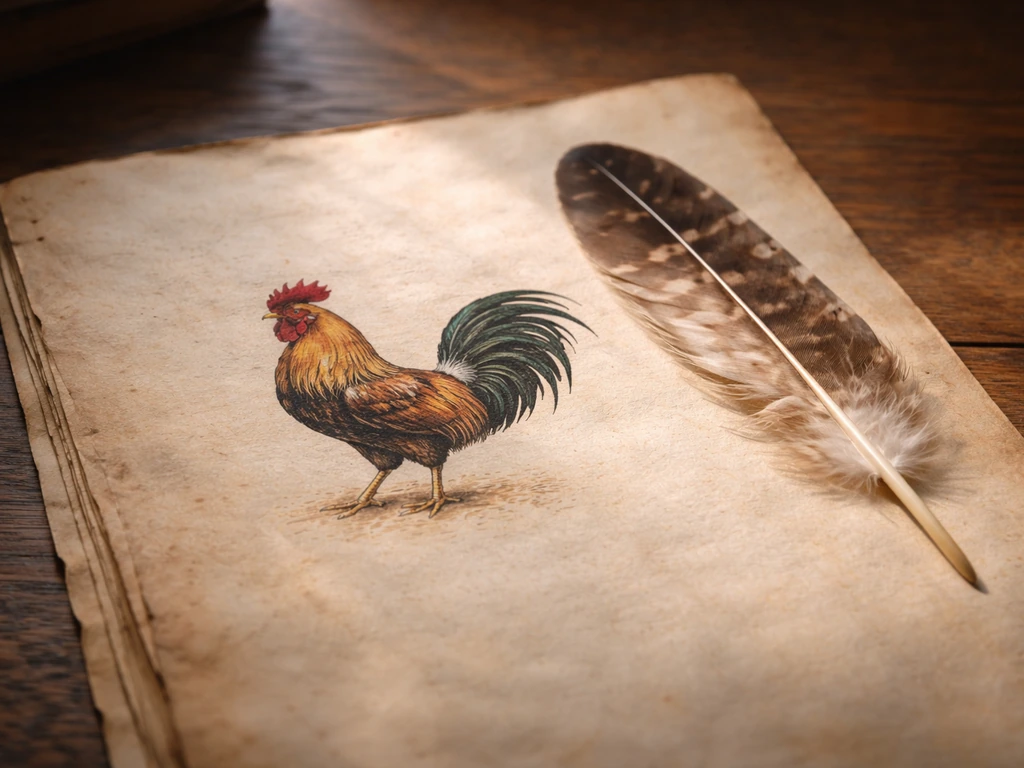
There are actually two birds you need to know about, and understanding why both matter makes the symbolism much richer. The rooster is the bird most commonly depicted alongside Hermes in ancient art. Museum catalog records (such as the Oxford CARC entry for a standing Hermes figure) describe a cock positioned beside him, and Wikipedia's Hermes article lists 'rooster' explicitly among his symbolic attributes. The hawk, meanwhile, is named as a sacred bird of Hermes by Pausanias, one of the most reliable ancient geographical and mythological writers. Theoi.com, which works directly from ancient sources, quotes that passage directly.
The Roman counterpart Mercury shares the same associations, and Cornell's digital collections even include an item titled 'Rooster with the Head of Mercury,' showing how thoroughly this bird-god pairing was embedded in Roman visual culture. So when you ask what the bird of Hermes is, the honest, sourced answer is: the rooster in iconography and cult contexts, the hawk in sacred-animal tradition. To get the clearest answer to what is Hermes sacred bird, look at the rooster in Greek iconography and the hawk as Pausanias’s cited sacred animal the rooster in iconography. The two are not in conflict, they represent different facets of what Hermes meant to the ancient world.
Why these birds belong to Hermes
The rooster's role
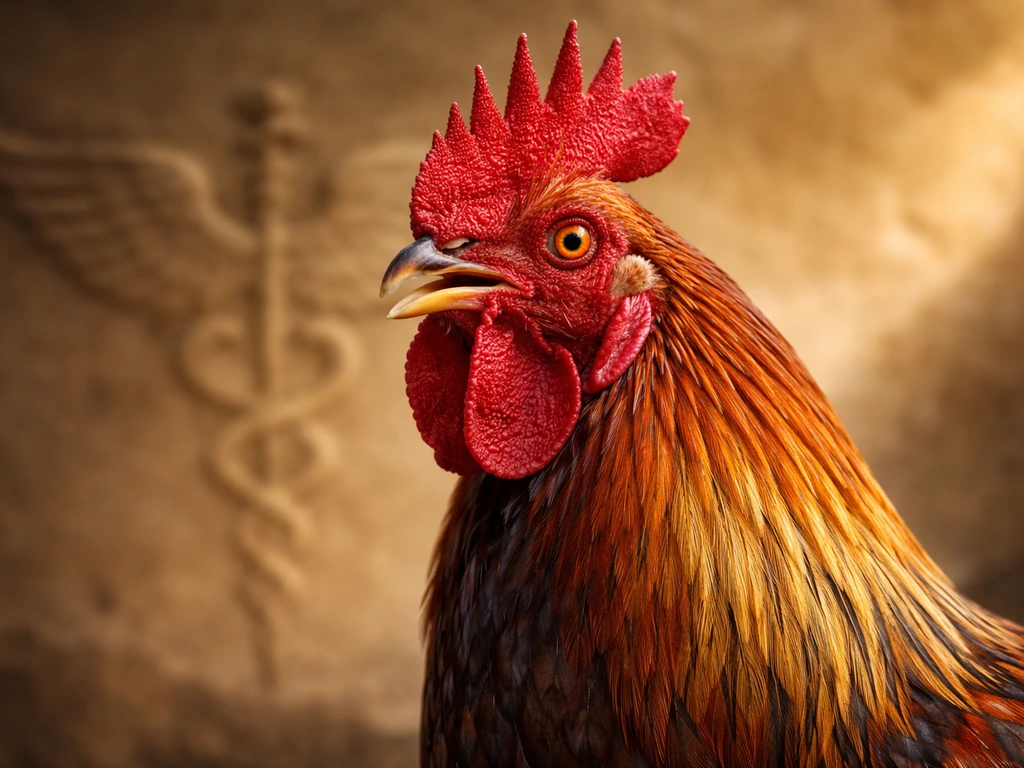
Hermes is the messenger of the gods, the guide of souls to the underworld (his psychopomp role), and the deity of communication, commerce, and the crossing of boundaries. The rooster fits that profile precisely because it is the bird that announces the transition between night and day. It marks the threshold. In the ancient world, that liminal quality, standing at the edge between one state and another, was exactly Hermes' territory.
Lucian's 'The Cock' builds an entire philosophical dialogue on that connection, opening with Hermes-referenced instructions delivered through the voice of a rooster. The rooster also appeared in Greek religious offerings and cult practice, and the Walters Art Museum's catalog framing of Hermes as a primary 'messenger god' of Greek mythology reinforces why any animal associated with him carries themes of communication and passage.
The hawk's role
The hawk brings a different quality: speed, sharp vision, and flight between earth and sky. Theoi cites Pausanias' attribution of the hawk as sacred to Hermes, and this makes intuitive sense. Hermes moves faster than any other deity in Greek myth, he is dispatched the moment communication needs to happen. The hawk, as a raptor, embodies that combination of swiftness and purposeful, directed motion. Theoi also notes that because Hermes was 'heaven's herald,' he was seen as the origin point for all birds of omen, winged messengers of heaven. That broader claim means the hawk sits within a wider tradition of Hermes-linked bird symbolism, not as an isolated odd choice.
The caduceus connection

Hermes' other iconic attributes, the winged sandals, the winged cap (petasos), and the caduceus (kerykeion, his herald's wand), all reinforce why winged, fast-moving creatures cluster around him symbolically. The caduceus is a symbol of mediation and negotiated communication, and it was carried by Hermes specifically in his role as a border-crosser and go-between. His birds inherit that same energy: they are birds that carry messages, cross thresholds, and announce change.
Where the confusion comes from
A lot of people arrive at 'bird of Hermes' from a completely different direction: medieval alchemy. [The phrase 'the Bird of Hermes is my name, eating my wings to make me tame'](https://www. bowdoin. edu/profiles/faculty/akitch/pdf/kitch%2C-ripley-scrolls.
pdf) is one of the most quoted lines from the Ripley Scrolls, a series of English alchemical manuscripts. In the Ripley Scrolls, the Bird of Hermes is treated as a distinct alchemical symbol, tied to the Philosopher's Stone process the Bird of Hermes is my name eating my wings to make me tame.
A Bowdoin-hosted academic PDF on the Ripley Scrolls discusses this image at length, and Bridgeman Images describes an artwork titled 'The Bird of Hermes' as the third section of the Ripley Scrolls. The AlchemyWebsite's index for British Library MS. Add. 5025 also reproduces this tradition.
In alchemical symbolism, the Bird of Hermes refers to a specific stage of the Philosopher's Stone process, it is Hermes Trismegistus (a fusion of Greek Hermes and Egyptian Thoth), not the Olympian Hermes of Greek myth. This bird of Hermes meaning is different in alchemical writings, where it is tied to a specific stage of the Philosopher's Stone rather than the Olympian Hermes of Greek myth. The two traditions share a name but are distinct in origin and meaning.
The other common confusion is between Hermes and other figures with similar-sounding names or overlapping iconography. People sometimes mix up Hermes' birds with the peacock, which belongs to Hera (whose giant watchman Argus had his eyes placed on the peacock's tail feathers, a separate mythological story entirely). This Hera-linked Argus-eyes story helps explain why the peacock is sometimes brought into discussions that otherwise focus on Hermes' birds the bird where hera placed the giant argus eyes.
Mercury, the Roman equivalent of Hermes, carries the same bird associations, so sources sometimes list these as 'Mercury's birds' rather than 'Hermes' birds,' which can make searches feel inconsistent. They are the same tradition described in different cultural language. Finally, because the caduceus is famously (and incorrectly) used as a medical symbol today, some readers arrive at Hermes symbolism through a healthcare context, expecting a serpent-and-wings meaning rather than a bird-and-messenger one.
Rooster vs. hawk: a quick comparison
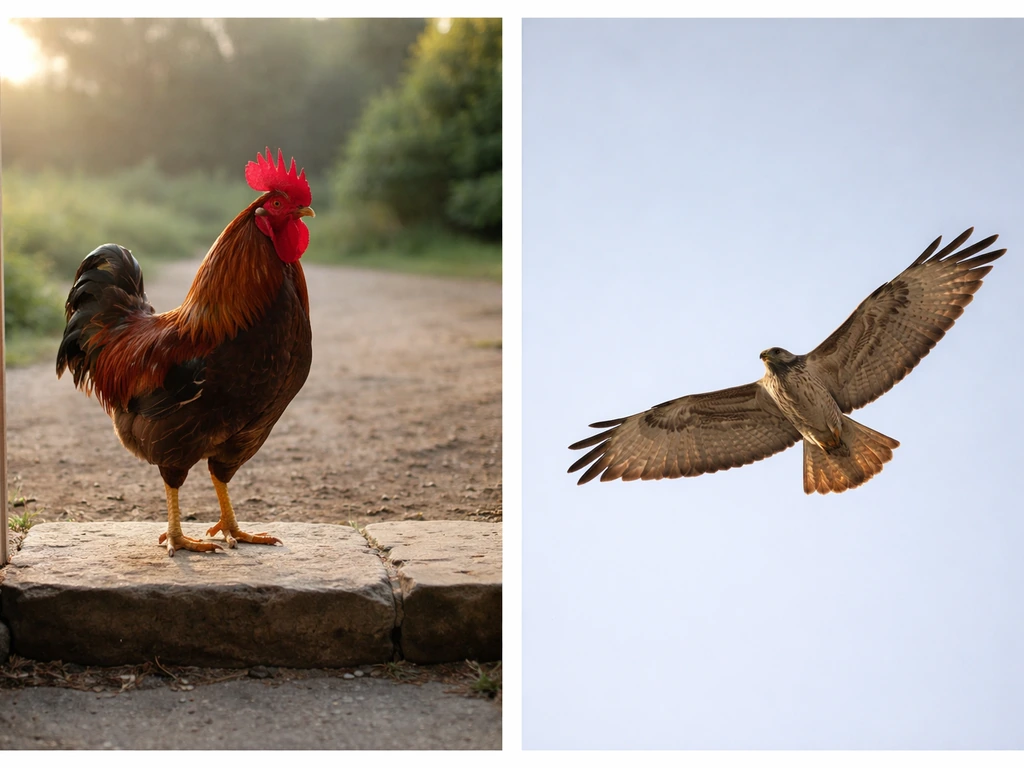
| Attribute | Rooster | Hawk |
|---|---|---|
| Ancient source | Lucian's Gallus; CARC iconographic records; Wikipedia Hermes article | Pausanias (via Theoi) |
| Primary symbolic role | Threshold-crossing, dawn announcement, cult offering | Speed, divine messenger, sky travel |
| Where it appears | Depicted beside Hermes in sculpture; Roman coin and art traditions | Named as sacred animal in ancient literary tradition |
| Core Hermes quality it reflects | Liminality, communication across boundaries | Swiftness, directed purpose, heavenly dispatch |
| Modern encounter context | Domestic; often seen in farms, countryside, folk art | Wild raptor; open skies, countryside, coastal cliffs |
| Recommendation | Strongest fit if you are drawn to Hermes as guide and communicator | Strongest fit if you are drawn to Hermes as swift messenger and visionary |
If you are trying to work with Hermes symbolism in a practical or spiritual context, both birds are legitimate. The rooster is probably the better-documented choice in terms of ancient visual evidence, but the hawk carries its own ancient textual authority. Choose based on which set of meanings resonates with what you are actually working through.
What it means when you encounter these birds
If you have been thinking about Hermes and you see a hawk circling overhead or a rooster crowing at an unexpected moment, the interpretive framework that makes the most sense given Hermes' mythology is one centered on messages, transitions, and guidance. Hermes is not a deity of passive contemplation, he moves, he delivers, he guides. An encounter with his birds traditionally signals that something is in motion: a message is being sent, a transition is approaching, or you are being called to pay attention to communication in your life.
Practically, this can mean several things depending on your circumstances. If you are facing a decision about travel, career movement, or a significant conversation you have been avoiding, a hawk sighting in a Hermes-aware moment can reasonably be read as encouragement to act with speed and precision. The hawk does not circle forever, it dives. Similarly, a rooster encounter (whether literal or symbolic, such as encountering rooster imagery repeatedly) points toward thresholds: something is ending, something is beginning, and the liminal space between those two states is where Hermes operates.
Symbolic themes worth sitting with
Working with Hermes-bird symbolism is most productive when you treat it as a lens rather than a verdict. Ancient Greek religion did not use birds as simple yes/no omens, Theoi's framing makes clear that birds were understood as 'winged messengers of heaven,' which is a much more nuanced role. Here are the core symbolic themes to reflect on:
- Communication and clarity: Is there a message you need to send, or one you have been ignoring? Hermes governs honest, timely communication — not comfortable platitudes but actual exchange.
- Guidance at crossroads: Hermes is a psychopomp, a guide of souls through transitions. His birds appearing at a moment of significant life change can be read as a signal to trust the crossing, not fear it.
- Commerce and exchange: In some traditions Hermes governs fair trade and negotiation. If a business situation or creative exchange is on your mind, the rooster's presence in Hermes iconography points toward the ethics of that exchange.
- Speed and timing: The hawk's association with Hermes suggests that timing matters right now. Not everything can wait for perfect conditions.
- Boundaries and their crossing: Both birds are threshold animals in their own way. If you feel stuck on one side of a boundary — emotional, geographic, professional — Hermes' birds encourage movement.
One useful daily practice is to note the context of any hawk or rooster encounter, not obsessively, but as a journal prompt. What were you thinking about when you saw it? What conversation had you just finished or been avoiding? Hermes-bird symbolism works best as a reflective prompt rather than a directive, because Hermes himself is a trickster as much as a herald, and the message is rarely as simple as it first appears.
How to verify this for yourself
The research trail here is actually quite accessible, which is one of the things that makes Hermes-bird symbolism more grounded than a lot of spiritual content online. Here is a practical verification path:
- Start with Theoi.com's Hermes page, specifically the 'Estate and Attributes' section. It cites Pausanias directly for the hawk attribution, and you can follow that citation to Pausanias' original text.
- Read Lucian's 'The Cock' (Gallus), available in full through the Internet Sacred Text Archive. It is short, entertaining, and makes the rooster-Hermes connection explicit in literary form.
- Search the Oxford CARC (Corpus of Ancient Roman Sculpture) for the Hermes standing figure entry that notes 'beside him a cock.' This gives you iconographic, museum-catalog-level confirmation of the rooster association.
- Check the Walters Art Museum's online collection record for object 54.985 (a Hermes figure dated to the 1st century CE) for context on Hermes as messenger-god in Roman-era visual culture.
- If you are curious about the alchemical 'Bird of Hermes' tradition (Ripley Scrolls), the Bowdoin PDF on the 'Ingendred Stone' and the AlchemyWebsite's manuscript index for British Library MS. Add. 5025 are the most reliable starting points — and they will clarify clearly that this is a medieval alchemical tradition, not ancient Greek myth.
- For the Roman side, Cornell's digital collections item 'Rooster with the Head of Mercury' shows how the Greek association was translated into Roman visual culture, which helps explain why modern sources sometimes say Mercury instead of Hermes.
Cross-cultural note: if you want to place Hermes' birds in a broader symbolic framework, it is worth knowing that the hawk carries strong messenger-bird associations in Egyptian tradition (Horus is often depicted as a hawk or hawk-headed figure), and the rooster appears in Celtic and Norse contexts as a bird of warning and threshold. Hermes himself was later syncretized with the Egyptian god Thoth to become Hermes Trismegistus, which means the hawk's appearance in both Greek and Egyptian bird symbolism is not a coincidence, it reflects a genuinely shared interpretive instinct across cultures that this bird belongs to the domain of divine communication. That broader cross-cultural resonance is part of what makes the bird of Hermes such a durable symbolic image.
If the alchemical angle interests you, the specific phrase from the Ripley Scrolls ('the Bird of Hermes is my name eating my wings to make me tame') is its own rich topic, explored in detail in manuscript scholarship. Similarly, the deeper question of what Hermes' sacred bird means in a strictly Greek religious context, separate from the Ripley tradition, is worth exploring alongside related topics like heraldic bird symbolism and the peacock's connection to Hera, which show how different Olympian deities each claimed distinct bird identities in the ancient Greek symbolic imagination. This is also where the heraldic bird meaning comes in, because traditions that use birds in coats of arms often treat them as shorthand for lineage, status, and moral qualities heraldic bird symbolism.
FAQ
So which one is the real “bird of Hermes,” the rooster or the hawk?
In classical Greek religious and iconographic material, the rooster is the more common “beside Hermes” bird. The hawk can also be cited as sacred to him, but it is typically discussed as a text-based sacred animal rather than as the default visual companion.
Does “bird of Hermes” always mean the rooster in mythology?
If you see “Bird of Hermes” used as a single named entity in medieval alchemy, that phrase often points to Hermes Trismegistus and a stage in the Philosopher’s Stone work, not the Olympian Hermes and not a literal animal. Treat it as a different symbolic system that happens to reuse the same name.
Why do people talk about a “serpent-and-wings” symbol when asking about Hermes’ bird?
No. A lot of people blend Hermes symbolism with the modern medical symbol. The caduceus is not a bird, and in any case medical rod-and-serpent usage is a later convention that can obscure why Hermes is linked to messenger and boundary-crossing themes.
Can the answer change if the source is about Mercury instead of Hermes?
When reading sources, confirm whether you are looking at Greek Hermes or Roman Mercury. They share much of the messenger and border-crossing symbolism, so some references will label the bird tradition under Mercury, which can look contradictory even when it is the same cultural idea.
If I use this symbol spiritually, is it supposed to predict events?
Yes. Hermes is also a “trickster as much as a herald,” so you usually get more value by treating bird sightings as a prompt to reflect on messages and transitions rather than expecting a direct, guaranteed prediction. A journal-style context check (what happened right before, what decision is near) prevents over-reading.
How do I decide whether a personal meaning should lean rooster or hawk?
A helpful way to avoid confusion is to map each bird to a theme: rooster fits liminal transition and announcements (night to day, thresholds), hawk fits directed speed and purposeful flight. If the meaning you feel matches speed, precision, and a “move now” mood, hawk symbolism may fit better than rooster symbolism.
Are Hermes birds always interpreted as good omens?
In these traditions, the birds function more like messenger archetypes than simple “good or bad” omens. The nuance is that they indicate something is in motion or that guidance is available, but they do not automatically tell you the outcome.
What should I look for if I encounter the Bird of Hermes in an old manuscript?
If you are coming across “Bird of Hermes” in a medieval artwork, double-check whether the work is in the Ripley Scrolls tradition or related manuscript symbolism. The phrase can refer to a specific alchemical process stage, and that will not match the Greek iconography meaning.
Why do peacocks show up when I search for Hermes’ bird?
Search results can be messy because other deities also have signature birds. For example, peacock imagery often ties to Hera and the Argus story, so it can appear in discussions alongside Hermes birds even though it belongs to a different divine profile.
Does the hawk have a broader connection beyond just being sacred to Hermes?
Hermes symbolism can include birds of omen in a broader “winged messengers” framework, so you may see hawk associations explained through “birds of heaven” logic. The practical takeaway is that the hawk is part of a messenger-bird constellation, not the only valid bird symbol available.