
The golden phoenix bird symbolizes divine transformation: a soul-level rebirth that isn't just renewal but a sanctified, radiant one. Where a plain phoenix represents rising from destruction, the golden version layers in wisdom, divine light, and spiritual elevation. If you've encountered golden phoenix imagery in a dream, a piece of art, or even as a recurring symbol in your life, the message is that whatever you're moving through carries a higher purpose, and you're being asked to trust that process.
Golden Phoenix Bird Meaning: Symbolism, Culture, and Signs

Eleanor Hartwell
30 May 2026

What people usually mean by 'golden phoenix bird'
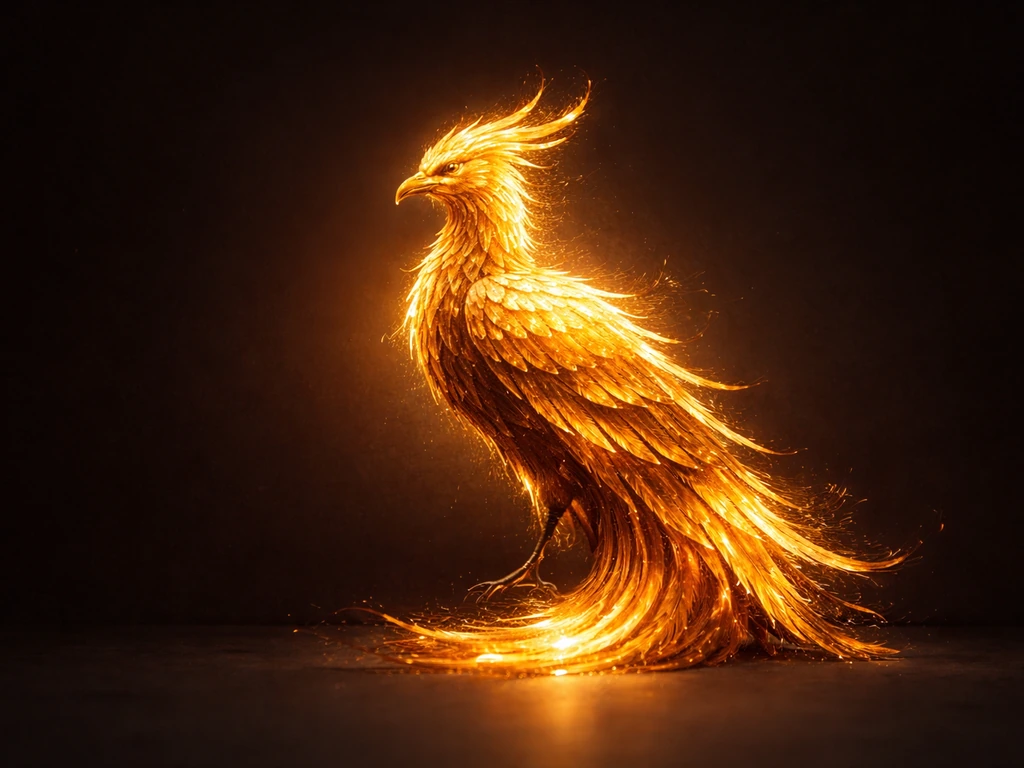
Before diving into meaning, it helps to clear up what 'golden phoenix bird' actually refers to, because it shows up in several different contexts and people often arrive at the phrase from completely different directions.
- Art and mythology imagery: A phoenix depicted in gold or surrounded by golden fire, common in classical paintings, illuminated manuscripts, and Eastern iconography.
- Dream symbolism: A visually golden or radiant phoenix appearing in a dream, which many people feel carries distinct spiritual weight compared to a generic phoenix image.
- Tattoos and personal emblems: People choosing a gilded phoenix design to represent a personal transformation, often tied to survival of a difficult period.
- Spiritual and metaphysical content: Modern spiritual traditions and dream interpretation guides that specifically use 'golden phoenix' to signal divine-level or soul-deep renewal.
- East Asian phoenix tradition: The Chinese fenghuang, which is often depicted in gold or gold and red tones, and carries its own rich symbolism distinct from the Greek/Egyptian phoenix.
All of these are legitimate uses of the phrase. The spiritual symbolism overlaps significantly between them, so regardless of which context brought you here, the core interpretive framework applies. What shifts slightly is how personal versus cultural the meaning becomes, and that's worth keeping in mind as you read.
The core phoenix symbolism: rebirth, renewal, and transformation
The phoenix is one of the most enduring symbols in human culture precisely because its story mirrors something universally felt: the experience of an ending that becomes a beginning. In the most common version of the myth, the phoenix lives an extraordinarily long cycle, sometimes described as 500 to 1,000 years, before it builds a pyre, is consumed by fire, and rises again from the ashes. That specific mechanism, destruction as a prerequisite for rebirth, is where the symbol's power lives.
Encyclopaedia Britannica connects the phoenix directly to ancient Egyptian sun worship, linking it to ideas of immortality and cyclical renewal. The bird was associated with the solar cycle, and its death-and-rebirth pattern mirrored the daily rising and setting of the sun. The Egyptian Bennu, a solar bird venerated at Heliopolis, is one of the primary threads scholars trace when looking at the phoenix's origins, though there is genuine academic debate about how Egyptian and classical accounts influenced each other over centuries. Some scholarly discussions summarized in Wikipedia also describe the phoenix’s origins as contested, with attributions to Ancient Egypt and competing views about later classical influence blank" rel="noopener noreferrer">there is genuine academic debate about how Egyptian and classical accounts influenced each other over centuries.
As the symbol traveled across cultures, it accumulated new layers. In late antiquity it appeared on Roman coinage as a representation of the Eternal City's undying nature. Early Christian writers, most notably in the poem attributed to Lactantius called 'De ave phoenice,' read the phoenix cycle as an allegory for Christ's resurrection, making it one of the first bird symbols explicitly adopted into Christian spiritual writing. Phoenix symbolism isn't inherently good or evil in any single tradition. It's a symbol of transformation, and transformation by definition involves both an ending and a beginning.
In modern spiritual interpretation, the phoenix is commonly understood as a message from your own deeper knowing about a cycle you're in. Dream guides and spiritual coaches describe phoenix imagery as the subconscious and higher self signaling that a period of significant change is underway, or that it needs to be. The fire isn't punishment. It's the process.
What 'golden' adds to that meaning
Gold isn't just a color in symbolic traditions. It's a signal. Across an enormous range of cultures and centuries, gold has been used to mark the sacred, the divine, and the spiritually significant. Medieval illuminated manuscripts used actual gold leaf not for decoration alone, but because the reflective surface was believed to represent holy light, making the text itself feel luminous and set apart. That same logic runs through Eastern religious art, Islamic manuscript traditions, and Byzantine iconography. The University of Nottingham's notes on illuminated manuscripts describe how gold leaf added a jeweled, radiant quality that elevated the spiritual weight of a page. Gold literally made things more important.
In color symbolism more broadly, gold is associated with enlightenment, higher awareness, divine energy, and spiritual illumination. It also carries associations with wisdom, healing, and prosperity, especially across Asian and Islamic cultural contexts where gold connects to purity and knowledge rather than just wealth. When that color attaches to a phoenix, it transforms the symbol's register. A golden phoenix isn't just going through transformation. It's going through a divinely sanctified transformation, one that carries the blessing of higher wisdom and emerges with spiritual radiance, not just survival.
The solar dimension reinforces this further. Because the phoenix was already associated with sun worship in its Egyptian roots, and because gold is the color most closely linked to solar light in visual symbolism, the golden phoenix brings those two threads together in a single, coherent image: the sun's own bird, made of its own light, dying and rising as the sun does every day. That's a powerful symbolic compound, and it explains why golden phoenix imagery tends to feel so spiritually charged when people encounter it.
Phoenix imagery across cultures: a brief tour
One of the most useful things you can do with phoenix symbolism is see it through multiple cultural lenses, because no single tradition owns the symbol and each one reveals something slightly different about what it means to rise.
| Tradition | Phoenix-Type Bird | Core Meaning |
|---|---|---|
| Ancient Egyptian | Bennu bird | Solar renewal, immortality, cyclical time |
| Greek/Roman | Phoenix | Immortality, undying endurance, resurrection allegory |
| Early Christian | Phoenix (allegorical) | Resurrection, life after death, Christ symbolism |
| Chinese | Fenghuang | Harmony, auspicious omen, Confucian virtue, yin-yang balance |
| Persian/Islamic | ʿAnqāʾ / Simurgh | Vast wisdom, divine mystery, sacred elevation |
| Modern spiritual | Golden phoenix | Divine transformation, soul-level rebirth, higher calling |
What's striking across all of these is that none of them frame the phoenix as simply lucky or simply powerful in a martial sense. The bird's strength is always tied to its willingness to go through fire. The Chinese fenghuang is particularly relevant to golden phoenix imagery specifically: it's described in Britannica as an immortal bird whose appearance foretells harmony and good governance, and it's closely tied to yin-yang balance and Confucian virtues. It's often depicted in red and gold, and its appearance is considered a deeply auspicious omen. In that same auspicious spirit, a phoenix is often treated as a phoenix bird for good luck, especially when it appears at the right time. If the phoenix imagery you're drawn to comes from an East Asian aesthetic, that tradition's emphasis on harmony, beauty, and collective blessing is worth leaning into alongside the more widely known transformation themes.
Interpreting golden phoenix encounters: dreams, signs, and synchronicities
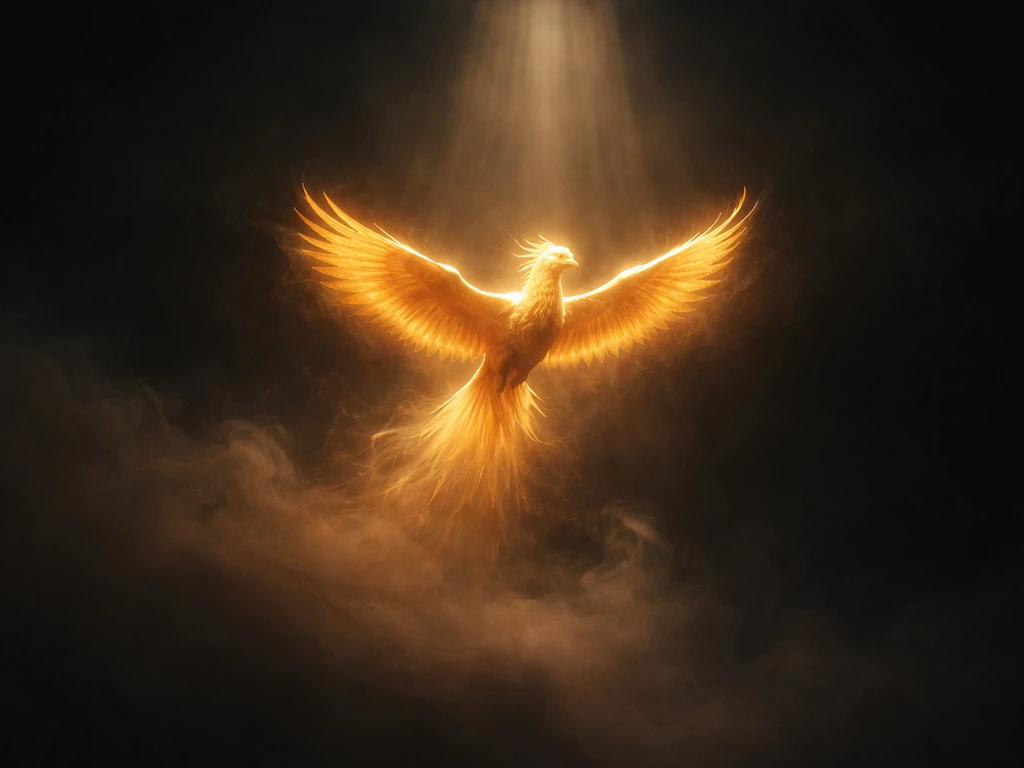
In dreams
A golden phoenix appearing in a dream is consistently interpreted in spiritual frameworks as a significant message, not background noise. The color gold in a dream typically signals that what you're seeing carries heightened spiritual weight. Combined with the phoenix's transformation symbolism, the most common interpretation is that your deeper self is communicating about a major life transition: either one already underway, or one that is necessary and being avoided. If the phoenix in your dream is rising, that's a clear signal of emergence and breakthrough. If it's mid-fire, you may be in the thick of a difficult passage that is nonetheless purposeful. A phoenix that appears to be fading or dying, without the full rebirth visible, is sometimes read as a prompt to consciously release something old so the new cycle can begin.
Pay attention to how you felt in the dream. Fear in the presence of a phoenix often points to resistance to change, specifically a fear of what has to end for something better to begin. Awe or warmth tends to signal alignment, a recognition at the soul level that the transformation is already working in your favor.
As a recurring image or sign
When golden phoenix imagery keeps showing up in your waking life, whether in art you notice, objects you're drawn to, or references that appear in unexpected places, many spiritual frameworks treat this as a form of synchronicity. Synchronicity here doesn't mean coincidence. It means a patterned repetition that your attention is being called to notice. The spiritual coach framing, echoed by several guides, is that these patterns work best when you're intentional rather than anxious about them. The question isn't 'Is this a sign?' so much as 'What is this pointing me toward, and am I willing to look?'
How to actually work with this symbol in your life

Symbolism only has practical value if it connects to something real in your life. Here's a concrete approach to working with golden phoenix meaning rather than just noting it.
Start with a journal entry
When the symbol appears, whether in a dream or waking life, write it down with the date, time, and what you were thinking or feeling immediately before the encounter. This isn't about finding proof of anything. It's about building a record that helps you see patterns over time. After two or three entries, look for what theme threads through each moment. That theme is likely what the symbol is pointing toward.
Reflection questions
- What in my life right now feels like it's burning down, and am I resisting that process or moving through it?
- Where am I holding onto something old (a relationship, identity, belief, habit) that no longer serves who I'm becoming?
- If I trusted that this ending was purposeful, what would I do differently?
- What does 'rising with radiance' look like for me specifically, not in a generic sense, but in this season of my life?
- Where do I need to bring more wisdom (the gold) into how I'm navigating this change?
Simple intention-setting practice
One grounded approach from spiritual practice is to set a clear, time-bound intention and then pay attention. You might write something like: 'I am open to understanding what transformation is being asked of me right now. Show me, clearly, where I need to release and where I need to rise.' Keep it simple and specific to your actual situation. Then for a set period, perhaps a week, notice what keeps surfacing in dreams, conversations, and quiet moments. The golden phoenix symbol is less about a single dramatic revelation and more about a sustained invitation to pay attention.
Using golden phoenix imagery intentionally
If the symbol resonates with you personally, placing golden phoenix imagery in your space (as art, a small object, or even a phone wallpaper you look at deliberately) can function as a daily reminder of what you're moving toward. In the same way that gold leaf in sacred manuscripts was meant to focus the reader's attention on what mattered most, a golden phoenix image can serve as a visual anchor for your own intention of transformation. The key is that you engage with it consciously rather than passively. Each time you see it, let it prompt a brief check-in: Where am I in my current cycle?
Putting it all together
The golden phoenix bird is one of the most layered symbols you can encounter, because it combines one of mythology's oldest transformation narratives with the spiritual language of divine light and sacred change. It isn't simply about surviving hard times, which is the simplified version you'll often see. It's about the quality of what you become after the fire: wiser, more radiant, spiritually refined. Whether you're working with this symbol through a dream, a piece of art, a tattoo you're considering, or a pattern you keep noticing, the invitation is consistent. Let what needs to end, end. Trust the fire. Rise with intention.
If you're exploring phoenix symbolism more broadly, questions about whether the phoenix is considered a good or protective force, what specific benefits it's associated with in different traditions, and how it compares to other powerful mythological birds are all worth sitting with. Some people also use phoenix bird images in Vastu-related practices to invite positive energy and align their space with transformation and renewal. If you want the specific phoenix bird benefits associated with the golden phoenix, the next step is to look at how each tradition frames protection, renewal, and blessing. The golden phoenix specifically lives at the intersection of transformation and the sacred, and that combination makes it one of the most spiritually rich bird symbols in any tradition.
FAQ
Is the “golden phoenix bird meaning” the same as “phoenix bird meaning,” or does the gold color change it?
The transformation core is similar, but gold usually intensifies the tone from ordinary renewal to sacred or divinely weighted renewal. If the symbol appears golden rather than just fiery or brown, people often interpret it as highlighting guidance, wisdom, or a higher-quality outcome after change.
What should I do if I dream about a golden phoenix but I feel nothing or I can’t remember my emotions?
If emotions are unclear, focus on the sequence and details instead: whether the phoenix is approaching, rising, burning, or fading, and what your dream was doing right before the image appeared. Those cues can be enough to infer whether you are in an emergence phase, a difficult mid-process phase, or a “release needed” phase.
Does a golden phoenix in a dream always mean something positive is coming soon?
Not necessarily. The recurring message is transformation, and transformation can be uncomfortable or disruptive before it becomes beneficial. If the phoenix looks distressed or the scene feels heavy, that often indicates the work is still underway, not that the “good part” has arrived yet.
How do I tell whether the sign is personal guidance versus a cultural symbol I happened to notice?
Check what else is happening around the symbol in your life. If your life situation clearly matches themes like endings, breakpoints, career or relationship shifts, or spiritual reassessment, the interpretation is more likely personal. If you mostly encounter the image through media trends, fashion, or decorative choices with no related life context, it may be cultural or aesthetic rather than targeted guidance.
What if the phoenix imagery I see is not consistent, like sometimes golden, sometimes red or plain?
Use the “constancy” principle: treat each variation as information, but prioritize the most repeated form. If the gold version appears less often but still stands out emotionally, it may indicate moments where guidance feels more pronounced or “higher stakes.” If only the non-golden version repeats, your focus may be on change without the same sacred emphasis.
Can golden phoenix meaning apply to relationship situations specifically, like breakups or reconnections?
Yes, in relationship contexts it often points to a required ending that clears space for a different dynamic. For example, “burning but not reborn yet” imagery can be a cue to complete the emotional closure before trying to restart, while a rising phoenix can suggest a more aligned reconnection or a new boundary-based beginning.
What’s a common mistake people make when interpreting golden phoenix signs?
One common mistake is treating every appearance as a yes or no prediction. A more useful approach is to interpret the theme, then take a practical action that supports the change (for example, decluttering, setting a new goal, ending a draining habit, or having a difficult conversation) within a realistic timeframe.
If I’m considering a golden phoenix tattoo, how should I decide the best meaning to commit to?
Choose the version of the story you actually want to embody. If you’re in a “rise after fire” chapter, a design that emphasizes the phoenix emerging can feel truer than one focused only on the burning. Also consider placement and size, because you’ll likely see it during triggers, not just during calm reflection.
Are there any situations where I should avoid relying on golden phoenix meaning for decisions?
If you’re making urgent safety or medical decisions, symbolism should not be the deciding factor. Use golden phoenix meaning for reflection and motivation, but pair it with professional guidance and concrete plans, especially if you’re dealing with trauma, crisis, or severe mental health concerns.
How can I work with the symbolism in waking life in a way that doesn’t become anxiety-driven?
Use a brief, time-bounded practice: when you notice the image, ask one concrete question (what needs to end, what needs to rise, and what is the next small action). Then stop there for the day. This turns the sign into a tool for clarity rather than an endless search for certainty.
Next Article
What Is Stronger Than a Phoenix Bird Meaning Explained
Discover what is stronger than a phoenix symbol: rebirth, endurance, divine power, or ultimate renewal meaning.