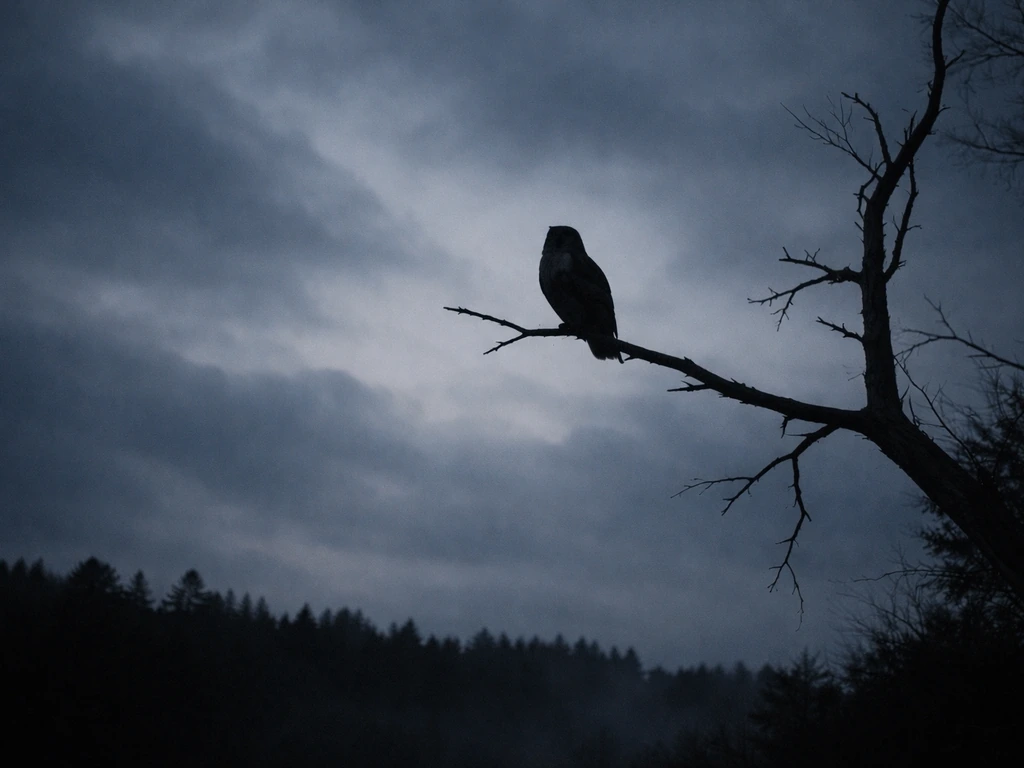
Across centuries of seafaring tradition, the albatross has been read as a bird of good omen: a sign of fair winds, safe passage, and protection for those navigating open water. Spot one following your ship through fog or ice, and the old sailor's belief held that fortune was with you. That core idea, the albatross as a favorable, even sacred, presence, runs through maritime folklore, Polynesian voyaging culture, and modern spiritual interpretation alike. If you've encountered an albatross in waking life or in a dream and want to know what it means, the short version is this: most traditions frame the sighting as an encouraging sign, one tied to guidance, resilience, and safe passage through difficulty.
Albatross Bird of Good Omen Meaning and Spiritual Guidance

Eleanor Hartwell
7 May 2026
What an albatross actually means as an omen
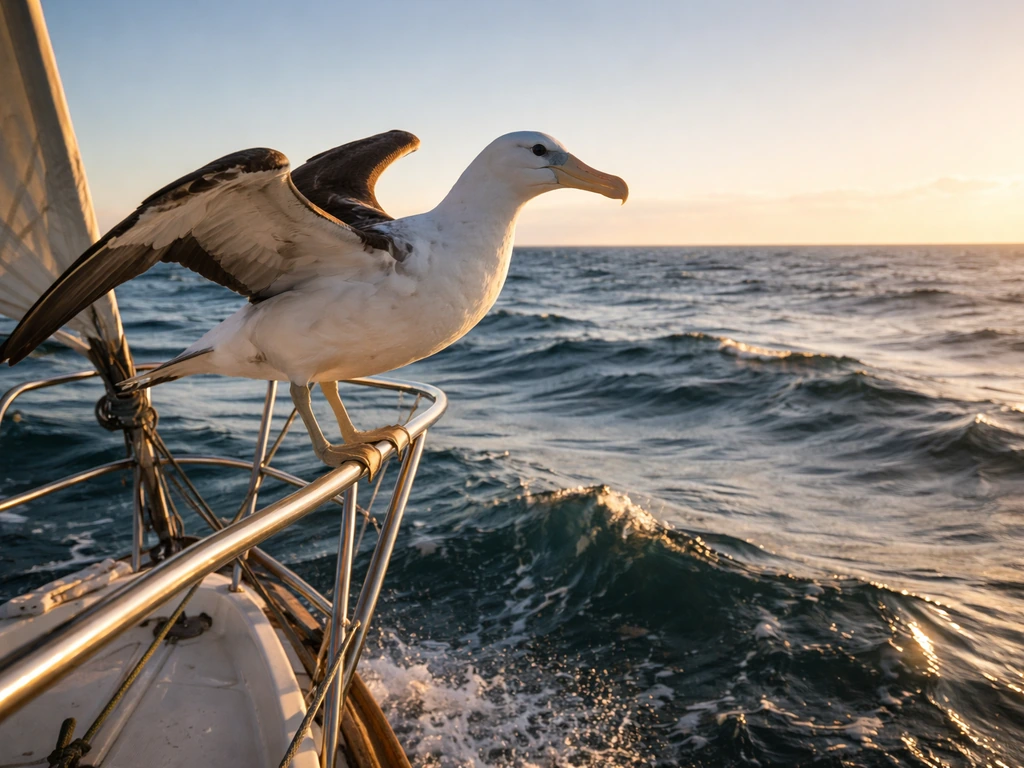
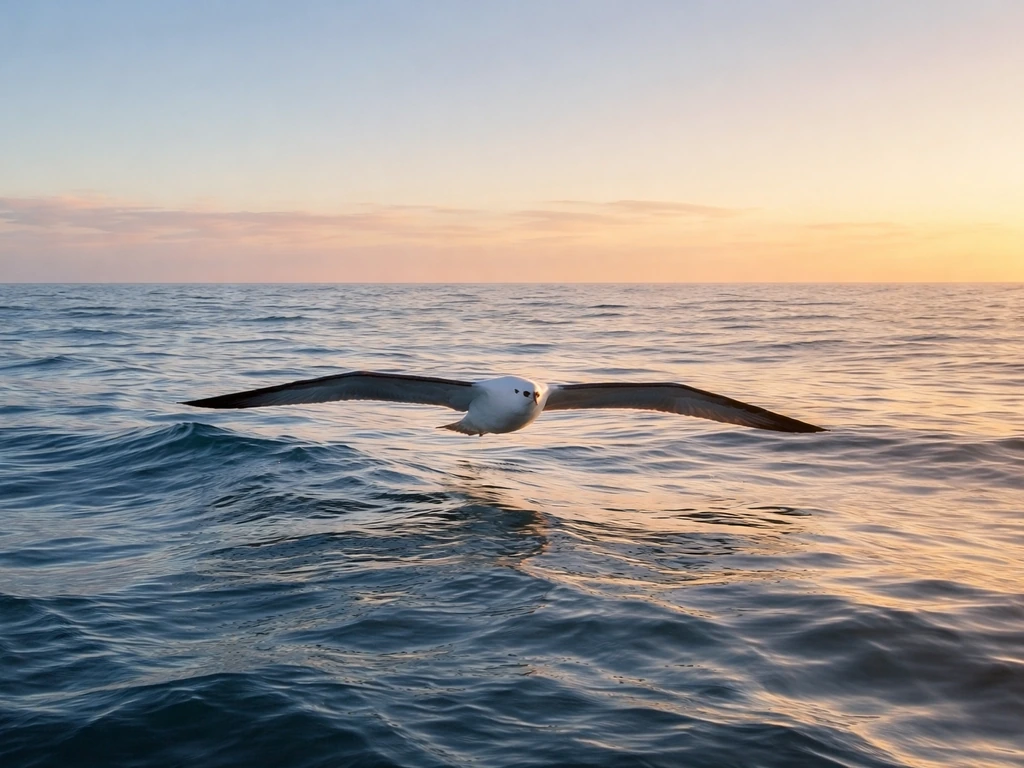
The popular belief is straightforward: seeing an albatross is good luck. Sailors historically associated albatross sightings with favorable winds and the promise of a safe voyage home. The bird's sheer size, its ability to glide for thousands of miles without rest, and its habit of appearing when a ship was struggling through rough, remote waters made it feel like a messenger from something larger than human circumstance. The consensus was that the bird brought the omen with it, and as long as you respected it, that omen stayed positive.
The other half of the belief is equally important: killing an albatross flips the omen entirely. Maritime folklore held that albatrosses carried the souls of sailors lost at sea, which made harming one an act of profound moral consequence, not just bad luck in the superstitious sense, but something closer to a violation of natural and spiritual order. That binary, honor the bird and prosper, harm it and suffer, became the symbolic engine that Coleridge locked into verse in The Rime of the Ancient Mariner, where a crew hails an arriving albatross as a god-sign before the mariner shoots it and invites catastrophe. Dictionary.com notes that the idiom “blank" rel="noopener noreferrer">albatross around one’s neck” refers to the mariner’s punishment in Samuel Taylor Coleridge’s “The Rime of the Ancient Mariner,” where he is forced to wear the albatross carcass after shooting it. If you're also curious about how people turn wonder into verse, you might enjoy exploring “a wonderful bird is the peacock limerick.”. In Coleridge's poem, the mariner hails the arriving albatross as a god-sign before he shoots it, and the omen turns into catastrophe bird of good omen rime of the ancient mariner. It is worth noting, as the sibling topic on that poem explores in detail, that Coleridge's treatment of the albatross as a bird of good omen is drawn directly from this pre-existing sailor belief, not invented by the poem itself.
One important distinction to hold onto: the modern English phrase 'an blank" rel="noopener noreferrer">albatross around your neck,' meaning a psychological burden, comes specifically from the dead-albatross penalty scene in the poem, not from the original maritime omen tradition. In the original belief, the albatross is not a burden at all. It is a protector. The burden only enters when the omen is violated. Keeping that sequence clear prevents a lot of confusion about what the bird actually symbolizes.
How albatross symbolism shows up across cultures
The good-omen reading isn't limited to European sailor folklore. Polynesian and Hawaiian voyaging traditions weave the albatross into a broader framework where birds and winds are read as navigational and spiritual cues together, not separated into 'practical' versus 'symbolic' categories. The revival canoe Hōkūleʻa, which became a powerful symbol of Pacific cultural reconnection, features an albatross sculpture on its bow, representing the bond uniting Pacific peoples. That isn't superstition in the dismissive sense; it's a deliberate use of bird symbolism to express continuity, guidance, and the sacred nature of ocean voyaging. The albatross earns that role because it literally travels the Pacific, connecting distant islands as no other bird does.
European maritime culture developed its albatross beliefs somewhat independently, but the underlying logic is similar: a bird that ranges across the world's most hostile ocean, never seeming to tire, is naturally read as something more than an animal. Sailors noted that albatrosses appeared to follow ships, that they seemed to arrive with wind shifts, and that their presence felt purposeful. From that daily observation came the omen framework: the bird as messenger, guide, and protective presence. The practice of reading birds for signs, sometimes called ornithomancy, is itself one of the oldest cross-cultural symbolic traditions, found in ancient Greece, Rome, Indigenous American cultures, and beyond.
What makes the albatross symbolism particularly consistent across these traditions is the emphasis on the bird's relationship with distance and return. It ranges impossibly far and then comes back. That pattern maps naturally onto ideas about safe passage, homecoming, and the persistence of spirit across separation. The same quality that makes the albatross a remarkable natural subject makes it a compelling spiritual symbol.
What a modern encounter might mean spiritually

Most people today aren't sailors, so if an albatross enters your awareness, it's more likely through a dream, a photograph, a story, or an unexpected sighting during travel near the coast. The spiritual interpretation in each case draws on the same core symbolism, adapted to your current situation rather than a literal sea voyage.
If you dream of an albatross in flight, the common interpretation is one of spiritual alignment and encouragement: you're on the right course, even if the path feels long or uncertain. The bird's long-distance nature connects to resilience and enduring hope, the sense that the journey isn't over and that guidance is present. If the albatross in your dream feels calm and protective, that traditionally reads as a favorable sign for whatever transition or challenge you're currently navigating. Some modern dream-work frameworks describe it as a messenger from a deeper or more expansive part of your awareness, the way the bird seems to carry meaning from far away.
A waking sighting, even if it happens during travel near the ocean or through media, can function as what many people in spiritual traditions call a 'sign': a moment when something in your environment seems to speak directly to a question or concern you're holding. The albatross in that context invites you to think about your own journey, whether you feel supported in it, whether you've been trusting the process or fighting it.
Why albatross symbolism works: the mechanics behind it
Bird symbolism in general operates through a few reliable 'symbol mechanics,' and the albatross uses all of them. Understanding these mechanics helps you trust your own interpretation rather than relying entirely on what a dictionary tells you the bird means.
- Flight and freedom: birds that fly enormous distances are read as symbols of spiritual elevation, liberation from constraint, and access to a broader perspective than ordinary life allows.
- Distance and guidance: the albatross travels over open ocean, one of the least hospitable environments on earth, and navigates without landmarks. That quality maps to the idea of guidance through uncertain or unmarked territory.
- Return and homecoming: albatrosses are known to return to the same nesting grounds across decades. The famous albatross Wisdom has been doing exactly this for more than 70 years. That fidelity to home becomes a symbol of continuity, belonging, and the reliable return of something precious.
- Feathers and presence: in many symbolic traditions, encountering a feather from a significant bird is treated as a version of encountering the bird itself. An albatross feather, if you come across one, would carry the same themes: protection, far-ranging guidance, and favorable passage.
- The moral dimension: the belief that harming an albatross inverts the omen introduces an ethical layer uncommon in simpler bird symbolism. This suggests the albatross isn't just a passive good-luck token but a symbol with moral weight, one that asks something of the observer in return.
This combination of qualities is why the albatross functions so powerfully as a symbolic bird across very different traditions. It isn't arbitrary. The bird's actual behavior, its real qualities as a living creature, earns it the symbolic meanings people attach to it. That's the case across most strong bird symbolism, from the swallow as a homecoming sign to the phoenix as a rebirth symbol: the symbolic meaning grows from what the bird genuinely does.
What to actually do when you see or dream of an albatross

The most useful thing you can do after an albatross encounter is slow down and engage with it deliberately rather than either dismissing it or attaching a rigid meaning. Here's a practical sequence that works whether your encounter was in a dream or a waking moment.
- Note the emotional tone first. Before you look up any meaning, write down exactly how the encounter felt. Was the bird calm, distant, close, threatening, or peaceful? Your emotional response is the most important data point in personal symbol interpretation. A dream dictionary can tell you what albatrosses mean in general; only you can tell what this one meant in your specific moment.
- Connect it to what's live in your life right now. Ask yourself: where am I in a 'long journey' right now, literally or metaphorically? Is there a transition, a project, a relationship, or a decision where I need reassurance that I'm on course? The albatross almost always relates to a journey context. Let the bird's arrival prompt you to name yours.
- Use a simple reflection prompt. Try writing a response to this question: 'If this bird is telling me I'm protected and headed in the right direction, what does that change about how I'll show up today?' You don't have to believe the omen literally for this exercise to be useful. It works as a reframing tool regardless.
- Consider a small gratitude practice. Traditional omen-reading wasn't passive. Sailors who saw a favorable albatross didn't just note it; they treated the bird with respect and care. In modern terms, that translates to acknowledging the sign rather than consuming it. You might spend a few quiet minutes sitting with gratitude for the journey you're on, for the guidance you've received so far, or for whatever 'favorable winds' are present in your life right now.
- If the meaning still feels unclear, ask for a second sign. Many spiritual traditions recommend this rather than forcing an interpretation. State internally or in your journal that you're open to further clarification, then notice what arrives over the next few days without hunting for it. This prevents the anxious over-analysis that turns symbolic thinking into a source of stress rather than meaning.
Common misconceptions worth clearing up
The biggest misconception is that the albatross is primarily a bad omen because of the 'albatross around your neck' phrase. That phrase is a modern English idiom borrowed from a specific scene in Coleridge's poem and refers to the burden that follows a moral violation, not to the bird's natural symbolic meaning. If you want the phrase behind it, a bird of ill omen meaning is usually about fear, warning, or a negative sign rather than protection and safe passage. The bird itself, in the original belief systems, is a protector and a good-omen sign. Don't let contemporary slang reverse thousands of years of maritime symbolism.
A related misconception is that believing in bird omens requires you to accept literal magical causation: that the bird caused the good fortune, or that failing to respond correctly will cause disaster. That's not how most serious symbolic traditions actually work. The omen framework is better understood as a lens for attention and meaning-making, a way of noticing what's present and aligning your intention with it. Whether the albatross 'caused' the fair winds is a separate question from whether treating it as a meaningful sign helps you navigate your journey with more awareness and gratitude. Most thoughtful practitioners of symbolic interpretation hold both ideas carefully, taking the meaning seriously without claiming certainty about literal causation.
It's also worth knowing that confirmation bias plays a real role in how omen beliefs feel convincing. When we're primed to see a bird as significant, we notice and remember the moments when the omen 'worked' and underweight the moments when it didn't. That doesn't make the symbolism worthless; it just means you should hold it with some intellectual humility. Use it as a prompt for reflection, not as a predictive mechanism.
Finally, the idea that you must respond to an omen with specific rituals or risk reversing it is a fear-based distortion of what symbolic thinking is for. Superstition functions partly as an anxiety-management system, and there's nothing wrong with rituals that help you feel settled and intentional. But if your response to an albatross sighting is primarily fear of doing the wrong thing, that's a signal to step back from the omen framework for a moment and return to it when you can engage with curiosity rather than anxiety. The bird, in virtually every tradition that references it, arrives as a favorable presence. It is not a test you can fail simply by not performing the correct response.
Putting it together
The albatross as a bird of good omen is one of the most consistent and cross-culturally grounded examples of bird symbolism we have. Maritime cultures from Atlantic Europe to the Pacific Islands independently developed a reverential relationship with this bird, connecting it to safe passage, protection, resilience, and the faithful return home. When it appears in your life, in whatever form, the most honest summary of what it means is this: you are being reminded that long journeys can be navigated, that guidance is available even in featureless open water, and that returning to what matters is possible. If you have seen this omen connected to the pious bird of good omen vinyl, treat it as another way of pointing you toward guidance, resilience, and safe passage. Work with that message practically, stay curious rather than anxious about the symbolism, and let the bird do what birds have always done best in the symbolic imagination: point toward something just beyond the visible horizon that is worth moving toward.
FAQ
If I see an albatross and then something goes wrong, does that mean the omen failed?
Most traditions treat the omen as a prompt for attention, not a guaranteed cause-effect. If events turn difficult, read it as a nudge to adjust how you’re navigating, rather than proof that the bird’s meaning was “wrong.”
What’s a simple way to work with the albatross meaning without doing rituals?
Use a short reflective check-in: What journey am I on right now, what support have I been ignoring, and what small action would align me with “safe passage”? Then follow through within 24 to 48 hours, so the symbol turns into guidance.
Does the omen mean the same thing if the albatross is far away versus very close?
A distant sighting is often read as guidance that’s available but not yet actionable, like “trust the path.” A closer encounter can be taken as a clearer invitation to respond, for example making a decision you’ve been delaying.
How should I interpret an albatross appearing in a dream where I feel fear?
Fear doesn’t automatically negate the “good omen.” In many modern dream approaches, it signals resistance to a long transition. Consider what part of the journey feels risky, then look for one concrete reassurance or boundary you can set.
Is an albatross different from other seabirds in terms of spiritual meaning?
Yes, the albatross symbolism is unusually tied to long-distance travel, return, and endurance. If the dream or sighting feels repetitive or “makes no sense” compared to local seabirds, the mind often uses the most distant-travel bird as a cue for perseverance and homecoming themes.
What if I live far from the ocean and rarely see birds, is it still relevant?
Absolutely. If you encounter an albatross through media, a random photo, or a story, the meaning usually attaches to your current question. Treat it as a sign that your “distance” theme (waiting, separation, delayed results) is active now.
Does the “killing an albatross” idea imply I should fear harming wildlife today?
It’s best taken as an ethical warning, not a superstition that you’ll be cursed. A practical modern response is to avoid unnecessary harm and choose responsible actions (for example, follow wildlife viewing rules and support conservation where you can).
How can I avoid mixing up “albatross bird of good omen” with the idiom “around your neck”?
The idiom points to the psychological burden that follows a moral violation, while the bird’s baseline symbolism is protective guidance and safe passage. If you’re focusing on burden, ask what “violation” the metaphor is referring to in your life, rather than assuming it’s about the bird itself.
Is there a difference when the albatross appears during travel versus at home?
During travel, many people read it as support for the route, timing, and decision-making while moving. At home, the same symbol often shifts toward emotional navigation, “returning to what matters,” and regaining steadiness in a life phase that feels stalled.
What should I do right after I notice an albatross, to prevent confirmation bias from taking over?
Write down one neutral observation (time, place, how you felt) and one question you want to answer about your journey. Avoid forcing a prediction. Revisit the notes later and see whether your actions improved alignment, that’s the cleanest indicator the symbol helped rather than deceived you.
Next Article
A Bird of Ill Omen Meaning: Signs, Traditions, and Next Steps
Meaning of a bird of ill omen: how to interpret signs, notice species and behavior, and respond calmly with next steps.