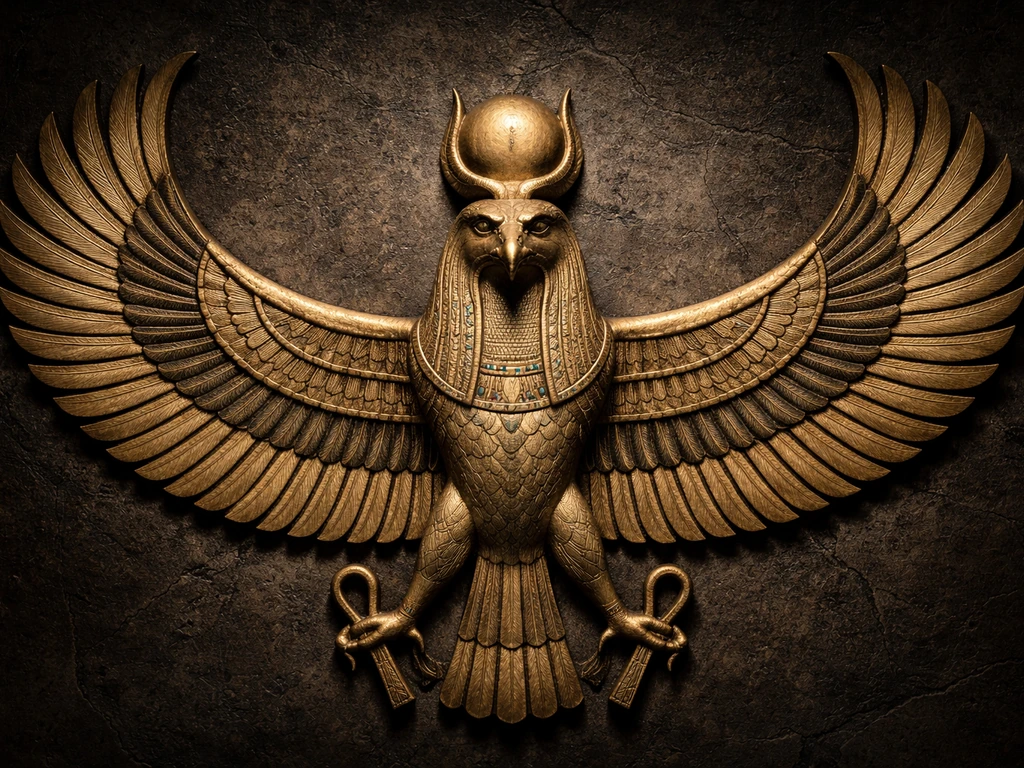
When people search 'Horus bird meaning,' they're almost always referring to the falcon form of Horus, the ancient Egyptian sky god whose image appears in art, jewelry, tattoos, and sacred objects across thousands of years. In short: the Horus bird is a falcon, and what it symbolizes is protection, divine kingship, celestial watchfulness, and renewal. But there's a companion symbol, the Eye of Horus, that often gets bundled into the same search, and knowing the difference between the two shapes how you interpret whatever you've encountered.
Horus Bird Meaning: Symbolism, Eye of Horus, and Falcon Readings

Eleanor Hartwell
8 Jun 2026
What people mean by 'Horus bird'
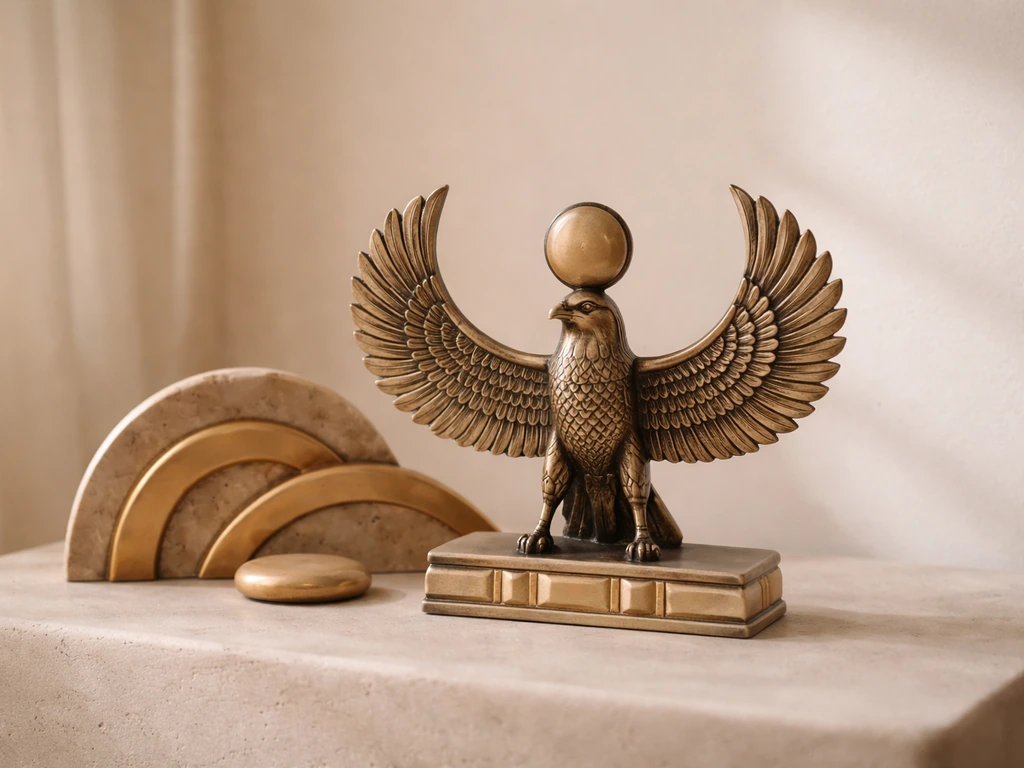
The phrase 'Horus bird' isn't a formal term from Egyptology. It's the natural way modern people describe the falcon-headed or full-falcon depictions of Horus that appear everywhere from museum cases to tattoo studios. When someone says they 'saw a Horus bird' or asks about its meaning, they usually mean one of three things: a full falcon figure representing Horus himself, a falcon-headed human figure (Horus in his anthropomorphic deity form), or the Eye of Horus, the famous stylized eye symbol that borrows the distinctive markings of a falcon's face.
Outside the Egyptian context, 'Horus bird' occasionally surfaces in modern spiritual communities discussing spirit animals or totem figures, and sometimes in brand names or logos with no mythological intent at all. For the purposes of this guide, we're staying firmly in the Egyptian symbolic tradition, because that's where the real depth lives and where the meaning holds up under scrutiny.
Why Horus is a falcon: the origins
Horus is one of the oldest deities in the Egyptian pantheon, worshipped across Egypt for at least three thousand years, and his identity as a sky god is inseparable from the falcon. The falcon was the apex aerial predator of the Nile Valley: fast, sharp-eyed, and capable of diving from heights most creatures couldn't even perceive. To ancient Egyptians, that combination of speed, vision, and dominance from above made the falcon the obvious physical embodiment of a sky deity.
Horus in his falcon form didn't just represent the sky as an abstract concept. He was understood to be present in it, with his right eye identified as the sun and his left eye identified as the moon. When the falcon crossed the sky, both celestial bodies moved with him.
The mythological foundation runs deeper than sky symbolism, though. Horus is the son of Osiris and Isis, born after Osiris was murdered by Set. His whole mythic arc involves reclaiming divine authority, defeating chaos, and restoring rightful order. That narrative made him not just a sky god but a god of kingship and legitimate power.
Every pharaoh was considered the living embodiment of Horus on earth. The famous statue at the Metropolitan Museum of Art showing Horus as a falcon sheltering King Nectanebo II literally shows the pharaoh positioned beneath the bird's breast, protected by its wings. The Met’s object description notes that Nectanebo II’s position under Horus’s “powerful breast” implies Horus offers him protection [“powerful breast” implies that Horus offers him protection. ](https://www.
metmuseum. org/art/collection/search/100001282). That image captures everything: the king draws his authority from divine protection, and Horus is the source of that protection.
The core symbolism of the Horus bird
The Horus falcon carries a dense cluster of meanings that have remained remarkably consistent across Egyptian history and into modern spiritual interpretation. Rather than treating them as a flat list, it helps to understand how they connect to each other.
Protection
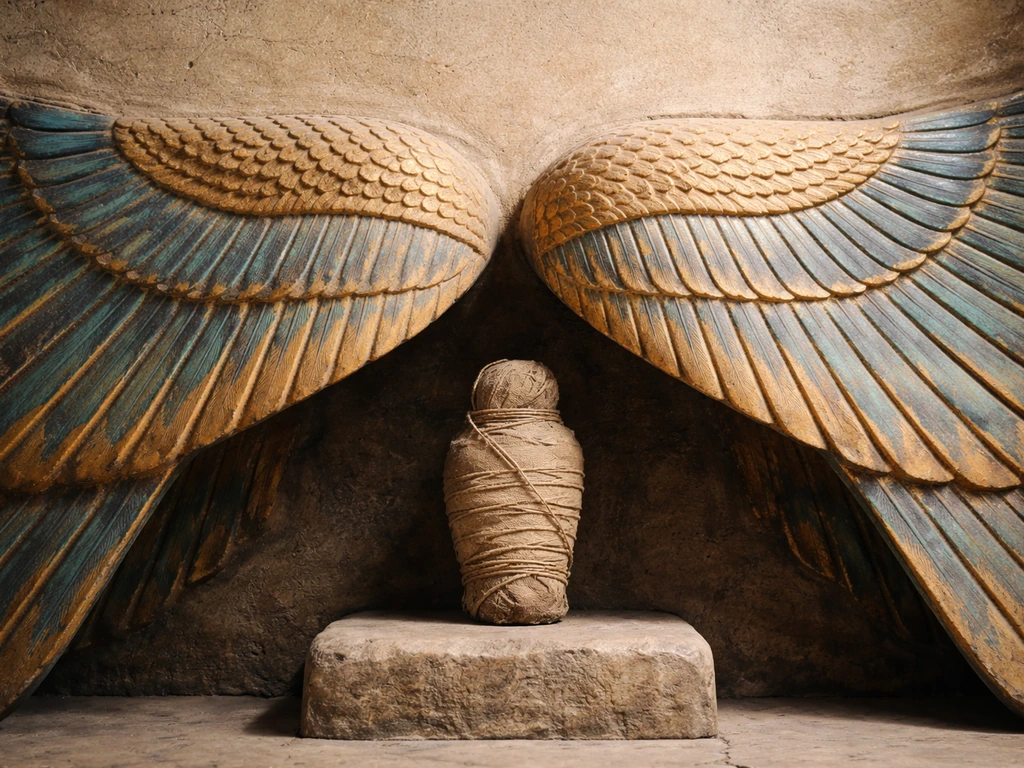
The outstretched wings of Horus-as-falcon are one of Egyptian art's most recognizable images of divine protection. The wings physically shelter what lies beneath them, and that gesture was so understood by ancient Egyptians that falcon-winged images were placed in royal tombs, on thrones, and over doorways. If you encounter Horus imagery with wings spread, protection is the primary message.
Kingship and legitimate authority
Because every pharaoh was Horus incarnate during his reign, the falcon became synonymous with rightful rule and divine mandate. This wasn't political spin; it was a genuine theological framework. The falcon didn't just legitimize power, it defined what good power looked like: watchful, elevated above petty conflict, capable of seeing the whole picture. In modern symbolic readings, encountering Horus imagery can resonate for people navigating leadership, authority, or decisions about who or what deserves their allegiance.
Sky, flight, and divine perspective

The sky association isn't incidental. It's the organizing principle of Horus symbolism. Flight as a metaphor for transcendence, for rising above the immediate and seeing from a higher vantage, is one of the oldest and most universal meanings birds carry across cultures. In the Horus tradition, this becomes specifically about divine perspective: the capacity to see what others miss because you're positioned above the noise. The falcon's actual biology reinforces this. Falcons have extraordinarily acute vision, capable of detecting motion at distances that seem impossible to human eyes. The symbolic reading maps directly onto behavior.
Renewal and cyclical restoration
Horus's mythology is fundamentally a story of restoration. His father Osiris was killed, order was broken, and through Horus's struggle against Set, the cycle was restored. This makes Horus a symbol not just of victory but of renewal after loss. The sun rising each morning was understood as Horus returning, which is why his solar eye is associated with the morning star. If you're working through a period of recovery, rebuilding, or starting over, the Horus bird carries specific resonance for exactly that kind of transition.
Eye of Horus vs. Horus-as-bird: how to tell what you're looking at
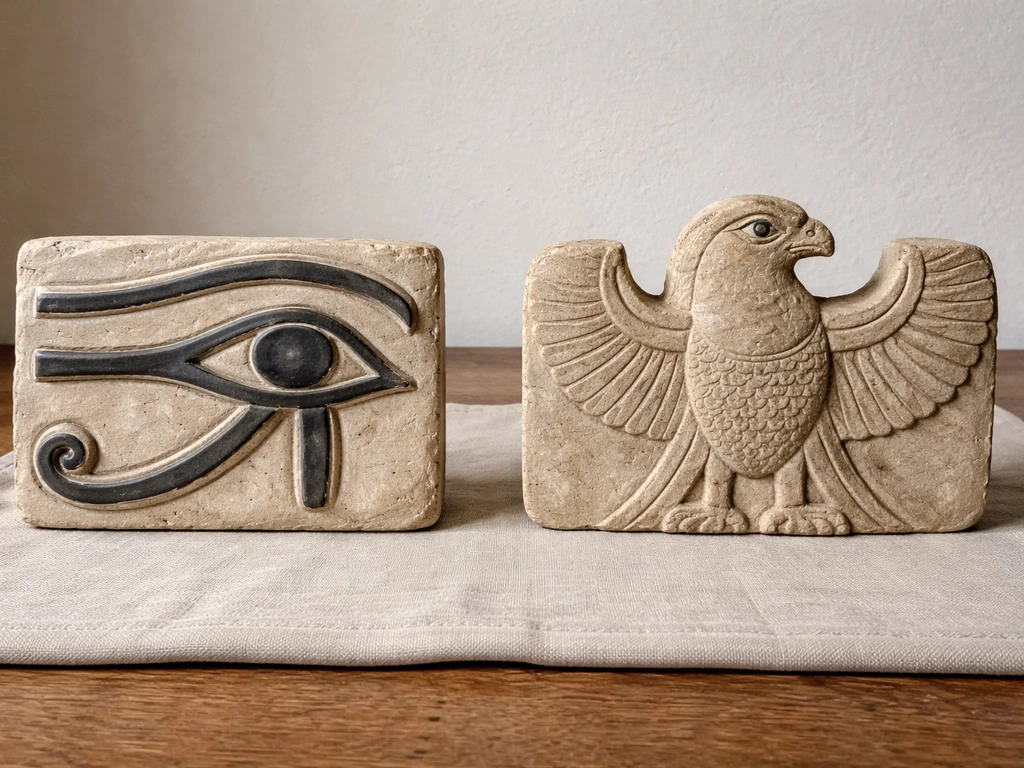
This is where people get genuinely confused, and it matters for interpretation. The Eye of Horus (also called the wedjat eye) is not a picture of Horus. It's a stylized eye with very specific design features: it resembles a human eye with a brow, but the markings below and beside it, specifically a teardrop-shaped line and a curling spiral, are derived from the facial markings of a lanner falcon. The British Museum's description of a wedjat eye amulet puts it plainly: those distinguishing marks are 'the drop and curl' related to the lanner falcon's eye. So the Eye of Horus is itself a bird reference, but it's not the same as seeing a falcon or a falcon-headed figure.
| Symbol | Visual Form | Primary Meaning | What to Ask Yourself |
|---|---|---|---|
| Horus as falcon | Full bird, often perched or with wings spread; sometimes sheltering a figure beneath | Protection, divine kingship, sky authority, renewal | What in my life needs protection or clarity from a higher perspective? |
| Horus falcon-headed figure | Human body with falcon head, often holding a crook or flail | Divine rule, legitimacy, the god in active form | Where am I being called to step into authority or rightful responsibility? |
| Eye of Horus (wedjat) | Stylized eye with teardrop and curl markings; no bird body | Protection, healing, wholeness, restoration | What needs healing or restoration in my life right now? |
The wedjat eye amulet the Met describes is specifically identified as representing 'the healed eye of the god Horus,' referencing the myth in which Horus's eye was injured in his battle with Set and later restored. That restoration narrative makes the Eye of Horus a symbol of healing and wholeness in its own right, distinct from but complementary to the falcon's symbolism of protection and authority. If what you've seen is the eye symbol, the themes to sit with are health, recovery, and wholeness. If it's a falcon or falcon-headed figure, lean into protection, perspective, and leadership.
Where you might encounter Horus bird imagery
Horus imagery appears in a surprising range of contexts, and the setting shapes how you interpret the encounter.
- Museum art and artifacts: Statues, amulets, and reliefs depicting Horus as a full falcon or falcon-headed figure are among the most common surviving Egyptian objects. Seeing one in a museum context is encountering the symbol in its original sacred and royal function.
- Jewelry and tattoos: Horus falcon imagery and Eye of Horus designs are enormously popular in contemporary jewelry and tattoo art. People often choose them for protection, spiritual grounding, or connection to Egyptian heritage. If someone has it tattooed, they've made a deliberate symbolic choice worth asking about.
- Home decor and murals: Egyptian-themed design frequently incorporates Horus, sometimes as a decorative motif without deep spiritual intent, but often as a conscious invocation of protection and strength.
- Dreams and visions: If a falcon or falcon-headed figure appears in a dream with an unmistakably divine or authoritative quality, many people in spiritual communities associate this with Horus symbolism, particularly around themes of guidance, protection, and perspective.
- Actual falcon sightings: Some people who work within Egyptian spiritual traditions or simply feel drawn to Horus see a real falcon in unexpected circumstances and interpret it as a meaningful sign. This is culturally consistent with how the Egyptians themselves understood the falcon.
How to use this meaning practically
Bird symbolism works best when it functions as a lens, not a verdict. The goal is to use the encounter as a prompt for reflection, not to read it as a literal prediction. Here's how to actually do that with Horus imagery.
Start with context: what was happening when you noticed it?
This is the most important question, and it's often skipped. The meaning of any symbol lands differently depending on where you are in your life. If you stumbled on a Horus falcon image during a period of feeling unprotected or vulnerable, the protection symbolism hits directly. If you're navigating a leadership decision, the kingship aspect speaks more loudly. Write down what was on your mind in the days before and after the encounter.
Journaling prompts
- What in my life currently needs protecting? Where am I feeling exposed or unsupported?
- Is there a situation where I need to gain perspective by stepping back and seeing the full picture, falcon-style?
- Where have I experienced loss or disruption recently, and where might restoration be available to me?
- Am I being called into a leadership role or to claim authority I've been avoiding?
- If the image was the Eye of Horus specifically: what is in the process of healing in my life, and what would it mean for that to be fully restored?
Meditation and intention-setting
If you want to work with Horus symbolism in a more deliberate way, the falcon's nature gives you a clear focal point. Sit with the image of a falcon in flight, high above the landscape, able to see everything below without being caught in any of it. That image is the essence of what Horus represents as a sky deity: total awareness without panic, power without aggression, vision without distortion. Use it as a visualization anchor when you need clarity, when you're feeling overwhelmed by the details of a situation and need to zoom out.
If protection is what you're seeking, the image of the falcon's wings spread over the figure below is equally useful. Visualize that protection extending over whatever situation or person needs it. This isn't about magical thinking; it's about using a culturally grounded symbol to focus your intention in a specific, meaningful direction.
Related Egyptian bird symbols: what overlaps and what doesn't
Horus isn't the only sacred bird in Egyptian tradition, and knowing the differences helps you interpret Egyptian bird imagery more accurately when you encounter it.
The ibis is the bird most associated with Thoth, the god of wisdom, writing, and the moon. Where Horus-as-falcon represents executive power, divine authority, and the solar sky, the ibis represents intellectual wisdom, record-keeping, and lunar cycles. If the bird you saw or the symbol you encountered is long-beaked and wading rather than sharp-taloned and soaring, you're likely in Thoth's territory, not Horus's. The wading bird that was sacred in ancient Egypt is often linked with Thoth rather than Horus-as-falcon. The wading birds of ancient Egypt carried their own distinct sacred weight, quite different from the falcon's aerial dominance. In ancient Egypt, the falcon was the bird most closely regarded as sacred, especially through Horus symbolism.
The Bennu bird, often associated with the phoenix archetype in later Greek interpretation, was the bird of Ra and Atum, connected to creation and the primordial sunrise. The Bennu's symbolism is more specifically about origins and creation than about protection and kingship. The Egyptian bird hieroglyph system as a whole is a rich separate topic, with different bird glyphs carrying different phonetic and symbolic meanings depending on context. Egyptian bird hieroglyph meaning is a wider topic, since different bird glyphs change meaning based on their context.
The sphinx, though not strictly a bird symbol, occasionally appears with wings in Egyptian and later Greek traditions, which sometimes creates confusion with falcon imagery. And the hamsa, while it incorporates an eye motif that visually rhymes with the Eye of Horus, comes from a distinct cultural tradition and carries its own separate symbolic history.
Within the Egyptian framework specifically, Horus stands apart because of the directness of his avian identification. He isn't just associated with a bird; he is the falcon, and that distinction makes his symbolism unusually consistent and interpretable across thousands of years of Egyptian religious expression. When you see the falcon form, you're reading one of the clearest symbolic languages that ancient Egypt left behind. African mask imagery with a bird on the head is often used to signal status, protection, and spiritual connection, depending on the culture and region African mask with a bird on head meaning.
FAQ
How can I tell whether the Horus symbol I’m seeing is the Eye of Horus or a falcon representation?
If the symbol is an outlined eye with the “drop and curl” style markings, it is the wedjat (Eye of Horus). If it shows feathers, a beak, or a full falcon silhouette, it is the Horus falcon theme. When in doubt, check for whether it is primarily an eye shape (Eye of Horus) or primarily a bird/wing composition (Horus as falcon).
Does “Horus bird meaning” imply a literal protection or a guaranteed outcome?
Horus imagery can be protective and empowering, but it is not meant as a guaranteed shield from consequences. The most useful way to use it is as a prompt for how you will act next (for example, seeking clearer oversight in a decision, or choosing leadership behaviors aligned with watchfulness), rather than expecting an automatic outcome.
What should I watch out for when someone says “Horus bird” is a spirit animal or totem?
Spiritual communities sometimes use “Horus bird” language for spirit animals, but Egyptian sources are specific: Horus is identified directly with the falcon. If you see a “spirit bird Horus” claim, you can still work with it symbolically, but interpret it as personal meaning, not as an inherited Egyptian doctrine.
If I’m trying to interpret a tattoo or necklace, how do I decide which theme fits best?
You can narrow the meaning by aligning the imagery with your immediate concern. For example, wings spread often points to protection, falcon-in-flight to elevated perspective and clarity, and the healed-eye motif to recovery or restoration after disruption.
Can the artistic style of a Horus falcon image change its meaning?
Art style can affect emphasis. A realistic falcon pose tends to foreground biological traits like sharp vision and dominance, while highly stylized or symmetrical wing images tend to foreground sheltering protection and royal authority. Use the pose and composition as your “clue,” not just the fact that it includes a falcon.
What’s a common mistake people make when they interpret Eye of Horus-inspired designs?
Yes, the same visual family can be conflated. Some people mix Eye of Horus with general “protection eye” symbols, but in Egyptian tradition the wedjat’s specific markings matter. If the design lacks the distinctive lanner-falcon-inspired drop and curl, you may not be looking at a true wedjat representation.
How do I interpret Horus imagery if it shows up during a leadership or responsibility period?
In Egyptian royal contexts, the falcon can imply legitimate authority, rightful rule, and oversight. If you are using it personally, consider whether you are seeking guidance about responsibility, boundaries, or decision-making power, since those are the themes the imagery is “trained” to emphasize.
What’s a practical way to use Horus symbolism for reflection instead of making it into a prediction?
If your goal is reflection rather than prediction, use a short before-and-after check: write what you were worried about, how the image relates to that worry, and one concrete action you will take within a week. This keeps the symbol as a lens, not a verdict.
How can I avoid confusing Horus with other Egyptian bird symbolism like Thoth or Ra-related birds?
Different sacred birds in Egypt can be mixed up visually. A long-beaked, wading bird is typically closer to Thoth’s ibis theme, not Horus’s falcon theme. If the bird is soaring or sharp-taloned, Horus is more likely the referent.
Next Articles
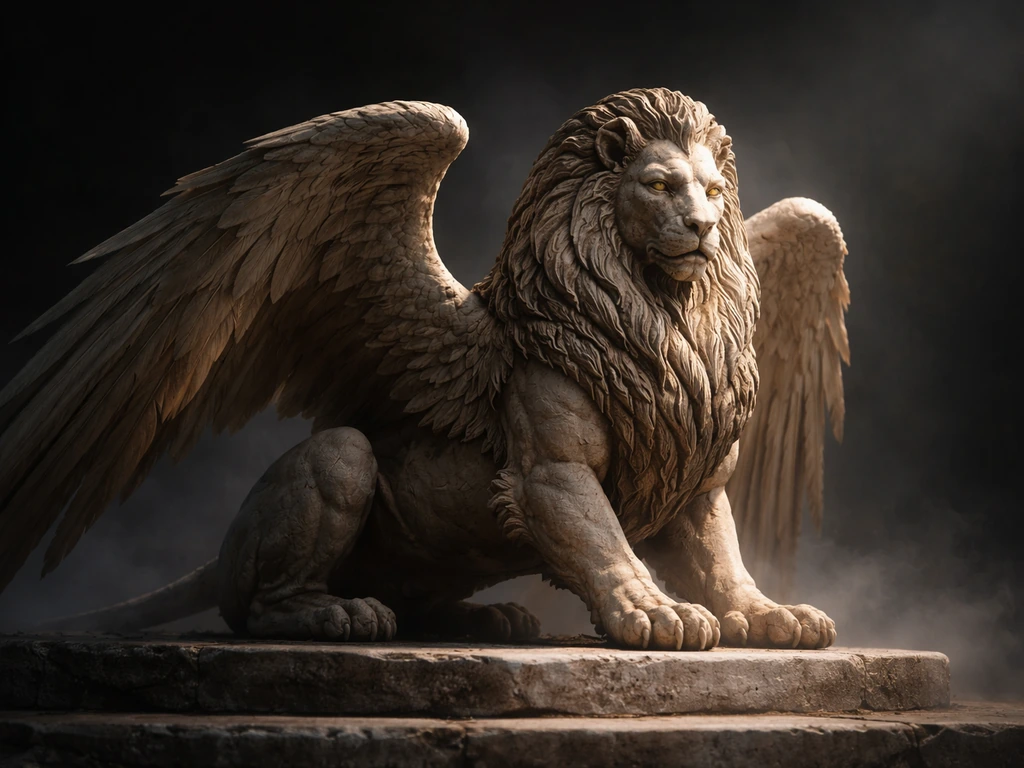
Sphinx Bird Meaning: Symbolism, Spiritual Messages, and Clues
Unpack sphinx bird meaning by pairing sphinx imagery with bird symbolism, plus prompts to interpret dreams, art, and enc
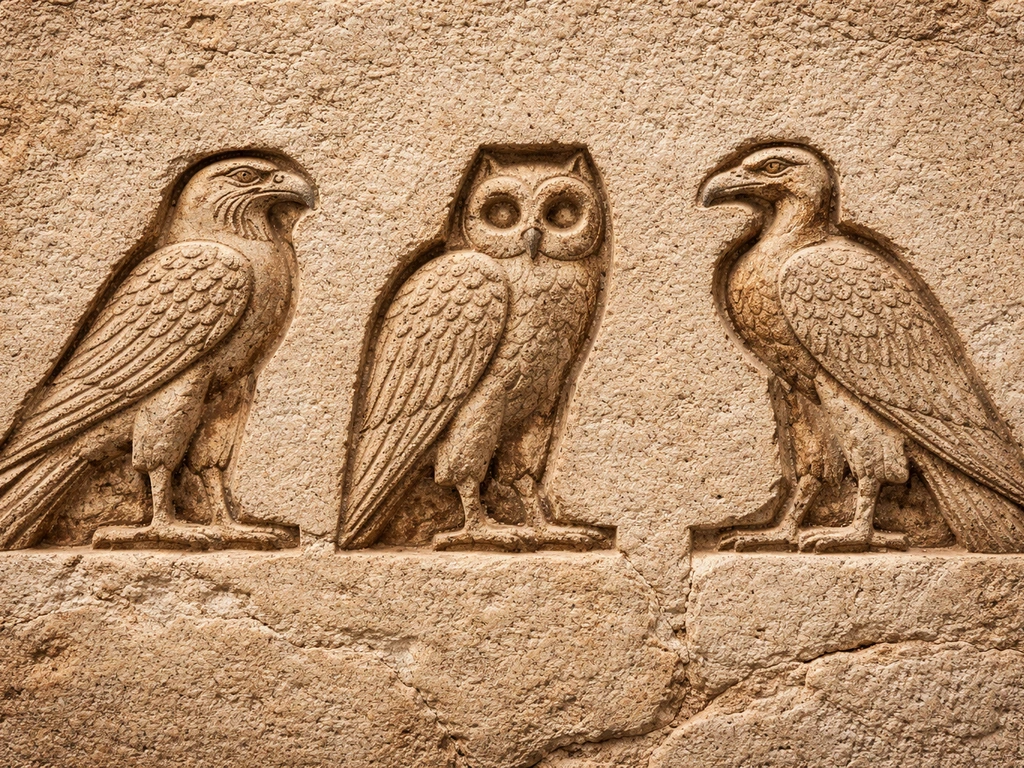
Egyptian Bird Hieroglyph Meaning: Guide to Determinatives
Learn Egyptian bird determinatives: identify bird glyphs, phonetic vs semantic roles, and confirm meanings from text con

Wading Bird Sacred in Ancient Egypt: Identify and Meaning
Identify Egypt’s sacred wading bird and its symbolism, from life-giving waters to order and rebirth meanings.