
The turkey bird is not mentioned in the Bible. Not once, in any translation that accurately reflects the original Hebrew or Greek. This is not a matter of interpretation or theological debate, it is a straightforward historical and linguistic fact: turkeys are native to the Americas, the Bible was written in the ancient Near East, and the two worlds had no contact. No biblical author ever saw one.
Is Turkey Bird Mentioned in the Bible? What to Check

Eleanor Hartwell
16 May 2026
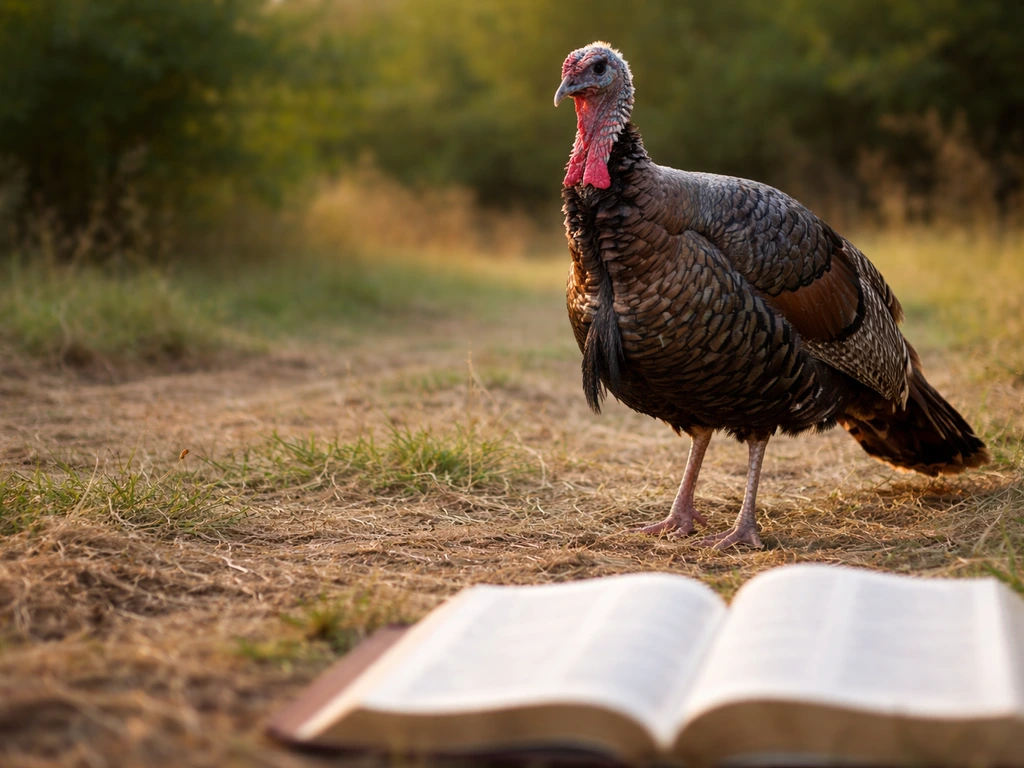
Why the Word 'Turkey' Creates So Much Confusion
The confusion here is almost entirely a language problem, and once you understand where the word 'turkey' actually comes from, the whole question untangles itself. The English word 'turkey' has a surprisingly twisted history. By the 1540s, English speakers were already using 'turkey' or 'turkey-cock' as a name for the guinea fowl, an [African bird that reached Europe through Ottoman trade routes, giving it the geographic association with Turkey](https://en. wikipedia.
org/wiki/Turkey_%28bird%29). When Europeans encountered the large New World bird in the 1550s, they apparently thought it resembled the guinea fowl enough to call it by the same name. Merriam-Webster notes that the word “turkey” originally referred to “turkey-cock” or “turkey-hen,” an old term for guinea fowl, and was later applied to the New World bird because it seemed reminiscent of that older bird [“turkey-cock” or “turkey-hen”](https://www. merriam-webster.
com/dictionary/turkey). The label stuck, and the American bird permanently inherited the name 'turkey. '
The Bible, of course, was written thousands of years before any of this happened. The Hebrew scriptures and the Greek New Testament predate European contact with the Americas by well over a millennium. So when you pick up a Bible and search for the word 'turkey,' you are searching for a 16th-century English word in texts that were written in ancient Hebrew, Aramaic, and Greek. The bird the word now describes simply did not exist in the biblical world.
What to Check in Your Bible: Passages People Often Point To

A handful of passages get cited when people ask this question, usually because an older English translation uses an unusual bird name that modern readers associate with turkey. The most commonly flagged sections are the food and dietary law lists in Leviticus 11 and Deuteronomy 14, the provision of birds for food in Numbers 11 and Psalm 105, and a few scattered references to 'fatted fowl' or 'birds' in the wisdom and poetic books.
Kings 4:23, for example, refers to 'fatted fowl' as part of Solomon's daily provisions. None of these passages use the word 'turkey,' but they describe birds in culinary and sacrificial contexts, which is why they get pulled into the conversation. Micah 1:16 mentions birds as part of the passage's imagery, not turkeys.
The practical test is simple: open your Bible to any of those passages and look for the word 'turkey.' You will not find it in any translation that uses responsible scholarly methods, not the KJV, not the NIV, not the ESV, not the NASB. If you do find a translation that uses the word 'turkey,' treat that as a significant red flag about the quality of that translation, not as evidence that the turkey bird is biblically documented.
What the Hebrew and Greek Actually Say
When you go to the original languages, the picture is very clear. The Hebrew scriptures use several bird-related terms: 'tsippor' (a general word for bird or small bird), 'ayit' (a bird of prey), 'orev' (raven), 'yonah' (dove), 'nesher' (eagle or vulture), and 'selav' (the quail that God provided in the wilderness). None of these correspond to a turkey. The food lists in Leviticus 11:13-19 and Deuteronomy 14:12-18 name specific birds that are forbidden, using Hebrew terms that scholars and linguists have linked to owls, vultures, herons, hoopoes, and bats. Permitted birds for food include the dove and the pigeon, species that were well-known in the ancient Near East.
In the Greek New Testament, the generic term 'peteina' covers birds broadly, and 'strouthion' refers specifically to sparrows in passages like Matthew 10:29 and Luke 12:6. None of the Greek terms map onto anything resembling a turkey. When translators encounter these ancient words, any responsible rendering produces terms like 'bird,' 'sparrow,' 'dove,' 'eagle,' or 'quail', never 'turkey,' because the original authors had no word for a bird they had never encountered.
Birds in the Bible That Feel 'Turkey-Adjacent'
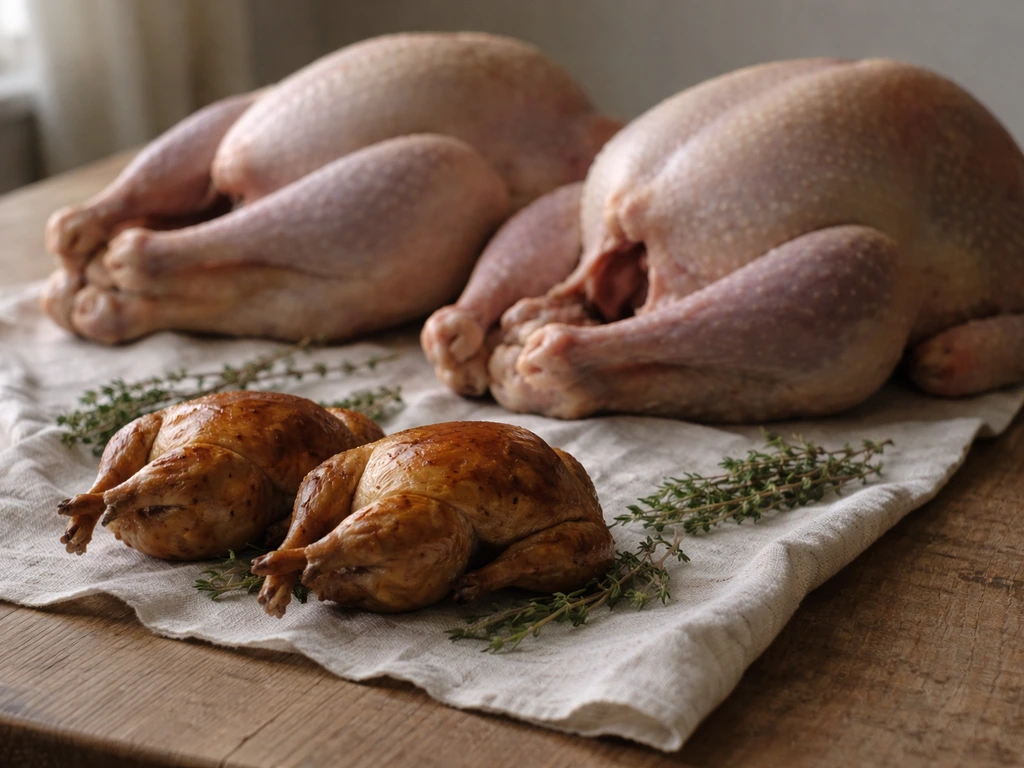
Even though the turkey itself is absent, the Bible has plenty to say about large game birds, birds used as food, and birds in sacrificial contexts. If you are asking, “What is the first bird mentioned in the Bible,” you will still find the turkey is not part of that early bird list. God does not name a specific “favorite bird” in Scripture, but the Bible often highlights certain birds for provision, symbolism, and spiritual lessons.
If you are specifically wondering what bird the Bible mentions when it is sometimes mistakenly linked to turkey, the best place to start is with the Hebrew and Greek bird terms discussed in this guide turkey itself. Understanding these creates the honest picture of where the turkey question is coming from.
- Quail (selav): The most direct parallel to the turkey as a food bird. God provides quail miraculously for the Israelites in the wilderness (Numbers 11:31-32, Exodus 16:13), and this is a concrete, named bird used specifically for eating. If you are looking for a large-scale divine provision of bird meat, this is the actual biblical story.
- Fatted fowl (1 Kings 4: 23): Solomon's daily provisions include 'ten fat oxen, twenty pasture-fed cattle, a hundred sheep, and deer, gazelles, roebucks, and fatted fowl.' The Hebrew here does not specify the species, and scholars generally understand it as domestic poultry or well-fed birds — not turkeys.
- Pigeons and turtledoves: These are the birds explicitly approved for sacrifice throughout Leviticus. They are small, accessible, and the standard offering for those who cannot afford a larger animal (Leviticus 5:7, 12:8).
- The 'great speckled bird' in Jeremiah 12: 9: This passage uses the image of a strange or multicolored bird as a metaphor for Israel. Scholars debate the exact species, but it functions as symbolism, not as a menu item.
- Birds of prey and unclean birds: The long lists in Leviticus 11 and Deuteronomy 14 name forbidden birds, giving us a window into the avian world the biblical authors knew — owls, hawks, cormorants, pelicans, storks, and herons. Turkeys are absent because they did not exist in that world.
How to Verify This in Your Own Bible
If you want to confirm this for yourself rather than take anyone's word for it, a concordance is the right tool. A concordance indexes every word in a specific Bible translation and tells you every verse where that word appears. Here is the practical approach:
- Use a Strong's Concordance (available free on sites like BlueLetterBible.org or StudyLight.org). Search for 'turkey' in the English index. You will find zero results.
- Compare translations side by side using a parallel Bible tool like BibleGateway.com. Look up 1 Kings 4:23, Numbers 11:31-32, and Leviticus 11:13-19 in KJV, NIV, ESV, and NRSV simultaneously. Notice that 'turkey' never appears in any of them.
- Check the Hebrew or Greek original by clicking on any word in those passages on BlueLetterBible. You can see the exact Hebrew or Greek term, its transliteration, and its range of meanings. None will point to a New World bird.
- Look at the word history in a reference like Merriam-Webster or an etymology dictionary. Confirming that 'turkey' as a bird name dates to the 1540s — centuries after the canon closed — is the clearest possible proof that the biblical authors could not have used it.
- Cross-reference with a Bible dictionary or theological wordbook (such as the Theological Wordbook of the Old Testament) under entries for birds. These list every Hebrew bird term and their scholarly identifications. Turkey will not appear.
| Bible Passage | Translation Used | Word in English | Original Hebrew/Greek Term | Most Likely Actual Bird |
|---|---|---|---|---|
| Numbers 11:31-32 | KJV / NIV / ESV | Quail | Selav (Hebrew) | Quail (Coturnix coturnix) |
| 1 Kings 4:23 | KJV / NIV / ESV | Fatted fowl | Bari (fat) + generic bird | Unspecified domestic poultry |
| Leviticus 11:13-19 | KJV / NIV / ESV | Various forbidden birds | Multiple Hebrew terms | Owls, vultures, herons, hoopoe |
| Matthew 10:29 | KJV / NIV / ESV | Sparrow | Strouthion (Greek) | House sparrow |
| Genesis 8:7-12 | KJV / NIV / ESV | Raven / Dove | Orev / Yonah (Hebrew) | Raven / Dove |
What Bird Symbolism in the Bible Actually Offers You
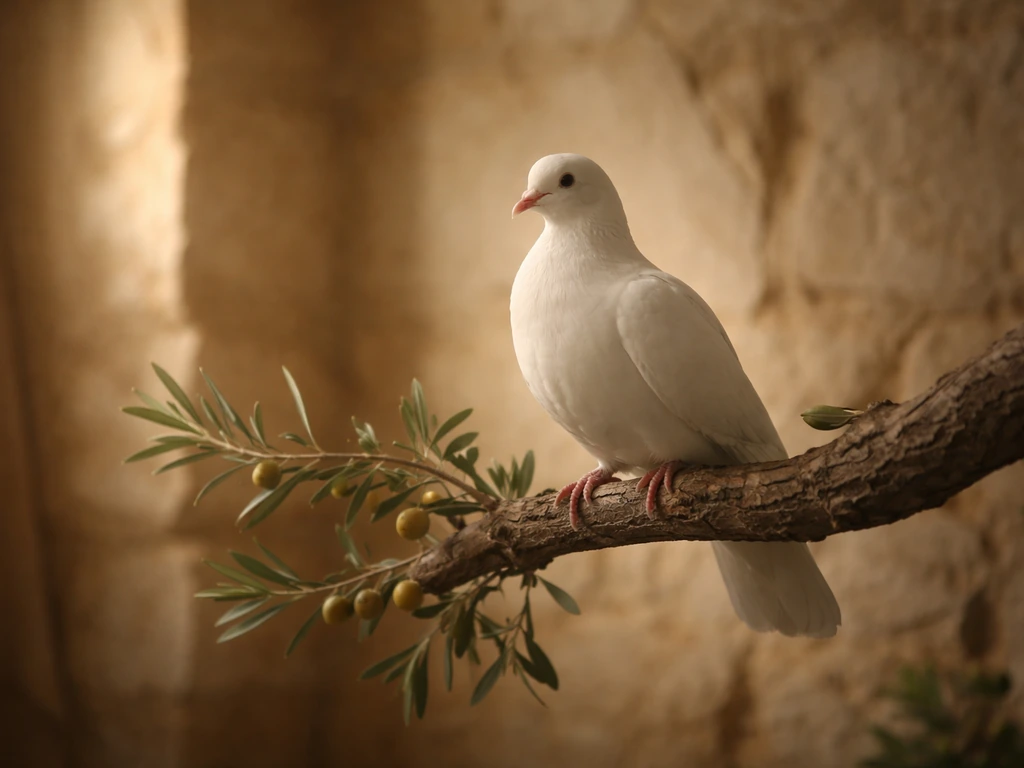
The absence of the turkey from Scripture does not make your interest in bird symbolism any less spiritually meaningful. The Bible is extraordinarily rich with bird imagery, and those images carry freight that is worth sitting with. Ravens appear as God's messengers and as examples of divine provision (Luke 12:24). Rabbens are described in Scripture as God providing for people, which is why they come up when asking what birds God provided for the Israelites Ravens.
Doves signal peace and the presence of the Holy Spirit (Matthew 3:16). Eagles represent strength and renewal (Isaiah 40:31). Sparrows, the cheapest birds sold in the market, become the basis for one of Jesus's most tender assurances: that God notices even the smallest of creatures, and by extension, you.
If you came to this question because of Thanksgiving, or because you were curious whether the bird at your table has any sacred resonance, there is still something meaningful to find, just not in a direct biblical citation. The turkey's symbolism in American tradition draws heavily on themes of abundance, gratitude, and communal sharing, all of which the Bible addresses at length through other imagery.
If you want the deeper cultural story behind why is turkey the thanksgiving bird, it helps to compare that tradition with the Bible's broader bird symbolism themes. The quail in the wilderness, for instance, is a profound story of divine provision in a place of scarcity. That spiritual thread connects to the same human experience that the turkey represents on the Thanksgiving table, even if the bird itself is different.
When studying bird symbolism across religious traditions, the honest approach is always to let the original text speak for itself before layering on modern associations. The Bible's bird imagery is grounded in the specific birds the ancient Near Eastern world knew: ravens, doves, eagles, sparrows, quail, storks, and swallows. Each of these carries layered meaning across Jewish, Christian, and even broader Near Eastern traditions.
The turkey, as a genuinely New World creature, simply belongs to a different chapter of bird symbolism, one rooted in Indigenous American traditions and later in colonial American culture, rather than in the ancient scriptures. If you are still asking, “what is the great speckled bird in the Bible,” the key is to look at what the Hebrew actually says rather than assuming it is about a turkey-like bird.
How to Read Bird Encounters Through a Biblical Lens Anyway
If you encounter a turkey in the wild or find yourself drawn to it as a symbol, the Bible's general framework for birds still applies. Scripture consistently presents birds as creatures under God's care, as signs woven into the fabric of creation, and as metaphors for spiritual states, freedom, vulnerability, provision, and transcendence.
If you are looking for something like a red bird as a sign, the biblical lens still starts with what God says about birds and their role in creation birds as creatures under God's care. Proverbs 1:17 notes that 'a net is spread in vain in the sight of any bird,' a line that speaks to awareness and instinct. Psalm 84:3 describes the sparrow finding a home near God's altar, turning a mundane bird into an image of belonging.
The impulse to find spiritual meaning in birds is not only valid within a biblical worldview, it is modeled throughout the text itself. What matters is matching the symbolism you draw to a source that is honest about where it comes from.
FAQ
If no translation uses the word “turkey,” how do people still end up convinced it’s in the Bible?
Most cases come from (1) searching a modern English translation for “turkey” and accidentally using a version that swaps in unusual wording, or (2) confusing generic references to “birds” or “fatted fowl” with the specific modern bird. The article’s checks show that when reputable scholarly methods are used, the specific term never maps to a turkey.
What should I search for if I want to check the Bible for the turkey claim in my own translation?
Instead of searching only for “turkey,” search for the English terms your translation uses for birds in those key categories, such as “bird,” “fowl,” “sparrow,” “quail,” “dove,” “eagle,” and “owl,” then compare them to the passage list you see referenced (Leviticus 11, Deuteronomy 14, Numbers 11, and the Gospels’ sparrow sayings). This helps you test whether you’re dealing with a specific bird term or just a generic “birds” reference.
Could a turkey fit under a broad Hebrew or Greek word like “bird” or “peteina”?
Broad categories (like generic “bird” terms) could include many species in principle, but the question is whether the ancient text points to a turkey-like bird. Since the original authors named specific types tied to their known animals, responsible translators render those terms as the traditional ancient identifications, not as a New World species the text did not have in view.
Do the dietary law passages rule out all turkey, or is the issue simply that turkey is not discussed?
They do not address turkeys specifically, because the Hebrew lists identify particular kinds of birds by their own ancient terms. So the correct conclusion is not “turkeys are forbidden or permitted,” but “the classification lists were never written to cover turkeys as a category.”
What about the KJV, since some people claim it mentions “turkey”?
If you ever find “turkey” in an English Bible, treat that as a translation issue, not as proof of biblical turkey. The practical approach is to look at the underlying Hebrew or Greek term in that passage, then see how modern translations render it using standard scholarly methods.
Are there any verses where a turkey could be implied indirectly through “provision” or “game birds”?
The Bible does include birds in provision contexts, but those passages point to ancient, identifiable birds such as quail in wilderness provision, and sparrows in Jesus’ teachings. Indirectly drawing “turkey” from those themes usually reflects modern cultural substitution rather than the text’s bird identities.
If the turkey is absent, what bird-related passages should I look at first for spiritual meaning?
For bird symbolism grounded in Scripture, start with the passages highlighted in the article, such as ravens tied to divine care and provision, doves tied to peace and the Holy Spirit, eagles tied to strength and renewal, and sparrows tied to God’s attention to even the smallest creatures.
Does Thanksgiving-era symbolism (abundance and gratitude) have any real connection to the Bible?
The themes overlap, but the connection is thematic rather than textual. The Bible supports gratitude and communal provision broadly through its own imagery and practices, but it does not give turkey-specific symbolism as a direct biblical citation.
What’s the best tool to confirm this claim without trusting a single website or video?
Use a concordance for your specific Bible translation (or a word-search feature in a Bible app that lists the exact occurrences). Then verify the underlying Hebrew or Greek for any surprising result, because a single English substitution can mislead your conclusion.
If I’m writing or teaching, how can I explain this claim without sounding dismissive?
Focus on the “where the word comes from” issue and the “what the ancient text actually names” issue. A helpful framing is that the Bible uses bird terms tied to ancient animals, while “turkey” is a modern English label rooted in later European naming history for a New World bird.
Next Article
What Is the First Bird Mentioned in the Bible?
Identifies the earliest biblical bird reference and explains its spiritual symbolism, plus how to verify with verse sear