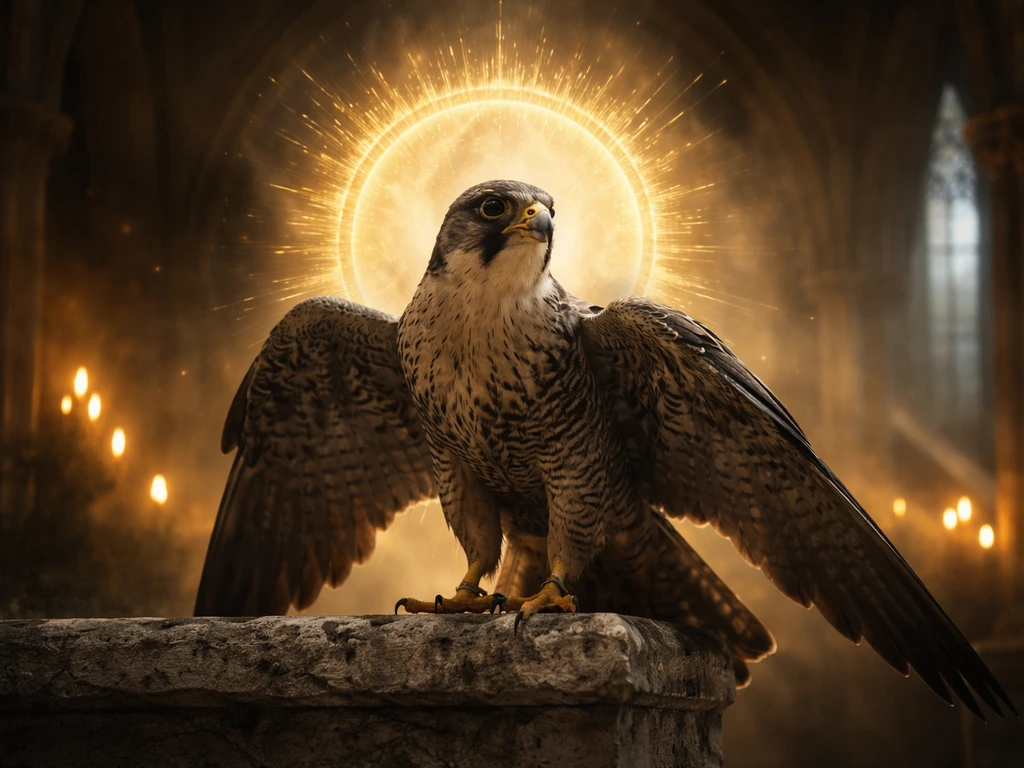
If you searched 'bird of prey Jim Morrison,' you are most likely looking for one of two things: the spiritual meaning of the bird-of-prey archetype in Morrison's poetry, or a specific track called 'Bird of Prey' that appears on the 1995 remastered edition of the posthumous Doors album An American Prayer. Both angles are worth understanding, and they actually reinforce each other. The song is a short spoken-word piece in Morrison's own voice, and its imagery draws on the same ancient raptor symbolism that spans Egyptian, Greek, Native American, and biblical traditions. Whether you came here through Fatboy Slim's 2000 track 'Sunset (Bird of Prey),' which samples Morrison's vocals directly, or you encountered the phrase in Morrison's poetry, the spiritual meaning underneath is consistent: the bird of prey is a symbol of raw clarity, fierce vision, and the willingness to act without hesitation.
Bird of Prey Jim Morrison Meaning: Symbolism, Dreams, and Intent

What 'Bird of Prey' Actually Means as a Spiritual Symbol
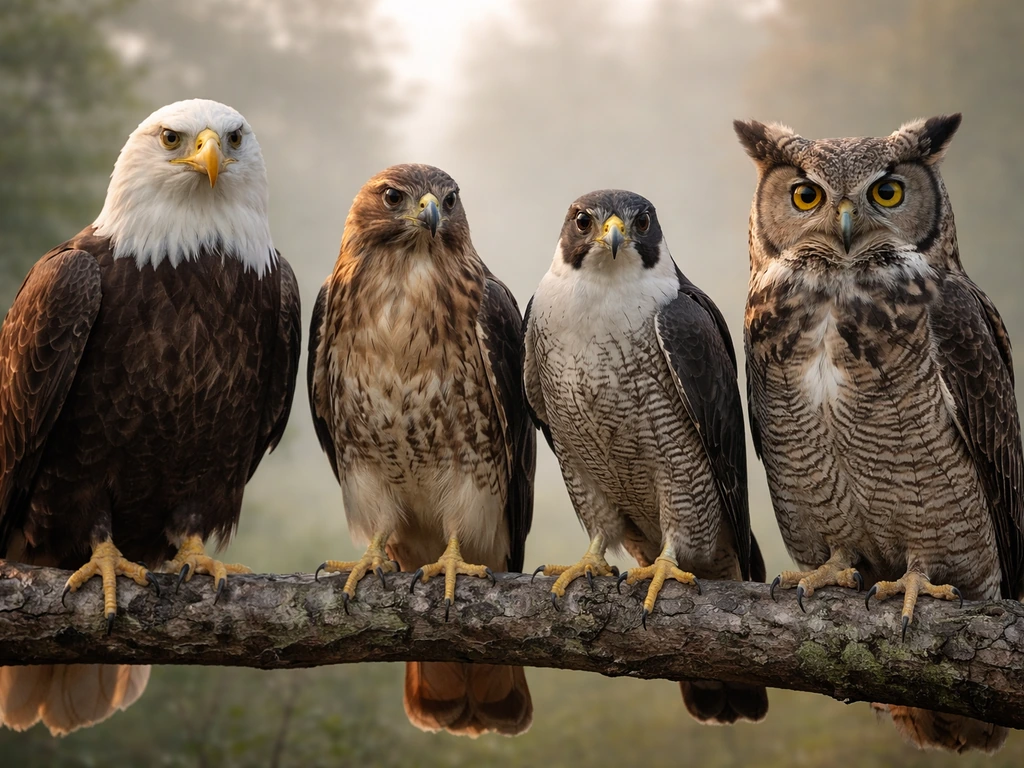
A bird of prey, technically called a raptor, is any predatory bird that hunts by sight and seizes prey with talons. The UCDavis California Raptor Center notes that “raptor” is a general term for predatory birds, including diurnal birds of prey such as hawks, eagles, kites, and falcons, and nocturnal birds of prey such as owls A bird of prey, technically called a raptor, is any predatory bird. That category includes eagles, hawks, falcons, owls, kites, and vultures. In symbolic terms, raptors are never just about predation. Across virtually every culture that has written down its beliefs, these birds sit at the intersection of sky and earth, spirit world and physical world. They are messengers, guardians, and judges. The predatory quality itself becomes symbolic: the capacity to see clearly, to act decisively, and to take what is needed without sentimentality.
It is worth noting that the Hebrew word 'nesher,' used throughout the Old Testament and often translated as 'eagle,' almost certainly covered a range of large birds of prey, possibly including the griffon vulture. This matters because the symbol is not locked to one species. When Isaiah 40:31 promises that those who wait on the Lord 'shall mount up with wings as eagles,' the underlying imagery is of a large, soaring raptor whose effortless climb mirrors spiritual renewal. The bird of prey in scripture functions as a carrier of both promise and judgment, depending on context. Eagles appear in passages of restoration (Isaiah 40:31, Deuteronomy 32:11) and in passages of swift, terrifying judgment. That duality is central to understanding the symbol wherever it appears, including in Morrison's work.
Jim Morrison and 'Bird of Prey': What You Are Actually Looking At
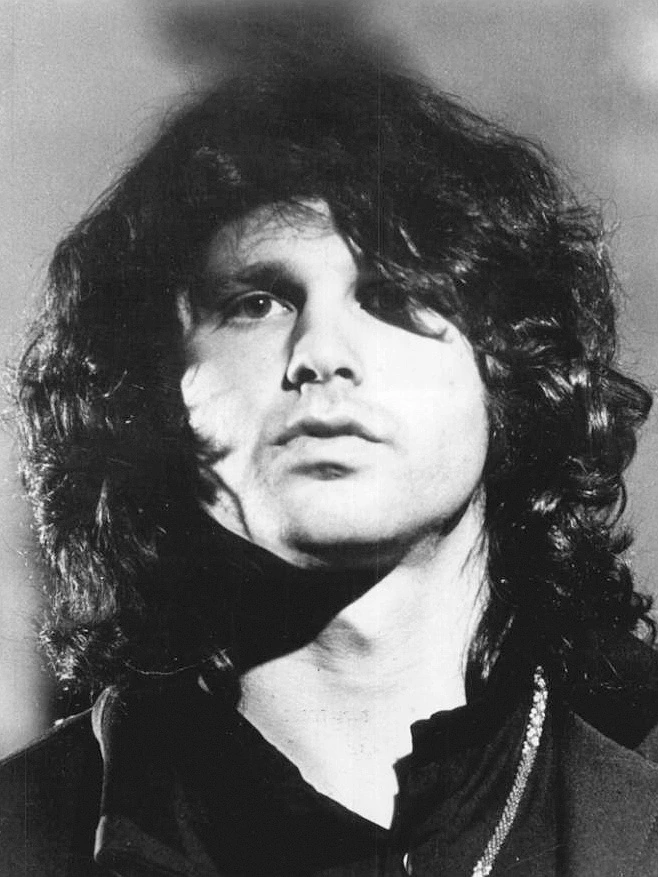
'Bird of Prey' is a real, titled piece. It appears as a bonus track on the 1995 CD remaster of An American Prayer, the posthumous album of Jim Morrison's spoken-word poetry, originally released in 1978. The piece consists of Morrison's recorded voice performing a poem, set to Doors music. Morrison's vocal from this recording was later sampled by Fatboy Slim for 'Sunset (Bird of Prey)' in 2000, which is one reason a new generation of searchers arrives at this phrase. Morrison's poetry in general, and An American Prayer specifically, draws on shamanic imagery, Dionysian mythology, and the American West. Birds of prey fit naturally into that world. They are wild, they hover at the edge of civilization, and they watch from above. For Morrison, who openly identified with the shaman archetype, the bird of prey was a figure of visionary power, someone who sees the whole field while others stay on the ground.
So if you were wondering whether 'bird of prey Jim Morrison' points to a generic metaphor or a specific artifact, the answer is both. There is a named track you can listen to, and there is a layered symbolic tradition feeding into it. Morrison did not invent the symbol; he inherited it from a long lineage and poured his own persona into it. His wider poetry collection, compiled in volumes including The American Night (published by Penguin), extends this imagery further. The bird of prey in Morrison's hands becomes something close to the shaman's spirit guide, the creature that carries vision and moves between worlds.
The Core Spiritual Meanings Behind Each Major Raptor
Eagles, hawks, falcons, and owls each carry their own specific weight, though they share common ground. Understanding which raptor you have encountered, dreamed about, or read about helps you land on the right interpretation.
| Bird | Core Symbolic Meaning | Key Tradition |
|---|---|---|
| Eagle | Strength, spiritual renewal, divine messenger, sovereignty | Biblical, Greek (Zeus), Roman (Jupiter), Sioux |
| Falcon | Kingship, protection, clarity of vision, swift decisive action | Egyptian (Horus), Celtic, modern spiritual frameworks |
| Hawk | Clear perception, critical thinking, mental focus, warning to pay attention | Native American, contemporary spiritual practice |
| Owl | Wisdom, hidden knowledge, liminal transition, sometimes death omen | Greek (Athena/Minerva), Roman folk belief, many Indigenous traditions |
Raptors possess eyesight estimated to be four to eight times sharper than human vision. That biological fact feeds directly into the spiritual meaning. When you see a hawk perched and watching, it genuinely perceives details you cannot. That is not metaphor; it is behavior. The symbolism grows from observation. A bird that sees everything from altitude and strikes with precision becomes, in the human imagination, a stand-in for clarity, foresight, and purposeful action. That is why raptor imagery ends up in coronation rituals, on military standards, and in the visions of poets.
How Different Cultures Read the Raptor
Ancient Egypt
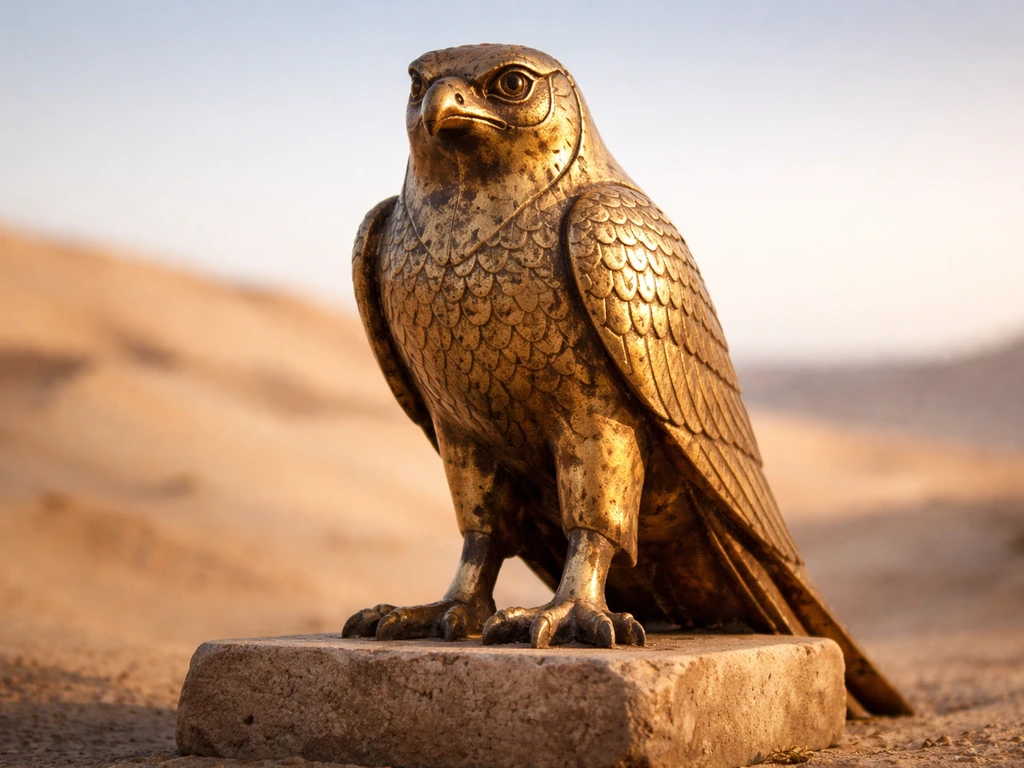
In ancient Egypt, the falcon was the form of Horus, one of the most significant deities in the entire pantheon. Horus represented kingship, healing, protection, the sky, and the sun. Pharaohs were considered earthly manifestations of Horus, which means the falcon was literally royal. The Eye of Horus, one of the most widely recognized symbols from ancient Egypt, represents well-being, healing, and protective sight. When you trace 'bird of prey' symbolism back to its oldest visual traditions, the Egyptian falcon is a foundation stone.
Greek and Roman Worlds
In Greek religion, the golden eagle was the bird of Zeus. In Roman religion, the same role belonged to Jupiter. The eagle carried divine authority, literally serving as the messenger between the king of the gods and the human world. The owl belonged to Athena, goddess of wisdom, and appeared on Athenian coins as her emblem. Roman-era folk belief also associated certain owls with death omens, showing how the same bird could carry both wisdom and warning depending on context. The 'bird of prey as judge' reading that runs through biblical texts has a parallel in these classical traditions.
Native American Traditions

Eagle symbolism holds significant ceremonial and spiritual importance across many Native American communities. Eagle feathers are used in sacred ceremonies, and their use is protected under U.S. federal law (the Eagle Feather Law), which provides limited exemptions for enrolled members of federally recognized tribes for bona fide religious practice. This legal framework reflects how seriously the spiritual significance of these birds is treated in living traditions. The eagle is widely understood as a messenger between humans and the Creator, carrying prayers upward and bringing guidance back. Morrison's shamanic persona was partly inspired by this tradition, though filtered through his own artistic lens.
Biblical Contexts
The bird of prey in scripture works in two directions. If you are wondering who this bird of prey is in the Bible, the most common idea is the eagle-like raptor imagery found throughout both the Old and New Testament who is the bird of prey in the bible. In the Bible, birds of prey are often tied to both divine protection and spiritual judgment, depending on context bird of prey in scripture. On one side you have Isaiah 40:31 and Deuteronomy 32:11, where the eagle carries images of protection, strength, and renewal. On the other side, raptor imagery in Matthew 24:28 and Luke 17:37 connects birds of prey with judgment and the consequences of spiritual neglect. In biblical tradition, “a bird of the air shall carry the voice” points to a message that rises and spreads beyond the immediate moment. There is also a prophetic figure described in Isaiah 46:11 as a 'ravenous bird from the east,' called to execute divine purpose. These dual roles, protector and executioner, guardian and judge, are not contradictory. They reflect the full range of what the raptor archetype holds.
Seeing a Bird of Prey in Real Life: What to Actually Do With It

When people encounter a hawk circling overhead, a falcon perched outside their window, or an owl calling at night, the question is usually the same: what does this mean for me right now? The honest answer is that the symbolism does not hand you a predetermined message. Hawk energy in spiritual frameworks is interpreted through your emotional state and current situation. Mindbodygreen's description of hawk symbolism puts it plainly: the hawk's message is about clear vision and critical thinking, and what that looks like in your life depends on what decision or transition you are currently facing.
A few practical approaches that help most people work with raptor encounters meaningfully:
- Notice what you were thinking or doing at the exact moment of the sighting. The bird's appearance often punctuates a thought already in motion.
- Ask whether clarity or decisiveness is what you are being called toward. The raptor does not hesitate. If you have been hesitating, that contrast is worth examining.
- If you found a feather, consider which bird it came from if you can identify it. The species shifts the emphasis: eagle feathers carry sovereignty and renewal, owl feathers carry hidden knowledge, hawk feathers carry perception and focus.
- In dreams, pay attention to whether the raptor is soaring, hunting, or perched. Soaring often signals perspective and elevation. Hunting can suggest focused pursuit of a goal. Perched and watching is typically a call to observe before acting.
- Journal the encounter the same day. Raptor symbolism tends to illuminate something already present but unacknowledged, and writing quickly captures that before it fades.
If you arrived at this topic through Morrison's work specifically, consider that the poem 'Bird of Prey' sits inside a larger project about vision, transcendence, and the American psyche. Morrison's bird of prey is not a comforting symbol. This idea also shows up when you look at how mother mary is a bird of prey across certain spiritual interpretations. It is an uncompromising one. If you feel called by it, the question it probably wants you to answer is: what do you see from where you are, and what are you willing to do about it?
Match the Meaning to Your Situation
Before settling on one interpretation, run through these questions. They help narrow down which angle of the symbol is actually speaking to you.
- Did you encounter this phrase through music, specifically through Fatboy Slim's 'Sunset (Bird of Prey)' or through The Doors? If yes, start with the Morrison poem itself and read or listen to it in full before applying a broader spiritual frame.
- Are you drawn to Morrison's persona as a shaman-poet figure? If so, the bird of prey in his work is specifically about visionary clarity and the refusal to be domesticated by convention.
- Did you see an actual raptor recently, or find a feather? If yes, focus on the specific bird (eagle, hawk, falcon, owl) and the situational context rather than the Morrison angle.
- Are you in a period of decision-making, transition, or needing to cut through confusion? Raptor symbolism across nearly every tradition points toward sharpened perception and purposeful action as the core message.
- Are you interested in the biblical angle? There the symbol splits: if you are seeking renewal and strength, Isaiah 40:31 is the relevant frame. If you sense judgment or an urgent call to pay attention, look at the prophetic raptor passages.
- Is this about a dream? Dreams of birds of prey most commonly reflect a need to rise above a situation and see it from elevation, or they signal that something is being overlooked at ground level.
The 'bird of prey Jim Morrison' search tends to pull together people with very different actual questions. Some are music fans who want to know what the poem says. Some are spiritual seekers who hit the phrase in Morrison's work and want to understand its symbolic weight. If you are also looking for the bird of jove meaning, connect it back to the same raptor symbolism of clarity, authority, and decisive action. Some came through Fatboy Slim and followed the sample back to its source. All of those paths lead to the same territory: a bird that sees everything, waits for the right moment, and acts without apology. That same idea, that the weak should fear the strong bird, is part of how raptor symbolism carries its edge. That archetype shows up in Egyptian temple carvings, Greek coins, Native American ceremony, Christian scripture, and the late-night poetry of a rock singer who understood that the oldest symbols still have teeth. Whichever door brought you here, you are working with a real and enduring image.
FAQ
Is the meaning I should take from “bird of prey Jim Morrison” spiritual, literal, or both?
In Morrison’s case, the line between the spiritual archetype and the literal recording matters. The piece titled “Bird of Prey” is a spoken-word performance that uses raptor imagery to project a shaman-like stance, so it is less about “what animal am I seeing” and more about “what level of clarity and action does the voice demand from the listener.”
How do I know which “side” of the raptor symbol applies to me right now?
The safest way to interpret the symbolism is to match it to your current context and emotion, not to treat it as a fixed prediction. If you feel anxious or pressured, raptor symbolism may emphasize discernment and boundaries, if you feel stuck, it may point toward decisive action. If you feel already overconfident, it can be a warning to see facts before acting.
Does it change the meaning if I think it was a hawk versus an eagle versus an owl?
Because raptors include multiple birds, the “message” can shift with the species. A hawk is often read as surveillance and critical thinking, a falcon as focused intent and speed, an eagle as broad vision and authority, an owl more as wisdom and nighttime insight. If you do not know the bird, lean on shared raptor themes (clear vision, timing, decisive action) until you can refine.
If I saw the phrase in a dream, should I read it the same way as Morrison’s poem?
Yes. Morrison’s “Bird of Prey” is presented as a composed artistic performance, not a dream interpretation. If you want to apply it to a dream, treat it as guidance about perception and readiness rather than a direct map of events. A dream sign becomes useful when you link it to what you were “seeing” or avoiding in waking life.
What does it mean when raptor imagery in the Bible feels contradictory (protection versus judgment)?
People often assume there is only one “bird of prey” in scripture, but the symbol works in multiple directions depending on the passage. When raptor imagery appears alongside protection or renewal, it tends to emphasize spiritual safety and strengthening. When it appears with gathering after neglect, it tends to emphasize judgment or consequences. Context is the deciding factor.
Does the “raptors see four to eight times better” fact change how I should interpret the symbolism?
A common mistake is to over-literalize biology, sharper eyesight, and then treat it as supernatural proof. The more grounded approach is to use the biological detail as an origin for the metaphor: people observe precision in real birds and then attach that quality to human qualities like foresight, discrimination, and timing.
How can I confirm I’m looking at the real “Bird of Prey” spoken-word piece?
If you are trying to identify the exact “Bird of Prey” piece, it helps to know the recording is tied to “An American Prayer” as a titled track included on the 1995 CD remaster and delivered as Morrison’s spoken performance. If a search result offers a different format or a different Doors-related track, it may be unrelated even if it uses similar raptor wording.
Does Fatboy Slim’s “Sunset (Bird of Prey)” change the meaning from Morrison’s original piece?
Yes, sampling can blur attribution. When Fatboy Slim’s “Sunset (Bird of Prey)” uses Morrison’s vocal, the listener may feel like the meaning belongs to the DJ track. The helpful decision aid is to separate layers: the sample is the delivery method, while the core symbolism comes from the original spoken-word imagery and Morrison’s persona of visionary authority.
Is “act without hesitation” the correct takeaway, or does it mean something more deliberate?
The prompt to “act without hesitation” can be misread as impulsivity. A more accurate takeaway is “act at the right moment with clear vision.” In practice, pair the symbol with a quick checklist: what am I truly seeing, what is the smallest decisive next step, and what risk am I ignoring because I want speed?
Can I use eagle feathers or do eagle-inspired rituals for this symbolism?
The eagle-as-messenger theme can be powerful, but it also has legal and cultural boundaries. If you are considering feather-based rituals or “copying” ceremony, do not assume permission or equivalence. In the U.S., eagle feathers are regulated, and legitimate use is tied to specific tribal membership and bona fide religious practice.
How does “bird of jove meaning” connect to the “bird of prey” theme?
If you are comparing raptor symbolism to other power symbols, keep the mapping consistent. “Bird of Jove” symbolism generally points toward authority, divine backing, and command energy, but your interpretation should still land on raptor ground: clarity, timing, and decisive action. Treat it as a related archetype, not a replacement.
What does “the weak should fear the strong bird” mean in a practical, non-threatening way?
If you encounter the phrase “the weak should fear the strong bird,” read it as an archetypal edge, not a personal mandate to dominate others. It usually functions as a psychological mirror: where in your life have you been under-responsible, and what would it look like to meet your own standards with sharper vision and accountability?
Mother Mary Is a Bird of Prey Meaning and Symbolism
Learn the symbolism behind Mother Mary as a bird of prey, linking Marian imagery and predatory bird meanings for reflect