
In the Bible, 'bird of prey' is a symbol of raw, divine power, most often appearing in two distinct roles: swift judgment (a conquering force that strikes suddenly, as in Isaiah 46:11) and scavenging aftermath (carnivorous birds gathering over the slain, as in Ezekiel 39 and Matthew 24:28). The specific bird behind the phrase changes depending on the passage and your translation, but the theological weight is almost always the same: God uses these creatures, or their image, to signal something decisive is coming or has arrived.
Bird of Prey Meaning in the Bible: Symbol and Context

Eleanor Hartwell
29 May 2026

What 'bird of prey' actually means in plain English
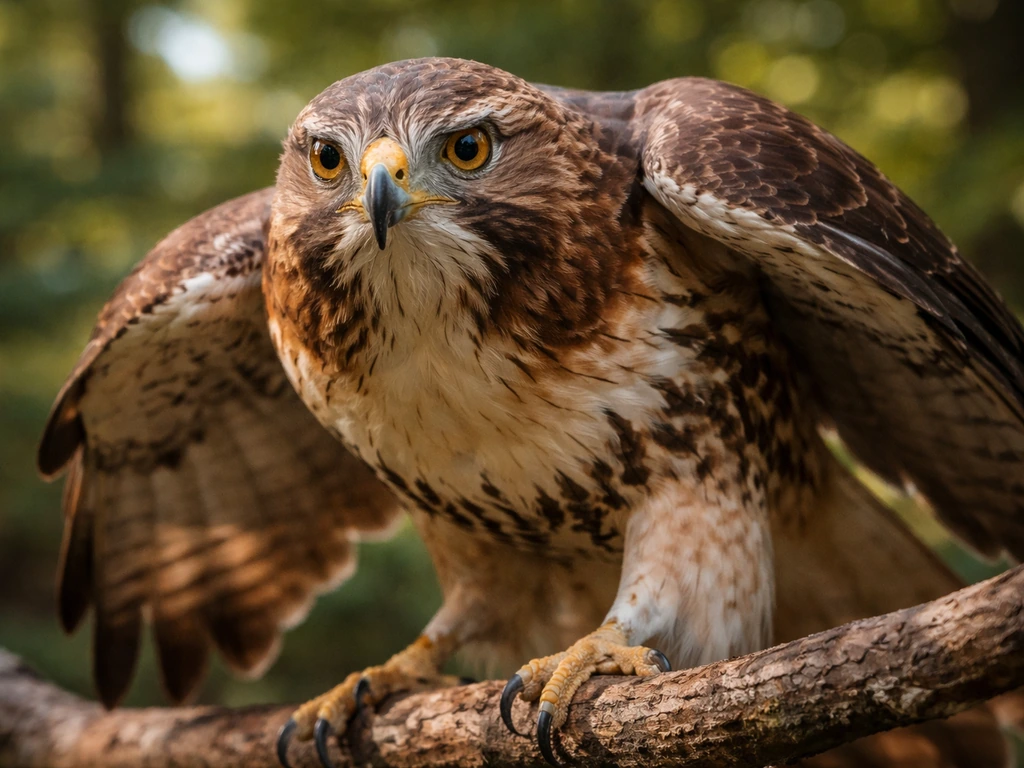
Before diving into scripture, it helps to know exactly what category of bird we're talking about. A bird of prey, in everyday English, is any carnivorous bird that hunts or scavenges for meat. Oxford, Cambridge, and Merriam-Webster all define the term this way, and they share overlapping examples: eagles, hawks, falcons, owls, and vultures. Britannica further splits these into diurnal raptors (hawks, eagles, falcons, vultures that hunt by day) and nocturnal raptors (owls). What all of these birds share is a combination of sharp talons, a hooked beak, keen eyesight, and the capacity to kill or feed on other animals.
This broad definition is important because when you read a Bible verse that uses the phrase 'bird of prey,' you can't automatically assume it means a single species. It might be referring to a swooping eagle, a scavenging vulture, or a general category of fearsome winged creatures. The Hebrew and Greek originals each carry their own nuances, and the English translation you're reading shapes which mental image lands in your head.
How the Bible classifies birds, and where raptors land
The Bible doesn't use a modern ornithological taxonomy, but it does draw a very clear line between clean birds (suitable for eating and sacrifice) and unclean birds (forbidden). The foundational passage is Leviticus 11:13–19, where Moses lists birds the Israelites were not to eat. Leviticus 11:13, 19 is the key Torah list for “unclean” birds, including raptors and scavengers (Bible Study Tools encyclopedia entry “Birds, Unclean”) unclean birds. The NIV renders these as 'the eagle, the vulture, the black vulture, any kind of hawk, the osprey,' and the list continues from there. What you'll notice immediately is that this is essentially a catalogue of birds of prey and scavengers.
One reason these birds were classified as unclean likely had to do with their diet: they eat blood, carrion, or living prey, which put them in a category associated with death and danger. But the unclean label doesn't mean these birds are evil in a simple moral sense. In biblical symbolism, they're often instruments of God, not enemies of God. Being unclean for dietary law purposes and being a powerful symbol of divine action are two entirely different things in scripture.
It's also worth knowing that the Hebrew word nesher (נֶשֶׁר), often translated 'eagle,' could refer to both eagles and vultures depending on context. This is one reason translations differ: your NIV might say 'eagle' where another version says 'vulture,' and both are working from the same original Hebrew term. The word ʿayit (עַיִט), which appears in Isaiah 46:11, is translated 'bird of prey' in the NIV and most modern versions, though some older translations render it as 'eagle.' The NET Bible's translation notes explicitly confirm that ʿayit is best read as 'a bird of prey' in general, not a single species.
What birds of prey symbolize in the Bible

Across scripture, birds of prey carry a cluster of consistent symbolic meanings. They don't always mean the same thing in every verse, but a few themes appear again and again.
Swift, decisive power
The most dramatic use of bird-of-prey imagery in the Old Testament is Isaiah 46:11, where God declares: 'I am calling a bird of prey from the east, the man to carry out my purpose. If you're trying to understand what the phrase means, the context of Isaiah 46:11 is where the bird of prey imagery and its message come into focus bird-of-prey imagery. ' Most scholars read this as a reference to Cyrus the Great of Persia, who would sweep in and release the Israelites from Babylonian captivity. Many scholars connect this bird of prey to Cyrus the Great, who God used to accomplish his purpose in Isaiah 46:11. The bird-of-prey image captures exactly what Cyrus represented: speed, precision, inevitability. There's no negotiating with a raptor mid-dive. This symbolism frames God's historical actions as something as natural and unstoppable as predation itself. The question of exactly who or what this 'bird of prey' refers to is rich enough that it deserves its own closer look in dedicated discussion of Isaiah 46:11.
Judgment and aftermath
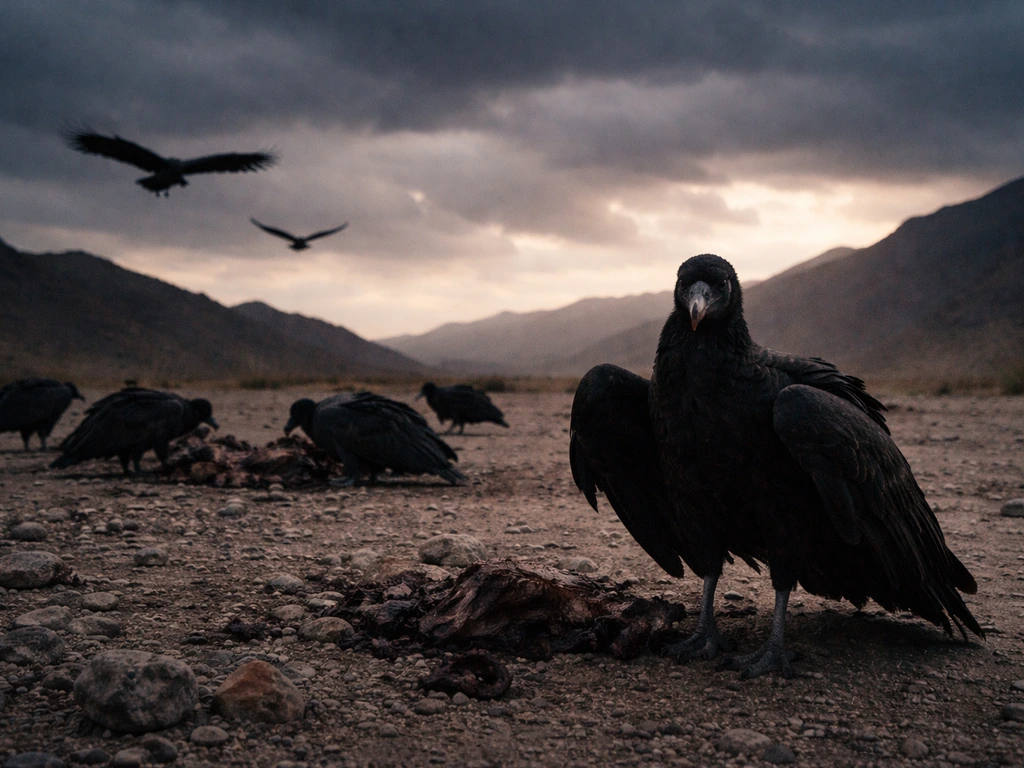
Ezekiel 39:4–5 offers one of the Bible's most vivid uses of scavenging birds as judgment imagery: 'I will give you to birds of prey of every sort and to the beasts of the field to be devoured.' This is set in a prophecy about the defeat of Gog, and the birds gathering over the dead aren't incidental detail, they are the point. The scene communicates total defeat, the kind where there's no burial, no dignity, no recovery. Similar language appears in Revelation's 'great supper of God,' where birds are called to feed on fallen armies. Matthew 24:28 and Luke 17:37 both include Jesus saying 'wherever there is a carcass, there the vultures will gather,' a saying tied to his discourse on judgment and the end of an age. The vultures don't cause the judgment; they reveal that it has already happened.
Dominance and sovereignty
Beyond judgment, birds of prey in scripture also function as markers of sovereignty and strength. Empires in the ancient Near East used eagle imagery on their standards for the same reason scripture does: the raptor at the top of the food chain mirrors the king at the top of the political order. When God is described as bearing his people 'on eagles' wings' (Exodus 19:4), the raptor imagery shifts from threatening to protective, but the underlying attribute being invoked, absolute power, remains the same.
Reading bird-of-prey symbolism in prophecy and dreams
People often search 'bird of prey meaning Bible' after encountering this imagery in a dream, a devotional reading, or a prophetic teaching. That's a completely understandable path to this question. But it's worth being careful here, because biblical symbolism is deeply tied to its original literary context. A dream about a bird of prey swooping down might feel powerfully significant, and it might be, but the symbolic interpretation you apply to it should stay tethered to what that imagery actually means in the verses you're drawing from.
If someone tells you 'God showed me a bird of prey in a dream, and it means judgment is coming,' they may be working from a real scriptural symbol, but the interpretation should be tested against the surrounding biblical material. In Ezekiel, the judgment is specific: it applies to Gog, in a particular prophetic context. In Isaiah, the bird of prey is an agent of redemption, not destruction. The same image carries different freight in different passages. So before applying a bird-of-prey interpretation to a personal situation or prophetic claim, it's worth asking: which verse? What context? What does the passage say is actually happening?
This kind of grounded reading is especially worth practicing with end-times prophecy, where bird imagery (eagles, vultures, unclean birds) gets layered heavily. Responsible interpretation treats symbolism as a lens that helps you understand the text, not a code to extract predictions from.
The main birds grouped under this imagery, and what each carries
Because translations differ and Hebrew terms overlap, it helps to know the key birds that appear in or alongside 'bird of prey' language across the Bible. Each carries its own symbolic accent.
| Bird | Key Passages | Primary Symbolic Weight |
|---|---|---|
| Eagle (nesher) | Exodus 19:4; Isaiah 40:31; Ezekiel 1:10; Revelation 4:7 | Strength, divine protection, renewal, sovereignty |
| Vulture (nesher / ʿayit depending on translation) | Matthew 24:28; Luke 17:37; Ezekiel 39:4 | Judgment, aftermath of defeat, end-times gathering |
| Raven | Genesis 8:7; 1 Kings 17:4–6; Luke 12:24 | Provision despite uncleanliness, divine care in wilderness |
| Owl | Leviticus 11:16–17; Isaiah 34:11; Psalm 102:6 | Desolation, mourning, ruined lands |
| Hawk (various Hebrew terms) | Leviticus 11:16; Job 39:26 | Swiftness, instinct, the inexplicable wisdom of creation |
| Stork (chasidah) | Leviticus 11:19; Psalm 104:17; Zechariah 5:9 | Seasonal faithfulness, migration, loyalty — and paradoxically, unclean by law |
The eagle gets the most symbolic attention across the whole Bible, partly because of its majesty and partly because the Hebrew nesher is broad enough to carry the weight of multiple species. If you also want to know who the bird of prey is in the Bible, start by checking the specific verse and its Hebrew or Greek wording carries the weight of multiple species. The vulture's role is more specific: it shows up almost exclusively in judgment contexts, where its scavenging behavior becomes a theological statement about the completeness of a defeat. Ravens are fascinating outliers, declared unclean in Leviticus but used by God to feed Elijah in 1 Kings, which is itself a kind of commentary on how biblical symbolism refuses to stay neatly categorized. The bird of Jove (Jupiter's eagle) from Roman tradition is a separate but related image worth knowing, since it shows how eagle symbolism traveled across cultures and informed how later readers understood the biblical eagle.
How to look up the exact verse and use the symbolism responsibly

If you're trying to track down a specific verse that uses 'bird of prey' language, here's a practical workflow that actually works.
- Start with a Bible search tool like Bible Gateway or BibleHub and search the exact phrase 'bird of prey' in your preferred translation. The NIV, ESV, and NLT will return results; older translations like the KJV may use different phrasing (often 'fowl' or 'ravenous bird'), so try both.
- Note the context of each verse: Is it a historical prophecy (like Isaiah 46:11)? A legal list (Leviticus 11)? An apocalyptic vision (Ezekiel 39; Revelation 19)? The context tells you which symbolic register you're in.
- Check the original language if you can. BibleHub's interlinear tool shows you the Hebrew or Greek word behind the English translation, which is especially useful when you want to know if 'eagle' and 'bird of prey' in two different passages are actually the same underlying word.
- Read at least five verses before and after your passage. Bird-of-prey imagery in prophecy almost never stands alone: it's embedded in a larger oracle, and that oracle tells you who the imagery is directed at and why.
- If you're applying this symbolism to a dream, a personal situation, or a teaching you've heard, run it through the same filter: which verse is the source, what does the surrounding passage say, and does the interpretation stay consistent with the broader biblical theme rather than importing meanings from outside the text?
One more thing worth noting: translations genuinely disagree on these birds. If you're studying Isaiah 46:11 and one commentary says 'eagle' while another says 'bird of prey,' neither is necessarily wrong. They're reflecting real ambiguity in the Hebrew. The NET Bible's translation note for Isaiah 46:11 is one of the clearest explanations of this: it explicitly states that ʿayit can be rendered as a general 'bird of prey,' and the note helps you understand why different Bible versions land in different places. Reading those footnotes is genuinely worthwhile.
Biblical bird symbolism rewards patient, text-close reading. Whether you're studying the scavenging imagery of Ezekiel 39, the swift-agent image of Isaiah 46, or the carcass-and-vultures saying of Matthew 24, you'll find that these images are doing real theological work, not just decorating the text. The bird of prey in the Bible is almost always a messenger of something decisive. Your job as a reader is to figure out what the specific passage is saying it's deciding.
FAQ
If I see “bird of prey” in a dream or devotional message, does it automatically mean judgment is coming?
In Scripture, the phrase usually functions as an image, not a biological label, so it is best treated as “an agent of decisive divine action” (judgment or aftermath) rather than a prediction of a specific event. The safest way to apply the meaning is to ask what the surrounding verse says the bird is doing (calling, scattering, feeding on fallen bodies) and who the passage says is involved.
Why can “bird of prey” mean judgment in one place but redemption or deliverance in another?
Not automatically. The same general imagery can signal different theological outcomes depending on the passage. For example, in Isaiah 46:11 the bird image is tied to God’s purpose and deliverance through Cyrus, while in Ezekiel 39 and the end-times sayings the bird imagery highlights total defeat and aftermath. If you do not identify the specific biblical setting, you will likely misread the intent.
How do I confirm what “bird of prey” is referring to in a specific Bible verse?
Look at three anchors: (1) the exact verse reference, (2) the immediate context (what prophecy or discourse section it belongs to), and (3) the translation’s wording for the underlying term. If you cannot locate the passage being cited, treat the claim as interpretive speculation rather than a settled biblical meaning.
Why do Bible translations differ between “eagle,” “vulture,” and “bird of prey” in the same verse?
Translations differ because the underlying Hebrew terms can be broad or overlapping. A helpful edge case is Isaiah 46:11, where some versions render a specific “eagle” idea, while others translate it more generally as “a bird of prey.” Rather than choosing the version you like best, compare how multiple translations handle the same verse and check the footnote or note on the original term when available.
Does calling birds “unclean” in Leviticus mean birds of prey are portrayed as evil?
Yes. The Bible’s distinction between clean and unclean birds is dietary and covenantal, but “unclean” does not automatically mean “evil” or “judicially condemned.” Birds of prey can be instruments of God’s action or symbols of what God is doing, even when they are categorized as unclean for eating and sacrifice.
Is “bird of prey” always a judgment symbol in the Bible?
Often, but not always. Birds of prey imagery tends to cluster in judgment and aftermath scenes (carcass imagery and scavenging), yet the Bible can also use the broader raptor idea as a sign of sovereignty and power. So, when you are reading a passage, do not stop at “it sounds like judgment,” also ask whether the imagery is emphasizing power, speed, deliverance, or inevitability.
Can I use bird-of-prey symbolism to make specific predictions about my life?
Be careful about making it a personal prophecy. Biblical symbolism is anchored to the author’s literary context, so a personal application should be cautious and qualitative (for example, “God’s power is decisive,” “God’s judgment is real”) rather than quantitative predictions (specific timelines, named individuals, or guaranteed outcomes).
What’s a good method to avoid confusing eagles, hawks, vultures, and “generic raptor” references?
If you are trying to identify the bird behind the phrase, track the verse’s key term (like nesher or the term translated as “bird of prey”) and note whether the scene is hunting, scavenging, calling, or protecting. Then see whether the context points to a particular bird type (such as vultures for carcass aftermath) versus a generic raptor image. This prevents the common mistake of forcing one species onto every “bird of prey” reference.
In Matthew 24 (and Luke 17), do vultures cause the judgment or just show where it is?
Yes, there is an important nuance: Jesus’ “wherever there is a carcass, there the vultures will gather” is descriptive of judgment that is already happening or unmistakably present, and the vultures reveal that reality rather than causing it. So the meaning centers on the certainty and visibility of judgment, not on vultures as the moral agents.
What practical steps should I follow to interpret bird-of-prey imagery responsibly?
Use the text-close workflow: write down the verse, list what the bird image is doing, identify the audience and the surrounding event in the chapter, then compare 2 to 3 translations for how they render the underlying term. If the passage is prophetic, pay special attention to how the prophecy frames the “decisive action” so you do not import a different message than the text intends.
Next Article
Bird of Prey Jim Morrison Meaning: Symbolism, Dreams, and Intent
Explore bird of prey symbolism and how it may connect to Jim Morrison meanings in dreams, lyrics, and signs.