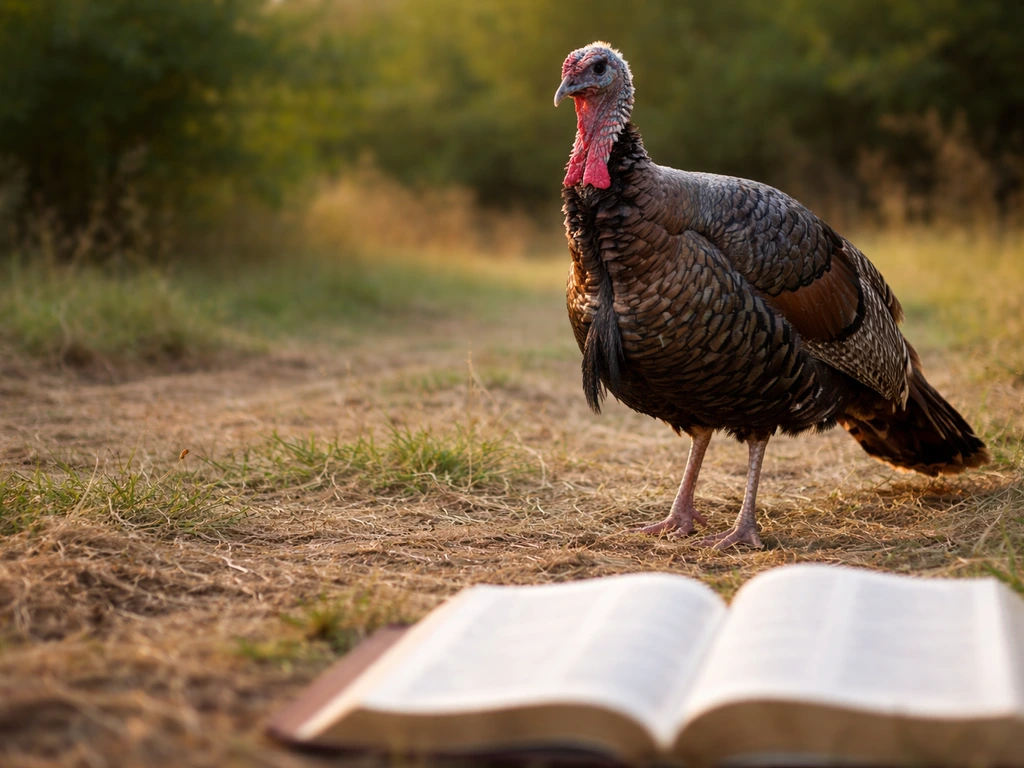
The bird God provided for meat in the wilderness was quail. This is consistent across every major English translation of the Bible, and the answer appears in at least three separate passages: Exodus 16:13, Numbers 11:31-32, and Psalm 105:40. The Hebrew word behind every instance is שְׂלָו (selav), which scholars and translators uniformly render as quail. There is no serious debate about the identification.
What Bird Did God Provide for Meat in the Wilderness?

Eleanor Hartwell
31 May 2026

What the question is really asking
When people search for what bird God provided for meat in the wilderness, they are usually working from a memory of a Sunday school lesson, a devotional reading, or a general phrase like 'God gave them meat to eat.' The word 'meat' in older translations (especially the KJV) simply means food, particularly animal flesh, so 'meat in the wilderness' refers to the bird-based food provision given to Israel during their journey from Egypt. The confusion usually comes from the fact that 'meat' and 'quail' appear in slightly different verses within the same passage, and casual readers sometimes miss the direct connection between the two.
What was actually happening in the wilderness

The Exodus narrative sets up two distinct provision events. The first occurs in Exodus 16, where the timing is remarkably specific: it was the fifteenth day of the second month after Israel left Egypt, and they were camped in the wilderness of Sin, the desert region between Elim and Sinai. Israel was hungry, demoralized, and already romanticizing Egypt. Exodus 16:3 records their complaint in vivid terms: they claimed they had sat by 'meat pots' in Egypt and eaten bread 'to the full.' In other words, slavery had at least meant being fed, and the wilderness felt like a death sentence.
The second major provision episode comes in Numbers 11, later in the same wilderness journey, at a location that would eventually be named Kibroth-hattaavah, which literally means 'Graves of Craving.' By this point, a mixed group traveling with Israel was stoking appetite complaints again. Numbers 11:4 frames it as craving: the people wept and said, 'If only we had meat to eat!' They looked back on fish, cucumbers, melons, leeks, onions, and garlic from Egypt and complained that now they had nothing except manna.
The specific bird named and how translations handle it
In Exodus 16:12, God tells Moses: 'blank" rel="noopener noreferrer">At twilight you will eat meat.' One verse later, Exodus 16:13 delivers the fulfillment: 'That evening quail came and covered the camp.' The Hebrew term selav (Strong's H7958) is what gets translated as quail across the ESV, NIV, KJV, NKJV, NLT, and CSB. The same word appears in Numbers 11:31-32 and Psalm 105:40. Because the word 'meat' or 'flesh' (basar, H1320) appears in one verse and 'quail' appears in the next, some readers lose the thread and think these refer to different things. They do not. The quail is the meat. The Hebrew selav is the bird God sent.
Encyclopedic sources connected to biblical scholarship are direct on this point: there is full agreement on the translation of selav as quail, and no other bird fits the narrative as described. If you have ever seen a translation that uses a word other than 'quail' here, it is worth looking more carefully at the verse reference, because a different passage may be in view.
How and when the quail were provided
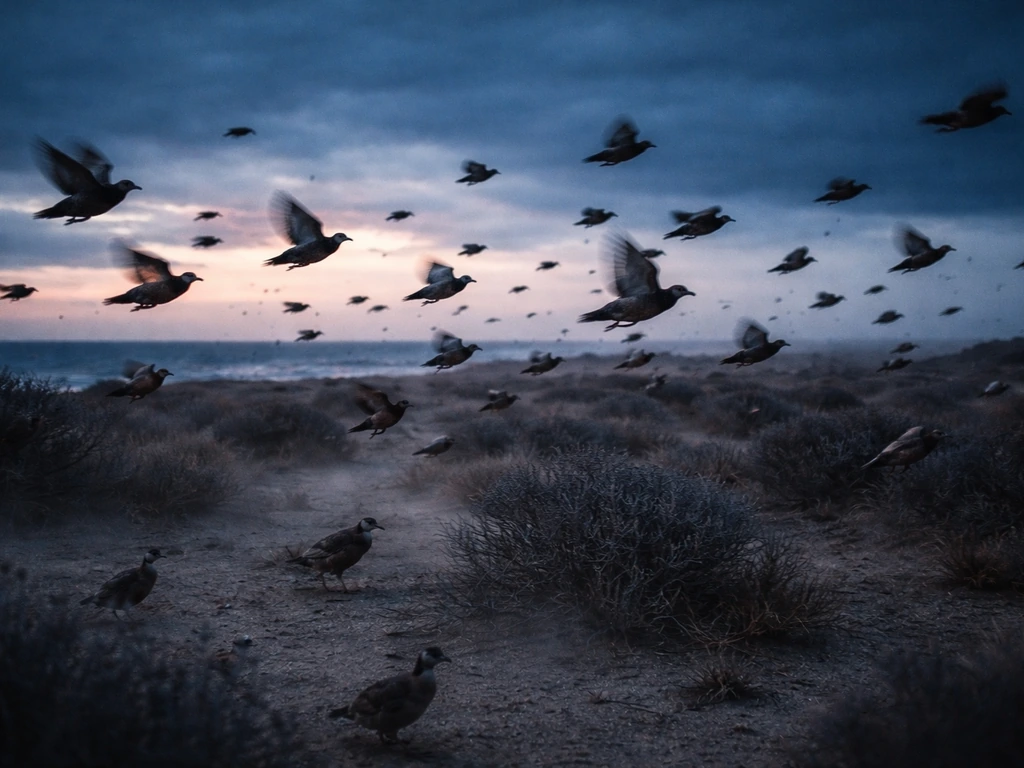
The two accounts describe the provision differently, and both details matter. In Exodus 16, the rhythm is structured: quail arrived in the evening, and manna appeared in the morning. The quail 'covered the camp,' suggesting a massive arrival. The evening/morning contrast is deliberate, pairing two different kinds of provision into a single act of divine care.
Numbers 11:31 gives more dramatic detail. A wind drove the quail in from the sea, and they fell around the camp to a depth described as 'about two cubits above the surface of the ground,' roughly three feet deep. The gathering that followed was enormous: Numbers 11:32 says the least anyone gathered was ten homers. The scale here is almost overwhelming by design, which sets up the narrative tension that follows in verses 33-35, where the eating is interrupted by a severe plague and the site becomes known permanently as Kibroth-hattaavah because of the craving that drove the request.
The symbolic weight of quail in this wilderness story
From the perspective of biblical bird symbolism, the quail story carries layers that go beyond the literal food event. Flight has long been used across traditions as a metaphor for divine delivery, and here the birds literally arrive on the wind, drawn from the sea, in a movement that mirrors what we might today call a sign written in feathers and motion. The provision is airborne. It descends from outside the natural supply chain of the desert. That is worth sitting with.
Psalm 105:40 retells the story in poetic memory: 'They asked, and he brought quail; he satisfied them with the bread of heaven.' The pairing of quail and 'bread of heaven' lifts this bird moment into a much larger theological frame, one where the physical act of birds flying into camp becomes evidence of divine attentiveness to human hunger. In this reading, the quail are not just protein delivery. They are the shape that provision takes when it arrives from outside human effort.
There is also an honest tension in the symbolism. Unlike the pure-gift framing of Exodus 16, the Numbers 11 account is complicated by the craving context. The quail arrive in abundance, but the abundance itself becomes part of the judgment. This is unusual in bird symbolism across traditions: a bird sent as provision that simultaneously represents the cost of ingratitude. The quail in Numbers are not simply a good omen. They are a response that carries both grace and consequence, which makes them a more honest and layered symbol than many readers expect.
For anyone interested in the broader landscape of biblical bird imagery, the quail passage sits alongside other striking bird appearances in scripture, from the great speckled bird of Jeremiah to the birds mentioned in the laws of Leviticus to questions about what bird God favors most. If you also wonder whether a specific bird like turkey is mentioned, the Bible does not name turkey as such in these wilderness or related bird passages birds mentioned in the laws of Leviticus. Many people also ask, what is God's favorite bird, and the answer is often tied to the quail story in Exodus and Numbers what bird God favors most. The great speckled bird mentioned in Jeremiah is often discussed as a different kind of biblical bird reference. The quail stands out because it is one of the few birds explicitly named as an instrument of divine provision at a moment of national crisis.
Where people get confused and why
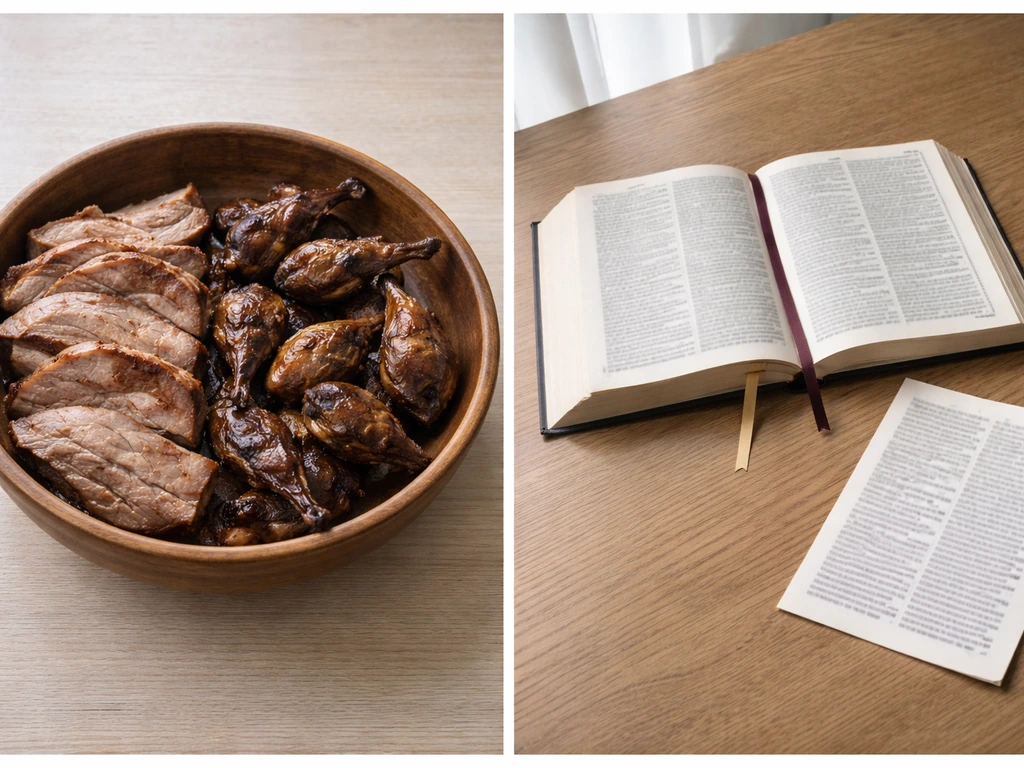
The most common mix-up is separating the 'meat' verse from the 'quail' verse in the same passage. Because Exodus 16:12 promises meat and Exodus 16:13 delivers quail, readers who only remember one verse will sometimes ask what bird was meant, not realizing both verses are part of the same statement. Reading just two verses further in any translation resolves this completely.
A second source of confusion is the Exodus/Numbers distinction. These are two separate quail events, though they involve the same bird and the same people. Exodus 16 is earlier in the journey and has a simpler provision tone. Numbers 11 is later, more charged, and ends with judgment. Conflating them leads to questions like 'Why did God punish them for eating what he gave them?' The answer is that Numbers 11 is a different episode with a different context, even though the bird is the same.
A third, rarer confusion: some readers wonder if the 'meat' God provided could have been something other than a bird, perhaps manna itself described differently, or another miraculous food. The text does not leave this open. Exodus 16:13 is explicit: quail covered the camp that evening. Numbers 11:31 is equally explicit: wind-driven quail from the sea. Both passages refer to a real bird.
There is also no biblical textual support for any other bird species in these wilderness meat-provision passages. Turkey, dove, and other birds sometimes surface in loose conversations about biblical birds, but none of them appear in Exodus 16, Numbers 11, or Psalm 105:40. The Hebrew selav is quail, and that is the only identification that fits the textual, geographic, and natural-history context.
How to verify this in your Bible right now
If you want to confirm this yourself rather than just taking someone's word for it, the process is quick and satisfying. Here is exactly what to look up:
- Open Exodus 16: 12-13. Read both verses together. Verse 12 promises meat at twilight; verse 13 delivers quail that evening. This is the clearest, most direct answer to the question.
- Read Exodus 16: 1-3 for context. This tells you where Israel was (the wilderness of Sin, between Elim and Sinai), when it happened (the fifteenth day of the second month after leaving Egypt), and what they were complaining about (hunger, missing Egypt's meat pots).
- Read Numbers 11: 4 and then jump to Numbers 11:31-32. Verse 4 sets up the craving complaint; verses 31-32 describe the wind-driven quail arriving around the camp to a depth of two cubits. Note the scale: ten homers was the minimum anyone gathered.
- Read Psalm 105: 40 as a third confirming source. The psalm retells the provision in poetic shorthand: 'They asked, and he brought quail; he satisfied them with the bread of heaven.'
- If you use Bible Gateway or a similar tool, pull up Exodus 16: 13 in parallel view using ESV, NIV, KJV, and NKJV. All four will say 'quail.' This is the fastest way to confirm that it is not a translation artifact or a single-version reading.
- For the Hebrew behind the word, search Strong's H7958 (selav). The entry shows it appears in Exodus 16:13, Numbers 11:31-32, and Psalm 105:40, and every appearance is translated as quail.
Connecting the quail to bird symbolism thoughtfully
If you are approaching this question from a symbolic or spiritual angle, the quail story gives you genuine material to work with, as long as you stay close to what the text actually shows rather than importing meanings from outside. The wind-driven arrival of birds as a response to human need is a powerful image on its own. This includes the broader theme of when God sends a red bird as a sign of divine provision and timing. You do not need to stretch it. The quail in Exodus 16 represent provision that arrives on its own terms, in its own time, from outside human control. The quail in Numbers 11 represent something more complex: abundance that arrives in response to craving, with consequences folded inside the gift.
What feels most honest, both symbolically and textually, is to treat the quail not as a simple good-omen bird but as a bird that carries the full complexity of divine response to human need. Sometimes provision is straightforward grace. Sometimes it arrives inside a larger story about what we are really asking for and what happens when we receive it. The quail, small and unremarkable as a bird, carries both of those meanings in the biblical wilderness narrative.
FAQ
If Exodus 16 mentions “meat” and then “quail” in the next verses, are those different foods?
Yes. In Exodus 16, God promises “meat” (food) at evening, and then the next verse specifies the means, “quail” covering the camp. The “meat” language is generic, the “quail” language is the specific bird that fulfills the promise.
Did the quail replace manna, or did both happen during the wilderness journey?
Manna appears alongside the quail story rather than replacing it. In Exodus 16, manna is tied to the morning rhythm after the evening quail arrives, while Numbers 11 focuses more on the craving for meat and the wind-driven quail delivery (with the manna complaint in view).
Why do Exodus 16 and Numbers 11 both mention quail, and is it the same incident?
Exodus 16 and Numbers 11 describe separate events, even though they involve the same named bird. Exodus 16 emphasizes the timing pattern (evening quail, morning manna) and a provision response, while Numbers 11 adds the craving context and later consequences at Kibroth-hattaavah.
What does the “two cubits” description in Numbers 11 actually imply about how the quail arrived?
The “about two cubits” depth in Numbers 11:31 refers to how deep the quail were described as falling around the camp, and it supports the idea of an overwhelming, piled-in arrival that lets people gather food in quantity. It is not presented as a light scattering that would require hunting.
How does the Bible describe where the quail came from, and does it explain how they got there?
The text says the quail were driven in by a wind from the sea (Numbers 11:31). So the delivery mechanism is supernatural, not migration by normal desert foraging patterns, and it helps explain why the birds appear “out of nowhere” in the narrative.
Is the word “meat” in older translations the same meaning we use today?
“Meat” is a translation convention in older English, where it commonly meant food or flesh, not modern meat as a specific category. In this context, the Bible’s point is that Israel would eat animal flesh, and then it identifies the bird as the source (quail).
What’s the most common mistake people make when trying to answer this question from memory?
A common reason is reading only one verse, or assuming that “meat” refers to a different provision than the next verse’s “quail.” Checking the immediate surrounding verses in the same passage resolves it quickly, because God’s promise and the fulfillment are directly linked.
Does Psalm 105 add anything new beyond Exodus and Numbers, or is it just a retelling?
Psalm 105:40 retells the event as a poetic summary, focusing on God bringing quail to satisfy the request and pairing it with “bread of heaven.” It is not meant to add a new bird species, but to reinforce the earlier narrative as God’s responsive care.
Is there any biblical basis for identifying a bird other than quail for “wilderness meat”?
No. Within these wilderness meat-provision passages, the Hebrew term used in the quail verses is שְׂלָו (selav), and the identification consistently comes back to quail based on the text’s own specificity. If another bird shows up in casual discussion, it is not supported by these verses’ wording.
Next Article
Is Turkey Bird Mentioned in the Bible? What to Check
Find out if turkeys are named in the Bible, what verses people cite, and how to verify with Hebrew and Greek.