The phrase 'the bird of Hermes is my name' is an ancient alchemical riddle, and when someone attaches 'Alucard' to the front of it, they are weaving together two very different symbolic threads: a reversed name that signals transformation and hidden identity, and one of the most potent messenger-bird invocations in Western esoteric tradition. Spiritually, the whole phrase functions as a declaration of liminal identity, someone (or something) that exists between worlds, carries messages, and moves freely across thresholds. If this phrase keeps appearing in your life or mind, treat it as a prompt to examine your own role as a communicator, guide, or someone in a state of profound transition.
Alucard the Bird of Hermes Is My Name: Symbolic Meaning

Eleanor Hartwell
7 Jun 2026
Breaking Down the Phrase: Alucard, Hermes, and Bird Imagery
Let's start with 'Alucard' because it is the part most likely to cause confusion. Online, 'Alucard' is almost universally recognized as 'Dracula' spelled backwards, an anadrome or cryptonym that appeared famously in the 1943 film Son of Dracula, where the name reversal was played as a plot reveal. In pop culture it has since been attached to sympathetic or complex vampire characters, most notably the half-vampire son of Dracula in the Hellsing anime and manga. So if you encountered this phrase in a media context, that is probably the immediate source. But here is the thing: the reversal of a name is itself a powerful symbolic act across many traditions. A reversed name signals a mirror identity, something that is the same substance as the original but seen from the opposite side. Applied to the 'bird of Hermes' context, it suggests not darkness or evil, but duality and inversion, the idea that the speaker exists as both the thing and its reflection.
The second half of the phrase, 'the bird of Hermes is my name,' is genuinely old. It comes from the Ripley Scroll, a 15th-century English alchemical manuscript, and in that context it refers to the ouroboros (the serpent eating its own tail) as the bird of Hermes, a creature of self-consuming transformation. In other readings, the 'bird of Hermes' is the ibis or the cock, birds specifically tied to Hermes in classical iconography. The phrase functions as a declaration of alchemical process: I am the thing that consumes itself to renew itself. Pair that with the reversed-Dracula name, and the whole invocation points toward transformation through inversion, cycles of death and renewal, and the liminal space between states.
What Hermes Actually Symbolizes, and Why Birds Belong to Him
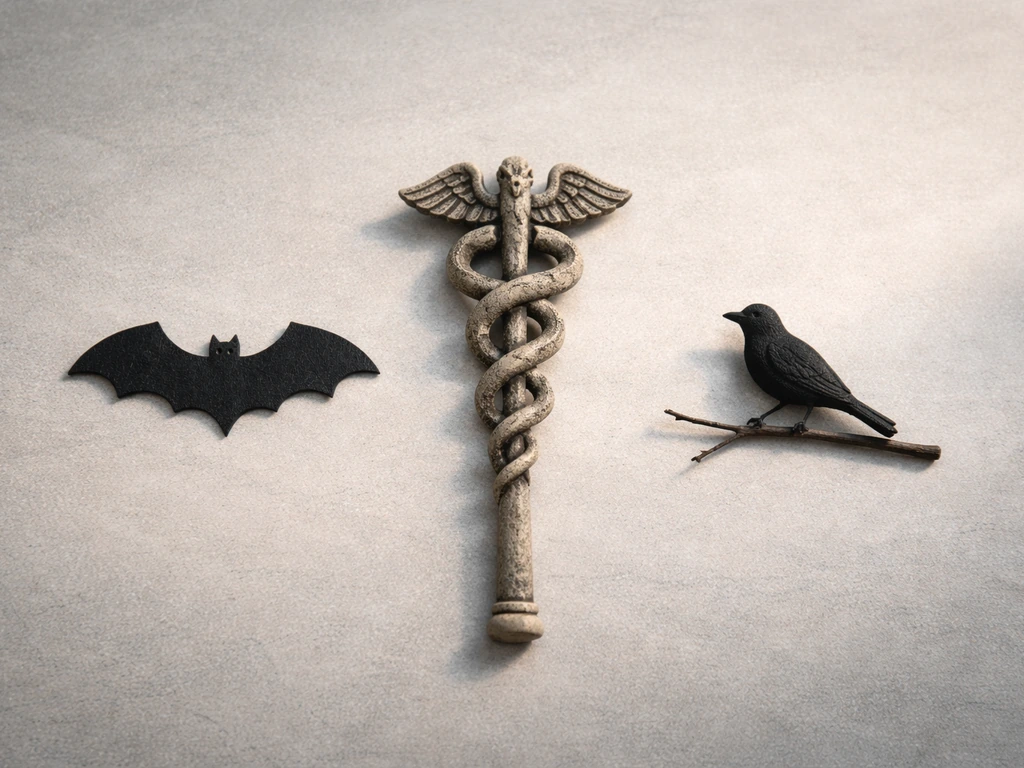
Hermes is one of the most symbolically loaded figures in Western mythology. He is the messenger of the gods, yes, but his role goes far deeper than postal delivery. He is the psychopomp, the guide of souls between the living world and the underworld. He presides over thresholds, crossroads, travelers, merchants, and thieves. His iconography, the caduceus (two serpents entwined around a winged staff), the talaria (winged sandals), and the petasos (winged cap), all emphasize speed, passage, and the ability to move freely through boundaries that others cannot cross.
Birds fit Hermes perfectly because they are the original boundary-crossers. They move through air, land, and water. They appear and disappear. They carry sound across distances. Nearly every ancient culture developed ornithomancy, the practice of reading omens from birds' flight and cries (from the Greek ornis, bird, and manteia, divination), precisely because birds seemed to operate in a register humans could not fully access. The Audubon Society has documented how this interpretive tradition was especially detailed in ancient Greece and Rome, where the direction, speed, and call of a bird could be read as a message from the divine. Hermes, as the divine communicator, is the natural patron of that whole system.
It is also worth noting the Hermetic tradition, which developed in late antiquity and blended Greek Hermes with Egyptian Thoth, the ibis-headed god of writing, wisdom, and esoteric knowledge. In that syncretism, the messenger role expands from practical communication to spiritual revelation. This means that 'Hermes' in your phrase could carry either the practical Greek meaning (messages, travel, communication, guidance) or the deeper Hermetic meaning (hidden wisdom, alchemy, transformation through knowledge), or both. Context and personal resonance will tell you which lane you are in.
Which Bird Could It Be? Working with Uncertainty

The honest answer is that 'the bird of Hermes' does not point to one single species. Depending on the tradition and the source, it could be the ibis (linked to Thoth/Hermes Trismegistus in the Hermetic tradition), the cock (associated with Hermes as herald of the dawn), or the ouroboros-creature of the Ripley Scroll, which is more alchemical symbol than literal bird. If you are comparing other mythic season-signaling birds too, you might also look into which bird is known as the herald of spring herald of the dawn. If you are working with this phrase spiritually and you are not sure which bird resonates, that ambiguity is actually useful rather than a problem. If you are wondering specifically about the liver bird and its phoenix-style symbolism, the key is to compare how each tradition uses bird imagery for identity and transformation is the liver bird a phoenix. Here is how to navigate it by looking at universal bird symbolism.
| Bird | Core Symbolism | Hermes/Messenger Fit | Watch For |
|---|---|---|---|
| Ibis | Wisdom, writing, esoteric knowledge, Thoth | Strong in Hermetic tradition | Appears in art, dreams, or meditation imagery |
| Cock/Rooster | Dawn, heralding, wakefulness, courage | Classical Greek association with Hermes | Early morning encounters, repeated crowing |
| Raven/Crow | Transformation, intelligence, liminal passage | Psychopomp symbolism, death-to-rebirth cycles | Recurring appearances near transitions or decisions |
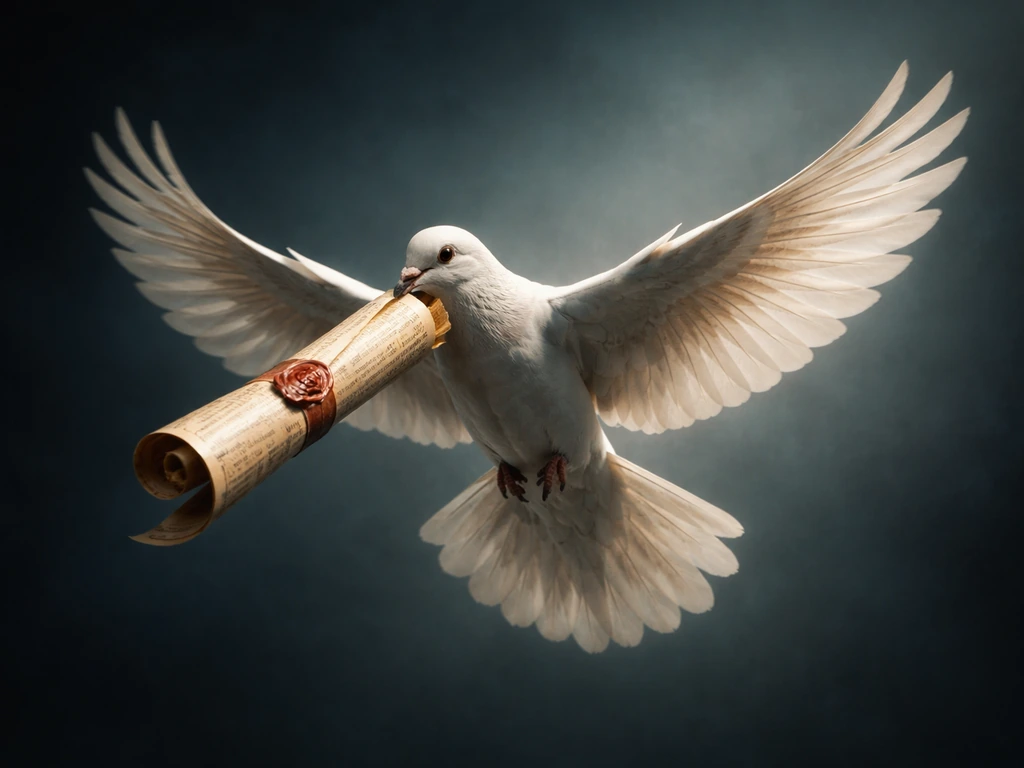
| Dove | Peace, spiritual communication, Holy Spirit | Messenger in Christian and broader traditions | Appears during moments of grief or major change |
| Owl | Wisdom, prophecy, hidden knowledge | Night messenger, Hermetic/esoteric angle | Appears during periods of major uncertainty |
| Eagle | Sovereignty, divine vision, sky messenger | Zeus/Jupiter messenger but overlaps Hermes themes | Appears when you need perspective on a big decision |
If you have no specific bird in mind and the phrase simply arrived, use universal bird symbolism as your framework. A feather found unexpectedly is widely read across cultures as a sign that a message or reassurance is being offered. A bird that appears repeatedly in the same location, or that behaves unusually (landing very close, following you, looking directly at you), is a common prompt for reflection in ornithomancy traditions. You do not need to know the exact species to work with the symbol. What matters is the context: where were you, what were you feeling, what question were you sitting with?
Reading It as a Name, a Mantra, or an Invocation
One of the most useful frames for this phrase is to treat it as a name-signature or invocation rather than a factual claim. Across many spiritual traditions, blank" rel="noopener noreferrer">repeating a name or short phrase aloud or silently functions as a mantra or mantram, an attentional anchor that returns your mind to a specific intention or quality. The Blue Mountain Center of Meditation describes the mantram as a 'spiritual formula,' a short phrase that carries the weight of its meaning through repetition rather than through analysis. In that frame, saying or writing 'the bird of Hermes is my name' is not a claim about who you literally are. It is a way of aligning yourself with the qualities that phrase embodies: messenger capacity, liminal freedom, transformative movement, and the courage to cross thresholds.
The addition of 'Alucard' at the front deepens this, because it signals the shadow side of that identity. The reversed name suggests you are working with your own inversion, the parts of yourself you do not immediately recognize or that you have suppressed. A complete invocation of 'Alucard the bird of Hermes is my name' could be read as: I am the messenger who has looked at their own reflection and recognized it. I carry the capacity for transformation, including through darkness. I move between worlds. This is not a curse or a threat. It is a declaration of depth.
If you want to use it as a formal practice, japa (mantra repetition) traditions describe repeating a phrase aloud, in a whisper, or silently, using a physical anchor like a string of beads to count repetitions, and gently returning attention to the phrase whenever the mind wanders. You do not need a formal religious context for this. A simple daily practice of sitting quietly, repeating the phrase slowly 10 to 20 times, and then journaling whatever arises is a legitimate and grounded starting point.
Signs, Messages, and What This Might Mean for Your Life Right Now

The life themes most consistently associated with Hermes, the messenger archetype, include communication, guidance, liminality (being between two states or two worlds), and transition. If this phrase is surfacing for you, the most common reason is that you are in or approaching one of these territories: a major change in how you communicate or express yourself, a literal physical transition like a move or a journey, a spiritual passage between one understanding and a deeper one, or a role shift in which you are becoming a guide or teacher for others.
- Communication: Are you holding back something important that needs to be said? Or are you being called to speak in a new medium or register?
- Guidance: Are you being nudged toward a mentor, or are you being asked to step into mentorship or leadership yourself?
- Transition: Is there a threshold you have been standing at without crossing? A decision, a relationship, a career shift?
- Protection: Hermes also protects travelers and guides the lost. If you feel disoriented, this phrase may be reassurance that you are not without a map.
- Hidden identity: The 'Alucard' reversal suggests it may be time to look at something you have been presenting in reverse, a version of yourself that is turned away from the light, not from malice but from habit or fear.
One important caution worth naming: the Cleveland Clinic describes the Barnum effect as our tendency to read broad symbolic statements as specifically and uniquely about us, especially when we are anxious or seeking reassurance. The symbols here are powerful, but they work best as lenses for reflection, not as prophecy. A repeated encounter with bird imagery or this phrase is a prompt to ask questions, not a prediction of fate. Keep that distinction active and the symbolism will serve you well.
Practical Steps: How to Journal, Meditate, and Choose Your Interpretation
Here is a concrete workflow you can start today. It draws from synchronicity journaling methods and ornithomancy traditions, and it works whether you are a complete beginner or someone with years of symbolic practice.
- Record the encounter first, interpret second. Before you decide what the phrase means, write down exactly where you first saw or heard it, what time of day it was, what you were doing, and what you were feeling. This prevents you from reverse-engineering a meaning that fits your current anxiety rather than what actually showed up.
- Identify the emotional context. What was the dominant feeling in that moment? Relief? Unease? Curiosity? Excitement? The emotional tone is often the most honest signal about what the symbol is touching in you.
- Look for the recurring bird. In the days following your encounter with this phrase, pay attention to any bird that appears more than twice in an unusual context. Note the species if you can, the direction it was moving, whether it called or was silent. These are the specifics that ancient ornithomancy traditions built interpretation from.
- Choose the tradition that fits your background. If you have a Greek mythology background, work with Hermes as divine messenger and psychopomp. If you lean toward alchemy or Hermeticism, work with the Ripley Scroll 'bird of Hermes' as a symbol of self-consuming transformation. If you come from an Egyptian frame, work with Thoth and the ibis. You do not need to force a single answer. Pick the lane that generates the most genuine resonance.
- Translate the insight into one concrete next step. The synchronicity research tradition recommends ending every symbolic reflection with an action, however small. If the phrase is pointing at communication, write one message you have been avoiding. If it is pointing at transition, name the threshold clearly in writing. If it is about hidden identity, spend five minutes writing as the reversed version of yourself.
- Use the phrase as a morning mantra for one week. Repeat it slowly five to ten times each morning before checking your phone, then write three sentences about whatever arises. At the end of the week, read all seven entries together. The pattern across the week is usually more meaningful than any single day's reflection.
- Broaden your research when you hit a wall. If you feel you have exhausted one tradition, look at how other cultures handle bird-messenger symbolism. The ibis in Egyptian tradition, the raven in Celtic and Norse contexts, the dove in Christian symbolism, and the eagle in Aztec cosmology all offer different angles on the same core question: what is being communicated, and by whom? Comparing traditions often loosens a meaning that has gotten stuck.
A Note on When to Seek Outside Support
Symbolic interpretation is a healthy and enriching practice for most people. But if this phrase or related imagery is arriving as an intrusive thought you cannot set down, if engaging with it is creating compulsive reassurance-seeking, or if it is disrupting your daily routines, that is a signal to talk to a mental health professional rather than deepen the spiritual practice. Spiritual fixation and OCD-adjacent processes can look very similar from the inside. There is no contradiction between taking symbolism seriously and also knowing when your nervous system needs support rather than more interpretation.
How This Phrase Sits Among Mythic Bird Names
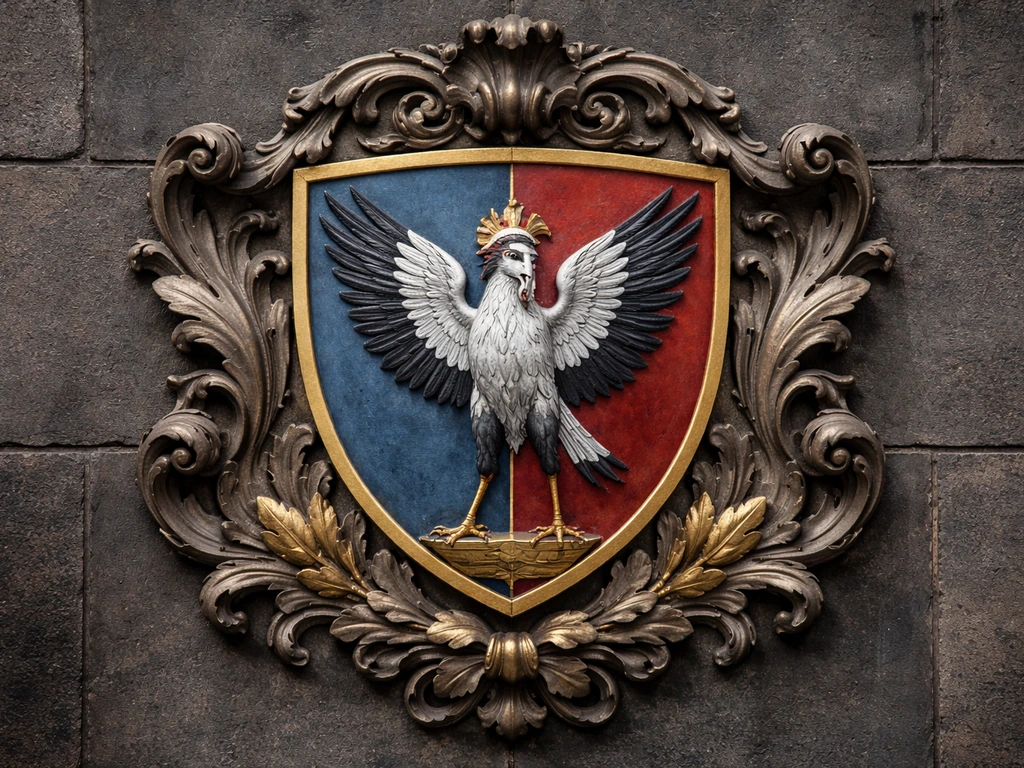
It is worth noting that 'the bird of Hermes' is far from the only bird with a deep mythic name-identity. Many traditions encode enormous symbolic weight into specific birds linked to specific powers or places, whether that is the halcyon bird whose name meant 'calm seas' to ancient sailors, or the legendary birds tied to heraldic symbols and civic identity across European history. In the same way, the halcyon bird meaning is often tied to calm seas and a sense of steadiness during uncertain times. That same blend of civic identity and bird symbolism is why the Liverpool “liver bird” became such a lasting emblem why is the liver bird the symbol of liverpool. If you are looking for heraldic context, the secretary bird coat of arms meaning is often discussed in relation to symbolism of vigilance and authority legendary birds tied to heraldic symbols and civic identity across European history. If you are also wondering what is the bird on the Thomas coat of arms, that heraldic detail can offer a useful parallel to the messenger-bird symbolism discussed here. What makes the 'bird of Hermes' phrase distinctive is its explicitly self-declarative form. 'Is my name' is a speech act of identity, not just observation. You are not watching the bird of Hermes. You are claiming to be it. That is the invocation dimension, and it is what gives the phrase its unusual power as a mantra. This is why questions like what does the liver bird represent often lead you to focus on symbolism and identity rather than a literal answer.
Whether you came to this phrase through the Hellsing anime, a late-night deep dive into alchemy, or a dream you cannot shake, the interpretive work is the same: sit with the reversal, sit with the messenger, sit with the bird, and ask what in your life right now is asking to be communicated, transformed, or crossed. The answer will not come from decoding the phrase as a factual statement. It will come from using it as a lens pointed at your own threshold.
FAQ
Is “Alucard the bird of Hermes is my name” a real historical mantra or just a modern invention?
The exact full wording is hard to pin to one single historical source, but the components are rooted in older symbolic systems, name-reversal as transformation, and Hermes messenger symbolism, plus alchemical riddle traditions that use “bird” or serpent imagery. Treat the full sentence as an invocation built from older motifs rather than a guaranteed “authentic quote.”
What should I do if I keep seeing birds, feathers, or the phrase in a stressful period of my life?
Use it as a check-in, not a prediction. Pick one concrete question to journal for 7 days, for example, “Where am I avoiding a conversation or decision?” Then make one small action tied to that question within 24 hours. If the symbolism ramps up into reassurance-seeking, pause the practice and ground with basics like sleep, food, and social contact.
How do I pick between ibis, cock, and the ouroboros-creature if the phrase does not name a bird?
Don’t force a literal match. Let your interpretation follow your context: if the moment is about writing, wisdom, or hidden knowledge, lean toward ibis/Hermetic associations. If it feels like dawn, awakening, or heralding a shift, cock symbolism fits. If it feels cycle-based, about endings that feed renewal, the ouroboros or self-consuming transformation angle is more consistent.
Can I use the phrase as a mantra if I’m not “spiritually religious” or I’m skeptical?
Yes. Approach it as a mental training anchor, similar to any short self-directed phrase you repeat to focus attention. The goal is not belief in literal claims, it is to create an internal cue for qualities like communication, liminality, and transition, then notice what thoughts and emotions arise during and after repetition.
Should I say it aloud or silently, and does it matter?
Either works. If you tend to get distracted by sound, do it silently for consistency. If you find that speaking helps you slow down and commit to the intention, whisper or read it quietly. Choose one method for a week, then keep the version that produces the clearest focus and journaling insights.
What if repeating the phrase makes me feel worse, more anxious, or mentally stuck?
Stop treating it as a daily practice if it increases rumination. Switch to a grounding alternative, like a short breath cycle or a single journaling prompt, then only return to the phrase when you can engage without compulsive checking. If intrusive-thought patterns, OCD-like reassurance loops, or distress increase, consider talking with a licensed mental health professional.
How is the “reversed name” idea supposed to be used without becoming self-obsessed?
Use reversal as an introspection tool, not a hunt for hidden meanings. Pick one “mirror” question, such as “What part of me do I keep denying?” Then translate that into one behavior change, like initiating a difficult message, asking for help, or setting a boundary. Avoid endlessly interpreting without acting.
What’s the difference between using this as reflection versus expecting an answer about fate?
Reflection asks, “What is this symbol pointing to in my current choices?” Fate-leaning use asks, “What will happen to me?” Keep it in the first category by writing one decision you can make today and one request you can make of yourself or others.
Can the phrase be used for communication or guidance in practical situations like work or relationships?
Yes, but translate symbolism into a communication plan. For example, before a tough conversation, repeat the phrase once, then write your three points: what you need, what you’re asking for, and how you will listen. Hermes symbolism is most useful when it becomes a structured message.
How often should I repeat it, and when should I stop for the day?
A simple starting point is 10 to 20 repetitions once per day, as a consistent attention anchor. Stop if you notice you are seeking certainty, repeatedly checking for signs, or spiraling into meaning-chasing. If you want progression, add journaling time rather than increasing repetition volume.
Next Article
Secretary Bird Coat of Arms Meaning: Symbols Explained
Secretary bird coat of arms meaning: aggressive predator control, vigilance, justice, and how colors and layout change t