
The most common bird you will find on a Thomas coat of arms is a heraldic eagle, typically shown 'displayed' (wings spread wide, facing forward). A secondary bird that frequently appears alongside it, or sometimes in its place, is the martlet: a stylized, footless bird used as a cadency mark or charge in its own right. Which one you are looking at depends entirely on which Thomas family line or branch the arms belong to, because 'Thomas' is not a single armorial grant but a surname shared by hundreds of distinct families across Wales, England, and beyond, each with their own recorded blazon.
What Is the Bird on the Thomas Coat of Arms?

Eleanor Hartwell
1 Jun 2026
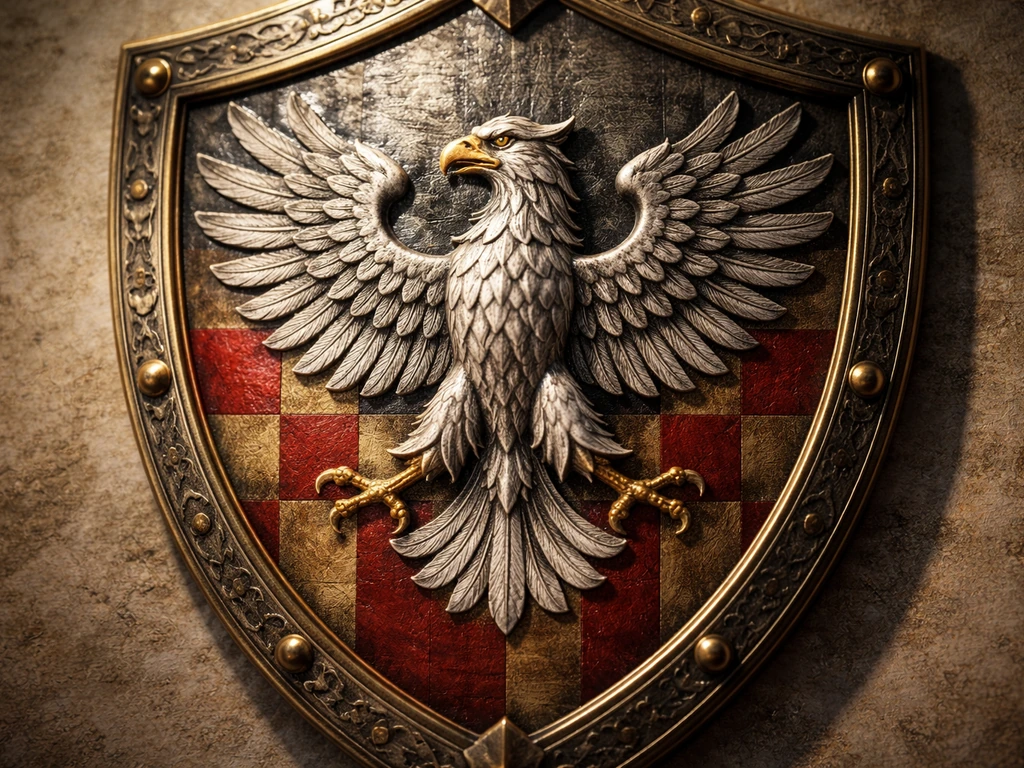
First, figure out which Thomas coat of arms you actually mean
This is the step most people skip, and it causes the most confusion. The name Thomas is one of the most widespread surnames in the English-speaking world, and many different families have been granted arms under it. A shield described for a Thomas family in Carmarthenshire, Wales, may bear nothing resembling the one recorded for a Thomas family in Kent, and both could be completely legitimate. Adding to the difficulty, illustrators and printers have re-drawn these shields for centuries, sometimes introducing errors. One documented example shows a library catalog that recorded 'mulletts' (stars) where the correct blazon read 'martlets' (birds), a difference that changes the entire character of the coat.
Before you can identify the bird, you need to pin down the specific family. Some people also ask whether the is-the-liver-bird-a-phoenix claim applies to a particular Thomas coat of arms, but you still need the exact bird in the blazon to be sure identify the bird. Ask yourself: Which country or region is this Thomas family from? What time period does the grant or pedigree reference? Is the coat of arms associated with a specific first name (such as Thomas Graves, where the bird in question is a well-documented golden eagle)? The answers narrow the field dramatically.
Quick identification checklist from the image
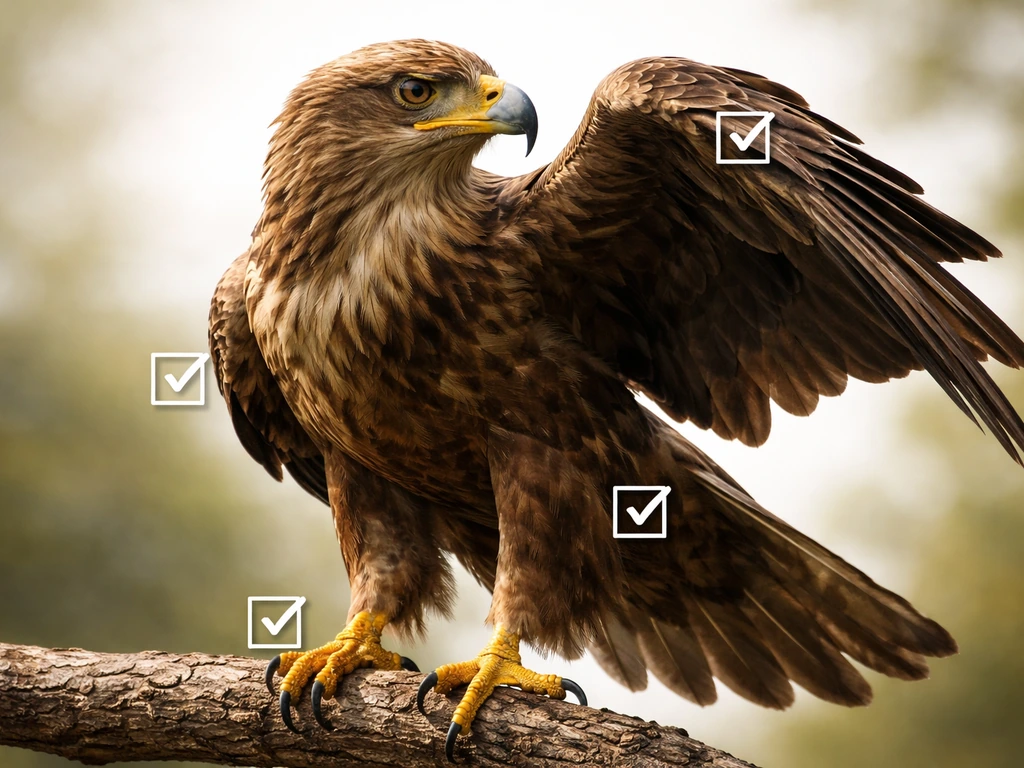
If you are working from a visual image of the arms rather than a written blazon, use this checklist to work out what you are looking at before you look anything up. Small details are the key.
- Legs and feet: Does the bird have legs and talons visible? If not, it is almost certainly a martlet. The martlet is specifically defined in English heraldry as a bird depicted without feet, which distinguishes it from every real bird species used as a charge.
- Wing position: Are the wings spread wide, pointing outward and upward, with the bird facing you? That posture is called 'displayed' and it is the default attitude for a heraldic eagle.
- Number of heads: Does the bird have two heads? A double-headed eagle is a distinct charge with its own symbolic weight, common in imperial and Continental heraldry.
- Size relative to the shield: Is the bird the primary charge filling most of the shield, or a smaller repeat element appearing in a pattern (e.g., three identical birds)? Eagles usually dominate the field; martlets often appear in groups of three or more.
- Color: Is the bird gold (Or) on a red (Gules) field? That combination is extremely common in Thomas-family eagle blazons. A martlet used as a cadency mark is often the same tincture as the field's main charge.
- Beak and crest details: A long hooked beak points toward a raptor (eagle, falcon, hawk). A short rounded beak suggests a passerine type or a martlet. Note that some images are mirrored due to a convention called heraldic courtesy, so the direction the beak faces is not always consistent across re-drawings.
Reading the blazon: terms that tell you the species
A blazon is the written, formulaic description of a coat of arms. It follows a strict grammar, and once you understand a few key words, you can decode almost any bird charge without looking at the image at all. The species word always comes before the attitude word in a blazon. So 'eagle displayed Or' means: species (eagle), attitude (displayed), tincture (Or, meaning gold). Here are the terms most relevant to Thomas-family arms.
| Blazon term | What it means visually | Likely species |
|---|---|---|
| Eagle displayed | Wings spread wide, facing viewer, talons visible | Heraldic eagle |
| Eagle displayed Or | As above, rendered in gold | Heraldic eagle (golden) |
| Double-headed eagle displayed | Two heads, wings fully spread | Imperial/Continental eagle variant |
| Martlet | Small bird, no feet or legs shown | Mythical/stylized martlet |
| Martlet of the second | Martlet in the second tincture listed in the blazon | Martlet used as cadency/difference mark |
| Bird of prey close | Raptor with wings folded, perching | Falcon, hawk, or eagle (unspecified) |
| Dove | Small bird, peaceful posture, often with olive branch | Dove (distinct symbolic register entirely) |
The attitude term is separate from species. 'Displayed' on its own does not tell you it is an eagle, but in practice the blank" rel="noopener noreferrer">displayed posture is so strongly associated with the eagle that most heraldry references treat it as the eagle's default). If your blazon says 'displayed' without naming a species, assume eagle unless another species is named explicitly. When the image and the blazon conflict, trust the written blazon from an authoritative registry over any secondary illustration.
The most likely birds and what they mean in heraldry
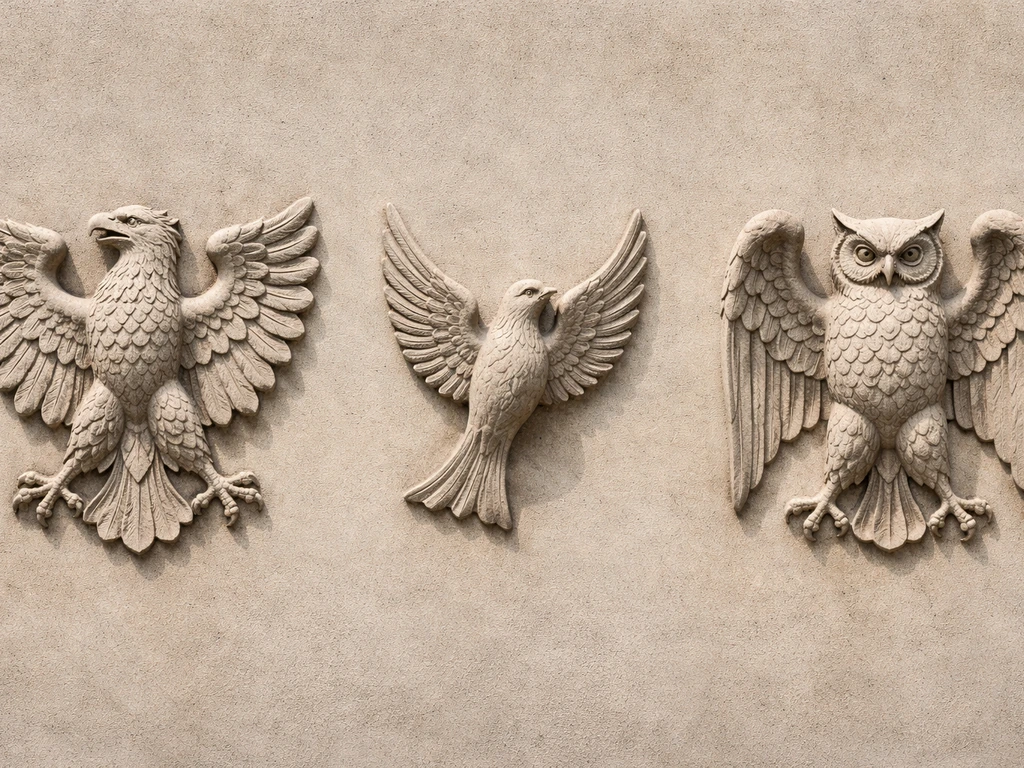
Three birds account for the overwhelming majority of what you will find on a Thomas coat of arms. The blank" rel="noopener noreferrer">eagle is the most common bird charge in English and European heraldry overall), which is why it dominates. The martlet is a close second in frequency on Thomas-family arms specifically, often appearing as a cadency mark to distinguish a younger son's line. The dove appears occasionally in arms associated with religious or clerical Thomas families but is far less common in a primary-charge role. If you are wondering which bird is known as the herald of spring, that description usually points to a different bird than the eagle or martlet commonly seen on Thomas arms dove.
| Bird | Heraldic meaning | How it typically appears |
|---|---|---|
| Eagle (displayed) | Strength, lordship, courage, imperial power | Large primary charge, wings spread, often gold on red |
| Double-headed eagle | Dual sovereignty, imperial lineage, watchfulness in all directions | Primary charge, found in some Welsh and Continental-influenced arms |
| Martlet | Cadency (younger son), perpetual motion, never settling, seeking merit through travel | Smaller charge, often in groups of three, or as a single difference mark |
| Dove | Peace, the Holy Spirit, purity, reconciliation | Rare as a primary charge in Thomas arms; more common in ecclesiastical contexts |
The martlet deserves a special note because it is often misidentified as a swallow or a small falcon by people unfamiliar with heraldry. The defining feature is the absence of feet. Heraldry theorists traditionally explained this as symbolizing a bird always in flight, never resting on earthly ground, which gave it a spiritual edge as a mark for younger sons who had to seek their fortune rather than inherit it. This symbolic restlessness is genuinely interesting when you place it next to the eagle's grounded, commanding presence on the same shield.
What the eagle (and martlet) mean beyond the shield
Eagle symbolism runs deep across almost every culture that has encountered the bird. In the UK, the liver bird is a famous civic emblem of Liverpool, and its meaning is distinct from heraldic Thomas-family birds. In Christian tradition the eagle is associated with St. John the Evangelist and with spiritual vision: the idea that the eagle alone can stare directly into the sun without flinching became a metaphor for contemplating divine truth.
In Celtic and pre-Christian British traditions the eagle was a creature of tremendous longevity and ancient wisdom, said in Welsh legend to be among the oldest living things. In Native American traditions, eagle feathers carry prayers upward, connecting earth to sky, the human to the sacred. In each of these frameworks, flight is not just physical movement but a metaphor for transcendence, for the soul's capacity to rise above immediate circumstance.
The 'displayed' posture amplifies this: a bird with wings fully open, chest forward, facing you directly, is a bird that has nothing to hide and nothing to fear. It is a posture of revelation as much as power. That is why the displayed eagle became the go-to charge for families wanting to project authority and openness simultaneously. When you see it on a Thomas coat of arms rendered gold on red, you are looking at a deliberate statement: this family identified with solar, life-giving, protective energy.
The martlet, by contrast, occupies a more introspective symbolic space. Its footlessness means it lives in perpetual motion, which some interpreters read as restlessness but others read as freedom from attachment, an idea that echoes Buddhist and Sufi notions of the liberated soul. The martlet is sometimes compared to the swallow or swift in its tireless movement, and in some European folk traditions the swallow-like bird was a symbol of the returning soul or of hope that survives a long journey. Where the eagle says 'I command,' the martlet says 'I seek.' Both are valid and complementary symbolic registers, which is perhaps why they appear on the same shield in several documented Thomas arms.
The secretary bird, another heraldic species found on some African-influenced arms, shares the eagle's commanding posture but adds the dimension of patient intelligence, a useful comparison point if you are researching cross-cultural bird symbolism in coats of arms more broadly. Similarly, the liver bird of Liverpool heraldry sits in a distinct tradition: a stylized cormorant with a branch, carrying civic and maritime symbolism that is quite different from the personal family heraldry of Thomas arms. The liver bird of Liverpool is often described as a stylized cormorant and is sometimes compared to other heraldic bird charges, but it is not the same as the typical Thomas-family martlet or eagle.
How to confirm exactly which bird is on your specific Thomas coat of arms

The most reliable route is to find the original grant or recorded blazon, not a re-drawn image. Here is a practical process you can follow today.
- Start with the College of Arms (England and Wales) or the Court of the Lord Lyon (Scotland). Both maintain official registers of granted arms. The College of Arms website allows you to submit a research inquiry for a fee, and their records go back to the 15th century.
- Search the Burke's Peerage and Burke's General Armory databases online or in a major library. Burke's General Armory lists blazons for hundreds of Thomas-family entries by county and period, and the written blazon is more trustworthy than any secondary illustration.
- Check the National Library of Wales for Welsh Thomas families specifically. The library holds extensive pedigree records and armorial manuscripts for Welsh gentry.
- Use the Wikimedia Commons 'File: Coat of Arms of Thomas...' pages as a starting point for identifying well-documented examples, but always cross-reference the description against an armorial registry. At least one documented case exists where such a file's description contained a cataloging error (martlets recorded as mulletts).
- If you have a physical image only, compare it side by side with confirmed blazon illustrations from The Heraldry Society or the Heraldry Society of Scotland. Look specifically for whether legs are present (ruling out martlet) and whether the wing posture matches 'displayed.'
- When sources conflict, write down each description separately and identify which is from a primary registry (most authoritative) versus a secondary re-drawing (less authoritative). Differences in beak direction across images are often explained by heraldic courtesy mirroring and do not indicate a different species.
What to do if the image is stylized or the label is vague
Sometimes a coat of arms illustration simply says 'bird' or 'bird of prey' without specifying species, or the image is so stylized that the feet are barely visible. This can also happen when heraldic images are altered using heraldic courtesy, which may mirror charges so birds appear with the beak facing the opposite way across redrawings heraldic courtesy can mirror charges.
In that case, apply the decision tree: no feet means martlet; feet plus hooked beak plus displayed posture means eagle; feet plus hooked beak plus folded wings (the 'close' attitude) means falcon or hawk; small rounded beak plus gentle posture could be dove. If you still cannot tell, a heraldry professional at the College of Arms or The Heraldry Society can interpret the blazon for you from a photograph, which is genuinely the fastest path to a definitive answer.
One more thing worth knowing: satirical prints and bookplates from the 18th and 19th centuries sometimes depicted coats of arms with invented or exaggerated charges, including birds that were never part of any official grant. If the image you are working from came from a decorative source rather than a genealogical one, treat it as artistic rather than heraldic evidence until you can verify it against a registry entry. The British Museum holds several examples of such satirical prints that depict double-headed eagles in contexts that were never intended as genuine armorial records.
Once you have identified the bird with certainty, you will find that it rewards deeper reading. Whether it is an eagle carrying centuries of solar and divine symbolism, or a martlet embodying the restless, seeking energy of the wandering soul, the bird on a coat of arms is never just decoration. In popular usage, people also ask for the halcyon bird meaning, which is often described as a symbol of calm and goodwill.
If you are comparing symbolic bird traditions, you may also run across the name “alucard the bird of hermes is my name” in related discussions of messenger and solar lore Whether it is an eagle carrying centuries of solar and divine symbolism. To see how that idea of authority and openness became a heraldic motif, explore where the noble bird stands proud eagle.
It is a compressed language, and learning to read it puts you in conversation with the families who chose it and the traditions that gave it meaning.
FAQ
Can the bird on a “Thomas coat of arms” be different even if it’s the same surname?
Not necessarily. A single “Thomas coat of arms” image online may combine details from different grants, or it may be an artist’s interpretation. If the bird is the only thing you are trying to identify, you still need to confirm the exact Thomas line by finding the original blazon or grant record for that family (often tied to a specific county and generation).
What if the picture is too stylized to see feet, how do I still tell eagle vs martlet?
Yes, especially when the source is an illustration without a written blazon. If feet are clearly visible, a true martlet is unlikely. Also note that some printers blur small shapes, so magnifying the beak and wing position can help: a hooked beak and strongly spread posture point toward an eagle, while footless, small, and stylized commonly points toward a martlet.
If a blazon only says “displayed,” what should I assume the bird is?
A “displayed” bird is described by posture, not by species. If the blazon explicitly names a species, follow that word even if the posture looks familiar. If “displayed” appears without a species, the article’s practical rule is usually to treat it as an eagle, unless another species term is present elsewhere in the blazon.
Could the bird be a hawk or falcon instead of an eagle or martlet?
Sometimes. If the image shows folded wings (“close” posture) with a hooked beak, you may be looking at a hawk or falcon rather than an eagle. That matters for Thomas arms because many people default to “eagle,” but folded-wing attitudes are a key clue that the species or charge is different.
Does the color of the bird (like gold on red) help confirm what bird it is?
Use tincture contrast and common artistic conventions. For example, gold on red is a very common heraldic rendering and can reinforce that the charge is meant to look assertive and foregrounded, but tinctures alone cannot prove species. The more reliable combination is posture plus the presence or absence of feet plus any species word in the blazon.
How do I avoid confusing a martlet with a swallow?
Yes, especially with martlets, which are often mistaken for swallows or small falcons. The decision aid is simple: martlets are traditionally footless, so look for any sign of legs or talons. If you see feet, talons, or an obvious stance on a ground, you should stop assuming martlet.
If a Thomas coat of arms shows more than one bird, does that change how I identify each one?
Yes. A coat of arms can feature multiple birds, or a single bird can appear in different positions across a family’s memorials and redrawings. If you are researching, note whether the bird is the main shield charge or appears as a secondary figure or supporter, because heraldry sometimes uses different birds for different roles.
What should I trust more, a modern illustration or an older blazon record?
When a registry entry lists the blazon, treat it as higher confidence than a later bookplate or decorative print. If you only have a photo of a shield, look for the clearest readable elements (species word, attitude, and feet) and then cross-check with a published blazon or official record for that exact family line and date.
If someone calls it the bird of spring, is it likely to be the Thomas heraldic bird?
Be careful with “bird of spring” descriptions. Many “spring” bird associations are popular culture labels that do not match heraldic species. In practice, a heraldic “bird of spring” label you see online may not be the same as what appears on the Thomas family grant, so you still need the blazon or the attitude and foot clues.
How do I handle cases where the coat of arms is from a satirical print or bookplate?
If the image is from a decorative context, like a satirical print or a novelty bookplate, the bird may be invented or exaggerated. A good workaround is to locate the family’s pedigree reference, then find the associated grant record and compare whether the bird charge matches the official blazon.