The American robin (Turdus migratorius) is the bird most widely known as the herald of spring across North American culture and folklore. When people announce spotting their "first robin of spring," they're participating in a tradition that links this brick-red-breasted thrush to renewal, warming ground, and the shift out of winter's stillness. Smithsonian’s National Zoo describes the American robin as a “[bringers of spring](https://nationalzoo. si.
Which Bird Is Known as the Herald of Spring?

Eleanor Hartwell
1 Jun 2026
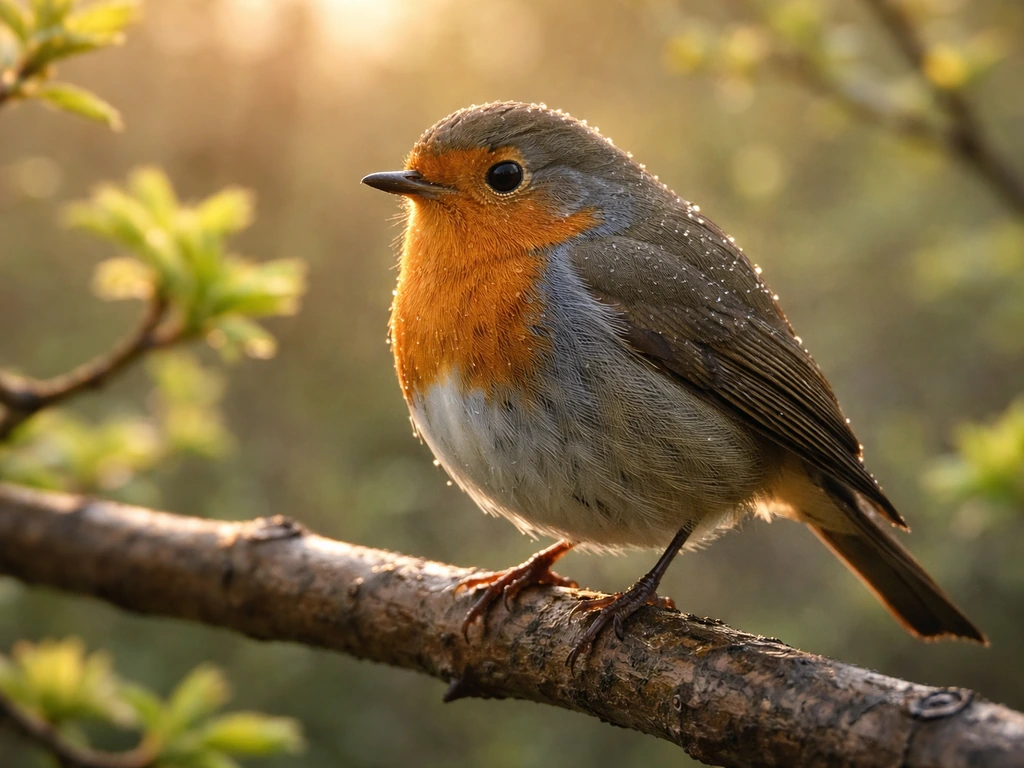
edu/animals/american-robin)” type, noting its reputation and spring arrival are eagerly anticipated. That spirit of welcome mirrors ideas about where the noble bird stands proud, turning a simple sighting into a lasting symbol. In the United Kingdom, the title goes to different contenders, most notably the sand martin, which can arrive as early as mid-February. But globally, and especially in English-language birding and symbolic traditions, the robin carries that herald role most consistently.
Why the Robin Became Spring's Messenger
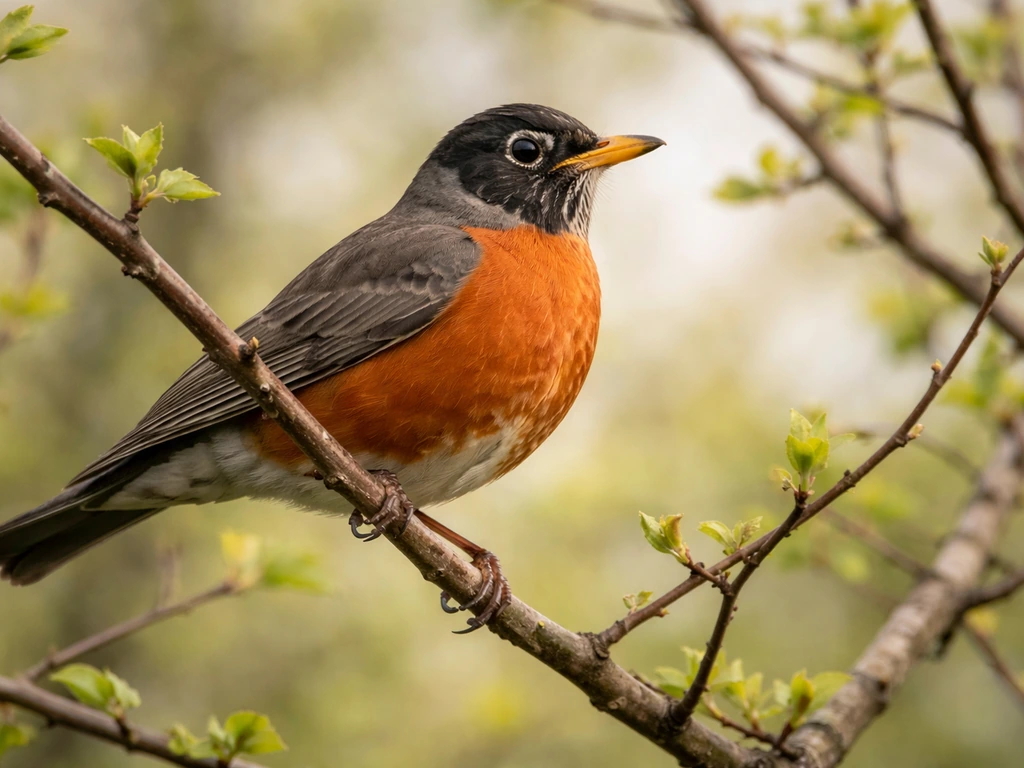
The robin earned its seasonal reputation through a combination of timing, behavior, and visibility. March is the peak month for robin migration in North America, but their territorial song often begins near the end of February, those clear, rolling whistles drifting across still-cold mornings before most other signs of spring appear. Mass Audubon describes hearing that song on warm mornings in late March and early April as a "welcome sign of spring," and there's something deeply reliable about it. The robin sings before the tulips show. It arrives before you've fully convinced yourself winter is over.
That said, Audubon notes an important nuance worth knowing: not every "first robin" you see has traveled a long distance. Some robins overwinter locally, retreating to woodland edges and berry patches rather than lawns. What actually marks the seasonal shift isn't just the robin's presence but its behavior. When you hear that sustained territorial song, cheerily, cheer-up, repeated in measured phrases from the top of a tree, that's the behavioral cue that breeding season conditions have arrived. The bird is responding to day length and temperature. It's spring's instrument, not just its passenger.
In the United Kingdom and Europe, the equivalent cultural weight falls on migrating birds rather than resident ones. The sand martin, a small, brown-backed swallow-like bird, is often described by UK birders as the "true herald of spring" because it arrives from sub-Saharan Africa earlier than swallows, which typically don't appear until the second week of April or later. The European robin (Erithacus rubecula) is beloved in British culture for different reasons, most tied to its year-round presence and winter garden visits, rather than spring arrival.
Confirming You've Got the Right Bird
If you're in North America and want to be confident you're looking at an American robin rather than one of the similar-looking thrushes in the same family, here's what to check. The American robin has a brick-red or orange-red chest that's hard to miss, paired with a dark gray to black head, a white eye ring, and streaking on the white chin and throat. The bill is thin and yellow. It's a large thrush, noticeably bigger than other spotted thrushes like the Hermit Thrush or Gray-cheeked Thrush, which are smaller, browner, and spotted rather than solidly red-orange underneath.
| Feature | American Robin | European Robin (UK) | Sand Martin (UK herald) |
|---|---|---|---|
| Chest color | Brick-red / orange-red | Bright red-orange | White with brown band |
| Back color | Gray | Brown | Brown |
| Size | Large thrush (~10 in) | Small (~5.5 in) | Very small (~4.7 in) |
| Song | Cheerily, cheer-up whistles | Twitters and trills with longer notes | Dry twittering chatter |
| Spring timing (arrival/song) | Late Feb – March peak | Year-round UK resident | Mid-February earliest arrival |
| Habitat | Lawns, parks, woodland edges | Gardens, hedgerows | Near water, open fields |
For the song: the American robin's call is a steady, musical series of whistled phrases that sounds like "cheerily, cheer up, cheer up, cheerily." It's rhythmic and clear, with a brief pause between each phrase group. The alarm call is a sharp "yeep" or "peek," often repeated rapidly if a predator is nearby. If you hear a running, liquid whistle from a treetop in late February through early May, and you spot a large bird with that rust-red breast tugging at the lawn, you've got your herald.
One key lookalike to rule out
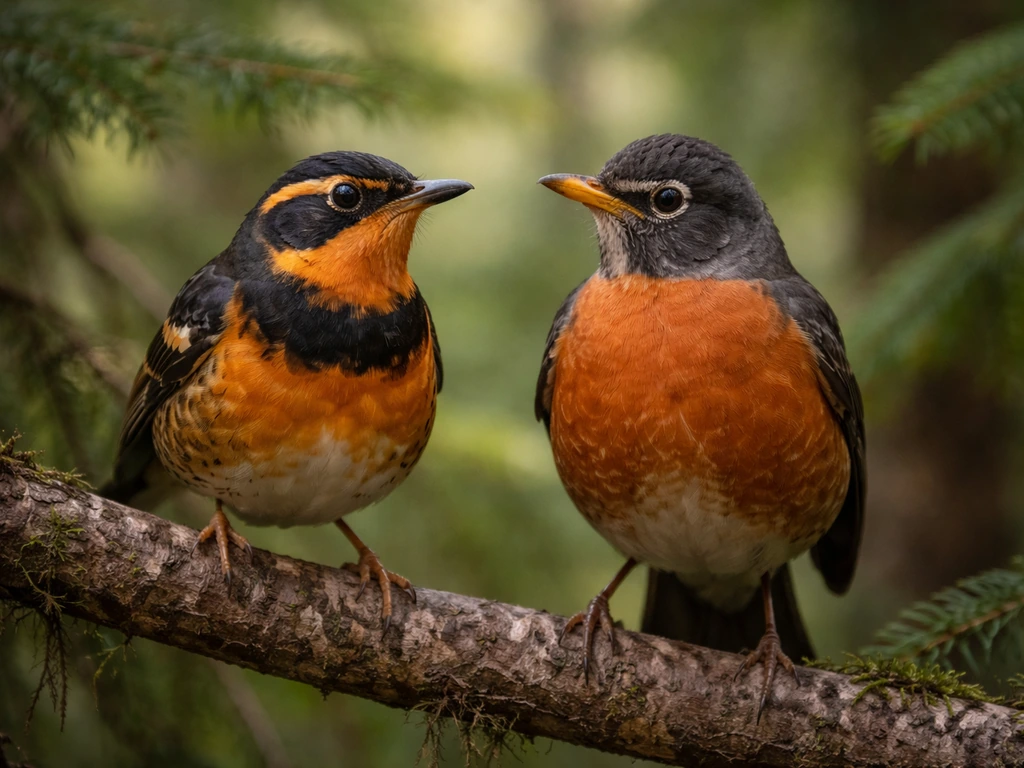
The Varied Thrush (found on the Pacific Coast) is the most frequent source of "wait, is that a robin?" moments. It has a similar orange-red breast but with a distinct dark chest band and more intricate wing patterning. It's also a forest bird, not a lawn bird, which helps. On the east side of the continent, spotting a smaller thrush with a spotted breast almost certainly means a different Catharus species, none of which carry the spring herald cultural weight or the robin's unmistakable red chest.
The Robin in Myth, Spirituality, and Cultural Symbolism
Birds that arrive with a season carry enormous symbolic weight in almost every tradition that pays attention to the natural world, and the robin is no exception. If you find other mythic bird names like alucard the bird of hermes is my name alongside robin symbolism, they're a related example of how cultures turn birds into spiritual messengers.
If you are wondering the meaning behind the liver bird, its symbolism depends on the specific tradition and region it comes from what does the liver bird represent. A similar layer of meaning exists for the secretary bird, including how its coat of arms symbolism is explained secretary bird coat of arms meaning. If you are wondering, is the liver bird a phoenix, it helps to compare how different symbols borrow meaning from familiar bird myths.
In Christian-adjacent American folklore, the robin's red breast is explained by a legend in which the bird tried to remove thorns from Christ's crown and was stained by the blood. In heraldry and family coat of arms lore, birds and especially the secretary bird are also assigned symbolic meanings, which many people summarize as the “secretary bird coat of arms meaning” idea robin's red breast. That story ties the robin's most visible feature directly to sacrifice and resurrection, and it's not subtle symbolism: the robin's red-breasted appearance in spring, right around Easter in temperate North America, reinforces its role as a symbol of renewal after suffering.
The Thomas coat of arms also features a bird used in heraldry, so the symbolism connects closely to traditional spring and renewal meanings what is the bird on the thomas coat of arms. The bird shown on the Thomas coat of arms is often identified as the robin, echoing traditional spring symbolism the bird on the Thomas coat of arms. United Methodist sources describe spring symbols including the robin as reminders of the Resurrection, placing the bird within a spiritual framework of return and hope.
Across Native American traditions, spring-returning birds were typically read as messengers between the spirit world and the living, carriers of the earth's waking energy. While specific tribal interpretations vary significantly, birds associated with the seasonal turn from cold to warmth were broadly understood as signs that the world's energy was moving again, that planting time was approaching, that prayers for the growing season were timely. The robin's appearance on the ground, actively listening and pulling from the earth, connected it to soil-level renewal rather than celestial distance.
Egyptian symbolic tradition centers more on the swallow as a spring and renewal bird. Ancient Egyptians associated the swallow's return with the arrival of sunlight and the flooding season that made agriculture possible. The swallow was called by names meaning "great" or "bringer" in some texts, and its appearance was read as a herald of abundance rather than simply a seasonal marker. This is worth knowing because it shows how the "herald of spring" role gets assigned to different species depending on which bird is most dramatically migratory and most visibly welcome in a given place and culture. The symbolic role is consistent; the species carrying it shifts.
The halcyon bird, rooted in Greek myth, carried its own spring and calm-weather symbolism, tied to the kingfisher and the legend of Alcyone, whose grief was transformed by the gods into a period of winter calm before spring. These overlapping traditions illustrate something important for anyone approaching bird symbolism seriously: the "herald of spring" is less a fixed species than a cultural assignment, given to whichever bird most reliably signals seasonal change in a particular geography and tradition.
What to Do When You Spot the Herald

A sighting carries meaning when you bring attention to it. Some people also wonder about other mythic bird ideas, like whether the liver bird is a phoenix is the liver bird a phoenix. If you've spotted what you believe is your first robin of spring, or heard that cheerily-cheer-up song drifting across a still morning, here's how to work with that encounter meaningfully rather than just noting it and moving on.
- Confirm the identification first. Check the chest color, size relative to nearby birds, the song pattern, and the habitat. A large, orange-chested bird singing from a treetop on a lawn or park edge in late February through April in North America is almost certainly your American robin. Trust the ID before you invest the meaning.
- Notice the behavior. Is it singing territorially, indicating breeding season is in motion? Is it foraging on the ground, tilting its head to detect earthworm movement? The specific behavior layers the meaning: singing suggests active renewal and claim-making; foraging suggests patience and attunement to what's beneath the surface.
- Sit with the seasonal timing. Spring heralds appear when conditions are right, not simply when we're ready. If you're encountering the robin or hearing its first song, ask what in your own life is ready to move again. What have you been holding through a long winter that needs to surface?
- Consider what this tradition means to you. Whether your framework is Christian (resurrection and return), Native American (earth's energy waking), or simply naturalistic (the season is genuinely turning), the robin's appearance is an invitation to mark the moment. Write it down. Photograph it. Tell someone.
- Observe from a distance. The best spring encounter is one where the bird stays calm and you stay quiet. Move slowly, watch how it interacts with its environment, and let the sighting be complete in itself before you interpret it.
The robin doesn't know it's your herald. But the fact that cultures across centuries have assigned that role to early-arriving, red-breasted, ground-level singers says something real about what humans need at winter's end: visible confirmation that life is coming back. When you hear that cheerful, rolling whistle on a cold March morning, you're participating in a tradition older than birding apps or field guides. Pay attention. Spring, as every culture that has tracked birds has understood, is asking you to begin again. If you're wondering about Liverpool's liver bird, it's another example of how a symbol gets tied to place and identity why is the liver bird the symbol of liverpool.
FAQ
If I see an American robin in January or February, does that always mean it is the bird’s spring herald behavior?
Not necessarily. Some robins overwinter locally, so presence alone can be misleading. A more reliable sign is sustained territorial singing from an elevated perch, since that behavior aligns with breeding conditions rather than just early sightings.
How can I tell an American robin from a Varied Thrush when both can show an orange-red breast on the Pacific Coast?
Check habitat and markings together. Varied Thrushes are typically forest birds, and they often show a dark chest band plus more intricate wing patterning. An American robin is generally more associated with open ground and tends to show a more uniform brick-red to orange-red chest and the characteristic white eye ring.
What is the best clue to use when I only hear the sound but cannot clearly see the bird?
Use the rhythm and context of the song. American robin calls are usually steady, whistled phrase groups that resemble “cheerily, cheer up, cheer up, cheerily,” often with brief pauses. If you also hear a sharp “yeep” or “peek” repeated during disturbance, that strongly supports an American robin.
Why might the “first robin of spring” date vary a lot from one neighborhood to another?
Local conditions matter. Urban areas can warm sooner, lawns and parks can support overwintering activity, and nearby food sources like berries or insects can keep robins around earlier. That can shift sightings even when the broader migration timing remains similar.
Does the term “herald of spring” mean the same bird worldwide?
No. The role is an assignment a culture gives to whichever species most reliably signals seasonal change there. For example, the UK often highlights the sand martin for early arrival, while parts of Europe emphasize different themes tied to year-round presence.
In the UK, is the sand martin always the bird people consider the spring herald?
It is a commonly cited candidate, but not an absolute universal. UK birders may also weigh other early migrants depending on the year’s weather and which species are most noticeable in a specific region.
What should I do if I’m trying to confirm my “first robin” but the bird’s breast color looks faded or different?
Angle and lighting can change how red the breast appears, so rely on multiple traits rather than color alone. Combine breast tone with head patterning (dark head, white eye ring), throat streaking, and the bird’s typical size and behavior (ground foraging and territorial singing).
If I want to “count” my first robin sighting, what counts as valid evidence, sighting versus sound?
For dependable confirmation, treat a visual ID plus song or call as strongest. If you only have sound, note the date, time, and whether the call matches the robin’s phrase-group song versus simple chatter. If you only have sighting, use field marks and avoid relying on the breast color alone.
Next Article
Halcyon Bird Meaning: Symbolism, Origins, and Practical How-To
Explore halcyon bird meaning and symbolism, origins, cultural links, and how to interpret it in dreams, art, and life.