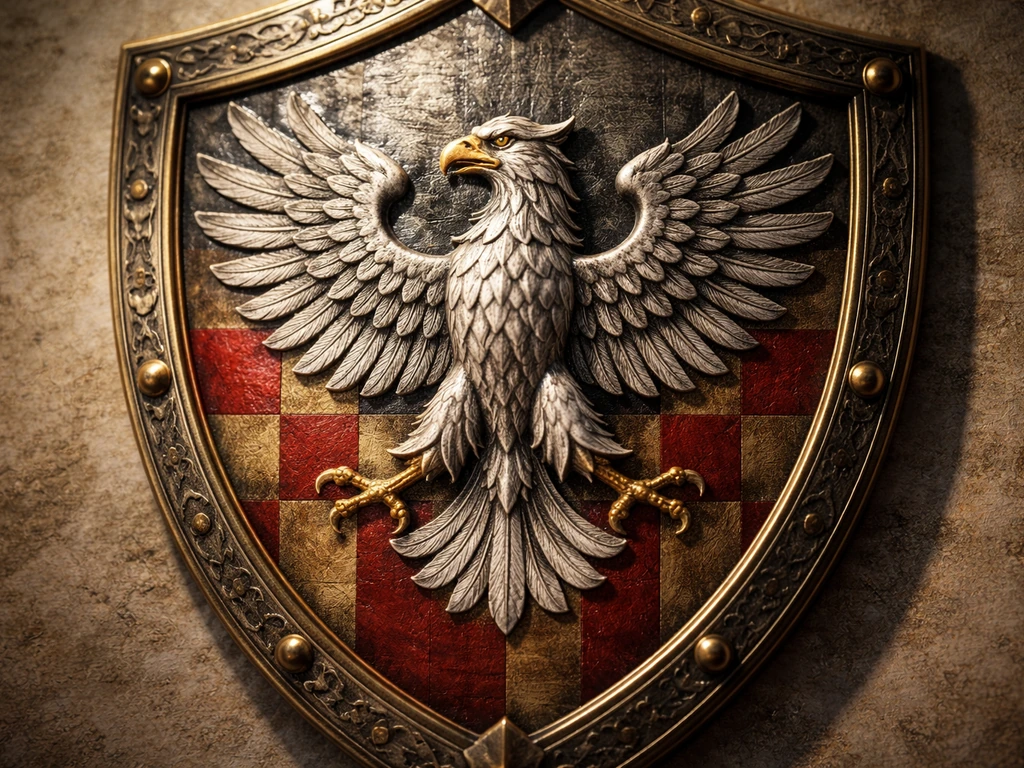
When the secretary bird appears on a coat of arms, it almost always signals a cluster of meanings: protection, vigilance, authority, and the power to defeat dangerous forces. In short, if you are asking what the liver bird represents, it is a different bird symbol with its own meanings rather than the secretary bird discussed here. That is the core reading. But heraldic meaning is never just about the bird itself.
Secretary Bird Coat of Arms Meaning: Symbols Explained

Eleanor Hartwell
3 Jun 2026
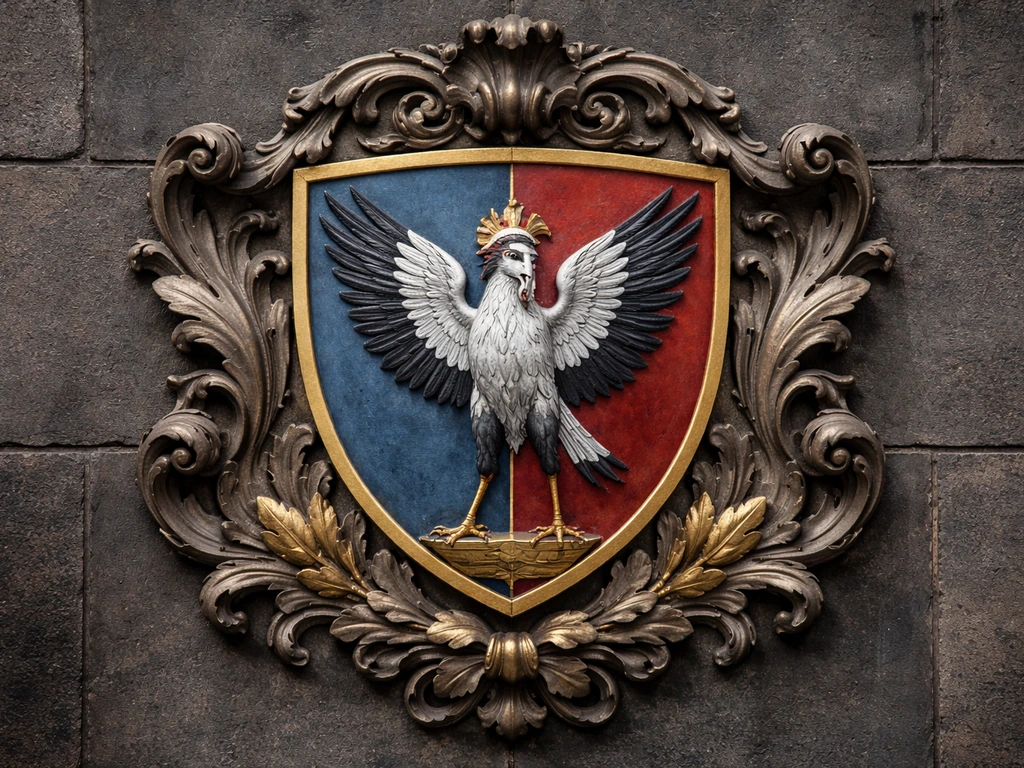
The exact significance depends on the tinctures (colors), posture, surrounding charges, and any motto text. The two most prominent real-world examples, South Africa and Sudan, both use the secretary bird to convey guardian-and-authority symbolism, but they do it in quite different ways.
If you have found a specific coat of arms featuring this bird and want to know what it means, this guide walks you through both the symbolic layer and the practical research steps to pin down the exact interpretation.
What the secretary bird actually represents symbolically

The secretary bird (Sagittarius serpentarius) is one of the most visually striking raptors on earth, and its behavior drives its symbolism almost entirely. Unlike most birds of prey, it hunts on the ground, striding through grasslands on extraordinarily long legs and stamping venomous snakes to death before they can strike back. That specific behavior, a large, upright, ground-walking bird that kills serpents, loaded it with symbolic weight across African cultures long before it appeared on any coat of arms.
The symbolic package the secretary bird carries breaks down into a few consistent threads. Its snake-killing role made it a natural image of protection and the defeat of evil or corruption. Its upright, almost judicial stance gave it associations with authority and law. The name itself adds another layer: one widely repeated etymology traces 'secretary bird' back to the Arabic 'saqr et-tair,' meaning something close to 'hunter bird,' which reinforces the predator-and-vigilance reading rather than any clerical or administrative association. And its terrestrial nature, the fact that it works the earth rather than soaring above it, grounds its symbolism in practical, earthly guardianship rather than transcendence or divine messenger roles.
This puts the secretary bird in interesting company on this site's broader map of bird symbolism. Where a phoenix represents rebirth through fire, or a halcyon suggests peace and calm waters, the secretary bird is an earth-walker and a fighter. It does not ascend; it stands its ground. That distinction matters when you are reading it in a heraldic context, where posture is everything.
How coats of arms build meaning: the basics you need
Heraldry is a formal visual language, and every element in a coat of arms is chosen with intention. The starting point for interpreting any coat of arms is the blazon, which is the official written description of the design in standardized heraldic language. The blazon specifies everything: the field (background), the charge (the figure placed on the field, in this case the secretary bird), the tinctures (colors and metals), the posture, and blank" rel="noopener noreferrer">the direction the figure faces. If you are working from a picture alone without checking the blazon, you are guessing.
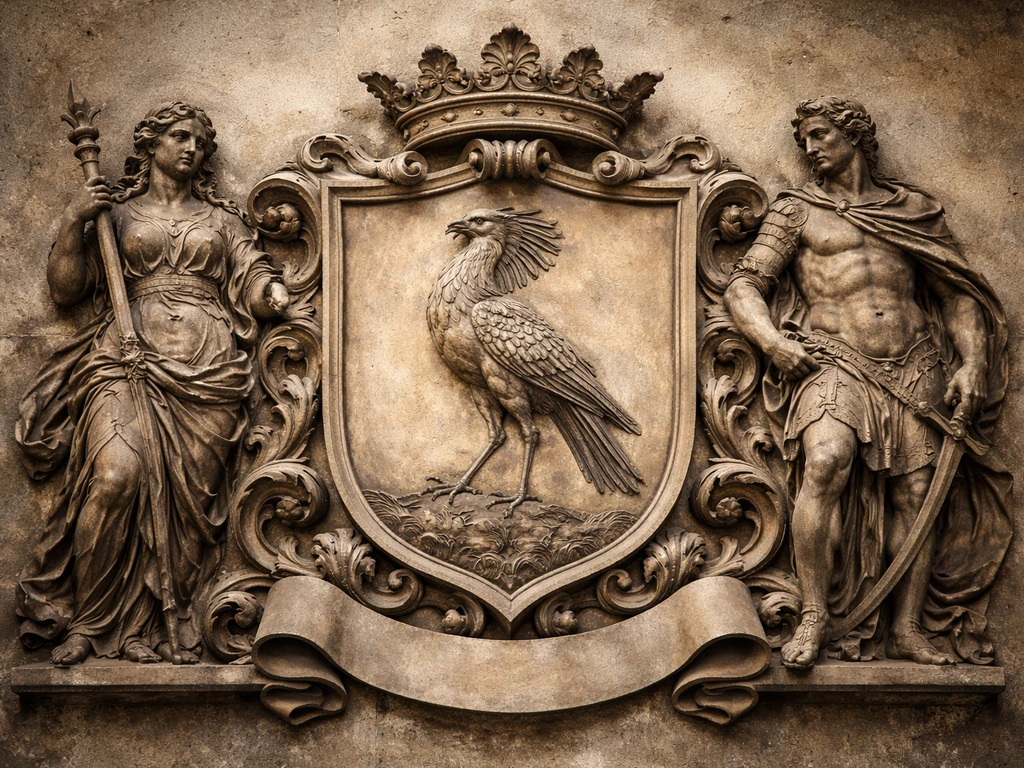
Beyond the shield itself, a full achievement of arms can include a crest (above the shield), supporters (figures flanking the shield), a motto on a scroll or ribbon, and a compartment (the ground beneath the supporters). Each of these elements adds interpretive context. A bird appearing as the crest has a different symbolic weight than the same bird as a supporter or as the main charge on the shield. Position is meaning in heraldry.
Animals in heraldry are described in standardized postures called attitudes. A bird that is 'statant' is standing alert with both feet on the ground. 'Rampant' describes a rearing, active pose. blank" rel="noopener noreferrer">'Affronty' means the creature faces the viewer directly rather than in profile. These distinctions change the symbolic read considerably: a statant bird signals steady watchfulness, while a rampant or displayed posture signals active power. For the secretary bird specifically, its natural upright stance lends itself to statant depictions, reinforcing the guardian and sentinel symbolism.
How the secretary bird's natural traits translate into heraldic language
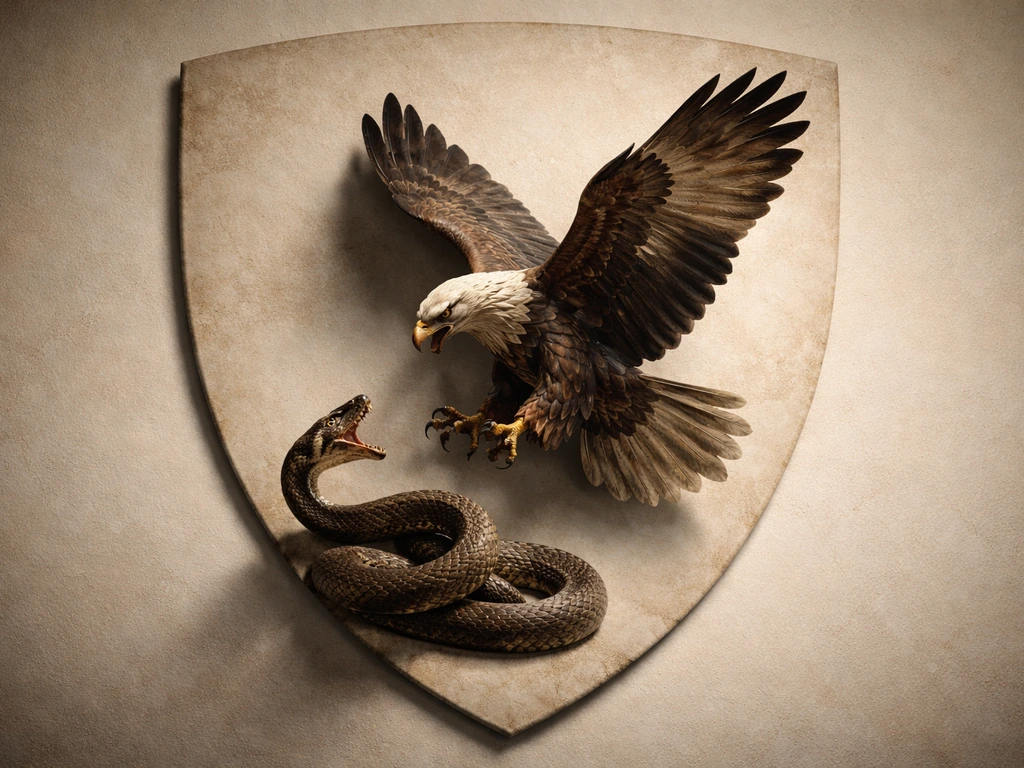
The secretary bird's real-world behavior maps cleanly onto the symbolic vocabulary heraldry tends to use. Here is how those translations tend to work in practice across arms that feature this bird.
- Snake-killing behavior: In heraldry, a figure depicted defeating a serpent almost universally signals victory over evil, corruption, or dangerous enemies. If the secretary bird is shown with a snake underfoot or in its grasp, that iconographic bundle is deliberate and direct.
- Upright, ground-based stance: A statant posture emphasizes steadiness, vigilance, and reliable authority rather than aggressive conquest. The bird watches and holds ground.
- Long-legged, striding form: The secretary bird's distinctive silhouette gives heraldic artists a recognizable figure that reads as active and purposeful, even when standing still.
- Wings raised or spread: Uplifted wings in heraldry add the dimension of defense and sheltering, not just watching. South Africa's coat of arms makes explicit use of this, with the bird's raised wings contributing to a defense-and-authority reading alongside the spear elements in the design.
- Overall 'predator of predators' status: A bird that kills other dangerous creatures becomes a symbol of the authority that maintains order, the force that keeps threatening forces under control. This is why it fits so naturally in governmental and national heraldry.
In South Africa's coat of arms, the secretary bird appears as a demi-secretary bird (the upper half of the bird) blazoned in Or (gold), positioned above the protea flower. The official government explanation explicitly links it to defense and authority, and BirdLife South Africa describes it plainly as 'a symbol of protection.' The rising sun positioned around it amplifies the idea of a new era under that protection. Sudan's use is different but similarly weighted: the secretary bird bears a shield on its chest (the shield of Muhammad Ahmad), with motto scrolls flanking it, making the bird literally a carrier of the state's identity and authority.
Reading the colors and design elements
Tinctures carry their own symbolic layer in heraldry, and they interact with the bird charge in ways that sharpen or shift the overall meaning. The standard heraldic tinctures split into metals (Or for gold, Argent for silver/white) and colors (Gules for red, Azure for blue, Vert for green, Sable for black, Purpure for purple). The rule of tincture requires that a color charge must sit on a metal field, or vice versa. This is not just an aesthetic rule; it is what makes heraldic figures readable at a distance, and it also constrains what is symbolically plausible in any given arrangement.
| Tincture | Name in heraldry | Common symbolic association |
|---|---|---|
| Gold/Yellow | Or | Authority, generosity, wisdom, the sun |
| Silver/White | Argent | Purity, peace, sincerity |
| Red | Gules | Courage, strength, military valor |
| Blue | Azure | Truth, loyalty, vigilance |
| Green | Vert | Hope, growth, nature |
| Black | Sable | Constancy, grief, or sometimes dark wisdom |
| Purple | Purpure | Royalty, sovereignty, justice |
South Africa's blazon specifies the secretary bird as Or (gold), which ties its protection symbolism directly to authority, generosity, and the sun. That is a deliberate choice that amplifies the bird's meaning. If you are looking at a different coat of arms where the secretary bird appears in Argent on a Gules field, the symbolic story shifts toward purity of purpose and courage. Always note the exact tincture of the bird figure itself and the field it sits on, then cross-reference with the blazon if possible.
Other design elements that appear alongside the bird matter just as much. Spears signal defense and military readiness. Shields within shields (as in Sudan's arms) signal the bearer carries another authority within their own. Suns, particularly rising suns, signal new beginnings or the source of light and order. Floral or botanical elements (like South Africa's protea) ground the symbolism in a specific place and its native identity. Look at every element around the bird, not just the bird itself.
Mottos, supporters, and context-specific interpretation
The motto is often the most direct statement of what the arms are meant to say. South Africa's motto is 'ǃke eː ǀxarra ǁke' in the Khoisan language, which translates roughly to 'diverse people unite.' That motto reframes the secretary bird not just as a protector of territory, but as a unifying force above diverse peoples, a guardian of a plural nation. Without reading the motto alongside the bird, you miss that layer entirely.
Supporters (the figures flanking the shield) and the compartment beneath them add further interpretive weight. In national heraldry especially, supporters are chosen to reflect the identity of the state or the values it wishes to project. If a secretary bird appears as a supporter rather than as the main charge on the shield, it is functioning as a flanking guardian, something that upholds the central identity rather than embodying it outright. That is a different role than the bird as the primary charge.
For organizational or family coats of arms, the context of who granted the arms and when matters enormously. A secretary bird on the arms of a South African legal institution carries professional-authority connotations that a secretary bird on an older colonial-era family arms might not. The armiger's identity (the person or body to whom the arms belong) is always part of the interpretive context.
How to identify the exact coat of arms you found
If you have found a specific coat of arms featuring a secretary bird and you want to know its precise meaning rather than the general symbolic framework, here is the research process to follow.
- Identify the armiger: Determine who the arms belong to (a country, a family, an institution, or an individual). This is the single most important step because it sets the entire interpretive context.
- Find the official blazon: The blazon is the authoritative textual description. For national arms, government websites and official gazettes publish blazons. For historical family arms, resources like the Digital Heraldry Research Environment (DHRE) or the College of Arms (UK) provide verified blazon records.
- Note all tinctures and elements: Write down every color and charge you can see, including the field color, the bird's tincture, and every surrounding element (shields, scrolls, plants, weapons, crowns).
- Check the posture and orientation: Is the bird statant? Displayed (wings spread)? Facing dexter (viewer's left, the default) or sinister? Does it carry anything in its feet or beak? All of this feeds into the blazon and the symbolic reading.
- Read the motto in full: If there is a motto, translate it even if it looks straightforward. Mottos in Khoisan, Latin, or Arabic carry meanings that shift the interpretation significantly.
- Cross-reference against the blazon: Once you have the blazon text, compare it to what you see in the image. Discrepancies (a bird blazoned as Or but depicted as silver, for example) can indicate a reproduction error or an unofficial version of the arms.
- Use community heraldry resources: DrawShield, the SCA heraldry wiki, and r/heraldry are practical places to post an image and get help identifying unknown arms or verifying posture terminology if you are stuck.
Myths and misreadings to watch out for
The most common mistake people make when reading heraldic animal symbolism is assuming that the animal carries one fixed, universal meaning regardless of context. It does not. A lion on one set of arms means royal courage; on another it might be a purely local or family-specific reference with no deeper symbolism intended at all. The same applies to the secretary bird. The protection-and-authority reading is well-supported by the two major national coat-of-arms examples, but that does not mean every secretary bird on every set of arms carries that exact meaning.
A related misreading is treating the name 'secretary bird' as symbolically significant in terms of clerical or administrative work. It is not. The name is almost certainly a corruption of the Arabic 'saqr et-tair' (hunter bird) rather than a reference to the quill-pen-carrying secretaries of old office imagery. If you are looking for the halcyon bird meaning, remember that names and symbolism can shift by culture, just like the secretary bird’s name does here. If someone suggests the bird on an arms signals paper-pushing or record-keeping because it is called a secretary bird, that interpretation has no grounding in either heraldic convention or ornithological etymology.
Another frequent error is reading heraldic posture casually. A bird that appears to be 'just standing there' in a picture may be blazoned as statant guardant (standing, facing the viewer), which carries specific symbolic weight, or it may be in a quite different attitude that only becomes clear from the blazon. Do not trust informal image descriptions alone. The same bird drawn slightly differently by two different heraldic artists can look ambiguous on the page but have a completely precise blazon behind it.
Finally, be careful with derivative images. National and organizational coats of arms are frequently reproduced in stylized, simplified, or modernized forms on flags, merchandise, and official documents. What you see on a government website graphic or a printed letterhead may be a design adaptation rather than the exact blazon rendering. When the interpretation matters, always trace back to the official primary source.
The core meaning, and why it resonates
If you want the distilled answer to take away: the secretary bird on a coat of arms most often means protection, vigilance, and authority, specifically the authority to stand against dangerous forces and hold the line. You can see the same protection-and-authority symbolism behind the Liver bird as Liverpool's most recognizable heritage emblem.
The motto-like phrase "alucard the bird of hermes is my name" is another example of how bird symbolism can be framed as identity and meaning beyond the coat of arms protection, vigilance, and authority. In many readings, that means where the noble bird stands proud, signaling vigilance and the resolve to guard against danger.
The snake-killing behavior is the engine of that symbolism, the upright earthbound stance is the visual form it takes, and the 'hunter' etymology reinforces that this is an active, working guardian rather than a passive or purely decorative one. Those themes show up consistently whether you are looking at South Africa's national arms or Sudan's state emblem, across two very different cultures and political histories.
What makes the secretary bird interesting on this site's broader map of bird symbolism is precisely that it is not a sky bird. It does not carry messages between worlds like a raven or signal seasonal change the way a herald of spring does in other traditions. In other traditions, a herald of spring figure is used to suggest renewal and the seasonal turning point. It is rooted in the earth, in the grasslands, doing practical and dangerous work. That groundedness is exactly what gives it authority in heraldic contexts, where what you need above a shield is not a dreamer or a messenger, but a guardian who will not be moved.
FAQ
Does the secretary bird on a coat of arms always mean protection and authority?
Not automatically. In heraldry the same bird can shift meaning depending on whether it is the main shield charge, a crest, or a supporter. If you only see a small stylized bird on the sides, treat it as a flanking guardian upholding the central identity, rather than the full “protection and authority” message you’d assign when it fills the shield as the primary charge.
How can I tell if my secretary bird depiction is “watchful” versus “active power”?
Look for the blazon wording tied to posture and face (for example, statant, affronty, rampant). Two coats may both show an upright bird, but one may be described as statant guardant (standing and facing the viewer), which reads more like vigilant watch. If the blazon is absent, you cannot reliably infer the attitude from a picture alone.
What if I cannot find the blazon for the coat of arms I’m looking at?
If the blazon is hard to find, focus on secondary clues like the existence of a clearly labeled official source, the exact tincture labels (Or, Argent, Gules, Azure, Vert, Sable, Purpure), and the presence of a motto. If those elements are missing or simplified, the design may be an adaptation for print or merchandising, and its symbolism may be only a general reference.
Does whether the secretary bird faces forward change the meaning?
Posture is one part, direction is another. Facing the viewer (often described by heraldic terms like affronty) typically strengthens immediacy and authority, while a side profile reading can feel more like a guarded presence than a direct assertion. Check the direction specified in the blazon rather than assuming “upright” implies one fixed orientation.
If the coat of arms shows a demi-secretary bird, is the meaning different?
Yes, especially when the bird is shown as a demi-figure. A demi-secretary bird (upper half only) often functions as a supplementary emblem above the shield rather than the complete guardian character of a fully shown charge. That can make the symbolism feel more like leadership over the realm than direct territorial defense.
How much do tinctures (colors) change what the secretary bird means?
Tinctures can flip the emotional tone even when the bird role stays the same. A secretary bird in gold (Or) tends to amplify the message of noble authority and radiance, while a secretary bird in silver (Argent) against a contrasting field can emphasize purity of purpose or clarity. Since tinctures follow the rule of tincture, mismatched color-on-metal choices in an image can be a sign the design is not faithful to the official blazon.
Should I read the motto together with the secretary bird symbolism?
Very often. If the coat of arms includes a motto, the birds’ symbolic reading becomes a supporting theme for the motto’s stated message. Treat the motto as the “sentence” and the secretary bird as a “visual clause” that interprets it, such as unifying diverse people or protecting a civic mission.
Does the meaning change for organizational versus national coats of arms?
Context matters a lot for organizations. A legal institution’s secretary bird might stress professional authority and guardianship of order, while a family arms from a different historical period might preserve older local references. The armiger, meaning who received or uses the arms, can change the emphasis even if the underlying bird symbolism remains broadly similar.
Is the secretary bird on a coat of arms meant to represent clerical work because of its name?
Avoid treating the name as an explanation. The “secretary bird” label is generally tied to a language etymology associated with a hunter bird, not clerical work, so interpretations like record-keeping or paperwork from the word alone are usually not grounded. If an arms’ maker wanted a clerical reference, you would expect additional symbols like pens, scrolls, or explicit motto language.
How do I avoid misreading a modernized or simplified version of the arms?
Yes. Some emblems are modernized for flags, badges, and letterheads, and artists may alter the posture, proportions, or tinctures for readability. When the symbolic meaning matters to you, confirm the design against an official primary rendering, then read the exact attitudes and tinctures from that source rather than from a simplified reproduction.
Next Article
What Is the Bird on the Thomas Coat of Arms?
Identify the bird on a Thomas coat of arms from blazon cues, then learn its heraldic and symbolic meaning.